Silicon Carbide vs. Glass Bead Blasting: Aggressive Cut vs. Smooth Finish
When does angular SiC outperform spherical glass bead — and when is the reverse true? A practical application-focused guide to choosing between these two fundamentally different blast media philosophies.
SECTION 01The Fundamental Difference: Cut vs. Peen
Silicon carbide and glass bead represent two opposite ends of the abrasive blasting performance spectrum. They do not compete in the same applications — they serve fundamentally different surface engineering objectives. Understanding this distinction eliminates confusion for procurement teams evaluating both media types.
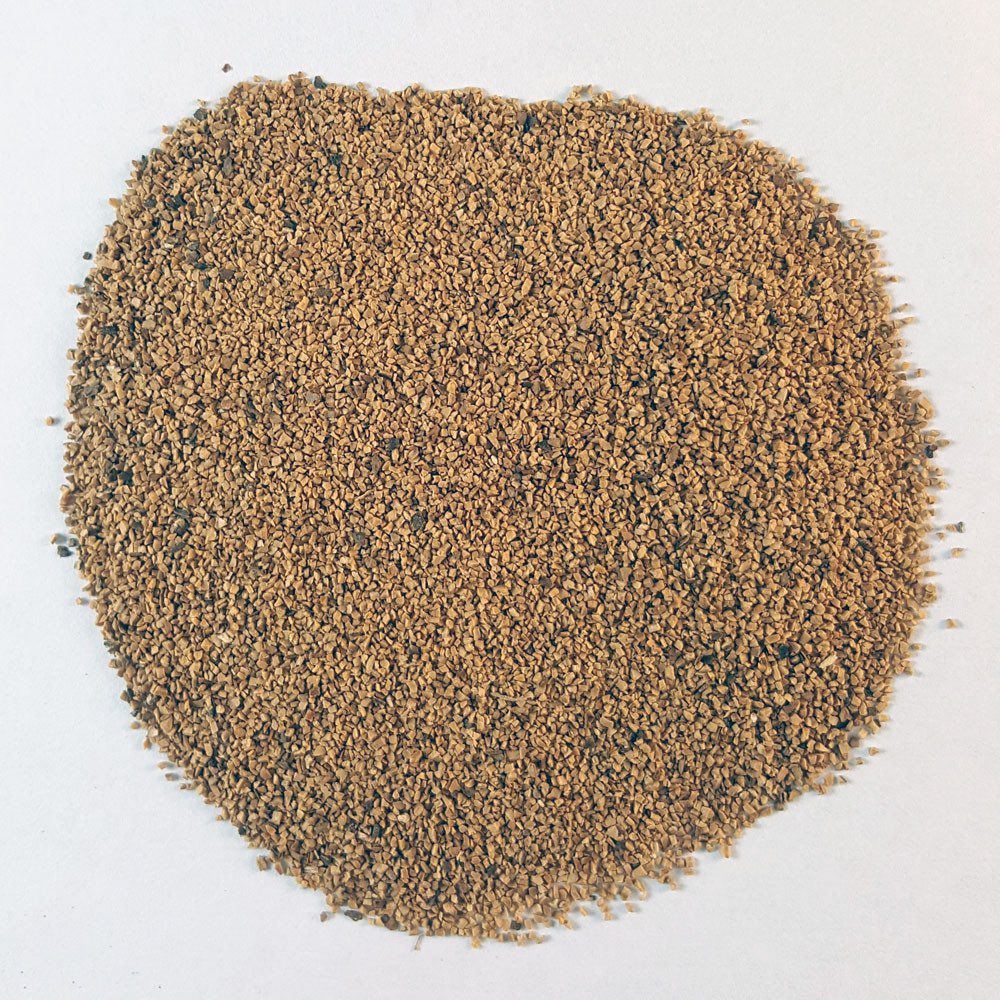
Silicon carbide blasts by cutting: Angular SiC particles strike the substrate and micro-cut the surface, removing material in the form of chips and dust. The result is a rough, angular surface profile with high Ra values, characterized by sharp peaks and deep valleys — ideal for mechanical adhesion of coatings, functional surface preparation, and aggressive cleaning of hard substrates.
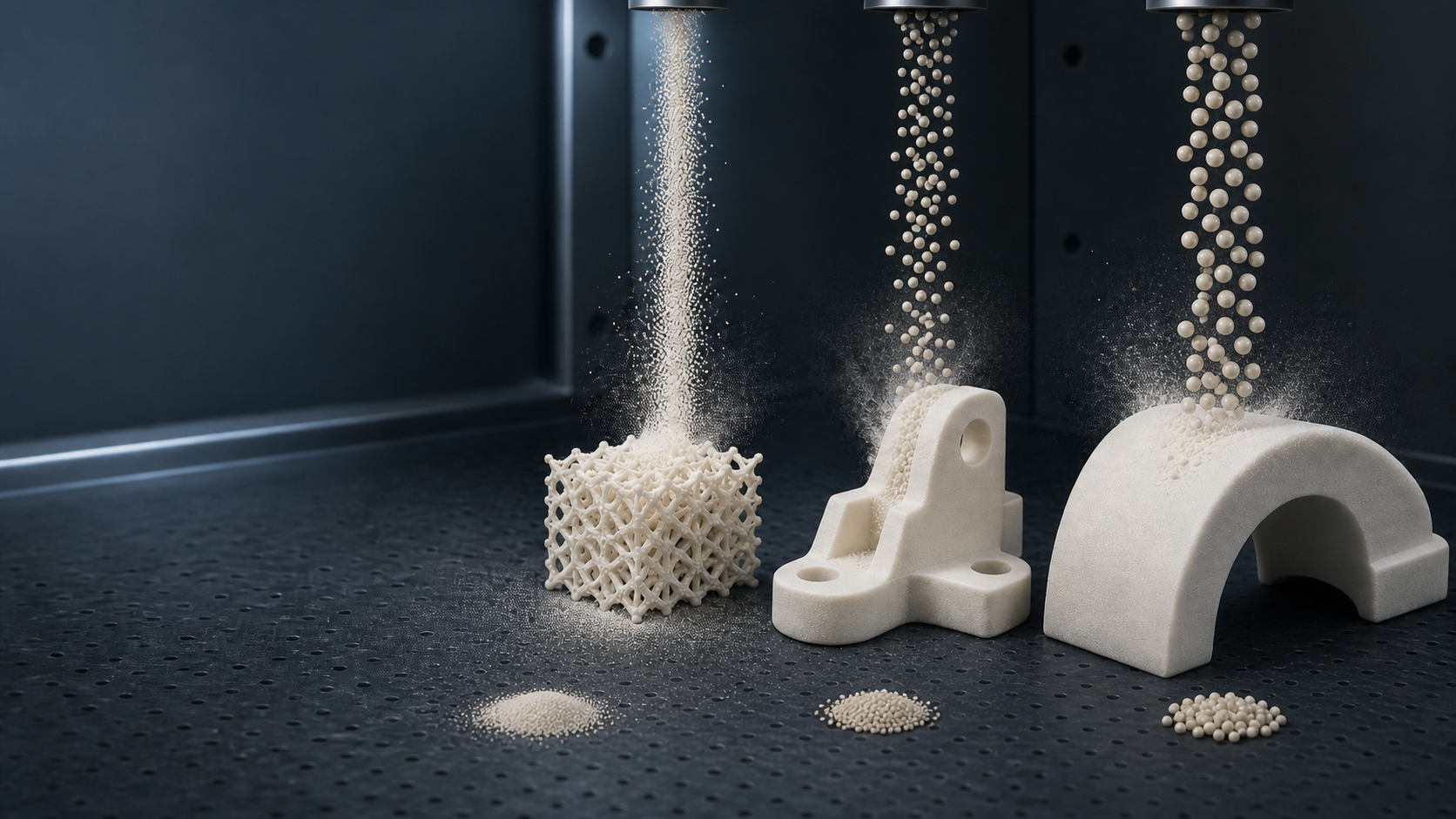
Glass bead blasts by peening: Spherical glass particles strike the substrate and compress the surface without significant material removal. The result is a smooth, uniformly matte surface with low Ra values, characterized by shallow, rounded indentations — ideal for cosmetic finishing, shot peening to improve fatigue life, and cleaning of precision components where dimensional preservation is critical.
For a full overview of SiC’s cutting properties and applications, see: Complete Buyer’s Guide to SiC Abrasive Blasting Media.
SECTION 02What Is Glass Bead Blast Media?
Glass bead abrasive is manufactured from soda-lime glass, processed into spherical particles through a rotary atomization or bead-forming process. Particles range from approximately 50 µm to 850 µm in diameter (corresponding roughly to mesh sizes #14 to #325), with hardness of 5.5–6.5 Mohs. Unlike angular abrasives, glass bead is specifically manufactured to be spherical — the geometry is the functional property, not merely a side effect of the production process.
Glass beads are available in several MIL-SPEC grades (MIL-G-9954, SAE AMS 2431) and are widely used in aerospace component cleaning, precision instrument parts finishing, stainless steel satin finishing, and medical device manufacturing. They are inert, silica-based (but amorphous silica — not crystalline silica, which is the silicosis hazard), and do not introduce metal contamination on non-ferrous substrates.
SECTION 03Particle Shape and Surface Action
| Property | 碳化硅 | Glass Bead |
|---|---|---|
| 粒子形状 | Sharp, angular — irregular polyhedra with acute cutting edges | Spherical — near-perfect round geometry |
| Surface Action | Cutting / shearing — removes substrate material | Peening / compressing — deforms substrate surface |
| Material Removal | High (aggressive) | Minimal (compressive deformation only) |
| Surface Stress Effect | Neutral to slight tensile (micro-cutting) | Compressive residual stress (beneficial for fatigue) |
| Dimensional Change | Measurable material loss | Negligible dimensional change |
| 莫氏硬度 | 9.0–9.5 | 5.5–6.5 |
SECTION 04Surface Profile Comparison
The difference in surface profiles produced by SiC and glass bead is dramatic and defines which applications each can serve.
| Media | Surface Morphology | Typical Ra on Steel (µm) | Surface Appearance |
|---|---|---|---|
| SiC #60 | Deep angular peaks and valleys | 5–9 | Rough, matte gray |
| SiC #120 | Medium angular profile | 3–5 | Medium-rough matte |
| Glass Bead #70 | Shallow uniform dimples | 0.8–1.5 | Smooth satin sheen |
| Glass Bead #120 | Very shallow uniform dimples | 0.3–0.8 | Smooth, near-bright satin |
| Glass Bead #170 | Micro-dimple, near-flat | 0.1–0.3 | Bright satin / semi-gloss |
This profile difference is why glass bead cannot substitute for SiC in coating adhesion applications: the Ra 0.3–1.5 µm profiles produced by glass bead are too shallow to provide adequate mechanical anchor for most industrial coating systems, which specify Ra minimums of 2–6 µm depending on coating type and DFT.
SECTION 05When to Choose Silicon Carbide
- Surface preparation for industrial coatings — epoxy, polyurethane, zinc-rich, thermal spray (requires Ra 3–12 µm anchor profile)
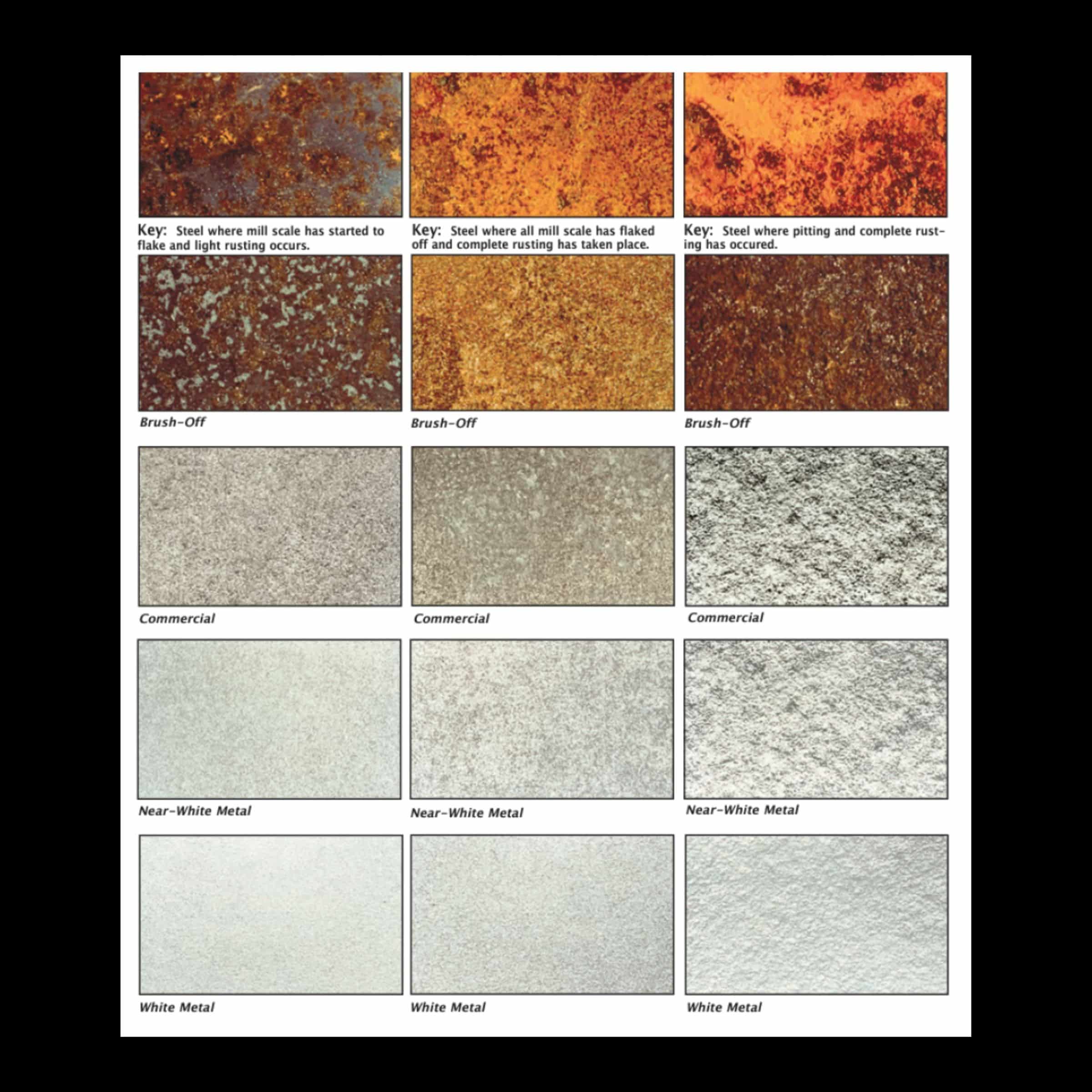
- Rust removal and mill scale cleaning on structural steel to Sa 2.5 / Sa 3 cleanliness
- Aggressive cleaning of ceramic, stone, concrete, or hardened metal surfaces
- Glass etching — decorative frosting, signage carving, architectural glass texture
- Any substrate harder than Mohs 6 where meaningful material removal is required
- Marine hull preparation for anti-corrosion coating systems
- Anti-slip surface profiling on concrete, steel grating, ramp surfaces
- Deburring of hard metal castings and forgings where sharp edge removal is needed
SECTION 06When to Choose Glass Bead
- Cosmetic finishing of stainless steel components to a uniform satin appearance
- Shot peening of springs, gears, and fatigue-critical aerospace parts to introduce compressive residual stress
- Cleaning of aluminum, magnesium, copper, or other soft non-ferrous metals without dimensional damage
- Medical device and implant finishing where dimensional precision is critical
- Removing light oxidation or discoloration from stainless steel welds without changing dimensional profile
- Precision instrument parts where Ra must be kept below 1.0 µm
- Preparation for electroplating or anodizing where smooth pre-treatment surface is specified
Key limitation: Glass bead at Mohs 5.5–6.5 is too soft to effectively blast substrates harder than Mohs 5–6 (i.e., harder than feldspar). On hardened steel, tool steel, or ceramics, glass bead will bounce off the surface without meaningful cleaning or material removal, consuming enormous media volume with negligible result.
SECTION 07Cost Comparison
Glass bead is generally comparable in price to silicon carbide on a per-ton basis, with modest variation by grit size and specification grade. However, since the two media serve different applications, price comparison is largely irrelevant — the correct comparison is whether the media achieves the required process outcome, not which is cheaper per ton. A buyer substituting glass bead for SiC to save cost on steel surface prep will spend far more in labor (dramatically reduced cleaning speed) and waste (glass bead exhausted quickly on hard substrates) than any price difference would save.
SECTION 08Comparison Summary Table
| Factor | 碳化硅 | Glass Bead | Advantage |
|---|---|---|---|
| Primary Action | Cutting / material removal | Peening / compressing | Application-dependent |
| Hardness (Mohs) | 9.0–9.5 | 5.5–6.5 | SiC |
| Surface Profile (Ra) | 3–20 µm | 0.1–1.5 µm | Application-dependent |
| Coating Adhesion Prep | Excellent | Not suitable | SiC |
| Soft Metal Safety (Al, Cu) | Too aggressive | Safe | Glass Bead |
| Cosmetic Satin Finish | Not suitable | Excellent | Glass Bead |
| Shot Peening (fatigue improvement) | Not suitable | Excellent | Glass Bead |
| Rust/Scale Removal | Excellent | Not effective | SiC |
| Glass Etching | Excellent | Not suitable (too soft) | SiC |
| 可回收性 | 3–5 cycles | 5–15 cycles | Glass Bead |
SECTION 09Related Guides
Need SiC Blasting Media for Your Application?
Jiangsu Henglihong Technology Co., Ltd. supplies silicon carbide blasting media across the full grit range — from coarse industrial grades to ultra-fine precision lapping grades — factory-direct with complete QC documentation.
Request a Quote →过滤器