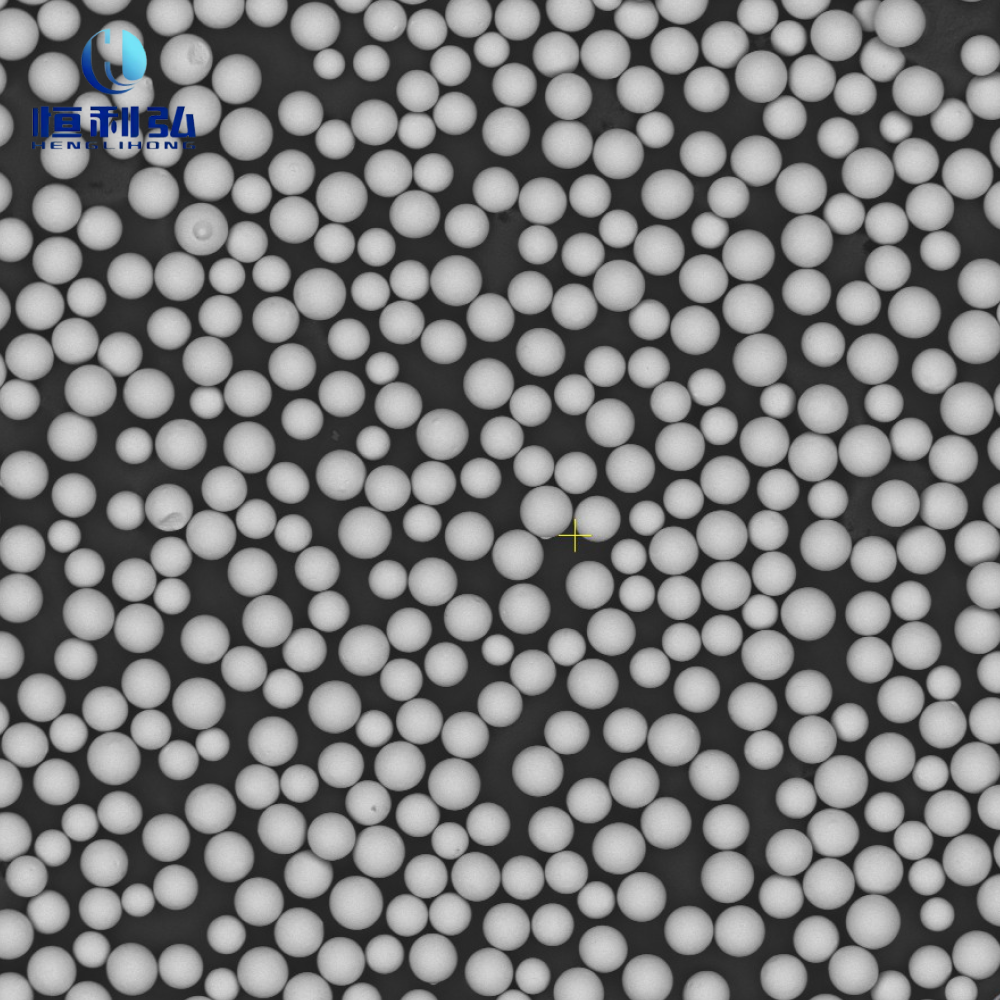
Sand Blasted Surface Roughness Chart: Ra & Rz Values by Media and Grit
A consolidated reference of measured Ra and Rz roughness values across the six most common abrasive media, with grit-size breakdown, pressure-effect data, and substrate-hardness corrections — usable directly in coating specifications and supplier RFQs.
How to Use This Chart
This chart consolidates surface roughness data from industry standards bodies (SSPC, NACE, ISO 8503) and from production measurements collected by Jiangsu Henglihong Technology Co., Ltd. across mild steel substrates. Values are presented as ranges because actual roughness varies with pressure, distance, substrate hardness, and media wear state.
For interpretation guidance — Ra vs Rz, how to specify, how to measure — see the pillar guide on sand blasted surface specification and the dedicated reference on how to measure sand blasted surface profile.
All values below assume blast pressure of 90 psi at the nozzle, working distance 300 mm, impact angle 75°, on mild steel substrate (~150 HB). Adjust ±20% for variations in pressure or substrate hardness.
Master Roughness Chart
| Media | Grit / Mesh | Ra (µm) | Rz (µm) | Typical Application |
|---|---|---|---|---|
| Glass Bead | #220 | 0.4 – 0.6 | 2.5 – 3.5 | Cosmetic premium matte |
| #170 | 0.5 – 0.8 | 3.0 – 4.5 | Pre-anodize aluminum, surgical instruments | |
| #100 | 0.8 – 1.2 | 4.5 – 6.5 | General cosmetic blast | |
| 氧化铝 | #180 | 1.0 – 1.3 | 6.0 – 8.0 | Stainless steel cosmetic + prep |
| #120 | 1.3 – 1.7 | 8.0 – 10 | General coating preparation | |
| #80 | 1.8 – 2.3 | 10 – 14 | Industrial coating prep, aerospace primer | |
| #36 | 3.2 – 4.0 | 18 – 24 | Heavy fabrication prep | |
| 石榴石 | 80 mesh | 1.5 – 2.0 | 9 – 12 | Stainless prep, marine touch-up |
| 30/60 mesh | 2.5 – 3.5 | 15 – 22 | Marine, offshore, structural steel | |
| 20/40 mesh | 4.0 – 5.5 | 25 – 32 | Aggressive structural blast | |
| 钢砂 | G-80 | 2.0 – 2.8 | 12 – 16 | Pre-paint, fine industrial |
| G-40 | 3.6 – 5.0 | 22 – 30 | Heavy fabrication, shipyards | |
| G-25 | 5.5 – 7.5 | 35 – 45 | Aggressive descaling | |
| 钢丸 | S-330 | 2.0 – 3.0 | 12 – 18 | Castings, shot peening |
| S-460 | 3.0 – 4.5 | 18 – 26 | Heavy castings, structural | |
| Coal Slag | 30/60 mesh | 2.5 – 4.0 | 15 – 25 | General field blasting |
| 20/40 mesh | 4.0 – 7.0 | 25 – 42 | Heavy field blasting |
Pressure Effect on Ra
Holding media constant, blast pressure has a strong but non-linear effect on Ra. The following shows the effect for aluminum oxide #80 grit on mild steel:
| Pressure | Velocity | Resulting Ra (µm) |
|---|---|---|
| 60 psi | ~110 m/s | 1.4 – 1.6 |
| 80 psi | ~135 m/s | 1.7 – 1.9 |
| 90 psi | ~150 m/s | 1.8 – 2.3 |
| 100 psi | ~162 m/s | 2.1 – 2.6 |
| 110 psi | ~175 m/s | 2.3 – 2.9 |
Above ~110 psi, pressure increases produce diminishing Ra returns because the failure mode shifts from substrate cratering to media fracture. The four-parameter interaction is explained more fully in our guide on how sandblasting works: pressure, nozzle distance, and angle parameters.
Substrate Hardness Correction
Softer substrates accept deeper craters and produce higher Ra at identical parameters. Approximate correction factors relative to mild steel (~150 HB):
| Substrate | 硬度 | Ra Multiplier |
|---|---|---|
| Aluminum 6061-T6 | ~95 HB | ~1.4× |
| Mild steel A36 | ~150 HB | 1.0× (baseline) |
| Stainless 304 | ~180 HB | ~0.9× |
| Stainless 316L | ~200 HB | ~0.85× |
| Tool steel D2 hardened | ~600 HB | ~0.4× |
For aluminum, the higher Ra multiplier means glass bead alone often provides sufficient profile depth; coarser media risks over-blasting and warping in thin sections. See our material-specific guidance for sand blasted aluminum pre-anodizing specifications.
When to Specify Rz Instead of Ra
Ra is the average; Rz is the peak-to-valley extreme. For coating adhesion work, Rz frequently matters more because it directly measures the anchor pattern depth coatings grip. Coating manufacturers increasingly specify Rz alongside or instead of Ra.
- Use Ra when: Cosmetic uniformity is the goal; substrate is being prepared for thick high-build coating; legacy specifications use Ra.
- Use Rz when: Anchor pattern depth matters; thin coatings risk profile telegraphing; matching coating manufacturer requirements.
The relationship between profile depth and coating DFT is detailed in our guide on anchor pattern specifications: how to match profile depth to coating DFT.
Frequently Asked Questions
What Ra value does sandblasting produce?
Practical Ra ranges from 0.4 µm with fine glass bead to 7.5 µm with coarse steel grit. The most common industrial range is Ra 1.5–4.0 µm, achieved with aluminum oxide or garnet at #80–30 grit.
What is the difference between Ra and Rz?
Ra is the arithmetic mean roughness — the average deviation from the mean line. Rz is the average maximum peak-to-valley height across the sampling length. Rz is typically 5–8× higher than Ra for the same surface.
Why does my measured Ra differ from chart values?
Chart values are starting points based on baseline conditions. Actual production Ra varies with pressure at the nozzle (not the compressor), media wear, substrate hardness, and operator overlap. Variations of ±25% are normal.
Which media gives the most consistent Ra?
Aluminum oxide produces the most consistent Ra because the angular synthetic media has tightly controlled particle size distribution and breakdown behavior. Garnet is also consistent. Coal slag has the widest variation.
Does media wear change Ra?
Significantly. Fresh sharp media at the start of a blast cycle produces deeper Ra than worn media. Closed-loop recycling systems that monitor media maintain consistency; open-loop systems show progressive Ra reduction.
Request an Abrasive Blasting Media Sample
Jiangsu Henglihong Technology Co., Ltd. supplies certified aluminum oxide, garnet, glass bead, steel grit, and steel shot to global industrial buyers. Request a sample with full batch documentation for technical evaluation.
Request a Sample →过滤器