Steel Grit & Steel Shot Suppliers: Specs, Grades & Bulk Pricing
Steel grit and steel shot are the workhorses of industrial abrasive blasting. Together, they account for the majority of blast media consumed in shipbuilding, structural steel fabrication, oil & gas pipeline preparation, wind energy manufacturing, and foundry descaling worldwide. If you are specifying, procuring, or evaluating steel grit and steel shot suppliers, this guide gives you everything you need: SAE grade charts, hardness selection logic, 2026 bulk pricing benchmarks, and a pre-order supplier checklist.
This page is part of our comprehensive Sandblasting Media Suppliers: Complete Buyer’s Guide, which covers all abrasive media families, selection methodology, OSHA compliance, and supplier evaluation criteria.
for steel grit
range (Rockwell C)
achievable
(OSHA compliant)
1. What Are Steel Grit and Steel Shot?
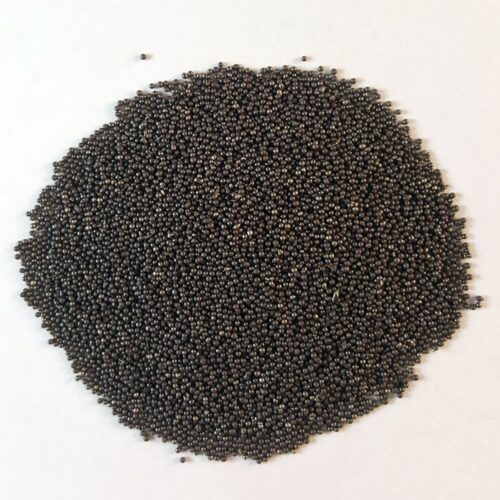
Steel grit is produced by crushing hardened steel shot into angular fragments, then screening by particle size to produce consistent grades. The manufacturing process — typically involving electric arc furnace melting, atomization, hardening, tempering, and crushing — determines both the particle geometry and the final hardness. The angular shape is the defining feature: sharp edges create a cutting action when propelled at a surface, enabling rapid removal of rust, mill scale, and existing coatings, while simultaneously imparting a deep, angular anchor profile that maximizes adhesion for subsequent protective coatings.
Steel shot is manufactured by atomizing molten steel into a water or air stream, producing spherical particles that are then heat-treated for consistent hardness. Unlike grit, shot does not cut the surface — it peens it, plastically deforming the surface layer to create a smooth, dimpled topography and introduce compressive residual stress. This peening action is exploited in fatigue life extension applications (springs, gears, turbine blades) and in foundry descaling where dimensional precision must be maintained.
2. Key Differences: Steel Grit vs. Steel Shot
| Property | 钢砂 | 钢丸 |
|---|---|---|
| Particle shape | Angular / sharp-edged | Spherical |
| Action on surface | Cuts & etches | Peens & compresses |
| Surface finish | Angular, rough anchor profile | Smooth, dimpled finish |
| Typical anchor depth (G25 / S230) | 50–80 µm | 20–40 µm |
| Best for | Sa 2.5 / Sa 3 prep for coatings | Peening, foundry descaling, smooth finish |
| 可回收性 | Very high (500–2,000 cycles) | Very high (1,000–3,000 cycles) |
| Breakage rate | Moderate (angular edges wear) | Low (spheres are more durable) |
| Equipment wear | Slightly higher (sharper particles) | Lower (smooth spheres) |
| SAE standard | SAE J444 / ISO 11124-3 | SAE J827 / ISO 11124-2 |
3. SAE Grade Reference & Specifications
Steel Grit — SAE J444 Grades
| SAE Grade | Nominal Size (mm) | Sieve Range (µm) | Typical Profile Depth | Primary Application |
|---|---|---|---|---|
| G10 | 2.00 | 2360–1680 | 100–150 µm | Very heavy mill scale, thick coatings (>500 µm) |
| G16 | 1.40 | 1680–1190 | 80–120 µm | Heavy industrial steel, offshore structures |
| G18 | 1.18 | 1400–1000 | 70–100 µm | Shipbuilding, heavy fabrication |
| G25 | 1.00 | 1190–850 | 50–80 µm | Standard Sa 2.5 structural steel |
| G40 | 0.60 | 710–425 | 35–60 µm | General structural steel, wind towers |
| G50 | 0.50 | 600–355 | 25–45 µm | Moderate profiling, thin plate |
| G80 | 0.30 | 355–212 | 15–30 µm | Precision profiling, automotive |
| G120 | 0.18 | 212–150 | 8–18 µm | Fine finishing, thin coatings |
Steel Shot — SAE J827 Grades
| SAE Grade | Nominal Size (mm) | Primary Application |
|---|---|---|
| S70 | 0.18 | Light cleaning, fine finishing |
| S110 | 0.28 | Fine peening, light descaling |
| S170 | 0.43 | Automotive spring peening |
| S230 | 0.58 | General descaling, moderate peening |
| S280 | 0.71 | Foundry castings, heavy descaling |
| S330 | 0.84 | Heavy castings, aggressive descaling |
| S390 | 1.00 | Very heavy castings |
| S460 | 1.17 | Large-bore centrifugal wheel machines |
| S550 | 1.40 | Very large castings, aggressive profiling |
| S780 | 2.00 | Largest castings, maximum productivity |
4. Hardness Grades Explained (HRC)
Hardness is one of the most important — and most misunderstood — parameters in steel abrasive selection. Measured on the Rockwell C scale (HRC), hardness affects breakage rate, surface profile depth, recyclability, and equipment wear. Most reputable steel abrasive manufacturers offer three hardness categories:
| Hardness Category | HRC Range | 特点 | Best For |
|---|---|---|---|
| Low (GL / SL) | HRC 40–47 | Tough, ductile, low breakage, longer life in recycling systems | Thin plate, delicate substrates, high-cycle blast rooms |
| Medium (GM / SM) | HRC 47–56 | Balance of hardness and toughness; most common grade | General structural steel, standard industrial blast rooms |
| High (GH / SH) | HRC 56–65 | Harder, more brittle; faster cutting, deeper profile, higher fines generation | Maximum productivity, heavy mill scale, hard-to-blast surfaces |
5. Industrial Applications
Shipbuilding & Marine
Ship hull plating demands the highest productivity blast rates to meet dry-dock schedules. Centrifugal wheel blast machines running G16 or G18 steel grit at wheel speeds of 70–80 m/s deliver the Sa 2.5 / 50–80 µm profile required by most class-approved coating systems. Steel grit’s recyclability is critical in shipyards where daily consumption can exceed 20 metric tons.
Structural Steel Fabrication
G25 is the de facto standard grade for structural steel Sa 2.5 preparation in fabrication shops feeding bridge, building, and infrastructure projects. The combination of adequate profile depth (50–80 µm) for standard epoxy primer systems and high recyclability makes G25 the most cost-effective grade for most enclosed blast room operations.
Oil & Gas Pipeline
FBE (fusion-bonded epoxy) and 3LPE coating systems for pipelines typically specify a 40–80 µm anchor profile per ISO 21809 and NACE SP0169. G25 or G40 grit in automated blast machines is the standard approach for production-line pipe coating facilities.
Wind Tower Manufacturing
Wind tower segments require consistent Sa 2.5 preparation across large surface areas. G40 or G50 grit in automated tumblast or spinner-hanger machines delivers the 35–50 µm profiles compatible with most wind tower coating specifications (ISO 12944 C5-M).
Foundry Descaling (Shot)
Steel shot S230–S330 in tumblast or drum blast machines removes sand and scale from iron and steel castings without creating sharp angular profiles that would interfere with dimensional tolerances. The peening action also improves casting surface integrity.
Shot Peening (Fatigue Life Extension)
Controlled shot peening with certified media (meeting AMS 2431 specifications) induces compressive residual stress in high-cycle fatigue components: automotive springs, gears, turbine blade roots, aircraft landing gear, and medical implant surfaces. This is a precision engineering process — media size, hardness, and Almen intensity must all be tightly controlled and documented.
6. Bulk Pricing Benchmarks (May 2026)
Steel abrasive pricing is influenced by steel scrap prices, energy costs, production country, certification level, and order volume. The following ranges reflect FOB China pricing for standard commercial grades from ISO 9001-certified manufacturers as of May 2026. Significant premiums apply for AMS-certified or MIL-SPEC grades.
| 产品 | Grade / Hardness | FOB Price (USD/MT) | Typical 20′ Container Volume |
|---|---|---|---|
| 钢砂 | G25, Medium (HRC 47–56) | $480–$580 | 20–22 MT |
| 钢砂 | G40, Medium (HRC 47–56) | $490–$590 | 20–22 MT |
| 钢砂 | G25, High (HRC 56–65) | $520–$640 | 20–22 MT |
| 钢丸 | S230, Standard (HRC 40–51) | $440–$540 | 20–24 MT |
| 钢丸 | S330, Standard (HRC 40–51) | $440–$540 | 20–24 MT |
| 钢丸 | S230, AMS 2431 certified | $700–$950 | 20–22 MT |
7. Pre-Order Sourcing Checklist
Before placing a container order for steel grit or steel shot, verify the following with your supplier:
- ISO 9001:2015 certificate — valid, verifiable certificate number with accreditation body name
- SAE J444 / SAE J827 / ISO 11124 compliance — product data sheet citing specific standard
- Batch-level chemical analysis (MTC) — C, Mn, Si, S, P content; carbon typically 0.7–1.2% for grit
- Hardness test certificate — per SAE J827 or ISO 11124; minimum 10-sample average
- Particle size distribution (sieve analysis) — batch-specific, not generic catalog data
- Free silica content — SDS must state <1% (ideally <0.1%)
- Moisture content — <0.5% by weight; critical for blast machine performance
- Sample shipment — 25–50 kg certified sample before FCL commitment
- Export documentation — HS code (typically 7206.10 for steel grit/shot), COA, packing list
For a broader view of how to evaluate any abrasive supplier — not just for steel grades — see our complete framework: How to Evaluate a Sandblasting Media Supplier: 8 Quality Checkpoints.
8. Frequently Asked Questions
Request Steel Grit & Steel Shot Pricing
Tell us your required grade, hardness, quantity, and destination port. Our team at Jiangsu Henglihong Technology Co., Ltd. will provide a competitive FOB quotation within 24 hours.
Get a Quote →过滤器