Sandblasting Media Suppliers: The Industrial Buyer’s Complete Guide
Finding the right sandblasting media supplier is one of the most consequential procurement decisions a surface-preparation professional makes. The abrasive you choose directly determines your blast rate, your finished surface profile, your coating adhesion quality, and — ultimately — your project profitability. Yet the global market for abrasive blast media is crowded, terminology is inconsistent, and specification sheets can be misleading for buyers who are new to the category.
This guide was written by the technical team at 江苏恒利宏科技股份有限公司, a China-based manufacturer that exports steel grit, steel shot, aluminum oxide, and specialty abrasives to industrial buyers in North America, Europe, the Middle East, and Southeast Asia. Our goal is straightforward: give you every piece of information you need to specify, source, and evaluate abrasive blasting media — regardless of whether you ultimately buy from us or from a competitor.
By the time you finish reading, you will understand the six major media families, how to match media to your substrate and desired surface profile, what OSHA compliance requires, how to compare supplier quotes on a cost-per-cycle basis, and what red flags to watch for when vetting overseas abrasive suppliers.
market size (2025 estimate)
Henglihong exports
families covered
for protective coatings
1. What Is Sandblasting Media?
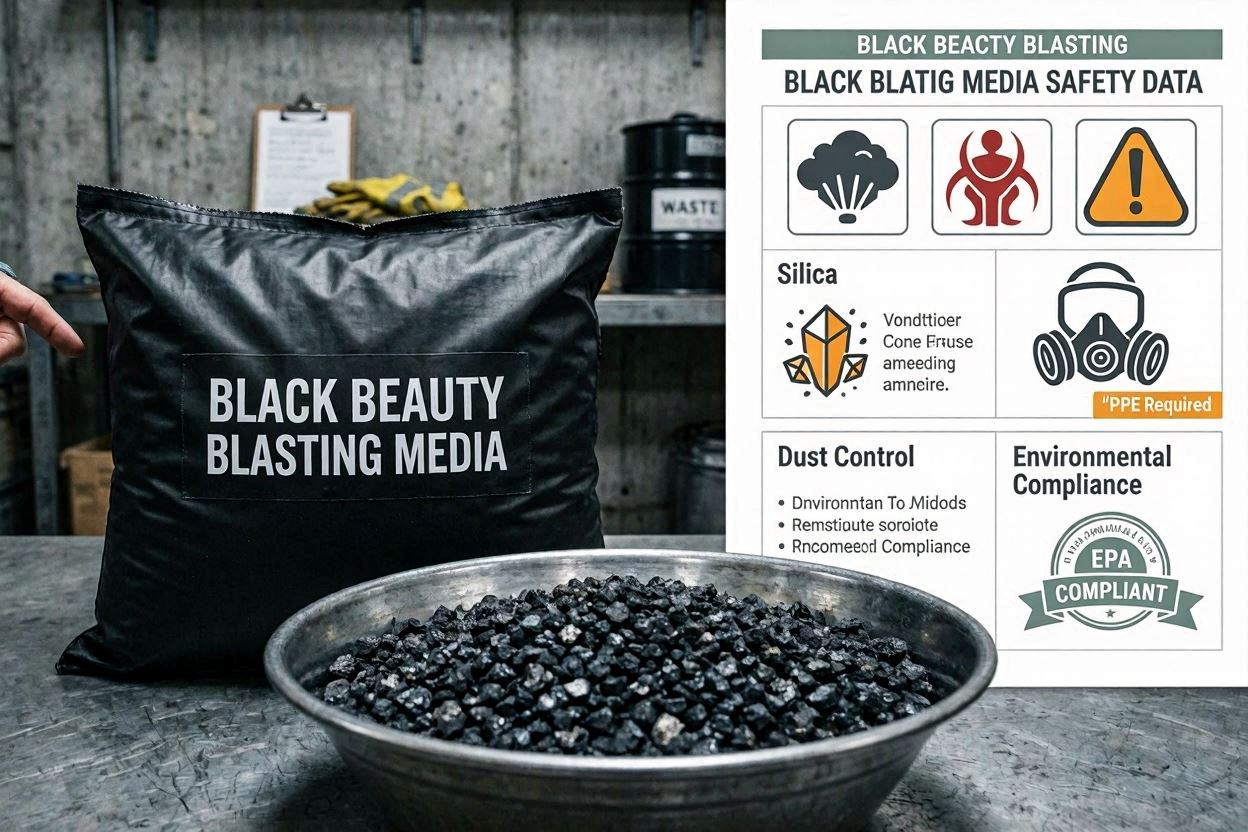
喷砂介质 — more accurately called abrasive blasting media — is any granular material propelled at high velocity against a surface to clean it, remove coatings, create a mechanical anchor profile, or achieve a decorative finish. The term “sandblasting” dates to the era when actual silica sand was the go-to abrasive; today, true silica sand is largely banned in professional applications because prolonged inhalation of fine silica dust causes silicosis, a fatal lung disease.
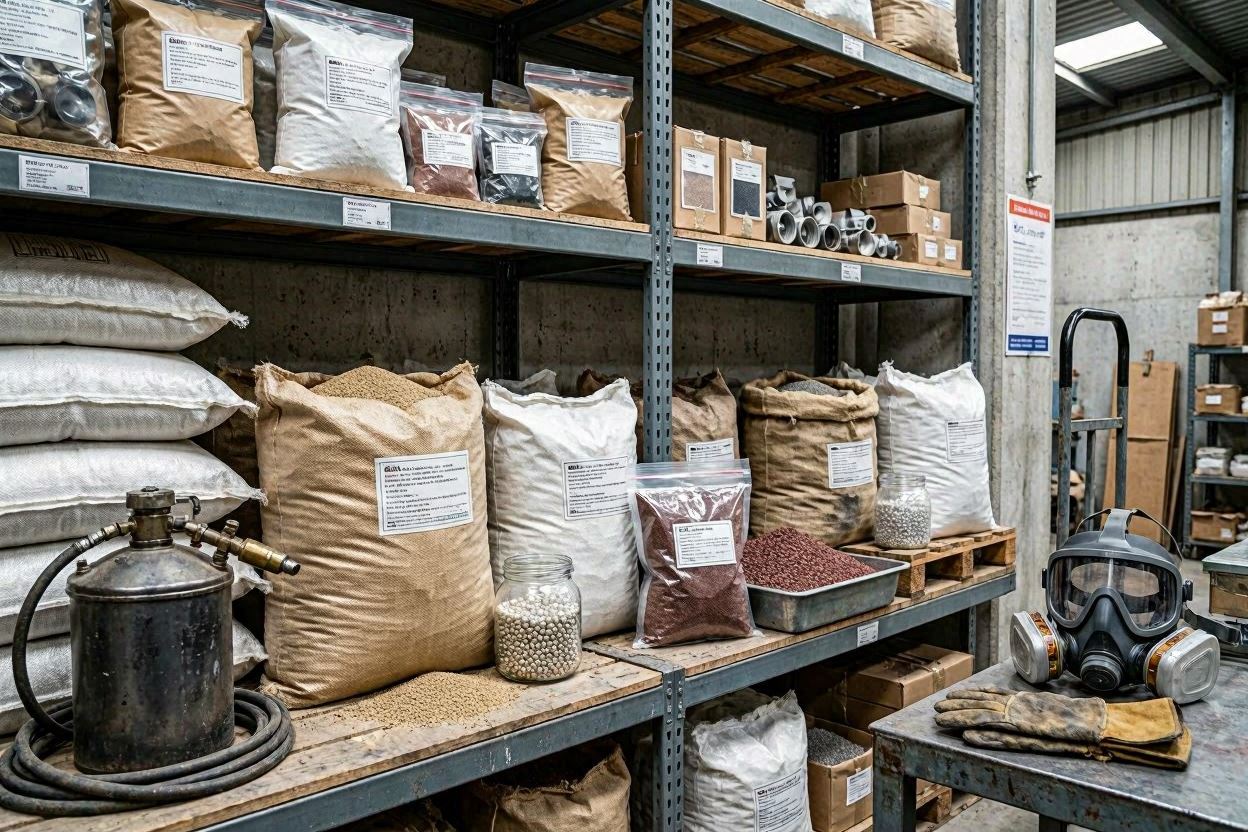
Modern blast media is a diverse category. Materials range from angular steel grit engineered for aggressive industrial surface preparation, to gentle walnut shell granules used on soft automotive substrates, to recycled crushed glass that provides an environmentally friendly profile for structural steel. What unites them is the underlying mechanism: high-speed particle impact transfers kinetic energy to the workpiece surface, eroding contaminants or the substrate itself in a controlled, reproducible way.
Key Functions of Abrasive Blast Media
- Cleaning: Removing rust, mill scale, paint, oil films, or biological growth from metal, concrete, stone, and wood surfaces.
- Surface profiling: Creating a microscopically rough “anchor pattern” that dramatically improves adhesion for epoxy coatings, thermal spray, galvanizing, and other protective finishes.
- Deburring & deflashing: Smoothing machined or cast parts to remove sharp edges and mold flash without dimensional impact.
- Peening: Compressing the surface layer of metal components (shot peening) to introduce residual compressive stress that extends fatigue life.
- Etching & decorative finishing: Frosting glass, engraving stone monuments, or producing a satin finish on stainless steel.
2. Types of Sandblasting Media Explained
Blast media is typically classified by material origin (metallic vs. mineral vs. organic vs. synthetic), by shape (angular vs. rounded), and by hardness (measured on the Mohs scale). Each combination produces a distinct surface outcome. Below we cover the six main families that account for the vast majority of industrial use.
2.1 Steel Grit & Steel Shot
Steel grit is manufactured by crushing and screening hardened steel shot into angular fragments. Its sharp, faceted geometry makes it exceptionally aggressive — it cuts into rust and scale rather than merely bouncing off it. Steel grit is the dominant choice for heavy-duty surface preparation on structural steel, shipyard hull plating, bridge girders, pressure vessels, wind towers, and heavy industrial equipment.
Steel shot, by contrast, retains its spherical form. Rather than cutting the surface, it peens it — imparting compressive stress and producing a smooth, dimpled finish. Steel shot is widely used in foundry descaling, automotive spring peening, and applications where a relatively smooth surface is acceptable or desirable.
Both media types are recyclable through blast cabinet or blast room recovery systems, making them highly cost-effective over full project life cycles. High-quality steel grit from a reputable sandblasting media supplier typically achieves 200–2,000 blast cycles before being consumed, depending on hardness grade and equipment setup.
| Property | 钢砂 | 钢丸 |
|---|---|---|
| Shape | Angular / faceted | Spherical |
| Surface result | Angular anchor profile | Smooth peened surface |
| Primary use | Heavy rust/scale removal, coating prep | Peening, foundry descaling |
| 可回收性 | Very high (200–2,000+ cycles) | Very high (1,000–3,000+ cycles) |
| Common grades | G10–G120 (SAE J444) | S70–S780 (SAE J827) |
| Mohs hardness | 6.5–7.5 (HRC 40–65) | 6.5–7 (HRC 40–55) |
For a deep-dive on sourcing steel grit and steel shot — including grade specifications, HRC hardness options, bulk pricing benchmarks, and what to ask your supplier before placing a container order — see our dedicated page: Steel Grit & Steel Shot Suppliers: Specs, Grades & Bulk Pricing.
2.2 Aluminum Oxide
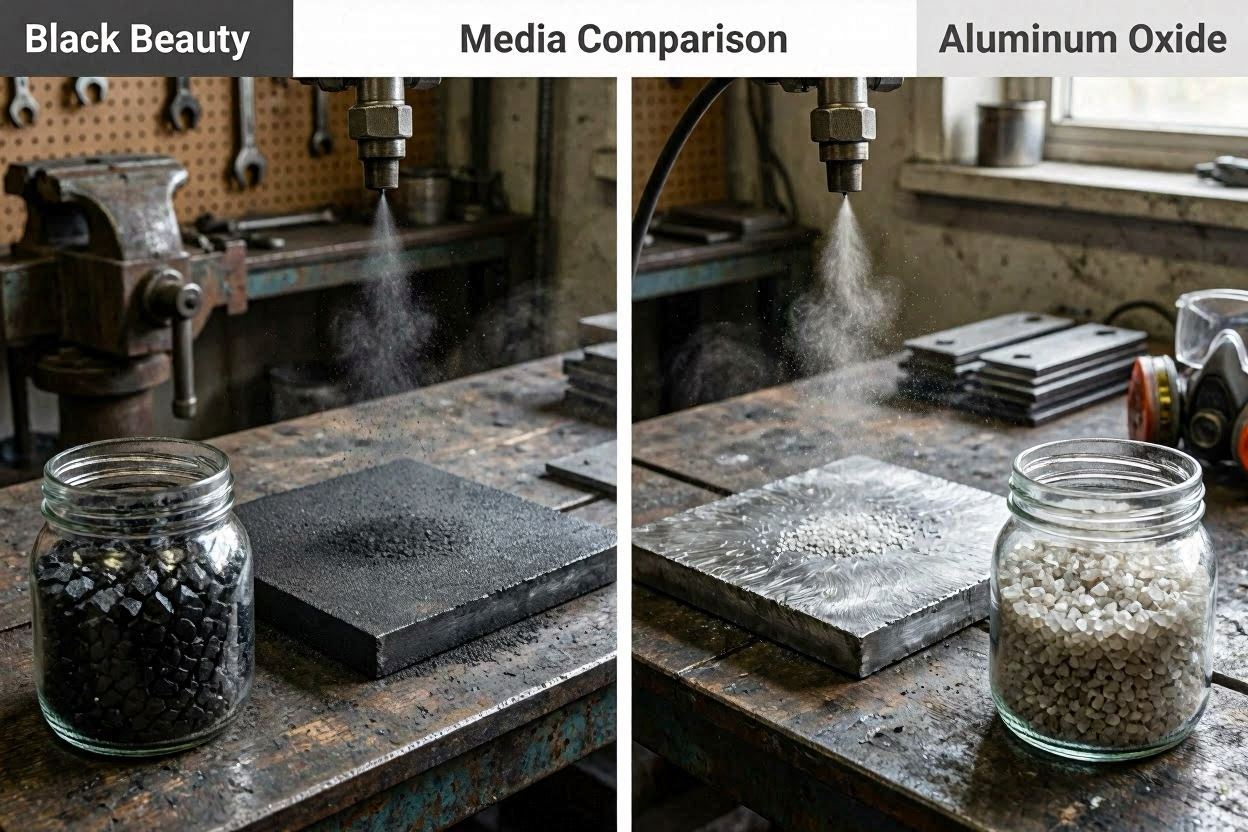
氧化铝 (Al₂O₃), also marketed as alumina or corundum, is one of the hardest and most chemically stable abrasives available, sitting at Mohs 9 — just below diamond. Its extreme hardness makes it a powerhouse for cutting into very hard substrates, profiling before thermal spray coatings, etching glass and stone, and applications where rapid material removal is critical.
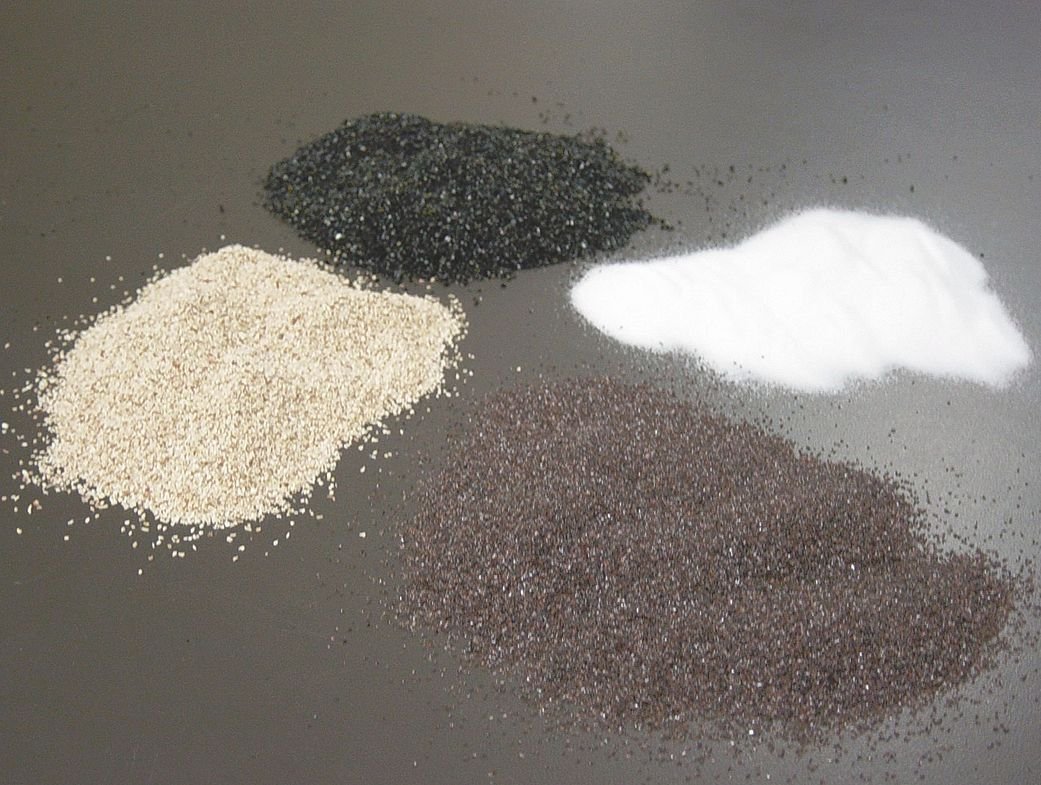
Brown fused aluminum oxide (BFA) is the workhorse grade — affordable, widely available, and suitable for most industrial blasting tasks. White fused aluminum oxide (WFA) offers greater purity and friability, making it the preferred choice for precision surface finishing and applications where iron contamination from media must be avoided (such as stainless steel or titanium workpieces).
Because aluminum oxide is a sharp, angular media with very high hardness, it breaks down relatively quickly compared to steel grit, but it still performs far better than slag abrasives in recycled blasting systems. For full sourcing guidance, specifications by grit size, and price-per-kg benchmarks for different purity grades, visit our resource page: Aluminum Oxide Blasting Media Suppliers: Grit Sizes, Hardness & Sourcing.
2.3 Garnet
石榴石 is a naturally occurring silicate mineral mined primarily in Australia (GMA garnet), India (almandine garnet), and the United States. Its combination of moderate hardness (Mohs 7–8), angular particle shape, and low free-silica content makes it a popular choice for open-air blasting operations where dust control and worker safety are priorities.
Garnet is widely used in oil and gas pipeline preparation, marine vessel maintenance, and waterjet cutting. Its low dust generation and high recyclability — typically 3–6 cycles in a controlled system — give it strong economic credentials despite a higher unit cost than slag abrasives. For a full comparison of GMA vs. almandine garnet grades, mesh size availability, and certified suppliers, see: Garnet Abrasive Suppliers: GMA Garnet vs Almandine, Mesh Sizes & Bulk.
2.4 Glass Beads & Crushed Glass
玻璃珠 are spherical, chemically inert particles manufactured from soda-lime glass. Because they are rounded, they peen rather than cut the surface, producing a smooth, bright, satin finish on stainless steel, aluminum, and other non-ferrous metals. Glass beads are the media of choice for decorative finishing, cleaning without dimensional change, and applications where a uniform sheen is required.
Crushed glass (made from recycled post-consumer glass bottles) is angular and cuts more aggressively. It provides a sharp anchor profile on steel and concrete, is lead-free and low-silica, and carries strong environmental credentials as a recycled product. For mesh size charts, recyclability data, and supplier comparison guidance, visit: Glass Beads & Crushed Glass Blasting Media: Supplier Guide & Mesh Chart.
2.5 Coal Slag & Copper Slag
Coal slag 和 copper slag are byproducts of power generation and copper smelting respectively. Both are inexpensive, widely available, and provide aggressive cutting action on steel surfaces. They are typically single-use media — not suitable for recycling through blast cabinet systems — and generate relatively high volumes of dust and spent abrasive waste.
Despite their lower unit cost, the true cost of slag abrasives often exceeds that of recyclable media when disposal fees, dust suppression equipment, and cleanup labor are factored in. For a detailed cost and safety comparison, as well as OSHA compliance notes specific to slag abrasives, see: Coal Slag & Copper Slag Abrasive Suppliers: Cost, Safety & Applications.
2.6 Plastic Media, Walnut Shell & Corn Cob
When the workpiece substrate is soft, delicate, or compositely bonded — think aircraft panels, vintage automotive sheet metal, fiberglass boat hulls, or carbon fiber structural components — conventional metallic abrasives are far too aggressive. 塑料介质 (angular urea or acrylic particles), walnut shell grit和 corn cob granules offer effective paint stripping and cleaning without substrate damage.
Walnut shell and corn cob media are biodegradable, which simplifies waste disposal. Plastic media is highly uniform, available in multiple hardness grades and sizes, and delivers consistent stripping results on aerospace and defense applications where tight dimensional tolerances must be preserved. For sourcing guidance on all three media types, visit: Plastic & Biodegradable Blast Media Suppliers: Walnut Shell, Corn Cob & More.
3. How to Choose the Right Blast Media
Selecting the optimal abrasive is a multi-variable problem. The following five questions form the backbone of any competent media selection process. For a fully worked step-by-step selection methodology with decision trees and substrate-specific recommendations, see our dedicated guide: How to Choose Sandblasting Media: A Step-by-Step Selection Guide.
Question 1: What is the substrate material?
Hard metals (structural steel, cast iron) tolerate aggressive angular abrasives. Soft metals (aluminum, copper, zinc), composites, and non-metallic substrates require softer or rounded media to avoid dimensional damage. Concrete and masonry can accept a wide range of media depending on desired profile depth.
Question 2: What surface cleanliness standard do you need to achieve?
ISO 8501-1 and SSPC/NACE standards define cleanliness levels from Sa 1 (light brush-off) through Sa 3 (white metal). Most protective coating specifications require Sa 2.5 (near-white metal). Achieving Sa 2.5 on heavily corroded steel demands angular, hard media such as steel grit or aluminum oxide — rounded media cannot achieve this level consistently.
Question 3: What surface profile (anchor depth) is specified?
Coating manufacturers specify a minimum anchor profile depth (measured in mils or microns) for their products to achieve rated adhesion. Profile depth is primarily controlled by media grit size and particle hardness. Larger, harder grit creates deeper profiles. A G25 steel grit, for example, typically produces a 50–80 µm profile; G80 produces 15–30 µm.
Question 4: Is the process open-air or in a blast cabinet/room?
In enclosed blast rooms or cabinets with abrasive recovery systems, recyclable media (steel grit, aluminum oxide, garnet) deliver the lowest cost per square meter over time. Open-air, once-through applications — common in field blasting — can economically use single-use slag or crushed glass abrasives, provided disposal costs are factored.
Question 5: Are there environmental or health constraints?
OSHA 1910.94 and OSHA 1926.57 regulate permissible dust exposure levels. California, Texas, and other states impose additional regulations on spent abrasive disposal. Media with higher free-silica content, higher heavy-metal contamination risk (some slags), or very fine particle size distributions require enhanced respiratory protection and disposal protocols. When in doubt, choose a low-silica, low-heavy-metal media with documented safety data sheets (SDS).
4. Grit Size & Mesh Reference Chart
Abrasive grit size is expressed differently depending on the media type: SAE grades (G10–G120) for steel grit and shot; FEPA/ANSI mesh numbers for aluminum oxide and garnet; and manufacturer proprietary codes for glass beads and plastic media. Understanding grit size is essential for specifying the right anchor profile and blast rate. For a full cross-reference table including mesh number, micron size, typical profile depth, and compatible blast equipment, see: Sandblasting Media Grit Size Chart: What Each Mesh Number Means.
| SAE Grade (Steel) | Nominal Size (mm) | Typical Profile Depth | Common Application |
|---|---|---|---|
| G10 | 2.0 mm | 100–150 µm | Heavy mill scale, thick coatings |
| G16 | 1.4 mm | 80–120 µm | Heavy industrial steel structures |
| G25 | 1.0 mm | 50–80 µm | Standard Sa 2.5 preparation |
| G40 | 0.6 mm | 35–60 µm | General structural steel |
| G80 | 0.3 mm | 15–30 µm | Thin coatings, precise profiling |
| G120 | 0.18 mm | 8–18 µm | Fine finishing, automotive |
| FEPA Mesh (Al₂O₃ / Garnet) | Particle Size (µm) | Typical Use |
|---|---|---|
| #16 / #24 | 1180–710 µm | Aggressive profiling, coating removal |
| #36 / #46 | 500–425 µm | Rust removal, heavy preparation |
| #60 / #80 | 250–180 µm | General surface prep, Sa 2.5 |
| #120 / #150 | 125–106 µm | Precision profiling, light cleaning |
| #220 / #280 | 75–53 µm | Fine finishing, glass etching |
5. Application Use Cases by Industry
No single abrasive is optimal for every blasting task. The following industry-by-industry breakdown highlights the most common media choices for each application environment. For in-depth application guides, explore our dedicated pages on rust removal on steel and heavy equipment, as well as automotive and aerospace non-destructive stripping.
Structural Steel & Bridges
Steel grit G25–G40 is the near-universal choice for Sa 2.5 preparation before epoxy or polyurethane coatings. Garnet 30/60 is preferred for open-air bridge work due to low dust generation.
Shipbuilding & Marine
Ship hull blasting demands high productivity — steel grit G16–G25 in centrifugal wheel blast machines dominates. Garnet is popular for field touch-up and waterjet-cut plate edges.
Oil & Gas Pipeline
FBE (fusion-bonded epoxy) coating specs typically require an anchor profile of 50–100 µm. Steel grit G25 or garnet 30/60 are both widely certified for NACE SP0188 compliance.
Automotive Restoration
Glass beads for bright finishing on chrome and aluminum. Plastic media for paint stripping from thin sheet metal without warping. Walnut shell for interior trim and upholstery-adjacent work.
Aerospace & Defense
Plastic media (Type I, II, IV) certified to MIL-P-85891A for composite and aluminum aircraft skins. Shot peening of titanium and high-strength steel components uses cast steel or ceramic shot.
Concrete & Masonry
Crushed glass or steel shot for surface profiling before industrial floor coatings. Aluminum oxide for aggressive removal of epoxy or polyurethane coatings from concrete. More detail: Concrete & Masonry Blasting Media Guide.
6. OSHA Safety & Silica Sand Regulations
Perhaps the most critical regulatory issue in abrasive blasting is the prohibition on crystalline silica sand. The full regulatory picture — including OSHA’s 2016 Silica Rule (29 CFR 1910.1053 and 1926.1153), permissible exposure limits (PEL of 50 µg/m³ as an 8-hour TWA), and specific safe alternatives — is covered in detail in our compliance guide: OSHA Sandblasting Safety: Why Silica Sand Is Banned and What to Use Instead.
Key OSHA Compliance Requirements for Blast Operations
- Engineering controls: Enclosed blast rooms or blast cabinets with dust collection and HEPA filtration are required wherever feasible before respiratory protection is relied upon.
- Respiratory protection: At minimum, a supplied-air respirator (SAR) rated for abrasive blasting is required. A standard dust mask is inadequate and does not comply.
- Medical surveillance: Workers with potential silica exposure above the action level (25 µg/m³ as an 8-hour TWA) must receive baseline and periodic medical examinations.
- Hazard communication: Current Safety Data Sheets (SDS) must be available for all blast media used. Suppliers are required to provide SDS under OSHA’s Hazard Communication Standard (29 CFR 1910.1200).
- Spent abrasive disposal: Spent blast media may be classified as hazardous waste depending on the substrate coatings removed (lead paint, chromium, etc.). Consult your state environmental agency before disposal.
7. Reusable vs. Single-Use Media: True Cost Analysis
One of the most common procurement mistakes is selecting blast media purely on unit price (cost per ton) without accounting for consumption rate, reusability, and disposal costs. A full lifecycle cost model almost always reveals that recyclable metallic abrasives — despite higher upfront costs — deliver lower cost per square meter of prepared surface. Our detailed cost-per-cycle analysis with worked examples is available at: Reusable vs Single-Use Blast Media: Cost-Per-Cycle Analysis.
| 媒体类型 | Unit Cost (USD/ton) | Avg. Recycle Cycles | Disposal Cost Factor | True Cost/m²* |
|---|---|---|---|---|
| Steel grit G25 | $450–$700 | 500–1,500 | Low (inert metal) | $0.04–$0.12 |
| Aluminum oxide #36 | $600–$900 | 50–150 | Low (inert ceramic) | $0.06–$0.18 |
| GMA garnet 30/60 | $350–$550 | 3–6 | Low | $0.15–$0.35 |
| Coal slag | $80–$180 | 1 (single-use) | Medium–High | $0.20–$0.60 |
| Crushed glass | $120–$250 | 1–2 | Low (recycled) | $0.18–$0.45 |
*Approximate figures for enclosed blast room operations. Open-air figures will vary significantly. Based on typical consumption rates of 50–200 kg/m² for initial blast cycles. Disposal costs estimated at $80–$200/ton for non-hazardous spent abrasive.
8. Bulk Packaging, MOQ & International Freight Guide
Understanding how abrasive blast media is packaged and shipped is essential for accurate landed-cost calculations, particularly when sourcing from overseas manufacturers. For a comprehensive breakdown of packaging formats, minimum order quantities, container loading calculations, and what to include in your freight quote request, see: Bulk Sandblasting Media: Packaging Options, MOQ & Freight Guide for Buyers.
Standard Packaging Formats
- 25 kg (55 lb) paper or PE bags: Most common for smaller orders, lab samples, or testing quantities. Palletized at 40–50 bags per pallet (1–1.25 MT per pallet).
- 500 kg jumbo bags (FIBC): Efficient for mid-volume buyers with forklift access. Reduces per-unit handling cost significantly vs. 25 kg bags.
- 1,000 kg (1 MT) super-sacks: Standard for larger blast rooms and high-volume industrial users. One 20-foot container typically holds 18–22 MT of steel grit in this format.
- Bulk loose (pneumatic truck delivery): Lowest cost per ton for very high-volume blast facilities with silo storage. Available from regional distribution hubs in North America and Europe.
Container Loading Reference (Steel Grit G25)
| Container Type | Payload Capacity | Est. Steel Grit Volume (MT) |
|---|---|---|
| 20′ GP (standard) | ~28 MT | 20–24 MT (weight limited) |
| 40′ GP (standard) | ~28 MT | 20–26 MT (weight limited) |
| 40′ HC (high cube) | ~30 MT | 22–28 MT |
9. How to Evaluate a Sandblasting Media Supplier: 8 Quality Checkpoints
Whether you are sourcing domestically or from an overseas manufacturer, a systematic supplier evaluation process protects your projects from substandard abrasive that causes rework, equipment damage, or health & safety violations. Our full 8-point supplier evaluation checklist — with sample audit questions and red flags — is available at: How to Evaluate a Sandblasting Media Supplier: 8 Quality Checkpoints.
Below is a summary of the eight dimensions to assess:
- Product certifications: Does the supplier hold ISO 9001:2015 certification? Can they provide mill test certificates (MTCs) and SDS for every product? Are steel abrasives certified to SAE J444 / ISO 11124?
- Chemical composition control: For steel abrasives, check carbon content (typically 0.7–1.2% for grit), manganese, silicon, and sulfur levels. For aluminum oxide, check Al₂O₃ purity (>95% for BFA, >99% for WFA).
- Particle size distribution (PSD) testing: Reputable suppliers provide sieve analysis data for each production batch. Out-of-spec fines and oversized particles both reduce blast efficiency and surface quality.
- Free silica content: Any supplier providing abrasive for blasting applications must be able to certify free silica content below 1% (ideally <0.1%) per their SDS. This is non-negotiable for OSHA compliance.
- Hardness consistency: For steel grit, HRC hardness should be tested per SAE J827. Inconsistent hardness causes erratic surface profiles and accelerated equipment wear.
- Moisture content: Wet media clogs blast machines, reduces blasting efficiency, and promotes rust contamination on freshly blasted surfaces. Specification is typically <0.5% moisture by weight.
- References and export track record: Ask for references from buyers in your industry and country. A supplier with established export documentation experience (HS codes, COA, phytosanitary certificates for organic media) reduces customs risk.
- Sampling policy: Any credible abrasive supplier should provide a certified sample shipment (typically 25–50 kg) before a full container order. Walk away from suppliers who refuse to provide samples.
10. Steel Grit vs. Aluminum Oxide vs. Garnet: Side-by-Side Comparison
These three abrasives are the most frequently compared by industrial buyers sourcing for the first time or switching media types. Each has a distinct performance profile that makes it optimal for specific applications. A full head-to-head comparison — including cost modelling, application suitability matrices, and supplier selection factors — is available at: Steel Grit vs Aluminum Oxide vs Garnet: Which Blast Media Is Right for You?
| Criterion | Steel Grit G25 | Aluminum Oxide #36 | Garnet 30/60 |
|---|---|---|---|
| Mohs hardness | 6.5–7.5 | 9.0 | 7.0–8.0 |
| Shape | 有角的 | Angular / sharp | Sub-angular |
| 可回收性 | Excellent (500–1,500 cycles) | Good (50–150 cycles) | Fair (3–6 cycles) |
| 粉尘产生 | Low | Moderate | Low–Moderate |
| Typical profile depth | 50–80 µm (G25) | 40–70 µm (#36) | 40–65 µm |
| Iron contamination risk | Yes (metallic) | No | No |
| Best for | Structural steel, shipyards, blast rooms | Hard surfaces, thermal spray prep, non-ferrous | Open-air blasting, pipeline, OSHA-sensitive sites |
| Approx. cost/ton (FOB) | $450–$700 | $600–$900 | $350–$550 |
| True cost/m² (enclosed) | $0.04–$0.12 | $0.06–$0.18 | $0.15–$0.35 |
11. Surface Profile & Sa Rating: Matching Blast Media to Coating Specifications
One of the most technically important — and most frequently misunderstood — aspects of abrasive blasting is the relationship between blast media selection and the resulting surface profile and cleanliness rating. Coating manufacturers specify both a cleanliness level (Sa 1 through Sa 3 per ISO 8501-1) and a surface profile depth range (typically expressed in microns or mils). If your blast media cannot achieve the specified profile, the coating system will fail prematurely — regardless of the quality of the coating itself.
Our in-depth resource on surface profiling — including how to measure anchor depth with Testex tape or BMG profilometers, how to read ISO 8503 surface profile comparators, and which media reliably achieves which Sa and Rz values — is available here: Surface Profile & Sa Rating Guide: Matching Blast Media to Coating Specs.
Cleanliness Level Summary
- Sa 1 — Brush-off blast: Loose scale, rust, paint removed. Tightly adhering residues remain. Lowest performance specification; rarely adequate for protective coatings.
- Sa 2 — Commercial blast: Most scale, rust, and paint removed. Acceptable for many industrial coatings in non-critical environments.
- Sa 2.5 — Near-white metal: At least 95% of the surface is free of all visible contaminants. Required by the vast majority of heavy-duty industrial and marine coating specifications. This is the most common specification for new construction and major maintenance.
- Sa 3 — White metal: 100% free of all mill scale, rust, paint, and foreign matter. Required for immersion service, extreme chemical environments, and some offshore applications. Achievable only with angular metallic abrasives at adequate blast pressure.
Explore the Full Resource Library
The articles below form our complete sandblasting media knowledge base. Each page goes deep on its topic — from product-specific sourcing guides to application engineering and supplier evaluation. Every cluster page links back to this pillar guide as your central reference point.
Steel Grit & Steel Shot Suppliers
SAE grades, HRC hardness options, bulk pricing benchmarks, and pre-order checklist for metallic abrasives.
Read the guide →Aluminum Oxide Blasting Media Suppliers
Brown vs. white fused alumina, purity grades, grit size chart, and sourcing from certified manufacturers.
Read the guide →Garnet Abrasive Suppliers
GMA garnet vs. almandine, mesh size availability, waterjet vs. blast-grade differences, and bulk sourcing.
Read the guide →Glass Beads & Crushed Glass
Mesh chart for glass beads, recycled crushed glass credentials, recyclability data, and supplier comparison.
Read the guide →Coal Slag & Copper Slag Abrasives
Cost vs. safety tradeoffs, disposal regulations, OSHA compliance notes, and total-cost comparison with alternatives.
Read the guide →Plastic & Biodegradable Blast Media
Walnut shell, corn cob, and plastic media for delicate substrates — sourcing, specs, and applications.
Read the guide →How to Choose Sandblasting Media
Step-by-step decision framework covering substrate, cleanliness standard, profile depth, and operational constraints.
Read the guide →Grit Size & Mesh Chart
Cross-reference table: SAE grades, FEPA mesh numbers, micron sizes, profile depths, and equipment compatibility.
View the chart →Reusable vs. Single-Use Blast Media
Full lifecycle cost model comparing steel grit, garnet, and slag on a true cost-per-square-meter basis.
Read the analysis →OSHA Safety: Why Silica Sand Is Banned
OSHA regulations, PEL thresholds, required controls, and certified safe alternatives to silica sand blasting.
Read the guide →Surface Profile & Sa Rating Guide
How to read coating specifications, measure anchor depth, and select media to meet Sa 2.5 and Sa 3 requirements.
Read the guide →Steel Grit vs. Aluminum Oxide vs. Garnet
Side-by-side technical and cost comparison to help buyers select the right abrasive for their specific project.
Compare now →Blast Media for Rust Removal
Best media for steel, shipyard hulls, and heavy equipment — with productivity benchmarks and spec compliance guidance.
Read the guide →Automotive & Aerospace Blast Media
Non-destructive stripping solutions for composite, aluminum, and high-strength steel aircraft and vehicle components.
Read the guide →Concrete & Masonry Blasting Media
Surface prep before epoxy, polyurethane, and industrial floor coatings — media selection and profile depth guidance.
Read the guide →Bulk Sandblasting Media: Packaging & Freight
Container loading data, MOQ benchmarks, FIBC vs. bag comparison, and landed-cost calculation framework.
Read the guide →How to Evaluate a Blast Media Supplier
8-checkpoint audit framework covering certifications, PSD testing, silica content, and sampling policies.
Read the guide →China vs. USA Sandblasting Media Suppliers
Honest comparison of quality, lead time, MOQ, certification, and total landed cost for overseas abrasive sourcing.
Read the guide →12. Frequently Asked Questions
13. Conclusion & Next Steps
Selecting the right sandblasting media supplier is never a simple price comparison. It requires matching media type to substrate and coating specification, understanding the true cost-per-cycle economics of recyclable vs. single-use abrasives, verifying OSHA and international safety compliance, and rigorously vetting supplier quality systems before placing a full container order.
The key takeaways from this guide are:
- Silica sand is not an option — any specification that calls for it is out of date and non-compliant with OSHA regulations.
- Steel grit remains the lowest true cost-per-m² for high-volume enclosed blast operations on ferrous substrates.
- Garnet and aluminum oxide each have strong niches: garnet for low-dust open-air blasting, aluminum oxide for hard substrates and non-ferrous applications.
- Supplier certification and batch-level test data are non-negotiable — especially when sourcing internationally.
- Packaging and logistics planning significantly affects landed cost — understand container payload limits and freight options before comparing supplier quotes.
江苏恒利宏科技股份有限公司 manufactures and exports a complete range of abrasive blasting media — from SAE-certified steel grit and steel shot to brown and white fused aluminum oxide — to industrial buyers across North America, Europe, the Middle East, and Asia-Pacific. Our team of technical specialists can help you select the right media grade for your specific application, provide certified sample shipments, and prepare accurate landed-cost quotations for any destination port.
Ready to discuss your project requirements? Our technical sales team responds to all enquiries within one business day.
Get a Free Technical Consultation & Quote
Tell us your substrate, surface standard, and target volume — our specialists will recommend the right abrasive grade and provide a competitive FOB price within 24 hours.
Contact Our Technical Team →过滤器