Eco-Friendly & Biodegradable Blasting Media: Green Alternatives Guide
A comprehensive evaluation of abrasive blasting media from an environmental perspective — covering dust generation, waste disposal classification, TCLP compliance, biodegradability, and alignment with sustainability goals and green procurement standards.
- Environmental Pressures on Blasting Operations
- Five Environmental Dimensions
- Environmental Scorecard by Media Type
- Garnet: The Green Industrial Standard
- Steel Media with Reclaim: Lowest Waste Volume
- Biodegradable Organic Media
- Slag Abrasives: Hidden Environmental Risks
- Spent Media Waste Disposal Guide
- Frequently Asked Questions
Environmental Pressures on Blasting Operations
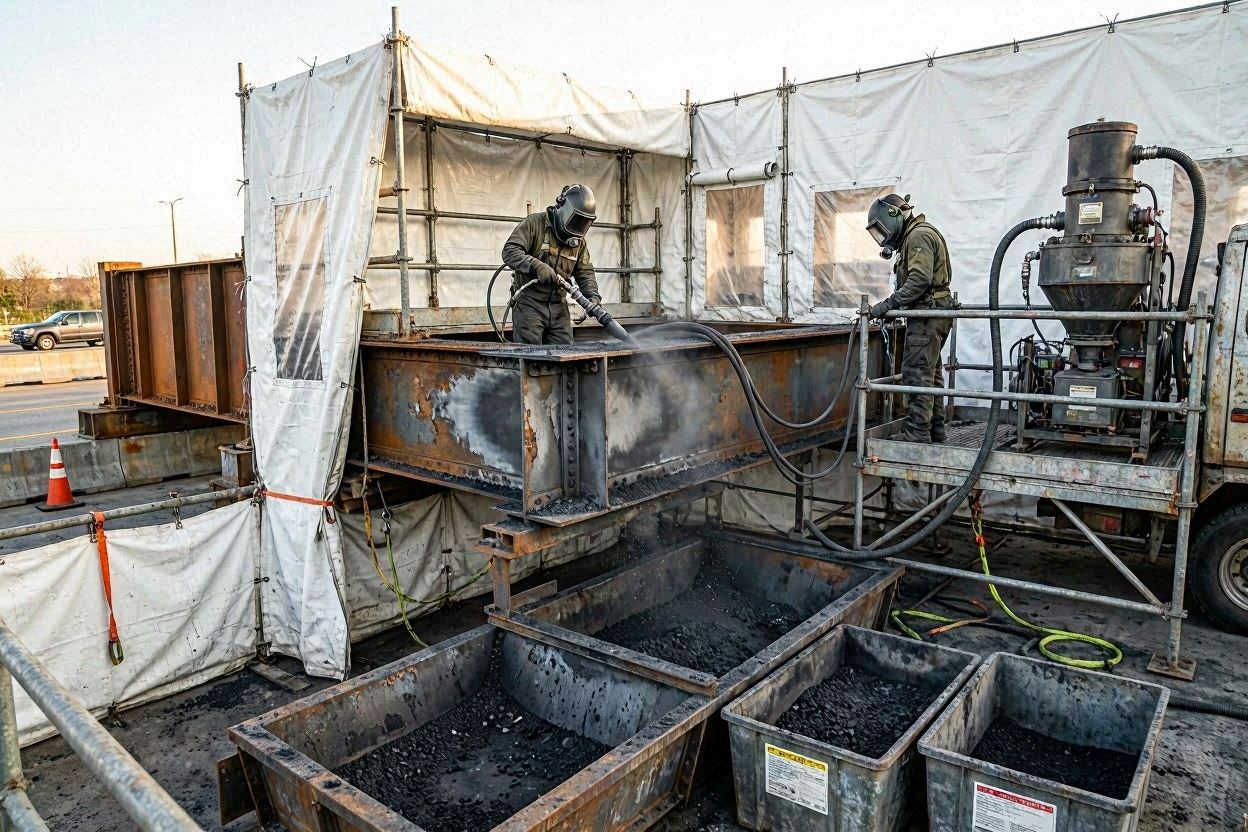
Environmental regulation of abrasive blasting operations has intensified significantly through the 2020s. In April 2026, operators face a more complex regulatory environment than any previous generation — with tightening rules on dust emissions, waste disposal classifications, crystalline silica exposure, heavy metal leaching from spent media, and waterway proximity requirements converging simultaneously on blasting operations in most major industrial jurisdictions.
Beyond regulatory compliance, supply chain sustainability requirements are increasingly influencing media selection for industrial blasting operations. OEM customers, ESG-focused procurement teams, and project-level environmental requirements are all driving demand for media with lower environmental impact — lower dust, non-hazardous waste, minimal heavy metal content, and low embodied energy where alternatives exist.
This guide evaluates all major abrasive blasting media across five environmental dimensions and provides a practical framework for identifying the most appropriate environmentally favorable media for specific application contexts. For complete media technical comparison: Abrasive Blasting Media Comparison Chart.
Five Environmental Dimensions of Blast Media
A meaningful environmental assessment of blasting media requires evaluation across five distinct dimensions — each reflects a different environmental impact pathway:
- Dust generation: Airborne particulate generated during blasting that may constitute a health risk, contribute to PM2.5 environmental pollution, or require costly dust collection systems.
- Free crystalline silica content: The primary driver of occupational silicosis risk and the basis for the most stringent regulatory controls on blasting media globally.
- Spent media waste classification: Whether spent media is classified as hazardous waste (RCRA, TCLP-based) or non-hazardous solid waste — determining disposal cost and administrative burden.
- Heavy metal content: Presence of lead, arsenic, chromium, cadmium, or other regulated heavy metals in the media that could leach from spent media and contaminate soil or groundwater.
- Recyclability / waste volume: The reuse cycles available and the resulting volume of spent media generated per unit of blasting work — a direct measure of resource efficiency.
Environmental Scorecard by Media Type
| 媒体类型 | Dust Level | Free Silica | Waste Classification | Heavy Metals | 可回收性 | Overall Env. Rating |
|---|---|---|---|---|---|---|
| 石榴石 | Very Low | <1% | Non-hazardous | Very Low | 3–5× | Excellent |
| Steel Grit/Shot | Low | Zero | Non-hazardous | Zero | 200–300× | Excellent (lowest waste volume) |
| 氧化铝 | Medium | <1% | Non-hazardous | Very Low | 4–8× | Good |
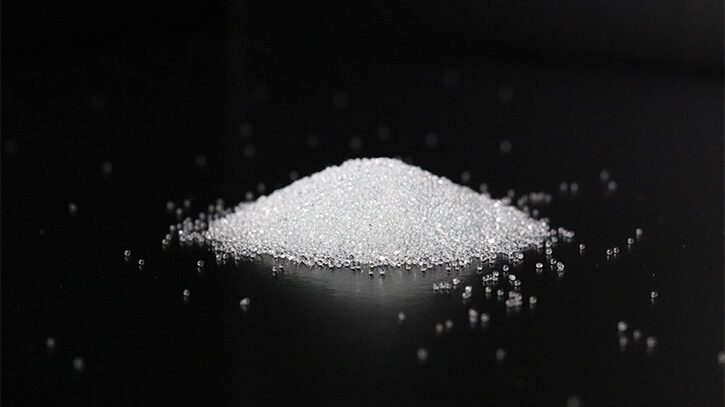
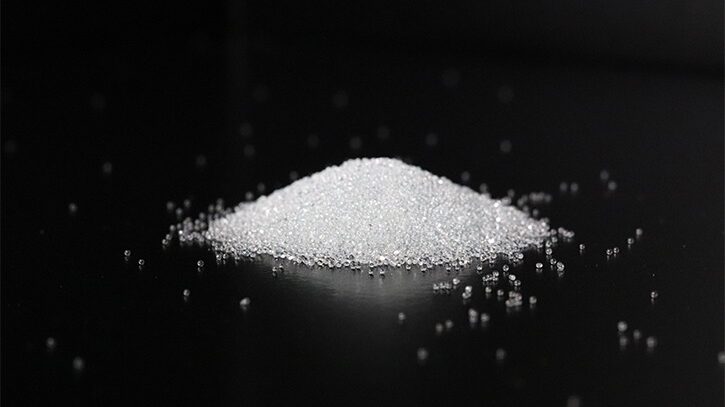
| Glass Bead | Low | ~70% (amorphous) | Non-hazardous | Very Low | 3–6× | Good |
| Walnut Shell / Corn Cob | Low | Zero | Compostable | Zero | Single-use | Good (biodegradable) |
| 碳酸氢钠 | Very Low | Zero | Water-soluble | Zero | Single-use | Very Good (zero solid waste) |
| Coal Slag | High | 1–3% | May be hazardous (TCLP) | Potential (As, Pb, Cr) | Single-use | Poor |
| Copper Slag | Medium-High | 1–2% | May be hazardous (TCLP) | Potential (Cu, Pb) | Single-use | Poor |
| 硅砂 | Very High | 70–99% | Non-hazardous (media itself) | Very Low | Single-use | Very Poor (health) |
Garnet: The Green Industrial Standard
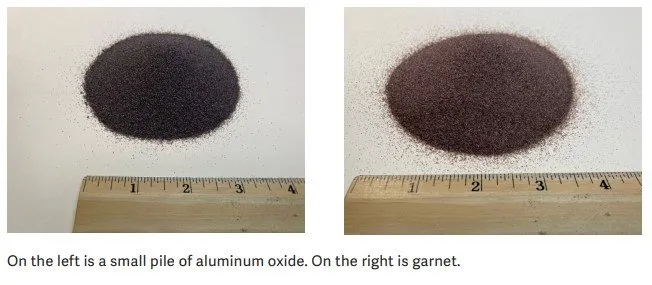
Garnet has established itself as the environmental benchmark for industrial mineral abrasive blasting. Its combination of very low dust generation, free silica content below 1%, non-hazardous waste classification in virtually all jurisdictions, negligible heavy metal content, and 3–5 reuse cycles makes it the go-to specification for environmentally sensitive blasting projects — marine and offshore work, bridge rehabilitation over waterways, and pipeline blasting in ecologically sensitive corridors.
SSPC-AB 3 compliance certification and TCLP test reports from garnet suppliers confirm non-hazardous waste status and provide the documentation needed for environmental permit applications and contract compliance. For full garnet technical reference: Garnet Blasting Media: Eco-Friendly Performance for Wet & Dry Blasting.
Steel Media with Reclaim: Lowest Total Waste Volume
While steel media does not biodegrade and does introduce iron into the spent media waste stream, its extraordinary recyclability (200–300 cycles) makes it the option with the lowest total solid waste volume generated per unit of blasting work. Consider: a facility blasting 100 tonnes of structural steel per month using copper slag (single-use) generates approximately 3,500 kg of spent media per month. The same facility using steel grit with reclaim generates approximately 50–100 kg of fines and rejected media per month — a 35–70× reduction in waste volume.
This waste reduction advantage is environmentally significant: less material extraction, less transportation, less disposal site usage, and lower disposal cost. For operations where iron contamination does not prevent steel media use (i.e., carbon steel substrates), steel media with proper reclaim is arguable the most resource-efficient choice overall. For cost-efficiency details: Abrasive Blasting Media Recycling & Reclaim Systems.
Biodegradable Organic Media: Walnut Shell, Corn Cob & Soda
Walnut shell, corn cob, and sodium bicarbonate blasting media are fully biodegradable or water-soluble, making them the most environmentally favorable options from a waste disposal standpoint — assuming the spent media is not contaminated with hazardous substances from the substrate. Clean spent organic media can typically be composted or treated as organic agricultural waste, eliminating industrial waste disposal costs and administrative burden.
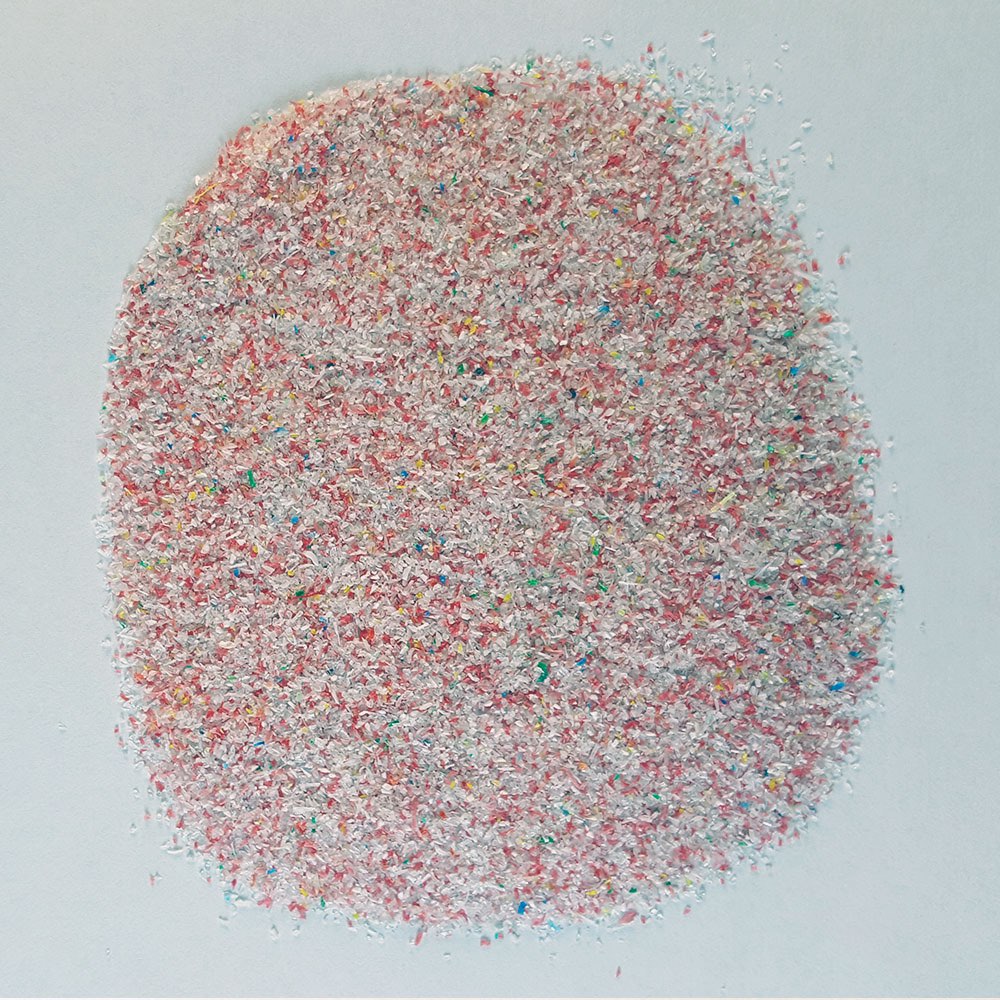
Their environmental advantages are real but their application range is narrow — these are cleaning media, not profiling media. They cannot remove rust, create coating adhesion profiles, or replace harder abrasives in any application requiring measurable surface roughness change. Their correct position is as the environmental best-practice choice within their defined application space: soft cleaning, food equipment, heritage stone, fire restoration. See full guide: Plastic & Organic Blasting Media.
Slag Abrasives: Hidden Environmental Risks
Coal slag and copper slag have been widely used as low-cost single-use abrasives, particularly in the US and Asia-Pacific markets. Their environmental profile is significantly worse than the alternatives outlined above:
- Higher dust generation: Slag abrasives are generally more friable than garnet or metal abrasives, generating more fine airborne particulate during blasting.
- Free silica concerns: Some slag sources contain 1–3% free crystalline silica, approaching regulatory trigger levels in jurisdictions with the most stringent controls.
- TCLP failure risk: Depending on the source material (coal or copper smelting slag), spent media may contain arsenic, lead, chromium, or other regulated heavy metals at concentrations that cause TCLP test failures — requiring disposal as hazardous waste at significantly higher cost than non-hazardous solid waste.
- No recyclability: Single-use only — generating the maximum possible waste volume per unit of blasting work.
Before specifying coal slag or copper slag for any project, always obtain and review current TCLP (Toxicity Characteristic Leaching Procedure) test data from the specific supply source being used. TCLP compliance can vary significantly between slag sources and even between production batches from the same source. A slag that passes TCLP from one mine or smelter may fail from another. Projects in sensitive environments, near water, or with strict waste disposal requirements should specify TCLP-certified non-hazardous media (garnet, aluminum oxide, steel) to eliminate this uncertainty.
Spent Media Waste Disposal Guide
| 媒体类型 | Typical Waste Class (clean steel substrate) | Typical Disposal Route | Cost Indicator | TCLP Testing Needed? |
|---|---|---|---|---|
| 石榴石 | Non-hazardous solid waste | Industrial landfill, recycling (aggregate) | Low | Not typically |
| 氧化铝 | Non-hazardous solid waste | Industrial landfill, recycling (refractory) | Low | Not typically |
| Steel Grit/Shot (fines) | Non-hazardous solid waste | Scrap metal recycling | Very Low (recyclable) | Not typically |
| Glass Bead | Non-hazardous solid waste | Industrial landfill, glass recycling | Low | Not typically |
| Walnut Shell / Corn Cob | Organic waste (if uncontaminated) | Composting, agricultural waste | Very Low | No |
| 碳酸氢钠 | Water-soluble (drain disposal where permitted) | Water rinse, drain (confirm local pH limits) | Very Low | No |
| Coal Slag | Varies — TCLP testing required | Industrial landfill or hazardous waste if TCLP fails | Medium–High | Yes — always |
| Copper Slag | Varies — TCLP testing required | Industrial landfill or hazardous waste if TCLP fails | Medium–High | Yes — always |
The waste classification of any spent blast media is determined by what it has absorbed from the substrate — not by the media’s own composition. Garnet, aluminum oxide, or any other non-hazardous media blasted from a substrate coated with lead paint, chromate primer, or cadmium plating will contain those hazardous substances and must be classified and disposed of accordingly. Always evaluate spent media from the substrate contamination perspective, not just the media identity.
Source Environmentally Responsible Blasting Media
Jiangsu Henglihong Technology supplies aluminum oxide, silicon carbide, glass beads, and steel shot/grit — all with low free silica, non-hazardous waste classification, and full TCLP and chemical analysis documentation. We support green procurement requirements with comprehensive environmental compliance documentation.
Request Environmental DocumentationFrequently Asked Questions
过滤器