Plastic Media for Mold Cleaning: Best Practices
A contaminated injection mold costs money in ways that are deceptively easy to underestimate. The obvious cost is scrap: parts that reject on visual inspection because of surface defects caused by carbon deposits, degraded release agent buildup, or polymer residue in the cavity. Less obvious — but often larger — is the opportunity cost of mold downtime: every hour a mold sits off the press for cleaning is an hour of lost production capacity that can rarely be fully recovered.
The traditional approach to mold cleaning — hand polishing with abrasive compounds, solvent soaking, dry ice blasting, or ultrasonic cleaning — each involves tradeoffs that plastic media blasting avoids. Hand polishing is slow, inconsistent, and risks altering the cavity geometry if the operator is not highly skilled. Solvents work for some contamination types but leave residue that affects subsequent coating and may degrade mold steel over time. Dry ice is gentle but expensive per use and ineffective on carbonized deposits. Ultrasonic cleaning requires mold disassembly and is limited in the cavity geometries it can address.
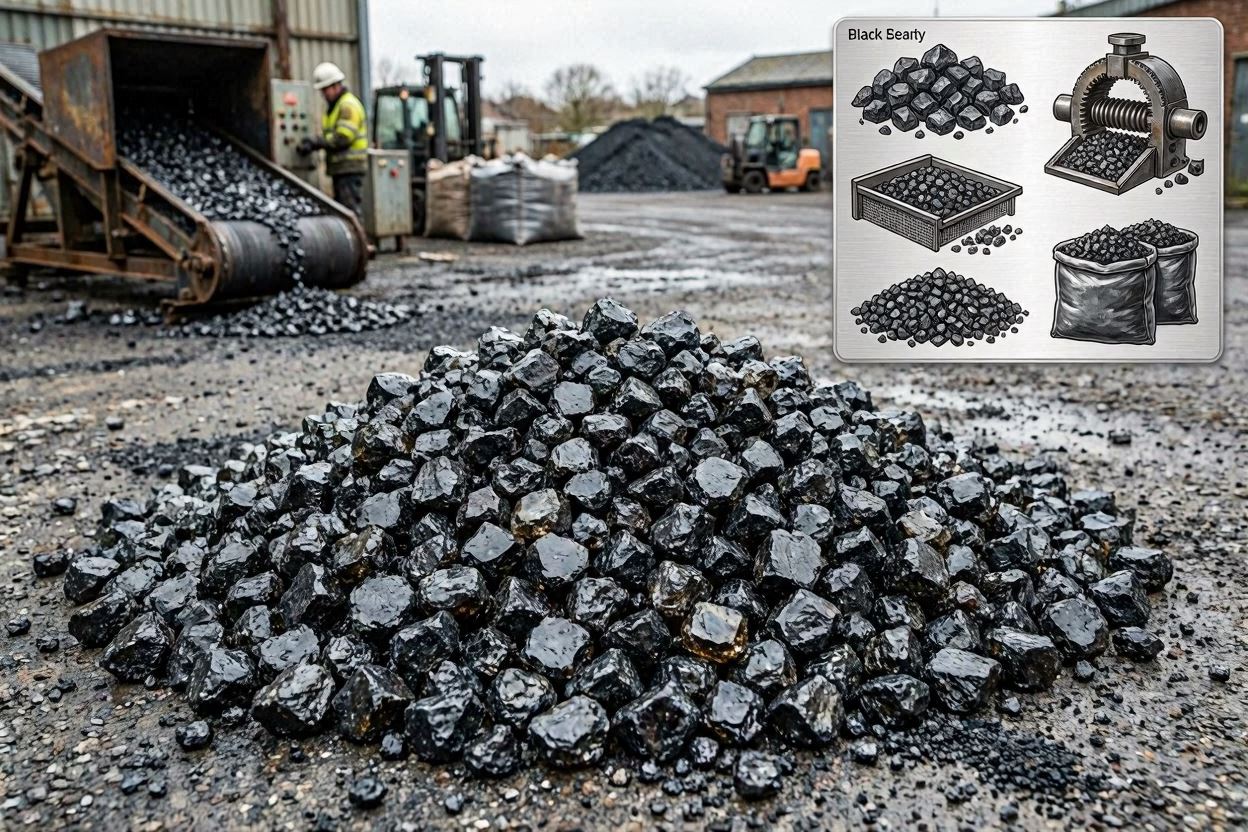
Plastic media blasting — specifically Type V acrylic or fine-grade Type II urea media at controlled low pressures — offers an increasingly preferred alternative: fast, consistent, dimensional-change-free cleaning of mold cavities, cores, and runner systems that can often be performed with the mold at or near operating temperature, dramatically reducing cleaning downtime. Done correctly, it is one of the highest-ROI maintenance processes in any injection molding or die-casting operation.
This guide covers every aspect of plastic media mold cleaning best practices: contamination types, mold material compatibility, media selection, process parameters, cleaning intervals, in-press vs. off-press cleaning, and the mistakes that turn a quick clean into an expensive repair. For a broader overview of the plastic media family, see: What Is Plastic Media? The Complete Guide.
Why Plastic Media for Mold Cleaning?
The decisive advantage of plastic media blasting over all other mold cleaning methods is its ability to remove contamination completely from complex three-dimensional cavity surfaces — including textured areas, shut-off faces, parting lines, vent slots, and ejector pin holes — without altering the cavity dimensions or surface finish that determine part quality.
This matters because a mold cavity is a precision instrument. The cavity geometry is a direct photographic negative of the part it produces: every micron of dimension and every Ra value in the cavity surface transfers directly to the molded part surface. Any cleaning method that removes metal — hand polishing with abrasive compounds, aggressive wire brushing, mechanical scrapers — changes the cavity geometry with each cleaning cycle. Over dozens of cleaning operations across a mold’s service life, these cumulative changes shift the cavity dimensions outside tolerance, degrade the surface finish specification, and eventually require welding and re-machining to restore.
Plastic media blasting, operating at the parameters described in this guide, removes contamination from the cavity surface without removing the tool steel, nickel, chrome, or beryllium copper beneath it. The mechanism — particle fracture at the surface rather than particle cutting into the surface — is the same physics that makes plastic media safe on aluminum aircraft structures, applied here to the even harder and more wear-resistant materials of production tooling.
Understanding Mold Contamination Types
Not all mold contamination is the same, and the correct cleaning approach depends on correctly identifying what is present. Plastic media blasting handles some contamination types extremely well and others less effectively — understanding the difference prevents wasted cleaning cycles and helps target supplementary methods where needed.
Carbon Deposits / Gate Burn
Hard, dark residue from thermally degraded polymer at gate areas, hot runner tips, and high-shear flow zones. One of the most common and difficult contamination types.
Difficult — hard, bondedRelease Agent Buildup
Cumulative layering of silicone or PTFE-based mold release sprays that were not fully removed between applications. Creates a film that inhibits proper part release and causes cosmetic defects.
Moderate — layered filmPolymer Residue / Flash
Solidified resin in parting lines, vent slots, and ejector pin clearances. Can range from thin films to thick flash requiring mechanical removal before blast cleaning.
Moderate — varies by resinOutgassed Volatiles / Plate-Out
Low-molecular-weight additives (lubricants, plasticizers, flame retardants, colorant carriers) that migrate to the mold surface and plate out as a thin greasy or waxy film during production.
Moderate — chemically adherentRust / Surface Oxidation
Light surface rust on unprotected P20 or H13 tool steel from moisture exposure during storage or condensation during production. Must be removed before it pits the cavity surface.
Damaging if left — act quicklyMold Corrosion / Staining
Chemical attack of tool steel from corrosive resins (PVC, flame-retardant ABS, some nylons) that release acidic or halogenated byproducts at process temperature.
Severe — may need chemical treatment firstGlass Fiber / Mineral Filler Embedment
Glass fibers or mineral filler particles from reinforced resins that become physically embedded in the cavity surface over time, causing surface roughening and acting as nucleation sites for further contamination.
Moderate — mechanical removal neededWatermarks / Coolant Deposits
Mineral scale from cooling water that has leaked past O-rings into the cavity area, or moisture condensation deposits on the cavity surface during mold startup in humid conditions.
Light — responds well to blastCleaning Methods Compared
| Method | Carbon Deposits | Release Agent | Polymer Film | Cavity Dimensions | Surface Finish | Downtime |
|---|---|---|---|---|---|---|
| ✅ Plastic Media Blast (Type V Acrylic) | Good | Excellent | Excellent | No change | Preserved | 30–90 min |
| ✅ Plastic Media Blast (Fine Type II Urea) | Very Good | Excellent | Excellent | No change | Slight risk at high PSI | 30–90 min |
| ⚠️ Hand Polish (Diamond Compound) | Fair | Fair | Fair | Cumulative removal | Changes Ra over time | 2–8 hrs |
| ⚠️ Dry Ice (CO₂) Blast | Fair | Good | Good | No change | Preserved | 30–60 min |
| ⚠️ Ultrasonic Cleaning | Very Good | Excellent | Excellent | No change | Preserved | 4–24 hrs (disassembly) |
| ⚠️ Solvent Wipe | Poor | Good | Fair | No change | Preserved | 15–30 min |
| ❌ Wire Brush / Scraper | Good | Poor | Fair | Risk of scoring | Scratches cavity | 30–60 min |
| ❌ Abrasive Wheel / Grinder | Very Good | Fair | Fair | Significant removal | Destroys finish | 1–3 hrs |
The comparison reveals that plastic media blasting is uniquely positioned at the intersection of cleaning effectiveness, dimensional preservation, and downtime minimization. Dry ice blasting is a close competitor on many dimensions but underperforms on carbonized deposits and carries a significantly higher ongoing consumable cost. Ultrasonic cleaning matches or exceeds plastic media on cleaning thoroughness but requires full mold disassembly, which makes it impractical for routine scheduled cleaning of production molds.
Mold Material Compatibility Guide
Injection molds, die-casting dies, and compression molds are constructed from a wide range of materials, each with different surface hardness, porosity, and sensitivity to abrasive impact. The correct media type and pressure depends critically on the mold base material and any surface treatments applied:
Media Selection: Type V vs Fine Type II
For mold cleaning specifically, the choice between Type V acrylic and fine-grade Type II urea is the most consequential media selection decision, and it is one that many operators get wrong by defaulting to a single media type across all their mold cleaning applications.
Type V Acrylic (PMMA) — The Conservative Choice
Type V acrylic is the correct default for mold cleaning in all situations where the cavity surface finish must be absolutely preserved, the mold material is softer (aluminum, BeCu, electroless nickel plate), or the production part has tight dimensional tolerances that reflect the cavity surface precisely. Acrylic’s lower Mohs hardness (~3.0), lower density, and thermoplastic deformation behavior produce the most gentle impact profile of any plastic blast media — and in mold cleaning applications, gentleness is a primary virtue.
Type V is also the correct choice for cleaning cavities that produce transparent or optically critical parts — not optical-mirror finish cavities (which should not be blast-cleaned at all), but the SPI B1 to B3 finish range used for transparent covers, packaging, and display lenses. At fine mesh (Mesh 60–80) and low pressure (12–20 PSI), acrylic media removes contamination from these surfaces without creating the micro-scratch pattern that urea media can introduce.
Fine Type II Urea — When You Need More Cutting Power
Fine-grade Type II urea at Mesh 50–60 is the better choice for cavities with carbonized deposits, heavy release agent buildup that resists acrylic cleaning, or molds running glass-fiber-reinforced resins where filler embedment has become a significant contamination component. Urea’s slightly higher hardness and more angular particle geometry provides more cutting authority on hard, tenacious deposits — the trade-off being that the process must be more carefully monitored for Ra change on polished surfaces.
Fine Type II urea is also more economical per cleaning cycle than Type V acrylic — it is cheaper per pound, and its higher strip efficiency means fewer passes are needed to achieve clean steel. For P20 and H13 molds with SPI C1 to D2 texture finishes (matte, semi-gloss, textured), where absolute Ra preservation is less critical than for polished cavities, fine urea delivers faster cleaning results at lower media cost.
| Mold / Cavity Condition | Recommended Media | Mesh | 原因 |
|---|---|---|---|
| Polished cavity (SPI A3–B2), tool steel, light contamination | Type V Acrylic | 60–80 | Preserve polished finish; acrylic’s gentlest impact profile at finest mesh |
| Semi-polished cavity (SPI B3–C1), moderate release agent buildup | Type V Acrylic | 50–60 | Effective release agent removal without risk to semi-polished finish |
| Textured cavity (SPI C2–D2), general contamination | Fine Type II Urea | 50–60 | Textured finish tolerates slightly more aggressive media; urea faster on general contamination |
| Any finish, heavy carbon deposits at gate | Fine Type II Urea | 40–50 | Carbon requires more cutting authority; slightly coarser mesh increases removal rate on hard deposits |
| Aluminum prototype mold, any contamination | Type V Acrylic | 60–80 | Aluminum’s lower hardness requires softest available media at finest mesh |
| BeCu insert, light contamination | Type V Acrylic | 60–80 | BeCu is softer than steel; requires most conservative parameters; mandatory beryllium PPE |
| Chrome-plated cavity, release agent and plate-out | Type V Acrylic | 60–80 | Chrome plating is hard but thin; conservative parameters prevent risk of delamination at edges |
| High-volume P20 mold, glass-fiber resin, filler embedment | Fine Type II Urea | 40–50 | Filler embedment requires cutting authority; P20 hardness provides adequate margin |
Blast Parameters by Mold Type
Mold cleaning operates at significantly lower blast parameters than coating removal applications. The governing constraint is dimensional preservation rather than coating removal speed — and the correct response to slow cleaning is more passes at lower pressure, not higher pressure.
Step-by-Step Cleaning Process
Pre-Clean Assessment and Documentation
Before blasting, photograph the mold cavity under consistent raking light at standardized angles. These photos document the contamination condition before cleaning and provide a baseline for assessing cleaning effectiveness. For molds with a defined PM (preventive maintenance) record, note the shot count since last cleaning. Identify the contamination type (carbon deposit, release agent, polymer film) and select media type accordingly.
If this is the first cleaning of a mold that has not previously been blast-cleaned, take Ra measurements at three representative locations: center of the largest flat cavity face, a curved surface area, and near a gate or runner. Record these as the dimensional baseline. For molds with previous blast-cleaning history, compare to the running Ra log.
Mold Preparation
Remove the mold from the press or position the open mold at working height with both cavity and core faces accessible. Remove all ejector pins, slides, lifters, and loose inserts that could trap media or that have surface finishes incompatible with the cleaning parameters for the main cavity. Cap or plug all water line ports, hydraulic cylinder ports, and thermocouple ports — trapped media in cooling channels causes corrosion and plugging that can require mold disassembly to clear.
If the mold has hot runner components — gates, manifolds, drops — consult the hot runner manufacturer’s recommendations before blast cleaning near heated components. Most hot runner manufacturers specify keeping blast media away from gate inserts and valve pin assemblies; clean these areas with solvent wipe only.
For in-press cleaning (mold open on the press), position the blast nozzle access to the cavity from the operator side. Ensure the press control is in manual mode and the clamp is locked open with the appropriate safety block or clamping tonnage set to zero before any personnel reach into the die space.
Equipment Setup and Parameter Verification
Load the correct media type and mesh size per the mold’s cleaning protocol. Verify nozzle pressure with an inline gauge at the nozzle inlet — mold cleaning pressures (12–30 PSI) are at the low end of what most blast equipment pressure gauges read accurately; use a calibrated low-range gauge (0–60 PSI) rather than a standard 0–200 PSI gauge for better resolution. Select a nozzle bore appropriate for the cavity geometry — a pencil nozzle (1/4-inch bore or smaller) provides better directional control for cleaning complex three-dimensional cavity features than a standard round nozzle.
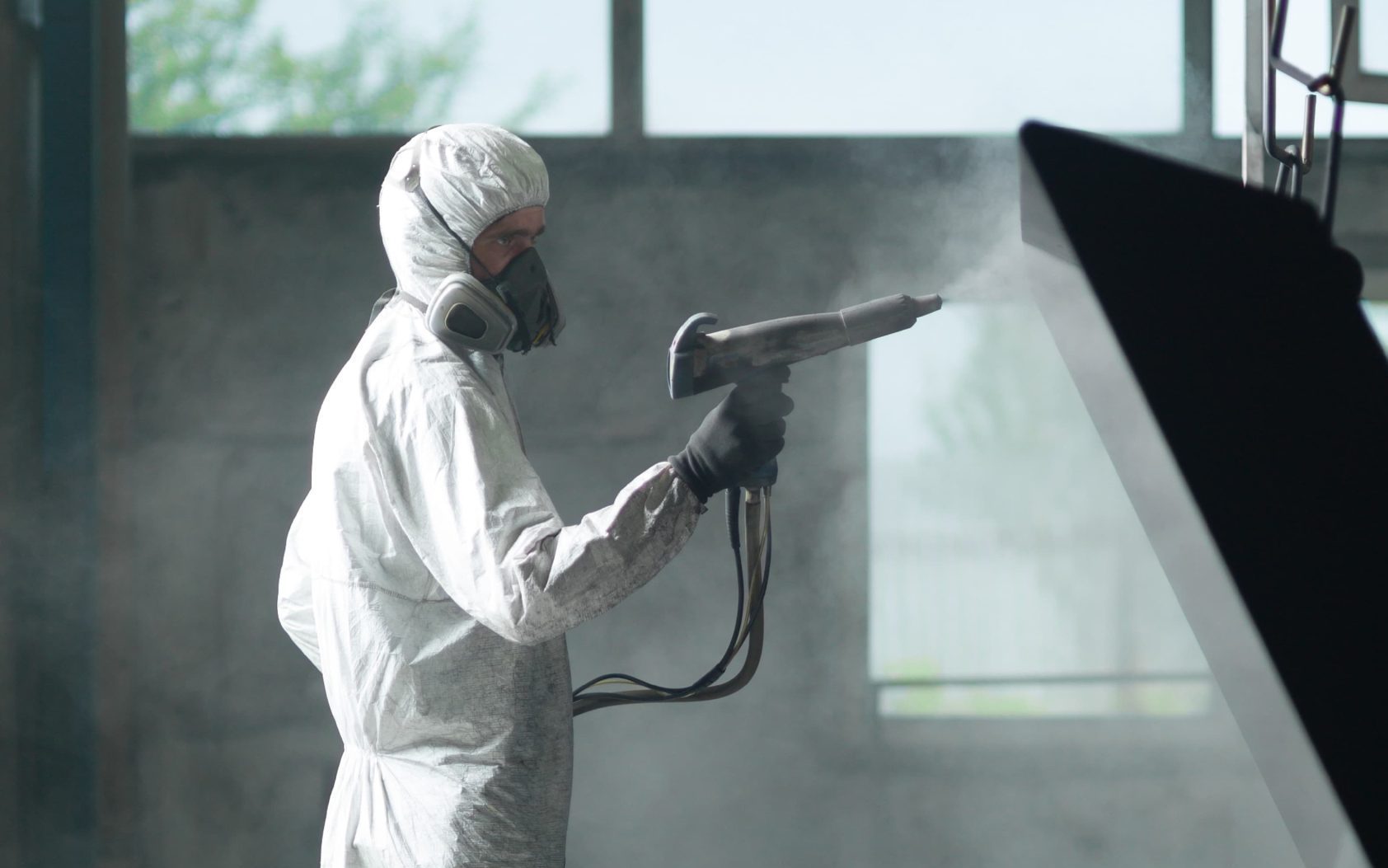
For in-press cleaning, connect the blast hose and verify that the exhaust from the cavity space is captured by a vacuum or dust collection system. Do not blast in a press bay without exhaust capture — the media and contamination dust will deposit on adjacent machines and press components.
Systematic Cavity Cleaning
Work the cavity in a systematic pattern, not randomly. For a rectangular or simple cavity: start at the parting line face, blast from one end to the other in overlapping passes, then move to the cavity side walls, then the cavity bottom. For complex geometry with bosses, ribs, and detailed features: blast the broad flat areas first, then address detailed areas with the nozzle repositioned to reach into recesses.
Keep the nozzle in continuous motion — never dwell in one spot, even at mold cleaning pressures. On contaminated areas that are not clearing in two passes, increase pass count before increasing pressure. Inspect after every two to three passes under good lighting — a flashlight or fiber optic probe light angled across the cavity face reveals contamination as a difference in surface reflectivity.
For carbon deposits specifically: work the gate area with the nozzle held at a shallow angle (30–45°) to the deposit surface, not perpendicular to it. Carbon responds better to a grazing angle blast that undercuts the deposit at its edges than to a perpendicular impact that packs it against the cavity wall.
Work both cavity and core faces — contamination accumulates on both, and cleaning only the cavity while neglecting the core produces parts with cosmetic defects on the core-side surface that are harder to attribute to the cause.
Post-Blast Inspection and Ra Measurement
After cleaning, blow the cavity with clean dry compressed air to remove all media and contamination debris. Inspect under raking light — any residual contamination will be visible as a dull or colored area against the cleaner surrounding metal. Use a cotton-tipped swab wiped across the cavity face to check for residual release agent or polymer film that is not visible under light.
Take Ra measurements at the same three locations recorded in the pre-cleaning baseline. If Ra has increased by more than 2 µin (0.05 µm) at any location compared to the previous cleaning cycle’s post-clean measurement, flag the mold for review — this indicates the cleaning parameters may need adjustment to prevent cumulative Ra creep. Log the measurements in the mold’s PM record.
Surface Protection and Mold Return to Service
Apply mold protection treatment immediately after cleaning — bare tool steel oxidizes rapidly when exposed to ambient humidity after blast cleaning removes any residual protective film. Options include: mold release spray applied in a light, even coat (not built up in layers, which creates the plate-out contamination you just removed); rust preventive spray for molds going into storage or long production gaps; or mold cavity sealer for molds being returned to production immediately.
For molds returning to production: run the first 10–20 shots after cleaning at standard process parameters and inspect the parts under controlled lighting before releasing to production. First-article parts after mold cleaning occasionally show minor surface differences from contamination that the blast did not fully remove — these clear within the first production shots as the cavity surface conditions to the new resin contact.
In-Press Cleaning vs Off-Press Cleaning
Whether to clean a mold while it remains in the press (in-press) or to pull it from the press and clean it on a dedicated workstation (off-press) is primarily a productivity decision, but it has implications for cleaning thoroughness and safety that affect the quality outcome.
In-Press Cleaning: The Productivity Argument
In-press plastic media blast cleaning is widely practiced in high-volume injection molding operations because it minimizes mold downtime. The mold is opened, the blast nozzle is introduced through the operator door, and the cavity and core faces are cleaned without any of the press time required for mold removal, transfer, clamping at a workstation, and reinstallation. For molds with frequent cleaning intervals (every 2,000–10,000 shots), the cumulative time saving of in-press vs. off-press cleaning is substantial.
The practical constraints of in-press cleaning are: access is limited by the die opening distance and operator reach; blast nozzle angles are restricted by the press platens; cleaning of complex undercut areas and deep cores may be incomplete; and dust capture requires a vacuum system at the die parting line to prevent press bay contamination. In-press cleaning also cannot address contamination on components that must be removed for cleaning — slides, lifters, and inserts that are not accessible with the mold closed on both halves.
Off-Press Cleaning: The Thoroughness Argument
Off-press cleaning — pulling the mold and cleaning it on a dedicated blast workstation or in a blast cabinet — allows full 360° nozzle access to every cavity surface, core surface, parting line face, and runner system. Complex geometry features that receive shadow blast coverage in in-press cleaning get full direct treatment off-press. Components removed from the mold can be cleaned individually. The blast workstation can be equipped with a reclaim system to recover and reuse media economically — an option that is typically not practical for in-press operations, which treat media as single-use.
Off-press cleaning should be the method for scheduled PM cleaning intervals, annual deep cleans, and any cleaning event following a production contamination problem (material cross-contamination, color contamination, process upset) where thorough cleaning of every surface is critical before returning to production.
| Factor | In-Press Cleaning | Off-Press Cleaning |
|---|---|---|
| Mold downtime | Minimal (15–45 min) | Longer (2–8 hrs including change) |
| Cavity access completeness | Limited by die opening | Full 360° access |
| Component cleaning | Not possible (in-situ only) | Individual component cleaning possible |
| Media reclaim economics | Typically single-use (no reclaim) | Reclaim system practical |
| Contamination capture | Requires vacuum at parting line | Contained blast cabinet or room |
| Recommended use | Routine between-run maintenance cleaning | Scheduled PM, deep clean, post-contamination recovery |
Establishing Cleaning Intervals
The correct cleaning interval for a given mold is not a universal number — it depends on the resin being run, the part surface finish specification, the mold’s production rate, and the sensitivity of the downstream application to cosmetic defects. Here is a framework for establishing intervals that prevent contamination-driven scrap without over-cleaning:
These intervals are starting points, not fixed specifications. The correct interval for your specific mold, resin, and quality standard is determined empirically by tracking the relationship between shot count and first observed contamination-related defect, then setting the cleaning interval at 80% of that observed time-to-defect. This provides a safety margin while preventing unnecessary cleaning cycles.
Surface Finish Protection After Cleaning
The blast-cleaned mold surface is chemically active bare metal — it will begin to oxidize within minutes in typical shop humidity conditions. The immediate post-blast surface treatment determines how long the mold remains in usable condition between cleaning and return to production, and how well the initial parts from a freshly-cleaned mold meet surface appearance specifications.
For Molds Returning to Production Immediately
Apply a thin, uniform coat of mold release agent to the cleaned cavity and core surfaces before closing the mold and initiating production. Use a quality silicone-free or silicone-based release appropriate for the resin being run — silicone releases are incompatible with some painting or bonding operations on the finished parts, so check downstream requirements before selecting a release chemistry. Apply the release in a single light pass from 12–18 inches; never build up heavy layers that become the contamination the next cleaning must remove.
For Molds Going into Short-Term Storage (Days to Weeks)
Apply a rust preventive oil or mold preservative spray to all cleaned metal surfaces immediately after blasting. Products specifically formulated for mold storage (not general-purpose WD-40 or similar light oils) provide a film that persists through temperature changes and condensation. Store the mold closed and wrapped in VCI (Vapor Corrosion Inhibitor) film if high-humidity storage is expected.
For Molds Going into Long-Term Storage (Months)
Apply a heavier rust-preventive compound (grease or wax-based) to all cavity surfaces after blast cleaning. Plug all water ports and blind them with tape. Store the mold closed in a climate-controlled area. Inspect at 90-day intervals for any signs of condensation or surface corrosion.
Warning Signs: When the Mold Needs Cleaning
- Parts release cleanly from cavity on every cycle without sticking
- Part surface matches approved appearance standard (gloss, texture uniformly consistent)
- Cycle time is stable — no increase in pack/hold pressure needed to fill fully
- Flash at parting line is at normal level (if any baseline flash exists)
- Gate area shows normal appearance on part surface
- Shot weight is consistent across the production run
- Parts sticking at ejection — increased ejection force required, parts marking at ejector pins
- Surface gloss reduction or matte spots on otherwise glossy part surfaces
- Dark discoloration (brown/black) visible on part surface near gate — carbon transfer
- Splay, streaking, or surface roughness on parts that were not present earlier in the run
- Increasing flash at parting line despite no process parameter changes
- Visible deposit build-up on cavity walls during in-press inspection at shift change
- Vent plugging — venting areas producing burned marks on parts (diesel effect)
- Release agent use frequency increasing to maintain part release
Troubleshooting Common Problems
Carbon deposits at gate not clearing after multiple passes
Carbonized gate deposits are the hardest contamination type in injection molding. They form when polymer thermally degrades at the gate due to high shear rates or excessive residence time, and the resulting carbon char bonds tenaciously to tool steel. Type V acrylic at standard cleaning parameters often cannot overcome this bond. Switch to fine Type II urea at Mesh 40–50 and reduce the impingement angle to 30–45°, which undercuts the deposit from the side rather than compacting it. If this still fails, a light pre-treatment with a mold cleaning solvent (specifically formulated for carbon removal, not general-purpose acetone) to soften the deposit before blasting can be the deciding factor.
Ra increasing progressively across cleaning cycles
Progressive Ra increase is the clearest signal that blast parameters are cumulatively altering the cavity surface. The correct response is always parameter reduction — never accept Ra creep as normal. If fine Type II urea is the current media, switch to Type V acrylic. If Mesh 50 is currently in use, try Mesh 60. If pressure is at 20 PSI, reduce to 15 PSI and evaluate cleaning effectiveness. The mold’s cleaning effectiveness will be slightly reduced at lower parameters, but this can be compensated by increasing pass count. A mold that is cleaned in 8 passes at 15 PSI and preserved dimensionally is worth far more than one cleaned in 3 passes at 25 PSI with a drifting Ra specification.
Media embedding in cavity surface (visible as white specks on parts)
Plastic media embedment — where particles become physically driven into the cavity surface — is most likely to occur in softer mold materials (aluminum, soft P20, BeCu) at higher blast pressures. The embedded particles then transfer to molded parts as white or translucent specks in the surface. Check the mold’s Rockwell hardness against the parameters in use — a mold that is softer than specified (through de-tempering from heat exposure, or from using the wrong material grade) may not be compatible with standard cleaning parameters. Reduce pressure, reduce impingement angle, and switch to Type V acrylic. If embedment persists at minimum practical parameters, the mold material may be too soft for blast cleaning — consult with the toolmaker about surface hardening options.
Incomplete cleaning of parting line faces despite good cavity cleaning
Parting line flash — solidified polymer that has been compressed between the cavity and core halves at high clamp tonnage — is often mechanically bonded to the steel in a way that resists blast cleaning better than softer surface contamination. A light pass with a brass scraper (never steel — it will score the parting surface) to break loose the bulk flash, followed by blast cleaning to remove the residual film, is more effective than blast cleaning alone on thick parting line flash. Blast the parting line faces at a shallower angle (40–60°) rather than perpendicular, which allows the media stream to sweep along the parting surface and carry debris away rather than packing it against the steel face.
First parts after cleaning show surface defects not present before cleaning
Two things can cause post-cleaning surface defects. First, residual media dust or contamination particles remaining in the cavity after blasting transfer to part surfaces in the first shots after cleaning — this is solved by thorough compressed air blow-out and visual inspection before closing the mold. Second, a genuine Ra change from the cleaning process can affect part surface appearance — if the defects persist beyond the first 20 shots, measure the cavity Ra and compare to the pre-cleaning baseline. If Ra has shifted, review and reduce blast parameters for future cleaning cycles.
Critical Mistakes to Avoid
1. Using Blast Parameters from Coating-Removal Applications
The most common mistake operators make when transitioning from blast-to-strip work (aerospace, automotive) to mold cleaning work is applying the same pressure and mesh settings. Coating removal parameters (30–60 PSI, Mesh 20–30) will alter polished cavity surfaces within a single cleaning session. Mold cleaning requires fundamentally lower energy — typically 12–25 PSI and Mesh 50–80. Always approach a mold cleaning task as a precision operation requiring its own qualification, not a variation on blast stripping.
2. Skipping the Ra Baseline Measurement
Operating without a dimensional baseline means you cannot detect progressive Ra change until it has already shifted the cavity outside specification and produced a batch of non-conforming parts. The time investment of taking three Ra measurements before the first cleaning session is trivial compared to the cost of discovering Ra drift after a mold has already been damaged. Make Ra logging part of every scheduled PM event.
3. Not Protecting Water Ports Before Blasting
Media that enters a mold’s cooling channels will accumulate at flow restrictions and can block cooling water flow — causing hot spots in production, cycle time increases, and ultimately mold damage from thermal distortion. Plugging all water ports takes three minutes; clearing a partially blocked cooling circuit can take hours of disassembly and compressed air flushing. Always cap every port before blasting.
4. Cleaning at Production Temperature without Checking Media Limits
Plastic blast media has a heat deflection temperature — for Type V acrylic, approximately 185°F (85°C). Die casting dies and some injection molds operate above this temperature. Blasting a die that is still at 400°F (204°C) surface temperature with plastic media will cause the media particles to soften, flatten on impact rather than fracturing, and embed in the die surface. Verify that the mold or die surface is below 150°F (65°C) before any plastic media blast cleaning. Use an infrared thermometer to confirm temperature before starting.
5. Cleaning Only the Cavity Half and Neglecting the Core
Contamination accumulates on both the cavity (concave, female) and core (convex, male) surfaces of the mold. Operators often focus blast cleaning effort on the cavity because it is more visible and because cosmetic defects on the cavity-side part surface are more obvious. Core-side contamination causes its own defect types — surface sticking, ejection marks, and core-side surface roughness — that are just as costly in scrap and rework. Every cleaning session must address both halves completely.
Frequently Asked Questions
Can plastic media blasting be used to clean hot runner gates and valve pins?
Plastic media blasting is generally not recommended for hot runner gate inserts, valve pin tips, or the internal passages of hot runner manifolds. Gate inserts typically have very tight dimensional tolerances (the gate diameter is precisely controlled to influence part fill characteristics), and blast cleaning — even at minimum parameters — risks altering the gate geometry beyond acceptable limits. Valve pin tips and needle valve seats have even tighter tolerances and require contamination-free operation. The preferred cleaning method for hot runner components is chemical cleaning using solvent purging compounds run through the heated system, or manual cleaning with brass tools and appropriate solvents on disassembled components. Always follow the hot runner manufacturer’s recommended cleaning protocol for their specific system. Blast clean only the cavity gate pocket area (the mold steel surrounding the gate insert) after removing the gate insert, not the insert itself.
How do I clean a textured (EDM or chemical-etched) mold surface without altering the texture?
Textured cavity surfaces — whether produced by EDM (spark erosion), acid etching, or laser texturing — are intentionally rough surfaces with defined Ra values typically in the 50–250 µin range. The good news for blast cleaning is that textured surfaces are significantly more tolerant of blast parameters than polished surfaces — the existing surface topography means that small changes in Ra from cleaning are not meaningful. Use Type V Acrylic at Mesh 40–60 and moderate pressure (20–30 PSI) for most textured mold cleaning. The texture depth and geometry do not change measurably at these parameters. The one caution is very fine, shallow textures produced by laser — depths of less than 20 µm (0.8 mil) — which should be treated conservatively with Mesh 60–80 and low pressure (15–20 PSI). When in doubt, blast a textured coupon from the same texture specification and compare before and after under a magnifier or profilometer before cleaning the production mold.
Is plastic media blast cleaning suitable for die casting dies (zinc and aluminum)?
Yes — plastic media blasting is an effective and increasingly common die casting die cleaning method, but with two specific operational requirements that differ from injection mold cleaning. First, the die must be cooled to below 150°F (65°C) surface temperature before blasting — hot die surfaces soften plastic media particles and can cause embedment. Use an infrared thermometer to verify temperature before beginning. Second, aluminum soldering (where liquid aluminum alloy chemically bonds to the H13 die steel surface) is a severe contamination type that resists plastic blast removal — soldering requires chemical treatment with a de-soldering compound before blast cleaning can be effective. For general die maintenance cleaning (release agent buildup, metal splash, surface oxidation), Type V Acrylic at Mesh 40–60 and 20–30 PSI works effectively on properly cooled H13 die steel. Die casting die steel is typically harder than injection mold P20 steel, which provides somewhat more margin against blast-induced surface change.
What is the correct blast nozzle type for cleaning complex mold geometry?
For mold cleaning, nozzle selection is more important than in typical blast-strip applications because you need to direct media into three-dimensional cavity features with precision. The most useful nozzles for mold cleaning are: (1) pencil nozzles (1/4-inch or 3/16-inch bore) for cleaning ribs, bosses, and detailed cavity features — the narrow stream provides precise placement; (2) extended-reach nozzles (6–12-inch lance with 90° or angled tip) for reaching deep cores, recessed features, and areas behind protrusions; (3) fan nozzles for cleaning large flat parting line faces efficiently. Avoid standard round nozzles with bores larger than 3/8 inch for mold cleaning — the wide, uncontrolled pattern wastes media on areas that do not need cleaning and makes precise parameter control at low pressures difficult. A nozzle kit with at least a pencil nozzle and one angle-tip extended lance covers the majority of mold cleaning geometries.
After blast cleaning, my mold leaves slight media residue on the first few parts. How do I prevent this?
Media residue on first-off parts after blast cleaning is a blow-out thoroughness problem, not a blast process problem. After blasting, use a compressed air blow-off nozzle at 80–100 PSI (higher than blast pressure is fine for blow-off) and systematically clear every surface area, working from the deepest recesses of the cavity outward to the parting line. Pay particular attention to ribs, bosses, ejector pin holes, vent slots, and parting line recesses — these trap media particles that the blast stream cannot dislodge during cleaning. After compressed air blow-off, use a clean lint-free cloth or a soft natural-bristle brush (not synthetic, which can create static that attracts and retains fine media particles) to wipe accessible cavity surfaces. A final pass with compressed air after wiping removes any particles disturbed by the wiping action. Running 5–10 dry-cycle shots (press cycling without injection) before production shots also clears residual particles from ejector pin clearances and other features that cannot be reached with external blow-off.
过滤器