What Is Abrasive Media? Types, Uses & Complete Selection Guide
Everything you need to know about abrasive blasting media — from choosing the right type to understanding grit sizes, safety standards, and industry applications.
1. What Is Abrasive Media?
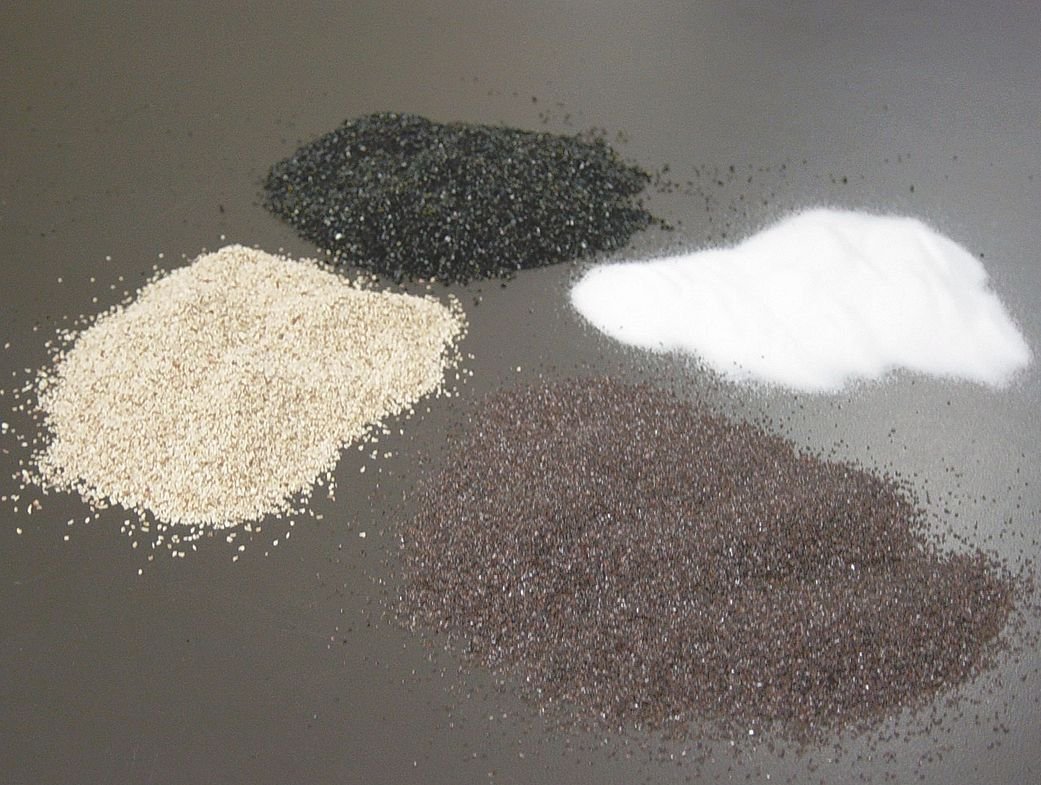
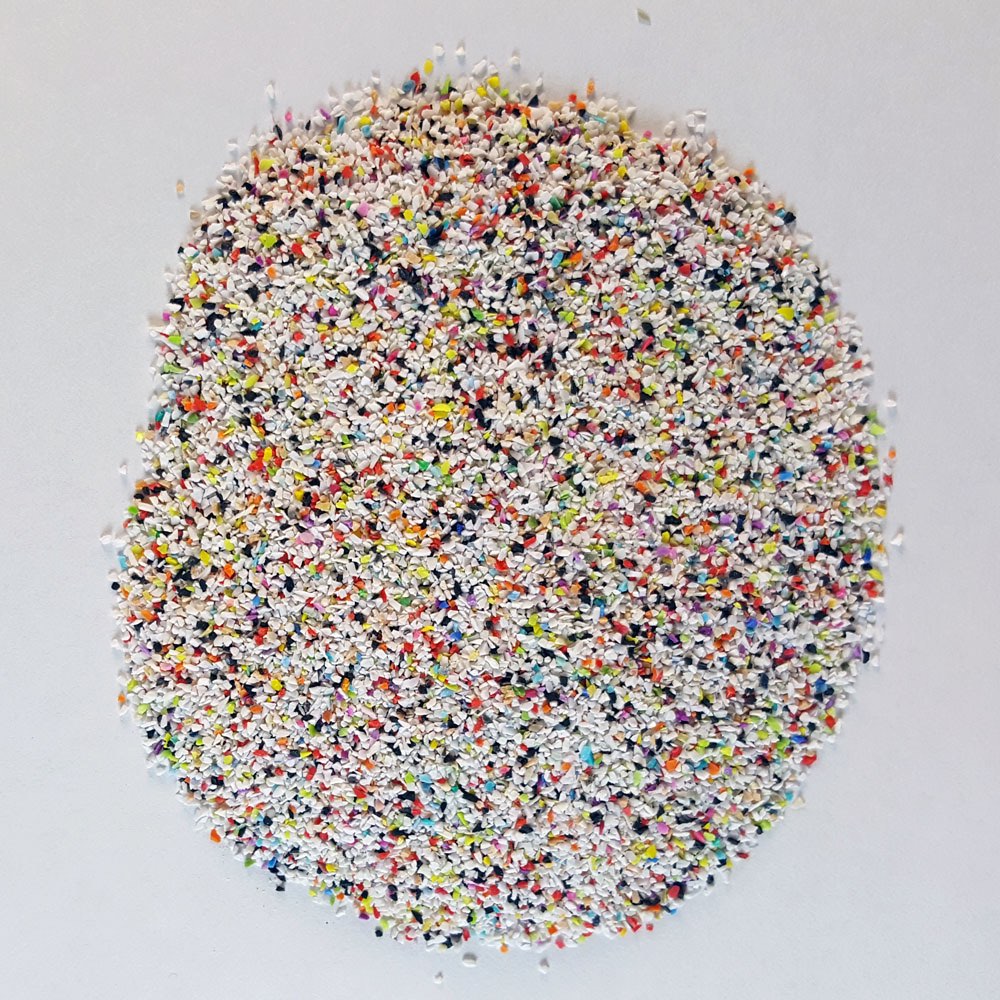
Abrasive media — also called blast media or blasting media — refers to any granular, particulate, or pelletized material that is propelled at high velocity against a surface to achieve a specific result: cleaning, stripping, smoothing, profiling, deburring, or shot-peening. The process that uses these materials is broadly known as abrasive blasting, though it encompasses everything from sandblasting and bead blasting to soda blasting and wet abrasive blasting.
The fundamental principle behind abrasive blasting is kinetic energy transfer. When hard particles strike a surface at speed, they dislodge contaminants such as rust, mill scale, old coatings, grease, and oxidation. Depending on the media’s hardness and shape, they can also create a microscopic surface profile — the tiny peaks and valleys that allow paints, coatings, and adhesives to bond reliably.
Abrasive media has been a cornerstone of industrial surface preparation for over a century, and it remains irreplaceable in sectors that demand tight coating adhesion, dimensional tolerances, and surface cleanliness standards. From the steel beams of a suspension bridge to the turbine blades of a commercial aircraft, abrasive media plays a silent but critical role.
Not all abrasive processes use the same media or the same mechanism. Understanding which media type suits your substrate and finish requirement is the foundation of effective surface preparation — and it directly affects cost, quality, and safety.
2. How Does Abrasive Blasting Work?
All abrasive blasting systems share three core components: a propulsion mechanism, an abrasive media, and a target surface. The propulsion mechanism is either compressed air (in pressure blast and suction blast cabinets), a centrifugal wheel (in wheel blast machines), or a wet slurry pump (in wet blasting). The choice of propulsion affects impact velocity and therefore the aggressiveness of the process.
Once the media particles impact the surface at velocities typically ranging from 50 to 250 feet per second, three outcomes occur simultaneously:
- Mechanical abrasion: Contaminants and weak surface layers are physically dislodged and carried away.
- Surface profiling: Angular media particles create a roughened anchor pattern. This profile — measured in mils or micrometers — is essential for mechanical coating adhesion.
- Compressive stress (peening): Round, hard particles like steel shot can induce compressive residual stress in metal surfaces, increasing fatigue resistance. This is the basis of shot peening in aerospace and automotive manufacturing.
The cleanliness and profile of the blasted surface are evaluated against internationally recognized standards, most commonly the SSPC (Society for Protective Coatings) et NACE standards in North America, and the ISO 8501 series internationally. Coatings manufacturers typically specify a minimum cleanliness grade (e.g., SSPC-SP10 Near-White Metal) and a surface profile range (e.g., 1.5–3.0 mil) that must be achieved before application.
Always confirm the coating manufacturer’s surface preparation specification before selecting your abrasive media. The wrong profile depth — whether too shallow or too deep — can result in coating failure and costly rework.
3. 10 Types of Abrasive Blasting Media
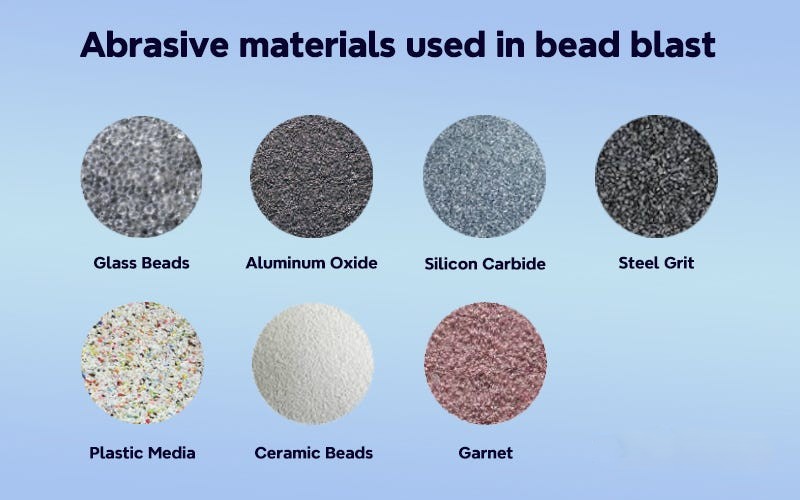
Selecting the right abrasive media is one of the most consequential decisions in any surface preparation project. Each media type has a distinct combination of hardness, shape, density, recyclability, and cost profile. Below, we cover the most widely used types — including all six media families that Jiangsu Henglihong Technology supplies to customers worldwide.
3.1 Aluminum Oxide (Corundum)
Aluminum oxide — also marketed as alumina or corundum grit — is the most versatile and widely used abrasive blasting media in industrial settings. With a Mohs hardness of 9 (second only to diamond and silicon carbide), it cuts aggressively into virtually any metal substrate, creating a consistent angular surface profile.
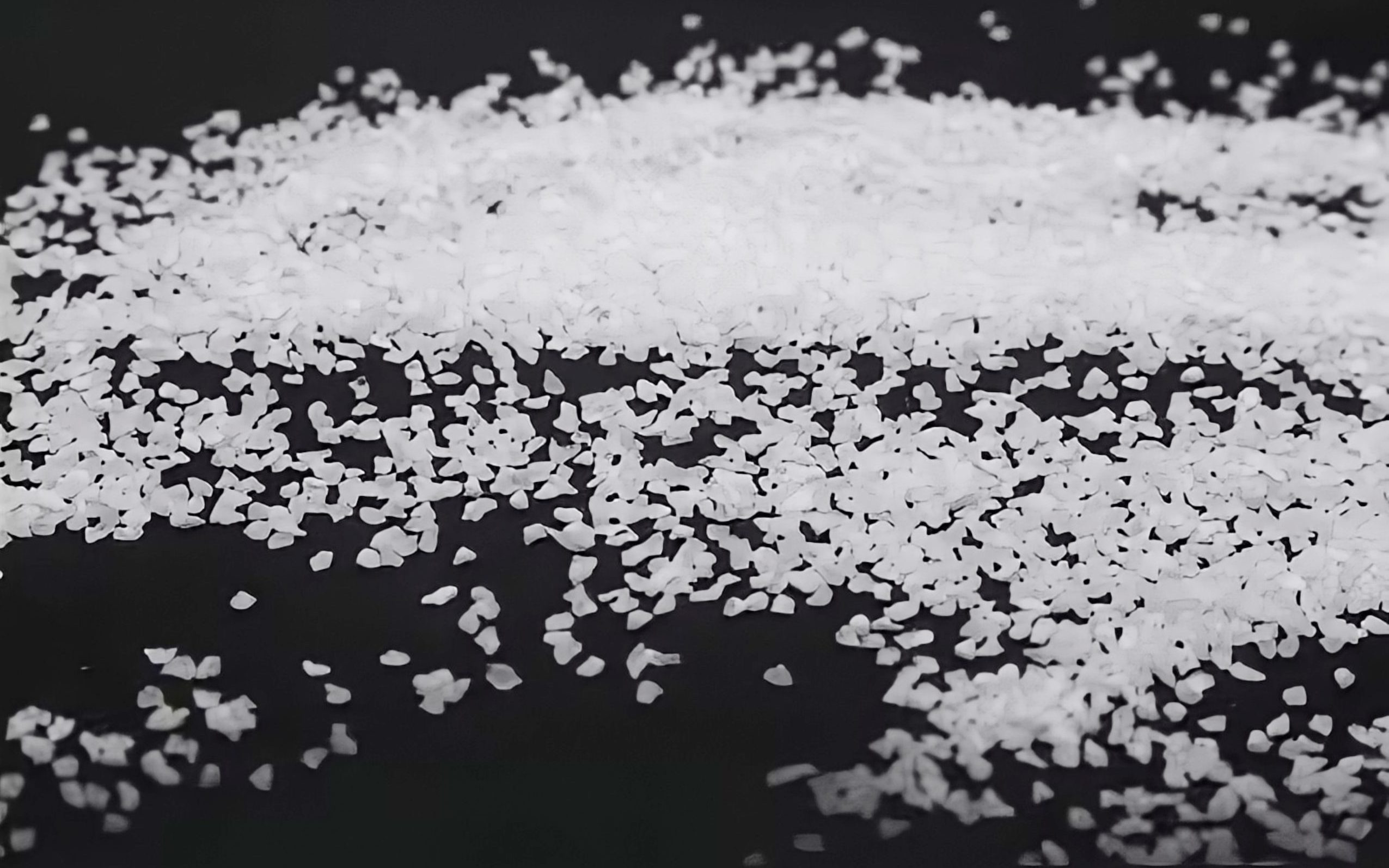
Its angular, blocky particle shape makes it exceptionally efficient at removing rust, mill scale, and old coatings. Brown aluminum oxide (BFA) and white aluminum oxide (WFA) are the two primary grades: BFA is the cost-effective workhorse for general industrial use, while WFA offers higher purity and tighter chemistry for precision applications including aerospace components and electronic substrates.
One of aluminum oxide’s standout properties is recyclability — depending on particle size and process conditions, it can typically be recycled 5 to 10 times before the particles degrade to an ineffective size, substantially lowering per-cycle operating costs. It is suitable for use on steel, stainless steel, cast iron, aluminum, titanium, composites, and ceramic surfaces.
Learn more in our dedicated guide: Aluminum Oxide Abrasive Media: Uses, Grit Sizes & Where to Buy →
3.2 Glass Beads
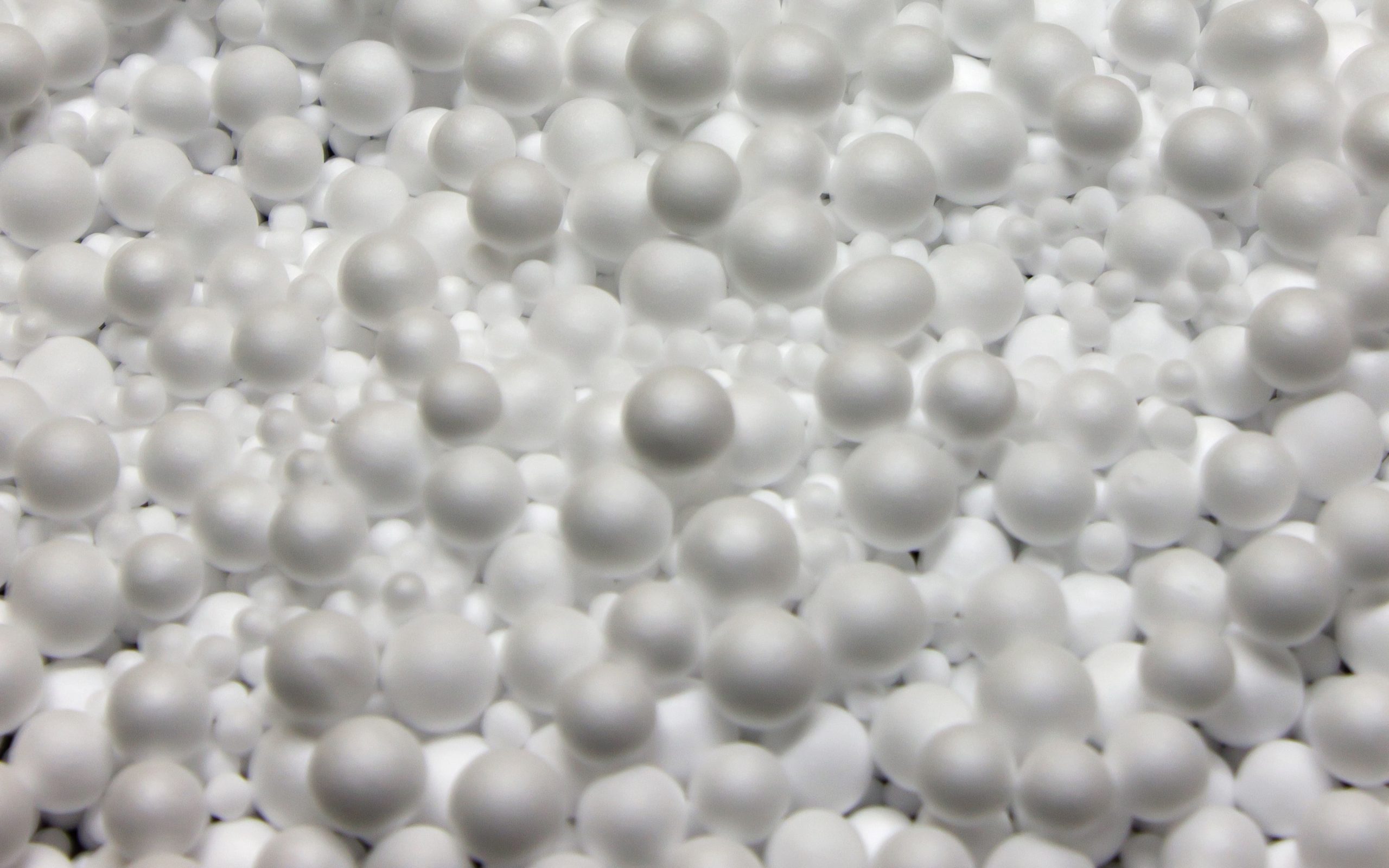
Glass beads are spherical abrasive particles manufactured from lead-free, soda-lime glass. Unlike angular media, their round shape produces a smooth, bright, satin-like finish rather than a rough profile. Instead of cutting into a surface, glass beads peen it — burnishing away surface contaminants while imparting compressive stress that can improve fatigue life.
This peening action makes glass beads the preferred abrasive for components where dimensional tolerances are critical and surface roughness must be minimized. Typical applications include stainless steel equipment cleaning in food processing and pharmaceutical plants, cosmetic surface finishing of aluminum extrusions, and precision deburring of aerospace castings.
Glass beads are also inherently silica-safe — they do not contain free crystalline silica in a respirable form — making them a compliant choice under increasingly stringent OSHA silica regulations. They can typically be recycled 3 to 5 times before breaking down.
Dive deeper: Glass Bead Abrasive Media: Applications, Benefits & Buying Guide →
3.3 Garnet
Garnet is a naturally occurring mineral abrasive mined primarily from almandine deposits. With a Mohs hardness of approximately 7.5–8 and a semi-angular particle shape, garnet sits in an excellent middle ground: aggressive enough to produce a strong surface profile, yet low in dust generation and virtually free of heavy metals and silica.
Garnet is the preferred media for waterjet cutting (GMA garnet is the global standard) and is increasingly specified for open-air and confined-space blasting where dust control is paramount. Its natural mineral composition makes it an environmentally favorable choice — spent garnet can often be recovered and repurposed as a landfill cap or construction aggregate.
Because garnet is self-sharpening as particles fracture during blasting, it maintains effective cutting action throughout multiple passes. It is particularly well-suited to blasting steel structures prior to marine coatings, where the combination of a clean profile and minimal chloride contamination is critical.
See our full breakdown: Garnet Abrasive Media: Why It’s the Industry Favorite →
3.4 Steel Grit & Steel Shot
Steel abrasives — both steel grit (angular) and steel shot (spherical) — are the dominant choice for high-volume industrial wheel-blast operations. Cast from carbon steel or stainless steel and heat-treated to precise hardness ranges, they combine extreme durability with powerful abrasive action.
Grains d'acier has an angular, fractured shape that bites deeply into steel surfaces, creating a pronounced anchor profile ideal for heavy-duty industrial coatings, structural steel fabrication, and bridge maintenance. Grenaille d'acier, with its round shape, is the go-to media for shot peening aerospace and automotive components, producing compressive stress that dramatically extends metal fatigue life.
The recyclability of steel abrasives is their greatest economic advantage: a single charge of quality steel grit or shot can withstand hundreds of blast cycles in a properly maintained wheel-blast machine before replacement is necessary. The result is an extremely low per-cycle cost in high-throughput production environments.
Understand the differences fully: Steel Grit vs Steel Shot: Which Abrasive Media Is Right for You? →
3.5 Walnut Shell & Corn Cob
Organic abrasive media — most commonly crushed walnut shells and ground corn cob — represent the gentlest end of the blasting spectrum. With Mohs hardness values of roughly 3–4, they clean and deburr surfaces without scratching or altering dimensions. This makes them invaluable in applications where the substrate itself must be preserved: stripping paint from aircraft composites, cleaning historic stonework, degreasing automotive engine parts without damaging aluminum, and polishing jewelry and precision instruments.
Both walnut shell and corn cob media are biodegradable, non-toxic, and silica-free, making them a responsible choice for environmentally sensitive projects. Walnut shell tends to be slightly harder and more aggressive than corn cob; corn cob is preferred for very delicate finishing and polishing tasks in vibratory or tumbling equipment.
Explore eco-friendly options: Eco-Friendly Abrasive Media: Walnut Shell, Corn Cob & Baking Soda →
3.6 Plastic Media
Plastic blast media is manufactured from thermoset urea, polyester, or melamine resin into angular particles. Its distinguishing characteristic is extremely low hardness (Mohs ~3–3.5) combined with a sharp, angular shape — a combination that delivers effective paint and coating removal without etching or distorting thin or soft substrates.
Plastic media is the preferred choice for aircraft paint stripping, where the composite and aluminum skin panels must not be damaged or work-hardened during the stripping process. It is also widely used in automotive restoration for stripping gelcoat from fiberglass body panels, in electronics for deflashing injection-molded components, and in military depot maintenance for stripping sensitive equipment.
Plastic media can typically be recycled 3 to 5 times and is available in multiple hardness grades and mesh sizes to match specific substrate sensitivities.
Full guide: Plastic Blast Media for Aerospace & Automotive Stripping →
3.7 Other Notable Types
Beyond the six core types above, several other abrasive media deserve mention for specialized applications:
- Silicon Carbide: The hardest synthetic abrasive (Mohs 9.5), used for blasting extremely hard substrates like ceramics, stone engraving, and carbide tooling. Very aggressive and generally single-pass only.
- Crushed Glass (Recycled): An economical, silica-compliant alternative to conventional sand. Angular and moderately aggressive — useful for structural steel and concrete surface prep.
- Sodium Bicarbonate (Baking Soda): The gentlest possible blasting media; water-soluble and non-damaging, primarily used for food equipment sanitation and mold remediation. Single-use only.
- Coal Slag (Copper Slag): Very low-cost, single-use media used in outdoor structural blasting. Regulatory scrutiny is increasing due to heavy metal content; confirm local compliance before use.
Oxyde d'aluminium
Hardness 9 Mohs · Angular · 5–10× recyclable · Versatile industrial workhorse
Full guide →Perles de verre
Spherical · Satin finish · Silica-safe · Ideal for stainless & aerospace
Full guide →Walnut Shell & Corn Cob
Biodegradable · Mohs 3–4 · Gentle on composites & delicate surfaces
Full guide →Supports en plastique
Angular resin · Mohs ~3 · Aircraft stripping · No substrate damage
Full guide →4. Abrasive Media Comparison Chart
The table below provides a direct side-by-side comparison of the six abrasive media types supplied by Jiangsu Henglihong Technology. Use it as a quick decision-making reference — then follow the links to each media’s dedicated guide for deeper specifications. You can also download our full printable Abrasive Media Comparison PDF for use on the shop floor or in specification documents.
| Type de média | Shape | Dureté Mohs | Typical Grit Range | Recyclabilité | Relative Cost | Best For |
|---|---|---|---|---|---|---|
| Oxyde d'aluminium | Angulaire | 9 | 16 – 320 | 5 – 10× | Medium | General industrial, metals, composites |
| Perles de verre | Spherical | 5.5 – 6 | 40 – 325 | 3 – 5× | Medium | Satin finish, stainless, food/pharma |
| Grenat | Sub-angular | 7.5 – 8 | 30 – 120 | 1 – 3× | Medium | Low-dust blasting, marine, waterjet |
| Grain d'acier | Angulaire | 7 – 8 (HRC 55–66) | G10 – G120 | 100+ cycles | High upfront | Heavy rust removal, deep anchor profile |
| Grenaille d'acier | Spherical | 7 – 8 (HRC 40–51) | S70 – S780 | 100+ cycles | High upfront | Shot peening, scale removal, scale-only |
| Walnut Shell | Angulaire | 3 – 4 | 8 – 100 | 1 – 2× | Faible | Gentle cleaning, composites, wood |
| Corn Cob | Angular/irregular | 3 – 3.5 | 4 – 80 | 1 – 2× | Faible | Polishing, jewelry, ultra-delicate |
| Supports en plastique | Angulaire | 3 – 3.5 | 12 – 80 | 3 – 5× | Medium | Aircraft stripping, fiberglass, electronics |
5. How to Choose the Right Abrasive Media
With so many variables at play, choosing the best abrasive media can feel overwhelming. In practice, the selection process comes down to five key factors evaluated in sequence. Our dedicated guide walks through each factor with decision trees and real-world examples: How to Choose the Right Abrasive Media for Your Project →
- Identify your substrate material. The hardness and sensitivity of the surface being blasted is the most critical constraint. Delicate materials — composites, thin aluminum, plastic, wood — require soft media (walnut shell, plastic, glass beads). Hard substrates — structural steel, cast iron, heavy plate — can tolerate aggressive media like aluminum oxide, steel grit, or garnet.
- Define the desired surface outcome. Are you removing rust and creating an anchor profile for coating adhesion? Use angular media (aluminum oxide, steel grit, garnet). Do you need a smooth, matte finish without raising a profile? Use spherical media (glass beads, steel shot). Stripping paint from a sensitive substrate without dimensional change? Use plastic media or walnut shell.
- Check the required surface standard. If your project is governed by a specification — SSPC, NACE, ISO, or a coating manufacturer’s data sheet — the acceptable media types and cleanliness grades will narrow your options significantly. Some specs explicitly prohibit certain media (e.g., silica sand, coal slag) for health or contamination reasons.
- Consider your blasting system type. Wheel-blast machines are engineered for steel abrasives (steel grit and shot) and cannot efficiently process lightweight or irregular media. Pressure blast pots and suction cabinets are more flexible. Wet abrasive blasting systems require media that does not absorb water. Match the media to your equipment specifications.
- Calculate total cost of use, not just purchase price. A lower-cost single-use media may seem economical per bag, but if a recyclable media like aluminum oxide or steel grit can be reused 5–10 or 100+ times respectively, the per-cycle cost often favors the higher-priced recyclable option substantially. Factor in media consumption rate, disposal cost, and productivity (blast rate and downtime).
Choosing the most aggressive media available to “blast faster” is a frequent and costly error. Overly aggressive media on a thin or sensitive substrate can cause warping, dimensional loss, surface contamination, and coating adhesion failures. Always start with the gentlest effective media for the application.
6. Understanding Grit Size & Mesh
Grit size — sometimes expressed as mesh number — defines the average particle diameter of the abrasive media. It is one of the most misunderstood parameters in surface preparation, yet it directly controls surface roughness (profile depth), blast rate, and finish appearance. Our comprehensive resource covers this in detail: Abrasive Media FAQ: Grit Size, Mesh, Recycling & Storage Tips →
The key relationship to remember: lower grit number = larger particle = coarser, deeper profile. Higher grit number = smaller particle = finer, shallower profile.
Heavy rust / deep profile Medium (40–80 grit)
General purpose Fine (100–320+ grit) ➡
Precision / smooth finish
For steel abrasives, the SAE/AMS standard uses a different notation: shot sizes (S110 through S780) and grit sizes (G10 through G120) where a larger number indicates a larger particle — the opposite convention from grit numbering. Always verify which standard applies when reading a specification or product data sheet.
For waterjet cutting garnet, the most common grades are 80 mesh (general cutting), 120 mesh (fine cutting, reduced kerf), and 220 mesh (polishing applications). The mesh number directly corresponds to the U.S. Standard Sieve series.
7. Industry Applications of Abrasive Media
The versatility of abrasive blasting media means it touches virtually every major manufacturing and maintenance industry. Below are the four core markets that Jiangsu Henglihong Technology serves, along with specific media recommendations for each. Explore the deep-dives via the linked cluster pages.
Industrial & Manufacturing
Steel fabrication, pipe coating, pressure vessel prep, OEM part cleaning. Typical media: aluminum oxide, steel grit/shot, garnet.
Automotive Restoration
Paint stripping, rust removal, chassis prep, engine component cleaning. Typical media: glass beads, aluminum oxide, plastic media, walnut shell.
Aérospatiale
Composite stripping, aluminum skin prep, turbine blade peening, deflashing. Typical media: plastic media, glass beads, aluminum oxide (WFA).
DIY & Consumer
Home workshop cabinet blasting, furniture restoration, tool refurbishment, hobby projects. Typical media: glass beads, walnut shell, aluminum oxide.
Industrial & Manufacturing
In fabricated steel manufacturing, abrasive blasting is a mandatory step in the production workflow, not an optional cleaning process. Hot-rolled steel plate arrives from the mill coated in mill scale — a hard, adherent oxide layer that prevents any subsequent coating or welding preparation from performing correctly. Steel grit and aluminum oxide are the standard solutions, routinely achieving SSPC-SP10 or SSPC-SP5 white metal cleanliness standards with profiles of 1.5–4.0 mil.
Read more: Abrasive Media for Surface Preparation: Industry Best Practices →
Automotive Restoration
Classic car restoration demands media that can strip decades of paint layers from complex body panels without warping the thin sheet metal or introducing contaminants that might bleed through a new finish. Glass beads at 100–150 mesh deliver a smooth, clean surface ready for primer application. For heavier rust on chassis components, aluminum oxide at 60–80 grit provides the necessary cutting power. Walnut shell and plastic media are preferred for fiberglass and composite body components.
Read more: Best Abrasive Media for Automotive Restoration & Paint Removal →
Aérospatiale
No industry places higher demands on surface preparation precision than aerospace. Every material — aluminum alloys, titanium, carbon fiber composites, Inconel — has narrow acceptable process windows. Plastic media blasting (PMB) is the FAA-recognized process for stripping paint from composite and aluminum aircraft skins. Shot peening with glass beads or cast steel shot is a mandatory process step for turbine blades, landing gear components, and structural fatigue-critical parts.
DIY & Consumer
Home workshop blasters and restoration hobbyists increasingly have access to affordable cabinet-style blast systems. Glass beads (80–120 mesh) are the most popular all-purpose media for home use — they clean rust, remove paint, and leave a professional finish on everything from hand tools to motorcycle parts. For those restoring wooden furniture or gun stocks, walnut shell or corn cob media delivers gentle cleaning without fiber damage.
8. Safety & OSHA Compliance
Abrasive blasting operations generate fine airborne dust that poses serious respiratory health risks. The hazard is not the abrasive media itself, but the silica, heavy metals, and toxic compounds that may be released when the media — and the surface being blasted — fractures into fine particles.
The Crystalline Silica Problem
Traditional silica sand was the dominant blast media for most of the 20th century. It is now severely restricted in many jurisdictions due to the proven link between crystalline silica inhalation and silicosis — an irreversible and potentially fatal lung disease. OSHA’s Silica Standard (29 CFR 1910.1053 and 1926.1153), finalized in 2016 and enforced from 2017, sets a Permissible Exposure Limit (PEL) of 50 micrograms per cubic meter of air as an 8-hour TWA — 80% lower than the previous standard.
All of the media types supplied by Jiangsu Henglihong Technology — aluminum oxide, glass beads, garnet, steel grit/shot, walnut shell, corn cob, and plastic media — are free of crystalline silica and represent compliant alternatives to silica sand in regulated work environments.
Essential PPE for Abrasive Blasting
- Supplied-air respirator (NIOSH-approved): Always required for open-air blasting. Air-purifying respirators are insufficient for most abrasive blasting operations due to high dust concentrations.
- Blasting helmet or hood: Protects eyes, face, and neck from rebounding abrasive particles.
- Heavy leather or canvas blast suit: Protects skin and clothing from abrasive impact.
- Hearing protection: Blast equipment regularly produces noise levels above 85 dB(A).
- Steel-toed footwear: Required in all industrial blasting environments.
For the complete safety framework including engineering controls, ventilation requirements, and hazard communication obligations, see: Abrasive Media Safety Guide: OSHA Standards & PPE Requirements →
9. Recycling, Disposal & Storage
Managing abrasive media through its full lifecycle — from initial use through recycling, storage, and final disposal — has significant implications for operating cost and environmental compliance.
Recycling
Recyclable media (aluminum oxide, steel grit/shot, glass beads, plastic media) should be processed through a reclaim system between blast cycles. An effective reclaim system removes broken particles, dust, and contaminants using a combination of mechanical screening, air wash classification, and magnetic separation (for steel abrasives). Media that is not properly reclaimed degrades faster and can introduce contaminants that damage the blasted surface.
Disposal
Spent abrasive media is classified as a solid waste and may — depending on the substrate blasted — be classified as a hazardous waste under RCRA if it contains lead, chromium, cadmium, or other TCLP-regulated metals at threshold concentrations. Always test spent blast media before disposal when blasting painted surfaces of unknown composition, and consult a licensed waste disposal contractor.
Storage
Store unused abrasive media in the original sealed bags or airtight containers in a dry location away from moisture. Moisture causes clumping, increases media consumption, and — critically for steel abrasives — promotes rust on the media particles themselves, which contaminates the blast surface. A humidity level below 60% is the recommended storage environment for most media types. Explore full guidance: Abrasive Media FAQ: Grit Size, Mesh, Recycling & Storage Tips →
10. Frequently Asked Questions
What is abrasive media?
Abrasive media refers to granular or particulate materials — such as aluminum oxide, glass beads, garnet, steel grit, walnut shell, or plastic resin — that are propelled at high velocity against a surface to clean, strip, profile, peen, or finish it. The process is known as abrasive blasting or sandblasting (though real sand is now largely replaced with safer alternatives).
What is the most commonly used abrasive blasting media?
Aluminum oxide is the most widely used abrasive blasting media globally. Its combination of hardness (Mohs 9), angular shape, versatility, and recyclability makes it the default choice for a vast range of industrial surface preparation applications. Steel grit and steel shot are dominant in high-volume wheel-blast manufacturing environments.
What abrasive media is best for automotive restoration?
For most automotive body panel work, glass beads (80–150 mesh) are the top choice — they remove paint and light rust while leaving a smooth, satin surface that doesn’t warp thin sheet metal. For heavy rust on frames and chassis, aluminum oxide or garnet at 60–80 grit works well. For fiberglass and composite panels, plastic media or walnut shell is preferred to avoid substrate damage. See our full guide: Best Abrasive Media for Automotive Restoration →
Is abrasive blasting media reusable?
It depends on the media type. Steel grit and steel shot offer the highest recyclability — typically 100+ blast cycles in a well-maintained wheel-blast system. Aluminum oxide typically recycles 5–10 times. Glass beads and plastic media recycle 3–5 times. Organic media (walnut shell, corn cob, baking soda) and single-pass mineral media like garnet and coal slag are typically one-use or low-cycle materials.
What grit size should I use for abrasive blasting?
Coarse grits (16–36) are used for aggressive rust removal and deep surface profiles required for heavy industrial coatings. Medium grits (40–80) are the general-purpose standard for most structural steel and fabrication work. Fine grits (100–220+) are used for precision work, aerospace components, automotive body panels, and applications requiring a smooth surface finish. Always match grit size to the coating specification’s required surface profile.
What is a safe alternative to silica sand for blasting?
OSHA’s crystalline silica standard makes conventional silica sand effectively unusable for most blasting work. Compliant, effective alternatives include garnet, aluminum oxide, glass beads, crushed glass, steel grit, steel shot, plastic media, and organic media. All abrasive media supplied by Jiangsu Henglihong Technology is free of crystalline silica and meets current regulatory standards. Learn more: Abrasive Media Safety & OSHA Compliance Guide →
How do I calculate how much abrasive media I need?
Media consumption depends on the blast nozzle size, operating pressure, media type, and surface condition. As a rough rule of thumb, a 3/8″ nozzle at 100 psi consumes approximately 600–900 lbs of aluminum oxide per hour for structural steel blasting. For accurate project planning, contact our technical team with your surface area, substrate condition, and target cleanliness grade — we’ll calculate a precise media requirement estimate.
11. Where to Buy Abrasive Media
Choosing a reliable abrasive media supplier is as important as choosing the right media type. Inconsistent particle size distribution, poor quality control, or high chloride contamination in supposedly clean media can all cause project failures that dwarf the cost of the media itself.
Jiangsu Henglihong Technology Co., Ltd. is an ISO-certified manufacturer and global exporter of abrasive blasting media, with production facilities in Jiangsu Province, China. We supply the full range of abrasive media types — aluminum oxide, glass beads, garnet, steel grit, steel shot, walnut shell, corn cob, and plastic blast media — direct from our manufacturing facility to customers in North America, Europe, the Middle East, Southeast Asia, and beyond.
Why Choose Jiangsu Henglihong Technology?
- Factory-direct pricing: No intermediary markups — our pricing reflects direct manufacturer costs.
- Consistent quality control: Particle size distribution, hardness, and chemistry are verified by in-house laboratory testing on every production batch.
- Flexible packaging: 25kg bags, 1-ton super sacks, and bulk container loads available to match your operation’s scale.
- Custom specifications: Non-standard grit sizes, hardness grades, and blend ratios available for OEM and specification-driven projects.
- Technical support: Our engineering team provides media selection guidance, surface prep specification review, and on-site application consultation.
- Global logistics: Established export experience with full documentation support (SDS, COA, test reports, customs paperwork).
Ready to Find the Right Abrasive Media for Your Project?
Get factory-direct pricing, free technical consultation, and fast sample lead times from Jiangsu Henglihong Technology Co., Ltd.
Request a Quote View All Products📚 Explore Our Complete Abrasive Media Resource Library
- Abrasive Media Comparison Chart: Hardness, Grit & Cost Guide
- How to Choose the Right Abrasive Media for Your Project
- Aluminum Oxide Abrasive Media: Uses, Grit Sizes & Where to Buy
- Glass Bead Abrasive Media: Applications, Benefits & Buying Guide
- Garnet Abrasive Media: Why It’s the Industry Favorite
- Steel Grit vs Steel Shot: Which Abrasive Media Is Right for You?
- Eco-Friendly Abrasive Media: Walnut Shell, Corn Cob & Baking Soda
- Plastic Blast Media for Aerospace & Automotive Stripping
- Best Abrasive Media for Automotive Restoration & Paint Removal
- Abrasive Media for Surface Preparation: Industry Best Practices
- Abrasive Media Safety Guide: OSHA Standards & PPE Requirements
- Abrasive Media FAQ: Grit Size, Mesh, Recycling & Storage Tips
- Abrasive Media for Sale: Bulk Pricing & Industrial Supply
Filtres