Surface Profile & Sa Rating Guide: Matching Blast Media to Coating Specifications
Surface preparation is the single most important determinant of protective coating performance — more important than coating quality, applicator skill, or coating thickness. Industry studies consistently show that 70–85% of premature coating failures are attributable to inadequate surface preparation, not coating or application defects. At the heart of adequate surface preparation is the relationship between blast media selection, cleanliness level achievedet surface profile depth created.
This technical guide explains every element of surface preparation specification — ISO 8501-1 Sa ratings, ISO 8503 surface profile parameters, measurement methods, and how to select the right blast media to meet any coating specification. It is part of the complete resource at Sandblasting Media Suppliers: The Industrial Buyer’s Complete Guide, by Jiangsu Henglihong Technology Co., Ltd.
1. Why Surface Profile Determines Coating Performance
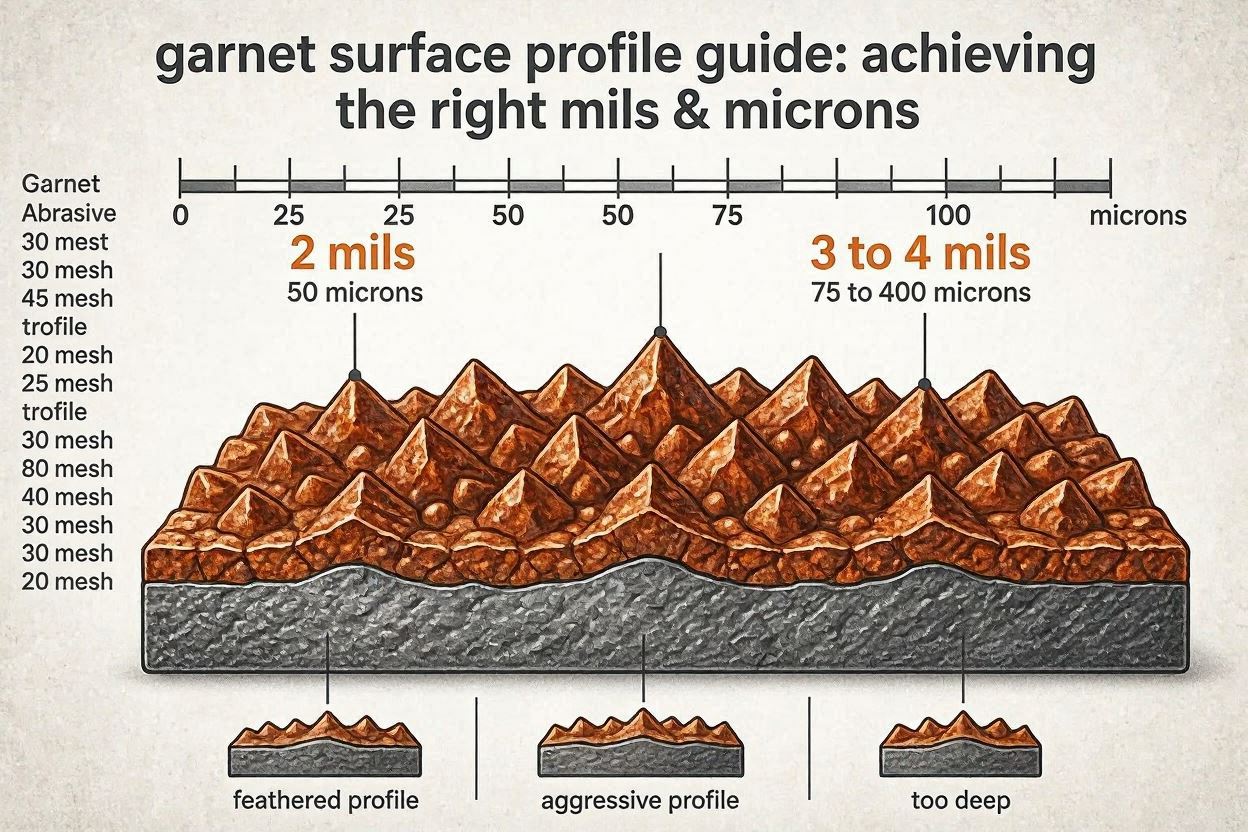
Protective coatings adhere to substrates through two primary mechanisms: chemical bonding (interaction between coating chemistry and the substrate surface) and mechanical interlocking (coating material penetrating the microscopic peaks and valleys of a roughened surface and curing in place, anchoring the coating mechanically).
On a smooth, unblasted steel surface, adhesion relies almost entirely on chemical bonding — which is weak and easily disrupted by moisture, corrosion underfilm, or mechanical stress. On a properly blasted steel surface with an angular anchor profile, the coating locks into thousands of microscopic undercut recesses per square centimeter, dramatically increasing pull-off adhesion strength and resistance to cathodic disbondment.
Without adequate surface profile, even the highest-quality coating system will fail prematurely. This is why coating data sheets specify not just a cleanliness level, but also a minimum anchor profile depth — and why selecting the right blast media to achieve that specific profile is a technical, not merely economic, decision.
2. Sa Cleanliness Ratings Explained (ISO 8501-1)
ISO 8501-1 is the international standard for visual assessment of steel surface cleanliness after abrasive blast cleaning. It defines four Sa grades, each with a visual reference photograph and a text description:
| ISO 8501-1 Grade | SSPC Equiv. | NACE Equiv. | Description | Residual Contaminants Allowed |
|---|---|---|---|---|
| Sa 1 | SSPC-SP 7 | NACE 4 | Brush-off blast cleaning | Tightly adhered scale, rust, paint — loosely adhered material removed |
| Sa 2 | SSPC-SP 6 | NACE 3 | Commercial blast cleaning | No more than 33% of surface covered by staining |
| Sa 2.5 | SSPC-SP 10 | NACE 2 | Near-white metal blast cleaning | No more than 5% of surface covered by staining — only light shadows or staining |
| Sa 3 | SSPC-SP 5 | NACE 1 | White metal blast cleaning | Zero — uniformly gray-white metallic color, no visible staining or residue |
3. Surface Profile Parameters: Rz, Ra, and Rmax
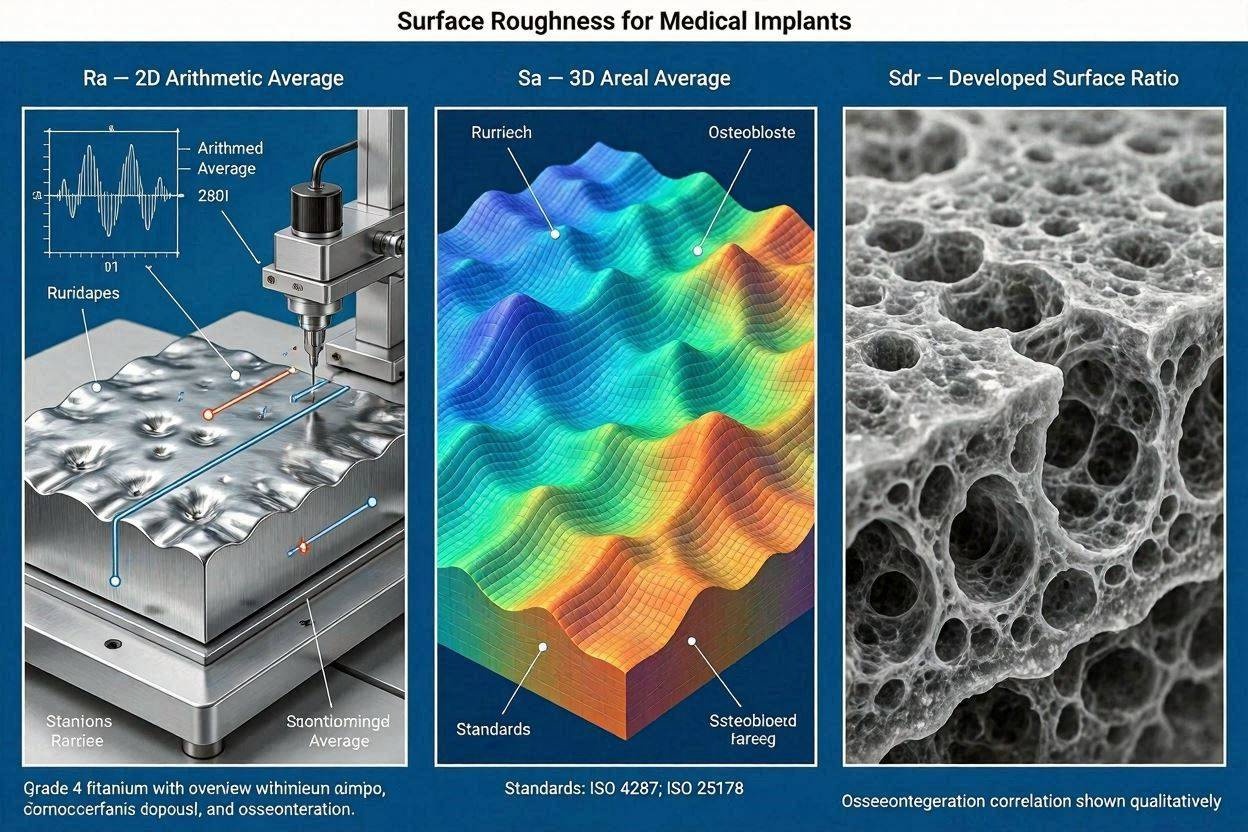
While Sa ratings describe cleanliness, surface profile roughness is described by standardized parameters from ISO 4287 and ISO 8503:
Rz — Mean Maximum Profile Height (Most Used in Blast Spec)
Rz is the average of the maximum peak-to-valley height measured across five consecutive sampling lengths. It is the most commonly used parameter in coating specifications and corresponds closely to what Testex Press-O-Film tape measures. When a coating data sheet specifies “profile 40–70 µm,” it almost always means Rz.
Ra — Arithmetic Mean Roughness
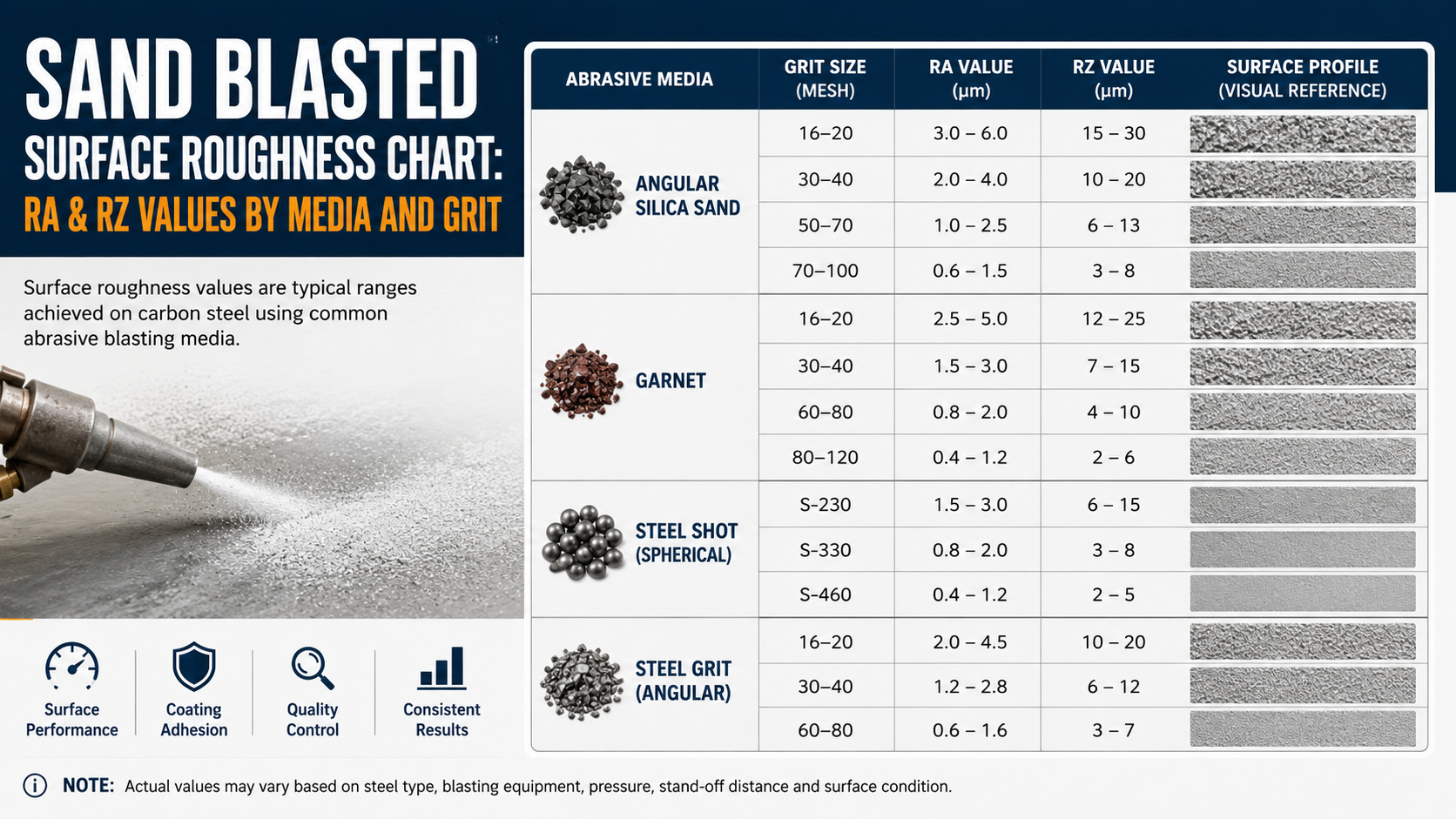
Ra is the arithmetic average of all profile deviations from the mean line. Ra is lower than Rz for the same surface — typically Ra ≈ Rz/5 to Rz/7 for blast-cleaned steel. Some coating specifications use Ra, particularly in precision engineering contexts. Confirm which parameter your specification uses before measuring.
Rmax — Maximum Single Peak-to-Valley Height
Rmax is the single highest peak-to-valley measurement within the evaluation length. Rmax is always higher than Rz. Some immersion service and pipeline specifications set Rmax limits to prevent coating thinning over profile peaks — a phenomenon where the dry film thickness (DFT) over the tops of profile peaks is substantially lower than nominal DFT, creating premature corrosion initiation points.
4. How to Measure Surface Profile
Method A: Visual Comparators (ISO 8503-1)
ISO 8503-1 defines surface profile comparators — pairs of reference plates with known surface profiles (G = shot-blasted, S = grit-blasted) against which the blasted surface is visually compared. Results are described as Fine, Medium, or Coarse for each comparator type. This is a qualitative method — useful for quick field assessment but not sufficient for specification compliance documentation.
Method B: Testex Press-O-Film Tape (ISO 8503-5 / ASTM D4417 Method C)
Press-O-Film tape is pressed firmly against the blasted surface, creating a replica of the profile. The raised replica is then measured with a dial micrometer or spring micrometer at the center of the pressed area. The tape base thickness (127 µm / 5 mils for Standard grade; 254 µm / 10 mils for Coarse grade) is subtracted from the reading to obtain the surface profile depth (Rmax). This is the most widely used field method and is required by many coating and inspection standards.
Method C: Electronic Profilometer (ISO 8503-4)
Digital stylus profilometers measure surface profile electronically, computing Rz, Ra, and Rmax directly from the stylus trace. Results are more precise and reproducible than Testex tape, and the instrument stores data for documentation. Required for high-specification immersion service inspections and some pipeline project documentation.
5. Matching Blast Media to Profile Requirements
| Target Profile (Rz) | Grain d'acier | Aluminum Oxide (BFA) | Grenat | Notes |
|---|---|---|---|---|
| 10–25 µm | G120 | #120–#150 | Not recommended (too coarse) | Thin-film coatings, anodize pre-treatment |
| 25–45 µm | G80 | #80–#120 | 80 mesh | Automotive primers, powder coatings |
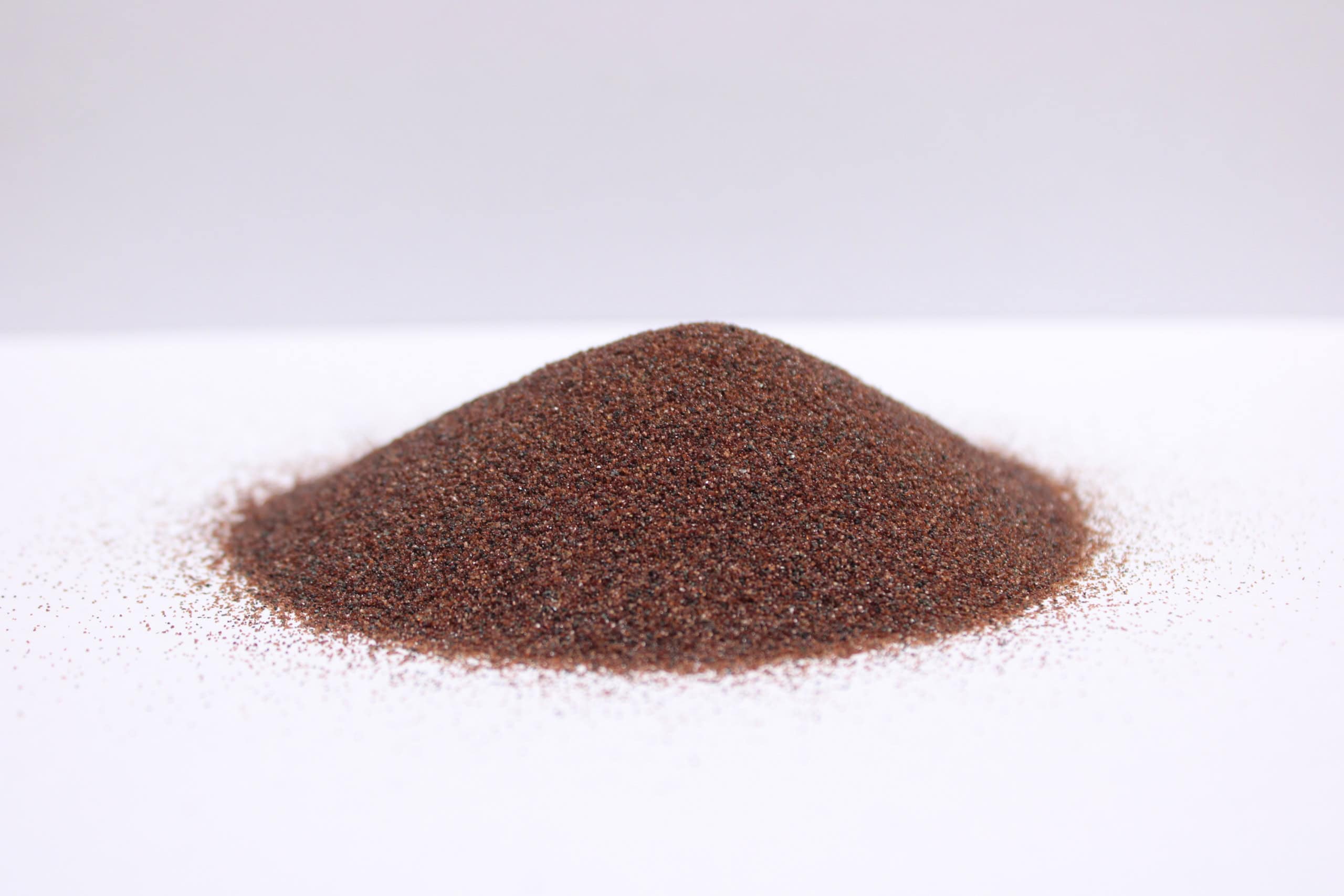
| 40–65 µm | G40–G50 | #46–#60 | 30/60 mesh | Standard epoxy systems — most common spec |
| 50–80 µm | G25 | #36–#46 | 20/40 mesh | High-build epoxy, zinc-rich primers |
| 75–120 µm | G16–G18 | #24–#36 | 16/36 mesh | Offshore high-build, polysiloxane topcoats |
| 100–150 µm | G10–G16 | #16–#24 | 12/20 mesh | Immersion service, extreme environments |
For the complete grit size reference chart with SAE, FEPA, and mesh numbering cross-references, see: Sandblasting Media Grit Size Chart: What Each Mesh Number Means.
6. Common Coating Specifications Decoded
Typical Epoxy Primer Data Sheet (Example)
A typical heavy-duty industrial epoxy primer data sheet surface preparation requirement reads: “Abrasive blast clean to SSPC-SP 10 / Sa 2.5 with an anchor profile of 40–75 µm (1.6–3.0 mils) Rz.”
Decoding this specification: SSPC-SP 10 = Sa 2.5 cleanliness; 40–75 µm Rz profile = requires steel grit G40 or garnet 30/60 in an enclosed blast room at standard blast pressures. If you use G80 grit (15–30 µm profile), you will be below the minimum profile — the coating will not achieve its rated adhesion strength. If you use G16 (80–120 µm profile), you will be above the maximum — dry film thickness over profile peaks will be below specification, risking early corrosion.
Offshore Immersion Service (Example)
A coating specification for an offshore splash zone structure: “SSPC-SP 5 / Sa 3 white metal blast; profile 75–100 µm Rz; Rmax not to exceed 150 µm; coating within 4 hours of blast.”
This requires: Sa 3 — only achievable with high-hardness steel grit (GH, HRC 56–65) or aluminum oxide at high blast pressure; G16 or G18 grit to achieve 75–100 µm Rz; Rmax monitoring with an electronic profilometer to ensure profile peaks do not exceed 150 µm; and a tight coating application schedule to prevent flash rust.
7. Profile-Related Coating Failure Modes
- Adhesion loss from insufficient profile: The most common failure mode. Coating “delamination” — sheets of coating lifting away from the substrate — is the visible result. Coating peel-off strength (pull-off adhesion) drops dramatically when profile is below the coating manufacturer’s minimum. Coating can often be removed by hand after failure.
- Pinpoint rust from excessive profile (peaks above DFT): When profile peaks are too high relative to the applied coating film thickness, the coating over each peak may be only 10–20 µm thick — far below the specified 200+ µm nominal DFT. These thin spots are the first corrosion initiation sites, appearing as tiny rust spots (“pinpoint rusting”) within months of application.
- Cathodic disbondment from contaminated surface: Even with perfect profile and cleanliness visually, soluble salt contamination (chlorides, sulfates) left on the surface by inadequate cleaning causes osmotic blistering and accelerated cathodic disbondment. Always test for soluble salts per ISO 8502-6 (Bresle method) when contamination is suspected.
8. Frequently Asked Questions
Get the Right Media for Your Coating Specification
Share your coating data sheet or project specification with Jiangsu Henglihong Technology Co., Ltd. Our technical team will recommend the optimal abrasive grade to achieve your required Sa level and surface profile.
Get Technical Advice →Filtres