Garnet Abrasive Media: Why It’s the Industry Favorite
The complete technical guide to garnet blast media — why low dust generation, low chloride content, and clean surface chemistry make garnet the default choice for marine, offshore, pipeline, and confined-space blasting worldwide.
What Is Garnet Abrasive Media?
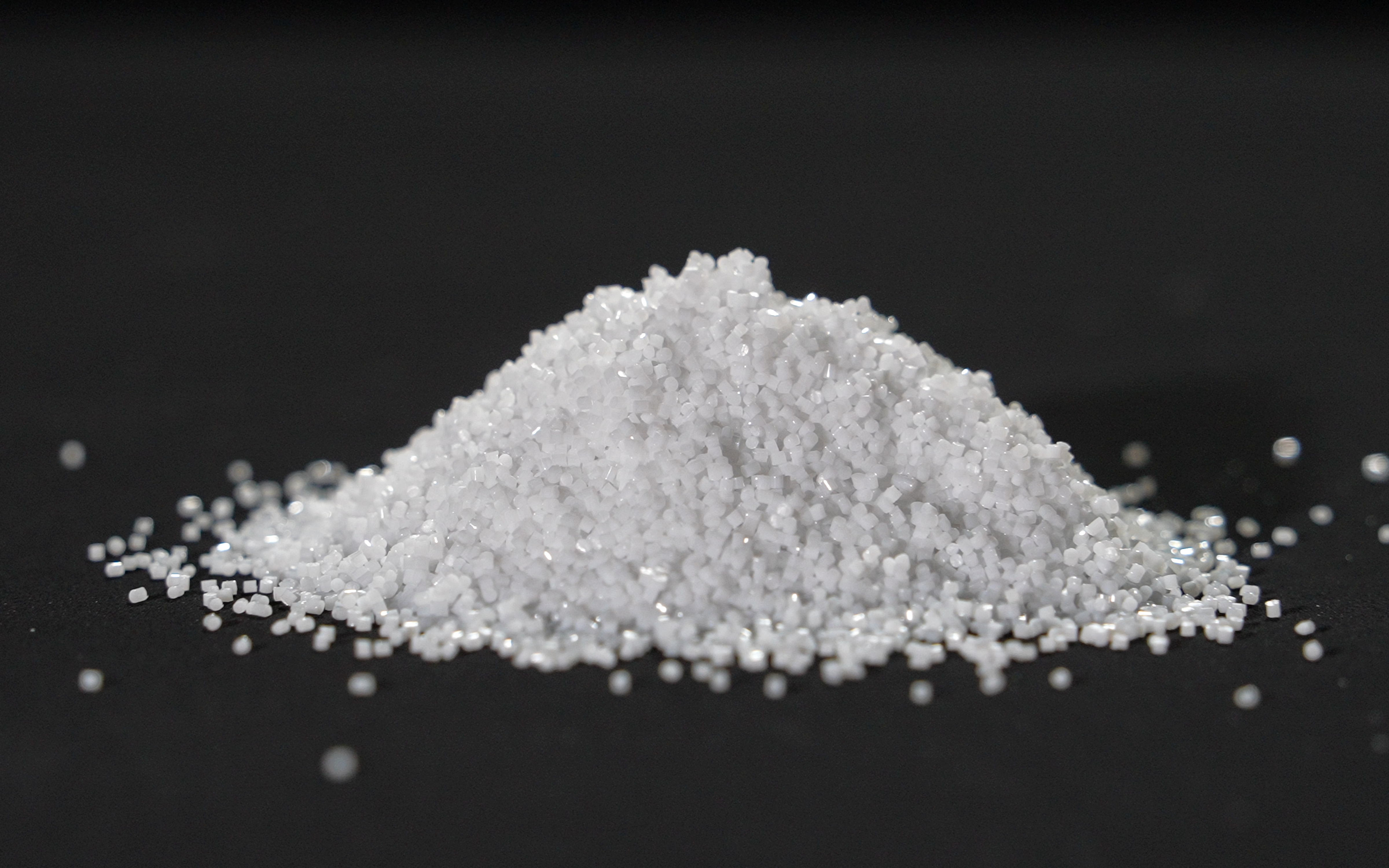
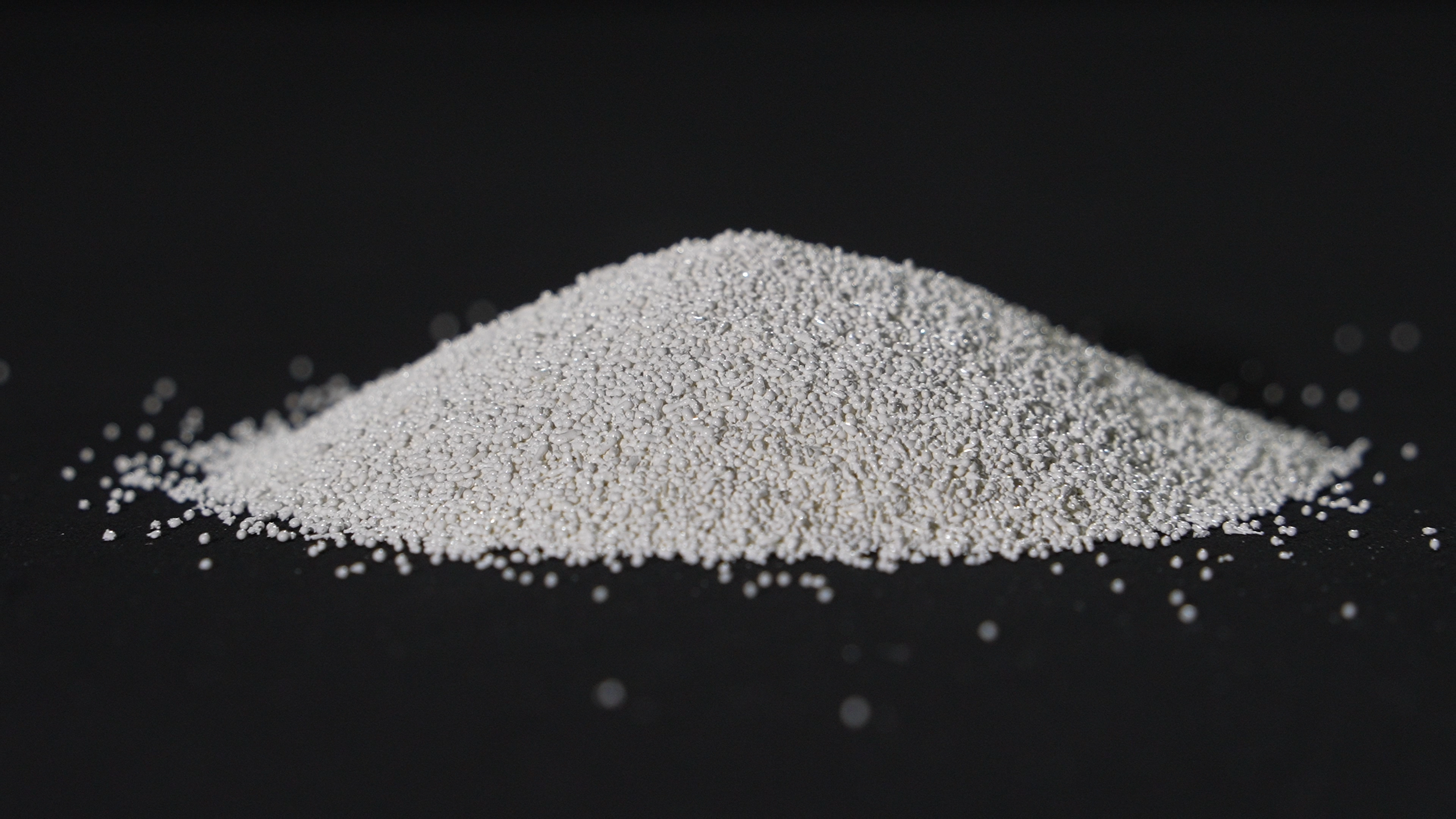
Garnet is a naturally occurring iron-aluminum silicate mineral belonging to the nesosilicate group. In abrasive blast media form, it is mined from alluvial deposits or hard-rock sources, crushed, classified, and screened to precise particle size distributions. The result is a sub-angular abrasive with a hardness of 7.5 to 8.0 on the Mohs scale — hard enough to achieve Near-White Metal cleanliness on steel in a single pass, but structured in a way that fundamentally limits dust generation compared to most competing media.
Garnet’s dominance in marine, offshore, pipeline, and confined-space blasting is not accidental. Three properties distinguish it from other abrasive media in these environments: its very low dust generation (a consequence of its dense, non-friable crystal structure), its low chloride content (critical for corrosion performance under marine coating systems), and its environmentally clean spent media profile (no heavy metals, typically classified non-hazardous). In applications where all three of these properties matter simultaneously — and in marine and offshore work, they always do — garnet has no direct competitor at an equivalent cost point.
For a full side-by-side comparison with aluminum oxide, glass beads, steel grit, and other media types, see our Abrasive Media Comparison Chart.
Garnet Types & Commercial Grades
Not all garnet is equal. The commercial abrasive market draws primarily from three garnet source types, each with distinct mineralogy, density, and performance characteristics. Understanding the source type behind a garnet product is important for specification work and performance prediction.
- Sourced from river and beach deposits — naturally rounded by water erosion
- Almandine mineral species (Fe₃Al₂Si₃O₁₂)
- Very consistent particle shape and size distribution
- Lower iron contamination than hard-rock varieties
- GMA (Australian) garnet is the global benchmark specification
- Best for: Marine, offshore, waterjet, and specification-governed industrial blasting
- Mined from metamorphic rock formations — crushed and screened
- Almandine and andradite species; higher Fe content possible
- Slightly more angular than alluvial grades — more aggressive blasting action
- Wider variation in particle shape between sources
- Generally lower cost per ton than Australian alluvial
- Best for: General structural steel prep, cost-sensitive industrial blasting
- Tightly classified to 80 mesh (180 µm) for waterjet cutting nozzle compatibility
- Strict particle size distribution control to prevent nozzle wear and blockage
- Low moisture content (<0.5%) for consistent flow in high-pressure mixing chambers
- Low free silica confirmed by XRD — critical for operator safety at mixing nozzle
- GMA 80 is the de facto global standard specified by all major waterjet OEMs
- Best for: All abrasive waterjet cutting machines (OMAX, Bystronic, Flow, WARDjet, etc.)
Key Technical Specifications
| Paramètres | Blasting Grade (30–80 mesh) | Waterjet Grade (80 mesh GMA) | Test Method |
|---|---|---|---|
| Mineral species | Almandine garnet (Fe₃Al₂Si₃O₁₂) | XRD analysis | |
| Mohs hardness | 7.5 – 8.0 | Scratch / Vickers | |
| True density (g/cm³) | 3.9 – 4.1 | Pycnometer | |
| Bulk density (g/cm³) | 1.9 – 2.1 | Tap density | |
| Fe₂O₃ (max %) | 33 – 37 (natural mineral) | 33 – 37 (natural mineral) | XRF |
| Free silica (SiO₂ crystalline) | None detected — OSHA compliant | XRD analysis | |
| Chloride content | <25 ppm | <20 ppm | Ion chromatography |
| Water-soluble chloride | <10 ppm | <8 ppm | IC extraction |
| Moisture content | <1.0% | <0.5% | Gravimetric drying |
| Forme des particules | Sub-angular | Sub-angular, tightly graded | Optical imaging |
| Applicable standards | ISO 11126-10 · SSPC AB-3 · MIL-A-22262 | GMA specification · OMAX WJS-80 | — |
Why Garnet Generates Significantly Less Dust Than Most Blast Media
Dust generation is the single most operationally significant variable in confined-space and indoor blasting. High dust levels reduce visibility in the blast zone, increase respiratory risk, require more frequent blast stops for media sweep-up, and accelerate filter replacement in dust collection systems. In offshore and marine environments, excessive dust can contaminate recently blasted adjacent steel surfaces, compromising coating adhesion across a wider area than the active blast zone.
Garnet generates less dust than most competing media for a structural reason: its high specific gravity (~4.0 g/cm³) combined with its low friability means that particles are dense enough to fall out of air suspension quickly after impact, and tough enough not to shatter excessively on impact. The comparison below illustrates relative dust generation across media types at equivalent operating conditions.
Relative Dust Generation — Lower Bar = Less Dust (qualitative comparison at 80 psi, 3/8″ nozzle)
OSHA regulations for confined space blasting (29 CFR 1910.146 and 1926.1153) require tight control of airborne particulate. In a ship ballast tank, pipeline trench, or bridge box girder, reduced dust from garnet directly translates to better operator visibility, lower respiratory exposure, and fewer blast interruptions for mandatory air changes — all of which improve both safety and productivity on the same project.
Grit Size Guide & Surface Profile Reference
Garnet is available in a narrower grit range than aluminum oxide, reflecting its primary application focus: structural steel surface preparation for coating systems. The table below covers the commercially significant garnet grit sizes and the surface profiles they produce at standard blast parameters.
| Grit Size | Particle Size (µm) | Profile Depth | SSPC Cleanliness | Primary Applications |
|---|---|---|---|---|
| 16 – 20 | 1,180 – 850 | 2.5 – 4.0 mil | SP5 / SP10 | Very heavy corrosion removal, maximum profile for thick coating systems |
| 30 | 600 | 2.0 – 3.0 mil | SP5 / SP10 | Heavy industrial steel prep, bridge and infrastructure, offshore jacket prep |
| 36 | 500 | 1.8 – 2.5 mil | SP10 / SP6 | Standard marine and offshore coating prep, pipe exterior coating, structural steel |
| 60 | 250 | 1.2 – 2.0 mil | SP10 / SP6 | General industrial steel prep, moderate corrosion, standard epoxy coating systems |
| 80 | 180 | 0.8 – 1.5 mil | SP10 / SP6 | Waterjet cutting (primary use at this mesh), fine surface prep, thin-film coating systems |
| 120 | 125 | 0.5 – 1.0 mil | SP10 | Fine industrial finishing, stainless steel prep (not recommended due to iron traces), light-duty cleaning |
Garnet contains naturally occurring iron in its mineral structure (Fe₃Al₂Si₃O₁₂). While this iron is tightly bound in the crystal lattice and not freely soluble, there is a risk of iron particle transfer to stainless steel surfaces during blasting, particularly with harder blasting pressures. For stainless steel applications, specify perles de verre ou white fused alumina (WFA) instead.
Industrial Applications
Garnet’s specific combination of moderate hardness, sub-angular shape, low dust, and low chloride content concentrates its use in a well-defined set of applications where these properties matter most.
Marine & Offshore Structure Preparation
Ship hulls, offshore platforms, FPSO vessels, and subsea structures require blast-cleaned steel with low chloride surface chemistry before application of epoxy, vinyl, or polyurethane marine coating systems. Garnet’s <25 ppm chloride content satisfies the most stringent marine coating specifications, including NORSOK M-501 and ISO 12944-4 requirements for aggressive marine environments.
Recommended: 30–60 mesh · SSPC-SP10 · 1.5–2.5 mil profileOil & Gas Pipeline Coating Prep
External and internal pipeline coating specifications (including FBE, 3LPE, coal tar enamel, and liquid epoxy systems) mandate near-white metal cleanliness with tight chloride limits. Garnet is the dominant blast media in pipe coating plants worldwide, where its consistent performance, low dust in enclosed pipe rotating blast systems, and non-hazardous spent media classification all confer operational advantages.
Recommended: 36–60 mesh · SSPC-SP10 · 1.5–2.5 milBridge & Infrastructure Rehabilitation
Bridge rehabilitation projects in urban and environmentally sensitive locations demand blast media that generates minimal dust (protecting adjacent traffic and waterways), produces no hazardous spent media (simplifying disposal on limited jobsites), and consistently achieves SSPC-SP10 cleanliness for the zinc-rich primer systems used on most bridge re-coating specifications.
Recommended: 30–60 mesh · SSPC-SP10 · Low dust variantConfined-Space & Internal Tank Blasting
Blasting inside ballast tanks, storage tanks, pressure vessels, and box girders creates extreme dust exposure for operators. Garnet’s low dust generation directly reduces airborne particulate concentrations, improving operator visibility and respiratory safety. In many confined-space specifications, garnet is the only non-wet-blast option that meets the dust exposure action levels without extraordinary ventilation engineering.
Recommended: 36–60 mesh · Pressure blast · Adequate ventilationAbrasive Waterjet Cutting
GMA 80 mesh garnet is the global standard media for abrasive waterjet (AWJ) cutting machines. Its sub-angular shape, consistent 80-mesh particle size distribution, low moisture content, and controlled hardness deliver the combination of cutting efficiency, nozzle life, and predictable kerf width that the waterjet industry demands. All major waterjet OEMs specify GMA-grade garnet in their operating manuals.
Recommended: 80 mesh GMA waterjet grade · <0.5% moistureGeneral Industrial Surface Preparation
For industrial facilities, fabrication shops, and general maintenance contractors who require a reliable, OSHA-compliant media that achieves SP10 cleanliness without heavy dust management overhead, garnet at 30–60 mesh is a practical, cost-competitive alternative to aluminum oxide where the lower recyclability of garnet is acceptable in exchange for lower dust and easier spent media handling.
Recommended: 30–60 mesh · Pressure blast · Single or double-passGarnet in Waterjet Cutting — A Dedicated Technical Overview
Abrasive waterjet (AWJ) cutting uses a high-pressure water jet (typically 40,000–90,000 psi) combined with an abrasive slurry to cut virtually any material — steel, aluminium, stone, glass, ceramic, composites — with minimal heat-affected zone and exceptional dimensional accuracy. Garnet is the universally specified abrasive for this process, and 80-mesh GMA garnet accounts for the majority of all waterjet abrasive consumption worldwide.
✂️ Waterjet Garnet — Critical Specification Parameters
The following parameters are critical for waterjet cutting performance and nozzle life. Deviating from any of these specifications will result in reduced cutting speed, inconsistent kerf width, accelerated nozzle wear, or nozzle plugging.
An important distinction for waterjet operators: waterjet-grade garnet is not the same product as blasting-grade garnet, even at the same nominal mesh size. Waterjet grade is held to tighter particle size distribution tolerances, lower moisture content, and more consistent shape distribution than standard blasting grade. Specifying standard blasting garnet in a waterjet machine increases nozzle wear, causes inconsistent kerf quality, and may plug mixing chambers. Always specify waterjet-grade (GMA 80 or equivalent) for cutting applications.
Pros & Cons of Garnet Abrasive Media
✓ Advantages
- Faible production de poussière — best-in-class for confined-space and indoor blasting
- Low chloride content (<25 ppm) — safe for marine and aggressive corrosion environment coating specs
- No heavy metals — spent media typically non-hazardous; easier and cheaper disposal
- Sub-angular shape — clean, controlled anchor profile (1.5–2.5 mil) for standard coating systems
- OSHA-compliant — no free crystalline silica
- Waterjet cutting standard — GMA 80 mesh universally specified by all major OEMs
- Self-sharpening fracture — fresh angular faces maintained through use
- Environmentally favourable — natural mineral; spent garnet often re-used as construction aggregate
✗ Limitations
- Lower recyclability (1–3 cycles) — higher per-cycle cost than aluminum oxide or steel abrasives at scale
- Cannot achieve profiles above 3.0 mil without very high pressure — use steel grit or coarse Al₂O₃ for deep-profile applications
- Natural mineral variability — particle shape and composition vary between mining sources; specify source or GMA standard for consistency
- Not suitable for stainless steel — iron mineral content risks surface contamination
- Not compatible with wheel blast machines — use steel abrasives for centrifugal wheel systems
- Higher cost than crushed glass — single-use economics require volume justification vs the cheapest alternatives
Garnet vs Other Blast Media
| Comparison | Grenat | Alternative | Choose the Alternative When |
|---|---|---|---|
| vs Oxyde d'aluminium | Lower dust, lower chloride, simpler disposal; 1–3 cycle recycling | Harder (Mohs 9), recyclable 5–10×, wider grit range, lower per-cycle cost at volume | High-volume operations with reclaim system; deeper profiles required; cost per cycle is the primary metric |
| vs Perles de verre | Creates anchor profile; harder; better for rust removal | Smooth peened finish; zero iron; safe on stainless; better for appearance-critical work | Stainless steel, decorative finishes, or shot peening for fatigue life improvement |
| vs Grain d'acier | No iron contamination, no wheel blast requirement, non-hazardous disposal | 100+ cycle recyclability, deepest profiles, lowest per-cycle cost at production scale | High-volume fabrication wheel blast lines where steel substrate contamination is irrelevant |
| vs Crushed Glass | Lower dust, more consistent profile, lower chloride, recyclable 1–3× | Cheaper per bag; widely available; acceptable for single-pass outdoor structural work | Budget is the sole driver; dust and chloride are not specified; single-pass outdoor work only |
| vs Coal Slag | No heavy metals (no As, Cd, Pb); lower chloride; cleaner spent media | Lower cost per bag; moderate dust | Projects without environmental restrictions on heavy metals in spent media |
Environmental & Disposal Advantages
Garnet’s environmental profile is one of its most commercially significant, yet least-discussed, advantages. In an era of increasing regulatory scrutiny on blast media waste — particularly on infrastructure projects with waterway adjacency, EPA oversight, or LEED/environmental certification requirements — garnet’s clean chemistry simplifies compliance considerably.
Non-Hazardous Spent Media Classification
Garnet itself contains no RCRA-regulated heavy metals (lead, chromium, cadmium, arsenic, barium, mercury, selenium, silver). When blasted onto clean steel without a pre-existing lead-based or chromate-containing coating, spent garnet blast media consistently passes TCLP (Toxicity Characteristic Leaching Procedure) testing and is classified as non-hazardous solid waste under 40 CFR Part 261. This classification allows disposal in standard solid waste landfills at costs of $30–$80 per ton — compared to $150–$400+ per ton for hazardous waste from lead-paint blasting projects regardless of media type.
Secondary Use as Construction Aggregate
The high specific gravity, chemical inertness, and angular shape of spent garnet make it suitable for reuse as a construction aggregate in asphalt filler, concrete admixture, anti-skid road surface dressing, and sports surface infill. Several major infrastructure contractors have established garnet recycling programs that divert the majority of spent garnet from landfill entirely — improving both environmental performance and project economics.
The above applies to garnet used on uncoated or clean steel. When blasting painted steel of unknown coating history — particularly on structures built before 1980 where lead-based paint is probable — spent garnet may absorb lead and other regulated metals from the removed coating. This contaminated spent media must be characterised by TCLP testing before disposal regardless of media type. Garnet itself does not introduce regulated metals; the hazard comes from the substrate coating, not the blast media.
Safety & Regulatory Compliance
OSHA Crystalline Silica
Almandine garnet is an iron-aluminum silicate mineral. The silica within the garnet crystal structure is tightly bound in the mineral lattice as amorphous silicate — not free crystalline silica. OSHA’s crystalline silica standard (29 CFR 1910.1053 / 1926.1153) regulates free crystalline silica (quartz, cristobalite, tridymite) — not silicate minerals. Garnet XRD analysis consistently shows no detectable free crystalline silica. Henglihong garnet is fully OSHA compliant and carries no silicosis risk.
Required PPE for Garnet Blasting
- Supplied-air respirator (NIOSH Type CE): Required for all abrasive blasting regardless of media type, due to general airborne particulate and substrate contamination (including potential lead from old coatings).
- Blast helmet and face shield: Particle rebound at blast pressure is sufficient to cause serious eye and facial injury without protection.
- Leather or canvas blast suit: Full body coverage against particle impact.
- Hearing protection: Blast noise routinely exceeds 90 dB(A) in production environments.
For the full safety framework including ventilation engineering controls, confined space permitting, and hazard communication requirements, see our Abrasive Media Safety Guide: OSHA Standards & PPE Requirements.
Ordering Garnet from Jiangsu Henglihong Technology
Jiangsu Henglihong Technology supplies both alluvial and hard-rock garnet grades, providing chloride certification and XRD silica analysis with every production batch. Our waterjet-grade garnet meets GMA 80 mesh specifications and is cleared for use in all major waterjet OEM platforms including OMAX, Flow, Bystronic, and WARDjet machines.
For marine and offshore projects requiring NORSOK M-501, ISO 12944, or SSPC-PA-Guide compliance documentation, we provide full material traceability from mine source through production and dispatch. Contact our technical sales team to discuss project-specific documentation requirements.
Questions fréquemment posées
Why is garnet used in marine and offshore blasting?
Three properties make garnet the preferred media for marine and offshore surface preparation: its very low dust generation improves operator safety and visibility on confined shipboard and platform work; its chloride content below 25 ppm satisfies the strict surface chemistry requirements of marine coating specifications including NORSOK M-501 and ISO 12944-5; and its non-hazardous spent media classification simplifies disposal at sea or in port without specialist waste handling. No other single blast media delivers all three of these properties simultaneously at a comparable cost point.
What mesh size garnet should I use for structural steel coating prep?
For standard structural steel surface preparation to SSPC-SP10 Near-White cleanliness with a 1.5–2.5 mil anchor profile — the specification required by most epoxy, polyurethane, and zinc-rich primer systems — 36 or 60 mesh garnet is the most commonly specified choice. For heavier corrosion requiring a deeper profile (2.0–3.0 mil), use 30 mesh. Always verify against the coating manufacturer’s surface preparation datasheet before finalising grit selection.
Can garnet be used in a waterjet cutting machine?
Yes — but only waterjet-grade (GMA 80 mesh) garnet should be used. This is a tighter specification than standard blasting garnet, requiring controlled particle size distribution (<5% oversize, <10% undersize), moisture content below 0.5%, and consistent sub-angular shape. Standard blasting-grade garnet at nominally the same mesh will cause accelerated nozzle wear, inconsistent kerf quality, and mixing chamber plugging. Specify GMA 80 waterjet grade and verify the product meets OEM specifications for your specific machine.
Is garnet safe to use — does it contain silica?
Yes, garnet is safe from a crystalline silica standpoint. Almandine garnet is an iron-aluminum silicate mineral — the silica within the crystal is chemically bound as a silicate, not free crystalline silica (quartz). OSHA’s crystalline silica standard regulates only free crystalline silica (quartz, cristobalite, tridymite). Garnet XRD analysis consistently shows no detectable free crystalline silica, and Henglihong garnet is fully OSHA-compliant. Standard blast safety PPE (supplied-air respirator, blast suit, helmet) is still required during use.
How many times can garnet blast media be reused?
Garnet typically achieves 1 to 3 effective blast cycles with a reclaim system. Its relatively low recyclability compared to aluminum oxide (5–10 cycles) or steel abrasives (100+ cycles) is a known limitation. However, garnet’s lower per-bag cost compared to aluminum oxide, combined with the operational and compliance advantages of low dust and non-hazardous spent media, often makes the economics comparable or favourable in the specific applications — marine, offshore, confined-space — where garnet is the preferred choice.
What is the difference between alluvial and hard-rock garnet?
Alluvial garnet is sourced from river or beach deposits where natural erosion over thousands of years has worn the particles to a more consistent, rounded shape with lower surface contamination. The benchmark product is GMA (Garnet Manufacturers Association) Australian alluvial garnet — the most consistent and specification-reliable garnet on the market. Hard-rock garnet is mined directly from metamorphic rock formations, crushed, and screened. It tends to be slightly more angular, slightly less consistent in shape, and generally lower in cost per ton. For marine and specification-governed work, alluvial (GMA) garnet is the correct specification. For general industrial blasting where cost is the primary driver, hard-rock garnet is a practical alternative.
Ready to Order Garnet Abrasive Media?
Blasting grade and GMA 80 waterjet grade available — 25 kg bags to full container loads. Chloride certification and XRD silica analysis included with every shipment.
Request a Quote View All Abrasive Media Products →Filtres