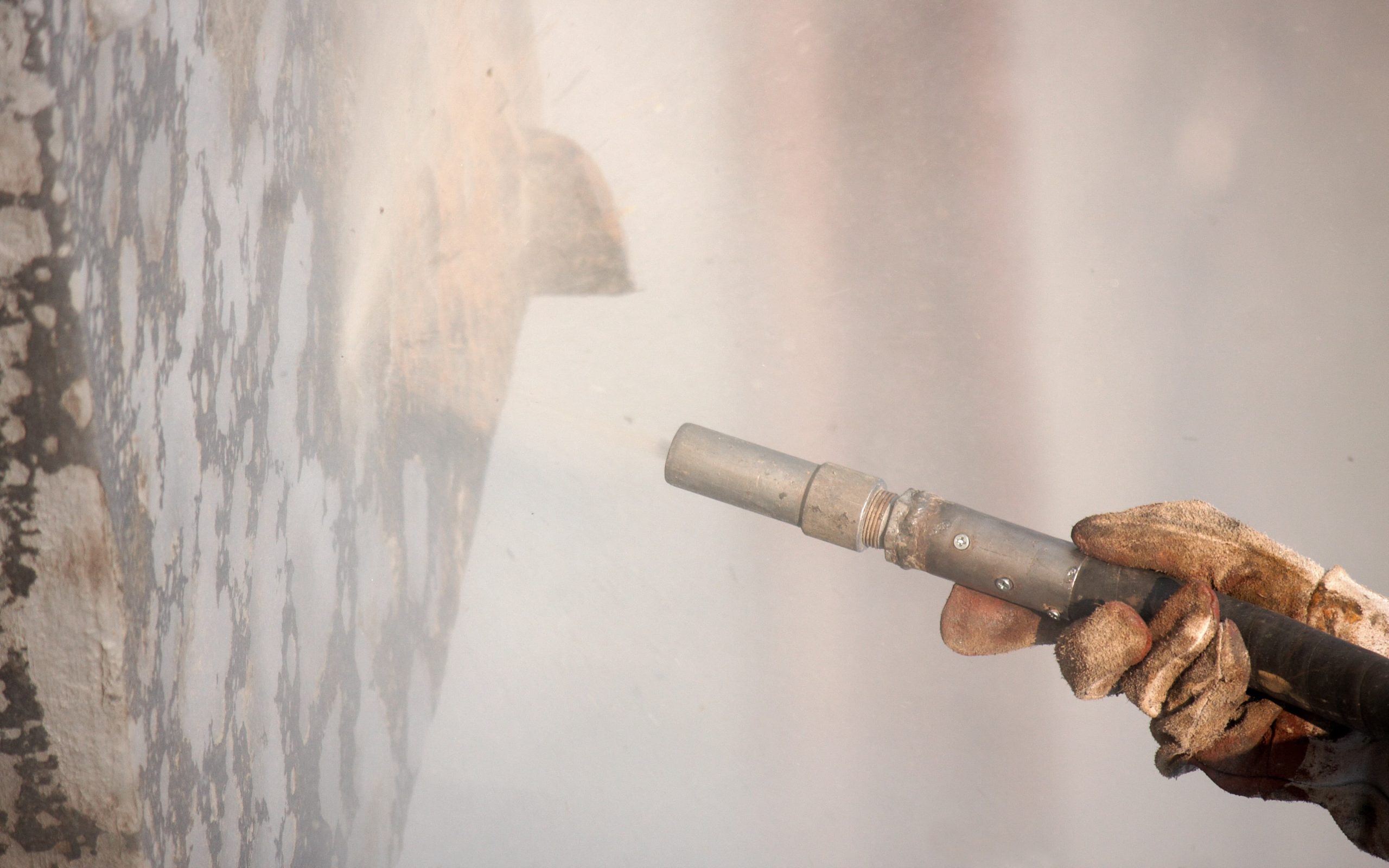
Eco-Friendly Abrasive Media: Walnut Shell, Corn Cob & Beyond
A complete guide to biodegradable and low-impact abrasive blast media — walnut shell, corn cob, wheat starch, and sodium bicarbonate. When organic and soft media is the right call, what each type can and cannot do, key safety considerations, and how they compare to mineral and synthetic alternatives.
What Are Eco-Friendly Abrasive Media?
Eco-friendly abrasive blast media is a broad category covering any blasting material derived from natural, agricultural, or low-toxicity sources that offers meaningfully lower environmental impact than conventional mineral or metallic abrasives — through biodegradability, non-toxic spent media classification, absence of heavy metals, renewable sourcing, or reduced worker health risk.
In practice, the most widely used eco-friendly blast media are four types: walnut shell (crushed black walnut shell), corn cob (ground corn cob granules), wheat starch (structured starch granules), and sodium bicarbonate (baking soda). All four are significantly softer than any mineral abrasive — Mohs hardness of 3.0 to 4.0 for walnut and corn cob, and 2.5 or below for wheat starch and baking soda — which makes them appropriate for a specific set of applications where substrate sensitivity, contamination risk, or environmental disposal requirements make harder media impractical.
These media do not replace mineral or metallic abrasives for heavy rust removal or anchor profile creation. They are specialist tools for specific applications. For guidance on choosing between eco-friendly and mineral media, see our complete media selection guide.
Four Main Types Compared
- Crushed black walnut shell, angular to sub-angular particles
- Hardest of the organic media — Mohs ~3.5–4.0
- Removes carbon deposits, oil, paint, and light oxidation without scratching aluminium, brass, or soft metals
- Standard for carburettor, engine bay, and cast aluminium cleaning
- Also widely used for tumble polishing of soft metals and jewellery
- Absorbs oil during blasting, helping to clean oily surfaces
- Ground from the woody core of dried maize cobs, rounded angular particles
- Slightly softer than walnut shell — Mohs ~3.0–3.5
- Highly absorbent — excellent for degreasing and moisture removal simultaneously with blasting
- Standard media for vibratory tumbling of brass, copper, and precious metals
- Used for gentle surface cleaning of stone, masonry, and historic building materials
- Low dust generation relative to other organic media
- Manufactured from wheat starch processed into angular structured granules
- Very soft — Mohs ~2.5–3.0 — gentler than walnut or corn cob
- Specifically designed for paint stripping from aircraft composites and aluminium where even plastic media is too aggressive
- Biodegradable and water-soluble — spent media disposal is straightforward
- Used by commercial aviation MRO as an alternative to methylene chloride chemical stripping
- Higher cost than walnut or corn cob; used in precision applications
- Pure food-grade sodium bicarbonate (NaHCO₃) in controlled crystal size
- Softest blast media available — Mohs ~2.5; dissolves on contact with water
- The only blast media that can be used on glass, rubber seals, and food contact surfaces without damage
- Leaves a light alkaline residue that inhibits flash rust on ferrous substrates
- Water-soluble — completely rinse-away cleanup; zero solid waste
- Used for graffiti removal from historic masonry, food equipment cleaning, fire damage restoration
Technical Specifications
| Paramètres | Walnut Shell | Corn Cob | Wheat Starch | Bicarbonate de sodium |
|---|---|---|---|---|
| Source material | Black walnut shell | Maize cob core | Wheat grain starch | Mineral / synthetic NaHCO₃ |
| Mohs hardness | 3.5 – 4.0 | 3.0 – 3.5 | 2.5 – 3.0 | ~2.5 |
| True density (g/cm³) | ~1.3 | ~1.2 | ~1.5 | ~2.2 |
| Forme des particules | Angular / sub-angular | Sub-angular, granular | Angular, structured | Crystalline, irregular |
| Surface profile created | Zero to trace — no measurable anchor profile (all types) | |||
| Iron contamination | None — fully safe on all metals and composites | |||
| Crystalline silica | None — OSHA compliant (all types) | |||
| Biodegradable | Yes | Yes | Yes | Yes — water soluble |
| Combustible dust risk | Yes — controls required | Yes — controls required | Yes — controls required | No — inorganic salt |
| Recyclabilité | 3–6 cycles | 3–5 cycles | 2–4 cycles | Single use |
| Spent media disposal | Compostable or landfill | Compostable or landfill | Compostable or water-wash | Water rinse — no solid waste |
| Typical grit/mesh range | 8 – 60 mesh | 4 – 40 mesh | 30 – 60 mesh | Fine / Medium crystal |
Industrial Applications
Engine Bay & Cast Aluminium Cleaning
Carbon deposits, baked-on oil, and surface oxidation on carburettors, intake manifolds, valve covers, and engine housings require a media that cuts through carbon without abrading the soft aluminium casting. Walnut shell at 12–20 mesh strips these deposits efficiently while leaving the aluminium substrate intact and scratch-free. This is the most established application of walnut shell blast media in automotive maintenance.
Walnut shell 12–20 mesh · 40–55 psi · Suction cabinetJewellery & Precious Metal Polishing
Corn cob in vibratory tumbling machines is the standard finishing medium for gold, silver, platinum, and copper jewellery after forming and soldering. The granules polish surfaces to a bright lustre, remove light oxidation and flux residues, and dry components without scratching. The gentle abrasion of corn cob produces the “just polished” finish that customers expect without the labour of hand polishing each piece.
Corn cob 20–40 mesh · Vibratory tumbler · Dry or with polish compoundAircraft Paint Stripping (Wheat Starch)
Wheat starch blast media is used in commercial and military aviation MRO for stripping paint from carbon-fibre composite, glass-fibre, and thin aluminium aircraft structures where even the softest plastic media grades carry a fibre-exposure risk. Wheat starch’s very low hardness and structured particle geometry remove paint layers without impacting the composite surface, and the biodegradable spent media simplifies environmental compliance at MRO facilities.
Wheat starch 30–40 mesh · 30–50 psi · Aviation specificationsHistoric Building & Masonry Cleaning
Cleaning soot, biological growth, graffiti, and weathered coatings from stone, brick, terracotta, and decorative masonry facades requires media soft enough not to erode the stone surface. Both corn cob and sodium bicarbonate are used for this application — corn cob for moderately soiled surfaces, sodium bicarbonate (which dissolves on contact with water) for surfaces where zero solid residue in the stonework is required, such as historic listed buildings.
Corn cob 8–20 mesh or soda blast · 30–60 psi · Wet rinse afterFood Equipment & Food Contact Surfaces
Cleaning bakery equipment, food processing machinery, conveyors, and food contact surfaces requires a media that leaves no harmful residue and meets food safety standards. Sodium bicarbonate (food-grade NaHCO₃) is the only blast media appropriate for use on food contact surfaces — it is a recognised food additive, water-soluble with complete rinse-away cleanup, and leaves a mildly alkaline residue that is compatible with food safety protocols.
Sodium bicarbonate medium crystal · 40–80 psi · Water rinse · NSF compliantFire & Smoke Damage Restoration
Restoration of fire-damaged structures and contents requires removing carbon char, smoke residue, and odour-laden deposits from surfaces without further damaging already weakened materials. Sodium bicarbonate blast is the preferred method — it neutralises acidic smoke deposits chemically while removing them physically, leaves no harmful residue, and the water-soluble spent media rinses away completely without contaminating the structure or adjacent surfaces.
Sodium bicarbonate medium crystal · 40–70 psi · HEPA vacuum & wet rinseGraffiti Removal from Sensitive Surfaces
Graffiti removal from heritage stonework, brick, glass, and painted surfaces using abrasive blasting risks damaging the substrate if media is too hard. Sodium bicarbonate is uniquely suited to graffiti removal from sensitive surfaces because it is soft enough to remove paint without etching stone or glass, water-soluble for clean removal without residue, and can be applied in wet-blast mode to eliminate all dust in public environments.
Sodium bicarbonate fine crystal · 30–50 psi · Wet blast preferred in public areasGun Cleaning & Firearms Maintenance
Walnut shell media in a blast cabinet is widely used by gunsmiths and armourers for cleaning carbon, powder residue, and copper fouling from gun actions, barrels, and components. The angular walnut particles strip fouling without removing bluing, parkerising, or cerakote finishes, and without introducing the micro-scratches that wire brushing creates on polished lock surfaces and barrel interiors.
Walnut shell 20–40 mesh · 30–50 psi · Suction cabinetEnvironmental & Sustainability Benefits
On infrastructure, renovation, and commercial projects with LEED certification goals or EPA environmental compliance requirements, specifying biodegradable abrasive media for applicable tasks can contribute to materials credits, waste reduction documentation, and reduced regulatory burden on spent media disposal. The switch from chemical stripping to wheat starch or soda blast also eliminates HAP (Hazardous Air Pollutant) reporting obligations that apply to facilities using methylene chloride or NMP-based strippers above de minimis thresholds.
Pros & Cons of Eco-Friendly Blast Media
✓ Advantages
- Biodegradable and renewable — agricultural co-products with low environmental footprint
- No heavy metals — spent media typically non-hazardous; compostable or standard landfill disposal
- Zero iron contamination — fully safe on all metals, composites, and food contact surfaces
- No crystalline silica — OSHA compliant; no silicosis risk
- Will not damage soft or sensitive substrates — Mohs 2.5–4.0 is softer than all metals
- Eliminates chemical strippers — removes methylene chloride and NMP from facility
- Sodium bicarbonate unique properties — food-safe, water-soluble, zero solid waste, works on glass and rubber
✗ Limitations
- Cannot remove heavy rust or mill scale — too soft to cut through substantial corrosion products
- Cannot create anchor profiles — not suitable when coating adhesion profile is required
- Combustible dust hazard (walnut, corn cob, wheat starch) — explosion risk in enclosed blast areas without controls
- Higher moisture sensitivity — organic media clumps if stored damp; must be kept dry
- Lower recyclability than mineral abrasives — 2–6 cycles vs 5–10 for Al₂O₃
- Sodium bicarbonate single-use only — higher per-cycle cost for volume applications
- Slower cleaning rates than mineral media for equivalent tasks
How Eco-Friendly Media Compares to Mineral Alternatives
| Application | Eco-Friendly Choice | Mineral Alternative | Which to Choose |
|---|---|---|---|
| Carbon removal from Al castings | Walnut shell 12–20 mesh | Glass beads 80–120 | Walnut shell: more aggressive carbon removal. Glass beads: finer finish on machined surfaces |
| Aircraft composite paint stripping | Wheat starch 30–40 mesh | Plastic media melamine 30 | Wheat starch gentler; plastic media faster. Both suitable for CFRP — wheat starch biodegradable |
| Jewellery & precious metal polishing | Corn cob 20–40 mesh (vibratory) | Glass beads 150–230 | Corn cob: bulk vibratory tumbling; glass beads: blast cabinet precision finishing |
| Food equipment cleaning | Sodium bicarbonate medium | None suitable | Soda blast is the only option for food contact surfaces — no mineral media is food-safe |
| Historic masonry cleaning | Corn cob or sodium bicarbonate | Glass beads (very fine) | Organic media or soda blast preferred for conservation; glass beads risk etching soft stone |
| Structural steel rust removal | Not suitable | Garnet 30–60 orAl₂O₃ 36–60 | Eco media too soft for rust removal; use mineral abrasives for any structural steel prep |
🔥 Combustible Dust — Critical Safety Warning
All three organic blast media types generate combustible dust that can form explosive concentrations in enclosed blast areas, blast cabinets with inadequate dust extraction, and storage areas with accumulations of fine dust. NFPA 652 (Standard on the Fundamentals of Combustible Dust) and NFPA 654 classify agricultural dusts in this hazard category. Operations using organic blast media in enclosed environments must implement: effective dust extraction and collection (HEPA-rated for fine particles); elimination of ignition sources (spark-proof electrical equipment, anti-static earthing of all equipment and personnel); no open flames or hot work within the blast area; regular housekeeping to prevent dust accumulation on surfaces above equipment; and a documented combustible dust hazard analysis per OSHA 1910.119 or NFPA 652. Sodium bicarbonate is not a combustible dust — it is an inorganic salt and carries no fire or explosion risk from the media itself.
Recyclability & Waste Management
Eco-friendly blast media recyclability depends on type, mesh size, and blast pressure. Walnut shell achieves the best recycling performance of the organic group at 3–6 cycles in a cabinet with reclaim; corn cob performs similarly. Wheat starch typically achieves 2–4 cycles before the particle size distribution degrades beyond useful blasting performance. Sodium bicarbonate is single-use — it shatters completely on impact and cannot be reclaimed for reuse.
Spent Media Disposal
The key advantage of organic blast media waste is its classification. Walnut shell, corn cob, and wheat starch spent media from clean substrates (no lead paint, no heavy metals) is classified as non-hazardous organic solid waste and can typically be disposed of by composting, standard landfill, or in some jurisdictions as a soil amendment. Sodium bicarbonate spent media dissolves in rinse water and produces no solid waste stream. This compares very favourably to mineral abrasive spent media, which, while also often non-hazardous from clean substrates, is an inert solid waste without the composting or soil amendment options.
As with all blast media: if you are stripping coatings containing lead, chromate, or other regulated substances, the spent media absorbs those regulated materials and must be characterised by TCLP testing before disposal, regardless of media type. The biodegradable nature of walnut shell or corn cob does not exempt the spent material from hazardous waste classification if it contains leachable heavy metals from stripped coatings. Always confirm the coating composition before selecting a disposal route. See our Safety Guide for full waste characterisation guidance.
Ordering Eco-Friendly Blast Media from Jiangsu Henglihong Technology
Henglihong walnut shell and corn cob media is produced from agricultural co-products to consistent moisture content and particle size distribution, with batch certification available for quality-controlled applications. Our walnut shell grades cover the full range from coarse (8 mesh) for aggressive carbon removal to fine (60 mesh) for precision cabinet applications.
For applications requiring sodium bicarbonate or wheat starch blast media, please contact our technical sales team — we can source and supply these specialist grades with appropriate documentation for your application and regulatory requirements.
Questions fréquemment posées
What is walnut shell blast media used for?
Walnut shell blast media is primarily used for cleaning carbon deposits, oil residue, and surface oxidation from soft metal components — particularly cast aluminium engine parts (carburettors, intake manifolds, valve covers), brass fittings, and die-cast components — where harder abrasive media would abrade or scratch the substrate. It is also used for tumble polishing of coins, hardware, and small metal parts in vibratory tumblers, and for cleaning firearms and gun actions. Its defining characteristic is being hard enough (Mohs 3.5–4.0) to dislodge carbon and light corrosion products, while soft enough not to cut into aluminium, brass, or other soft metal surfaces.
Is corn cob or walnut shell better for jewellery tumbling?
Both are widely used for jewellery finishing in vibratory tumblers, but they serve slightly different purposes. Corn cob at 20–40 mesh is the standard choice for drying, light polishing, and removing flux residues — its highly absorbent nature makes it excellent for degreasing and drying freshly cleaned jewellery pieces. Walnut shell at 20–40 mesh is slightly more aggressive and better for removing light oxidation and burnishing soft metals to a brighter lustre. Many jewellers use corn cob as the final polishing step after walnut shell as a cleaning step. For gold, silver, and platinum, either type can be used with or without polishing compound depending on the desired finish.
Can I use sodium bicarbonate blasting on food equipment?
Yes — sodium bicarbonate (food-grade NaHCO₃) is the only blast media suitable for use on food contact surfaces. It is a recognised food additive (E500), is water-soluble with complete rinse-away cleanup, leaves a mildly alkaline residue that is compatible with food safety protocols, and leaves no mineral or metallic contamination. After soda blasting, rinse the surface thoroughly with clean water and verify that all media and stripped coating residues have been removed before returning to food service. Always use food-grade sodium bicarbonate (not industrial grade) for food contact surface applications and confirm compliance with applicable food safety regulations in your jurisdiction.
Why is walnut shell blast media a fire hazard?
Walnut shell (and corn cob and wheat starch) generates fine organic dust during blasting that, when suspended in air at sufficient concentration, forms a combustible dust cloud that can ignite from a spark, static discharge, or hot surface. This is the same hazard present with flour dust in bakeries or grain dust in elevators — it is not unique to blast media, but it is a real and serious industrial hazard. Minimum ignition energy for agricultural dusts is typically very low (a few millijoules), meaning even small static sparks can initiate an explosion. Controls required include effective dust extraction to maintain dust concentrations below the Lower Explosive Limit, elimination of ignition sources, anti-static earthing, and spark-proof electrical equipment. Sodium bicarbonate does not present this hazard as it is an inorganic salt.
How do I store walnut shell and corn cob blast media?
Organic blast media must be stored in dry conditions, ideally in sealed bags or airtight containers away from moisture sources. Both walnut shell and corn cob are hygroscopic — they absorb atmospheric moisture readily, which causes particle swelling, clumping, and reduced blasting performance. Damp media clogs nozzles and reclaim systems, and may promote mould growth during extended storage. Store in a climate-controlled warehouse or dry storage room; do not store directly on concrete floors (which transmit ground moisture). Check moisture content before use if media has been stored for an extended period — dry in a low-temperature oven (50–60°C) if necessary before blasting.
Can eco-friendly media remove rust from steel?
No. Walnut shell, corn cob, wheat starch, and sodium bicarbonate are all significantly softer than rust (iron oxide, Mohs ~5.5–6.5). They will clean surface contamination, light oxidation, and carbon deposits from steel surfaces, but they cannot cut through substantial rust layers or mill scale. For any meaningful rust removal from steel, you need a mineral or metallic abrasive — aluminum oxide, garnet, steel grit, or steel shot depending on the substrate and profile requirements. Eco-friendly media is the right choice when the steel is clean and you need to remove coatings or surface deposits without profiling the metal; it is not an alternative to mineral abrasives for corrosion removal applications.
Ready to Order Eco-Friendly Blast Media?
Walnut shell and corn cob in all commercial mesh sizes — 25 kg bags to super sacks. Suitable for automotive cleaning, jewellery finishing, and any application where substrate sensitivity and biodegradable disposal are priorities.
Request a Quote View All Abrasive Media Products →Filtres