Ceramic vs Plastic Polishing Media: Engineering-Level Comparison and Selection Guide
Choosing between ceramic polishing media and plastic polishing media is one of the most critical engineering decisions in mass finishing processes, especially when targeting specific surface roughness (Ra), cycle time, dimensional control, and part integrity. While both media types are widely used in vibratory finishing, centrifugal barrel finishing, and drag finishing systems, their material properties, cutting mechanisms, wear behavior, and polishing outcomes differ fundamentally. This page provides an engineering-level comparison of ceramic vs plastic polishing media, focusing on measurable parameters, application boundaries, and selection logic rather than superficial marketing claims.
Relationship Between This Comparison and Ceramic Polishing Media Systems
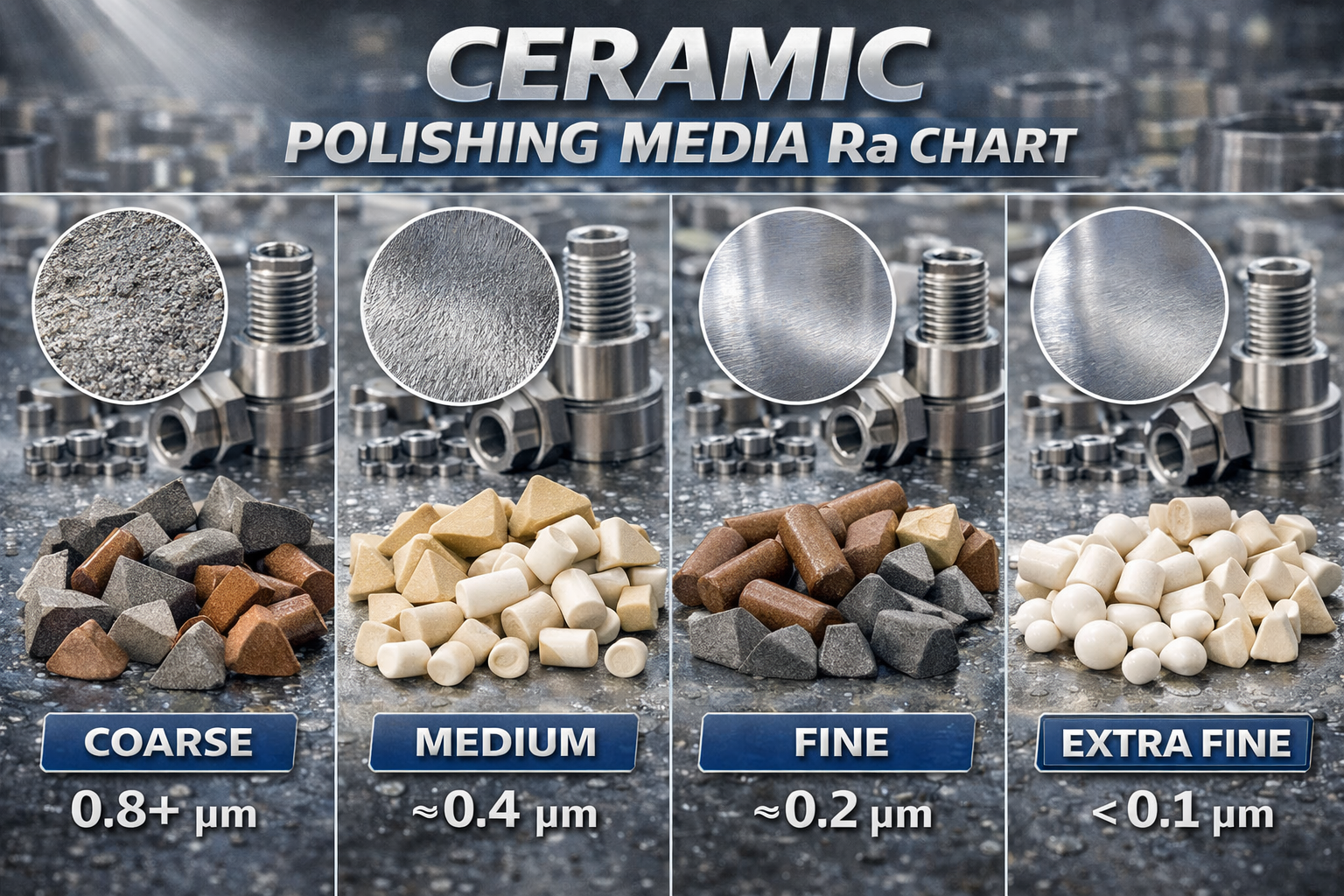
This comparison page functions as a decision-support cluster under the Ceramic Polishing Media pillar. Readers should first understand the fundamentals of ceramic polishing formulations, grades, and surface finish capabilities via Ceramic Polishing Media Grades and the quantitative roughness outcomes detailed in Ceramic Polishing Media Ra Chart. For aluminum-specific decision paths, see Ceramic Polishing Media for Aluminum, which benchmarks both ceramic and plastic solutions in non-ferrous finishing.
Material Composition and Mechanical Properties
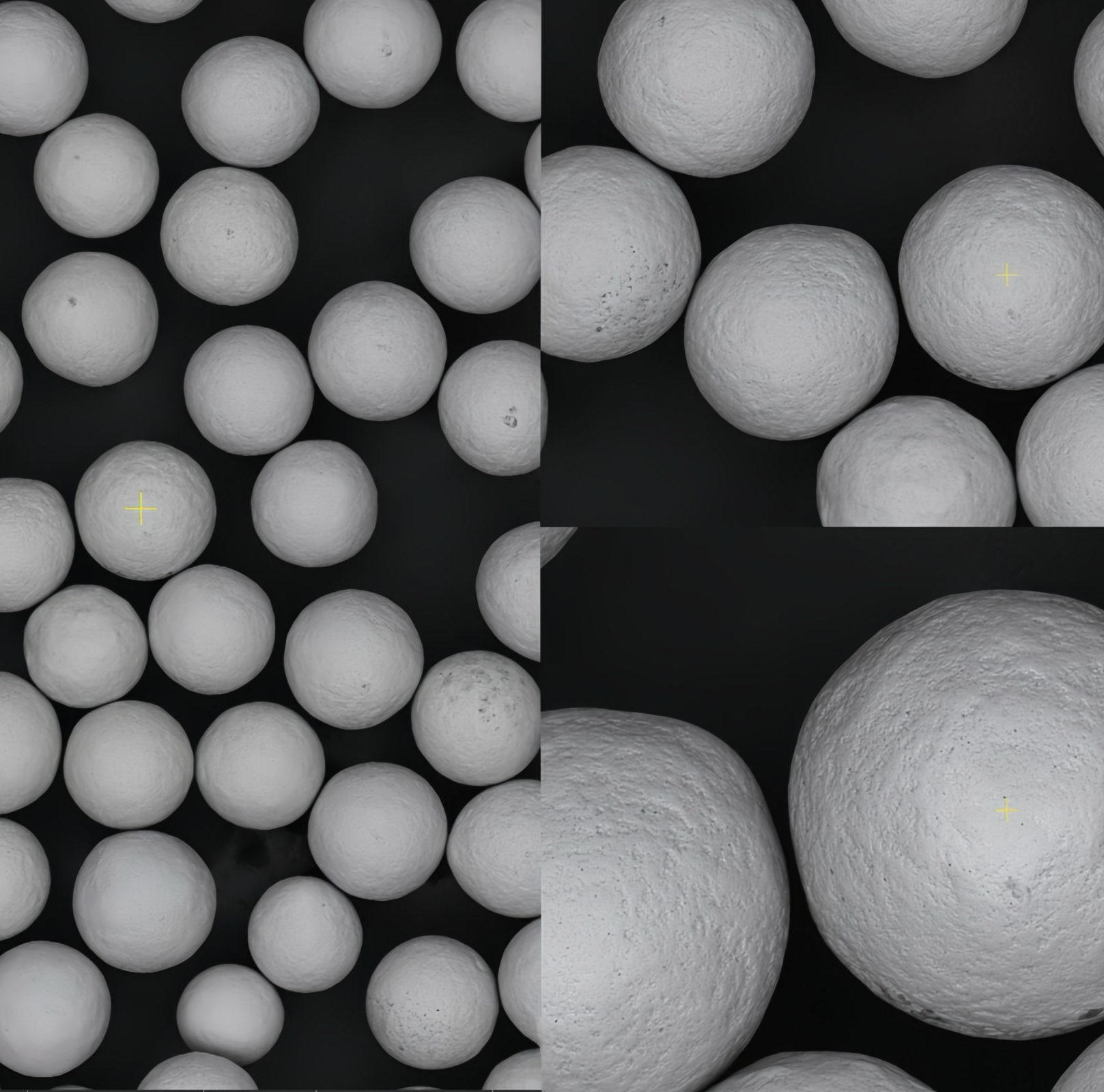
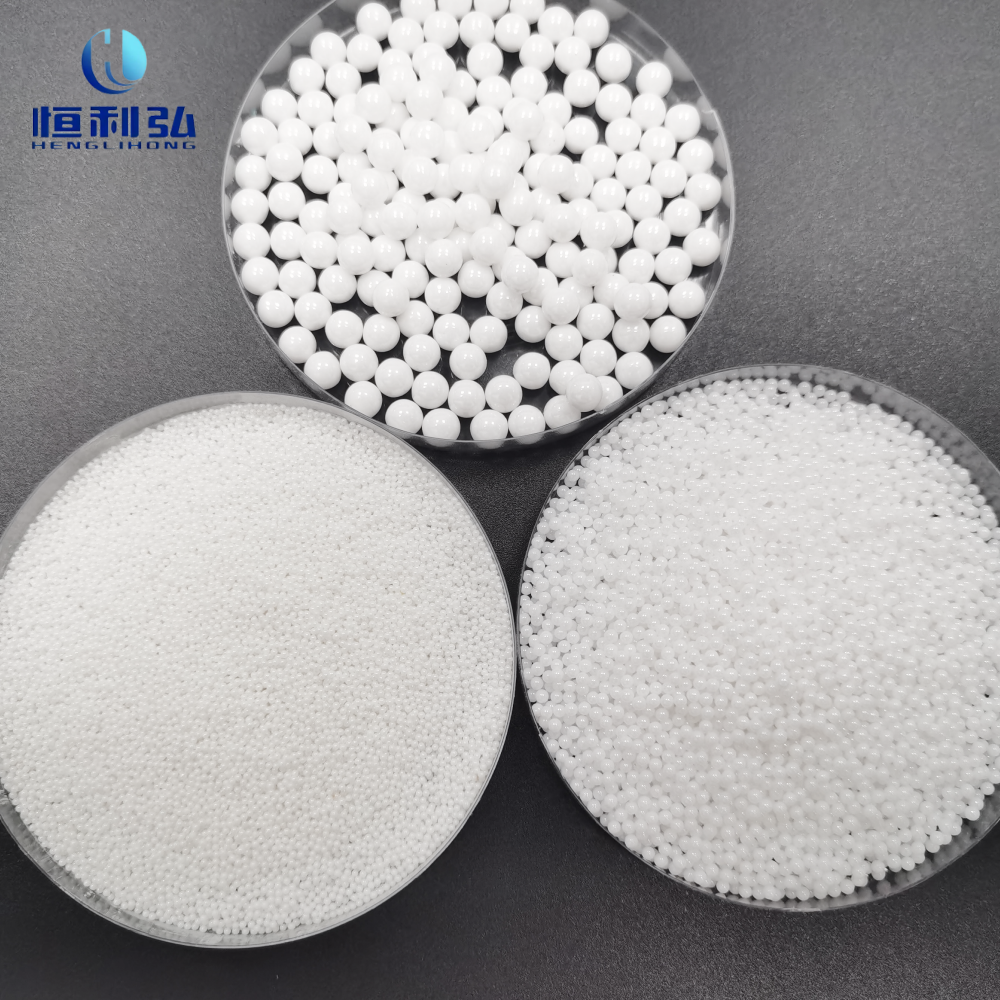
Ceramic polishing media are inorganic, sintered bodies composed primarily of alumina (Al₂O₃), silica, feldspar, and controlled ceramic bonding phases. Plastic polishing media, by contrast, consist of organic polymer matrices (typically polyester or urea-based resins) filled with abrasive grains such as aluminum oxide or silicon carbide. These structural differences directly determine density, hardness, modulus, and long-term wear stability.
| Property | Ceramic Polishing Media | Plastic Polishing Media |
|---|---|---|
| Densité en vrac | 2.2–2.6 g/cm³ | 1.3–1.6 g/cm³ |
| Dureté Mohs | 7.0–9.0 (grade dependent) | 4.0–6.0 (abrasive dependent) |
| Elastic Modulus | High (rigid contact) | Low to medium (compliant contact) |
| Thermal Stability | Excellent, no softening | Limited, resin softening possible |
The higher density and rigidity of ceramic polishing media generate greater normal force at the part-media interface, which directly translates into higher material removal efficiency and more predictable surface modification. Plastic media, with lower density and higher compliance, distribute contact pressure more gently across the surface.
Cutting Mechanism and Surface Interaction Model
Ceramic polishing media operate primarily through controlled micro-cutting and micro-plowing. The abrasive grains are fixed within a hard ceramic matrix, maintaining consistent protrusion height throughout the media lifecycle. This stability allows ceramic media to reduce surface roughness in a linear and repeatable manner, particularly when transitioning from pre-polish to fine polish stages.
Plastic polishing media rely on semi-elastic abrasive embedding. Abrasive grains can partially retract into the resin binder under load, resulting in a burnishing-polishing hybrid effect. While this reduces aggressive cutting, it also limits the achievable Ra floor and introduces variability as the binder wears unevenly over time.
Surface Roughness Performance Comparison (Ra Reduction)
Quantitative surface finish outcomes highlight the fundamental gap between ceramic and plastic polishing media. Based on controlled vibratory finishing tests under identical machine amplitude, compound chemistry, and cycle time, the following Ra trends are consistently observed.
| Initial Surface (Ra) | Ceramic Polishing Media | Plastic Polishing Media |
|---|---|---|
| Ra 3.2 µm | Ra 0.6–0.8 µm | Ra 1.0–1.4 µm |
| Ra 1.6 µm | Ra 0.3–0.4 µm | Ra 0.6–0.8 µm |
| Ra 0.8 µm | Ra 0.15–0.25 µm | Ra 0.35–0.5 µm |
For applications targeting sub-Ra 0.4 µm surfaces, ceramic polishing media consistently outperform plastic alternatives. Plastic media reach a functional plateau where further cycle extension yields diminishing returns.
Dimensional Control and Edge Integrity
Plastic polishing media are often promoted for delicate parts due to their softer contact behavior. However, dimensional control is not solely determined by media softness but by the predictability of material removal. Ceramic polishing media, when properly graded as outlined in Ceramic Polishing Media Grades, offer superior dimensional consistency due to uniform wear rates and stable abrasive exposure.
Plastic media can round edges unpredictably when resin softening occurs, especially in high-energy finishing systems. Ceramic media, despite being harder, allow tighter control over edge break magnitude when size, shape, and cycle parameters are correctly selected.
Media Wear Rate and Process Stability
Ceramic polishing media exhibit low volumetric wear rates, typically 1–3% per 100 operating hours depending on grade and application. Plastic polishing media may exceed 5–8% wear under similar conditions. This difference affects not only consumable cost but also process drift, as worn plastic media change contact mechanics over time.
From a production engineering perspective, ceramic media enable longer process windows with fewer parameter adjustments, making them preferable for high-volume and tightly controlled finishing lines.
Cost Analysis: Media Cost vs Cost per Finished Part
Although ceramic polishing media have a higher initial purchase cost, total cost of ownership often favors ceramic solutions. When normalized by throughput, cycle time reduction, and replacement frequency, ceramic media typically deliver a lower cost per finished part in medium-to-high volume operations.
| Cost Factor | Supports en céramique | Supports en plastique |
|---|---|---|
| Initial Media Cost | Higher | Lower |
| Service Life | Long | Short to medium |
| Process Stability | Haut | Modéré |
| Cost per Part | Lower (long term) | Higher (long term) |
Application-Based Selection Logic
Ceramic polishing media are recommended when surface roughness targets are strict, throughput is critical, and process repeatability is required. Typical applications include aerospace aluminum components, automotive die-cast parts, stainless steel fittings, and precision-machined components. Plastic polishing media remain suitable for extremely thin-walled parts, cosmetic-only finishes, and low-energy equipment where aggressive cutting is undesirable.
For aluminum-specific trade-offs, the detailed decision tree is covered in Ceramic Polishing Media for Aluminum, where plastic media are benchmarked primarily as secondary or pre-polish solutions rather than final finishing tools.
Conclusion: Engineering Preference Over Perception
The choice between ceramic and plastic polishing media should be driven by engineering requirements rather than perceived gentleness or tradition. Ceramic polishing media offer superior control over surface roughness, dimensional consistency, and long-term process stability. Plastic polishing media occupy a narrower niche where compliance outweighs precision. In modern mass finishing environments, ceramic polishing media increasingly replace plastic solutions as surface finish specifications tighten and production efficiency demands rise.
Filtres