Black Beauty Abrasive Blasting Media:
The Complete Buyer’s Guide
Everything industrial buyers, contractors, and surface-preparation engineers need to know — from coal slag chemistry to grit selection, application benchmarks, safety compliance, and bulk sourcing.
1. What Is Black Beauty Abrasive Blasting Media?
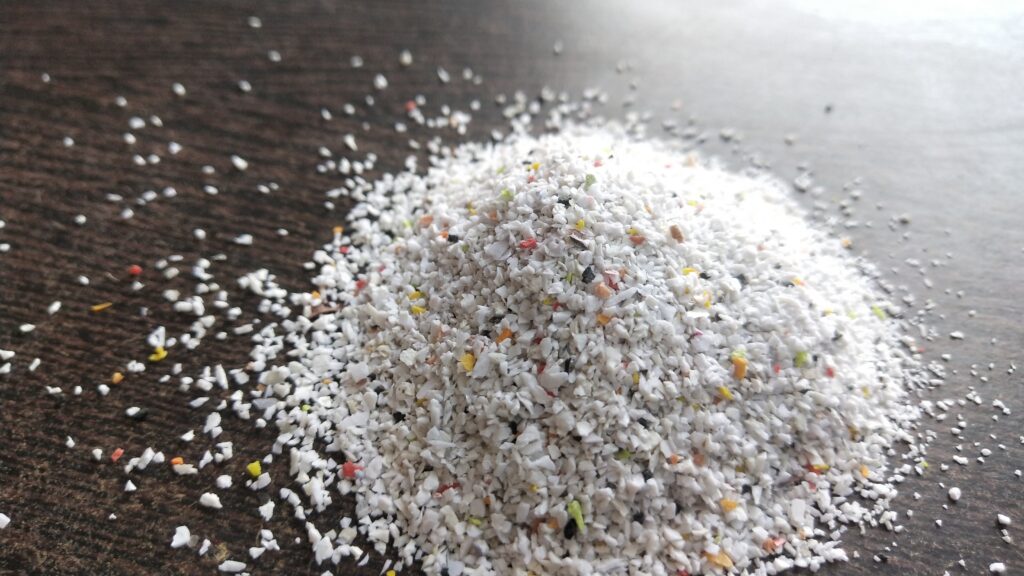
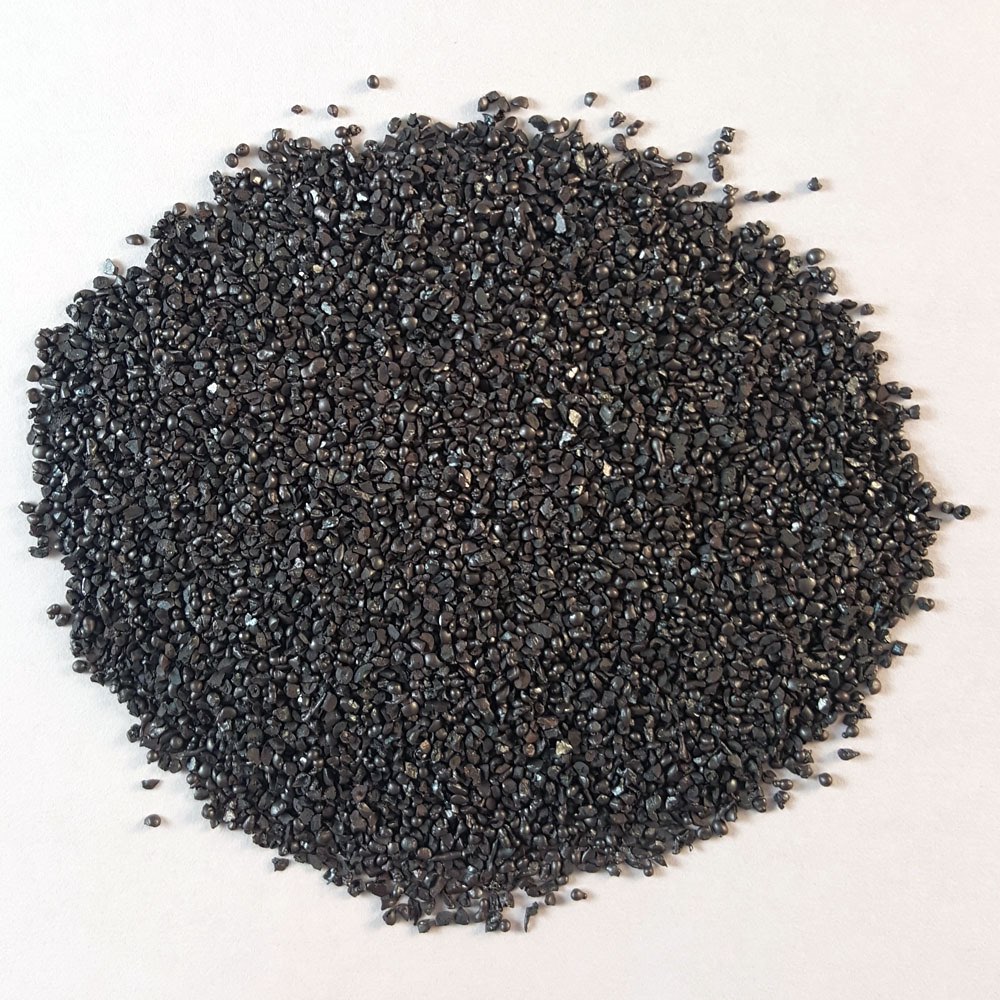
Black Beauty abrasive blasting media is a processed coal slag abrasive — a granular, angular material derived from the vitrified residue of coal combustion at industrial power plants. Dark grey to jet-black in color, it has been one of the most widely specified blast abrasives in North American heavy industry since the 1930s, prized for its combination of fast cutting action, low free-silica content, environmental credentials, and attractive cost-per-cycle economics.
The term “Black Beauty” is a registered trade name originally associated with Harsco Corporation and subsequently carried by several licensed processors and distributors. In the broader market, the name is often used generically to describe any high-quality processed coal slag abrasive that meets the same chemical and mechanical performance standards. Whether you encounter the branded product or a specification-equivalent alternative, the underlying material — boiler slag or fly-ash-derived vitrified silicate — performs according to the same engineering principles.
At its core, Black Beauty is valued for three reasons: it cuts fast due to its angular, sharp-edged particle morphology; it generates low respirable dust because free silica content is kept well below 1%; and it is environmentally positioned as a recycled byproduct that diverts industrial waste from landfill while delivering measurable performance on the job site.
For a deeper dive into coal slag chemistry and how it compares to natural mineral abrasives, see our companion guide: What Is Black Beauty Abrasive? Coal Slag Explained.
2. How Black Beauty Is Made: From Coal Combustion to Classified Grit
Understanding the manufacturing pathway helps buyers evaluate supplier quality claims and predict real-world blasting performance. The production of Black Beauty involves four distinct stages:
- Coal combustion & slag formation. Coal is burned at temperatures exceeding 1,400 °C in industrial boilers or power-plant furnaces. The mineral fraction of the coal — silica, alumina, iron oxides, and calcium compounds — melts, vitrifies, and falls to the bottom of the furnace as molten slag (bottom ash or boiler slag). This rapid cooling produces a glass-like, non-crystalline structure that is fundamentally different from naturally occurring crystalline silica minerals.
- Quenching & solidification. The molten slag is quenched with water, causing it to fracture into irregular, glassy fragments. The quenching rate and water chemistry influence the final particle porosity and surface texture — denser, smoother particles tend to come from faster quenching.
- Crushing & milling. Solid slag chunks are passed through jaw crushers and impact mills. Because the vitrified slag fractures conchoidally (like glass), the resulting particles have sharp, angular edges — a geometry that is critical for efficient mechanical cutting action during blasting.
- Screening, classification & quality control. Crushed material is passed through multi-deck vibratory screens to separate particles by mesh size into the commercial grade bands (Extra Fine, Fine, Medium, Coarse). Samples from each batch are tested for particle size distribution, free-silica content, moisture, and bulk density before release. Premium suppliers also perform TCLP (Toxicity Characteristic Leaching Procedure) testing on every production lot.
The result is a moisture-free, chemically inert abrasive with tightly controlled gradation — the foundation for consistent anchor profiles and predictable blast productivity.
3. Key Technical Properties & Material Composition
No two coal slag sources are chemically identical — variations in feed coal and furnace design alter the oxide ratios. However, premium Black Beauty-grade coal slag consistently falls within the following ranges:
| Property | Typical Value / Range | Significance |
|---|---|---|
| Dureté Mohs | 6.0 – 7.0 | Hard enough to cut rust and paint; softer than garnet or Al₂O₃, so slightly less aggressive on delicate substrates |
| Gravité spécifique | 2.6 – 2.9 g/cm³ | Moderate density; flows well in conventional blast pots without excessive media consumption |
| Densité en vrac | 85 – 100 lb/ft³ (1,360 – 1,600 kg/m³) | Affects pot-loading volumes and weight per bag |
| Free Silica (SiO₂ crystalline) | < 0.1% (some grades < 0.01%) | Critical for OSHA/health compliance; dramatically lower than silica sand (up to 99%) |
| Total SiO₂ (amorphous) | 40 – 55% | Amorphous silica is non-respirable and not a carcinogen; contributes to hardness |
| Al₂O₃ | 20 – 28% | Increases hardness and cutting speed |
| Fe₂O₃ / FeO | 10 – 18% | Responsible for characteristic dark color; influences specific gravity |
| CaO + MgO | 4 – 10% | Affects chemical inertness; calcium iron silicate variants (“Platinum” grades) show higher durability |
| Moisture | < 0.5% | Prevents clumping; enables free flow in pressurized blast pots |
| Forme des particules | Angular, sharp-edged (conchoidally fractured) | Maximizes mechanical abrasion and anchor-profile depth per pass |
For a complete technical data sheet breakdown with nozzle sizing and pressure parameters, refer to our detailed guide: Black Beauty Blasting Media Specifications: Technical Data Sheet Breakdown.
4. Grit Size Guide: Choosing the Right Mesh for Your Job
Grit selection is the single most critical specification decision for any blasting project. The wrong mesh size either leaves the surface under-prepared (coating adhesion failures, re-rust) or over-profiles it (wasted abrasive, excessive anchor pattern that consumes extra primer). Black Beauty is commercially available in four primary grades:
| Grade Name | Mesh Size | Anchor Profile (Mil) | Min. Nozzle Orifice | Typical SSPC-SP Level | Best For |
|---|---|---|---|---|---|
| Extra Fine | 30/60 | 1.0 – 2.6 Mil | 1/8 in. (3.2 mm) | SSPC-SP 6 (Commercial Blast) | Light cleaning, brush-off blast, high-pressure water blast systems, sandblast cabinets |
| Fine | 20/40 | 2.0 – 3.8 Mil | 3/16 in. (4.8 mm) | SSPC-SP 6 / SP 10 | New construction steel, light rust removal, reduced-profile requirements, thin-film coatings |
| Medium | 12/40 | 3.0 – 4.8 Mil | 1/4 in. (6.4 mm) | SSPC-SP 10 (Near-White) | General maintenance blasting, paint and rust removal from structural steel, bridges, industrial equipment |
| Coarse / Heavy | 8/16 or 8/30 | 4.0 – 6.0+ Mil | 5/16 in. (8 mm) | SSPC-SP 5 (White Metal) on heavy substrates | Ship hulls, heavily corroded pipelines, mill scale removal, off-shore structures |
Choosing between grades can be complex when multiple SSPC levels or coating systems are involved. Our dedicated resource walks through every scenario in detail: Black Beauty Grit Size Chart: How to Choose the Right Mesh for Your Job.
5. What Surfaces Can You Blast? Industrial Application Overview
5.1 Structural Steel & Bridges
Structural steel accounts for the majority of Black Beauty consumption globally. Bridge maintenance programs, in particular, specify coal slag abrasives because the material achieves SSPC-SP 10 Near-White cleanliness — the minimum standard for high-performance protective coatings under FHWA and state DOT specifications — at significantly lower cost than garnet or steel grit. Medium-grade (12/40) Black Beauty is the standard specification for bridge recoating, producing a 3.0–4.8 Mil anchor profile compatible with most zinc-rich primer systems.
Read our full application guide: Using Black Beauty Abrasive on Structural Steel Bridges: Best Practices.
5.2 Ship Hulls & Marine Equipment
The maritime industry demands rapid turnaround in dry-dock environments. Coarse Black Beauty achieves aggressive mechanical cleaning of hull plating, ballast tanks, and superstructure steel, removing layers of old antifouling coatings and mill scale in fewer passes than finer media. The material’s angular morphology also creates an optimal keying surface for epoxy and antifouling topcoats. Low chloride content (a consideration for offshore assets) must be verified against supplier certificates of conformance.
Application-specific guidance is available in our guide: Black Beauty Blasting Media for Ship Hull Cleaning: Application Guide.
5.3 Concrete & Masonry
Black Beauty is also used to profile concrete surfaces prior to industrial floor coatings, bridge deck overlays, and waterproofing membranes. The medium and coarse grades open the concrete substrate texture sufficiently for high-build epoxy systems without the over-aggressive scarification that steel shot can produce on slab edges.
5.4 Sandblast Cabinets
At the smaller scale, Extra Fine and Fine-grade Black Beauty are widely used in suction-fed and pressure-fed sandblast cabinets for workshop stripping of automotive parts, hand tools, valves, and fittings. The 30/60 and 20/40 mesh sizes are compatible with the smaller nozzle orifices (1/8–3/16 in.) in bench-top cabinet equipment. Cabinet users should note that Black Beauty fractures to fine dust on impact and is primarily a single-use media — reclamation efficiency is moderate at best.
Cabinet-specific tips and equipment settings: Black Beauty Abrasive for Sandblast Cabinets: Setup, Tips & Compatible Machines.
5.5 Pipelines & Oil Field Equipment
Oil and gas field operators use Black Beauty to prepare pipe exteriors and tank interiors for corrosion-protection coatings. The key advantage here is the combination of low moisture content (preventing flash rusting between blast and coat) and the ability to achieve FBE (Fusion Bonded Epoxy) anchor profiles of 2.5–4.5 Mil using fine to medium grades.
6. Compliance, Certifications & Environmental Standards
Industrial procurement teams and project engineers routinely require documentation of regulatory compliance before approving a blast media supplier. Black Beauty-grade coal slag can satisfy all of the following standards when sourced from a reputable manufacturer:
| Standard / Certification | Scope | Relevance |
|---|---|---|
| SSPC AB 1 | Mineral and Slag Abrasives — quality requirements for mineral and slag abrasives used in surface preparation | Industry baseline for blast media quality; most coating specifications require AB 1 compliance |
| MIL-A-22262B(SH) | Military specification for abrasive blast material for shipboard use | Mandatory for U.S. Navy and Coast Guard vessel maintenance contracts; Extra Fine and Fine grades typically qualified |
| 40 CFR 261.24 (TCLP) | EPA Toxicity Characteristic Leaching Procedure — tests whether spent media is classified as hazardous waste | TCLP-passing slag can often be disposed of as non-hazardous solid waste, dramatically reducing disposal costs |
| OSHA 1910.1000 Table Z-3 | Air contaminants regulation — sets permissible exposure limits for nuisance and respirable dust | Black Beauty’s <0.1% free silica keeps it well under respirable crystalline silica PELs compared to silica sand |
| ISO 11126-3 | Preparation of steel substrates before application of paints — specifications for copper refinery slag | Relevant where international tender documents specify ISO rather than SSPC |
| NACE SP0188 | Discontinuity (Holiday) Testing of New Protective Coatings | Downstream coating quality standard; proper blast preparation with Black Beauty contributes to passing holiday test rates |
For a full breakdown of safety data sheet (SDS) interpretation, silica exposure calculations, and disposal regulations by jurisdiction, see: Black Beauty Blasting Media Safety Data: Silica, Dust & Environmental Compliance.
7. Black Beauty vs. Other Blast Media: Comparison Overview
No single blast abrasive is optimal for every application. The table below summarizes how Black Beauty performs against the most common alternatives across the key decision criteria. Detailed head-to-head analyses are linked after the table.
| Type de média | Dureté Mohs | Cost / Ton (relative) | Reusability | Dust Level | Cutting Speed | Best Use Case |
|---|---|---|---|---|---|---|
| Black Beauty (Coal Slag) | 6.0 – 7.0 | Faible | Single use / low reclaim | Faible | Haut | Large-area heavy industrial blasting |
| Grenat | 7.5 – 8.5 | Medium–High | 3–5 cycles | Très faible | Very High | Precision blasting, offshore, enclosed spaces |
| Aluminum Oxide (Al₂O₃) | 9.0 | Haut | 5–10 cycles | Low–Medium | Highest | Hardened steel, aerospace, blast cabinets (reclaim) |
| Copper Slag | 6.0 – 7.0 | Low–Medium | Single use | Faible | Haut | Shipyards, general fabrication; sometimes preferred over coal slag on heavy profiles |
| Grain d'acier | 8.0+ | High (initial) / Low per cycle | 50–200+ cycles | Très faible | Haut | Automated blast rooms, high-volume production |
| Perles de verre | 5.5 – 6.0 | Medium | 3–5 cycles | Faible | Low (peening) | Surface finishing, deburring, decorative — not surface preparation |
| Sable de silice | 7.0 | Très faible | Single use | Very High | Haut | Heavily regulated or banned in many countries due to silicosis risk |
✅ Where Black Beauty Wins
- Lowest cost per ton among angular abrasives
- Excellent anchor profile depth for heavy-duty coatings
- Compliant with SSPC AB1 and most government specs
- Non-hazardous disposal (TCLP passing) in most jurisdictions
- Widely available in North America and global distribution networks
⚠️ Where Alternatives May Be Better
- Enclosed indoor blasting — garnet’s lower dust is safer
- High-reuse operations — steel grit is more economical over time
- Hardened alloy surfaces — aluminum oxide cuts faster
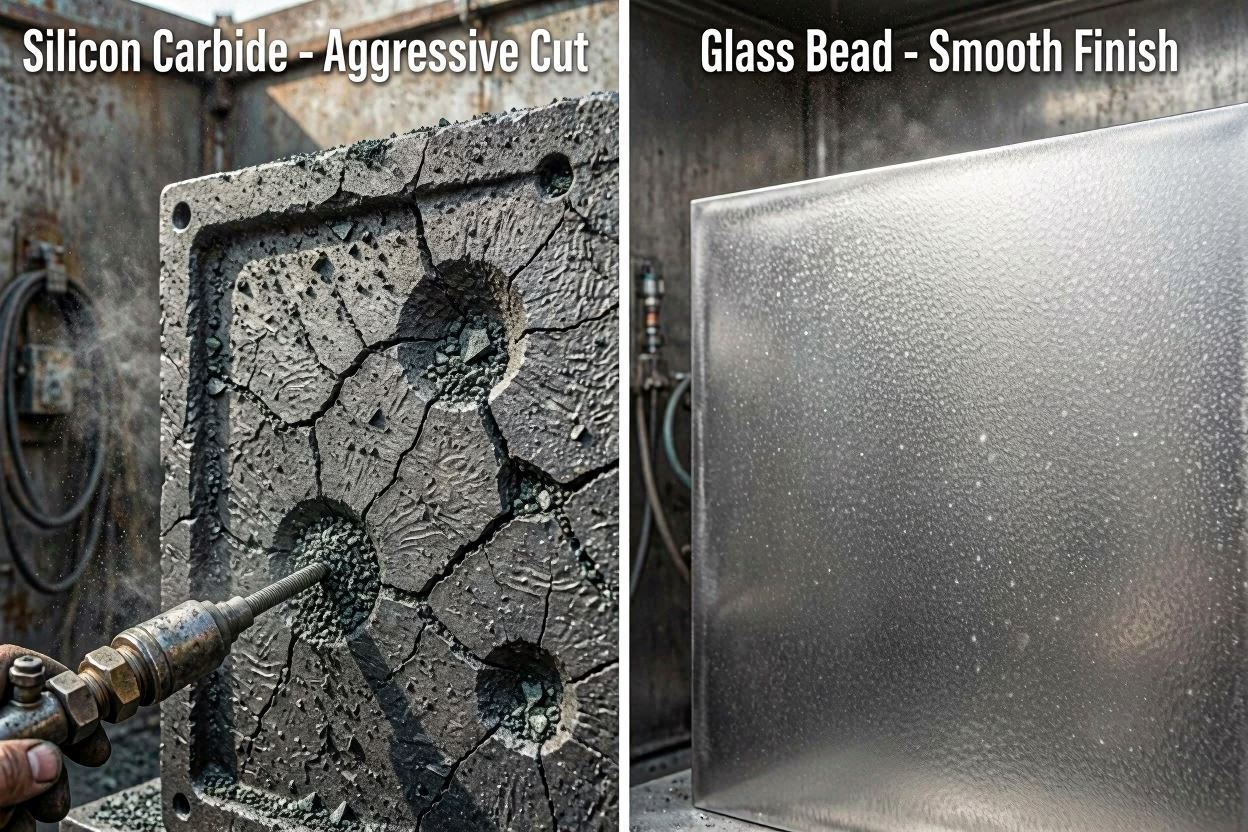
- Decorative finishing — glass beads give smoother, peened surface
- Ultra-precision profiles — garnet offers tighter gradation control
Read our full head-to-head comparisons for the three most commonly evaluated alternatives:
- Black Beauty vs. Garnet: Which Blasting Media Should You Choose?
- Black Beauty vs. Aluminum Oxide: Sandblasting Media Comparison
- Black Beauty vs. Copper Slag: A Complete Blasting Media Comparison
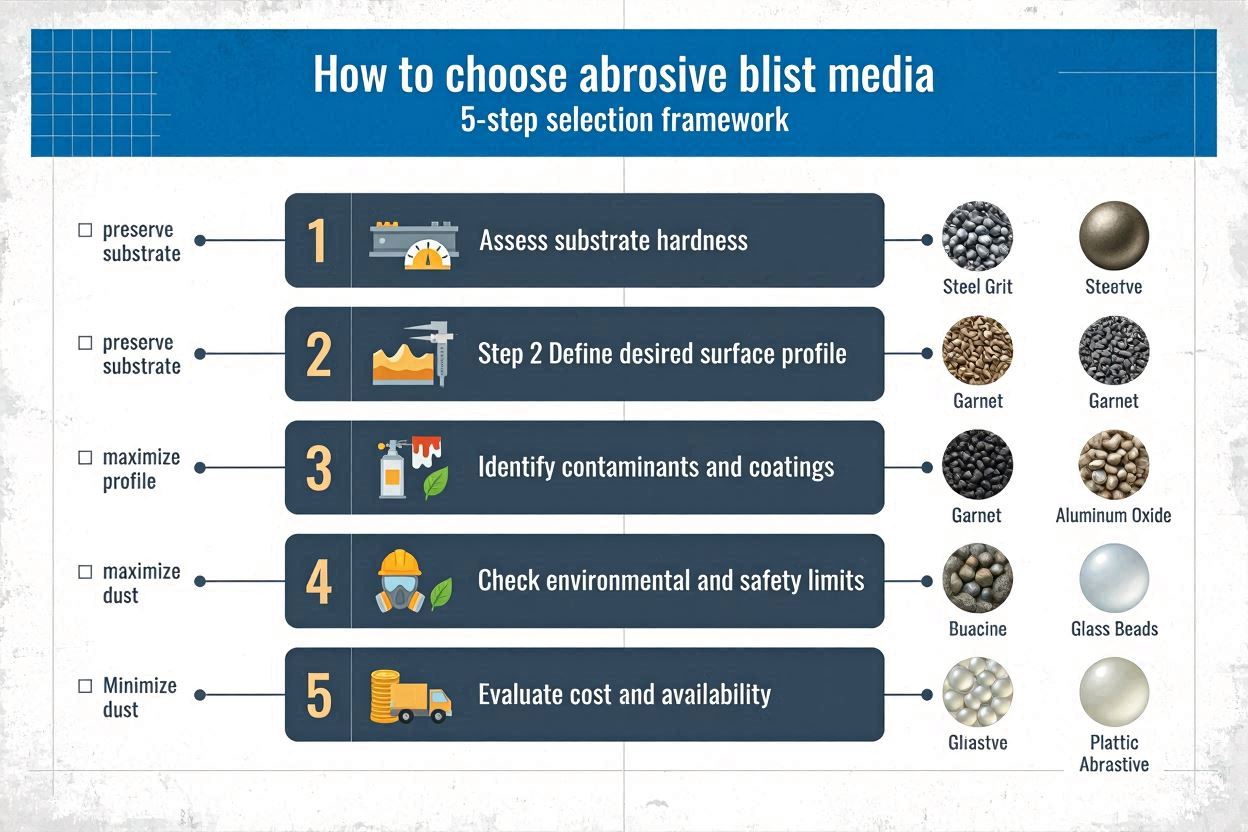
For a broader framework on selecting the right abrasive for any steel surface preparation job, the following guide establishes the decision logic from SSPC specification to media type: How to Choose the Right Abrasive Blasting Media for Steel Surface Preparation.
8. How to Use Black Beauty Blasting Media: Equipment & Setup
8.1 Compatible Equipment
Black Beauty coal slag is compatible with all standard dry abrasive blasting equipment, including:
- Pressure blast pots (deadman valve type, 1.5–6 cu ft capacity) — the most common configuration for field blasting of structural steel, bridges, and pipelines
- Suction blast (siphon) systems — suitable for maintenance blasting and workshop environments with lower throughput requirements
- Blast rooms with reclaim floors — Black Beauty can be partially reclaimed (typically 1–2 cycles before fines buildup degrades performance); a cyclone separator and dust collector are required
- Pressurized blast cabinets — Extra Fine and Fine grades work well in bench-top and walk-in cabinet configurations
8.2 Recommended Operating Parameters
| Paramètres | Extra Fine | Fine | Medium | Coarse |
|---|---|---|---|---|
| Nozzle Pressure (pot) | 60–90 psi | 80–100 psi | 90–110 psi | 100–120 psi |
| Min. Nozzle Orifice | 1/8 in. | 3/16 in. | 1/4 in. | 5/16 in. |
| Recommended Nozzle Type | Venturi / straight bore | Venturi | Venturi | Wide-throat Venturi |
| Stand-off Distance | 6–10 in. | 8–12 in. | 10–14 in. | 12–18 in. |
| Angle d'explosion | 45–70° | 45–75° | 45–75° | 60–90° |
| Approximate Coverage | 80–100 ft²/hr per nozzle | 70–90 ft²/hr | 60–80 ft²/hr | 50–70 ft²/hr |
8.3 Surface Cleanliness Verification
After blasting, surface cleanliness must be verified using a visual standard comparator (SSPC-VIS 1 for steel, SSPC-VIS 3 for hand/power tool cleaned steel) and anchor profile depth measured with a Testex Press-O-Film tape and spring micrometer or an electronic profile gauge. Surface conductivity (salt contamination) should also be tested using a Bresle patch or equivalent method when the substrate will receive a high-performance coating system.
9. Safety Profile: Dust, Silica & Worker Protection
Worker health and safety is the non-negotiable foundation of any blasting operation. Black Beauty’s core safety advantage over conventional silica sand is its near-elimination of crystalline free silica — the mineral phase that causes silicosis (an irreversible, progressive lung disease) and is classified as a Group 1 human carcinogen by the International Agency for Research on Cancer (IARC).
9.1 Free Silica Comparison
Sable de silice Up to 99% free crystalline silica (quartz)Black Beauty <0.1% free crystalline silica (vitrified/amorphous form)
This difference is not merely regulatory — it represents a fundamental change in the risk profile of the blasting operation. Silica sand blasting is banned or severely restricted in the United Kingdom, most of the European Union, Canada, Australia, and numerous other jurisdictions precisely because the amorphous slag alternatives (coal slag, copper slag, garnet) deliver equivalent or superior performance with a fraction of the silicosis risk.
9.2 Recommended PPE for Black Beauty Operations
- Supplied-Air Respirator (SAR): Type CE abrasive blasting helmet with air supply — mandatory for all operators within the blast zone. OSHA 1910.94(a)(5) requirement for open blast operations.
- Blast suit: Heavy leather or heavy-canvas blast jacket and pants to protect against abrasive particle rebound.
- Hand protection: Heavy gauntlet-style gloves rated for abrasive blasting.
- Hearing protection: Blast nozzles at 100+ psi generate noise levels of 105–115 dB — rated ear defenders or plugs required.
- Observers and spotters: Half-face respirators with P100 particulate filters at minimum, positioned upwind of the blast zone.
9.3 Spent Media Disposal
Spent Black Beauty slag that passes the TCLP (EPA Method 1311) is classified as non-hazardous solid waste in most U.S. states and can be disposed of in permitted solid-waste facilities. However, if the blasted substrate contained heavy metal coatings (lead-based paint, zinc chromate), the spent media will be contaminated and must be characterized and disposed of as hazardous waste under 40 CFR Part 262.
For comprehensive SDS interpretation, silica PEL calculations, and jurisdiction-specific disposal guidance, see our in-depth safety article: Black Beauty Blasting Media Safety Data: Silica, Dust & Environmental Compliance.
10. Where to Buy & Bulk Sourcing Considerations
10.1 Retail & Small-Volume Purchasing
For volumes under one ton (2,000 lb), Black Beauty is widely available through industrial supply chains, blast equipment retailers, and mainstream e-commerce platforms. Typical retail packagings are 25 lb, 50 lb, and 100 lb poly bags. Retail pricing in the United States as of June 2026 runs approximately:
- 25 lb bag: $18–$25 (Extra Fine / Fine grades)
- 50 lb bag: $30–$45 (all grades)
- 100 lb bag: $55–$80 (Medium grade most commonly stocked)
10.2 Bulk & Industrial Purchasing
For contractors, shipyards, and fabrication shops consuming more than five tons per month, bulk purchasing dramatically reduces cost per unit. Key buying considerations at volume include:
- Request batch-level certificates of conformance (CoC) covering particle size distribution, free silica percentage, TCLP test results, and moisture content — before committing to a supplier relationship.
- Compare total landed cost, not bag price. Freight from the production facility to your job site or warehouse can equal or exceed the media cost itself, especially for remote locations.
- Evaluate suppliers against SSPC AB 1 compliance documentation. Any specification-grade project will require this from your blast media supplier as part of the project quality file.
- Consider lead time and regional availability. Coal slag plants are regionally concentrated; confirm that your supplier can maintain supply continuity across your project schedule.
- Assess packaging and delivery format. Bulk super-sacks (1-ton or 2,000 lb bags on pallets) are more economical than individual bags; some suppliers offer pneumatic bulk tanker delivery for very high-volume fixed installations.
For a detailed cost analysis and guidance on calculating cost-per-cycle versus alternative media types, see our pricing guide: How Much Does Black Beauty Blasting Media Cost? Pricing Guide & Bulk Buying Tips.
11. Related In-Depth Guides
This pillar page is part of a comprehensive knowledge series on abrasive blasting media produced by Jiangsu Henglihong Technology Co., Ltd. Each guide below provides deep-dive coverage of one specific topic area referenced above.
12. Frequently Asked Questions
Filtres