Plastic & Biodegradable Blast Media Suppliers: Walnut Shell, Corn Cob & More
When the workpiece cannot tolerate the aggression of steel grit, aluminum oxide, or even garnet, a category of softer abrasives becomes essential. Plastic blast media, walnut shell gritet corn cob granules are the three primary options for applications where the goal is to strip coatings, clean surfaces, or remove contamination without damaging the underlying substrate. These media types are the standard of care in aerospace paint stripping, automotive restoration of thin sheet metal, cleaning of delicate electronics, and decontamination of food processing equipment.
This guide is part of the complete Sandblasting Media Suppliers: Industrial Buyer’s Complete Guide from Jiangsu Henglihong Technology Co., Ltd.
1. Why Soft & Biodegradable Media Exist
Conventional abrasive blasting media — steel grit, aluminum oxide, garnet — are designed to aggressively remove material and create anchor profiles. For heavy industrial surfaces, that aggression is desirable. But many manufacturing and maintenance applications involve substrates that are simply too thin, too soft, or too structurally sensitive to tolerate conventional abrasives:
- Aircraft skins: Aluminum alloy panels 1–3 mm thick cannot be blasted with steel grit without warping or surface damage. Paint stripping must remove the coating without touching the aluminum substrate.
- Carbon fiber composites: Any media that cuts into the fiber matrix causes structural damage. Only the softest abrasives can clean composite surfaces.
- Vintage automotive sheet metal: Thin-gauge steel panels from pre-1980s vehicles warp easily under aggressive media. Plastic media strips paint while preserving panel geometry.
- Food processing equipment: Walnut shell and corn cob are non-toxic, biodegradable, and leave no metallic contamination — critical for equipment used in food contact applications.
2. Plastic Blast Media: Types & Specifications
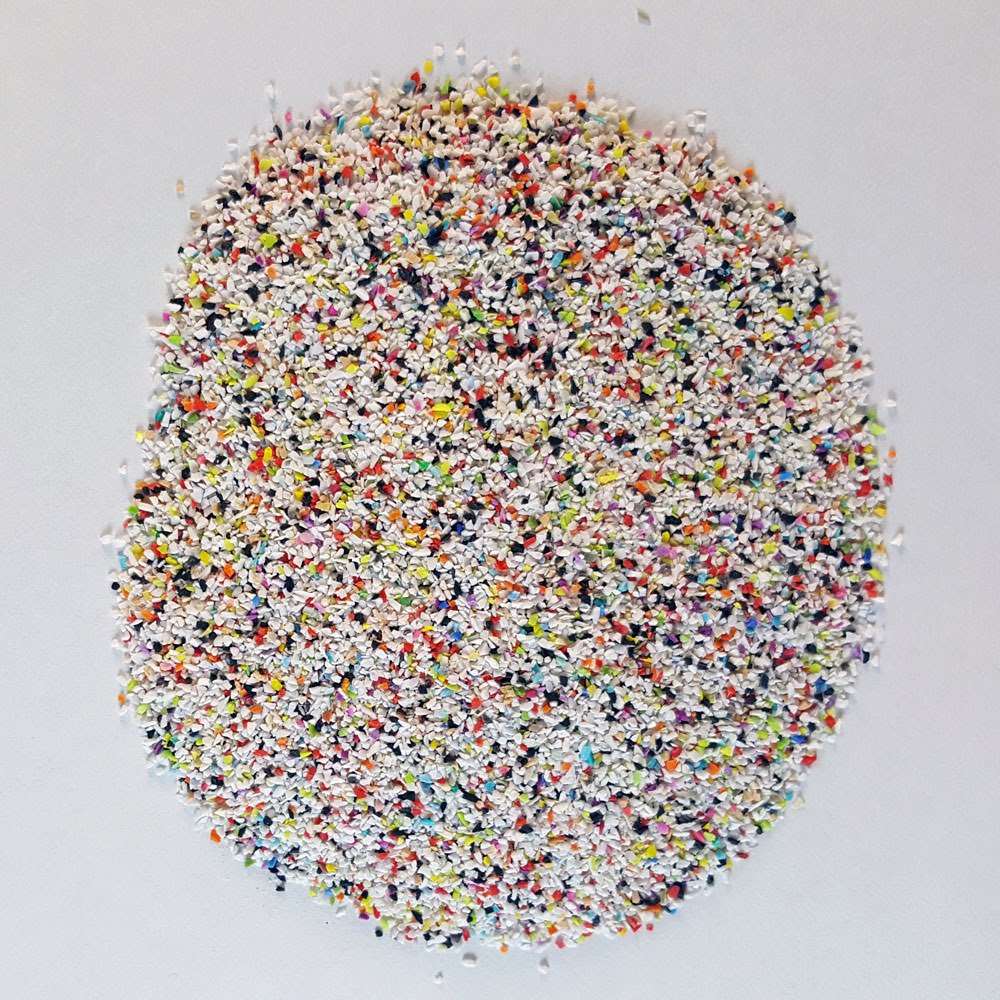
Plastic blast media (PBM) consists of angular thermoplastic particles manufactured from urea formaldehyde, melamine, acrylic (PMMA), or polyester resins. Different resin types offer different hardness profiles, allowing precise matching of media aggression to substrate sensitivity. The U.S. military specification MIL-P-85891A governs plastic blast media used in aerospace applications and defines four media types:
| Type | Résine | Hardness (Mohs approx.) | Best For |
|---|---|---|---|
| Type I | Urea formaldehyde | 3.0–3.5 | Softest — carbon fiber, fiberglass, thin aluminum |
| Type II | Mélamine | 3.5–4.0 | Aluminum aircraft skins, composite structures |
| Type III | Acrylic (PMMA) | 3.0–3.5 | Precision finishing, electronic components |
| Type IV | Polyester | 3.5–4.5 | Harder composites, bonded structures |
Plastic Media Size Grades
| Size Grade | Particle Size Range | Application |
|---|---|---|
| Extra coarse | 1180–2000 µm | Heavy coatings, thick films, rapid stripping |
| Coarse | 850–1400 µm | Standard paint stripping on aircraft and automotive |
| Medium | 600–1000 µm | Multi-layer coating removal, general aviation |
| Fine | 425–710 µm | Precision stripping, composite surfaces |
| Extra fine | 212–500 µm | Delicate surfaces, thin primer removal |
3. Walnut Shell Grit
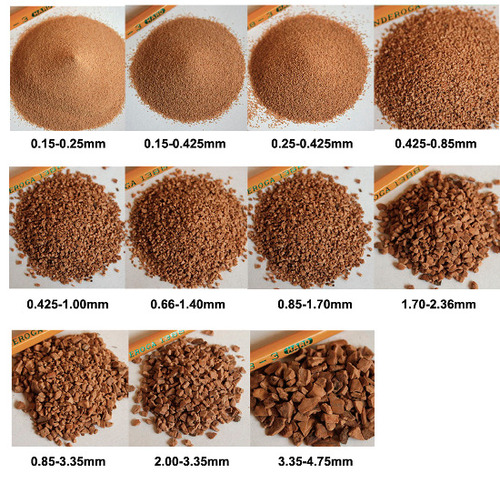
Walnut shell grit is produced by crushing the hard shells of English walnuts (Juglans regia) or black walnuts (Juglans nigra), then screening to precise mesh sizes. It is a natural, renewable, and fully biodegradable abrasive with a Mohs hardness of approximately 3.0–4.0 — hard enough to strip paint and clean surfaces, soft enough not to damage aluminum, copper, soft steels, wood, and most plastics.
Key Properties of Walnut Shell Grit
- Mohs hardness: 3.0–4.0
- Specific gravity: 1.2–1.4 g/cm³ (very light — lower impact energy than plastic media)
- Free silica: None (natural organic material)
- Biodegradable: Yes — spent media can often be composted or landfilled as non-hazardous organic waste
- Moisture sensitivity: Walnut shell absorbs moisture readily — must be stored in dry conditions and moisture content verified before use (<8% for reliable blasting performance)
- Oil absorption: Walnut shell naturally absorbs oils and grease during blasting — useful for cleaning contaminated surfaces, but the absorbed contamination must be managed in spent media disposal
Walnut Shell Mesh Sizes
| Mesh Size | Particle Range | Application |
|---|---|---|
| 4/8 | 4750–2360 µm | Heavy paint stripping, wood cleaning |
| 8/12 | 2360–1680 µm | General automotive paint stripping |
| 12/20 | 1680–850 µm | Standard aviation cleaning |
| 20/40 | 850–425 µm | Fine parts cleaning, precision cleaning |
| 40/60 | 425–250 µm |
4. Corn Cob Granules
Corn cob granules are produced from the woody core of corn cobs, dried and ground to specific mesh sizes. They are softer than walnut shell (Mohs approximately 2.5–3.5) and are primarily used for very gentle cleaning, polishing, and deburring applications where even walnut shell would be too aggressive. Corn cob is also widely used as a drying media in tumble finishing to absorb moisture from freshly cleaned or plated parts.
Key Properties of Corn Cob Granules
- Mohs hardness: 2.5–3.5 (softer than walnut shell)
- Biodegradable: Yes — fully compostable
- Moisture absorption: High — excellent for drying and degreasing applications
- Free silica: Aucun
- Non-toxic: Safe for food equipment cleaning and pharmaceutical manufacturing environments
- Primary limitation: Too soft for aggressive paint stripping; most effective for light cleaning, polishing, and drying
5. Comparison Table: All Soft Blast Media
| Media | Dureté Mohs | Biodegradable | Best For | Not Suitable For |
|---|---|---|---|---|
| Plastic Type I (urea) | 3.0–3.5 | No | Carbon fiber, thin aluminum, composite stripping | Hard substrates requiring profile |
| Plastic Type II (melamine) | 3.5–4.0 | No | Aircraft aluminum, MIL-spec stripping | Hard metals, coating prep |
| Walnut shell | 3.0–4.0 | Yes | Automotive restoration, soft metals, food equipment | Heavy rust removal, anchor profiling |
| Corn cob | 2.5–3.5 | Yes | Drying, light cleaning, jewelry polishing, tumbling | Paint stripping, rust removal |
6. Applications by Industry
Aerospace & Defense
Plastic media blasting (PMB) is the standard method for paint stripping military and commercial aircraft without substrate damage. Type I and Type II PBM per MIL-P-85891A are used on aluminum skins, composite fairings, and titanium structural components. The key performance parameter is selectivity: the media must remove the paint film while leaving the bare metal surface dimensionally unchanged within specification. For the complete aerospace application guide, visit: Blast Media for Automotive & Aerospace: Non-Destructive Stripping Solutions.
Automotive Restoration
Vintage vehicle restorers use plastic media and walnut shell to strip paint and undercoating from thin sheet metal panels without warping. Unlike chemical stripping (which can leave residues in seams) or heat guns (which risk distorting the metal), media blasting provides complete, uniform paint removal at controlled, low impact energy.
Food & Pharmaceutical Equipment
Walnut shell and corn cob are the only blast media appropriate for cleaning processing equipment in food, beverage, and pharmaceutical facilities where zero metallic contamination is mandatory. Both materials are GRAS-listed (Generally Recognized As Safe) as agricultural products, and spent media can typically be composted.
Firearms Cleaning
Walnut shell grit (20/40 mesh) in a tumbling media application is the standard method for cleaning and polishing firearm brass casings and action components without dimensional impact. The gentle abrasion removes carbon fouling and oxidation while preserving case dimensions critical to safe reloading.
7. Sourcing & Pricing Guide (May 2026)
| Produit | Grade | Price Range (USD/MT) | Notes |
|---|---|---|---|
| Plastic media Type I | Coarse / Medium | $1,800–$2,800 | MIL-P-85891A certification adds 15–25% premium |
| Plastic media Type II | Coarse / Medium | $2,000–$3,200 | Melamine resin; harder, more durable |
| Walnut shell grit | 8/12 (standard) | $400–$700 | Varies significantly by harvest season and origin |
| Walnut shell grit | 20/40 (fine) | $500–$800 | Higher processing cost for finer screens |
| Corn cob granules | Medium / Fine | $250–$450 | Most affordable soft media option |
8. Frequently Asked Questions
Find the Right Soft Media for Your Application
Contact Jiangsu Henglihong Technology Co., Ltd. with your substrate details, coating system, and performance requirements. We will recommend the optimal media type and connect you with certified supply options.
Get Expert Advice →Filtres