Steel Grit Abrasives for Sablage
The premier metallic abrasive for heavy industrial surface preparation. Angular, ultra-hard, and recyclable for 100+ cycles in wheel-blast systems. Complete guide for structural steel, shipbuilding, and pipeline coating preparation.
What Is Steel Grit?
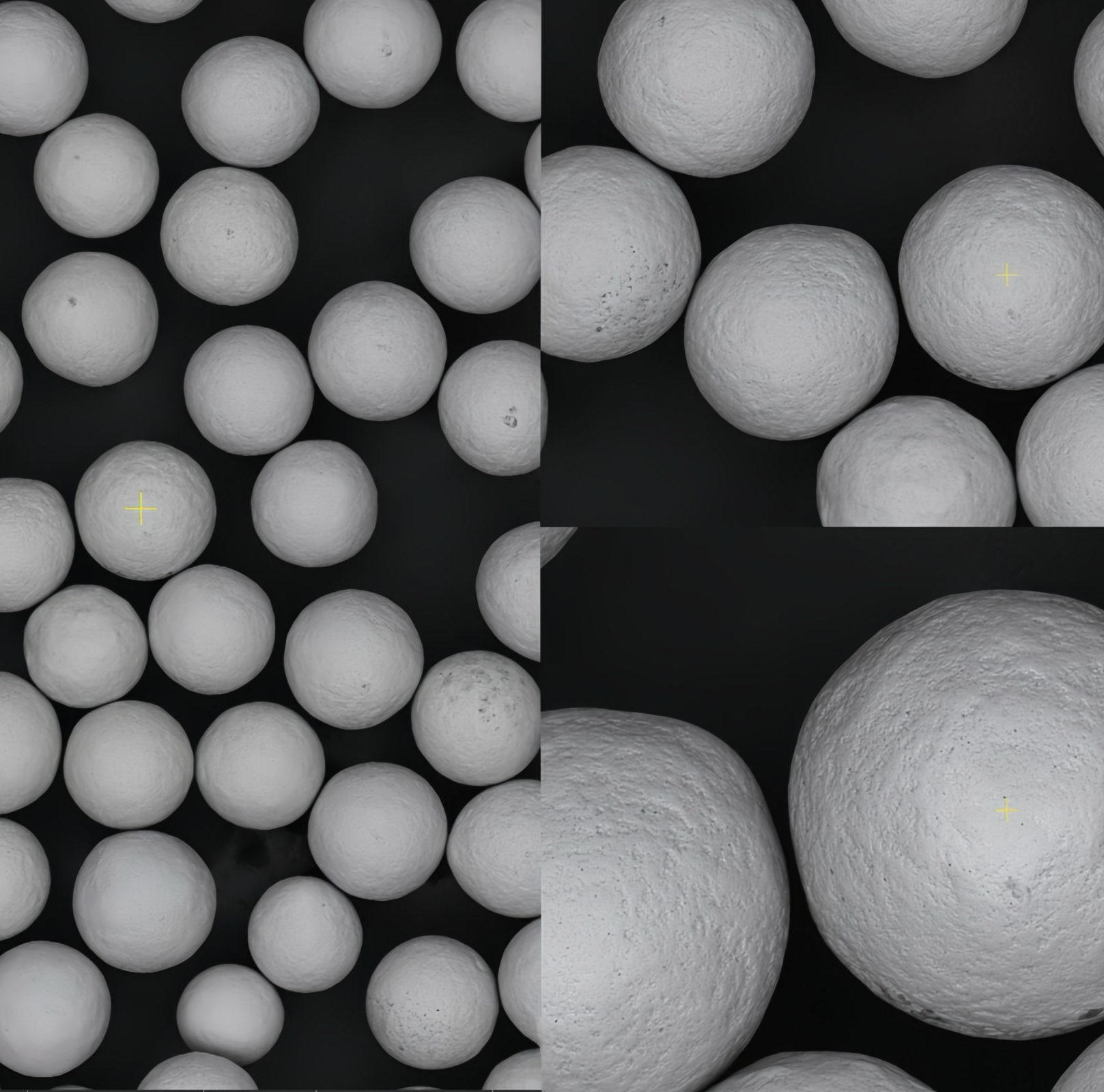
Steel grit is an angular metallic abrasive produced by crushing and screening steel shot, then heat-treating the resulting fragments to achieve precise hardness levels. Unlike round steel shot — which peens surfaces — steel grit’s sharp, irregular edges cut aggressively into the substrate, producing the deep angular surface profiles required by heavy protective coating systems.
Steel grit is the dominant abrasive in centrifugal wheel blast machines used in structural steel fabrication plants, offshore platform coating facilities, and shipyard pre-treatment lines. Its exceptional recyclability — 100 to 200 cycles in a well-maintained wheel-blast system — makes it the lowest-cost-per-square-foot metallic abrasive in high-volume operations, despite its higher initial purchase price compared to mineral media.
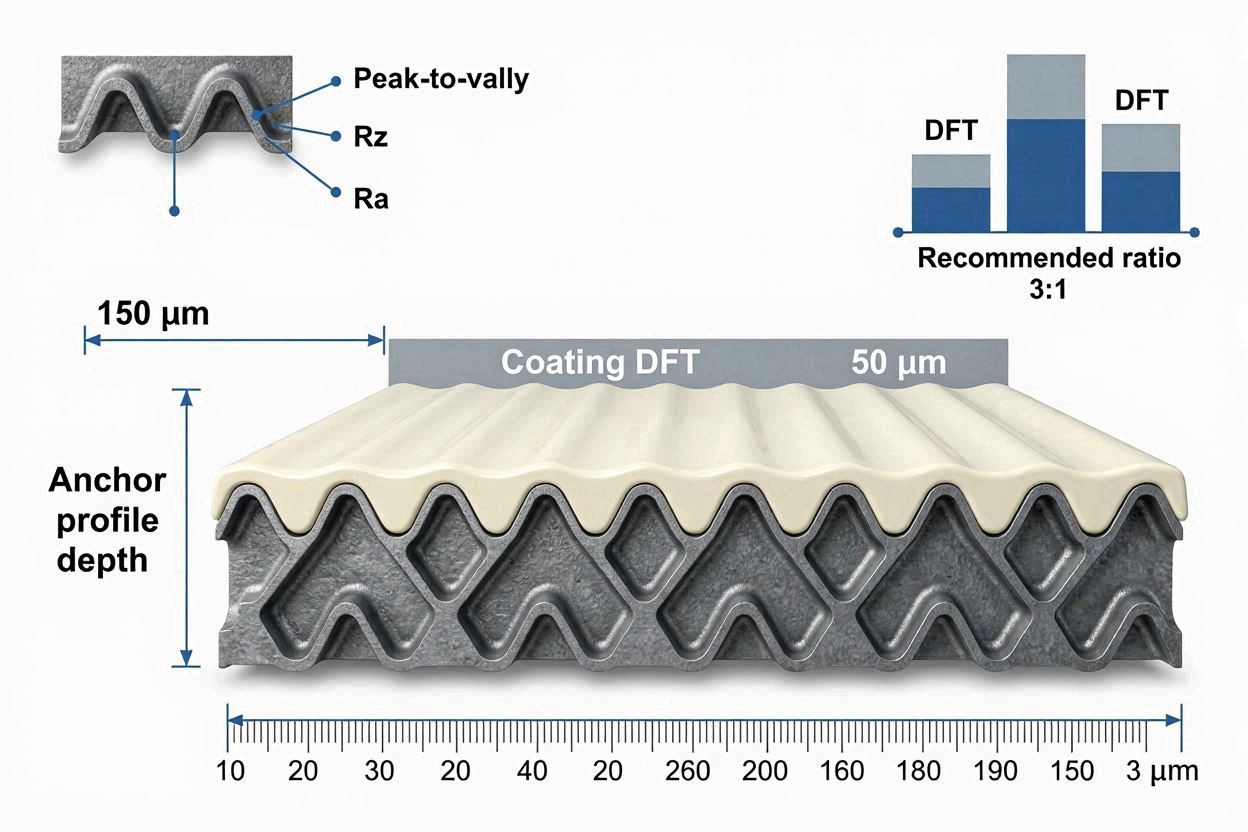
In April 2026, steel grit remains the specification-preferred abrasive for Sa 2.5 and Sa 3 surface preparation to ISO 8501-1 across the global offshore, shipbuilding, and structural steel industries. When combined with the anchor profiles specified by major marine coating manufacturers (2.0–4.0 mil), steel grit consistently meets the demands of the most demanding corrosion protection systems.
Technical Specifications
| Property | Value / Range |
|---|---|
| Matériau | Carbon steel (C: 0.85–1.20%) |
| Hardness Range | HRC 40–66 (grade dependent) |
| Gravité spécifique | 7.4 g/cm³ |
| Densité en vrac | 4.0–4.5 g/cm³ |
| Shape | Angular, irregular |
| Surface Profile | 2.0–5.0 mil (grade & size dependent) |
| Standard | ISO 11124-3, SAE J1993 |
| Free Silica | Aucun |
| Recyclabilité | 100–200+ cycles (wheel blast) |
Steel Grit Hardness Grades: GL, GH, and GP
Steel grit is classified by hardness into three broad grades, each suited to different applications and equipment types.
GL (Low Hardness)
Tougher, less brittle. Longer lasting in air-blast systems. Produces moderate profiles. Suited for applications where profile depth is secondary to longevity.
GH (High Hardness)
Maximum hardness and cutting aggression. Produces deepest profiles. Preferred in wheel-blast machines for structural steel requiring profiles above 3.0 mil.
GP (Pearlitic)
Intermediate microstructure. Balances cutting speed with impact toughness. Good all-round choice for mixed-application blast rooms.
The most commonly specified grade in structural steel and marine applications is GH (high hardness), used in sizes G10–G40, producing profiles of 2.0–4.5 mil suitable for high-build epoxy and glass flake coating systems.
Steel Grit Size Selection & Profile Depth
| SAE Size | Nominal Diameter | Profile Depth (mil) | Typical Application |
|---|---|---|---|
| G10 | 2.0 mm | 3.5–5.0 | Maximum profiling, very thick coatings, ballast tanks |
| G14 | 1.7 mm | 3.0–4.5 | Offshore platforms, glass flake epoxy systems |
| G18 | 1.4 mm | 2.5–4.0 | Structural steel fabrication, Sa 2.5 standard |
| G25 | 1.0 mm | 2.0–3.5 | General heavy industrial, ship hull preparation |
| G40 | 0.6 mm | 1.5–2.5 | Moderate profiling, thinner coating systems |
| G50 | 0.5 mm | 1.0–2.0 | Light profiling, maintenance blasting |
For a full cross-media grit size reference and profile depth comparison, visit the Sandblasting Abrasives Grit Size Chart.
Applications
Structural Steel Fabrication
Steel grit is the standard pre-treatment media in automated blast lines at steel fabrication plants, where I-beams, columns, plates, and sections are blasted to Sa 2.5 or Sa 3 before primer application. G18–G25 GH grade is the most common specification.
Shipbuilding & Marine
Ship hull pre-treatment to Sa 2.5 before epoxy anticorrosion primer is the largest single application of steel grit globally. G25–G40 produces the 2.5–3.5 mil profiles specified by major marine coating systems. See the marine blasting guide.
Pipeline Coating Preparation
External pipe coating to ISO 8501-1 Sa 2.5 or NACE No. 2 before FBE or three-layer polyethylene systems. Steel grit G18–G25 produces profiles within the 2.0–3.5 mil range required by most pipeline coating TDS documents. See the pipeline coating guide.
Offshore & Oil & Gas
Offshore topsides, jackets, and subsea components require maximum corrosion protection in aggressive marine environments. Steel grit G10–G18 is specified for glass flake and thermal spray zinc systems requiring profiles above 3.5 mil.
Pros & Cons
Avantages
- Deepest surface profiles of any common abrasive (up to 5.0 mil)
- 100–200+ cycles — lowest metallic media cost per square foot
- No free silica — fully OSHA and EU regulation compliant
- High bulk density delivers maximum kinetic energy per particle
- Available in standardised grades to ISO 11124-3 / SAE J1993
Limites
- Requires centrifugal wheel blast equipment for economic use — not cost-effective in portable pressure pots
- Not suitable for non-ferrous substrates (iron contamination risk)
- Higher equipment wear than mineral abrasives
- Requires closed-system blast facilities — not suitable for open field use
Recyclability & Economic Analysis
Steel grit’s economic proposition rests entirely on its exceptional recyclability in wheel-blast systems. In a modern blast line with magnetic separator and air wash classifier, GH grade steel grit maintains a working mix that lasts 100–200 operating hours before the particle size distribution degrades below the lower size limit. On a cost-per-square-foot basis, steel grit in a wheel-blast system typically costs 30–60% less than aluminum oxide in an air-blast pot, despite steel grit’s higher per-tonne purchase price.
For a full recyclability comparison including cost-per-cycle breakdowns, see the Recyclable Sandblasting Media Comparison.
Steel Grit vs Other Abrasives
- Steel grit vs aluminum oxide: Steel grit produces deeper profiles and offers far greater recyclability in wheel-blast machines. Aluminum oxide is more flexible (works in any air-blast system) and is better for non-ferrous substrates. Full comparison: Aluminum Oxide vs Steel Grit.
- Steel grit vs coal slag: Steel grit is far more recyclable and produces more consistent profiles. Coal slag is cheaper per bag but is economically justified only for field blasting where recycling is impossible. See Coal Slag guide.
- Steel grit vs garnet: Garnet is lower-dust and preferred in sensitive environments or waterjet operations. Steel grit’s recyclability and profile depth make it the clear choice for high-volume fixed-facility operations. See Garnet guide.
Questions fréquemment posées
Steel shot is spherical; steel grit is angular. Shot peens the surface (creates compressive stress, brightens, descales without profiling). Grit cuts the surface, creating the angular anchor profile required for coating adhesion. Most structural steel and marine applications specify grit; shot peening for fatigue life improvement uses shot. Many blast lines blend grit and shot to balance profile depth with surface cleanliness.
Yes, but it is not economical. Steel grit is prohibitively heavy to recycle in portable pot systems — the logistics of collecting, separating, and re-bagging spent media in field conditions makes per-cycle cost extremely high. In portable field blasting applications, mineral abrasives (garnet, aluminum oxide, coal slag) are far more practical. Steel grit’s economics work only in closed-system wheel-blast machines with integrated recycling.
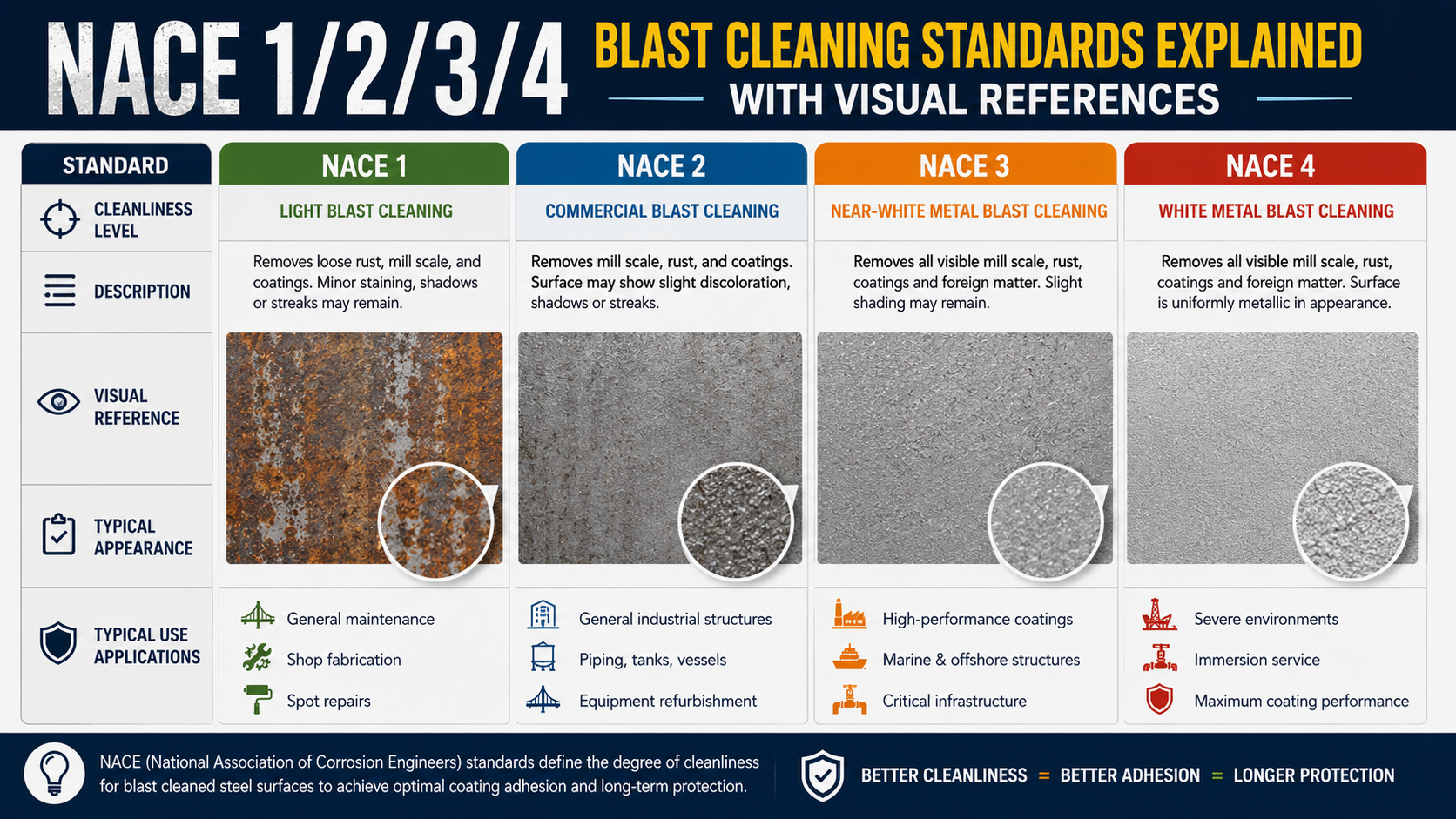
Steel grit in a properly operated wheel-blast machine consistently achieves Sa 2.5 (Near-White) and Sa 3 (White Metal) cleanliness to ISO 8501-1. Sa 3 (equivalent to NACE No. 1 / SSPC-SP 5) is the most demanding standard, requiring all mill scale, rust, paint, and foreign matter to be completely removed with a uniformly grey-white metallic surface appearance.
Source Steel Grit Abrasive Directly from the Manufacturer
Jiangsu Henglihong Technology Co., Ltd. supplies ISO 11124-3 compliant steel grit in GL, GH, and GP grades for global B2B buyers. FCL export pricing available.
Filtres