Silica-Free & Eco-Friendly Abrasive Blast Media: OSHA Compliant Options
Silica sand was the dominant blasting abrasive for most of the twentieth century — cheap, abundant, and effective at preparing steel surfaces. But the health consequences of using it were severe. Crystalline silica dust generated during blasting causes silicosis — a progressive, irreversible, and potentially fatal fibrotic lung disease — as well as lung cancer, kidney disease, and autoimmune disorders. Sandblasting operations without adequate respiratory protection exposed generations of workers to disabling and fatal silica-related diseases. In response, OSHA, HSE, and equivalent occupational health regulators worldwide have moved to dramatically restrict or outright ban the use of crystalline silica (quartz sand) as a blasting abrasive.
Today, professional blasting contractors have access to a wide range of silica-free abrasive media supplies that match or exceed the performance of quartz sand while fully satisfying regulatory requirements. This guide covers the OSHA standard that governs silica in blasting, the complete range of compliant alternatives, and how to evaluate each option for your specific application. For the full abrasive media supply picture, see the Abrasive Media Supplies Buyer’s Guide.
The Silica Hazard in Abrasive Blasting
Crystalline silica (quartz, SiO₂) in its free, unbound form is an IARC Group 1 human carcinogen — meaning there is sufficient evidence of causation of cancer in humans. When a silica-containing abrasive (quartz sand, some mixed-mineral slags with high SiO₂ content) is used in blasting, the impact fracture of each particle generates a cloud of respirable fine particles — those below 10 µm in aerodynamic diameter — that can penetrate to the deep lung. Once deposited, these particles trigger a chronic inflammatory response that progressively destroys lung tissue, reducing lung capacity and eventually leading to respiratory failure. There is no reversal once silicosis has developed.
The occupational exposure limit for respirable crystalline silica has been progressively tightened as the evidence of harm at previously “acceptable” exposure levels has accumulated. Dry abrasive blasting with silica sand — even briefly and with standard dust masks — generates respirable silica concentrations orders of magnitude above any safe exposure limit. This is why the professional blasting industry globally has transitioned to silica-free abrasive media supplies as the standard.
OSHA 2016 Silica Standard: What It Requires
OSHA’s final rule on occupational exposure to respirable crystalline silica — 29 CFR 1926.1153 (construction) and 29 CFR 1910.1053 (general industry), effective from June 2016 — established the following key requirements:
- Action Level (AL): 25 µg/m³ as an 8-hour TWA — above this, employers must begin implementing controls and medical surveillance
- Permissible Exposure Limit (PEL): 50 µg/m³ as an 8-hour TWA — the absolute ceiling for worker exposure, reduced from the previous PEL of 250 µg/m³
- Table 1 Engineering Controls: For specific tasks including abrasive blasting with crystalline silica-containing abrasives, OSHA requires specific engineering controls (wet methods, enclosed blast chambers with supplied-air respirators) regardless of whether the PEL is exceeded — making compliant silica-sand blasting operations expensive and operationally restrictive
- Medical Surveillance: For workers whose exposures may exceed the AL for 30 or more days per year, medical surveillance including baseline and periodic chest imaging is required
Practical implication: Using silica-free abrasive media with free SiO₂ content below 1% removes the most burdensome Table 1 requirements and dramatically simplifies regulatory compliance for blasting contractors, without any loss in surface preparation performance.
Silica-Free Abrasive Media Alternatives
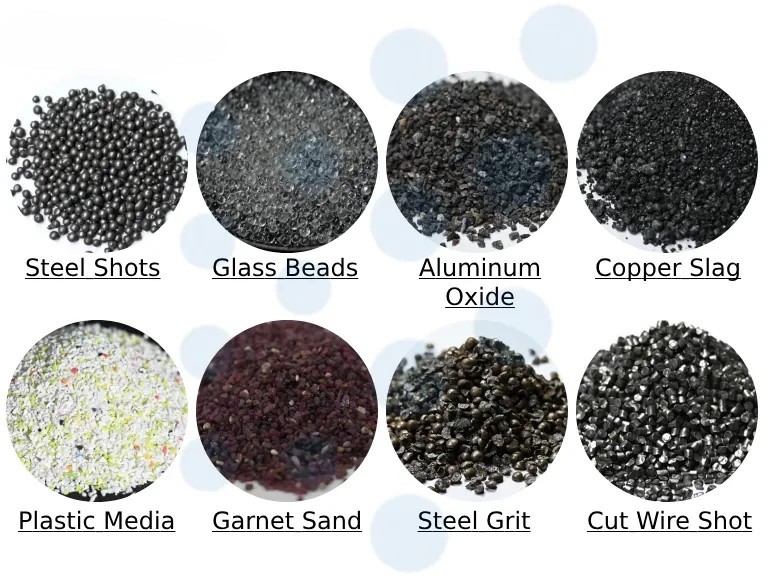
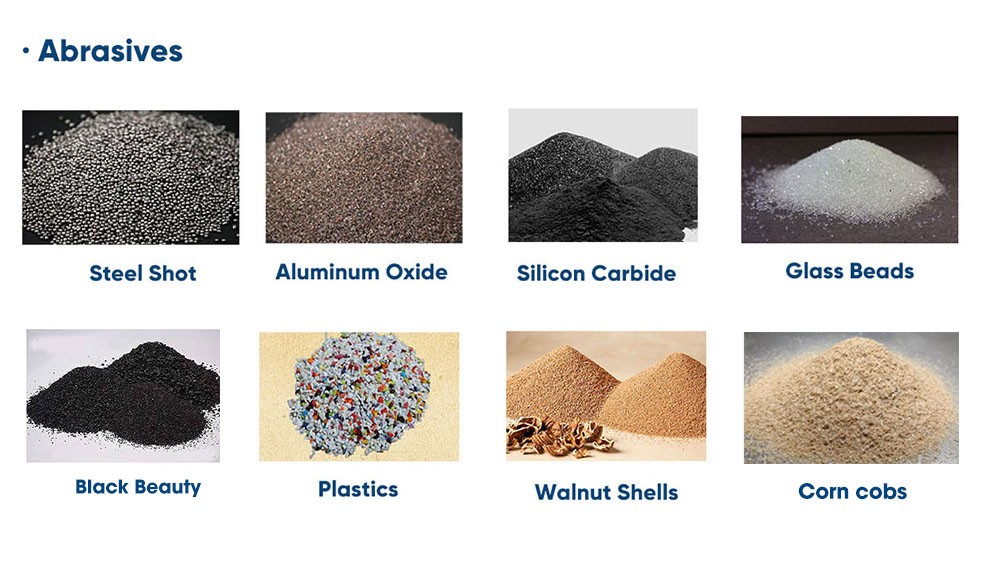
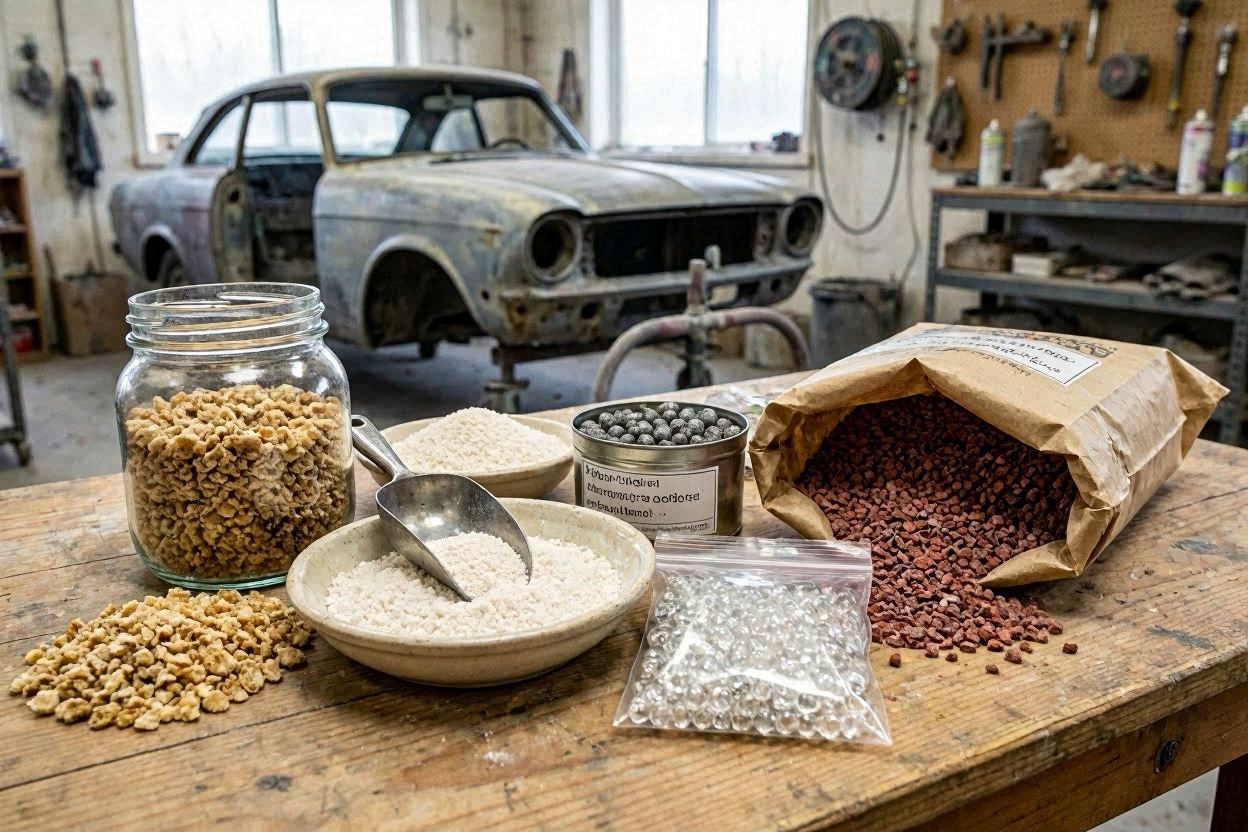
Garnet (Almandine) — Best All-Round Replacement
With free crystalline silica below 1%, Mohs hardness 7.5–8.5, and consistent sub-angular particle morphology, almandine garnet is the closest functional equivalent to quartz sand as a blasting abrasive — and in most performance metrics (dust, profile consistency, surface cleanliness) it outperforms sand significantly. Garnet #30/60 is accepted as a direct replacement in most blasting specifications that previously called for silica sand, including oil and gas pipeline, marine, and infrastructure coating projects. See the full guide: Garnet Blast Media: Why Professionals Choose It.
Steel Shot and Grit — Best for High-Volume Production
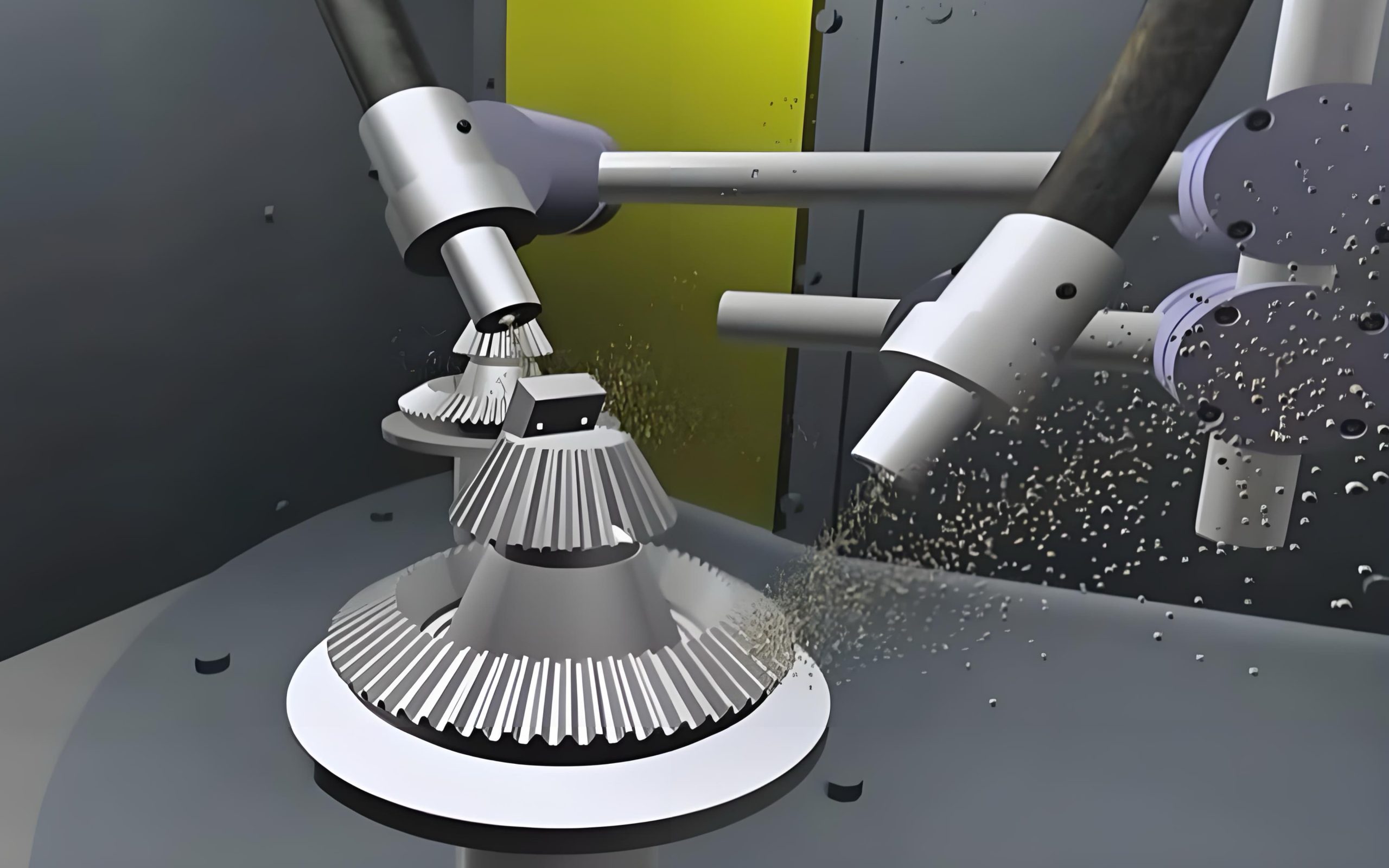
Metallic blast media contains no silica at all, making it inherently compliant. Steel shot and grit are the dominant choice for continuous-production blast rooms and wheel blast lines, where the 2,000–3,000 cycle reuse life makes them the most economical option at scale. The transition from sand to steel shot/grit on a wheel blast line requires equipment reconfiguration (wheel speed, separator calibration, liner selection for angular grit) but is a one-time investment that pays back quickly in media cost savings. See: Steel Grit vs Steel Shot.
Aluminum Oxide — Best for Precision and Contamination-Critical Applications
Aluminum oxide contains no free crystalline silica. Brown and white Al₂O₃ in a wide range of grit sizes covers most blasting, lapping, and surface preparation applications that required silica previously, with the added benefits of higher hardness, better profile control, and in the white grade, near-zero iron contamination. See: Aluminum Oxide Abrasive Media.
Copper Slag — Low-Cost Single-Use Option
Copper slag (Black Beauty and equivalent brands) is an industrial by-product of copper smelting with free SiO₂ below 1%. It is an aggressive, low-cost abrasive widely used in shipyards and infrastructure blasting where single-use economics apply. Its higher dust generation compared to garnet should be managed with adequate ventilation, but it presents no crystalline silica hazard. Verify free silica content by requesting the current Material Data Sheet from any copper slag supplier, as composition can vary between production sources.
Glass Beads — For Peening and Finishing Applications
Soda-lime glass beads are manufactured from vitreous (non-crystalline) glass, which contains silica in a non-crystalline amorphous form — this does not present the same silicosis hazard as crystalline quartz. Glass bead blasting is OSHA-compliant for most applications, though any fine airborne glass dust still requires appropriate respiratory protection as a general dust hazard. See: Glass Bead Blast Media.
Sodium Bicarbonate — Specialized Gentle Blasting
Baking soda (sodium bicarbonate) blasting is used in specialty applications — food-equipment cleaning, graffiti removal, building facade restoration, and automotive paint stripping — where a very soft, water-soluble abrasive that leaves no grit residue is required. Sodium bicarbonate contains no silica and is entirely OSHA-compliant, but its low hardness (2.5 Mohs) limits it to applications where the substrate or coating is softer than typical industrial work demands.
Comparison Table: Silica-Free Options
| Media | Free Silica | Hardness (Mohs) | Reuse Cycles | Cost Tier | Best Application |
|---|---|---|---|---|---|
| Granate | <1% | 7.5–8.5 | 5–10 | Medium | Pipeline, marine, infrastructure |
| Disparo de acero | Ninguno | 5–6 (HRC 40–51) | Up to 3,000 | High unit, low TCO | Continuous wheel blast production |
| Granalla de acero | Ninguno | 7–8 (HRC 54–65) | Up to 2,000 | High unit, low TCO | Structural steel, heavy coating prep |
| Óxido de aluminio | Ninguno | 9.0 | 50–100 | Medium | Precision blasting, thermal spray |
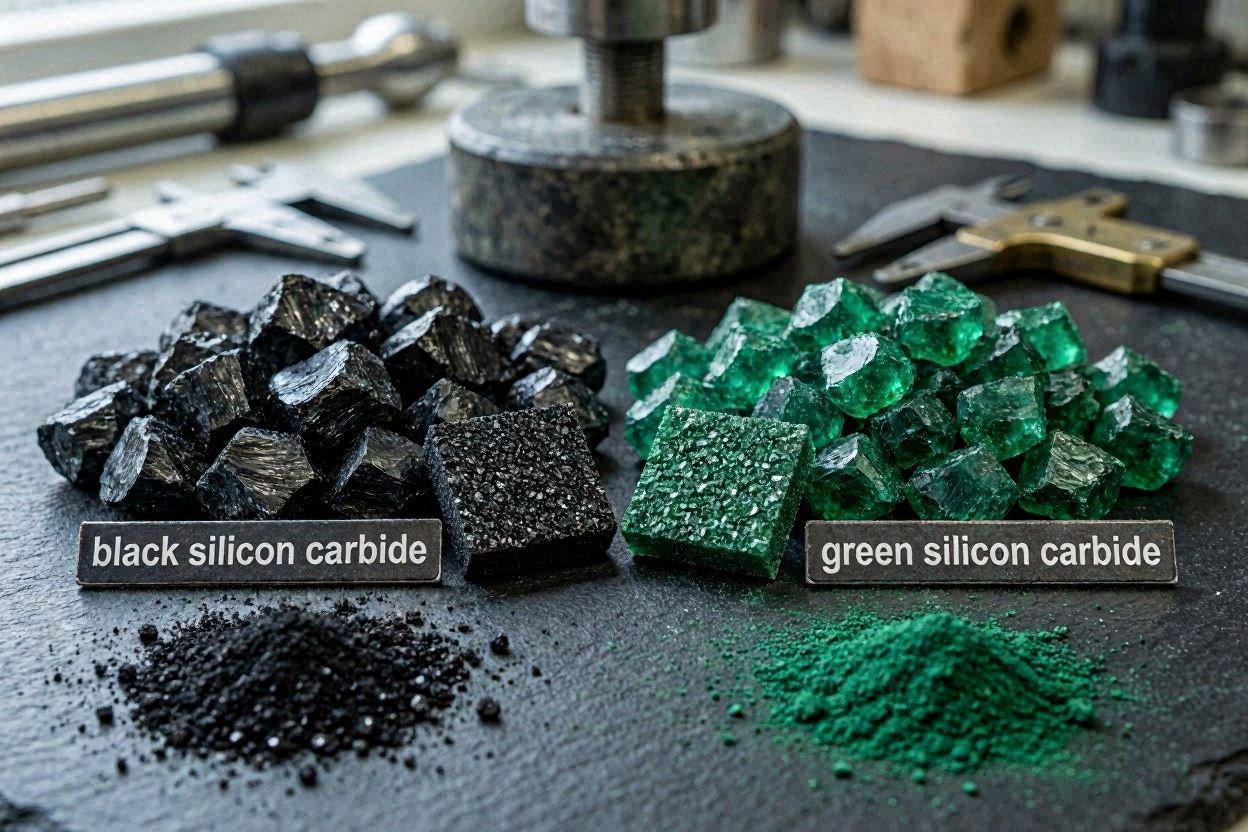
| Carburo de silicio | Ninguno | 9.5 | 30–60 | Medium-High | Glass etching, stone, hard ceramics |
| Cuentas de vidrio | Amorphous only | 5.5 | 30–50 | Medium | Peening, cosmetic finishing |
| Copper Slag | <1% | 6-7 | 1–2 | Bajo | Shipyards, large-area single-use |
| Bicarbonato sódico | Ninguno | 2.5 | 1 | Medium-High | Food equipment, delicate cleaning |
Selecting the Right Compliant Alternative
The selection framework for transitioning from silica sand to a compliant abrasive media follows the same five-step decision process as any media selection — substrate, profile, equipment, recyclability, TCO — with the additional constraint that free crystalline silica must be below 1% (and ideally near-zero) to satisfy OSHA requirements without Table 1 controls burden. For most field blasting applications where sand was previously specified, garnet #30/60 is the drop-in replacement that requires the least process adjustment. For production blast rooms, the transition to steel shot or grit with wheel blast equipment is the highest-ROI long-term solution. For a step-by-step selection methodology: How to Choose Abrasive Blast Media: 5-Step Selection Framework.
Preguntas frecuentes
Not all slags are equal in silica content. Copper slag (CuS) and nickel slag typically have free crystalline silica below 1% and are considered silica-safe alternatives. However, some coal slags, foundry slags, and mixed-mineral by-products may have higher crystalline silica content depending on the raw material source and process conditions. Always request the current Material Data Sheet (MDS) from the supplier for the specific production source and verify the free crystalline silica content — do not assume all slag is equivalent. If the SiO₂ is listed as total silica rather than free crystalline silica, it may include amorphous glass-phase silica that is not a silicosis hazard — but confirm with the supplier in writing.
Yes. Silica-free does not mean dust-free. Any dry abrasive blasting operation generates fine airborne particles of the abrasive media and blasted substrate material that present general inhalation hazards independent of silica content. Workers involved in blasting operations must still use appropriate respiratory protection — typically a supplied-air respirator (Type CE or equivalent) that provides positive pressure airflow — along with appropriate protective clothing, eye and ear protection. The elimination of crystalline silica specifically removes the cancer and silicosis risk, but does not eliminate the general requirement for respiratory protection in dusty blasting environments.
Silica-Free Abrasive Media from Henglihong
Garnet, steel shot/grit, aluminum oxide, glass beads, and copper slag — all with free silica below 1%, full MDS documentation, and REACH compliance statements available. Factory-direct export pricing.
Get a Free QuoteFiltros