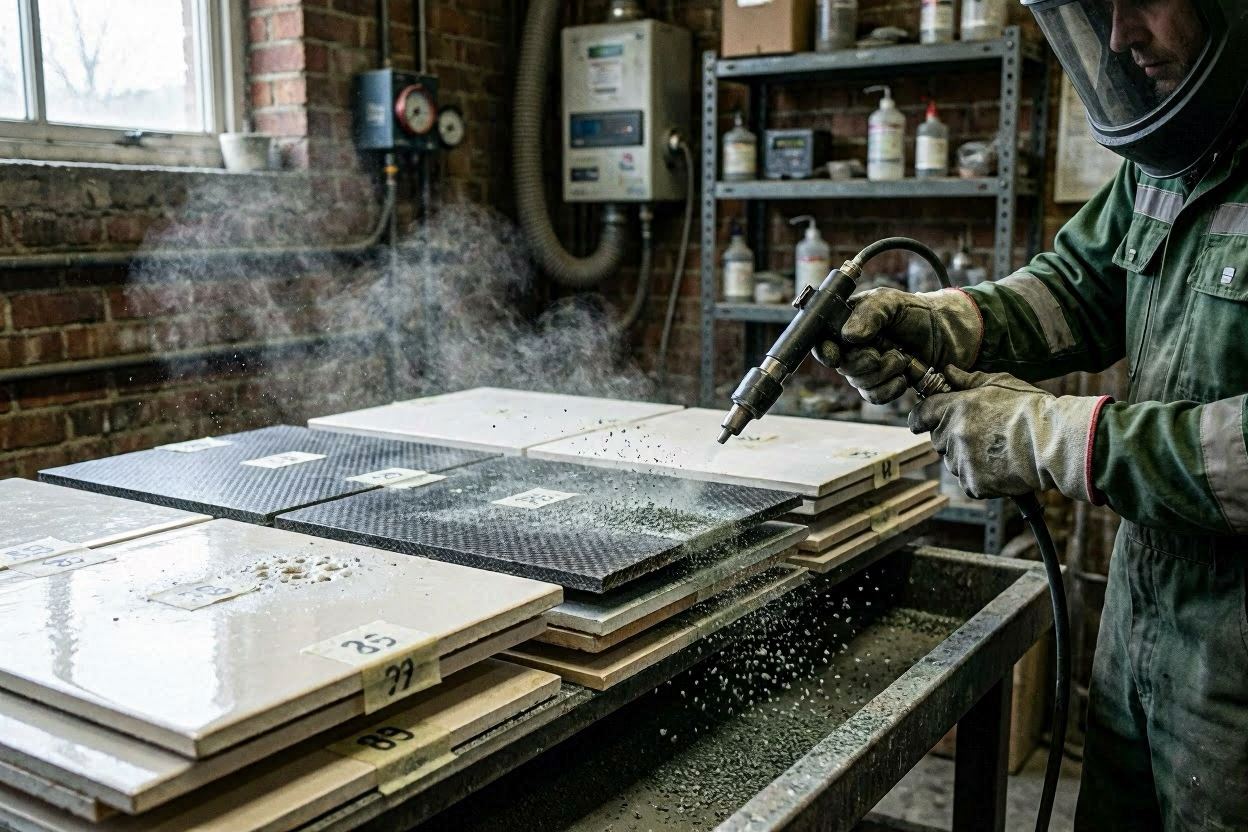
Glass Bead Sandblasting Abrasive
Spherical borosilicate glass beads for bright satin finishing, peening, and gentle surface cleaning without aggressive profiling. The preferred media for stainless steel, aluminium, and precision components where appearance and dimensional integrity are paramount.
What Are Glass Bead Blasting Abrasives?
Glass beads for sandblasting are precision-manufactured spherical particles of soda-lime or borosilicate glass, sized by screening to tight grit ranges and tested to meet MIL-PRF-9954 and AMS 2431/6 standards where required. Their defining characteristic is their perfectly round shape — the opposite of the angular, cutting particles found in aluminum oxide or steel grit.
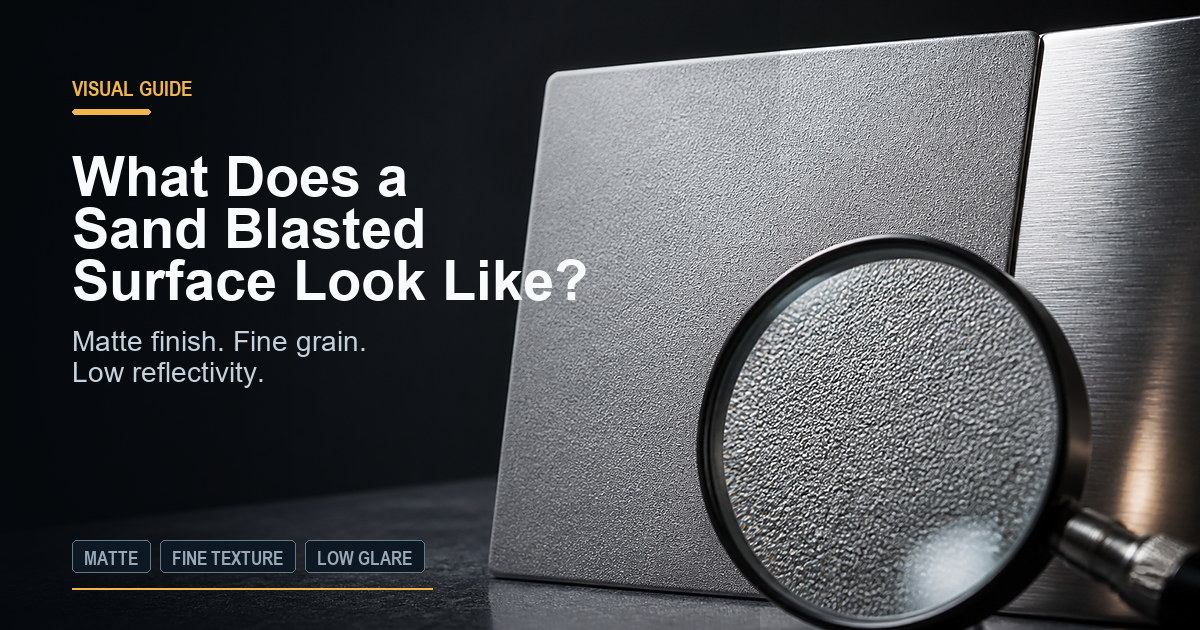
Because round particles cannot cut into a surface the way angular particles do, glass beads produce a fundamentally different surface outcome. Instead of carving an anchor profile into the substrate, each glass bead impact peens (compresses) the surface and creates a small, uniform dimple. The aggregate effect is a bright, smooth, satin or matte surface finish without significant material removal or profile depth — ideal when the goal is appearance, cleanliness, or compressive stress rather than coating adhesion profiling.
Glass beads are among the most widely used abrasives in precision manufacturing, automotive finishing, aerospace maintenance, and medical equipment cleaning. When used correctly, they deliver a controlled, repeatable surface finish that angular abrasives cannot produce.
Glass beads vs crushed glass: Glass beads (spherical) and crushed glass grit (angular) are completely different products that produce opposite surface outcomes. Crushed glass is an angular media used to create surface profiles for coating adhesion. Glass beads are spherical, used for peening and satin finishing. Confirm which product you need before ordering — the applications are not interchangeable.
Technical Specifications
| Property | Value |
|---|---|
| Composition | Soda-lime or borosilicate glass |
| Dureza Mohs | 5.5–6.0 |
| Peso específico | 2.45–2.55 g/cm³ |
| Shape | Spherical (>80% true spheres) |
| Surface Profile | 0.2–1.0 mil (size dependent) |
| Free Silica | <1% (soda-lime); <0.1% (borosilicate) |
| Reciclabilidad | 20–30 cycles in cabinet systems |
| Standards | MIL-PRF-9954, AMS 2431/6 |
Surface Finish & Profile Characteristics
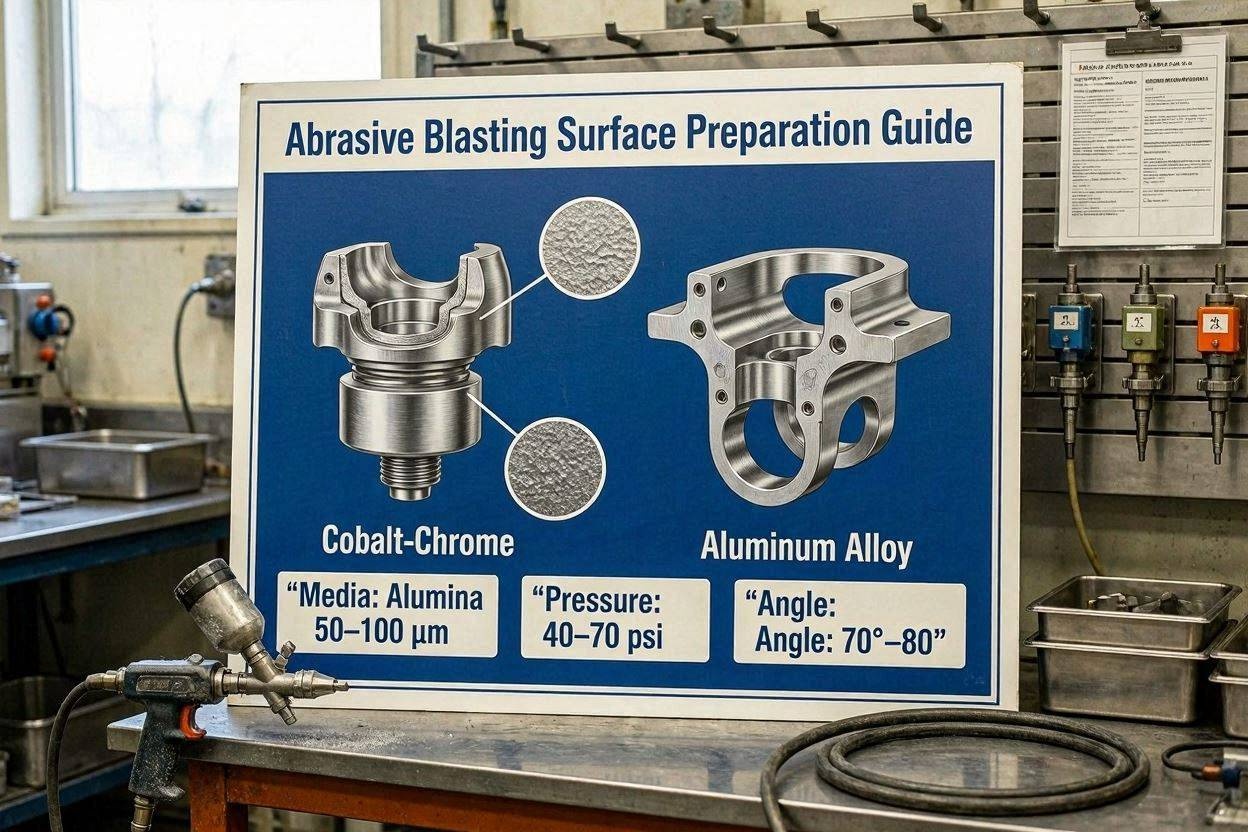
Glass bead blasting produces one of the most valued finishes in precision manufacturing: a uniform, bright satin appearance with low surface roughness (Ra typically 0.4–1.6 µm depending on bead size and pressure). The finish is visually clean, non-directional (no polishing lines), and aesthetically pleasing — characteristics that have made glass bead blasting the standard finishing step for stainless steel medical instruments, food processing equipment, automotive trim, and architectural hardware.
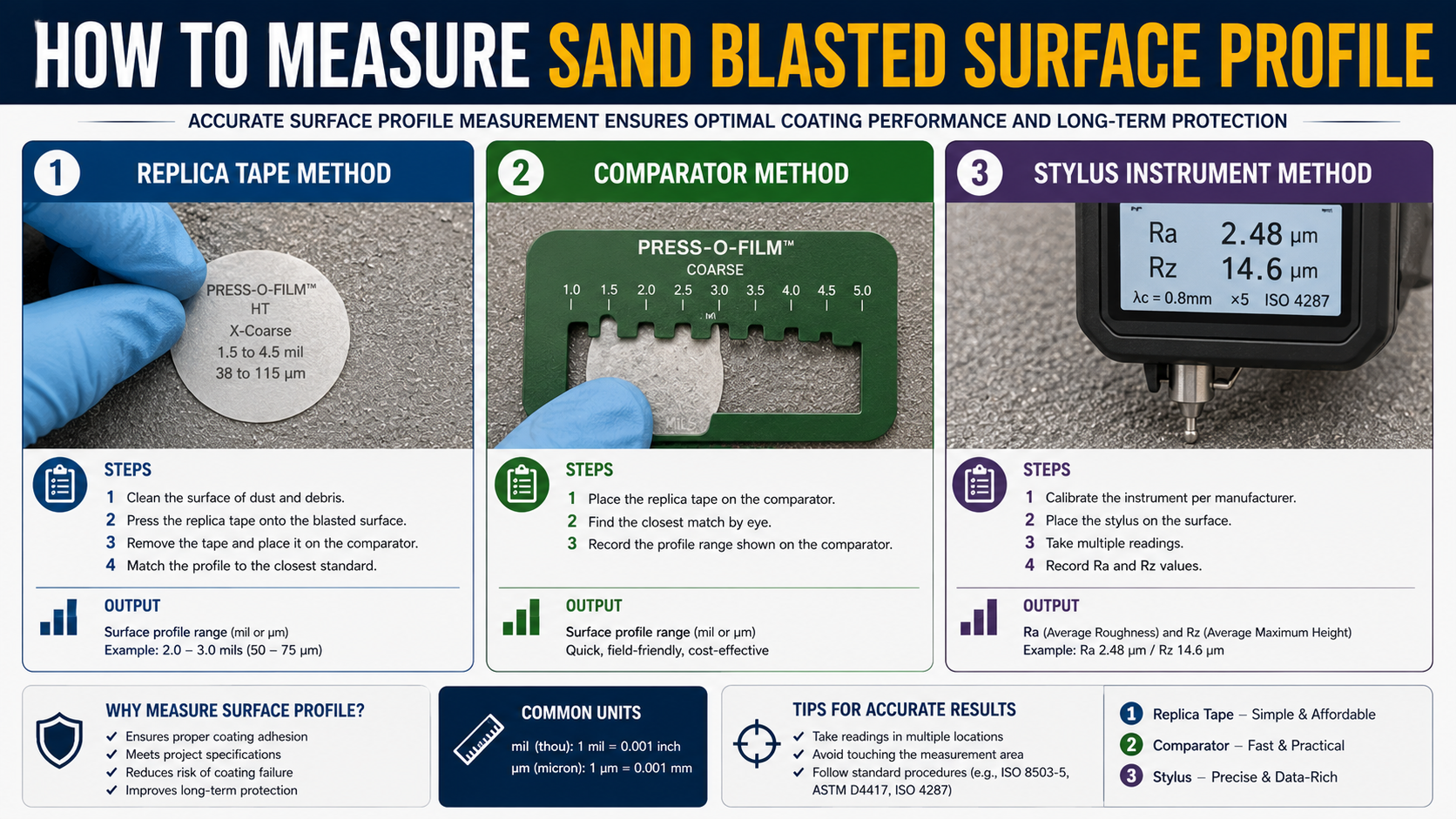
The profile depth produced by glass beads — 0.2–1.0 mil — is significantly shallower than the 1.5–4.0 mil required for most heavy protective coatings. This makes glass beads unsuitable as a pre-coating media for structural steel or marine applications, but ideal for applications where coating adhesion is achieved through light surface activation rather than deep mechanical interlocking.
Glass Bead Size Selection Guide
| Bead Size | Diameter (µm) | Finish | Best For |
|---|---|---|---|
| #40–#60 | 400–250 | Matte, textured | Heavy deburring, aggressive cleaning, mould texturing |
| #80–#100 | 180–150 | Satin | Automotive panels, general metal finishing, rust removal |
| #120–#150 | 125–106 | Bright satin | Stainless steel equipment, food industry components |
| #170–#200 | 90–75 | Smooth satin | Medical instruments, architectural hardware, jewellery |
| #230–#325 | 63–45 | Near-polish | Optical components, precision electronics, fine decorative |
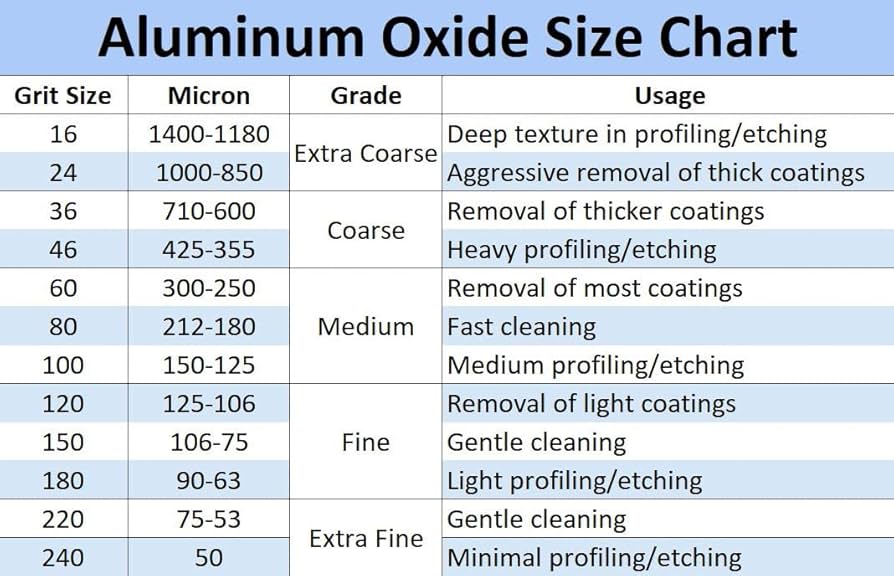
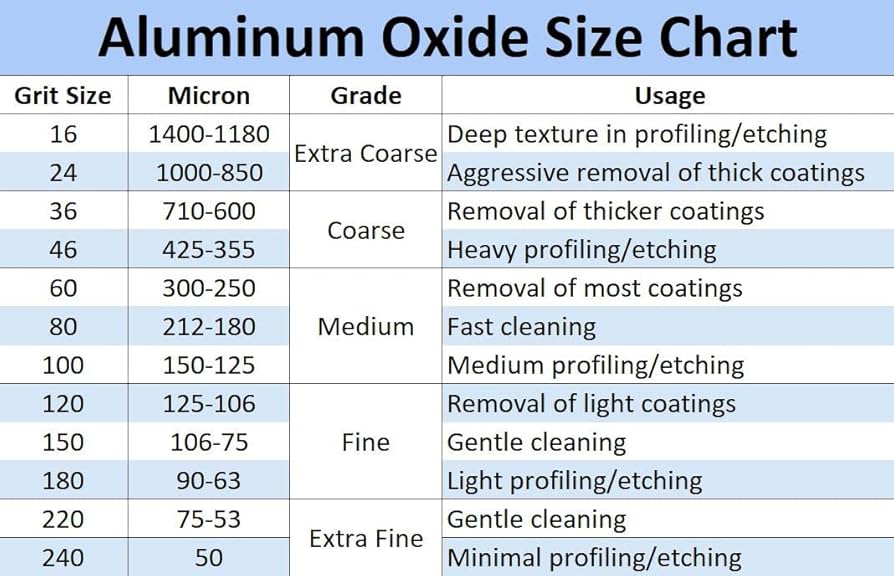
For a full cross-media size comparison, see the Sandblasting Abrasives Grit Size Chart.
Key Applications
Stainless Steel Finishing
Glass beads create the uniform satin finish specified for stainless steel in food processing, pharmaceutical, and medical applications. The non-directional finish meets hygiene surface roughness requirements and resists bacterial adhesion in accordance with 3-A Sanitary Standards.
Aluminium Component Cleaning
Glass beads remove oxidation, light corrosion, and surface contamination from aluminium without the iron contamination risk of steel media and without the aggressive profiling of mineral abrasives — essential before anodising, alodine treatment, or bonding operations.
Automotive Restoration
Carburettors, valve bodies, alloy wheels, and engine castings are routinely glass-bead blasted to restore a clean, bright appearance without dimensional change. Glass beads are safe on soft alloys where steel shot or grit would cause surface damage. See the automotive restoration guide.
Granallado
Glass beads are the standard media for peening applications where steel contamination is unacceptable — aluminium aircraft structures, magnesium components, and titanium fasteners. Glass bead peening induces compressive residual stress to improve fatigue life without the iron embedding risk of steel shot.
Pros & Cons
Ventajas
- Produces bright, uniform satin finish unobtainable with angular media
- No iron contamination — safe on stainless, aluminium, titanium
- Low surface roughness — meets medical and food industry finish requirements
- Recyclable 20–30 cycles in blast cabinets
- Available in wide size range (40–400 grit) for fine finish control
- Compatible with wet blasting systems
Limitaciones
- Not suitable for heavy rust removal or mill scale preparation
- Insufficient profile depth for most protective coating systems
- Softer than mineral abrasives — slower cutting on hard substrates
- Can embed in soft metals (aluminium) at high pressures — use with care
Glass Bead Peening: Improving Fatigue Life
Shot peening with glass beads is a controlled manufacturing process used to extend the fatigue life of metal components by inducing compressive residual stress in the surface layer. Unlike steel shot peening (which uses much harder, denser particles), glass bead peening is performed on components where steel contamination must be avoided — primarily aluminium alloy airframe structures, magnesium housings, and titanium fasteners in aerospace applications.
Peening intensity is measured using Almen strips and expressed in terms of arc height (in thousandths of an inch). Glass bead peening coverage and intensity must be precisely controlled by regulating blast pressure, nozzle distance, and dwell time. For aerospace applications, peening is typically performed to AMS 2431 specifications with certified media and process controls.
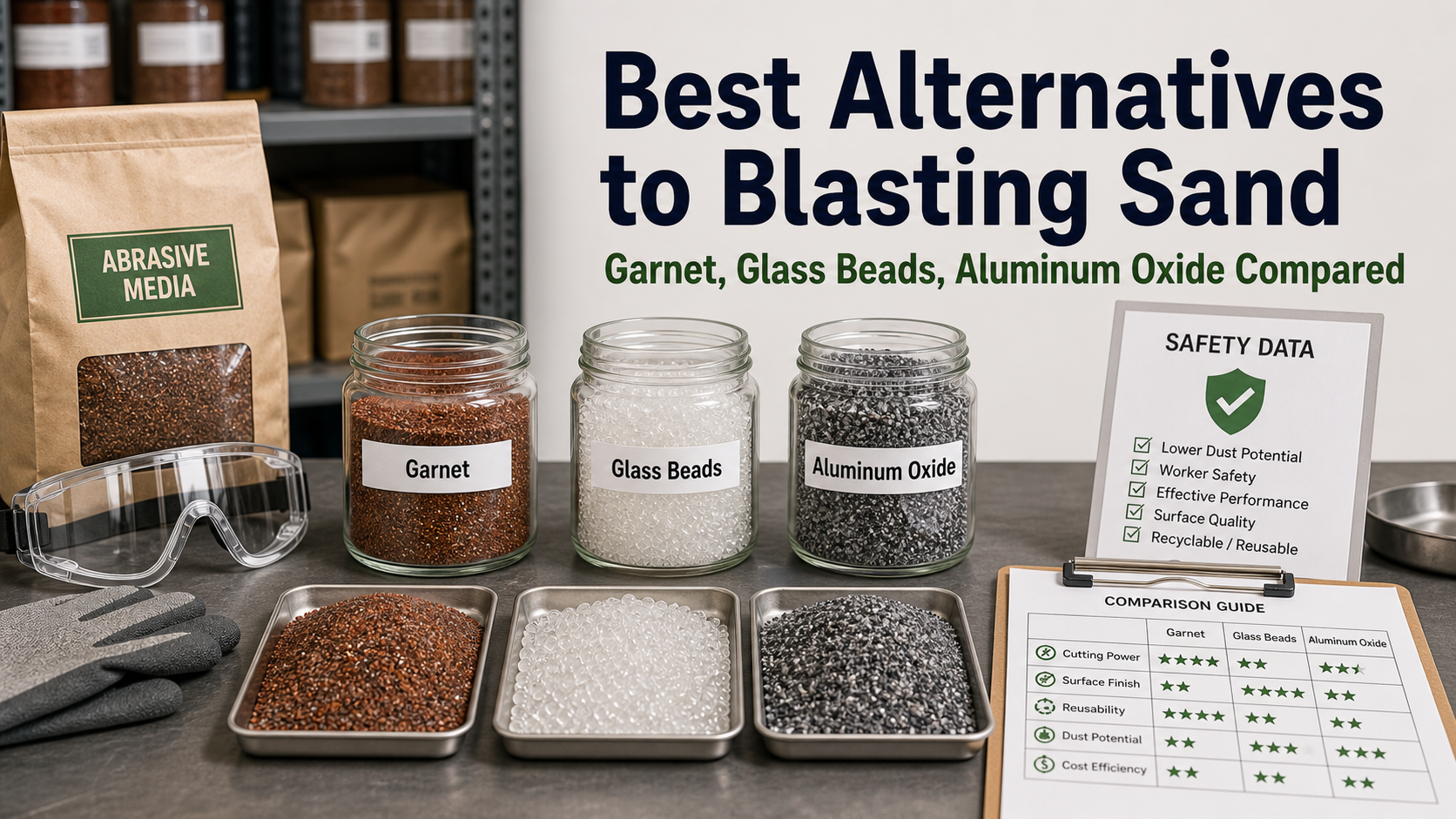
For applications where steel media is acceptable and maximum peening intensity is required, steel shot is the preferred media. See the Steel Grit guide for full steel media specifications.
PREGUNTAS FRECUENTES
At appropriate pressure settings (typically 40–60 psi for aluminium), glass beads clean and finish aluminium without dimensional damage. At excessively high pressures or with very coarse beads, embedding and surface distortion can occur. Always test on a representative sample before production blasting, and reduce pressure incrementally if embedding or warping is observed.
Yes — glass beads are well-suited for wet blasting (vapour blasting) systems. The addition of water reduces dust to near-zero, prevents bead fracture on impact (improving recyclability), and produces an exceptionally clean, bright finish that many customers prefer over dry-blast results. Wet blasting with glass beads is commonly used for motorcycle engine restoration and precision component finishing.
Source Glass Bead Blasting Media from Jiangsu Henglihong Technology
MIL-PRF-9954 compliant glass beads in sizes #40 to #325, available in 25 kg bags and 1,000 kg jumbo bags for global B2B export.
Filtros