Post-Blast Cleaning for Medical Devices: Ultrasonic Cleaning, Passivation, and ISO 16232 Cleanliness Verification
Abrasive blasting leaves behind a surface covered in media fragments, substrate debris, and compacted oxides. None of that belongs on a medical device that will contact the human body, interface with biological tissue, or proceed to passivation, anodizing, or coating. Post-blast cleaning is the step that bridges the mechanical surface engineering of blasting to the biological and chemical requirements of the finished device — and it carries exactly the same regulatory obligation as blasting itself. It must be validated, documented, and controlled. This guide covers the complete post-blast cleaning sequence from compressed-air blow-off through ultrasonic cleaning, DI water rinse, passivation, and cleanliness verification — with the parameters, equipment requirements, and ISO 13485 compliance framework at every step.
1. Why Post-Blast Cleaning Is as Critical as Blasting Itself
The mechanical action of abrasive blasting creates three categories of surface contamination that were not present before the process began. Each category creates a distinct risk if not removed before the device proceeds to the next manufacturing step or reaches the patient.
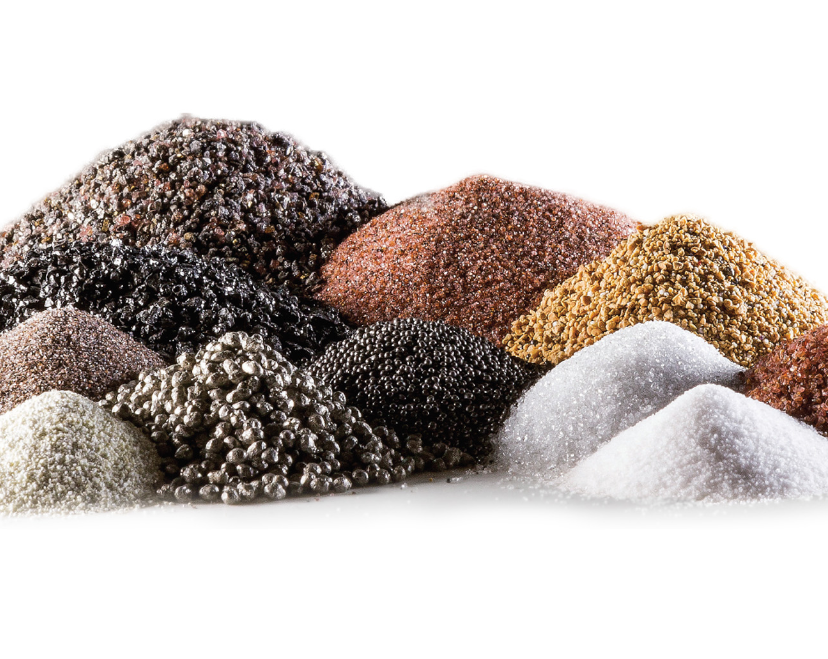
Category 1 — Blasting media residues: Fragments and dust from the blasting media — glass bead shards, alumina particles, TiO₂ fines — cover the blasted surface after processing. Loose particles are dislodged by compressed-air blow-off; embedded fragments and sub-micron dust require ultrasonic cleaning to remove. Any media residue remaining on the device surface is a foreign particle contamination that can interfere with downstream processes (passivation, anodizing, coating) and constitutes a biocompatibility concern per ISO 10993 if the device contacts the body.
Category 2 — Substrate material debris: The abrasive impact fractures and dislodges surface material from the workpiece itself. Metallic fines, oxide fragments, and chip material from the blasted substrate remain on the surface after blasting. These particles are identical in composition to the device material and may seem innocuous, but they are loose, potentially sharp, and represent the same cleanliness risk as the blasting media residue — particularly relevant for implants where loose particulate at the implant-bone interface is undesirable.
Category 3 — Disrupted oxide and surface contamination: The mechanical disruption of the native oxide layer during blasting exposes fresh reactive metal that, in the case of stainless steel, re-oxidizes inconsistently and may develop free iron contamination at the surface. For titanium, the disrupted oxide layer has different chemistry from the original native TiO₂ that would have formed in controlled conditions. Cleaning removes the loose disrupted oxide material and prepares the surface for passivation or anodizing to rebuild a controlled oxide layer.
2. The Complete Multi-Stage Cleaning Sequence
Compressed-air blow-off
Immediately after blasting, filtered dry compressed air (oil-free, ≤ 1 ppm oil per ISO 8573-1 Class 1) is directed across all blasted surfaces to dislodge loose media fragments and surface dust. Blow-off should be performed within the blasting cabinet or in a contained environment to prevent dispersal of media dust into the cleanroom or work area. This step removes the bulk of loose contamination before the parts enter the liquid cleaning line.
Ultrasonic cleaning — Stage 1 (alkaline detergent)
Parts are immersed in an aqueous alkaline detergent solution (typically pH 9–12, concentration 2–5% by volume) in an ultrasonic tank at 25–40 kHz. Acoustic cavitation dislodges embedded media particles, substrate debris, and organic residues. Bath temperature is typically 50–70°C to enhance detergent activity and cavitation efficiency. Immersion time is defined by the validated cleaning specification — typically 5–15 minutes per stage for implant components.
Intermediate rinse (DI water, ultrasonic or spray)
Parts transfer to a deionized water rinse stage to remove detergent residue and dislodged contamination carried from Stage 1. Ultrasonic agitation at the same or higher frequency accelerates detergent removal. Conductivity of the rinse bath is monitored — a rise in conductivity indicates detergent carry-over and signals that the bath needs refreshing. DI water minimum quality at this stage: 0.1 MΩ·cm.
Ultrasonic cleaning — Stage 2 (DI water, optional)
For implant components with stringent cleanliness requirements, a second ultrasonic stage in clean DI water provides additional particle removal. This stage is particularly important for implants that will be subject to ISO 16232 or VDA 19 cleanliness testing, where residual particle count limits are tight. DI water quality: ≥ 0.5 MΩ·cm.
Final high-purity DI water rinse
The final rinse in high-purity DI water (≥ 1 MΩ·cm resistivity, ≤ 1 μS/cm conductivity) removes all ionic species — chlorides, sulfates, detergent anions — from the surface. The rinse water quality at this stage directly determines the ionic cleanliness of the finished surface, which affects passivation quality, biocompatibility test results, and anodize adhesion. Overflow cascade rinse tanks (where fresh DI water continuously displaces used water from the bottom) are more effective than static tanks for this stage.
Drying
Parts are dried in a filtered hot-air oven (HEPA-filtered air, temperature 80–120°C, duration 15–30 minutes depending on part geometry and thermal mass) or by controlled nitrogen blow-off in a cleanroom environment. Incomplete drying creates water spots from DI water mineral residues (even high-purity DI water contains trace dissolved solids that deposit on drying) and can initiate flash oxidation on reactive metal surfaces. Drying must be complete before passivation, anodizing, or packaging.
Passivation or downstream treatment
Cleaned and dried stainless steel components proceed to passivation within the validated time window (typically within 4 hours to prevent surface re-oxidation and recontamination). Titanium components proceed to acid etching (SLA process), anodizing, HA coating, or packaging depending on the device specification. The time window between cleaning completion and the start of passivation or downstream treatment is defined in the process specification and is a controlled parameter.
Cleanliness verification
A sample of cleaned parts from each lot undergoes cleanliness verification per the applicable method (ISO 16232, VDA 19, or the organization’s proprietary cleanliness test method). Results are recorded in the Device History Record (DHR). Lots are not released to the next process step or to packaging until cleanliness conformance is confirmed.
3. Ultrasonic Cleaning: Frequency, Cavitation, Equipment, and Chemistry
Ultrasonic cleaning is the workhorse technology for post-blast cleaning of medical device components because it provides the mechanical energy needed to dislodge particles from the micro-scale surface features created by blasting — features that spray rinsing or manual wiping cannot access.
The Cavitation Mechanism
An ultrasonic transducer bonded to the tank bottom or immersed in the bath emits pressure waves at the operating frequency. As the wave passes through the liquid, alternating high-pressure and low-pressure zones are created. In the low-pressure zone, the dissolved gas and liquid vapor form microscopic bubbles. These bubbles grow during low pressure and collapse violently during the subsequent high-pressure half-cycle — a process called acoustic cavitation. The implosive collapse of each bubble generates a local micro-jet and shockwave with pressures estimated at thousands of atmospheres over a volume of approximately 1 μm³. This intense local energy dislodges particles adhering to the surface by mechanical impulse — effectively reaching into every surface feature regardless of geometry.
Frequency Selection
Detergent Chemistry for Medical Device Cleaning
Post-blast cleaning detergents for medical devices must achieve effective particle removal and organic cleaning without leaving residues that affect downstream processes or biocompatibility. Key selection criteria:
| Detergent Type | pH Range | Mechanism | Best For | Medical Device Consideration |
|---|---|---|---|---|
| Alkaline aqueous (phosphate-free) | 9–12 | Saponification of organics; emulsification of oils; particle suspension | General post-blast cleaning; orthopedic implants; surgical instruments | Phosphate-free preferred — phosphate residues can affect passivation; completely rinsable |
| Mildly alkaline enzymatic | 8–10 | Enzyme-catalyzed breakdown of organic residues + alkaline particle removal | Reusable instrument cleaning; components with complex geometry | Enzymes must be confirmed non-reactive with implant materials; validated removal by DI rinse |
| Neutral aqueous (pH 6.5–8) | 6.5–8 | Surfactant-based emulsification; limited particle removal without alkalinity | Final rinse stage; very delicate alloys sensitive to alkaline | Less effective for particle removal than alkaline; use only where alkaline is contraindicated |
| Acidic aqueous | 3–6 | Dissolution of oxide/mineral scale; not suitable as primary particle cleaner | Post-passivation brightening; scale removal | Not used as primary post-blast cleaner; may interfere with surface condition before passivation |
All detergents used in medical device cleaning must have complete safety data documentation and be evaluated for compatibility with the device material and downstream processes. Detergents that leave chloride, sulfate, or phosphate residues on titanium implant surfaces can affect the TiO₂ oxide chemistry measured by XPS during biocompatibility characterization.
4. Deionized Water Quality Requirements
Water quality in the post-blast cleaning sequence is not a minor detail — it is a validated parameter that directly determines the ionic cleanliness of the finished device surface. The key water quality parameter for medical device cleaning is electrical resistivity (or its reciprocal, conductivity), which reflects the concentration of dissolved ionic species.
| Cleaning Stage | Minimum Resistivity | Maximum Conductivity | Monitoring Method |
|---|---|---|---|
| Ultrasonic detergent stage | N/A (detergent solution) | N/A | Detergent concentration per validated specification |
| Intermediate DI rinse | 0.1 MΩ·cm | 10 μS/cm | Inline conductivity sensor; bath change at defined conductivity limit |
| Secondary ultrasonic DI stage | 0.5 MΩ·cm | 2 μS/cm | Inline conductivity; overflow cascade tank preferred |
| Final high-purity DI rinse | ≥ 1 MΩ·cm | ≤ 1 μS/cm | Inline resistivity meter; point-of-use measurement at tank inlet |
| DI water storage system | ≥ 0.5 MΩ·cm (bulk) / ≥ 1 MΩ·cm (POU) | ≤ 2 μS/cm | Continuous loop recirculation with monitoring; UV sterilization to control bioburden |
The DI water system must be included in the facility’s equipment qualification and maintenance program. DI water quality can degrade rapidly if the deionization resin bed is exhausted, the storage tank biofilm accumulates, or system plumbing is compromised. Automated conductivity monitoring with alarm limits and automatic shutoff protects the process from DI water quality failures that could silently contaminate the entire production lot.
5. Passivation for Stainless Steel: ASTM A967 and ASTM F86
Passivation is the chemical treatment that rebuilds the protective chromium oxide (Cr₂O₃) passive layer on stainless steel surfaces disrupted by abrasive blasting. It is distinct from cleaning: cleaning removes physical contamination, while passivation rebuilds the electrochemical protection mechanism of the stainless steel surface.
Abrasive blasting disrupts the passive layer through two mechanisms: direct mechanical fracture of the oxide film at each particle impact zone, and potential introduction of free iron from blasting media (particularly stainless steel shot) or blast cabinet components into the disrupted surface. Free iron at the stainless steel surface is anodic relative to the chromium-rich matrix and corrodes preferentially in the autoclave environment, producing the rust staining and pitting that indicates inadequate passivation.
Nitric Acid Passivation (ASTM A967)
- Practice A: 20–25% HNO₃, 21–32°C, ≥ 30 min — austenitic and martensitic SS
- Practice B: 20–40% HNO₃, 48–55°C, ≥ 20 min — austenitic SS (316L, 304)
- Practice C: 20–45% HNO₃ + 2–3% sodium dichromate, 21–55°C — precipitation-hardened SS
- Dissolves free iron preferentially; chromium diffuses to surface and oxidizes to form dense Cr₂O₃
- Traditional chemistry; well-established for all surgical-grade stainless alloys
- Requires careful waste treatment (NOₓ acid waste)
Citric Acid Passivation (ASTM A967)
- Practice E: 4–10% citric acid, 21–66°C, ≥ 10 min — 300-series austenitic
- Practice F: 4–10% citric acid, 60–71°C, ≥ 4 min — elevated temperature option
- Citric acid chelates iron ions, removing free iron without attacking the chromium-rich passive layer
- Environmentally preferred over nitric acid — less hazardous waste
- Equally effective on 300-series austenitic alloys; less proven on 400-series martensitic
- Growing adoption in instrument manufacturers’ QMS as primary passivation method
Passivation Verification Testing
Post-passivation verification confirms the passive layer has been successfully rebuilt before lot release. Three test methods are specified in ASTM A967:
- Copper sulfate test: A drop of 8% copper sulfate solution applied to the passivated surface. On a properly passivated surface, no copper-colored deposit forms (copper ions remain in solution because no free iron is present to displace them). Free iron causes copper plating — a red/pink deposit visible within 6 minutes. Simple, fast, and performed in-line on 100% of parts or on a statistical sample per the validated sampling plan.
- Ferroxyl test (potassium ferricyanide): K₃[Fe(CN)₆] solution turns deep blue (Turnbull’s blue) in the presence of Fe²⁺ ions from corroding free iron. More sensitive than copper sulfate for detecting low levels of free iron. Used when more sensitive detection is required.
- High humidity test: Parts placed in a humidity cabinet at 98 ± 2% relative humidity, 49 ± 3°C for 24 hours. No rust staining indicates acceptable passivation. Used as a periodic acceptance test or for new process validation rather than in-line production testing.
6. Post-Blast Treatment for Titanium Implants
Titanium implants do not require passivation in the stainless steel sense — titanium’s native TiO₂ oxide reforms spontaneously and provides adequate corrosion protection without chemical treatment. However, the post-blast step for titanium implants involves several distinct treatments depending on the device specification.
7. ISO 16232 and VDA 19 Cleanliness Verification
ISO 16232 (Cleanliness of components of fluid circuits — Road vehicles) provides the standardized framework for technical cleanliness testing most widely adopted in medical device manufacturing for implant component cleanliness verification. Its companion standard VDA 19 (from the German automotive industry) covers similar ground with some procedural differences. Both define validated extraction and analysis methods that produce objective, quantitative cleanliness data.
Gravimetric Method
The component is rinsed with a controlled volume of extraction fluid (filtered isopropanol, or another validated solvent/liquid) using a standardized procedure (immersion, pressure rinsing, or ultrasonic extraction). The rinse fluid is filtered through a pre-weighed membrane filter of defined pore size (typically 0.45–5 μm). After drying, the filter is weighed again. The mass increase represents total particulate residue per the defined test extraction area or per part. Result expressed as mg/part or mg/cm² of cleaned surface. Simple, quantitative, reproducible.
Particle Counting Method
After gravimetric collection on the membrane filter, the filter is examined under a microscope or automated optical particle counter. Particles are counted by size class (typically ≥ 25 μm, ≥ 50 μm, ≥ 100 μm, ≥ 200 μm, ≥ 400 μm, ≥ 600 μm, ≥ 1000 μm) and optionally characterized by morphology (fiber vs particle). Result expressed as particle count by size class per part or per cleaned surface area. More discriminating than gravimetric alone — can detect a small number of large particles that have minimal mass impact but significant biocompatibility or device function risk.
Cleanliness Specification Development
Before ISO 16232 testing can be used as a release criterion, a cleanliness specification must be established — the maximum acceptable residue mass and/or particle count by size class for the device. This specification is developed through three inputs:
- Risk assessment: What particle size, morphology, and quantity would pose a risk to device function or patient safety? A stray alumina particle of 100 μm adjacent to a UHMWPE bearing surface presents a different risk than a 5 μm glass bead fragment on an implant bone-contact surface.
- Process capability data: What cleanliness level does the validated cleaning process reliably achieve? The specification should be set at a level that the cleaning process can consistently achieve with adequate margin — not at the absolute detection limit of the test method.
- Biocompatibility context: The ISO 10993 biocompatibility testing of the finished device provides the definitive biological test of whether the cleaned surface is acceptable. The ISO 16232 cleanliness limit should be set at a level that the process demonstrably achieves, and which the biocompatibility testing of the cleaned device supports.
8. Cleaning Process Validation Under ISO 13485
Post-blast cleaning is part of the special process sequence that includes abrasive blasting. The complete sequence — blasting plus cleaning plus passivation or downstream treatment — must be validated together as a system under ISO 13485 Section 7.5.6. A blasting process that is validated but whose cleaning step is not validated does not satisfy the special process requirement.
Cleaning Validation Scope
Cleaning validation addresses three questions:
- Effectiveness: Does the cleaning process remove blasting media residues and other contamination to below the defined cleanliness specification?
- Reproducibility: Does it do so consistently across multiple batches, operators, and equipment conditions?
- Stability: Do the cleaning parameters remain within their effective ranges over time (detergent bath life, DI water quality, ultrasonic transducer performance)?
Cleaning Validation Protocol Design
| Validation Phase | Objective | Key Measurements | Acceptance Criteria |
|---|---|---|---|
| OQ — Cleaning parameter characterization | Establish parameter ranges that achieve cleaning specification | ISO 16232 gravimetric and particle count at parametric extremes (low temperature, min detergent, min time; high contamination load) | All test conditions achieve cleanliness ≤ defined limit; worst-case identified and used as PQ condition |
| OQ — Bath life study | Determine detergent bath change interval before loss of cleaning efficacy | Cleaning performance at defined intervals of cumulative parts processed; bath contamination (gravimetric, particle count in bath fluid) | Cleanliness limit maintained through defined maximum bath life; change interval set conservatively inside demonstrated limit |
| PQ — Cleaning system performance | Demonstrate consistent cleanliness across 3 independent cleaning runs at validated parameters | ISO 16232 gravimetric and particle count per lot; DI water quality; detergent concentration; passivation acceptance per lot | All lots ≤ cleanliness specification; all water and detergent parameters within validated range; all passivation lots accepted |
Ongoing Control After Validation
After the cleaning process is validated and locked, ongoing process control requires monitoring of the key parameters that were established in OQ as critical:
- DI water resistivity at point of use — monitored continuously with calibrated inline sensor
- Ultrasonic bath temperature — monitored per batch; recorded in DHR
- Detergent concentration — verified at start of each batch by titration or refractometry
- Bath age (cumulative parts processed) vs validated bath life limit
- Ultrasonic transducer performance — verified by foil erosion test or cavitation intensity meter at defined intervals
9. Frequently Asked Questions
Post-blast cleaning follows a multi-stage sequence: compressed-air blow-off → ultrasonic cleaning in alkaline detergent → DI water rinse → secondary ultrasonic DI stage (for implants) → final high-purity DI rinse (≥ 1 MΩ·cm) → drying. Stainless steel components then undergo passivation per ASTM A967 or F86. Titanium implants proceed to acid etching (SLA process), anodizing, HA coating, or packaging depending on device specification. Cleanliness is verified by ISO 16232 gravimetric or particle counting method.
25–40 kHz is most effective for removing blasting media residue from metal implant surfaces. Lower frequencies (25 kHz) generate larger, more energetic cavitation bubbles with higher mechanical impact — effective for dislodging embedded particles from rough SLA-blasted surfaces. Higher frequencies (80 kHz) produce gentler cavitation for delicate or thin-walled components. Dual-frequency systems alternating between 25 kHz and 40 kHz provide the best combination of deep penetration and surface safety for orthopedic and dental implant cleaning.
The final rinse requires DI water at ≥ 1 MΩ·cm resistivity (≤ 1 μS/cm conductivity) at point of use. This ensures ionic species — chlorides, sulfates — do not recontaminate the cleaned surface. Intermediate rinse stages require ≥ 0.1–0.5 MΩ·cm. Resistivity is monitored continuously by inline sensors; automated alarms prevent production use if water quality falls below specification limits.
ISO 16232 defines standardized methods for extracting and analyzing particulate contamination from component surfaces. Parts are rinsed with a controlled volume of extraction fluid, which is filtered through a pre-weighed membrane. Gravimetric analysis weighs the total collected residue (mg/part or mg/cm²). Particle counting sizes and counts particles by class (≥ 25 μm, ≥ 50 μm, ≥ 100 μm, etc.). In medical device manufacturing, ISO 16232 or VDA 19 results are compared against the validated cleanliness specification to release or reject production lots.
Cleaning removes physical contamination — media particles, debris, and organic residues — using mechanical and chemical action. Passivation is a chemical treatment (nitric acid or citric acid per ASTM A967/F86) that rebuilds the protective chromium oxide passive layer on stainless steel disrupted during blasting. Cleaning must precede passivation: surface residues interfere with passive layer formation. The two processes address different surface conditions — physical contamination vs electrochemical protection — and both are required in sequence for stainless steel medical devices.
Yes. Post-blast cleaning is part of the special process sequence and must be validated as a system with the blasting step under ISO 13485 Section 7.5.6. Cleaning validation must demonstrate that media residues and contamination are removed to below the defined cleanliness specification across multiple batches and parametric conditions. Validated parameters include ultrasonic frequency/power, detergent type and concentration, bath temperature, immersion time, number of rinse stages, DI water quality, and bath change interval. All parameters are locked in the process specification; changes require formal change control review.
Source Medical-Grade Blasting Media with Cleaning Validation Support
Jiangsu Henglihong Technology supplies glass beads, aluminum oxide, TiO₂, and specialty media with full chemical composition documentation, particle size data, and purity certificates — the upstream material foundation for a complete ISO 13485-compliant blasting and cleaning validation package.
Request Media Documentation & QuoteFilter