How Much Does Black Beauty Blasting Media Cost? Pricing Guide & Bulk Buying Tips
Retail prices, bulk ton pricing, cost-per-cycle calculations, and practical tips for industrial procurement teams buying Black Beauty coal slag at volume.
1. Retail Pricing: Bags and Small Quantities
For contractors, workshop operators, and facilities managers purchasing less than one ton at a time, Black Beauty is available through blast equipment distributors, industrial supply houses, and major e-commerce platforms. The following pricing is representative of the U.S. market as of June 2026:
2. Industrial Bulk Pricing
For contractors, shipyards, blast rooms, and industrial facilities consuming 5 tons or more per month, bulk purchasing dramatically reduces the unit cost. The economics of bulk coal slag procurement in the U.S. market as of June 2026 are approximately:
| Purchase Volume | Packaging | Approx. Unit Price (FOB Plant) | Notes |
|---|---|---|---|
| <1 ton | Individual bags (25–100 lb) | $600–900/ton equivalent | Retail pricing; significant premium over bulk |
| 1–5 tons | Pallet (40×50 lb bags or 20×100 lb) | $350–500/ton | Pallet pricing; freight included by some distributors |
| 5–20 tons | Super-sacks (1-ton or 2,000 lb bulk bags) | $200–320/ton | Standard industrial pricing; requires forklift for handling |
| 20–50 tons | Super-sacks or pneumatic bulk | $150–220/ton | Volume pricing; negotiate per-shipment minimums |
| 50+ tons/month | Dedicated truck or pneumatic bulk delivery | $120–180/ton | Contract pricing; best economics for high-volume fixed installations |
These are FOB (Free on Board) plant prices. Freight is additional and can add $30–$120 per ton depending on distance from the plant, regional freight rates, and shipment size. Freight cost is often the deciding factor in total landed cost — particularly for West Coast, mountain, and rural locations.
3. Cost-Per-Cycle: The Right Way to Compare Media Costs
Comparing blast media purely on price per ton is a common and costly mistake. The relevant economic metric is cost per productive unit — either cost per square foot of surface blasted to specification, or cost per cycle (one full ton of media consumed).
For Black Beauty, a “cycle” means purchasing, consuming, and disposing of one ton of media in a single-pass blasting operation. The cost-per-cycle includes:
- Media purchase cost (FOB plant price + freight)
- Spent media disposal cost (non-hazardous solid waste disposal: $20–60/ton; hazardous waste if lead paint present: $200–600/ton)
- Labor to handle, load, and clean up the media
Example calculation for Medium-grade Black Beauty, typical field operation:
| Cost Element | Amount per Ton |
|---|---|
| Media purchase (bulk, 20-ton delivery) | $200 |
| Freight to job site (moderate distance) | $60 |
| Non-hazardous solid waste disposal | $40 |
| Labor to handle and load (1 hour @ $45/hr) | $45 |
| Total cost per ton consumed | ~$345 |
| Coverage at 0.6 lb/ft² consumption | 3,333 ft² per ton |
| Media cost per square foot | ~$0.10/ft² |
4. Factors That Affect Your Landed Cost
Understanding the variables that move your true cost allows you to negotiate better and make smarter sourcing decisions:
- Distance from plant to job site or warehouse — coal slag plants are concentrated in the southeastern and midwestern U.S. (near coal power plant clusters). Projects more than 500 miles from a plant face materially higher freight costs.
- Substrate condition and media consumption rate — heavily corroded Grade D steel consumes 50–80% more media per square foot than lightly rusted Grade B steel. Factor substrate condition into your tonnage estimate.
- Grit grade — Fine and Extra Fine grades cost more per ton than Medium; Coarse grades are generally similar to Medium pricing.
- Order volume and frequency — blanket purchase agreements with monthly deliveries routinely achieve 10–20% lower per-ton pricing than spot purchases.
- Disposal pathway — if your project involves lead paint removal, hazardous waste disposal costs can exceed the media cost itself. Calculate total project cost, not just media cost.
- Packaging format — super-sacks reduce per-ton packaging cost by 15–25% compared to individual bags and reduce labor handling time significantly.
5. Media Cost Comparison: Black Beauty vs. Alternatives
| Medienart | Approx. Bulk Price ($/ton) | Reuse Cycles | Approx. Cost per Cycle | Relative Economics |
|---|---|---|---|---|
| Black Beauty (coal slag) | $150–220 | 1 (disposable) | $150–220 + disposal | Lowest disposable cost; best for large-area single-use field blasting |
| Copper Slag | $180–280 | 1 (disposable) | $180–280 + disposal | Slightly higher cost; similar single-use economics |
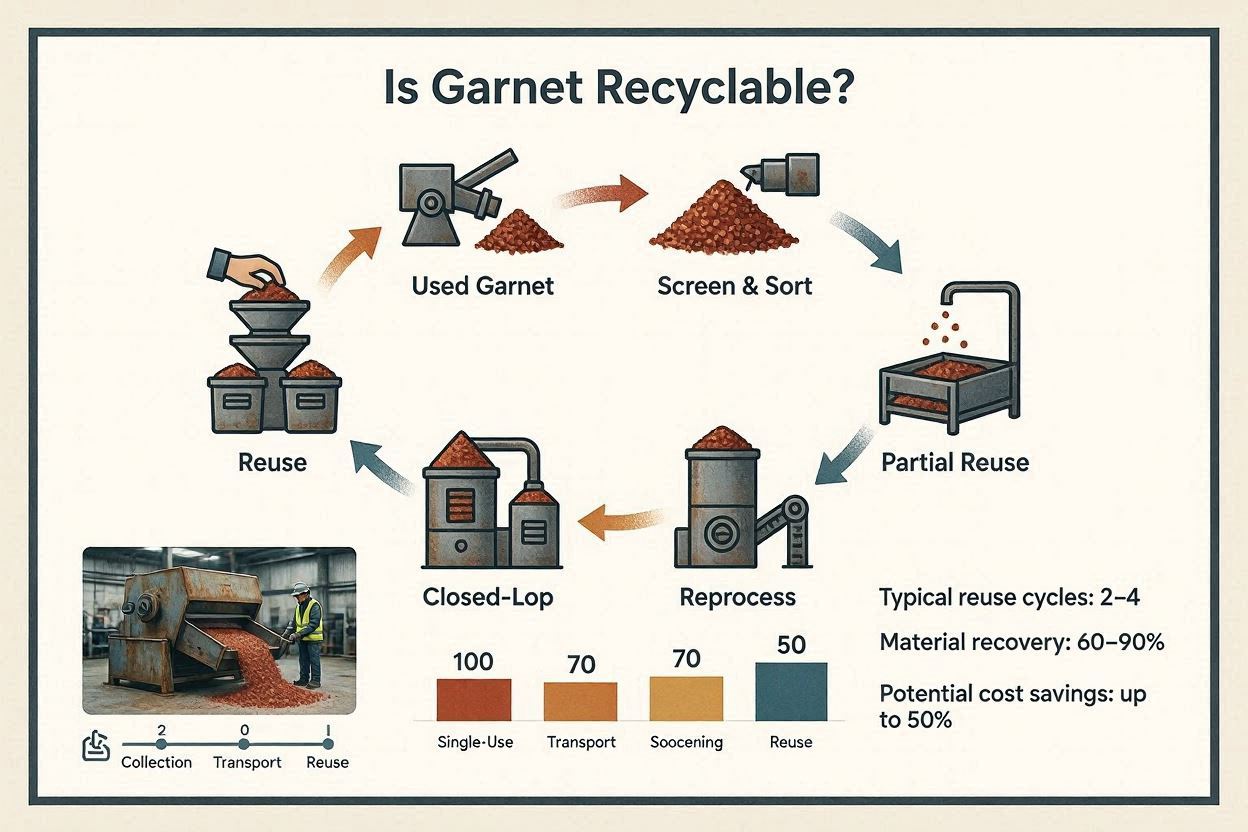
| Granat | $350–600 | 3–5 | $70–200/cycle with reclaim | Higher initial cost offset by reuse; better economics in enclosed reclaim operations |
| Aluminium-Oxid | $700–1,200 | 5–10 | $70–240/cycle with reclaim | High initial cost; favorable at 8+ reuse cycles in clean reclaim environment |
| Steel Grit (GH/GL) | $800–1,400 | 50–200+ | $4–28/cycle at 100 cycles | Dramatically lower per-cycle cost at scale; requires blast room capital investment |
| Glass Bead | $500–900 | 3–5 | $100–300/cycle | Not a cost-competitive cleaning media; used only where surface finishing properties are required |
For a focused comparison between coal slag and garnet economics, see: Black Beauty vs. Garnet: Which Blasting Media Should You Choose?
6. Bulk Buying Tips for Industrial Procurement
- Request batch-specific Certificates of Conformance (CoC) for every delivery — including particle size distribution, free silica XRD results, conductivity, and TCLP data. Establish in the supply agreement that payment is conditional on CoC receipt.
- Negotiate blanket purchase agreements with quarterly pricing reviews rather than spot-buying each project. Suppliers offer 10–20% better pricing for committed volume with predictable delivery schedules.
- Compare total landed cost, not unit price. Get freight quotes to your delivery location from at least two suppliers before awarding volume contracts. A $20/ton media price advantage can easily be erased by a $30/ton freight disadvantage.
- Standardize on super-sack packaging for volumes above 2 tons. Super-sacks reduce per-ton packaging cost by 15–25% and can be handled with a simple forklift — no pallet-by-pallet unloading required.
- Pre-qualify at least two suppliers for each project size category. Supply disruptions happen; having a qualified backup prevents costly project delays when your primary supplier has a delivery failure.
- Confirm lead times before project start. Super-sack deliveries often require 1–2 weeks lead time; ensure your procurement timeline builds in sufficient buffer for quality documentation review.
- Audit supplier plant certifications annually. Request updated SSPC AB 1 compliance data and TCLP test results at least annually from ongoing suppliers — production source and quality can change without notice.
7. True Total Cost of Ownership Calculation
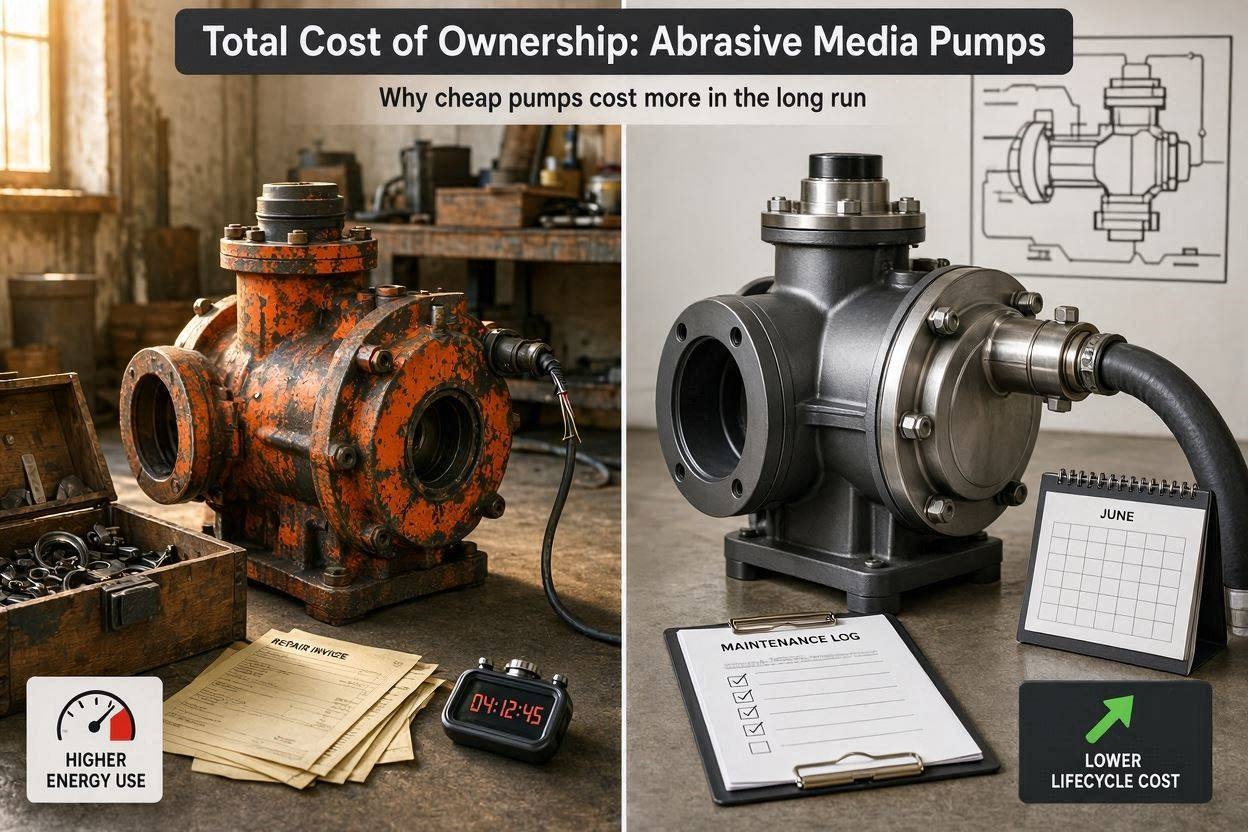
For operations comparing Black Beauty against a reusable abrasive (steel grit, garnet, aluminum oxide), the correct comparison framework is total cost of ownership over a defined project volume, not per-ton purchase price. The key variables:
- Capital equipment cost — reusable media require blast room and reclaim system investment (typically $50,000–$500,000); Black Beauty field blasting requires only blast pot and compressor
- Media purchase cost — multiply unit price × tons per year
- Disposal cost — multiply disposal rate × tons per year
- Labor for media handling — reusable systems require reclaim maintenance labor; single-use systems require cleanup/disposal labor
- Productivity comparison — if the alternative media achieves 25% faster blasting (higher hardness, better cutting), factor in reduced labor hours per square foot
For most field blasting operations producing fewer than 500,000 ft² of blasted surface per year, Black Beauty coal slag offers the lowest total cost. Above that threshold — particularly in blast room environments — steel grit economics become competitive. The crossover point depends on freight costs, disposal costs, and capital equipment pricing specific to your operation.
8. Sourcing Channels Overview
Black Beauty and specification-equivalent coal slag abrasives are available through three primary channels:
- Direct from processor/manufacturer — best pricing for large volume; requires minimum order quantities (typically 20–40 tons); may require logistics self-management
- Industrial blast equipment distributors — typically stock multiple grades; offer technical support and smaller minimums; pricing is 10–25% above direct processor pricing
- International/export suppliers — for projects outside North America, specification-equivalent coal slag and copper slag abrasives are available from Asian and Middle Eastern manufacturers; verify SSPC AB 1 compliance documentation carefully
Return to the overview: Complete Buyer’s Guide · Related: Black Beauty vs. Garnet · Black Beauty vs. Copper Slag
Filter