Angular vs Round Blasting Media: Surface Profile & Finish Differences
A technical deep-dive into how particle shape drives surface outcomes — from anchor profiles and coating adhesion with angular grit, to compressive peening and decorative finishing with spherical shot. Includes data on Ra, Rz, fatigue life improvement, and practical selection guidance.
The Fundamental Difference
Particle shape is the single most important morphological property of any abrasive blasting media, determining the fundamental mechanism by which the particle interacts with the substrate surface on impact. Everything else — hardness, size, density — modulates this interaction. Shape defines its character.
The distinction is clean and binary: angular particles cut; spherical particles peen. These are not just different outcomes — they are opposite mechanisms that produce opposite surface conditions. A surface blasted with angular grit and a surface blasted with spherical shot are as different from each other as a machined surface and a hammered one.
Understanding this difference is not academic — it determines whether a coating will adhere for its intended service life, whether a component will achieve its required fatigue life, and whether a decorative finish will meet specification. Selecting the wrong shape class is not compensable by adjusting other parameters.
How Angular Media Works: The Cutting Mechanism
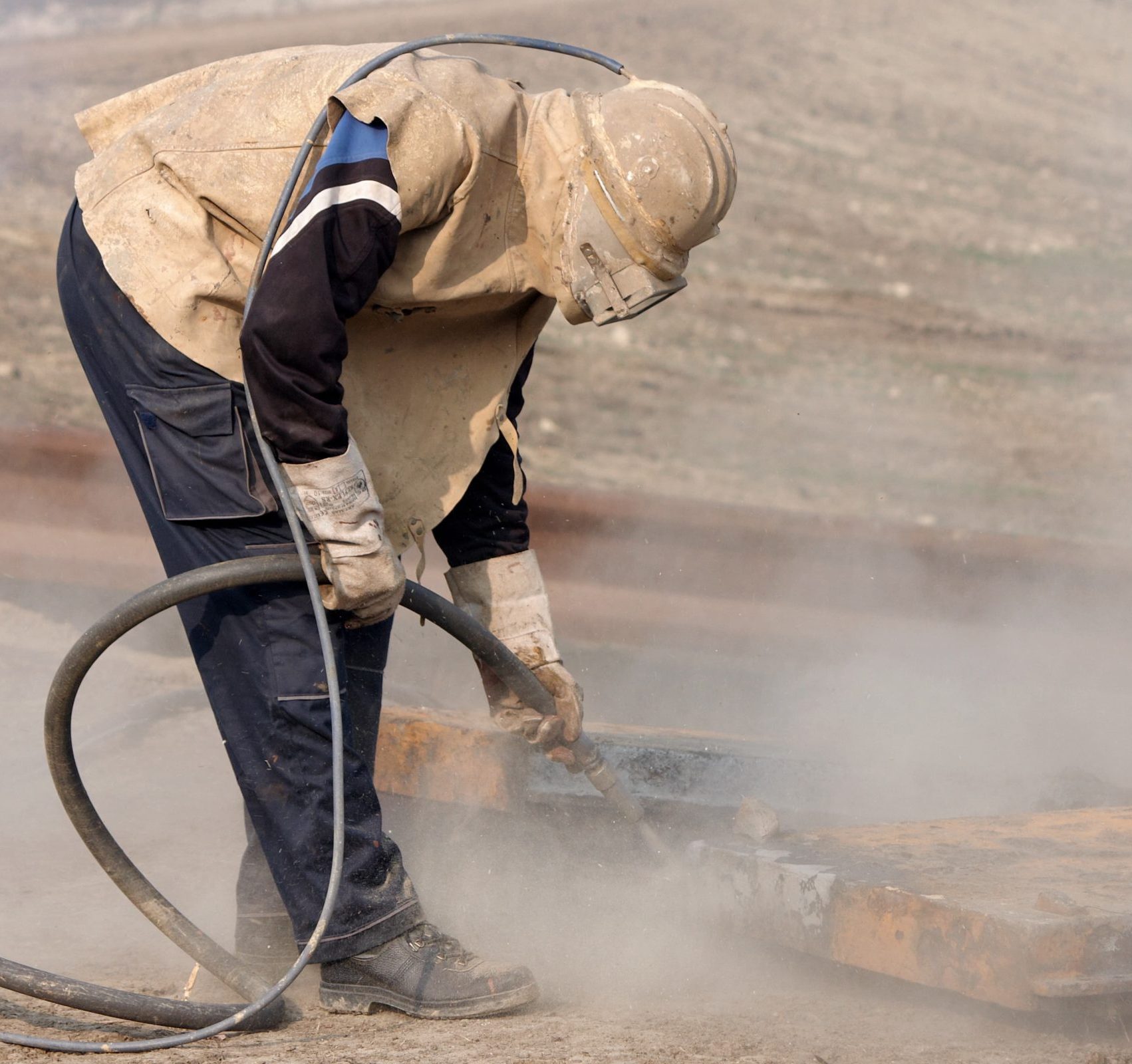
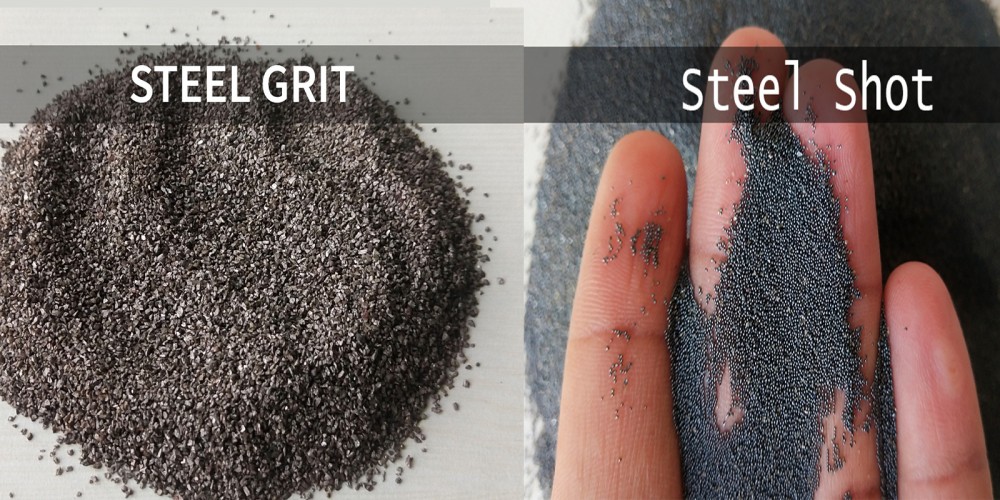
Angular blast media particles — produced by crushing, fracturing, or controlled solidification of abrasive materials — have sharp edges and irregular, faceted surfaces. When an angular particle impacts a surface at high velocity, several things happen simultaneously:
- The particle’s leading edge or corner concentrates the impact force into a small area, generating very high localized pressure — far exceeding the substrate’s yield strength.
- This concentrated force shears and displaces surface material, creating a small crater with raised edges (the “peak”) and a depressed center (the “valley”).
- The material displaced from the crater piles up at the crater’s rim, forming sharp peaks in the surface micro-topography.
- Thousands of overlapping such impacts across the entire surface area create the characteristic “angular anchor profile” — a forest of sharp peaks and valleys with a defined roughness depth.
This profiling action simultaneously cleans the surface (removing rust, scale, paint, and contamination), roughens it to a defined depth, and creates surface tensile stress in the deformed peaks — a state that is actually beneficial for coating adhesion, as the mechanical interlocking of coating material with the profile peaks provides the primary adhesion mechanism.
Angular Media Examples
- Stahlkorn — produced by crushing hardened steel shot; hardness 54–65 HRC; the most widely used angular media for structural steel preparation
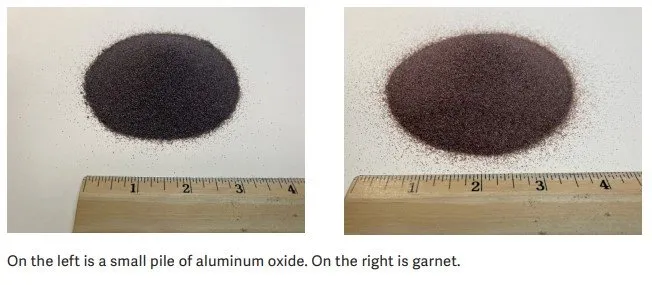
- Aluminiumoxid — synthetic angular abrasive; Mohs 9; preferred for precision profiling and thermal spray bond coat preparation
- Siliziumkarbid — hardest angular abrasive; Mohs 9–9.5; used for ceramics and hardened steel
- Granat — natural mineral angular abrasive; Mohs 7–8; preferred for marine and eco-sensitive applications
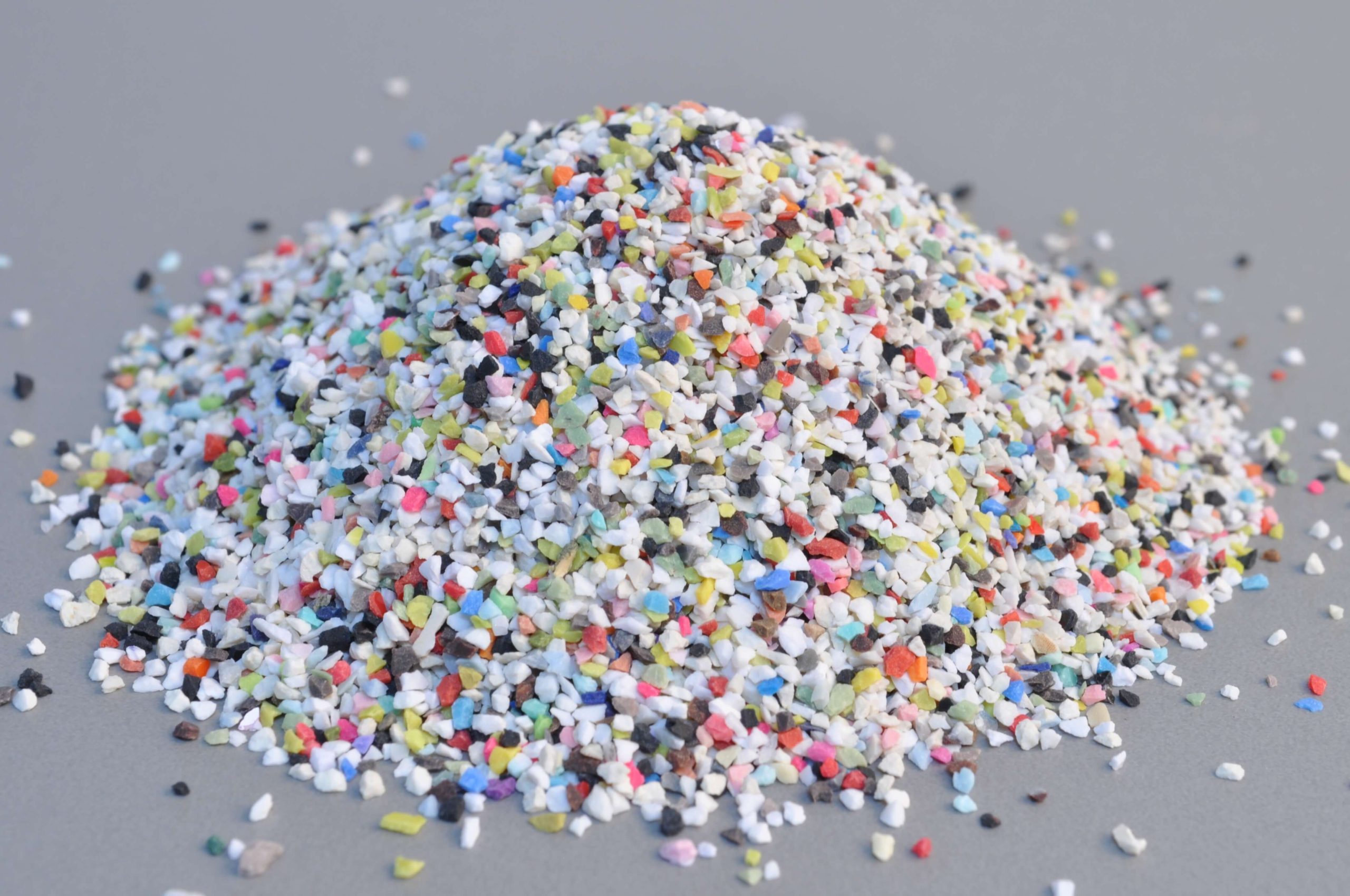
- Crushed glass — recycled glass angular abrasive; Mohs 5.5–6; used for general outdoor blasting
How Spherical Media Works: The Peening Mechanism
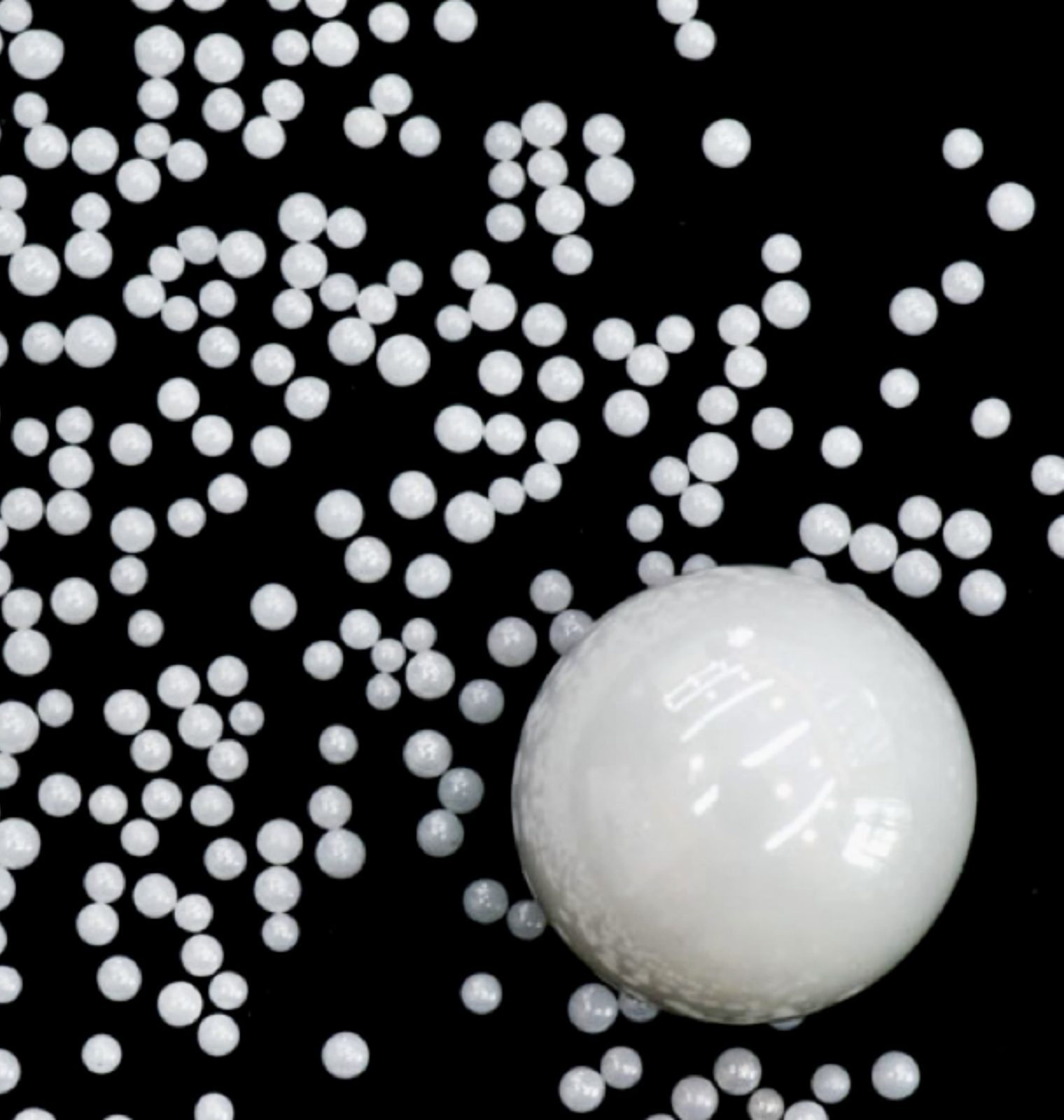
Spherical blast media particles — produced by water atomization (steel shot), precision glass manufacturing (glass beads), or controlled powder metallurgy — have no sharp edges. When a spherical particle impacts a surface at high velocity, the mechanics are fundamentally different:
- The impact force is distributed across the entire spherical contact area rather than concentrated at an edge — much lower peak pressure than an angular particle of comparable size and mass.
- The surface material is compressed downward and outward from the impact point, but is not sheared or removed. The surface material deforms plastically without material loss.
- The compressed material rebounds slightly but retains a net downward displacement, creating a shallow, smooth, rounded dimple in the surface.
- Repeated impacts across the entire surface accumulate compressive residual stress in the surface layer — the defining benefit of shot peening — while producing an overlapping pattern of smooth dimples with no sharp peaks.
The resulting surface is characterized by a uniform, non-directional texture with a bright, smooth appearance. The compressive stress layer — typically extending 0.1–0.5 mm below the surface depending on shot size and intensity — is the mechanism behind fatigue life improvement. Cracks initiate in tensile stress fields; compressive stress at the surface inhibits crack initiation and slows propagation.
Spherical Media Examples
- Stahlschrot — water-atomized steel spheres; hardness 40–51 HRC; dominant media for heavy industrial and automotive shot peening
- Glasperlen — precision lead-free soda-lime glass spheres; Mohs 5.5–6; preferred for light peening, decorative finishing, and iron-free applications
- Schrot aus rostfreiem Stahl — for peening stainless steel and non-ferrous substrates where iron contamination from carbon steel shot is unacceptable
- Ceramic shot (zirconia) — used in high-precision aerospace peening where contamination and consistency requirements are the most demanding
Surface Profile Data: Angular vs Round
| Media Type & Size | Ra (µm) | Rz (µm) | Profile Character | Material Removal | Residual Stress |
|---|---|---|---|---|---|
| Steel Grit GH G-25 | 10–18 | 70–140 | Sharp peaks, deep valleys | Significant | Tensile at surface |
| Steel Grit GL G-50 | 5–10 | 35–70 | Medium angular profile | Mäßig | Slight tensile |
| Al₂O₃ F36–F60 | 4–10 | 30–70 | Sharp angular, consistent | Mäßig | Slight tensile |
| Garnet 30/60 mesh | 4–8 | 30–55 | Angular, low dust | Mäßig | Slight tensile |
| Steel Shot S-330 | 2–5 | 10-30 | Smooth rounded dimples | Keine | Compressive |
| Steel Shot S-460 | 3–7 | 15–45 | Smooth rounded dimples | Keine | Compressive |
| Glass Bead US 100–170 | 0.5–1.5 | 3–10 | Fine uniform dimples | Keine | Compressive (light) |
| Shot/Grit Blend (50/50) | 4–8 | 25–55 | Angular profile, smoothed peaks | Low–Moderate | Near neutral |
Coating Adhesion: Why Angular Media Is Required
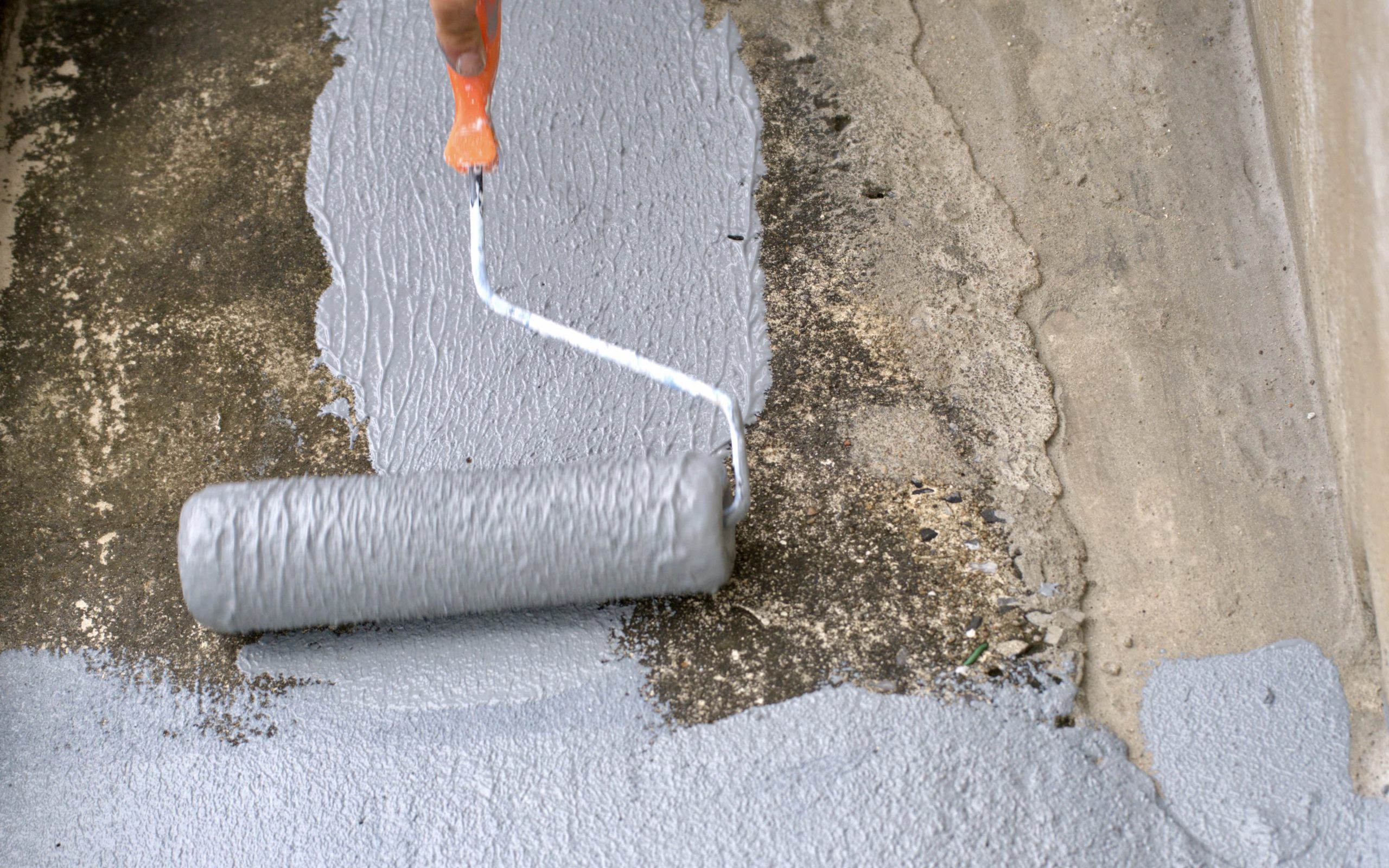
Coating adhesion to steel depends on two mechanisms: mechanical interlocking (the coating material flows into surface peaks and valleys and locks mechanically as it cures) and chemical bonding (atomic-scale adhesion between coating and clean substrate). Both mechanisms depend on surface preparation — but for industrial protective coatings in demanding environments, mechanical interlocking is the dominant adhesion mechanism, and it requires an adequate anchor profile.
Research on coating adhesion failure consistently shows that the most common cause of premature protective coating failure in service is inadequate surface preparation — either insufficient cleanliness (residual contamination blocking chemical bonding) or insufficient anchor profile depth (insufficient mechanical interlocking). Both problems are directly related to blast media selection and process parameters.
Steel shot and glass beads produce Ra values of 1–5 µm and Rz values of 5–30 µm at typical sizes and pressures. Most industrial coating systems require Rz 40–75 µm minimum for adequate adhesion — a profile that spherical media simply cannot achieve regardless of size or pressure, because the spherical impact geometry fundamentally limits how deep the surface is profiled. Using round media for coating preparation is a technically incorrect approach that leads to premature coating failure.
Fatigue Life Improvement: Why Spherical Media Is Required
Shot peening — the controlled application of spherical blast media to a surface — is a well-established engineering process for improving the fatigue life of metallic components subjected to cyclic loading. The mechanism is the introduction of compressive residual stress in the surface layer, which must be induced by a spherical, non-cutting impact mechanism.
Angular media cannot perform shot peening because:
- Angular particles cut the surface rather than compress it, generating tensile stress at the crater rim rather than the uniform compressive stress field required for peening benefit.
- The sharp-edged impacts from angular media create stress concentrations — notches and micro-cracks at impact sites — that can actually initiate fatigue damage rather than inhibit it.
- Angular impact produces inconsistent, direction-dependent stress patterns rather than the isotropic compressive stress field that peening specifications require.
Fatigue life improvements from properly executed shot peening typically range from 20% to 300% depending on the component geometry, material, and loading conditions. These improvements are quantified by Almen intensity measurements (using standardized Almen strip test pieces) and coverage percentage measurements — both of which require spherical media to be valid.
Blending Angular and Round: Getting Both Benefits
Many high-production structural steel blasting operations use mixed shot/grit media — typically 20–70% grit with the balance shot — to simultaneously achieve two objectives: the angular grit component creates the anchor profile required for coating adhesion, while the shot component rounds off the sharpest peak tips, reducing the peak-to-valley ratio (Rz) without reducing the overall profile depth (Ra).
This “optimized profile” approach — well-established in shipyard and structural steel fabrication blasting — produces a surface that:
- Has adequate profile depth for coating adhesion (Ra 5–10 µm, Rz 35–70 µm)
- Has a smoother peak distribution than pure grit blasting, reducing coating consumption at the profile peaks
- Achieves higher throughput than pure angular blasting due to the shot component’s cleaning efficiency on large flat surfaces
- Meets Sa 2.5 cleanliness requirements consistently
The optimal blend ratio is determined empirically for each operation by running test panels with varying blend ratios and measuring the resulting profile parameters against the coating specification.
Angular vs Round: Summary by Media Type
Angular Media
- Steel Grit (GP, GL, GH)
- Aluminum Oxide (Brown & White)
- Silicon Carbide (Black & Green)
- Garnet (Almandine)
- Crushed Glass
- Plastic Grit (Urea, Melamine, Acrylic)
- Walnut Shell, Corn Cob (sub-angular)
- Coal Slag, Copper Slag
Spherical (Round) Media
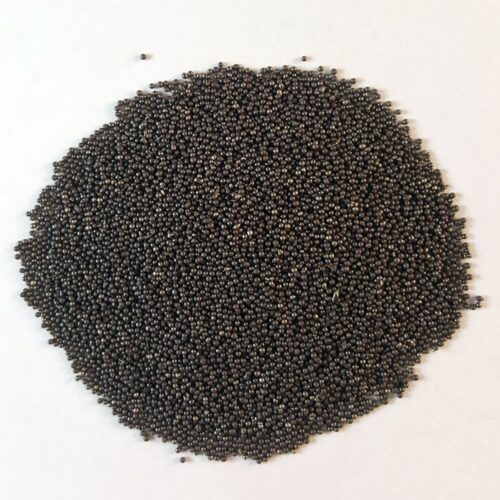
- Steel Shot (all SAE grades)
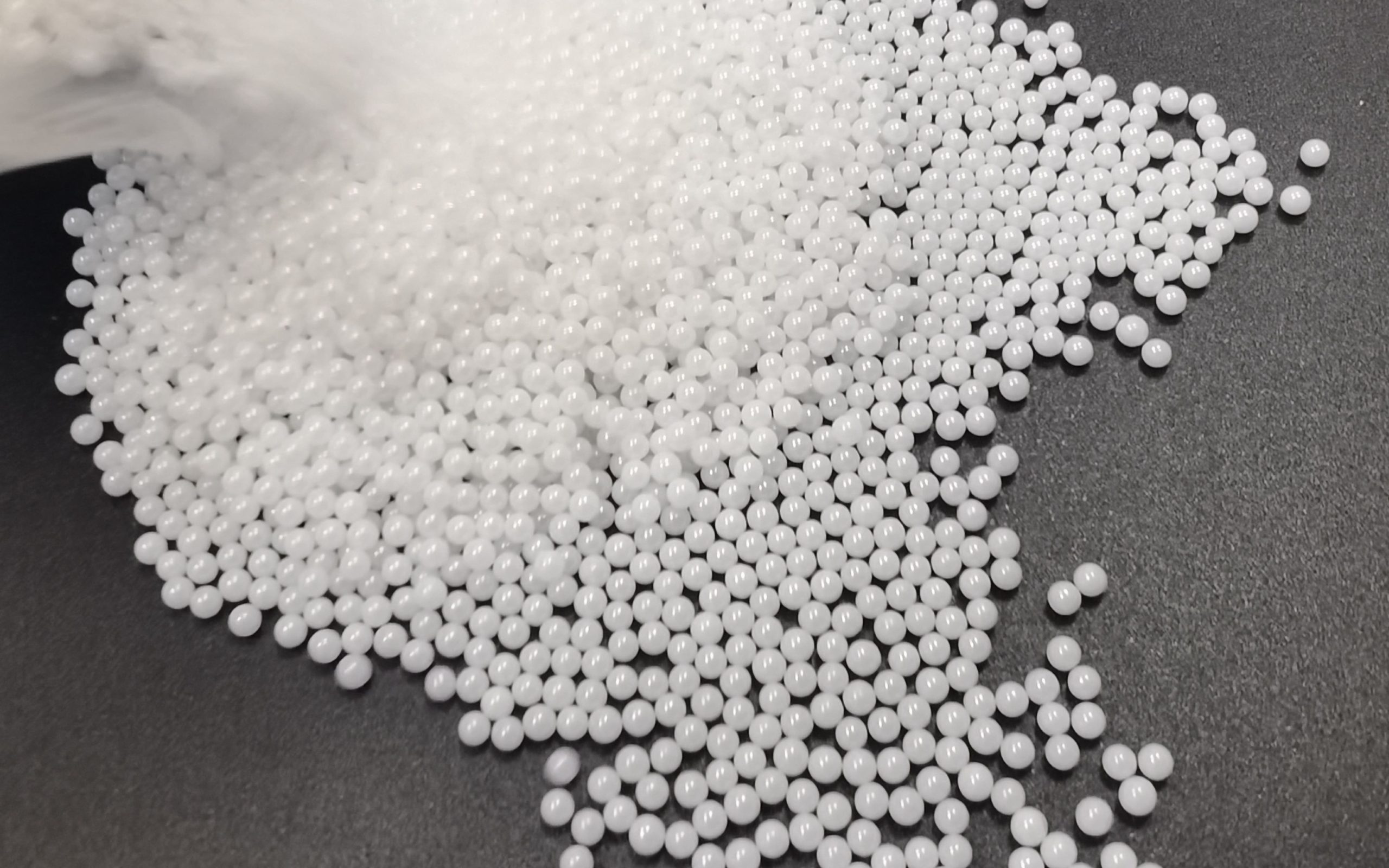
- Glass Beads (all mesh sizes)
- Stainless Steel Shot
- Ceramic Shot (Zirconia)
- Plastic Pellets (round grade)
- Zinc Shot
- Aluminium-Schuss
Decision Guide: Angular or Round?
| Ziel | Shape Required | Recommended Media |
|---|---|---|
| Coating adhesion preparation (Sa 2.5) | Eckig | Steel Grit, Aluminum Oxide, Garnet |
| Thermal spray bond coat preparation | Eckig | Aluminum Oxide F46–F60 |
| Heavy rust/scale removal | Eckig | Steel Grit GH, Coarse Al₂O₃ |
| Shot peening for fatigue life | Spherical | Steel Shot (SAE spec), Glass Bead (AMS 2431) |
| Decorative satin finish (stainless, aluminum) | Spherical | Glass Bead US 100–170 mesh |
| Compressive stress without profiling | Spherical | Steel Shot or Glass Bead |
| High-volume structural steel (anchored coating) | Angular dominant blend | Steel Grit + Steel Shot blend (70:30) |
| Cleaning without surface change | Soft angular or spherical | Plastic Grit, Walnut Shell, Fine Glass Bead |
Not Sure Whether Angular or Round Is Right for Your Application?
Jiangsu Henglihong Technology supplies both angular media (aluminum oxide, silicon carbide, steel grit) and spherical media (glass beads, steel shot) across a full range of sizes and grades. Our technical team can help you determine the right shape class, media type, and grit/size specification for your specific surface requirement.
Get Technical AdviceHäufig gestellte Fragen
Filter