Sand Blasted Surface: The Complete Guide to Process, Ra Values, Standards & Applications
From specification sheets to inspection acceptance — everything a sourcing manager, design engineer, or coating contractor needs to understand, specify, and verify a sand blasted surface in 2026. Written by the technical team at Jiangsu Henglihong Technology Co., Ltd., a manufacturer of abrasive blasting media supplying global industrial markets.
1. What Is a Sand Blasted Surface?
A sand blasted surface is a substrate whose surface layer has been mechanically modified by the high-velocity impact of abrasive particles, producing a controlled, uniformly textured profile. Despite the legacy name, modern industrial practice rarely uses actual silica sand — the term is preserved as an umbrella descriptor for abrasive blasting processes that include garnet blasting, aluminum oxide blasting, glass bead blasting, steel grit blasting, and shot blasting.
The defining characteristic is a random but statistically uniform micro-topography. Each abrasive particle delivers localized kinetic energy that displaces material, removes contaminants, and leaves behind a peak-and-valley profile. When the process is properly controlled, the resulting surface exhibits:
- A clean, matte appearance free of mill scale, rust, paint, oxidation, and oils
- A measurable surface roughness suitable for the intended downstream process
- An “anchor pattern” that mechanically interlocks with subsequent coatings or adhesives
- No directional grain — unlike brushed, ground, or polished finishes
Modern protective coatings — epoxies, polyurethanes, powder coats, thermal spray, plasma electrolytic oxidation — almost universally specify a sand blasted surface as the substrate condition. The bond strength between coating and metal can vary by an order of magnitude depending on whether the underlying profile is correctly prepared.
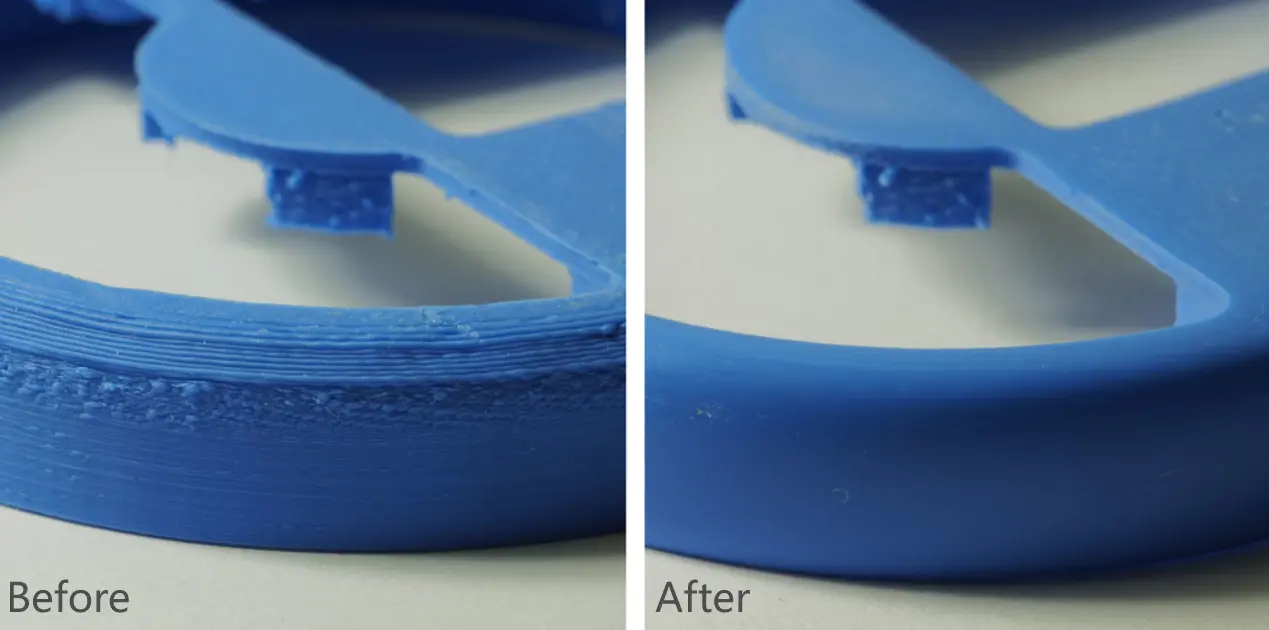
Visual identity of the finish
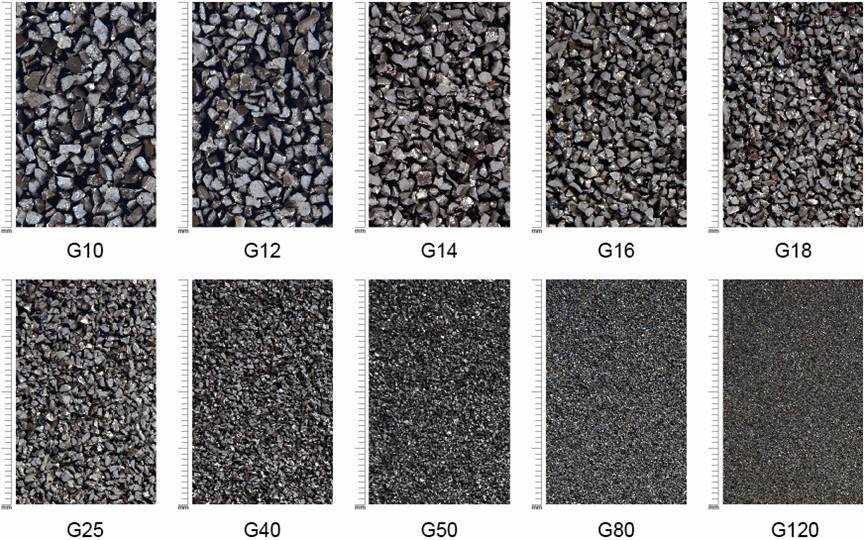
The surface presents as a uniform matte gray (or near-white for properly cleaned carbon steel) with a frosted, slightly velvety texture. There is no glare, no reflection, and no directionality. For a side-by-side photographic reference of how various grit sizes and media types appear at the macro and micro scale, see our visual reference guide on what a sand blasted surface looks like with Ra examples.
A note on terminology
“Sand blasting,” “abrasive blasting,” “grit blasting,” and “shot blasting” are often used interchangeably in casual conversation, but engineering specifications distinguish them. Sand blasting and grit blasting refer to angular media driven by compressed air. Shot blasting refers to spherical media — typically steel shot — propelled by a centrifugal wheel rather than a nozzle. The differences in impact mechanics, recyclability, and resulting surface texture are explored in detail in our comparison of sandblasting vs shot blasting vs bead blasting.
For context on how this surface finish differs from machined alternatives like brushed, ground, or polished surfaces, the comparative guide on sand blasted finish vs brushed vs polished lays out the visual, functional, and cost trade-offs.
2. How the Sand Blasting Process Works
Sandblasting is conceptually simple but governed by a handful of variables that, in combination, determine the final surface quality. The process can be broken into four stages:
The four critical process parameters
Even with identical media, two operators can produce dramatically different surfaces. Four variables dominate the outcome:
| Parameter | Typical Range | Effect on Surface |
|---|---|---|
| Blast pressure | 60 – 110 psi (4 – 7.5 bar) | Higher pressure deepens the profile but accelerates media breakdown and can over-blast soft alloys. |
| Nozzle distance | 150 – 450 mm | Closer nozzles increase impact energy and cutting rate; greater distance spreads the pattern and reduces roughness. |
| Impact angle | 60° – 90° (typical 75°) | Near-perpendicular angles maximize crater depth; lower angles improve material removal and reduce embedment. |
| Dwell time | Variable | Excessive dwell creates work-hardening, warping, and over-roughened “polished crater” valleys. |
Each of these parameters interacts with media type and substrate hardness in non-linear ways. The complete parametric model and operator-side adjustments are detailed in our guide on how sandblasting works: pressure, nozzle distance and angle parameters.
A brief historical note
The process was patented in 1870 by American inventor Benjamin Chew Tilghman. What began as a simple compressed-air nozzle pushing silica sand against a metal plate has evolved into robotic blast cells, recycled steel grit systems, vapor-abrasive hybrids, and ultra-fine micro-blasting for medical implants. The full timeline is covered in the history and evolution of abrasive blasting.
3. Surface Topography: Ra, Rz & Profile
To specify or accept a sand blasted surface, you must speak the language of surface metrology. Three measurements dominate technical drawings and coating specifications:
Ra (Arithmetic Mean Roughness)
Average deviation of the surface profile from the mean line, expressed in micrometers (µm). The most commonly cited single value for sand blasted finishes.
Rz (Mean Peak-to-Valley Height)
Average of the largest peak-to-valley distances across the sampling length. Better captures the “anchor pattern” depth coatings actually grip.
Rmax / Ry (Maximum Profile Height)
The single greatest peak-to-valley height in the assessment length — critical for thin-film coatings where extreme peaks may protrude through the topcoat.
Sa (3D Areal Roughness)
The areal equivalent of Ra, measured by interferometry or confocal microscopy over a 2D area rather than a line. Increasingly required in medical and aerospace specs.
Typical Ra values produced by common media
The following ranges reflect controlled production conditions at approximately 90 psi blast pressure, 300 mm nozzle distance, and 75° impact angle on mild steel:
| Medienart | Grit Size | Approx. Ra (µm) | Typical Use |
|---|---|---|---|
| Glass bead | #150 – #200 | 0.5 – 0.8 | Cosmetic matte, peening, food-grade equipment |
| Aluminiumoxid | #120 | 1.3 | Coating prep on aluminum and stainless |
| Aluminiumoxid | #80 | 1.8 | General industrial fabrication |
| Granat | 30/60 mesh | 2.5 – 3.5 | Marine, offshore, structural steel |
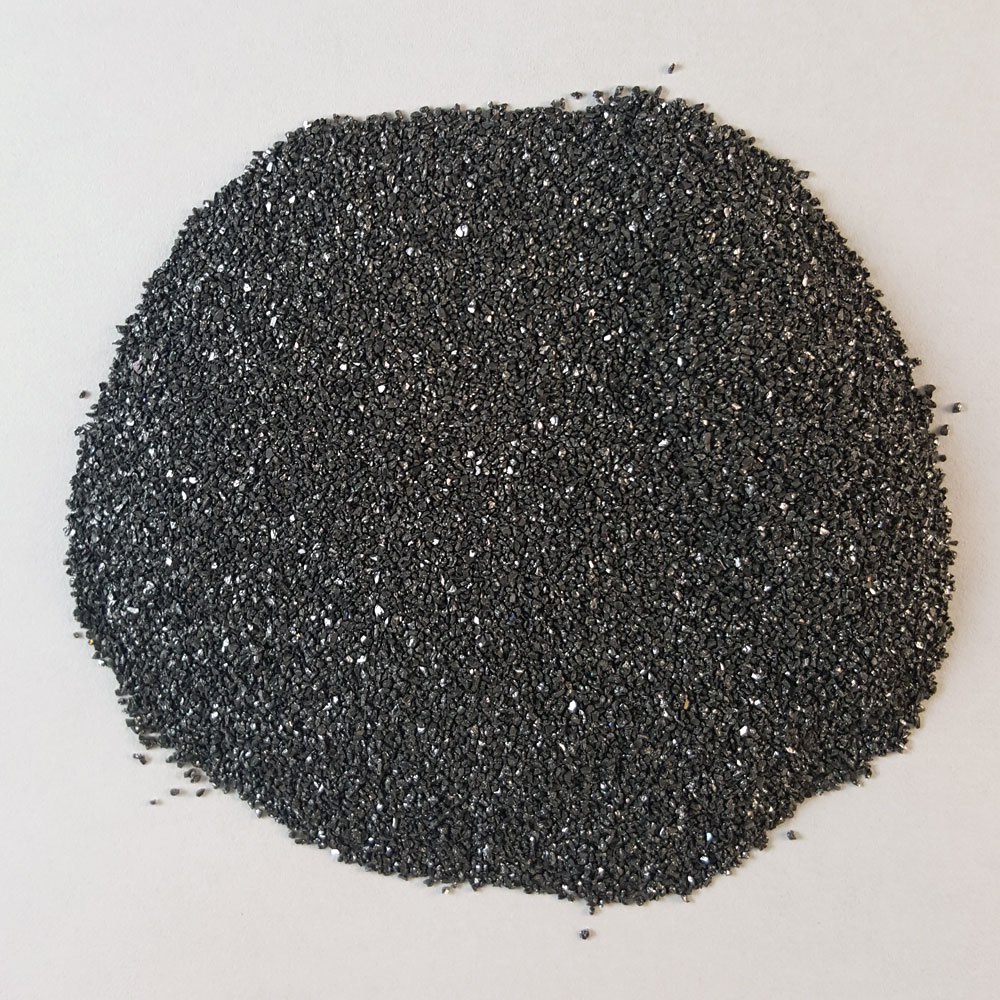
| Stahlkorn | G-40 | 3.6 – 5.0 | Heavy fabrication, shipyards |
| Stahlschrot | S-330 | 2.0 – 3.0 | Cleaning castings, shot peening |
| Coal slag | 20/40 mesh | 4.0 – 7.0 | Field blasting, single-use applications |
These are starting points, not specifications. Actual Ra varies with substrate hardness, media wear state, and operator technique. Our complete sand blasted surface roughness chart with Ra and Rz values by media and grit includes dataset-style tables that can be cited in technical drawings.
How profile is measured
Three instruments dominate field and laboratory measurement: replica tape (Press-O-Film or Testex), surface comparators (visual standards), and stylus or optical profilometers. Each has tolerances and limitations that affect the acceptance decision. For the full inspection workflow and which method to choose for which job, see our guide on how to measure sand blasted surface profile.
4. Blast Cleanliness & Profile Standards
Specifications use shorthand codes that frequently confuse buyers because they look interchangeable but are not. Three observations matter before reading any standard:
- Cleanliness ≠ profile. SSPC SP grades, ISO Sa grades, and NACE numbers describe how much rust, mill scale, and contamination remain visible. They do not specify Ra or Rz.
- Profile is specified separately using surface roughness numbers (Ra, Rz) or anchor pattern depth in mils/microns, typically per ISO 8503.
- Visual standards are interpretive. A photograph in ISO 8501-1 is the legal reference, not the written description — always inspect against the actual standard plate.
The four-standard cross-reference
| SSPC (USA) | NACE | ISO 8501-1 / Swedish SA | Beschreibung |
|---|---|---|---|
| SP 5 | NACE 1 | Sa 3 | White metal blast — 100% removal of all visible contaminants. Required for tank linings, immersion service, and aerospace. |
| SP 10 | NACE 2 | Sa 2½ | Near-white blast — at least 95% of each unit area free of contaminants. The de facto industrial standard for high-performance coatings. |
| SP 6 | NACE 3 | Sa 2 | Commercial blast — at least 66% of each unit area free of contaminants. Common for general structural steel. |
| SP 7 | NACE 4 | Sa 1 | Brush-off blast — loose contaminants removed; tightly adhered mill scale may remain. Used under thick maintenance coatings. |
The full mapping — including SP 11 (power tool to bare metal), SP 14 (industrial blast), and ST grades — plus side-by-side photographic references, is consolidated in our SSPC SP5 / SP6 / SP10 vs ISO Sa 1 / Sa 2 / Sa 2.5 / Sa 3 complete cross-reference.
The NACE family in detail
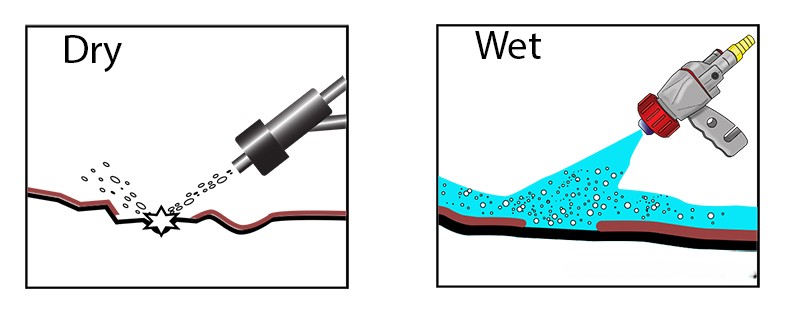
NACE International (now AMPP) developed its own number-based system that maps to SSPC but is sometimes specified independently in pipeline, offshore, and petrochemical work. NACE 1 through NACE 4 are functionally equivalent to SP 5, SP 10, SP 6, and SP 7 respectively. The nuances — including wet abrasive blasting variants and joint NACE/SSPC documents — are unpacked in our deep-dive on NACE 1/2/3/4 blast cleaning standards explained with visual references.
Matching profile depth to coating DFT
An undersized profile starves the coating of mechanical anchor points; an oversized profile causes peaks to project through the topcoat, leading to early corrosion sites. As a rule of thumb, the dry film thickness (DFT) of the coating should be at least three times the anchor pattern depth. For thin shop primers around 20–25 µm DFT, an aggressive 100 µm profile will cause coating consumption to balloon and adhesion to fail. The pairing logic is mapped out in our anchor pattern specifications guide for matching profile depth to coating DFT.
5. Abrasive Media Selection Guide
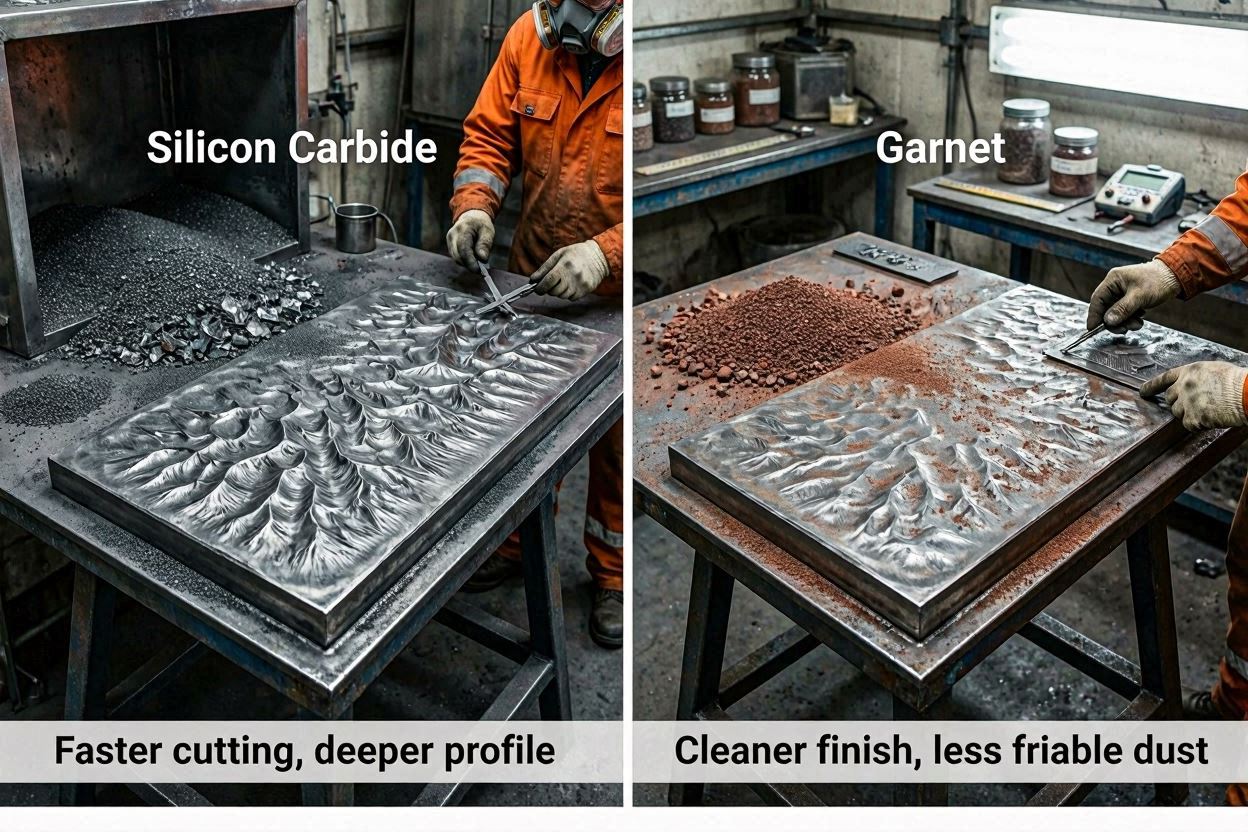
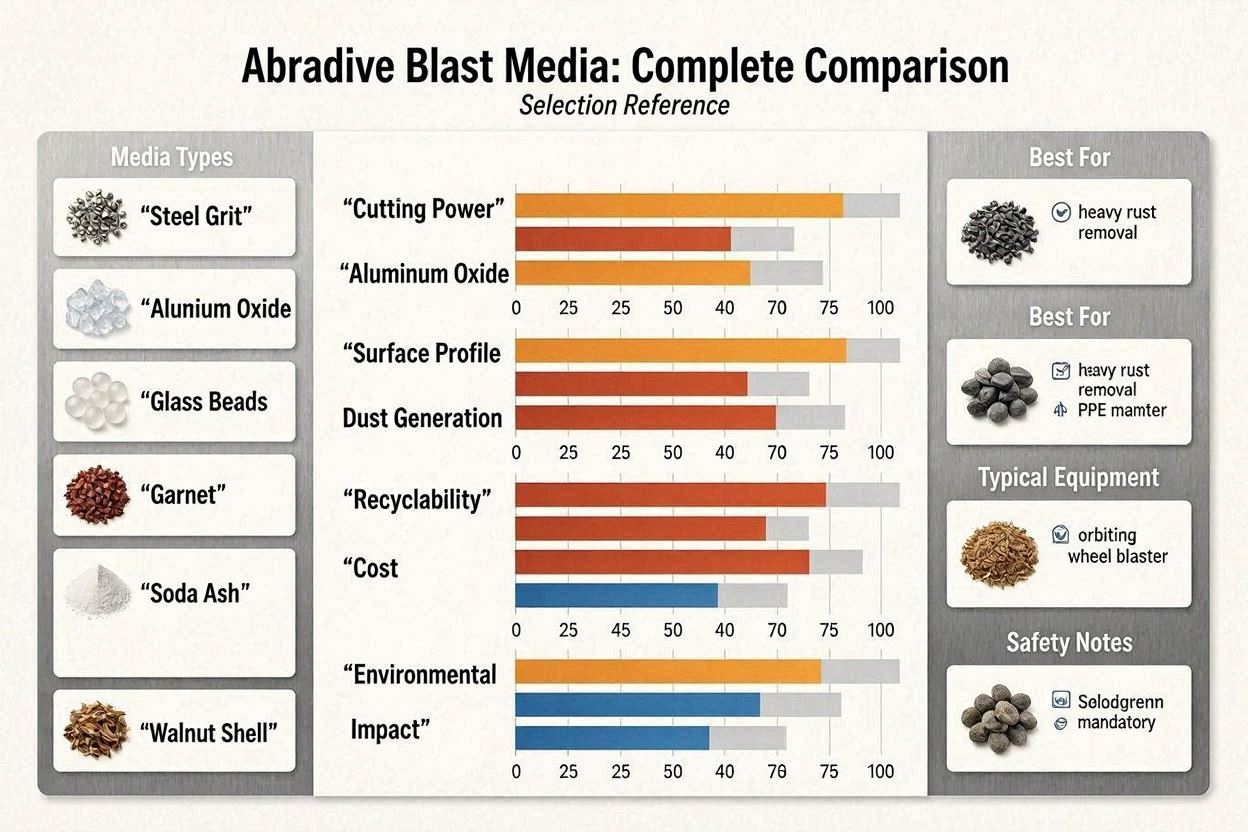
The single largest determinant of a sand blasted surface — beyond the parameters discussed above — is the abrasive media itself. Each media class has a defining hardness, particle shape, density, and life cycle that drives both surface outcome and total cost per square meter.
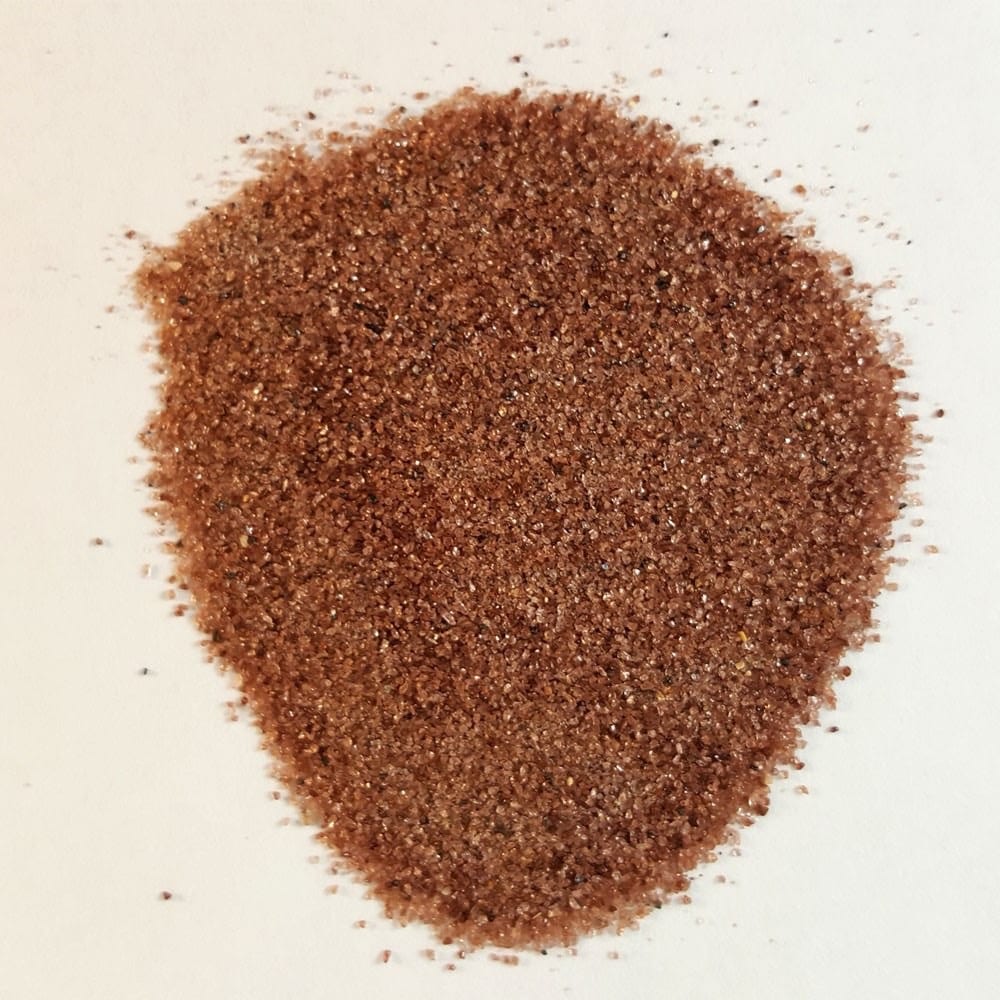
Granat
Mohs 7.5 – 8.0 · Angular natural
- Low embedment risk
- Geringe Staubentwicklung
- Recyclable 3–5 cycles
- Preferred for stainless and marine work
Aluminium-Oxid
Mohs 9.0 · Angular synthetic
- Aggressive cutting action
- Long media life (15–20 cycles)
- Sharp, consistent profile
- Industry standard for aerospace prep
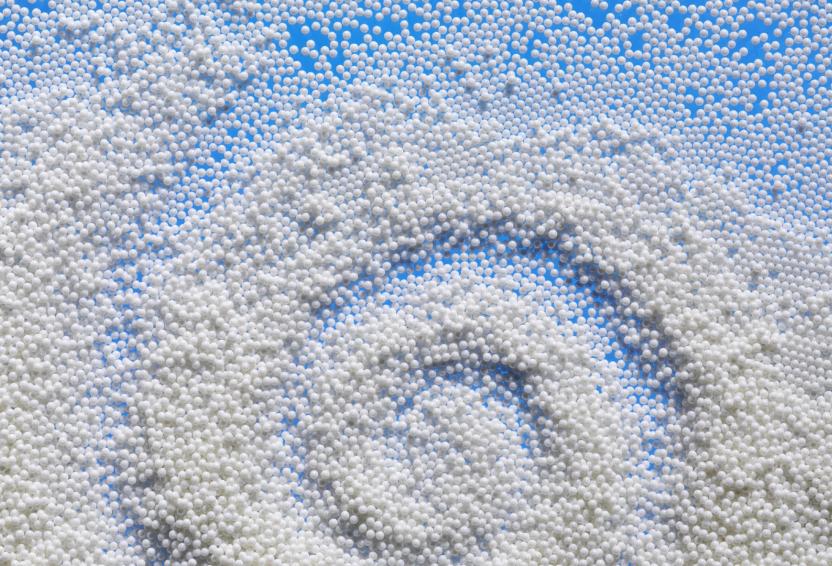
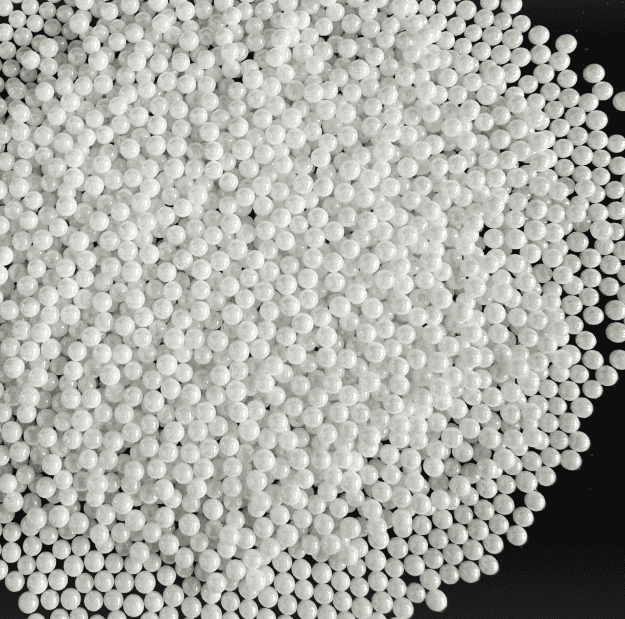
Glass Bead
Mohs 5.5 – 6.0 · Spherical
- Cosmetic satin finish
- No directional pattern
- Mild peening effect
- Used on aluminum, stainless, brass
Stahlkies
Mohs 7.0 · Angular metallic
- Highest cutting efficiency
- Recyclable 100+ cycles
- Aggressive deep profile
- Shipyards, structural steel
Stahlkugel
Mohs 7.0 · Spherical metallic
- Peening / cleaning hybrid
- Long media life
- Lower roughness than grit
- Castings, foundry, automotive
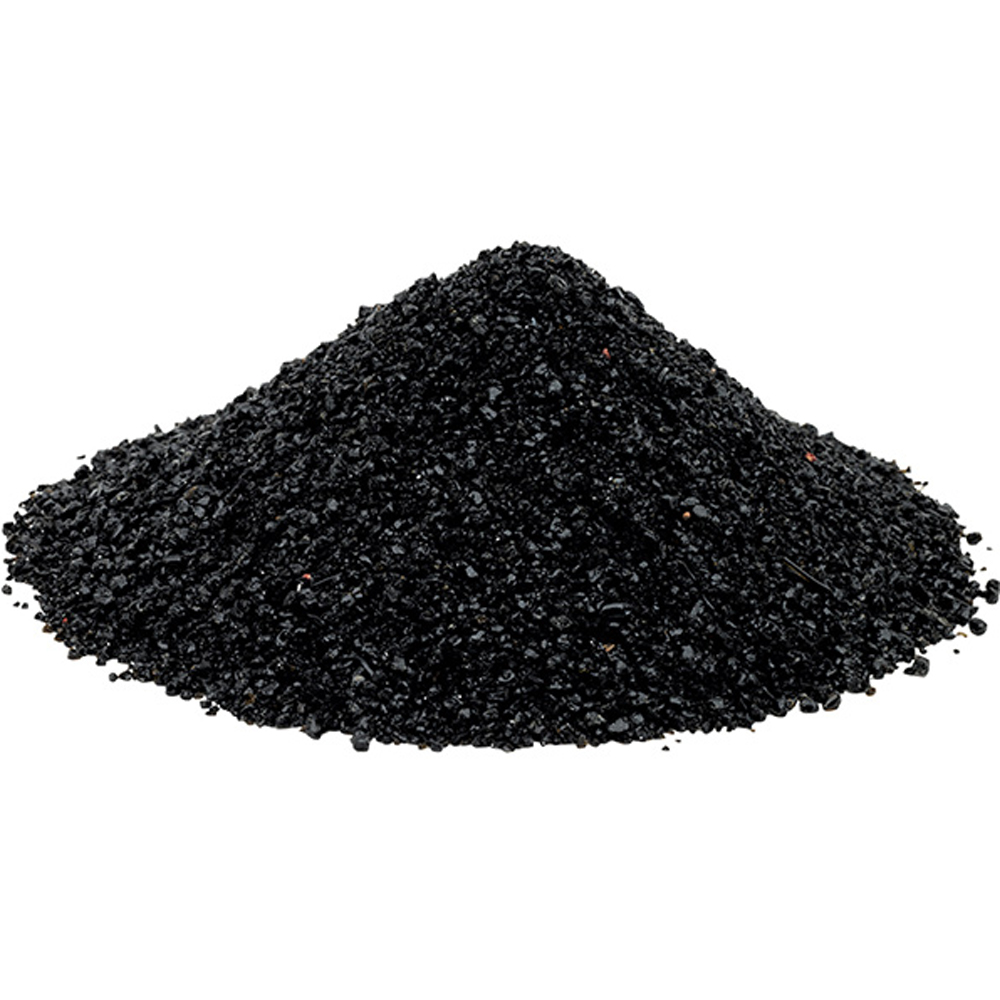
Coal Slag / Copper Slag
Mohs 6.0 – 7.0 · Angular by-product
- Low cost per ton
- Single-use only
- High dust output
- Field blasting, bridges, tanks
Wie man wählt
A practical media selection follows three filters: substrate compatibility (hardness, embedment sensitivity), downstream process requirement (coating, anodizing, bonding), and economics (recyclable closed-loop systems versus single-pass field work). For example, a stainless steel surgical instrument cannot tolerate iron contamination, ruling out steel media entirely. A 20,000 m² ship hull cannot economically use 15-cycle aluminum oxide and instead specifies recyclable steel grit in an enclosed yard.
Jiangsu Henglihong Technology Co., Ltd. manufactures and exports a full line of abrasive blasting media — including aluminum oxide, garnet, glass bead, steel grit, and steel shot — with batch certification for grit consistency, conductivity, and silica content. Sample programs are available for technical evaluation before bulk order.
6. Applications by Material & Industry
The sand blasted surface specification varies by material — not because the underlying physics changes, but because each substrate has its own constraints on hardness, contamination tolerance, and downstream chemistry. The following sections summarize the dominant patterns; each links to a dedicated material guide for specification-level detail.
Rostfreier Stahl
Stainless steel demands careful media selection to avoid iron contamination that destroys corrosion resistance. Glass bead and stainless-compatible aluminum oxide are standard, often followed by passivation per ASTM A967. Architectural stainless and food-grade equipment specify a uniform matte finish with Ra typically 0.4–0.8 µm. Hygiene-critical surfaces follow EHEDG and 3-A Sanitary guidelines. The complete specification framework is covered in our guide on sand blasted stainless steel finish grades, passivation, and hygiene standards.
Aluminium
Aluminum is softer than steel and easily over-blasted. Glass bead (#100–#170) is the dominant choice for pre-anodizing preparation per MIL-A-8625. Bead-blast-then-anodize produces the characteristic uniform matte finish seen on consumer electronics enclosures, automotive trim, and aerospace structural panels. Aggressive media or excessive pressure causes warping in thin sections. Full process windows are detailed in sand blasted aluminum: pre-anodizing bead blast specifications (MIL-A-8625).
Titanium for medical implants
Titanium implants — dental, orthopedic, cranial — rely on a sand blasted, large-grit, acid-etched (SLA) surface to promote osseointegration. The Sa roughness window is narrow: typically 1.5–2.5 µm to maximize osteoblast attachment without compromising fatigue strength. Alumina particles are the historical standard, although calcium phosphate alternatives are gaining ground for biocompatibility. Our guide on sand blasted titanium for medical implants: Sa roughness for osseointegration covers the regulatory and research landscape.
Architectural and decorative glass
Glass responds to sandblasting with frosting, etching, and patterned decoration depending on mask design and dwell time. Aluminum oxide or specialized soda lime media replaces silica sand to prevent crystalline silica exposure. Shower enclosures, wayfinding signage, and decorative panels routinely specify sand blasted finishes. See sand blasted glass: etching, frosting and decorative architectural applications.
Concrete substrates
Sand blasted concrete reveals aggregate, removes laitance, and opens the surface porosity for sealers, epoxy coatings, or decorative resin floors. Light blast removes only the cement paste; medium exposes fine aggregate; heavy reveals coarse aggregate for decorative effect. Application logic is covered in sand blasted concrete: surface preparation for coating and decorative exposure.
Marine and offshore steel
Few applications are as demanding as marine and offshore. Sa 2½ to Sa 3 cleanliness, a profile of 50–100 µm Rz, and immediate priming within a four-hour window before flash rust forms are typical specifications. Recyclable steel grit dominates yard work; garnet handles touch-up. The detailed workflow is laid out in sand blasted steel for marine and offshore: SA 2.5 + zinc primer workflow.
Other industries at a glance
- Luft- und Raumfahrt: SP 5 / SP 10 cleanliness with aluminum oxide for structural primer prep; glass bead peening for fatigue-critical fasteners.
- Automotive: Steel shot for casting deburring and cleaning; bead blasting for cosmetic alloy wheels.
- Oil & gas pipelines: Garnet at SP 10 cleanliness, profile 60–90 µm, before fusion-bonded epoxy coating.
- Construction equipment: Steel grit at SP 6, followed by epoxy primer and polyurethane topcoat.
7. Cost Considerations & ROI
Sand blasting cost is rarely a single line item; it is the sum of media, labor, equipment depreciation, containment, and waste disposal. Industry benchmarks for outsourced shop blasting in 2026 generally fall between USD 8 and USD 35 per square meter, depending on the region, target cleanliness, and media type.
| Cost Driver | Share of Total Cost | Levers for Reduction |
|---|---|---|
| Abrasive media consumption | 25 – 45% | Switch to recyclable media; closed-loop reclamation |
| Labor | 30 – 45% | Automation; robotic blast cells; operator training |
| Compressed air / energy | 10 – 18% | Right-sized compressors; nozzle wear monitoring |
| Containment & waste disposal | 8 – 20% | Specify low-silica media; dust collection optimization |
For quoting accuracy, regional price benchmarks, and a procurement-side cost model that separates fixed from variable contributions, see our complete sand blasted surface cost guide: per square meter pricing by region and method.
The hidden ROI: media choice over surface area
For high-throughput shops processing more than 5,000 m² per month, the total cost of using single-use coal slag at low unit cost can exceed the cost of recyclable aluminum oxide by 30–60% over a 12-month period when waste disposal and rework are factored in. Procurement decisions should look at total cost per m² of acceptable surface, not media price per ton.
8. Defects, Inspection & Quality Control
A finished sand blasted surface that passes visual inspection can still fail downstream. The five most common defects — and their root causes — should be familiar to every buyer and QC inspector:
| Defect | Visual Symptom | Root Cause |
|---|---|---|
| Shadowing | Dark patches where coatings or scale remain bonded | Insufficient cleanliness grade; weak operator overlap |
| Embedment | Black or metallic particles lodged in profile valleys | Wrong media for substrate; broken or worn media |
| Flash rust | Light orange/brown bloom appearing within minutes | Humid environment; delayed priming after blast |
| Over-blasting | Polished crater valleys; loss of profile sharpness | Excessive dwell, pressure too high, exhausted media |
| Profile too low | Smooth appearance; coating adhesion failure on test | Worn media; pressure too low; wrong grit size |
Each defect has a remediation path — sometimes re-blasting, sometimes accepting with documented deviation. The full taxonomy and field-ready troubleshooting decision tree is in our guide on common sand blasted surface defects: shadowing, embedment, and flash rust.
Inspection workflow
A defensible acceptance follows three steps: visual comparison against ISO 8501-1 plates (or SSPC visual references), profile measurement using replica tape or stylus instrument, and cleanliness verification (chloride salt test per ISO 8502-6, dust contamination per ISO 8502-3). The complete documentation chain — including what to record on the QC sheet — is covered in sand blasted surface inspection and acceptance: visual, profile, cleanliness.
9. Safety & Environmental Compliance
Modern sandblasting is regulated. The defining inflection point was the U.S. OSHA Respirable Crystalline Silica standard (29 CFR 1910.1053 and 1926.1153), which limits operator exposure to 50 µg/m³ as an 8-hour time-weighted average. Effectively, this has eliminated true silica sand from most regulated workplaces in North America and Europe.
Compliant alternatives include garnet, aluminum oxide, steel grit, glass bead, and engineered slag products — all of which Henglihong supplies with batch documentation. The regulatory background, jurisdictional differences, and the eco-friendly media landscape are covered in OSHA silica rule and eco-friendly alternatives to silica sand for blasting.
Operator protection essentials
- Supplied-air respirators (Type CE per NIOSH) rather than dust masks
- Blast suits and gauntlets with abrasion-resistant outer layer
- Hearing protection — blast nozzles routinely exceed 110 dBA
- Containment — full-enclosure cabinets, blast rooms, or vacuum-recovery systems
- Air quality monitoring — periodic personal sampling and dust collector validation
Environmental considerations
Spent abrasive is classified as industrial waste in most jurisdictions and may carry hazardous-waste designation if blasting a lead-based coating, chrome plating, or contaminated steel. Closed-loop recycling — feasible with steel grit, steel shot, and certain garnet grades — reduces both cost and disposal burden.
10. Procurement Best Practices
For sourcing managers and project engineers, a defensible procurement specification for a sand blasted surface contains seven mandatory elements:
- Substrate identification — material grade, thickness, prior condition
- Cleanliness standard — e.g., ISO 8501-1 Sa 2½ or SSPC SP 10
- Profile requirement — Ra or Rz range, with measurement method
- Approved media types — and grit size range
- Holding time / re-blast window — typically 4 hours to first coat in humid environments
- Inspection method — visual reference, profile measurement, cleanliness test
- Acceptance & rejection criteria — including documented deviation procedure
A specification template that consolidates these elements into a single one-page document — usable for RFQ, supplier qualification, and on-site inspection — is provided in our guide on how to write a sand blasted surface spec for suppliers (free template).
Before placing a bulk media order, request a 25 kg sample with batch certification covering particle size distribution, hardness, conductivity, chloride content, and silica fraction. A media supplier unable to provide a current MTR (mill test report) is not a serious candidate for industrial supply.
11. Further Reading & Reference Library
This pillar is the entry point to a 21-article reference set covering every aspect of sand blasted surface specification, execution, and inspection. Each companion guide is written for a specific operational question and links back to the relevant sections of this resource.
Process & Fundamentals
Standards & Technical Parameters
Materials & Applications
Procurement, Cost & Defects
12. Frequently Asked Questions
What is a sand blasted surface?
A sand blasted surface is a substrate that has been mechanically modified by the high-velocity impact of abrasive media — typically garnet, aluminum oxide, glass bead, or steel grit — to remove contaminants and produce a controlled micro-roughened profile. The term “sand” is historical; actual silica sand is rarely used in regulated industrial settings today.
What Ra roughness does sandblasting produce?
Practical Ra ranges from approximately 0.5 µm with fine glass bead media to 7.0 µm or higher with coarse coal slag. The most common industrial range is 1.5–4.0 µm, achieved with aluminum oxide or garnet at #80–30 grit. The specific value depends on media, grit size, blast pressure, nozzle distance, and substrate hardness.
What is the difference between SP 10 and Sa 2½?
SSPC SP 10 (USA) and ISO 8501-1 Sa 2½ (international) are functionally equivalent and both describe a “near-white metal blast” — a surface from which at least 95% of each unit area is free of all visible contaminants such as mill scale, rust, and paint. NACE 2 is the matching designation in the NACE/AMPP system. Coating specifications often cite both designations to avoid ambiguity.
Is sand blasted surface preparation required before painting?
For high-performance protective coatings on metal — epoxy, polyurethane, zinc-rich primer, powder coat, thermal spray — yes, almost universally. Painting over mill scale or unprepared steel reduces coating life by 50% or more. For light decorative paints over previously coated surfaces, lighter preparation methods such as SP 7 brush-off blast or solvent cleaning may suffice.
Which abrasive media is best for stainless steel?
Glass bead and stainless-compatible aluminum oxide are the safest choices because they avoid iron contamination that compromises corrosion resistance. Steel grit and steel shot must never be used on stainless. Garnet is acceptable provided the supplier certifies a low iron content. Post-blast passivation per ASTM A967 restores the chromium oxide layer.
How long can a sand blasted surface sit before coating?
In humid environments (above 70% relative humidity), flash rust can begin forming within 30 minutes to 4 hours on bare carbon steel. Industry practice is to apply primer within the same shift, ideally within 4 hours. Climate-controlled blast halls and dehumidification can extend the window. Marine and offshore specifications often mandate a 4-hour maximum.
What does a sand blasted surface cost per square meter in 2026?
Shop blasting in 2026 typically costs USD 8–35 per square meter, depending on the region, cleanliness standard, media type, and project size. Field blasting is generally higher due to containment, scaffolding, and waste handling. Recyclable closed-loop systems lower the per-square-meter cost over time even though equipment investment is higher.
Is silica sand still legal for sandblasting?
Silica sand for abrasive blasting is heavily restricted in the United States (OSHA 29 CFR 1910.1053 / 1926.1153), the European Union, the United Kingdom, and most regulated industrial markets. Compliant alternatives include garnet, aluminum oxide, glass bead, steel grit, and engineered slag products. Specific regulations vary by jurisdiction and end-use.
How do you measure a sand blasted surface profile in the field?
The most widely accepted field method is replica tape (Press-O-Film or Testex) read with a spring micrometer, calibrated per ASTM D4417 Method C. Surface comparators (visual standards per ISO 8503-1) provide a rapid visual reference. Stylus or optical profilometers are used in shop and lab settings for higher precision.
Does Henglihong supply abrasive blasting media internationally?
Yes. Jiangsu Henglihong Technology Co., Ltd. manufactures and exports aluminum oxide, garnet, glass bead, steel grit, and steel shot to industrial buyers across more than 40 countries. Sample programs, batch certification, and OEM packaging are available on request. Detailed product datasheets and inquiry options are accessible from the main website.
Request an Abrasive Blasting Media Sample
Specifying a sand blasted surface starts with the right media. Jiangsu Henglihong Technology Co., Ltd. provides certified samples of aluminum oxide, garnet, glass bead, steel grit, and steel shot for technical evaluation — with batch documentation covering particle size distribution, hardness, conductivity, and silica content.
Request a Sample →Filter