Jiangsu Henglihong Technology Co, Ltd.
Walnut Shell & Corn Cob Blasting Media: Gentle Abrasives for Delicate Surfaces
A complete guide to organic blasting media — covering walnut shell and corn cob properties, hardness comparison, applications in aerospace, automotive, wood, and food equipment, operating parameters, and when soft abrasives outperform everything harder.
What Are Organic Blasting Media?
Organic blasting media are naturally derived, biodegradable abrasives processed from agricultural by-products — primarily the shells of English walnuts and the ground cobs of corn (maize). Both materials exist at the soft end of the Mohs hardness scale (2.5–4.0), which is the fundamental characteristic that determines when and why they are specified: they are the only practical abrasive choice when the substrate to be blasted is too fragile, too dimensionally sensitive, or too valuable to tolerate the surface removal, deformation, or anchor profiling that any harder abrasive would produce.
In applications where aluminum oxide, steel grit, garnet, or even glass beads would damage the substrate — aircraft fiberglass skins, engine turbine blades subject to dimensional tolerance limits, hardwood furniture surfaces, food-processing equipment with precision-machined surfaces, and plastic injection-molded components — walnut shell and corn cob deliver effective cleaning and deburring without altering what lies beneath the contamination.
This page is part of Henglihong’s complete blasting media resource hub. For the full framework of all media types, see our complete guide to sandblasting material types and selection.
Organic abrasives operate on the principle that the media must be softer than the substrate to avoid surface damage, yet harder than the contamination to remove it effectively. In practice this means: media hardness (Mohs 2.5–4.0) is softer than virtually all metals but harder than organic contaminants (grease, carbon deposits, paint, wax, biological fouling) that sit on those metal surfaces. The contamination is removed; the substrate is not touched.
Walnut Shell Media: Properties & Best Uses
Ground walnut shell is produced by crushing and screening the shells of English walnuts (Juglans regia). The shell material is naturally hard for an organic substance — Mohs 3.5–4.0 — making walnut shell the harder and more abrasively capable of the two primary organic blasting media. Its particle shape is irregular and sub-angular, with sufficient surface texture to provide meaningful abrasive action against soft surface contamination while being incapable of cutting into metal, composite, or plastic substrates.
Key properties of walnut shell abrasive:
- Härte: Mohs 3.5–4.0 — hard enough to effectively remove carbon deposits, paint, and light rust from metal surfaces; soft enough to leave no surface profile on steel, aluminum, titanium, or plastic.
- Moisture absorption: Moderate — walnut shell absorbs minor amounts of moisture and grease, which can actually assist in the removal of oily contamination by incorporating it into the spent media rather than redistributing it.
- Staubentwicklung: Moderate — walnut shell generates less total dust than many mineral abrasives but produces organic dust that can be a respiratory irritant. Appropriate respiratory protection remains essential.
- Biodegradable: Fully biodegradable and non-toxic. Spent walnut shell media that has not been contaminated with hazardous materials (heavy metal paints, hazardous chemicals) can typically be composted or disposed of as general waste.
- Wiederverwendbarkeit: 2–4 cycles in blast cabinet systems with good classifier performance, depending on the hardness of contaminants being removed and the blast pressure applied.
Best applications for walnut shell:
Walnut shell is the standard organic abrasive for removing carbon deposits from aircraft jet engine components — turbine blades, compressor blades, exhaust nozzle sections — where the dimensional tolerances are so tight that even a single pass of glass beads at minimum pressure would remove too much material. It is equally important in automotive restoration for stripping paint from fiberglass body panels without cutting the laminate, for cleaning aluminum engine components without dimensional alteration, and for deburring precision plastic injection-molded parts that cannot tolerate angular mineral abrasives.
Corn Cob Media: Properties & Best Uses
Ground corn cob abrasive is produced from the woody inner core of corn cobs — the fibrous material that remains after the kernels have been removed. Corn cob is softer than walnut shell (Mohs 2.5–3.0) and has a uniquely fibrous, porous structure that makes it highly absorbent. This absorbency is the defining functional characteristic that distinguishes corn cob from walnut shell and creates its specific application advantages.
Key properties of corn cob abrasive:
- Härte: Mohs 2.5–3.0 — the softest commonly used blasting abrasive. Will not damage any metal substrate or even most painted surfaces if properly applied.
- High moisture and oil absorbency: The porous fibrous structure absorbs liquid contaminants (oils, greases, moisture) during blasting, effectively drying and degreasing the surface simultaneously with the cleaning action. This is a unique capability not shared by any mineral abrasive.
- Anti-static properties: Corn cob does not generate the static electricity that some mineral abrasives produce when blasting electronic components, making it safer for use on circuit boards and sensitive electronic assemblies.
- Biodegradable and non-toxic: Like walnut shell, fully biodegradable. Spent media is generally suitable for composting or agricultural use if not contaminated with hazardous materials.
- Wiederverwendbarkeit: 1–3 cycles — corn cob absorbs moisture and contamination progressively, eventually becoming too saturated and fragmented to be effective. Replace the media charge when contamination levels or particle breakdown become excessive.
Best applications for corn cob:
Corn cob is the leading choice for cleaning oily and greasy metal parts, degreasing engine internals and gearbox components, polishing jewelry and precious metal items, cleaning electronic circuit boards and sensitive assemblies, drying moisture-contaminated parts (the absorbency acts as a desiccant), and gentle cleaning of decorative wood surfaces. Its combination of very low hardness, oil absorbency, and anti-static properties creates a niche that no other abrasive can fill.
Walnut Shell vs. Corn Cob: Side-by-Side Comparison
🌿 Walnut Shell
- Mohs hardness: 3.5–4.0
- Die Form: Irregular, sub-angular
- Absorbency: Low-moderate
- Abrasive action: Stronger — removes carbon, paint, rust
- Best for: Jet engine cleaning, fiberglass, aluminum panels, plastic deburring
- Not for: Oily parts (limited absorbency), electronic components (slight static risk)
- Reuse cycles: 2–4
🌿 Corn Cob
- Mohs hardness: 2.5–3.0
- Die Form: Fibrous, irregular
- Absorbency: Very high
- Abrasive action: Gentler — cleans, polishes, degreases
- Best for: Oily/greasy parts, jewelry polishing, PCB cleaning, wood, drying parts
- Not for: Heavy contamination that needs mechanical cutting action
- Reuse cycles: 1–3
Grit Sizes Available
| Grit Designation | US Mesh Approx. | Particle Size (mm) | Typical Use |
|---|---|---|---|
| Coarse | #8–#14 | 1.4–2.4 | Heavy carbon deposit removal, aggressive cleaning of large components |
| Medium | #14–#20 | 0.85–1.4 | General aerospace cleaning, paint stripping from fiberglass, plastic deburring |
| Fine | #20–#40 | 0.42–0.85 | Aluminum panel cleaning, automotive restoration, light carbon removal |
| Very Fine | #40–#60 | 0.25–0.42 | Jewelry polishing, PCB cleaning, decorative wood finishing, delicate deburring |
| Extra Fine | #60–#100 | 0.15–0.25 | Ultra-delicate finishing, fine jewelry, optical component cleaning |
For a complete grit size reference across all media types, see the sandblasting grit size chart and surface profile guide.
Applications by Industry
Walnut shell for removing carbon deposits from turbine blades, compressor stages, and combustion chamber components without dimensional loss. Standard process at MRO facilities worldwide.
Walnut shell for stripping paint from fiberglass body panels without cutting the laminate. Corn cob for degreasing engine bay components and cleaning carburetors without residue. See our automotive restoration media guide.
Corn cob for defluxing, cleaning contact surfaces, and gentle deburring of PCB edge connectors without generating static that could damage sensitive components.
Fine and extra-fine corn cob for polishing gold, silver, and platinum jewelry in vibratory or rotary tumblers. Leaves a bright, clean surface without removing metal.
Walnut shell for cleaning stainless steel food-contact surfaces where chemical residue from mineral abrasives would be a contamination risk. Non-toxic and food-safe when used correctly.
Fine walnut shell or corn cob for cleaning painted or stained wood surfaces, stripping old finishes from antique furniture, and preparing decorative wood for re-finishing without tearing grain.
Walnut shell for deburring injection-molded plastic parts, removing mold release compounds from rubber components, and cleaning composite material surfaces without structural damage.
Walnut shell for cleaning small arms, weapon components, and optics where dimensional precision is critical and aggressive abrasives would alter tolerances. Corn cob for brass case cleaning in ammunition reloading.
Equipment & Operating Parameters
Blast Cabinets
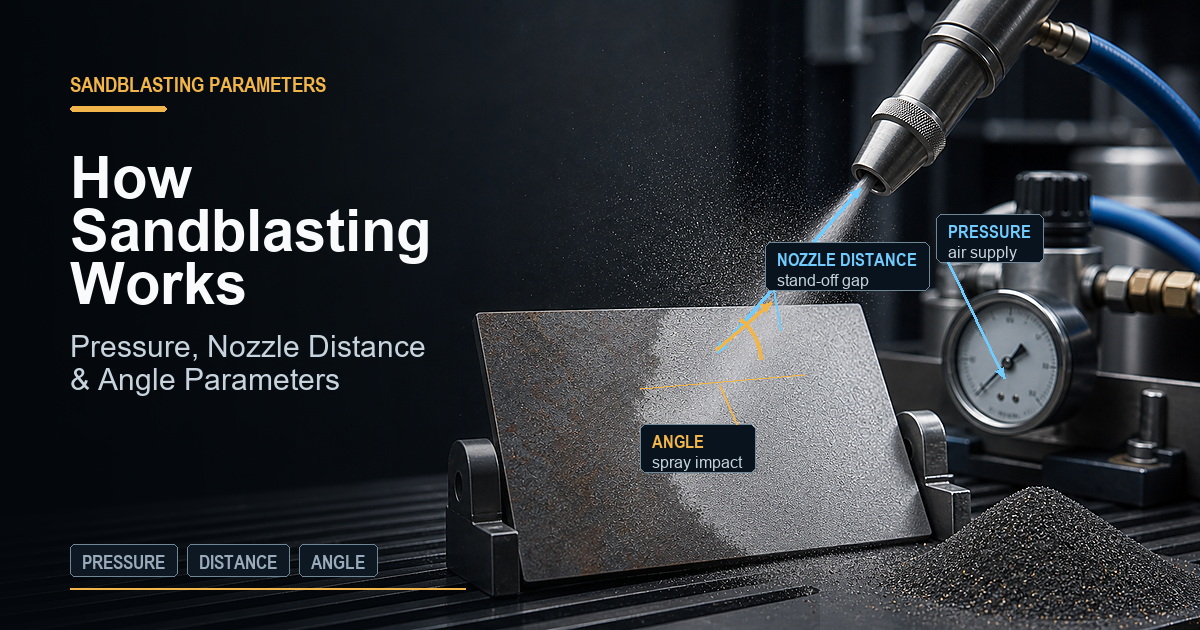
Organic media are most commonly used in enclosed blast cabinets with suction-feed or pressure-feed systems. Operating pressures should be significantly lower than for mineral abrasives — typically 20–50 PSI for walnut shell and 15–40 PSI for corn cob. Excessive pressure will fracture the organic particles rapidly, generating excessive dust and reducing the effective cleaning action to virtually nothing within minutes. Start at the lowest pressure that achieves the desired result and increase only if necessary.
Vibratory and Rotary Tumbling
For small parts (jewelry, ammunition casings, small plastic components, electronic connectors), vibratory or rotary tumbling in corn cob or fine walnut shell media is a standard batch-finishing process. The parts and media are loaded into a rotating drum or vibrating bowl, and the mechanical action of media-on-parts provides the cleaning and polishing effect without the need for a blast system. This is a low-energy, gentle, and highly consistent process for high-volume small-part finishing.
Nasses Strahlen
Walnut shell and corn cob are generally not suitable for wet (vapor) blasting systems. Both organic materials absorb water readily, which causes them to swell, agglomerate, and clog suction systems and nozzles. All organic media applications should use dry blast systems with appropriately dried compressed air supply.
Keep media dry. Organic media that has absorbed moisture will clump, clog nozzles, and lose abrasive effectiveness rapidly. Store in dry, sealed containers and ensure that the compressed air supply is properly dried with a refrigerant or desiccant dryer before entering the blast system. Monitor media condition. Unlike mineral abrasives, organic media degrades by becoming contaminated and fragmented simultaneously — replace the charge when visible contamination (dark color, oily feel) or excessive fines accumulate.
Organic Media vs. Harder Abrasives: When to Choose
| Criterion | Choose Walnut Shell / Corn Cob | Choose Harder Abrasive |
|---|---|---|
| Substrate is aluminum, fiberglass, or plastic | Yes — no dimensional risk | Only with very fine grit and low pressure |
| Carbon deposit removal from turbine components | Yes — walnut shell is the standard | No — harder media removes base metal |
| Oily / greasy parts cleaning | Yes — corn cob absorbs the oil | Mineral abrasives redistribute oil |
| Anchor profile needed for coating | No — zero profile produced | Yes — angular mineral abrasives required |
| Heavy rust or mill scale removal | No — insufficient hardness | Yes — aluminum oxide, steel grit, garnet |
| Jewelry and precious metal polishing | Yes — corn cob is the standard | No — too aggressive |
| High-volume throughput, cost-sensitive | No — limited reuse, higher media cost | Yes — steel or aluminum oxide in reclaim |
For the full multi-media comparison across all properties, see our sandblasting media comparison chart. For a complete selection guide based on substrate and application, see how to choose sandblasting material: step-by-step selection guide.
Häufig gestellte Fragen
Yes — walnut shell can remove paint from both steel and fiberglass car body panels, and it is in fact the preferred choice for fiberglass panels precisely because it removes the paint without damaging the fiberglass laminate beneath. On steel panels, walnut shell will remove paint but will not produce any anchor profile — so if the panel is to be repainted, a follow-up pass with aluminum oxide or crushed glass is required to create the surface roughness needed for primer adhesion. For aluminum body panels, walnut shell is an excellent choice as it removes paint without the warping risk associated with harder, denser abrasives. For detailed automotive media selection guidance, see our automotive restoration sandblasting media guide.
Organic blasting media contains no crystalline silica and no heavy metals, which eliminates the two most serious health hazards associated with mineral abrasives. However, all blasting operations generate airborne dust that can cause respiratory irritation, and organic dust has its own potential hazards — particularly for workers with allergies to nuts (walnut shell) or agricultural products (corn cob). Appropriate respiratory protection (minimum N95 or P100 filter half-face respirator) must be worn by all operators. Enclosed blast cabinets with adequate dust collection significantly reduce operator exposure and are strongly recommended for all indoor organic media applications. For a full overview of blasting media safety requirements, see our sandblasting media safety guide.
Soda blasting uses sodium bicarbonate (baking soda, NaHCO₃) as the blasting media — a very fine, water-soluble, extremely soft abrasive (Mohs 2.5) that is used for very gentle cleaning, mold remediation, fire restoration, and food-equipment cleaning. Soda is completely water-soluble, which means residue can be rinsed away cleanly without leaving embedded abrasive particles in the substrate — an advantage in food and pharmaceutical environments. Walnut shell and corn cob are not water-soluble but share soda’s gentle cleaning characteristics and non-toxic profile. For applications where the water-solubility of soda is an important advantage (food equipment, surfaces requiring clean rinse removal of all media residue), soda is preferred. For applications where a slightly more aggressive cleaning action is needed, or where water contact is undesirable, walnut shell is the better choice.
Request a Quote
Tell us your application, grit size requirement, and annual volume. Competitive pricing with technical data sheets within 24 hours.
Get a Free Quote →Talk to a Technical Advisor
Not sure whether walnut shell, corn cob, glass beads, or another media is the right fit for your delicate blasting application? We’ll advise you.
Contact Our Team →Filter