Acrylic (Type V) Plastic Media for Sensitive Surfaces
There is a category of surface finishing challenge where standard plastic blast media — even the substrate-friendly Type II urea — simply cannot be used without risking damage. Carbon fiber reinforced polymer structures. Thermoplastic injection-molded components. Polished mold tool cavities. Radome and antenna covers. In each of these applications, the question is not just “how do I remove this coating?” but “how do I remove it without altering, fracturing, or contaminating the substrate at the molecular level?”
The answer, consistently, is Type V acrylic (PMMA) plastic blast media.
Acrylic media is the softest, gentlest, and most substrate-protective abrasive in the plastic blast media family. It is also the least well understood — many operators know they need it for sensitive substrates but are unsure how it actually works, why it behaves differently from urea or melamine, and how to run it correctly to get reliable results without going through media charges too fast.
This guide closes those gaps. We cover the physics of PMMA’s impact behavior, every sensitive-surface application where Type V acrylic is the right choice, precise process parameters for each scenario, storage and handling requirements, and the limits beyond which even acrylic is not gentle enough. For a broader comparison with Type II urea and Type III melamine, see: Plastic Blast Media Types Compared: Urea vs Melamine vs Acrylic. For a broader overview of the full plastic media category, see: What Is Plastic Media? The Complete Guide.
What Is Type V Acrylic Blast Media?
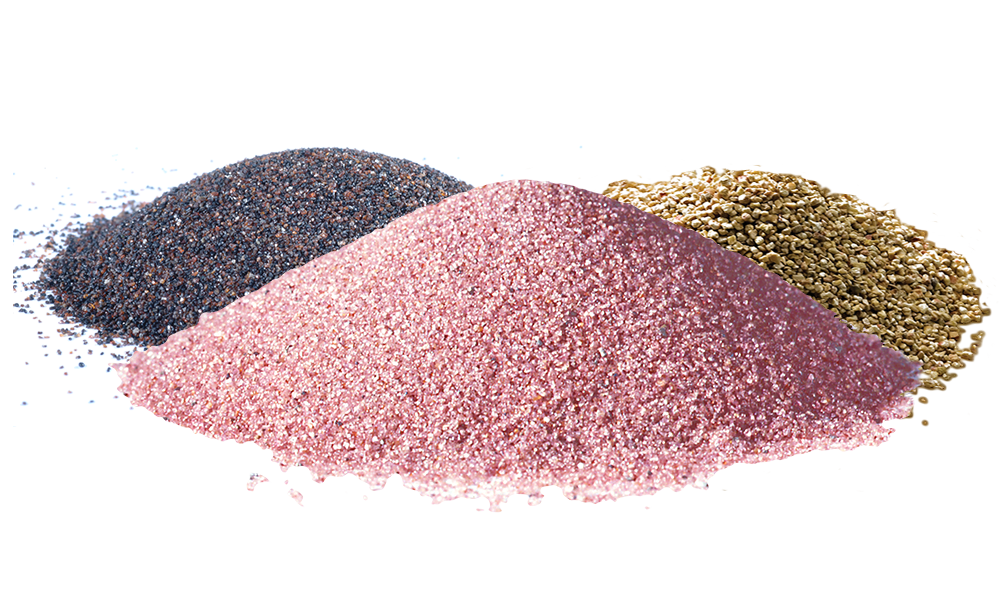
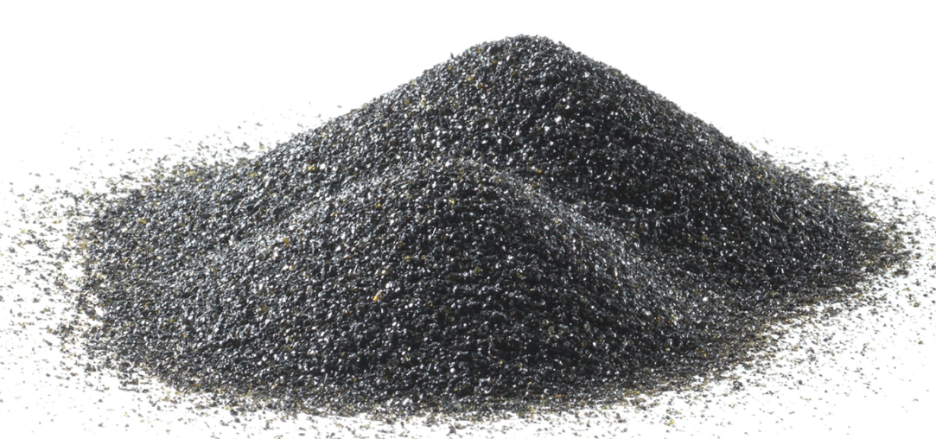
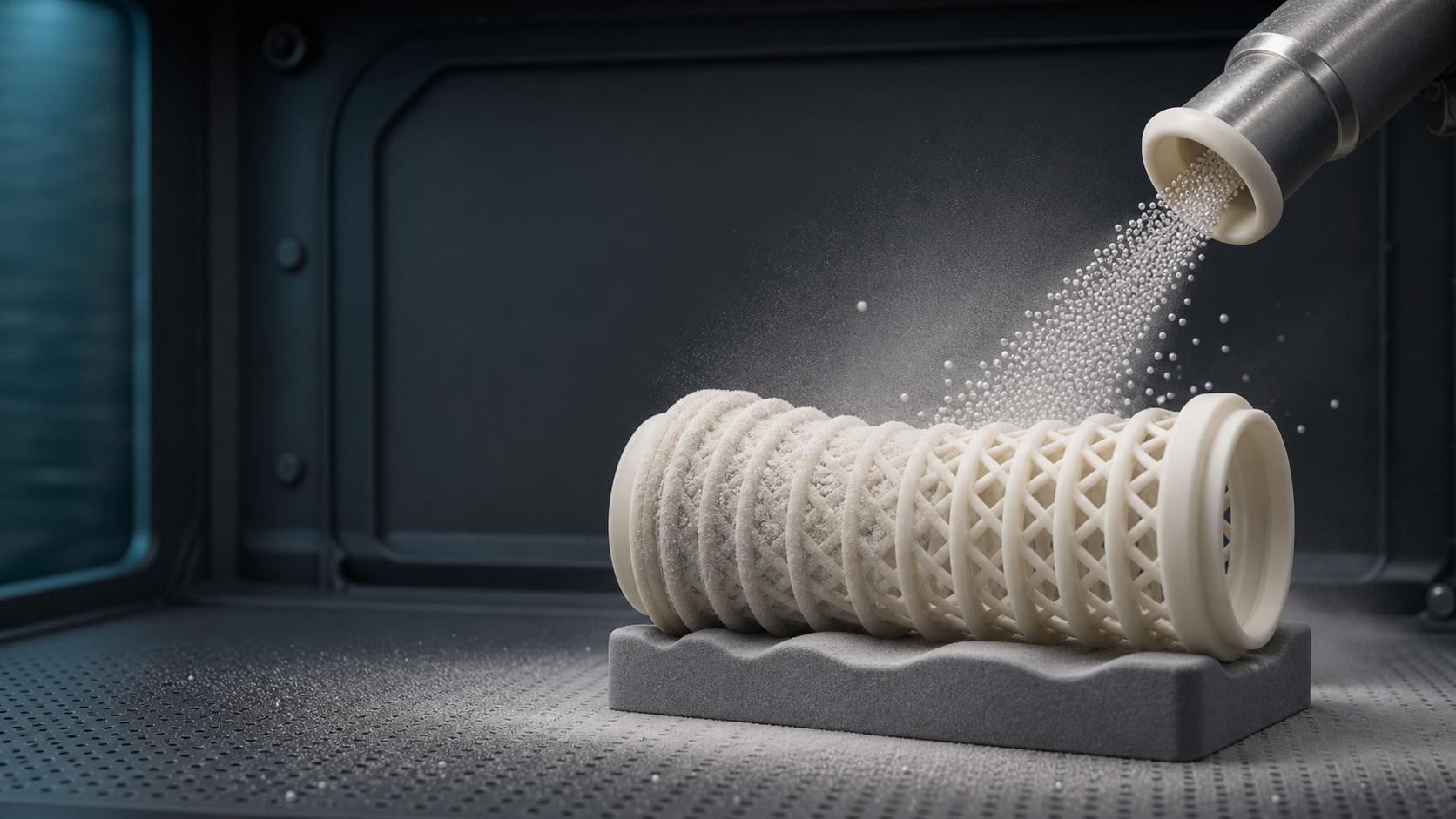
Type V acrylic blast media is manufactured from polymethyl methacrylate (PMMA) — the same base polymer used in Plexiglas, Lucite, and optical lenses — ground and screened to precise angular particle size distributions for use as a blasting abrasive. Unlike the Type II (urea) and Type III (melamine) varieties in the plastic blast media family, which are thermosetting resins that cure into rigid, brittle networks, PMMA is a thermoplastic: it remains re-meltable after forming, giving it a fundamentally different molecular structure and impact behavior.
Under the MIL-P-85891A classification system that governs plastic blast media for defense and aerospace applications, acrylic media is designated Type V. It is the softest type in the standard’s five-type taxonomy, with a Mohs hardness of approximately 3.0 — lower than urea (~3.5) and meaningfully lower than melamine (~4.0). That half-point difference in Mohs hardness may sound trivial, but at the particle-substrate interface during a blast operation, it translates into a categorically different force transfer profile that determines whether sensitive substrates survive the process intact.
The Science: Why PMMA Behaves Differently
The performance distinction between acrylic and thermosetting plastic blast media is not just a matter of degree — it is a difference in fundamental failure mode. Understanding this explains every practical difference you observe in blast cabinet performance.
🔴 Thermosetting Resins (Urea & Melamine)
Urea and melamine are three-dimensionally cross-linked polymer networks. Once cured, the chains cannot slide or reorient relative to each other. When a particle impacts a surface, the entire energy of the collision is absorbed in a single, near-instantaneous event. The cross-linked network cannot redistribute that stress — it fractures catastrophically along the path of least resistance through the particle. This brittle fracture concentrates force at sharp angular edges, maximizing cutting action on coatings. The same concentrated force, however, is what makes these media types risky on fragile substrates: the shockwave from each fracture event radiates into the substrate surface at peak intensity.
🟢 PMMA Thermoplastic (Acrylic Type V)
PMMA consists of long polymer chains with no cross-links between them. On impact, the chains can locally slide and reorient before the particle fractures — a brief period of viscoelastic deformation that absorbs and spreads the collision energy over a slightly longer time interval and larger contact area. This micro-deformation acts as a natural buffer: the peak stress transmitted to the substrate is measurably lower than for an equivalent thermosetting particle at the same velocity. PMMA still fractures — it is still a brittle material at macro scale — but the energy delivery to the substrate surface is gentler, more distributed, and less likely to initiate crack propagation in sensitive materials like carbon fiber or thin polymer matrices.
The Density Advantage
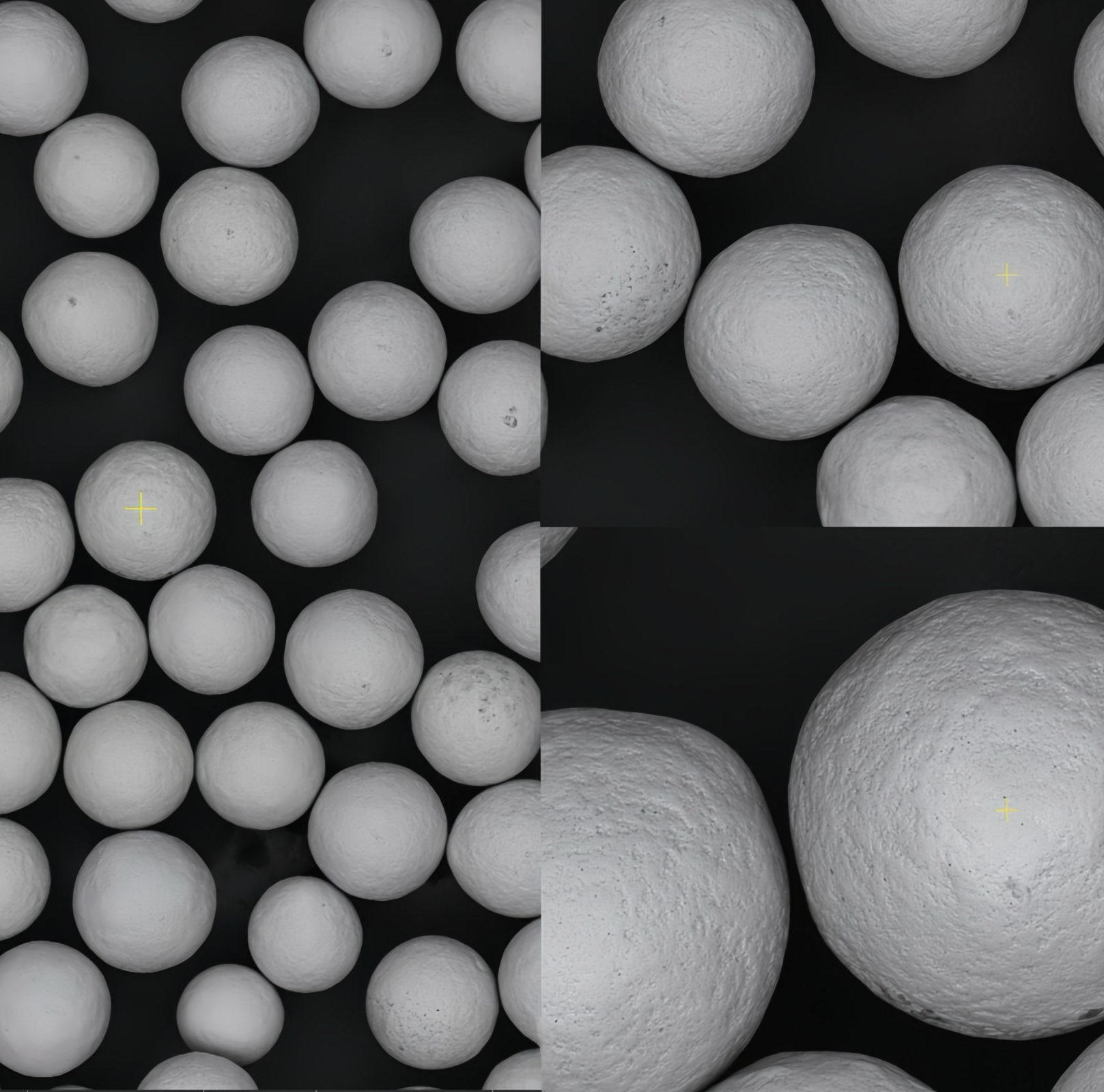
PMMA’s true particle density of approximately 1.18 g/cm³ is meaningfully lower than urea’s ~1.50 g/cm³ and melamine’s ~1.52 g/cm³. Since kinetic energy = ½mv², a lighter particle traveling at the same velocity carries less kinetic energy — and therefore delivers less impact force to the substrate per particle. At identical blast pressure settings, Type V acrylic particles arrive at the surface with roughly 20–25% less kinetic energy than equivalent-size urea particles. Combined with the viscoelastic deformation buffer, this makes the total substrate impact stress for acrylic significantly lower than the raw Mohs hardness comparison alone would suggest.
Complete Physical & Chemical Properties
| Property | Value / Specification | Practical Significance |
|---|---|---|
| Resin Chemistry | Polymethyl methacrylate (PMMA), thermoplastic | Viscoelastic deformation on impact; lower peak substrate stress vs. thermosetting types |
| MIL-SPEC Designation | MIL-P-85891A, Type V | Required for qualified CFRP and composite depaint processes on defense aircraft |
| Mohs-Härte | ~3.0 | Below virtually all structural metal alloys; near the lower bound for effective coating removal |
| True Particle Density | ~1.18 g/cm³ | Lowest density of any common plastic blast media; less kinetic energy per particle at equal velocity |
| Schüttdichte | ~45–52 lb/ft³ (720–830 kg/m³) | Lighter charge weight vs. urea/melamine; affects hopper sizing and media flow calibration |
| Partikelform | Sub-angular to irregular | Less aggressive cutting geometry than thermosetting types; reduces fiber scoring risk on CFRP |
| Farbe | Clear to translucent white | Translucency allows visual inspection of media charge quality; contamination visible as cloudiness or darkening |
| Available Mesh Sizes | 20, 30, 40, 50, 60, 80 | Finer range than urea/melamine; coarser grades (Mesh 12, 16) not typically produced in Type V |
| Moisture Absorption (24h) | ~0.3% by weight (ASTM D570) | Higher than thermosetting types; requires sealed storage and moisture management protocol |
| pH (10% aqueous slurry) | 6.5–8.0 (near-neutral) | No alkaline stress corrosion risk on aluminum; safe for all common metal substrates |
| Heat Deflection Temperature | ~185–205°F (85–96°C) | Media softens above this range; do not use in high-temperature blast environments or on hot substrates |
| Solvent Resistance | Moderate (attacked by ketones, esters, chlorinated solvents) | Do not clean blast cabinets or media with MEK, acetone, or chlorinated solvents when acrylic media is in circuit |
| Typical Reuse Cycles | 2–4 passes (with reclaim) | Lower than urea (3–6) and melamine (4–8) due to thermoplastic fragmentation behavior |
| Surface Profile Produced | <0.1–0.5 mil (2.5–12.5 µm) on aluminum | Near-zero profile capability; suitable for the most demanding re-prime and bonding specifications |
What Makes a Surface “Sensitive”?
Not every substrate that requires gentle handling qualifies as “sensitive” in the blast media selection context. The term has specific technical meaning: a surface is sensitive when one or more of the following conditions apply, and any of them triggers the need for Type V acrylic over harder alternatives:
Fiber-Reinforced Matrix
Any substrate where fibers (carbon, glass, aramid) are embedded in a polymer matrix. Abrasive impact can sever surface fibers or drive crack propagation between fibers and matrix — damage that is invisible externally but degrades structural properties.
Thin Wall / Low Stiffness
Parts where the substrate itself has low resistance to deflection under localized impact load. Thin thermoplastic housings, sandwich panel skins, and thin-walled composite shells can flex on impact in ways that cause delamination or stress-whiten the polymer matrix.
Dimensional Criticality
Surfaces where any measurable material removal from the substrate itself — even sub-mil — would violate dimensional tolerances. Injection mold cavity surfaces, precision optical components, and tight-tolerance machined features fall into this category.
RF / Electromagnetic Transparency
Radomes and antenna covers must maintain precise electromagnetic transmission characteristics. Physical surface alteration — even micro-scale profiling — can shift dielectric properties and degrade radar or communications performance.
Embedded Conductors
Electronic substrates with conductor traces, bond pads, or surface-mount components where abrasive impact could displace, damage, or short conductors. Deflashing of molded electronic parts requires controlled, gentle abrasive action.
Polished or Optical-Quality Finish
Surfaces with controlled Ra values below 16 µin (0.4 µm) — mirror-polished mold cavities, optical elements, precision bearing surfaces — where any abrasive roughening would be functionally unacceptable.
Application Deep Dives
Type V acrylic plastic media is the established solution for each of the following application categories. Each presents unique substrate sensitivities and process requirements:
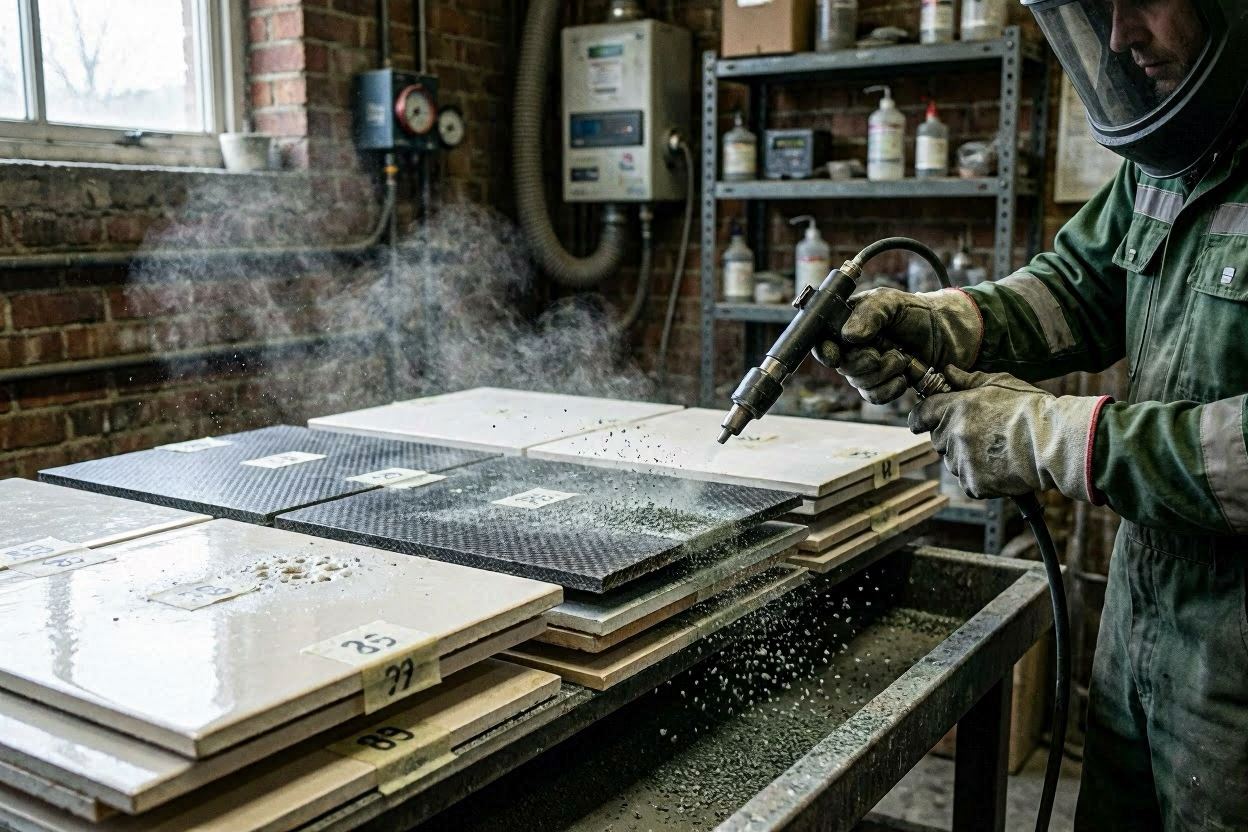
CFRP & Carbon Fiber Composite Structures
Carbon fiber reinforced polymer is the most demanding substrate in the plastic blast media world. CFRP derives its structural performance from the continuous carbon fiber reinforcement bonded within the polymer matrix — typically an epoxy resin system. The two failure modes that matter in blast operations are fiber severance (abrasive particles cutting through surface fibers, reducing load-carrying cross-section) and interlaminar delamination (shockwave energy propagating between plies and separating the matrix-fiber bond).
Type V acrylic is the only plastic blast media type that consistently avoids both failure modes at practical coating removal pressures. Its lower kinetic energy delivery, combined with the sub-angular particle shape’s reduced cutting geometry, strips paint from CFRP surfaces without driving crack propagation into the fiber architecture. The key operative word is “consistently” — urea can be used on CFRP at very low pressures (15–25 PSI) in some process specifications, but the margin for error is extremely narrow, and any equipment variation (worn nozzle, pressure surge, reduced standoff) pushes the process into the damage zone. Acrylic provides a wider, more forgiving process window.
Critical applications include: aircraft control surface depaint, composite fairing maintenance, CFRP fuselage panel stripping, nacelle acoustic liner cleaning, and repair bond surface preparation on structural composite assemblies.
Thermoplastic Injection-Molded Components
Thermoplastic parts — ABS housings, polycarbonate covers, nylon structural components, polyester panels — present a different sensitivity profile from composites. The risk here is not fiber damage but stress whitening (localized yielding of the polymer chains that creates visible opacity), surface crazing (micro-crack networks initiated by impact stress), and dimensional alteration from abrasive material removal of the polymer surface itself.
The scenario where acrylic blast media is most commonly applied to thermoplastics is paint stripping for rework. A painted thermoplastic housing that has been painted the wrong color, has a cosmetic defect, or needs to be stripped for re-use can be returned to bare substrate using Type V acrylic at low pressure — something that would be impossible with urea (which would gouge the thermoplastic surface) or any mineral abrasive (which would destroy it entirely).
The process must be carefully qualified by polymer type. Amorphous polymers (ABS, polycarbonate, PMMA itself) are generally more sensitive to stress cracking than semi-crystalline polymers (nylon, polypropylene, PEEK) and require lower blast pressures and finer mesh. Always test on a representative coupon of the exact resin grade before committing to production.
Fiberglass (FRP) Structures
Glass fiber reinforced polymer — the material of boat hulls, wind turbine blades, sporting equipment, and automotive body panels — shares some sensitivity characteristics with CFRP but is generally more forgiving. The glass fiber bundles embedded in polyester or vinyl ester resin matrices are less prone to individual fiber severance than carbon fiber, and the matrix materials are typically tougher than aerospace-grade epoxy systems.
However, FRP surfaces still require careful media selection for two reasons. First, excessive blast energy can expose the woven or chopped fiber mat at the surface, which would be unacceptable before repainting (gelcoat or primer will not bridge the fiber texture without additional filling). Second, older marine FRP structures may have osmotic blistering or delaminated gelcoat layers that can propagate inward if over-blasted.
For stripping antifouling paint from fiberglass boat hulls — one of the largest volume applications of acrylic blast media in the marine sector — Type V acrylic at Mesh 30–40 and 25–40 PSI consistently achieves clean gelcoat surfaces without fiber exposure when operated by trained personnel. The ability to process complex hull shapes in situ, without the chemical waste streams of traditional paint stripping, makes this an economically and environmentally attractive alternative to chemical stripping or mechanical sanding.
Polished Mold Tool Surfaces
Injection mold tool cavities represent one of the most dimensionally critical applications for plastic blast media. A production mold can represent hundreds of thousands of dollars in tooling investment and must maintain cavity dimensions within microns to produce acceptable parts. Carbon deposits, release agent buildup, and polymer degradation residue accumulate on mold surfaces over production cycles and reduce surface quality and part release performance — but conventional cleaning methods (steel brushes, abrasive polishing compounds, chemical cleaners) either risk dimensional change or require time-consuming disassembly.
Type V acrylic blast media at fine mesh sizes (Mesh 50–80) and low pressures (15–25 PSI) provides an effective in-situ cleaning solution. The acrylic particles remove surface contamination without measurably altering the polished steel surface beneath. The process can often be performed with the mold at temperature (below 180°F / 82°C, the acrylic media’s heat deflection limit), reducing cleaning downtime.
The critical qualification requirement is establishing baseline surface roughness (Ra) measurements before and after the first cleaning cycle to confirm that the process is not progressively altering the tool surface. If Ra measurements show any upward trend across multiple cleaning cycles, either reduce pressure, increase mesh fineness, or investigate whether the cleaning interval needs to be shortened to reduce contamination buildup per cleaning event.
Radomes & Composite Antenna Covers
Aircraft radomes — the fiberglass, CFRP, or Nomex honeycomb sandwich structures that house weather radar and communications antennas — are among the most technically demanding depaint applications in aviation maintenance. Their sensitivity is dual-natured: the composite substrate requires gentle abrasive action, and the electromagnetic transparency characteristics of the structure must be preserved within tight tolerances after any surface treatment.
Radomes are constructed with specific wall thicknesses and dielectric properties calculated to minimize signal attenuation at designated radar frequency bands. Any physical alteration of the surface — including micro-scale profiling — can shift the effective dielectric constant of the surface layer and alter the transmission spectrum. For this reason, radome depaint processes typically specify Type V acrylic at the finest practical mesh size and lowest effective pressure, with mandatory electrical testing (transmission loss and boresight error measurement) after any blast operation to confirm the radome remains within performance specification.
Most major commercial and military aircraft maintenance programs have qualified Type V acrylic blast processes for their specific radome constructions. If your organization is developing a new radome depaint process, expect an extensive process qualification phase including environmental testing (temperature cycling, humidity exposure) after blast treatment to confirm that the process has not introduced any latent delamination or matrix microcracking that could propagate in service.
Electronics Deflashing
After injection molding of thermoplastic or thermoset electronic components — connector housings, IC packages, sensor bodies, relay cases — residual flash at parting lines must be removed consistently and without damage to conductor traces, bond wires, or molded-in features. Traditional deflashing methods (hand trimming, cryogenic tumbling, vibratory finishing) each have limitations in throughput, consistency, or access to complex geometries.
Type V acrylic media in a controlled blast deflashing system — typically a dedicated automated cabinet with part fixturing and controlled nozzle sweep — provides precise, repeatable flash removal on small electronic components without risking conductor damage. The key process variables are blast pressure (kept very low, often 15–25 PSI) and nozzle distance, which must be consistent across all part surfaces to prevent variable flash removal depths.
For high-volume electronic component deflashing, cryogenic systems (where parts are cooled to embrittlement temperature before blast exposure) are frequently combined with Type V acrylic media — the cryogenic embrittlement makes the flash remove cleanly at lower blast energies, further reducing substrate stress risk. At ambient temperature, flash on flexible polymers may require higher pressures to achieve clean removal, potentially pushing the process toward substrate contact — cryogenic conditioning is the preferred solution when ambient-temperature deflashing cannot achieve adequate results without substrate risk.
Optimal Blast Parameters by Application
The following consolidates recommended parameters for the six primary Type V acrylic applications into a single reference table:
| Anmeldung | Mesh Size | Pressure (PSI) | Standoff (in) | Angle (°) | Key Risk to Monitor |
|---|---|---|---|---|---|
| CFRP / Carbon Fiber Composites | 30–50 | 20–40 | 8–12 | 60–80° | Fiber whitening, delamination |
| Thermoplastic Components | 40–60 | 15–30 | 10–14 | 60–75° | Stress whitening, crazing |
| Fiberglass (FRP) Hull / Panel | 30–50 | 25–40 | 8–12 | 60–80° | Fiber mat exposure |
| Polished Mold Tool Surfaces | 50–80 | 15–25 | 6–10 | 60–85° | Ra increase, surface haze |
| Radomes / Antenna Covers | 40–60 | 15–30 | 10–14 | 60–70° | Dielectric property shift |
| Electronics Deflashing (ambient) | 50–80 | 15–25 | 4–8 | 70–90° | Conductor exposure, incomplete removal |
| Electronics Deflashing (cryogenic) | 50–80 | 10–20 | 4–8 | 70–90° | Part thermal shock during transition |
Process Qualification: Step-by-Step
Because Type V acrylic is used precisely on the substrates where blast damage is most consequential, process qualification is not optional. Here is the standard qualification sequence:
Establish Baseline Measurements
Before blasting any qualification coupon, characterize the baseline substrate condition. For composites: photograph surface under raking light, document any existing fiber damage or surface anomalies. For metals: measure Ra with a profilometer. For mold tools: take Ra measurements at multiple cavity locations. For radomes: record transmission loss and boresight error at the operating frequency band. These baselines are your reference against which post-blast measurements will be compared.
Prepare Representative Coupons
Qualification coupons must be the same material, temper, layup, and surface condition as production parts — not similar or equivalent. For CFRP, this means the same fiber orientation, resin system, cure cycle, and ply count. For thermoplastics, the same resin grade, wall thickness, and surface finish. Generic coupons from a different source or process will give misleading qualification data.
Prepare at least 5 coupons per parameter set — one for each of the planned parameter levels you intend to test, plus two extras for repeat testing if initial results are borderline.
Blast at Conservative Starting Parameters
Begin at the lowest pressure and finest mesh in the applicable range from the parameter table above. Blast a single pass across the coupon, maintaining consistent standoff and travel speed. Document all settings precisely, including nozzle bore diameter, nozzle-to-work angle, and travel speed estimate.
Inspect and Measure After Each Pass
After each blast pass, inspect the coupon for signs of substrate interaction: fiber whitening (CFRP), surface crazing (thermoplastics), fiber mat exposure (FRP), Ra change (metal tools). For composites, use a 10× loupe or low-power microscope. Measure Ra after every pass for mold tool qualification. If baseline measurements have shifted, stop and analyze before increasing any parameter.
For CFRP specifically: lightly wiping the surface with a clean white cloth after blasting and before inspection will remove loose dust and make any fiber damage far more visible under raking light examination.
Confirm Coating Removal Adequacy
Simultaneously with substrate condition inspection, confirm that coating removal at the current parameters is adequate. If coating is not fully removed after 3 passes at the starting parameters, incrementally increase pressure (5 PSI steps) or move to a coarser mesh size (one step) and repeat from step 3. If coating removal is adequate but substrate shows damage signs, parameters must be reduced — this defines the upper bound of the process window.
Define and Document the Qualified Process Window
The qualified process window is defined by the parameters that achieve adequate coating removal with no measurable substrate damage — the overlap zone between these two requirements. Document the qualified parameters in a formal process specification, including nozzle type and bore size, pressure (measured at nozzle inlet, not compressor output), mesh size, standoff, angle, and travel speed. This document is your production control reference and, for aerospace work, the basis for your NADCAP or customer-specific process approval submission.
Storage, Handling & Moisture Control
PMMA’s moisture absorption characteristic (~0.3% per 24 hours at 50% RH) is the most significant handling difference between Type V acrylic and the thermosetting plastic blast media types. Moisture-absorbed acrylic media breaks down faster during blasting, shortens reuse cycles, and can introduce flow inconsistencies in the media delivery system. Proper storage is essential to capture the full economic value of the media.
Maximizing Reuse Cycles
Type V acrylic typically delivers 2–4 reuse cycles — fewer than urea (3–6) or melamine (4–8). This is inherent to its thermoplastic nature: PMMA fractures differently from thermosetting resins, producing a higher proportion of non-functional fines per impact event. However, careful process management can push acrylic reuse cycles toward the upper end of the 2–4 range:
- Minimize blast pressure. Every 5 PSI increase in nozzle pressure measurably reduces reuse cycles for acrylic media. Operating at the minimum effective pressure — rather than the maximum allowable — is the single most effective lever for extending media life.
- Calibrate air wash velocity precisely for each mesh size. The air wash separator must be set to carry away fines (sub-effective particles) without discarding intact particles that still have productive life. Miscalibration in either direction wastes good media.
- Prevent moisture exposure between cycles. Moisture-softened PMMA particles fracture at lower energies and produce more fines per cycle. Keep the media charge dry between blast sessions by sealing the hopper or returning unused media to sealed containers.
- Replace the media charge proactively. A media charge that has degraded to 50% of its initial strip rate should be replaced entirely rather than supplemented with fresh media. Mixing degraded and fresh media produces unpredictable blend behavior that is difficult to manage within a qualified process window.
Early Warning Signs of Over-Blasting
Because Type V acrylic is used on substrates where damage is difficult or impossible to repair, recognizing the early warning signs of over-blasting is critical. These are the observable indicators, organized by substrate type, that should trigger an immediate stop and parameter review:
| Substrate | Early Warning Sign | What It Indicates | Immediate Action |
|---|---|---|---|
| CFRP / Carbon Fiber | Surface fiber whitening or frosting under raking light | Surface fiber bundle disruption beginning — pre-damage state | Stop blasting. Reduce pressure 10 PSI or increase mesh fineness by one step. Re-qualify. |
| CFRP / Carbon Fiber | Fuzzy or feathered surface texture when viewed obliquely | Individual fiber severance — damage has occurred | Stop immediately. Engineer evaluation required before proceeding. Document and report. |
| Thermoplastic | Surface gloss reduction or matte appearance in blasted zone | Surface layer yielding beginning (early stress whitening) | Reduce pressure 5–10 PSI, increase standoff 2–3 inches. Re-evaluate on fresh coupon. |
| Thermoplastic | Visible white haze or clouding under surface | Stress whitening — matrix yielding with void formation | Stop. Part may be cosmetically unacceptable. Reduce all parameters significantly. |
| Fiberglass (FRP) | Gelcoat texture becoming granular or woven pattern beginning to show | Gelcoat layer being removed unevenly, approaching fiber mat | Reduce pressure, increase standoff, slow nozzle travel. Single-pass maximum. |
| Mold Tool Surface | Surface haze visible in polished cavity areas | Acrylic particles altering polished Ra — measurable roughening | Stop. Measure Ra immediately. Reduce mesh to next finer size and reduce pressure. |
| Radome / Antenna Cover | Any visible surface texture change from baseline | Dielectric property alteration risk — requires electrical test before further blasting | Stop. Perform transmission loss measurement per maintenance manual before proceeding. |
The Limits of Acrylic: When Even Type V Isn’t Enough
Type V acrylic is the gentlest practical blast abrasive available, but it is not universally applicable to all sensitive surfaces. There are situations where even acrylic at the lowest practical parameters will cause unacceptable substrate interaction, and where alternative cleaning methods must be considered:
Bare Optical Glass and Precision Optical Coatings
Optical elements — lenses, mirrors, windows — and their anti-reflection or high-reflectance coatings are typically produced with Ra values below 1 nm (0.001 µm). Even Type V acrylic at Mesh 80 and 15 PSI will alter such surfaces beyond recovery. Optical cleaning must use chemical methods (appropriate solvent wipes, ultrasonic cleaning in pH-neutral solutions) rather than any mechanical abrasive.
Thin-Film Coatings on Electronic Substrates
Sputtered or evaporated thin-film coatings (metallic or dielectric layers in the nanometer thickness range) on semiconductor or optical substrates cannot survive any blast process. Even the turbulent airflow around an acrylic blast stream would disturb nanometer-thickness coatings. Wet chemical cleaning is the only viable approach.
Parts with Exposed Bond Wires or Fine Conductor Lines
Wire-bonded integrated circuits or substrates with conductor line widths below 50 µm cannot be exposed to acrylic blast media without risk of wire displacement or conductor damage from even indirect particle impact. Precision cleaning with CO₂ pellets (dry ice blasting at extremely low pressure) or laser ablation are alternatives for these applications.
Very Thick or Highly Adhered Coatings on Sensitive Substrates
If a CFRP structure carries six or more layers of well-adhered mil-spec coating, Type V acrylic at safe substrate parameters may not have enough cutting authority to remove the coating in a practical number of passes. In this scenario, a two-stage process is sometimes used: a controlled first stage with fine-mesh Type II urea at minimum parameters removes most coating layers, followed by a Type V acrylic finish pass to clean the final residual layer from the bare substrate without risk. This approach requires individual qualification for each coating system and substrate combination.
Acrylic vs Walnut Shell on Sensitive Substrates
Walnut shell is the organic abrasive most frequently compared to Type V acrylic for sensitive surface applications. Both have similar Mohs hardness (~3.0–3.5), and both are used where substrate protection is the primary concern. Here is how they compare across the dimensions that matter for sensitive substrate operations:
| Attribute | Type V Acrylic (PMMA) | Walnut Shell |
|---|---|---|
| Mohs-Härte | ~3.0 | ~3.5 |
| Echte Dichte | 1.18 g/cm³ (lighter) | ~1.28 g/cm³ |
| Impact Behavior | Viscoelastic deformation → fracture | Brittle fracture (harder impact pulse) |
| CFRP Compatibility | Better — lower peak stress | Fair — higher hardness, more risk |
| MIL-SPEC Availability | Yes — MIL-P-85891A Type V | No military specification |
| Moisture Sensitivity | Moderate (PMMA hygroscopic) | High (organic; swells significantly with moisture) |
| Biological / Mold Risk | None (synthetic) | Present if stored in humid conditions |
| Particle Shape Consistency | High (engineered) | Variable (natural material) |
| Reuse Cycles | 2–4 | 2–5 (variable; degrades faster when wet) |
| Process Window (CFRP) | Wider — lower damage risk | Narrower |
| Environmental Disposal | Non-hazardous solid (if non-contaminated) | Non-hazardous (organic); compostable if uncontaminated |
For applications requiring MIL-SPEC traceability — all defense aerospace work — Type V acrylic is the required choice because walnut shell has no military specification. For non-defense sensitive surface applications (marine FRP, commercial composite structures), walnut shell can be a cost-effective alternative, but its variable particle shape, biological contamination risk during storage, and higher effective hardness make it a less reliable choice than engineered acrylic media for critical applications. Full comparison: Plastic Media vs Walnut Shell: Which Is Better?
Häufig gestellte Fragen
Can Type V acrylic media be used in a standard blast cabinet designed for mineral abrasives?
Technically yes, but with significant limitations. Standard mineral abrasive blast cabinets are not equipped with the air wash separator and fine-screen reclaim systems needed to effectively reclaim and reuse acrylic media. Without proper reclaim, every advantage of acrylic media — reusability and reduced per-part cost — is eliminated, and you are effectively paying a premium per-pound price for a single-use abrasive. Additionally, standard cabinet nozzle systems may not offer the fine pressure control needed for acrylic blast operations on sensitive substrates. Dedicated plastic media blast systems with calibrated reclaim are strongly recommended for any production acrylic blast process.
How do I know if my CFRP part has been damaged by over-blasting with acrylic media?
Early-stage blast damage on CFRP can be difficult to detect with the naked eye — which is exactly what makes process control so critical. Visual inspection under raking light at low angles to the surface is the most accessible first check: damaged fiber bundles appear as a frosted, matte, or slightly fuzzy texture compared to the clean, slightly glossy appearance of undamaged bare CFRP. More sensitive detection methods include: low-power optical microscopy (10–40×) for surface fiber condition; ultrasonic C-scan for inter-ply delamination detection; and peel-ply surface preparation tests (if applicable) to reveal matrix integrity at the surface layer. For flight-critical structure, any suspected over-blasting event should trigger an engineering evaluation before the part is returned to service.
Is Type V acrylic media the same product as what is sold as “PMMA blast media” by industrial suppliers?
PMMA blast media and MIL-P-85891A Type V acrylic media are based on the same resin chemistry, but not all commercial PMMA blast media meets the military specification. MIL-P-85891A Type V imposes specific requirements on particle size distribution, moisture content, bulk density, pH, and free monomer content, and requires a Certificate of Conformance documenting lot-specific test results. Generic “PMMA blast media” from a commodity supplier may or may not meet these requirements. For aerospace and defense applications, always specify MIL-P-85891A Type V and request CoC documentation. For non-defense sensitive surface applications, confirm with the supplier what testing their product undergoes and whether it would meet the MIL-SPEC parameters even if not formally certified.
After blasting a CFRP surface with Type V acrylic, what surface preparation is needed before adhesive bonding?
The surface preparation sequence after acrylic blast on CFRP prior to structural adhesive bonding typically includes: (1) compressed air blow-off to remove loose acrylic dust and coating debris; (2) solvent wipe with isopropyl alcohol on a lint-free cloth to remove any acrylic residue or contamination (avoid ketones or chlorinated solvents that attack PMMA); (3) visual and tactile inspection under raking light to confirm coating removal completeness and absence of fiber damage; (4) application of adhesive primer within the time window specified by the bondline process specification, typically within 4–8 hours to prevent re-contamination. For aerospace structural bonds, a water break test (water sheeting uniformly across the blasted surface without beading) is often required to confirm surface cleanliness before primer application. Consult the applicable composite repair manual for the specific bonded assembly you are working on.
Can Type V acrylic media be used on painted surfaces over aluminum without risk of substrate damage?
Yes — acrylic media is fully compatible with aluminum substrates and will not damage them at any practical blast pressure. If your substrate is aluminum (not composite), and your concern is gentle coating removal rather than CFRP protection, Type V acrylic is a valid but usually unnecessary choice. Type II urea (Type II, Mesh 30–40) achieves the same substrate-safe coating removal on aluminum at meaningfully higher strip rates and lower per-part media cost. Reserve Type V acrylic for applications where the substrate genuinely requires it — composite, thermoplastic, or polished metal surfaces — and use Type II urea as the default for standard aluminum structures.
Filter