What Is the Difference Between Sandblasting and Abrasive Blasting?
- Introduction
- Definitions: What These Terms Actually Mean
- Why the Terms Are Often Confused
- Materials Used: Sand vs Modern Abrasives
- Health, Safety & Regulatory Differences
- Equipment Differences
- Process Differences
- Surface Profile: How Results Differ
- Applications Compared
- Performance Comparison: Productivity, Cost & Efficiency
- Industry Standards & Specification Requirements
- Case Studies & Field Examples
- How to Choose the Right Method
- Schlussfolgerung
1. Introduction
In industrial surface preparation, the terms Sandstrahlen und abrasive blasting are frequently used interchangeably. However, engineers, coating inspectors, and safety professionals know that the two terms carry significantly different meanings in modern practice. Understanding the difference is crucial for writing accurate specifications, ensuring compliance with safety regulations, selecting appropriate blasting media, and achieving consistent coating performance.
The short explanation is:
Sandblasting originally referred to blasting with silica sand. Abrasive blasting is the modern, correct term that refers to blasting with any type of media.
But the deeper engineering differences extend into safety, microstructure, surface profile, media performance, cost efficiency, and compliance with ISO, SSPC/NACE, and OSHA regulations. This article examines these differences in technical depth, focusing on measurable parameters, process design, and practical engineering considerations.
2. Definitions: What These Terms Actually Mean
2.1 Sandblasting (Original Definition)
Sandstrahlen historically describes blasting using silica sand as the abrasive. This method originated in the late 1800s and became popular across automotive, shipbuilding, and heavy industry due to the wide availability and low cost of sand.
Key characteristics:
- Uses **silica sand** as the abrasive.
- Creates a very **angular profile** due to fractured sand grains.
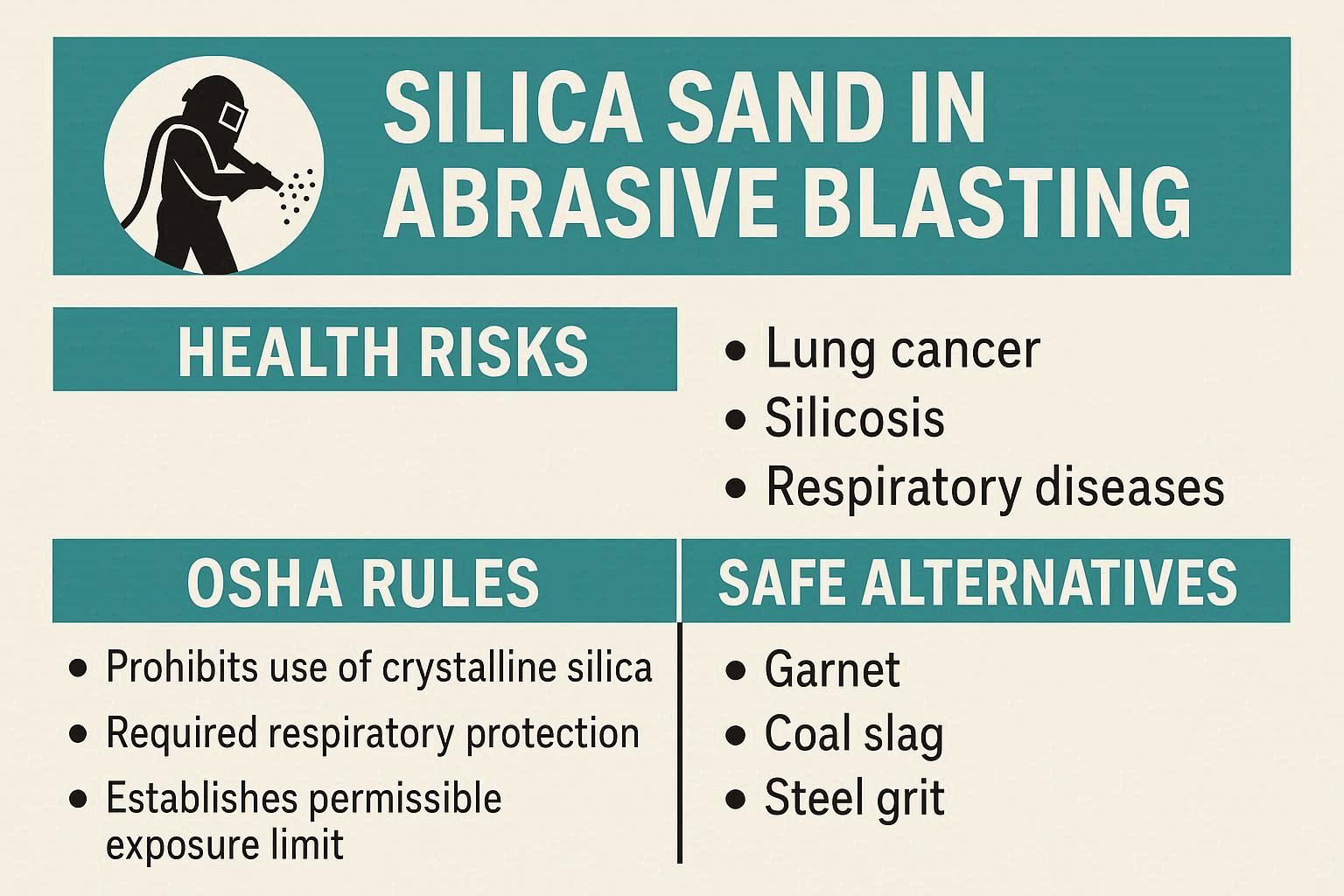
- Produces excessive **respirable crystalline silica dust**, which causes lung disease.
- Now largely **banned or restricted** in most countries.
2.2 Abrasive Blasting (Modern Standard Term)
Abrasive blasting refers to the process of propelling any abrasive media—mineral, metallic, synthetic, or organic—against a surface to clean, profile, or texture it.
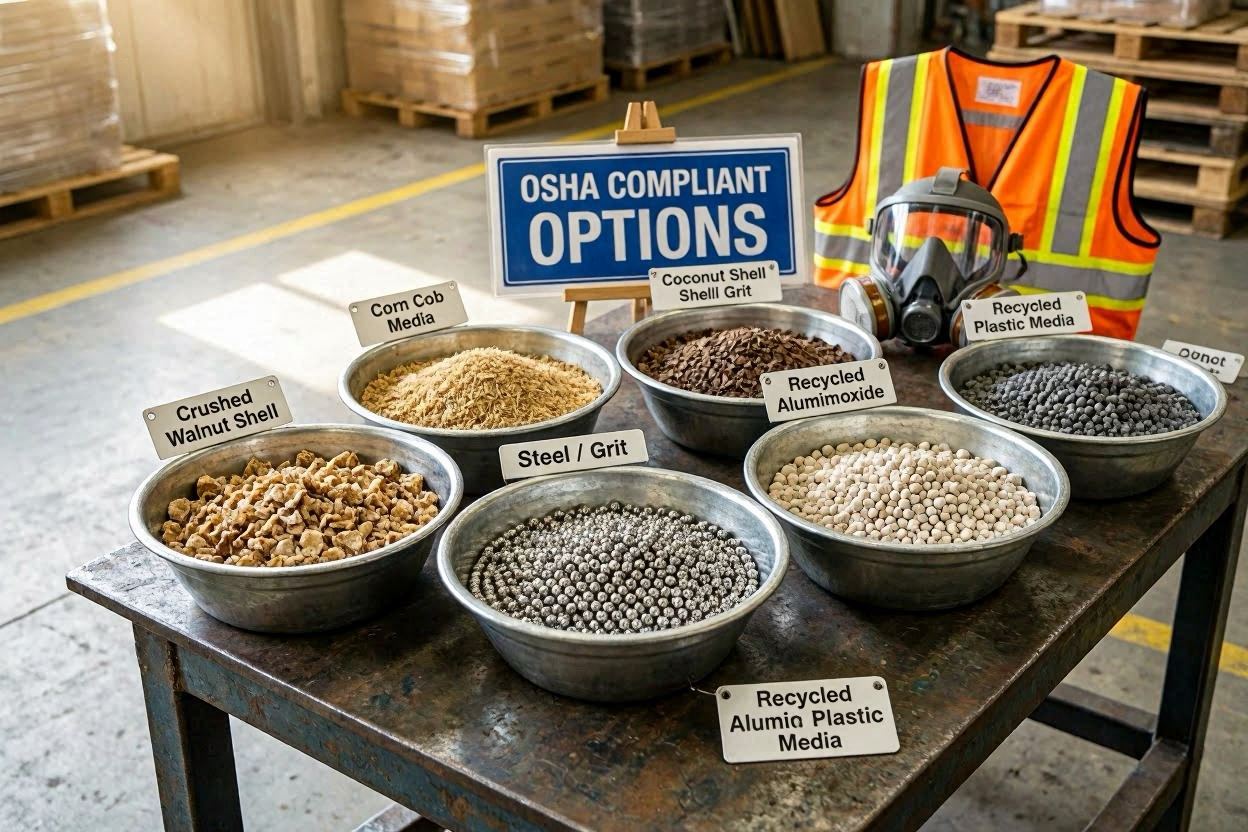
Examples of abrasive media:
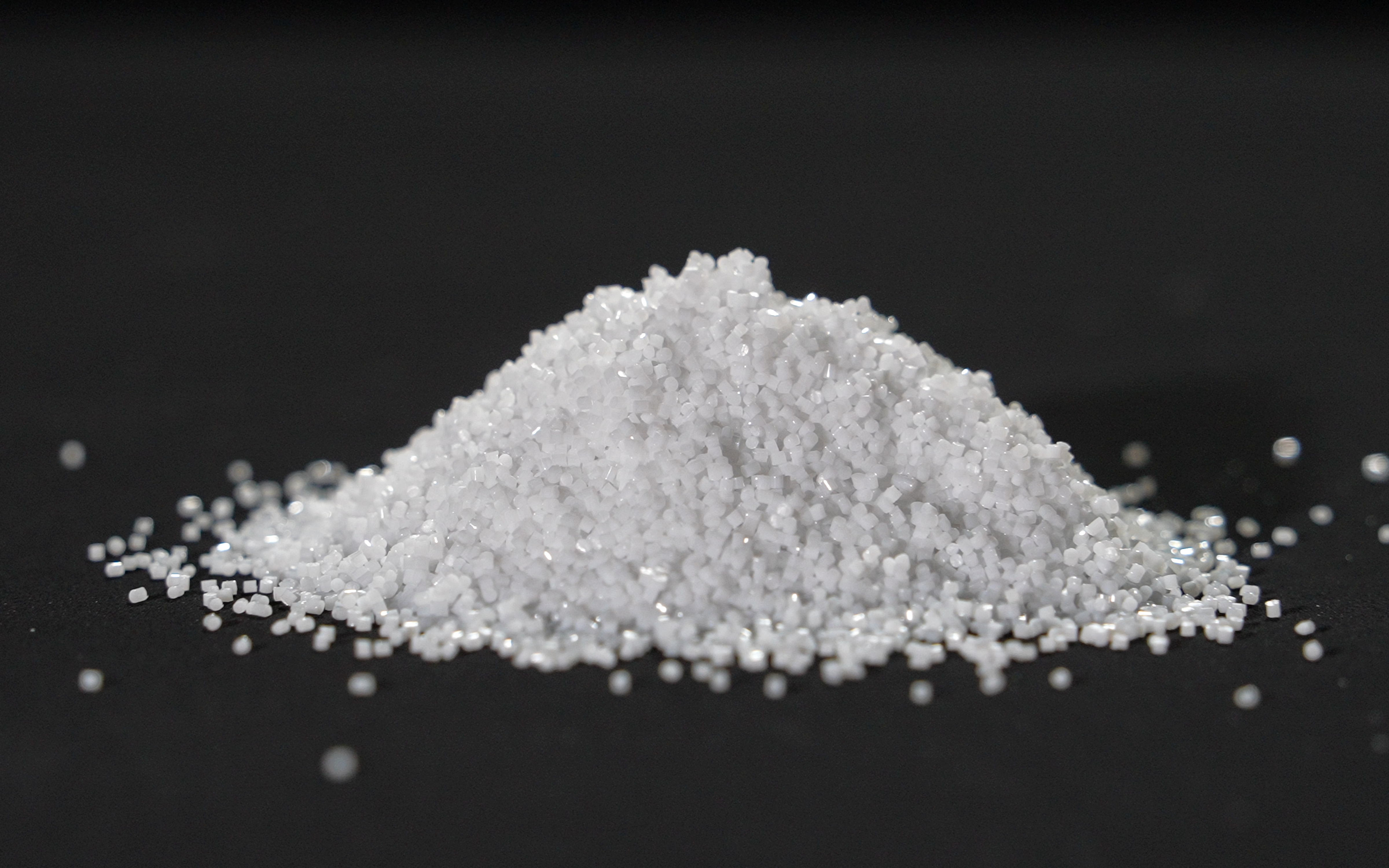
- Aluminiumoxid
- Granat
- Steel grit / steel shot
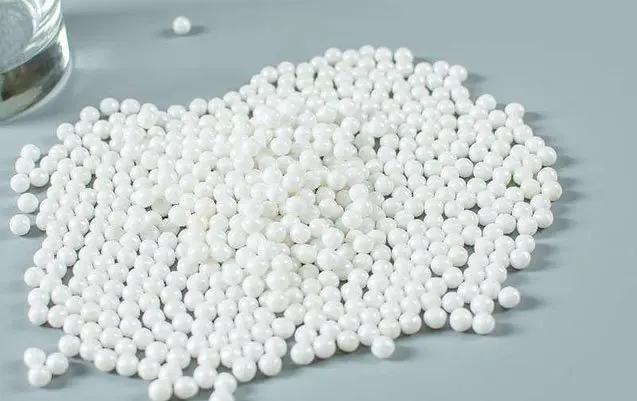
- Glass bead
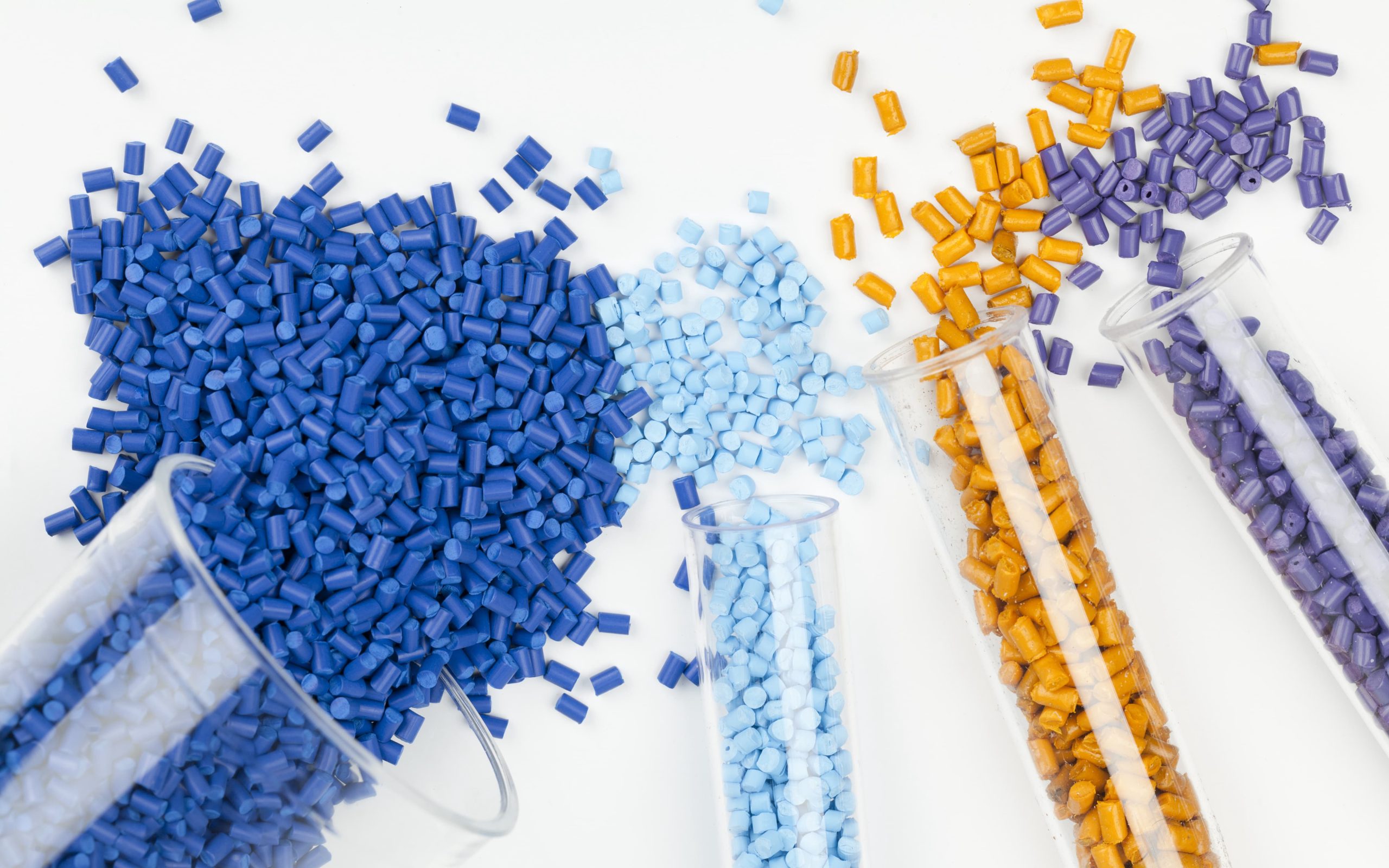
- Plastische Medien
- Walnut shell / corn cob
- Soda (sodium bicarbonate)
Abrasive blasting is therefore the **correct term** in engineering, QA documentation, and coating specifications.
3. Why the Terms Are Often Confused
Three main reasons explain why the public still uses the outdated term “sandblasting”:
- Historical usage: Sand was the original abrasive used when the technology was invented.
- Language habits: “Sandblasting” is simpler and became a generic household phrase.
- Small shops and hobbyists: Some still informally call all blasting “sandblasting,” even though they are not using sand.
In professional engineering practice, however, the distinction is important and affects safety compliance and specification accuracy.
4. Materials Used: Sand vs Modern Abrasives
Silica sand has distinct physical properties that differ from most engineered abrasives.
| Property | Quarzsand | Modern Abrasives (e.g., aluminum oxide, garnet) |
|---|---|---|
| Hardness (Mohs) | 6-7 | 7.5–9 (depending on media) |
| Shape | Irregular, rounded or semi-angular | Engineered angularity or specific shapes |
| Staubentwicklung | Extremely high | Low–moderate depending on type |
| Reusability | Very low | High (especially steel or ceramic media) |
| Safety | Contains respirable crystalline silica | Most alternatives are non-hazardous |
Silica sand is no longer considered a safe or efficient abrasive in modern blasting engineering.
5. Health, Safety & Regulatory Differences
This is the most critical difference and the reason why sandblasting is largely obsolete and prohibited in many countries.
5.1 Respirable Crystalline Silica (RCS)
Silica sand produces respirable particles less than 10 μm in diameter. Long-term exposure causes:
- Silicosis
- Chronic obstructive pulmonary disease (COPD)
- Lung cancer
OSHA, EU-OSHA, and ISO 11126 guidelines severely restrict the use of sand due to these risks.
5.2 Regulatory positions
- United States (OSHA): Strong restrictions on silica use; exposure limits are extremely low.
- European Union: Most nations ban sandblasting entirely.
- Australia: Silica sand blasting banned in many states.
- Middle East & Asia: Major industrial facilities follow ISO standards that discourage sand use.
In contrast, abrasive blasting using garnet, aluminum oxide, steel grit, or glass beads is fully accepted and compliant when conducted with proper PPE and ventilation.
6. Equipment Differences
The equipment used can be identical between sandblasting and abrasive blasting, but the choice of media influences component wear, nozzle selection, metering valve type, and containment requirements.
6.1 Nozzles
- Sand wears ceramic nozzles extremely quickly.
- Aluminum oxide requires tungsten carbide or boron carbide nozzles.
- Steel grit requires the highest wear resistance nozzles.
6.2 Blast pots and metering valves
Abrasive blasting systems use precision metering valves designed for consistent media flow. Sand, with its inconsistent grain size and moisture absorption, often caused clogging in older equipment.
6.3 Dust collection
Because sand produces heavy dust loads, it demands significantly greater dust extraction capacity compared with modern low-dust abrasives.
7. Process Differences
Although the mechanics of blasting are similar, the process differs in key engineering parameters.
7.1 Pressure Requirements
Silica sand tends to fracture at lower pressures. Modern abrasives are engineered to maintain integrity and provide predictable cutting profiles at high pressures (90–120 psi).
7.2 Surface Cleanliness Levels
Using ISO 8501-1 or SSPC-SP standards, modern abrasives achieve consistent cleanliness levels such as:
- SSPC-SP 5 / NACE 1 (white metal)
- SP 10 / NACE 2 (near-white)
- SP 6 (commercial blast)
Sand struggles to achieve these levels consistently due to dust inclusions and inconsistent grain shapes.
8. Surface Profile: How Results Differ
Different abrasives generate different anchor profiles (surface roughness). This significantly affects coating adhesion.
| Abrasive | Typical Profile (μm) | Konsistenz |
|---|---|---|
| Quarzsand | 25–70 μm | Inconsistent |
| Granat | 45–85 μm | Highly consistent |
| Aluminium-Oxid | 50–120 μm | Very sharp, aggressive |
| Stahlkies | 60–150 μm | Extremely consistent |
9. Applications Compared
9.1 When Sandblasting Was Historically Used
- Automotive restoration
- Ship hull cleaning (early 1900s)
- Rough construction steel cleaning
- Small workshop metal cleaning
9.2 Modern Abrasive Blasting Applications
- Offshore platform steel preparation
- Industrial tank linings
- Aerospace component texturing
- Precision equipment deburring
- Weld seam cleaning
- Coating adhesion optimization
10. Performance Comparison
Modern abrasives outperform sand in nearly every measurable parameter.
| Kategorie | Sandstrahlen | Abrasive Blasting |
|---|---|---|
| Productivity | Low–moderate | Hoch |
| Verbrauch von Abrasivmitteln | High (one-time use) | Low (reusable media) |
| Surface quality | Inconsistent | Controlled & repeatable |
| Staubentwicklung | Very high | Low–moderate |
| Kosteneffizienz | Poor overall | Hoch |
11. Industry Standards & Specification Requirements
Modern coatings and corrosion control specifications use the term abrasive blasting. Examples include:
- ISO 8501-1 / ISO 8503: Surface cleanliness & roughness
- ISO 11126 / 11127: Abrasive media testing
- SSPC-SP 5, SP 10, SP 6: Surface preparation standards
- NACE No. 1, No. 2, No. 3: Corrosion control standards
None of these modern specifications recommend sand.
12. Case Studies & Field Examples
12.1 Offshore Oil Platform — Abrasive Blasting with Garnet
- Achieved 75–90 μm profile
- Reduced abrasive consumption by 40%
- Zero silica exposure risk
12.2 Automotive Restoration Shop Still Using Sand
- Worker respiratory issues
- Poor surface consistency
- Excessive cleanup time
- Eventually transitioned to glass bead and aluminum oxide
13. How to Choose the Right Method
When to Use Abrasive Blasting (Recommended 99% of the time)
- You need controlled surface profile
- You follow any industrial specification
- You require repeatable coating performance
- You care about environmental or occupational safety
- You want lower long-term costs
When Sand Should Never Be Used
- Any confined space
- Any internal blasting operations
- Any professional industrial work
- Any scenario requiring regulatory compliance
When Sand Might Still Appear (Not Recommended)
- Low-budget hobby projects outdoors
- Rural construction sites (informal practices)
14. Conclusion
The difference between sandblasting and abrasive blasting is not just terminology—it reflects the evolution of an entire industry. Sandblasting is an outdated, unsafe, and largely prohibited practice tied to silica sand. Abrasive blasting is the modern, engineered, specification-driven method that uses safe, high-performance media to deliver consistent, optimized surface preparation for coatings, manufacturing, and corrosion protection.
Abrasive blasting is the correct and safe method for all industrial applications.
Understanding this distinction ensures regulatory compliance, worker protection, coating reliability, and surface treatment excellence.
Filter