Overview of Ceramic and Plastic Media
When it comes to abrasive media comparison, one of the most frequently debated topics is ceramic media vs plastic media. Both are widely used across multiple industries, but their characteristics, strengths, and limitations differ significantly. Understanding these differences is crucial for engineers, plant managers, and procurement teams who must balance performance requirements with cost efficiency.
What is Ceramic Media?
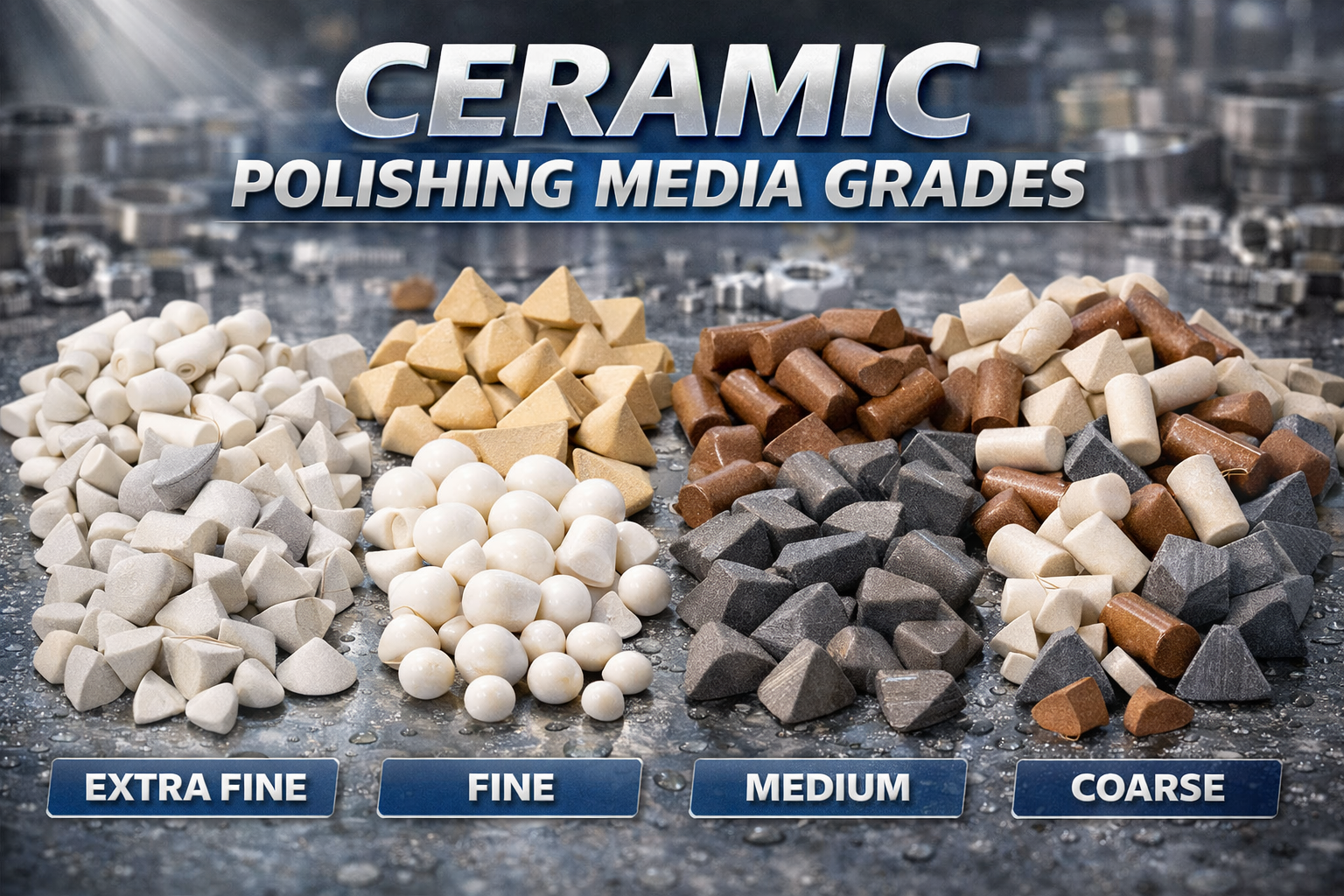
Ceramic media is a high-density abrasive media typically made from aluminum oxide, silica, and other ceramic compounds. It is sintered at high temperatures, resulting in excellent hardness and toughness. Ceramic media comes in different shapes—triangles, cylinders, cones—and grades ranging from aggressive cutting to fine finishing. It is widely used for deburring, descaling, edge radiusing, and surface smoothing.

What is Plastic Media?
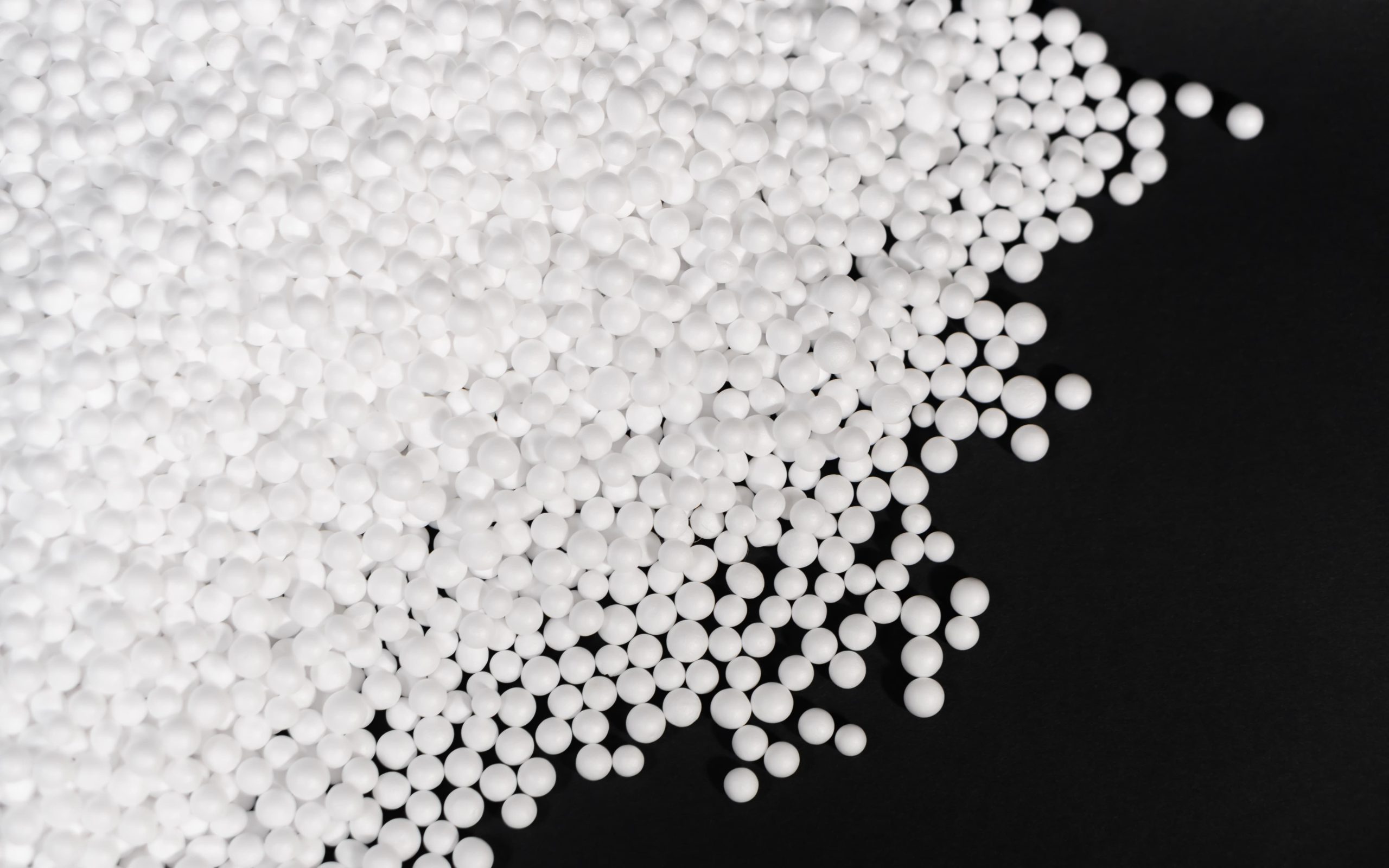
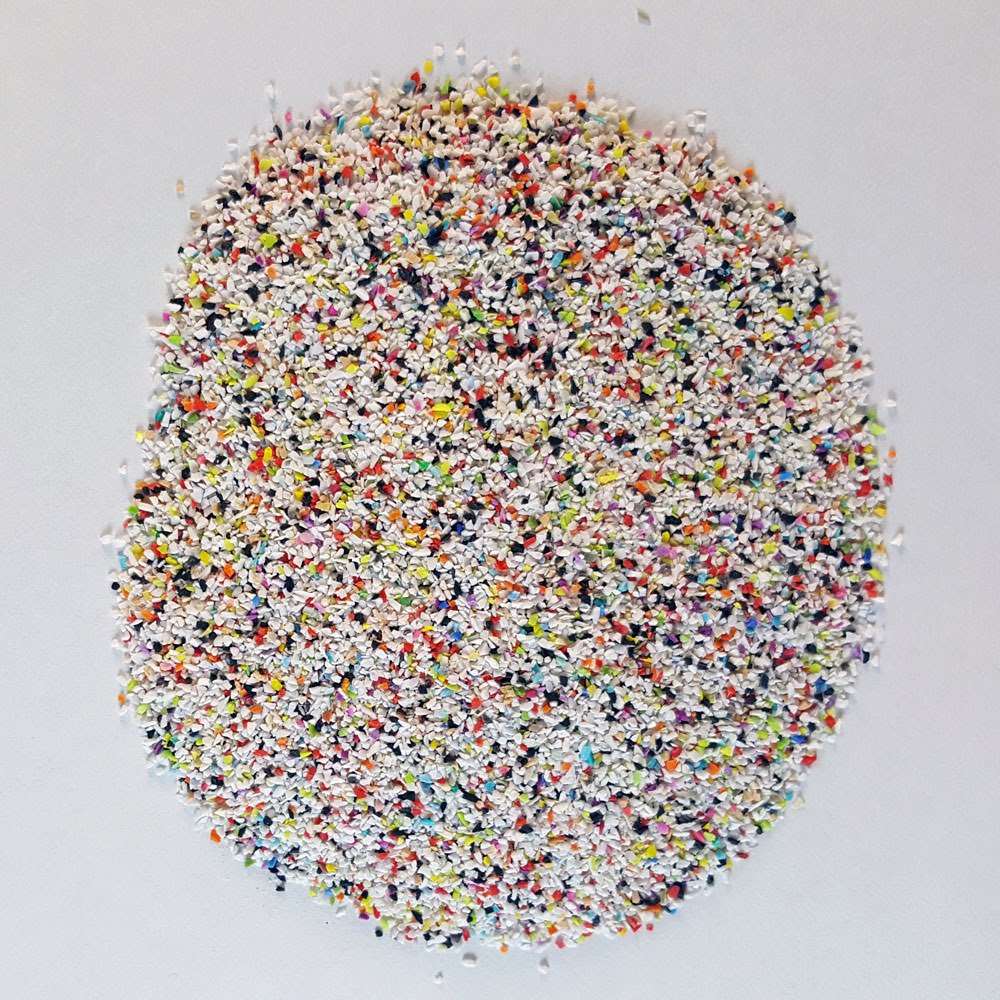
Plastic media is a low-density abrasive made from polyester resins and soft abrasives like aluminum oxide or silica fillers. Unlike ceramic media, plastic media is lighter and less aggressive. It is ideal for delicate applications where preserving surface integrity is critical. Commonly available in shapes such as pyramids, wedges, and spheres, plastic media is frequently used for polishing, light deburring, and finishing sensitive components.

Performance Comparison
To select the right abrasive, engineers often evaluate hardness, wear resistance, lifespan, and compatibility with surface treatment processes. The following sections compare ceramic and plastic media across these metrics.
1. Hardness and Cutting Power
Ceramic media exhibits significantly higher hardness compared to plastic media. With a Mohs hardness typically ranging between 7–9, ceramic can aggressively cut and remove material. Plastic media, by contrast, has a much lower hardness (around Mohs 3–4), making it more suitable for gentle surface finishing.
2. Wear Resistance
Because of its dense, sintered structure, ceramic media generally offers superior wear resistance. In continuous finishing operations, ceramic can last 2–3 times longer than plastic media. However, this durability comes at the expense of being harsher on softer substrates.
3. Service Life and Maintenance
Ceramic media requires less frequent replacement, reducing downtime in high-volume production environments. Plastic media, although shorter-lived, reduces machine wear and produces less dust, which can be a deciding factor in cleanroom or electronics-related applications.
4. Process Compatibility
- Ceramic Media: Best for heavy deburring, edge breaking, and aggressive finishing. Compatible with steel, titanium, and hard alloys.
- Plastic Media: Preferred for precision finishing, polishing of aluminum and brass, and protecting fragile or thin-walled components.
For more technical criteria, see the Abrasive Media Comparison Guide.
Application Scenarios
The practical applications of ceramic vs plastic media vary widely across industries. Below are examples with real-world relevance:
Automotive Industry
In automotive manufacturing, ceramic media is commonly used for deburring steel gears and components that undergo high mechanical stress. Plastic media, on the other hand, is chosen for aluminum engine parts where surface smoothness is critical for performance.

Electronics Industry
Plastic media dominates the electronics sector due to its ability to polish delicate parts such as connectors, casings, and micro-components without causing micro-cracks. Ceramic media is rarely used in this industry, except for heavy-duty housings.
Aerospace Industry
Aerospace applications demand precision and compliance with strict surface finish standards. Ceramic media is used for titanium turbine blades where high material removal is necessary, while plastic media is applied for polishing lightweight aluminum alloy structures.
Cost vs Benefits
When evaluating ceramic media vs plastic media, cost considerations are not limited to upfront purchase price. The total cost of ownership (TCO) must include service life, energy consumption, and impact on production efficiency.
Initial Purchase Cost
Plastic media generally costs less per kilogram than ceramic media. However, because it wears out faster, the replacement frequency increases long-term expenses.
Operational Efficiency
Ceramic media, though more expensive initially, maintains cutting performance longer, reducing cycle times and labor costs. This can offset the higher upfront investment over the product’s lifetime.
ROI Analysis
Consider a manufacturing plant using 1,000 kg of abrasive media annually:
- Ceramic Media: Higher upfront cost, but replacement needed only twice per year.
- Plastic Media: Lower cost, but replacement required 5–6 times per year.
Over three years, the cumulative cost of plastic media may exceed ceramic media, despite being cheaper at the start.
Recommendations
Choosing between ceramic and plastic media depends on your application requirements:
- Choose Ceramic Media if: You need aggressive material removal, durability, and efficiency in heavy-duty operations.
- Choose Plastic Media if: You prioritize delicate finishing, reduced machine wear, and protection of fragile components.
For a deeper comparison, see Aluminum Oxide vs Zirconia Beads, another common abrasive media decision point.
Frequently Asked Questions
Q1: Can I mix ceramic and plastic media in one process?
Mixing is generally not recommended because the difference in hardness causes uneven wear and inconsistent results. Processes should be optimized with one media type.
Q2: Which media is more environmentally friendly?
Plastic media produces less dust but can generate microplastic waste. Ceramic media lasts longer but requires more energy during production. Sustainability depends on disposal practices.
Q3: Is plastic media safe for aerospace-grade components?
Yes, plastic media is safe for polishing lightweight alloys. However, quality control is critical to avoid contamination.
Request a Quote
If you are unsure which abrasive media suits your process, our technical experts can provide a tailored recommendation based on your industry and production requirements.
过滤器