Alpha-Case Removal from SLM Titanium Parts Using Abrasive Blasting
Alpha-case is the most dangerous surface defect on SLM titanium parts and the one most likely to go undetected. This oxygen-enriched brittle layer forms during the build process, is invisible to the naked eye, and can reduce fatigue life by 50% or more if left in place. This guide covers the formation mechanism, detection methods, media selection rationale, and the complete staged blasting protocol for reliable, verified alpha-case removal.
1. What Is Alpha-Case and How Does It Form in SLM?
Alpha-case is a sub-surface zone of titanium enriched with interstitial oxygen and nitrogen that has diffused into the metal lattice at high temperature. In the hexagonal close-packed (HCP) α-titanium crystal structure, oxygen and nitrogen are strong α-stabilizers — they lower the β-transus and stabilize the α phase, producing a layer that is significantly harder and more brittle than the underlying alloy. On Ti-6Al-4V, the hardness of a severe alpha-case layer can reach 450–550 HV compared to the base alloy hardness of approximately 350 HV. This embrittlement dramatically reduces crack initiation resistance.
In selective laser melting, the thermal environment is particularly conducive to alpha-case formation. The melt pool repeatedly exceeds 1,700 °C — far above the β-transus of 995 °C for Ti-6Al-4V — and each pass of the laser over adjacent powder re-exposes the previously solidified surface to elevated temperatures. Even in a well-maintained inert argon atmosphere, residual oxygen concentrations as low as 100 ppm are sufficient to drive alpha-case formation over multiple thermal cycles. Practical machines rarely achieve better than 50–200 ppm O₂ during a full build, and oxygen ingress during powder handling, sieving, and loading also contributes to the overall exposure.
Alpha-case depth on SLM titanium typically ranges from 10 μm in well-controlled systems with freshly qualified powder and rigorously maintained argon purity, to 150 μm or more in older machines, recycled-powder builds, or parts that were not adequately shielded during post-build cool-down. The depth is not uniform across a single part: surfaces closest to the build chamber edges (where argon circulation may be less effective) and surfaces that faced up during the final laser scan tend to show deeper alpha-case than internal or downfacing surfaces.
This article is part of the comprehensive series on abrasive finishing for titanium SLM parts, published by Jiangsu Henglihong Technology Co., Ltd.
2. Why Alpha-Case Must Be Removed: Performance and Safety Consequences
The consequences of leaving alpha-case on a titanium SLM component depend on the application, but in any fatigue-loaded or fracture-critical application, they are severe. The brittle alpha-case layer has a significantly lower fracture toughness than the underlying alloy — typically 30–60% lower — which means that cracks nucleate preferentially at or near the alpha-case/substrate interface, where the hardness gradient creates a stress concentration. Under cyclic loading, these interface cracks can propagate without warning, leading to fatigue failures at stress levels well below the design allowable for the base material.
Published research on wrought titanium (the majority of the alpha-case literature, though the mechanism is identical for SLM titanium) documents fatigue life reductions of 30–80% in the presence of alpha-case layers exceeding 20 μm. For SLM titanium components that already carry elevated tensile residual stress from the build process, the combined effect of residual tensile stress and surface alpha-case can reduce the high-cycle fatigue limit to less than half of the expected design value. This is not a marginal reduction — it is the difference between a component that meets its design life and one that fails catastrophically before service inspection intervals.
For aerospace structural components, this is a non-negotiable removal requirement. Aerospace primes and their quality management systems specify destructive metallographic examination of witness specimens from each build plate, with alpha-case depth as a controlled output. For medical implants, alpha-case creates a brittle surface that can shed particles in vivo — a clinical and regulatory failure mode. Even for industrial applications without formal regulatory requirements, retaining alpha-case represents an unnecessary and avoidable risk to component life.
Key point: Alpha-case is not detectable by surface roughness measurement, visual inspection, or hardness testing on as-blasted surfaces. Metallographic cross-section and optical microscopy are the only reliable methods to confirm its presence and depth before and after removal.
3. Detecting Alpha-Case Before and After Blasting
The standard detection method for alpha-case is destructive metallographic examination. A sample is cross-sectioned — either the part itself (only for test or witness coupons) or a witness coupon from the same build plate that experienced identical thermal conditions. The section is mounted in epoxy, ground and polished to a metallographic finish (typically through 1 μm colloidal silica), and etched with Kroll’s reagent (2–5% HF in nitric acid diluted with water). Under optical microscopy at 200–500×, alpha-case appears as a bright, unetched layer at the surface. Because it is oxygen-enriched and its microstructure is stabilized in the α phase, it etches less aggressively than the normal two-phase α+β microstructure below, producing the characteristic pale layer that experienced metallographers identify immediately.
For production control, most aerospace primes and advanced AM service bureaus include alpha-case verification as a mandatory step in the first-article inspection plan and as a periodic audit requirement for sustained production. The standard practice is to include at least one witness coupon per build plate — built under identical conditions but reserved for destructive examination — and to release the production parts from that plate only after the witness section confirms alpha-case depth within the specified limit.
After blasting, re-examination of a witness coupon from the same batch is the definitive method to verify alpha-case removal. For production confidence without destructive testing of every part, the blast process must be validated on initial coupon sets to demonstrate that the defined parameters consistently remove alpha-case to at least the maximum depth identified in pre-blast metallography, with a defined safety margin. Validated processes with documented capability data provide the basis for release without piece-part destructive examination.
Surface roughness measurement alone cannot confirm alpha-case removal. For post-removal QC measurement protocols, see our guide on surface roughness measurement for abrasively finished titanium SLM parts.
4. Abrasive Media Selection for Alpha-Case Removal
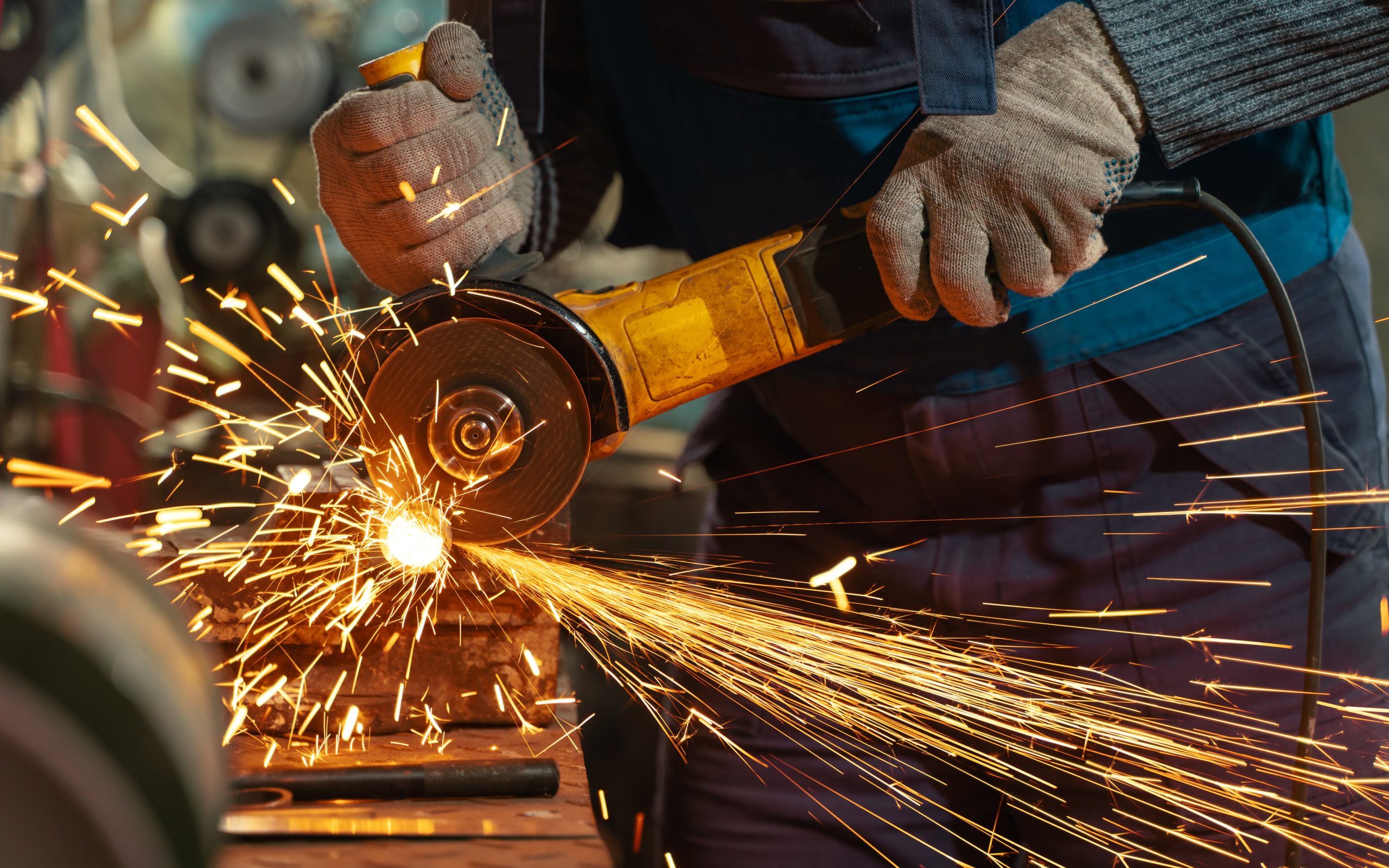
Alpha-case removal requires a cutting-dominant abrasive — not a peening media. The objective is to remove material at a rate sufficient to exceed the alpha-case depth, while maintaining controlled surface quality for the subsequent finishing stages. Angular aluminum oxide (Al₂O₃) is the only media type that meets this requirement for the initial removal stage.
Stage 1 media (alpha-case removal): Angular Al₂O₃, grit 60–80 (approximately 180–250 μm mean particle size). At this grit size and angular morphology, each particle impact delivers a micro-cutting action that removes 5–20 μm of surface material per pass, depending on blast pressure and nozzle speed. For alpha-case depths of 50–150 μm, three to eight passes at 65–80 PSI are typically required to achieve full removal, verified by witness coupon metallography.
Stage 2 media (surface quality restoration): After the coarse stage has removed the alpha-case enriched zone, the surface is rough (typically Ra 5–12 μm from the coarse grit) and may show aggressive angular features from the coarse media. A second stage with Al₂OΆ grit 120–150 at reduced pressure (50–65 PSI) smooths the surface and removes any residual sharp features from the first stage, reducing Ra to approximately 2–5 μm. This prepares the surface for the final application-specific finish blast.
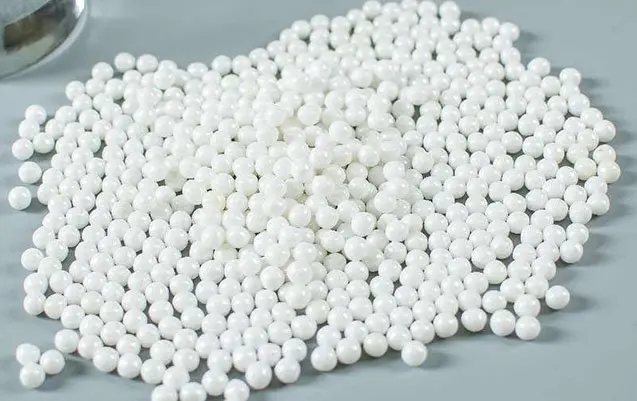
Stage 3 (application-specific): Depending on the final application — medical, aerospace, coating preparation — the appropriate fine media (glass beads, zirconia beads, or continued fine Al₂OΆ) brings the surface to specification. This stage is described in the application-specific cluster articles for orthopedic implants 和 aerospace shot peening.
5. The Complete Blasting Protocol: Stage by Stage
Before any blasting, confirm alpha-case depth from build plate witness coupon metallography. Record the maximum depth. Set the Stage 1 blast removal target to (maximum alpha-case depth + 25 μm safety margin). This defines the minimum material removal required in Stage 1.
Mask all precision features — threads, bores, bearing seats, sealing surfaces — per the masking drawing. Alpha-case removal requires aggressive blast conditions that will damage unmasked functional surfaces in seconds.
Blast at 65–80 PSI, standoff 150–200 mm, nozzle angle 60–75° to surface, traverse speed 150–200 mm/min. Perform controlled number of passes based on validated removal rate. Remove masking and take profilometric measurement at defined checkpoints. Compare measured Ra and material removal against validation data.
Blast at 50–65 PSI, standoff 150–180 mm, same angle. Two to four passes smooth the coarse-stage topography, reduce Ra to 2–5 μm range, and remove any residual angular features that could act as stress concentration sites in subsequent fatigue loading.
Measure Ra at defined locations after Stage 2. Confirm Ra is within the acceptable range for proceeding to Stage 3. If Ra is out of range, investigate blast parameters rather than adding uncontrolled additional passes.
Proceed to the final finish blast appropriate for the downstream application: fine Al₂OΆ for coating prep, zirconia beads for medical, ceramic shot for aerospace peening. Parameters per the application-specific specification.
The complete three-stage protocol for a part with 80 μm alpha-case depth typically requires 45–90 minutes of blast time for a component the size of an aerospace bracket or orthopedic cage, exclusive of masking, setup, and measurement time. Document all parameters, media batch numbers, and Ra measurement results in the batch record.
6. Post-Removal Verification and Quality Gates
Verification that alpha-case has been fully removed requires metallographic examination — there is no non-destructive alternative with demonstrated reliability. For first-article qualification, a witness coupon from the same build plate is sectioned, prepared, and examined after the complete blast protocol has been executed on the production part. The coupon must show no residual alpha-case layer at the surface — the microstructure should transition directly from a normal α+β two-phase microstructure at the surface with no pale unetched zone.
For sustained production, the validated blast protocol is the quality control mechanism. A validated process — demonstrated to consistently remove alpha-case to the required depth on representative coupons across multiple blast lots — provides the basis for releasing production parts without piece-part destructive examination. Periodic revalidation (typically quarterly or after any change in media batch, equipment, or blast parameters) maintains the validity of the release basis.
After alpha-case removal, a graded finishing sequence addresses remaining staircase roughness. See our guide on reducing staircase effect and layer-line roughness on titanium SLM parts with abrasive finishing for the continuation of the surface treatment workflow.
Frequently Asked Questions
Alpha-case depth on SLM titanium depends primarily on the build chamber oxygen level, the number of thermal cycles the surface experiences, and post-build handling conditions. In well-controlled machines maintaining below 100 ppm O₂ with fresh powder, depth is typically 10–30 μm. In less controlled environments, recycled-powder builds, or parts exposed to ambient air during cooling, depths of 80–150 μm are common. Depths beyond 150 μm have been documented in poorly maintained machines. The only reliable way to know the actual depth for a given build is destructive metallographic examination of a witness coupon from that specific build plate.
Yes — chemical milling in hydrofluoric acid-nitric acid solutions is used in the aerospace industry to remove alpha-case from conventional titanium parts, particularly for complex geometries that are difficult to blast uniformly. However, HF is extremely hazardous, requires specialized facilities and handling procedures, and the acid solution removes material uniformly across the entire surface without the ability to target specific zones. For SLM parts, chemical milling also removes material from features that may already be at tight dimensional tolerances, and the acid attack is difficult to control on the complex surface topography of as-built SLM titanium. Abrasive blasting is generally preferred for SLM titanium because it offers better process control, traceability, and is more compatible with the masked-area approach required for precision features.
Yes, but the magnitude is typically small and predictable. Removing 50–150 μm of alpha-case by blasting removes the same depth of base titanium from all blasted surfaces. For most SLM parts designed with adequate as-built tolerances to accommodate post-processing material removal, this is within the dimensional envelope. However, for tight-tolerance features such as bearing seats, precision bores, or critical mating surfaces, even 50 μm of material removal may be significant. This is why masking of precision features is mandatory before alpha-case blasting, and why SLM part designs should account for blast stock removal when setting as-built tolerances for post-processed surfaces.
Surface discoloration (blue, gold, or purple iridescence) on SLM titanium is caused by thin-film optical interference in the TiO₂ surface oxide layer — the same phenomenon that produces colors in anodized titanium jewelry. This discoloration indicates a thicker than normal oxide layer caused by localized overheating or atmospheric exposure, but it does not necessarily indicate deep alpha-case enrichment of the underlying metal. Alpha-case is a bulk microstructural change, not a surface oxide effect. However, heavily discolored areas often coincide with elevated alpha-case risk, because the conditions that produce visible oxidation (higher temperature, longer exposure time) also promote deeper oxygen diffusion into the metal. Treat visible discoloration as a flag for closer metallographic inspection, but do not assume that its absence means alpha-case is absent.
Need Specialist Abrasive Media for Titanium SLM Finishing?
Jiangsu Henglihong Technology Co., Ltd. supplies angular aluminum oxide in the grit 60–150 range specifically qualified for titanium SLM alpha-case removal protocols. Contact our technical team to discuss media grade, supply specification, and process qualification support for your application.
Contact Our Technical Team过滤器