Are Gear Pumps Suitable for Abrasive Liquids? (When They Work and When They Don’t)
Gear pumps are versatile positive displacement pumps known for their smooth flow, high pressure capability, and suitability for viscous fluids. They are widely used for hydraulic oil, chemical transfer, and fuel handling — applications where they often perform excellently. But when abrasive particles are present, gear pumps face a fundamental engineering conflict: the tight clearances that make gear pumps accurate and efficient are precisely what makes them catastrophically vulnerable to solid particles. This guide explains why gear pumps fail with abrasive media, when they might work in mildly abrasive conditions, and what alternatives to specify instead.
For an overview of all pump types suitable for abrasive media, see: Pumps for Abrasive Media: The Complete Selection & Buying Guide.
1. How Gear Pumps Work
Gear pumps use two meshing gears—either two external spur gears (external gear pump) or an inner rotor and outer ring gear (internal gear or gerotor pump)—rotating inside a closely fitted casing. As the gears unmesh at the suction port, they create expanding pockets that draw fluid in. As the gears rotate, fluid is carried in the tooth spaces from suction to discharge. As the gears remesh at the discharge port, the fluid is squeezed out at high pressure.
The entire mechanism depends on maintaining extremely tight clearances: typically 5–50 microns between gear teeth and casing walls, and between gear face and side plates. These tight clearances are what gives gear pumps their volumetric efficiency—very little fluid can slip backward from discharge to suction through these gaps. They also give gear pumps their ability to generate high pressures and meter fluid accurately.
The critical vulnerability is immediately apparent: solid particles cannot pass through 5–50 micron gaps without causing severe damage. Any particle harder than the pump material that enters these gaps will score both surfaces, rapidly opening the clearance from the designed tight tolerance to a loose, leaking gap—eliminating volumetric efficiency, reducing output pressure, and continuing to deteriorate until the pump fails completely.
2. Three Ways Abrasive Particles Destroy Gear Pumps
Failure Mode 1: Gear Tooth and Casing Scoring
Abrasive particles trapped between the gear teeth and the casing bore score both surfaces progressively. Each revolution of the pump drives abrasive particles around the full bore circumference, widening the clearance with every pass. What begins as a 20-micron clearance opens to 100 microns, then 200 microns—each doubling of the clearance roughly doubles the internal slip flow (recirculation from discharge back to suction), halving volumetric efficiency. A gear pump handling fine silica sand (Mohs 7) can lose 50% of its volumetric efficiency within the first few hours of operation.
Failure Mode 2: Side Plate Abrasion
The axial clearance between gear face and side plate is equally critical and equally vulnerable. Abrasive particles that enter this gap score the gear face and the plate, further increasing axial leakage. In external gear pumps with brass or polymer side plates, this failure mode is often faster than bore scoring because the side plate material is typically softer than the gear material, accelerating plate wear disproportionately.
Failure Mode 3: Shaft Seal Failure from Abrasive Ingestion
Even if the gears themselves survive initial abrasive exposure, mechanical seals and lip seals on the drive shaft are invariably destroyed by particles that reach the seal faces through internal circulation. Seal failure allows process fluid to leak externally and frequently introduces air into the pump body, causing cavitation damage on the next layer of pump components. In abrasive media applications, gear pump shaft seal life is typically measured in hours rather than months.
✗ The Verdict on Gear Pumps for Abrasive Media
For any fluid containing solid particles above approximately 5–10 microns at more than trace concentrations, gear pumps are not suitable. The tight-clearance design that is a strength in clean fluid applications is a fatal weakness in abrasive media. Gear pumps should not be specified for any application where abrasive solids are present, regardless of particle concentration, unless the specific application falls within the narrow exceptions described below.
3. When Gear Pumps Might Work with Mildly Abrasive Fluids
There are narrow conditions under which gear pumps can function acceptably with fluids containing minor abrasive content:
- Very fine, soft particles at very low concentration: If the fluid contains only particles below approximately 5 microns (sub-micron range) and the particles are soft (Mohs 3 or below), gear pump clearances may be sufficient to pass the particles without significant wear impact. Clay slurries at very low concentrations sometimes fall in this range. However, this should always be verified with the pump manufacturer for specific particle size and concentration data before committing to this approach.
- Self-lubricating abrasive compounds: Some cutting oil and metalworking fluid formulations contain very fine abrasive particles in a high-viscosity carrier oil that provides lubrication between the abrasive particle and the pump surfaces. The high viscosity and lubricating carrier reduce particle-surface impact energy sufficiently to allow limited abrasive content. This is application-specific—verify with the pump manufacturer.
- Short-duty, disposable pump applications: In some single-use or very short-service applications where pump replacement cost is low and performance consistency matters more than service life, gear pumps may be acceptable. This is a cost-based exception, not an engineering one—the pump will wear rapidly and its performance will decline within hours.
Outside these narrow exceptions, the answer to “can I use a gear pump for this abrasive slurry?” is almost always no.
4. Better Alternatives for Abrasive Media
The pump types below are specifically engineered to handle solid particles and provide the characteristics that gear pumps are sought for (positive displacement, high pressure, metered flow) without the vulnerability to abrasive particles:
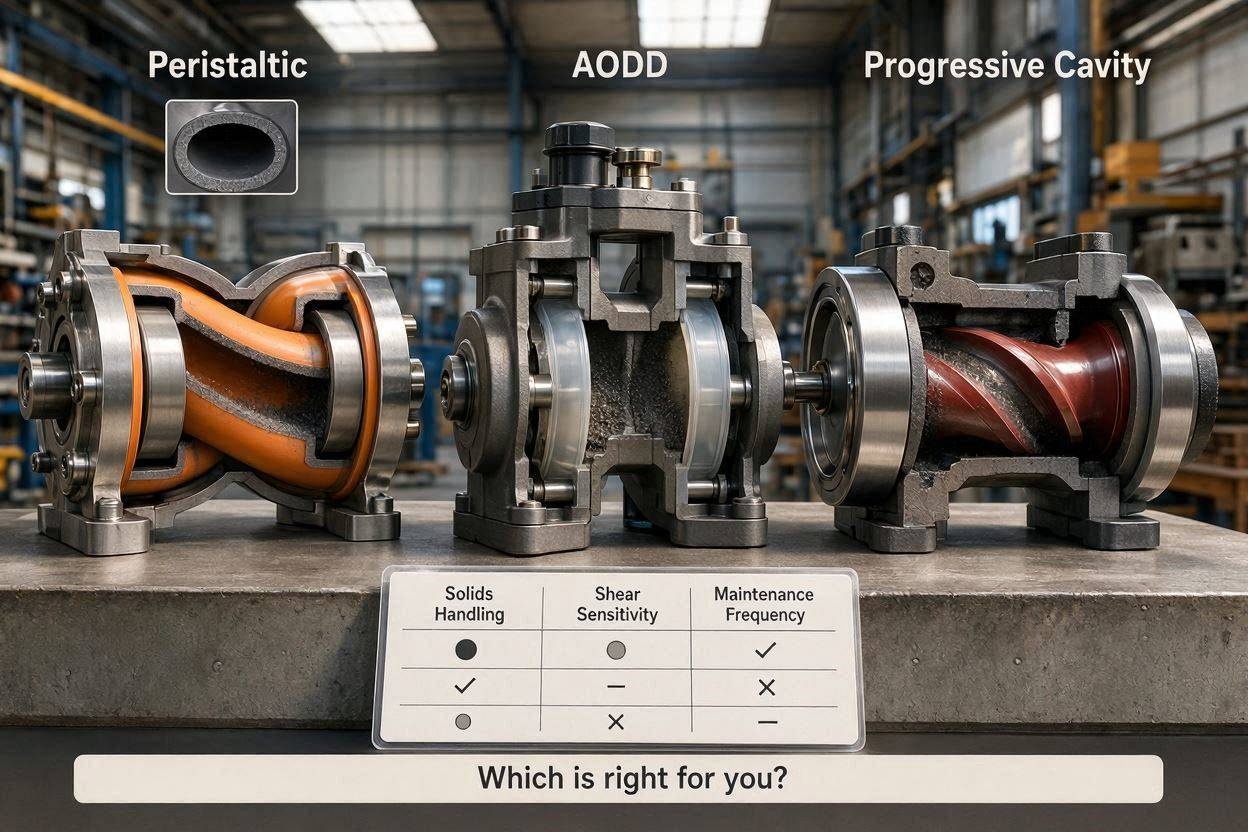
For detailed comparison of these alternatives, see: Peristaltic vs. AODD vs. Progressive Cavity Pumps for Abrasive Media. For the full pump selection framework covering all application types, see: How to Select a Pump for Abrasive Media: 8 Critical Parameters.
Frequently Asked Questions
The Right Abrasive Media for the Right Application
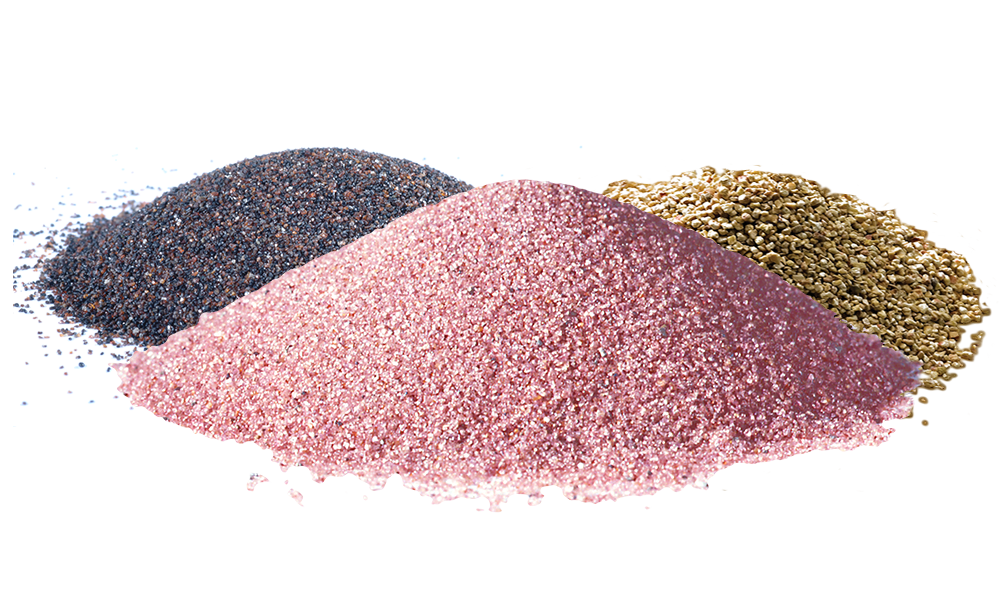
If you are using wet abrasive blasting, precision finishing, or surface treatment processes that require reliable slurry pumping, Jiangsu Henglihong Technology Co., Ltd. supplies certified steel shot, glass beads, stainless steel shot, and aluminum cut wire shot — with documented particle size and hardness for consistent system performance in your chosen pump type.
Request Abrasive Media Quotation →过滤器