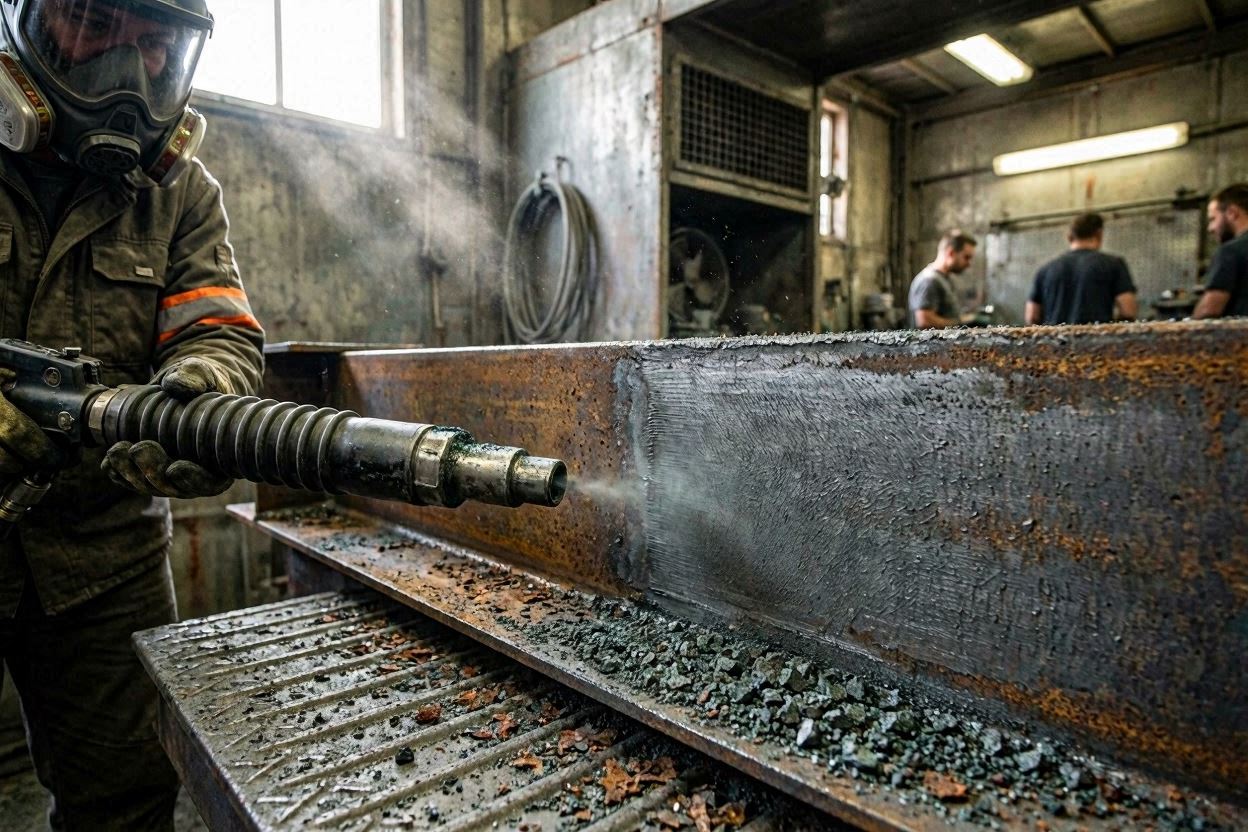
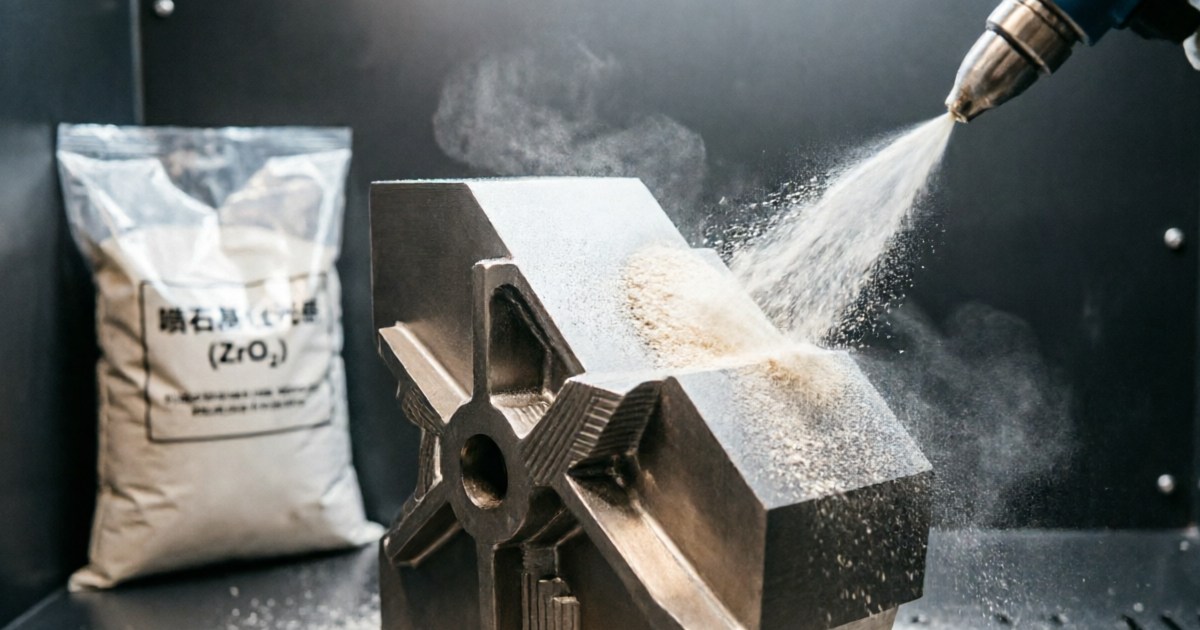
Abrasive Blasting Surface Profile Chart — Anchor Pattern Depth Guide
Surface profile is the most technically critical output of any blasting operation — and the most frequently misspecified. The right media type means nothing if the profile depth it produces falls outside the range the coating requires. This chart maps every major blast media type and grit size to the anchor pattern depth it achieves, and cross-references those depths against the coating systems that require them.
What follows is a complete surface profile reference for industrial abrasive blasting: a full anchor pattern depth chart by media type and grit size; a guide to the three primary field measurement methods; a coating system requirements table; a structured comparison of SSPC, NACE, and ISO surface preparation standards; and a breakdown of the six most costly surface profile mistakes made on real projects. Every data point is referenced to current industry standards as of July 2026.
This article is part of the complete abrasive blast media comparison and selection reference covering all ten major media types across hardness, grit size, cost, and application suitability.
What Is Surface Profile and Why Does It Control Coating Adhesion?
Surface profile — also called anchor pattern, anchor profile, or surface roughness — is the three-dimensional texture created on a substrate surface during abrasive blasting. It is characterized by a microscopic landscape of sharp peaks and corresponding valleys left by the impact of abrasive particles on the metal surface. The vertical distance between the highest peaks and the lowest valleys in this landscape is the profile depth, measured in mils (thousandths of an inch) or microns (µm).
Coating adhesion on metal substrates is primarily mechanical in nature. When a liquid coating is applied to a blast-cleaned surface, it flows into the valleys of the anchor pattern, surrounds the peaks, and cures in intimate contact with the textured surface. The result is a mechanical interlock between the cured coating film and the substrate — the coating cannot be pulled off without physically breaking either the coating material or the substrate metal peaks. Increase the profile depth (within the correct range), and you increase the surface area available for this mechanical interlock and therefore the pull-off adhesion strength of the coating.
Two parameters are used to characterize surface roughness quantitatively:
- Rz (maximum height / peak-to-valley height) — the vertical distance from the highest peak to the lowest valley within the evaluation length. Rz is the parameter specified in most coating TDS documents and surface preparation standards. When a spec says “1.5–3.0 mil profile,” it is referring to Rz.
- Ra (arithmetic mean roughness) — the arithmetic average of absolute surface deviations from the mean line. Ra is approximately one-fifth to one-seventh of Rz for a typical angular blast-cleaned surface. Ra is used more in precision machining and polishing contexts than in heavy industrial blasting.
Profile depth is influenced by four variables: media type and hardness (harder, more angular media creates deeper profiles); grit or particle size (coarser particles create deeper profiles); blast pressure (higher pressure increases particle velocity and therefore impact energy); and substrate hardness (harder substrates resist deeper penetration). Of these, grit size and media type are the primary specification tools; blast pressure is the fine-tuning variable used within a given media specification.
Critical reminder: Surface profile has both a minimum and a maximum. An under-profile (too shallow) fails to provide sufficient mechanical adhesion area, leading to coating delamination. An over-profile (too deep) allows metal peaks to protrude through the cured coating dry film, creating uncoated bare metal tips that corrode and undermine the coating from below. Both failure modes are specified-out — both cost real money on real projects.
The Complete Surface Profile Chart by Media Type and Grit Size
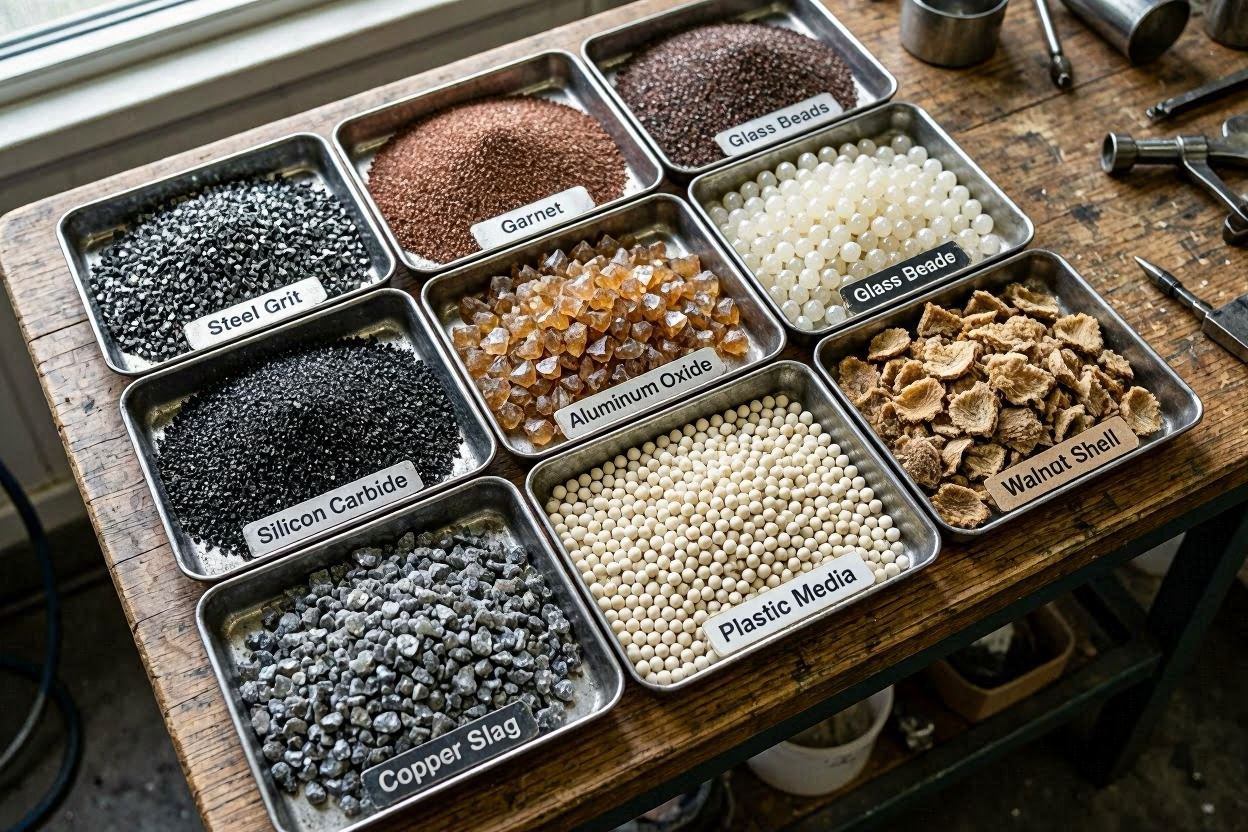
The table below lists the surface profile range achievable from each major blast media type at selected grit or size specifications. Values represent Rz (peak-to-valley depth) in mils and approximate µm equivalents, measured on structural carbon steel under standard dry pressure-blast conditions at 90–100 psi (6.2–6.9 bar) for mineral abrasives, and standard wheel-blast turbine settings for metallic abrasives. Actual values vary with specific equipment, blast angle, standoff distance, and substrate condition — these ranges represent validated operational data, not theoretical maxima.
| メディア・タイプ | Grit / Size | Profile Rz (mils) | Profile Rz (µm) | Surface Texture | Coating System Match |
|---|---|---|---|---|---|
| ALUMINUM OXIDE — Pressure Blast, 90–100 psi | |||||
| 酸化アルミニウム | F12 – F16 | 3.5 – 5.0 | 89 – 127 | Very rough, sharp peaks | Thermal spray prep, heavy CUI systems |
| 酸化アルミニウム | F20 – F24 | 2.5 – 4.0 | 64 – 102 | Rough, angular peaks | Zinc-rich primer, marine heavy epoxy |
| 酸化アルミニウム | F36 – F46 | 2.0 – 3.0 | 51 – 76 | Moderate angular | Standard epoxy primer |
| 酸化アルミニウム | F60 – F80 | 1.0 – 2.0 | 25 – 51 | Light, even profile | Alkyd primer, light industrial |
| 酸化アルミニウム | F100 – F150 | 0.3 – 1.0 | 8 – 25 | Very light | Thin-film polyurethane, fine finish |
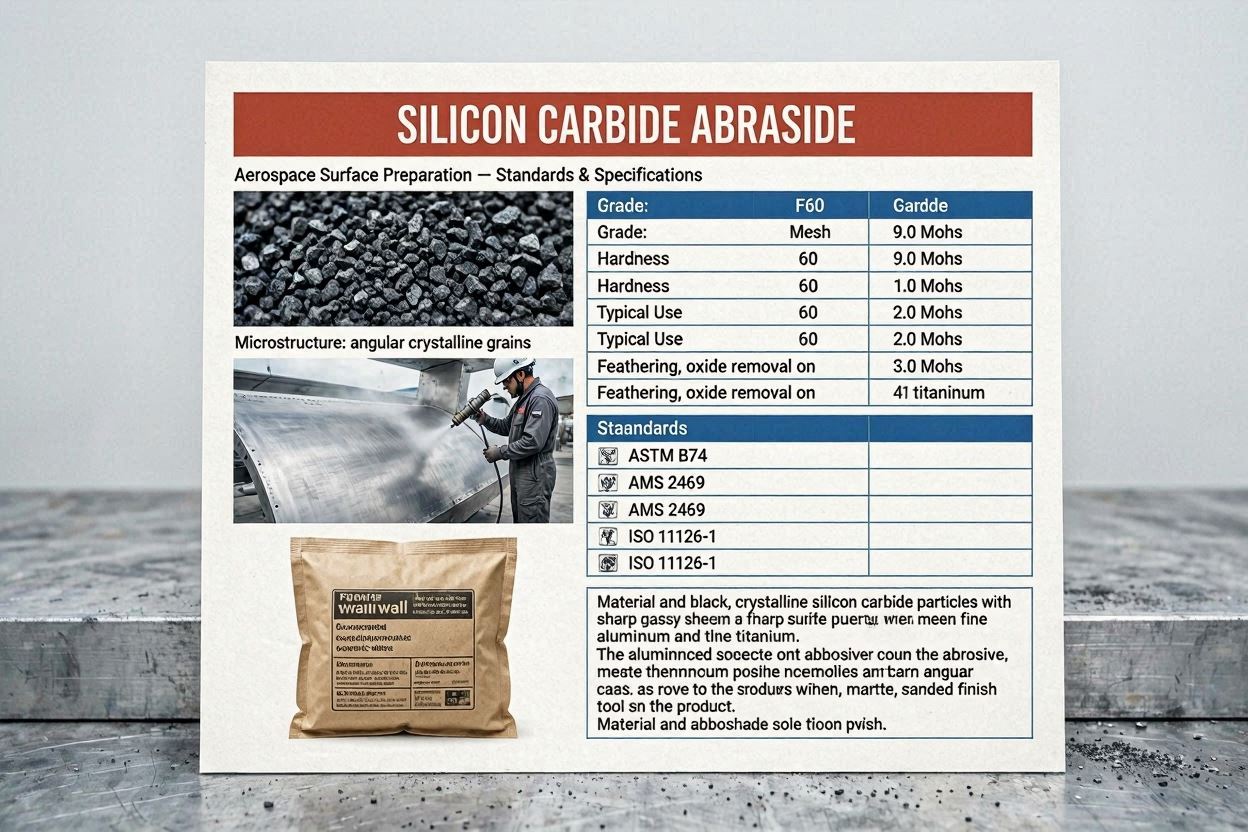
| SILICON CARBIDE — Pressure Blast / Cabinet | |||||
| 炭化ケイ素 | F36 – F60 | 2.5 – 4.5 | 64 – 114 | Very sharp, aggressive | Hard substrate coating prep |
| 炭化ケイ素 | F80 – F120 | 1.0 – 2.5 | 25 – 64 | Moderate, sharp edges | Glass/stone etching, precision prep |
| GLASS BEADS — Pressure Blast / Cabinet | |||||
| ガラスビーズ | 50 – 100 mesh | 0.8 – 1.5 | 20 – 38 | Smooth, round dimples | Stainless prep, decorative |
| ガラスビーズ | 120 – 325 mesh | 0.1 – 0.5 | 3 – 13 | Peened, minimal | Ultra-fine, light shot peening |
| STEEL SHOT — Wheel Blast (standard turbine speed) | |||||
| スチールショット | S-110 – S-230 | 0.3 – 1.5 | 8 – 38 | Smooth, uniform dimples | Shot peening, foundry descale |
| スチールショット | S-330 – S-550 | 1.0 – 2.5 | 25 – 64 | Smooth, deeper dimples | Mill scale removal, light primer |
| STEEL GRIT — Wheel Blast, GH (High Hardness) Grade | |||||
| Steel Grit (GM) | G-40 – G-50 | 1.5 – 2.5 | 38 – 64 | Angular, moderate | Standard coating prep, light industrial |
| Steel Grit (GH) | G-25 – G-40 | 2.5 – 3.5 | 64 – 89 | Angular, deep | Marine, heavy industrial epoxy |
| Steel Grit (GH) | G-18 – G-25 | 3.0 – 4.5 | 76 – 114 | Very angular, very deep | Zinc-rich, immersion service coatings |
| Steel Grit (GH) | G-12 – G-14 | 4.0 – 6.0 | 102 – 152 | Extremely deep, jagged | Thermal spray (HVOF, arc wire) |
| GARNET — Pressure Blast, 90–100 psi | |||||
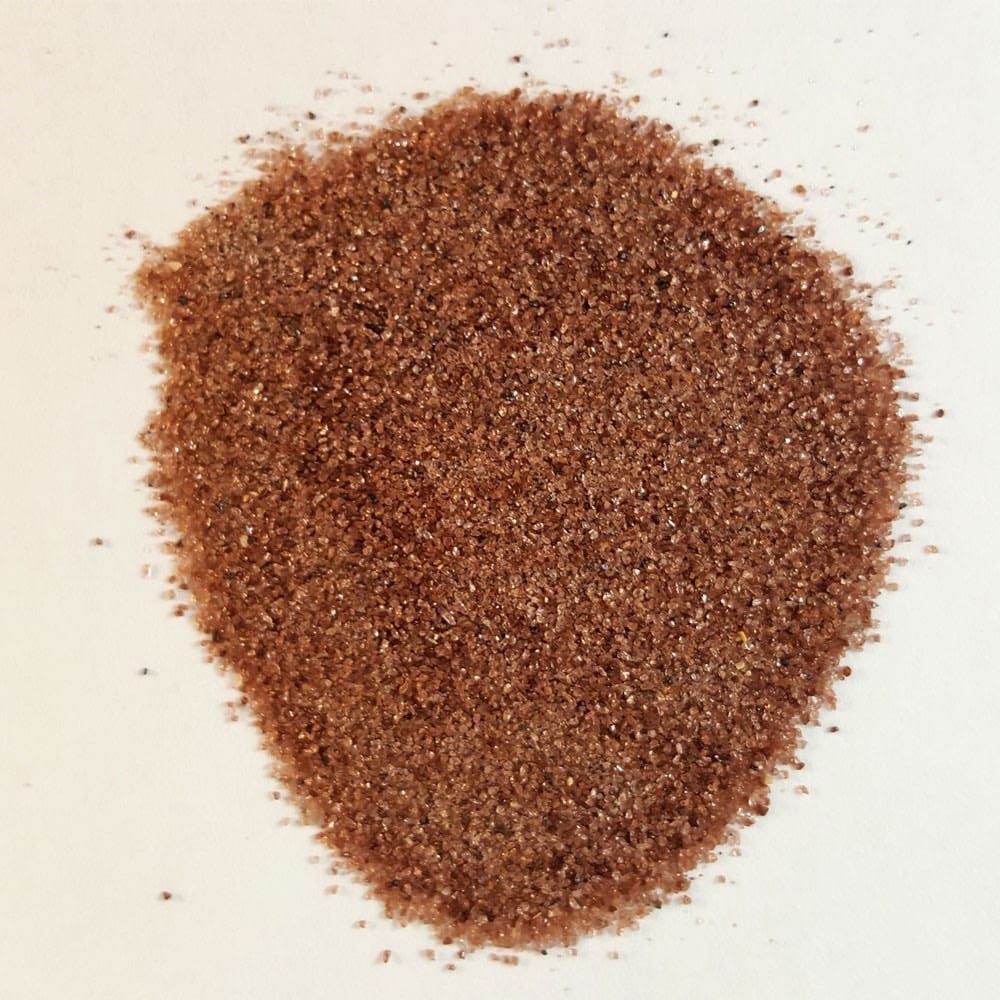
| ガーネット | 16 – 20 grit | 2.0 – 3.5 | 51 – 89 | Sub-angular, moderately deep | Marine, bridge, pipeline |
| ガーネット | 30 – 60 grit | 1.0 – 2.5 | 25 – 64 | Sub-angular, moderate | General industrial, pipeline |
| ガーネット | 80 – 120 grit | 0.5 – 1.2 | 13 – 30 | Light | Light industrial, stainless |
| SINGLE-USE MINERAL MEDIA — Pressure Blast | |||||
| Crushed Glass | 8 – 20 mesh | 1.5 – 3.0 | 38 – 76 | Angular, irregular | Outdoor structural, paint removal |
| Copper Slag | 16 – 30 mesh | 1.5 – 3.5 | 38 – 89 | Angular, glassy | Large outdoor structural |
| SOFT MEDIA — Pressure Blast / Cabinet | |||||
| Walnut Shell / Corn Cob | All sizes | < 0.5 | < 13 | Minimal, fibrous | Soft substrates only — no coating profile |
| Plastic Abrasive Grit | All sizes | < 0.5 | < 13 | Minimal, smooth | Composites, soft metals — no coating profile |
All Rz values are for standard dry blast conditions on structural carbon steel (approximately 150–300 HB). Actual values vary with blast pressure, standoff distance, nozzle angle, and substrate condition. Garnet values run approximately 15–20% shallower than AO of the same grit; SiC runs 10–15% deeper. Verify with trial blasts and field measurement before project commitment.
Grit Size to Profile Conversion Reference For a complete table converting grit number to micron size with profile depth implications across the full blasting range, see: Blasting Media Grit Size Chart — Grit, Mesh, Microns and Inches Conversion
How to Measure Surface Profile in the Field
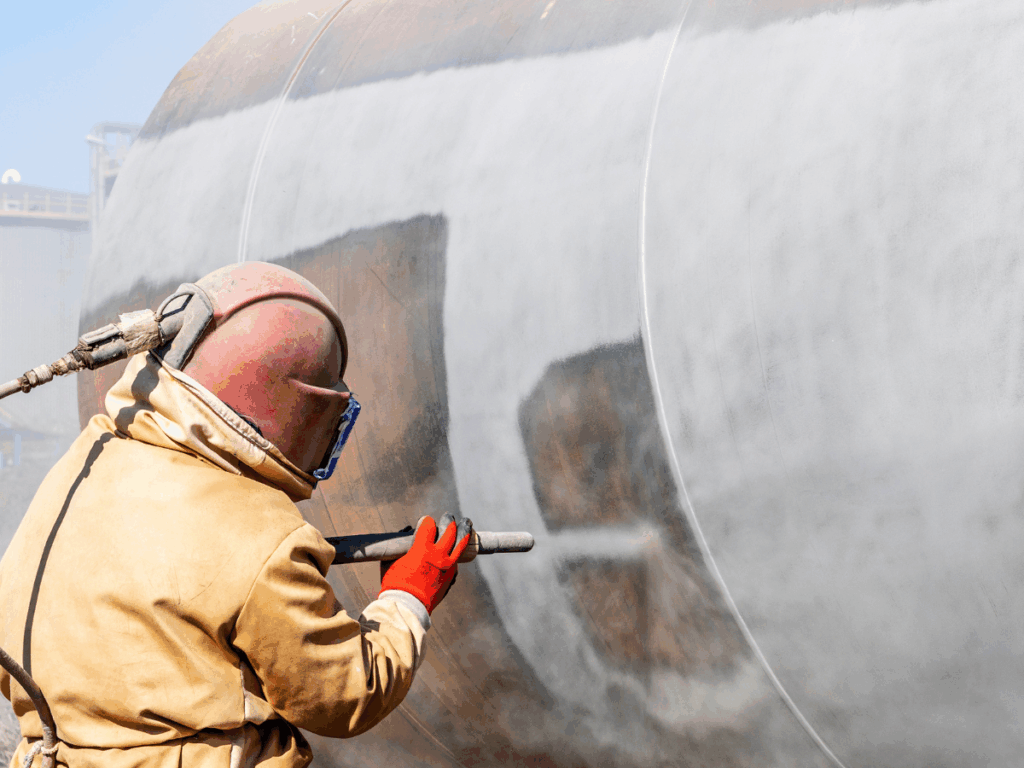
Surface profile must be measured and documented before any protective coating is applied. Measurement is not optional — it is a mandatory inspection step in all major surface preparation standards (SSPC, NACE, ISO) and is typically required for quality assurance records on any project involving a third-party coating inspector. Three methods are in common use:
Method A — Replica Tape (ASTM D4417-C)
The most widely used field method. Testex Press-O-Film tape is burnished onto the blasted surface, conforming to the profile. The combined thickness (tape + profile) is measured with a spring micrometer; subtracting the backing thickness (2.0 mils / 50 µm) gives the profile depth. Available in three grades: Coarse (0.8–2.5 mils), X-Coarse (1.5–4.5 mils), and X-Coarse Plus (4.0–5.0+ mils). Simple, portable, and produces a permanent physical record. Cost: approximately USD 1.50–3.00 per test.
Method B — Digital Profilometer (ASTM D4417-B)
A contact stylus or non-contact optical profilometer measures surface roughness directly, producing digital Rz and Ra readings in seconds. More precise than replica tape and reusable, but higher upfront cost (USD 500–3,000+) and requires regular calibration against certified reference standards. Best for high-volume inspection programs or when statistical data on profile distribution across a large surface is required. Records can be downloaded for QA documentation.
Method C — Visual Comparator (ISO 8503)
ISO 8503 comparator discs provide four standardized reference profiles (Fine, Medium, Coarse, Very Coarse) for both shot and grit blasted surfaces. The blasted surface is compared visually and tactilely against the disc to assign a profile grade. Simple and inexpensive (disc cost: USD 40–80), but subjective — operator experience significantly affects result consistency. Used more for quick go/no-go checks than precise measurement. Not accepted in specifications requiring Rz values in mils or µm.
Regardless of method, the following field measurement protocol applies:
- Measure within four hours of blasting — clean, dry blast-cleaned steel begins to form flash rust within hours in humid conditions, and re-blasting may be required if measurement is delayed.
- Take a minimum of three readings per 10 m² (or per 100 ft²), more in areas with variable blast results or where the profile is near the specification limits.
- Record all readings, not just the average — a low outlier near or below the minimum specification limit requires investigation even if the average is acceptable.
- Confirm the measurement instrument is calibrated and the calibration is current (typically annual calibration for profilometers, lot verification for replica tape).
Surface Profile Requirements by Coating System
The profile requirement for any specific coating is specified by the manufacturer in the product Technical Data Sheet. The table below provides representative ranges for common industrial coating types — these are industry-typical values, not universal standards. Always cross-check against the specific product TDS before finalizing the blasting specification for any project.
| Coating System | Min Profile (mils) | Max Profile (mils) | Min (µm) | Max (µm) | Recommended Media | Prep Standard |
|---|---|---|---|---|---|---|
| Thin-film polyurethane / acrylic topcoat | 0.5 | 1.5 | 13 | 38 | Garnet 80–120 / Glass beads 80 | Per TDS |
| Alkyd / oil-based primer | 0.8 | 2.0 | 20 | 51 | Garnet 60 / AO F80 | SSPC-SP 6 |
| Standard epoxy primer (industrial) | 1.5 | 3.0 | 38 | 76 | AO F36–F46 / Garnet 30–36 | SSPC-SP 6 or SP 10 |
| Heavy-duty marine epoxy | 2.0 | 3.5 | 51 | 89 | AO F20–F36 / Garnet 16–24 / Steel grit G-25 | SSPC-SP 10 |
| Zinc-rich inorganic primer | 2.0 | 4.0 | 51 | 102 | AO F20–F24 / Steel grit G-25 | SSPC-PS 12 / SP 10 |
| Anti-corrosion immersion coating | 2.5 | 4.5 | 64 | 114 | Steel grit G-18 / AO F16–F20 | SSPC-SP 10 / SP 5 |
| Thermal spray — HVOF bond coat | 3.0 | 6.0 | 76 | 152 | Steel grit G-12 / AO F12 | AWS C2.18 / NACE SP0198 |
| Thermal spray — arc wire | 2.5 | 5.0 | 64 | 127 | Steel grit G-14 / AO F14 | NACE SP0198 |
| Epoxy floor coating (concrete) | CSP 3 | CSP 5 | — | — | AO F16–F24 / Steel shot S-330 (floor machine) | ICRI 310.2 |
CSP = Concrete Surface Profile per ICRI Guideline 310.2. All other values reference steel substrate profile (Rz). Always verify profile requirement against the specific product TDS — values vary between manufacturers and product formulations.
SSPC, NACE, and ISO Surface Preparation Standards
Surface profile requirements are inseparable from the cleanliness standard being applied. In practice, the higher the cleanliness grade (more complete rust and scale removal), the more aggressive the blasting required — and the more aggressive the blasting, the deeper the resulting profile. The most widely referenced surface preparation standards in industrial blasting are shown below.
| SSPC Standard | NACE Equiv. | ISO 8501-1 Equiv. | 説明 | Typical Profile (mils) | Common Application |
|---|---|---|---|---|---|
| SSPC-SP 14 | NACE No. 8 | Sa 1 (approx.) | Industrial Blast — 90% clean; 10% tight rust/scale permitted | 0.5 – 2.0 | Non-critical structural elements, maintenance recoating |
| SSPC-SP 6 | NACE No. 3 | Sa 2 | Commercial Blast — no oil/grease; tight rust and mill scale permitted in ≤33% of surface | 1.0 – 3.0 | General industrial primer, maintenance painting |
| SSPC-SP 10 | NACE No. 2 | Sa 2.5 | Near-White Metal — only traces of staining remain (≤5% of each unit area) | 1.5 – 3.5 | Marine coatings, chemical plant, bridge, pipeline |
| SSPC-SP 5 | NACE No. 1 | Sa 3 | White Metal — completely free of all mill scale, rust, coatings, and staining | 2.0 – 4.5 | Buried pipe, immersion service, severe chemical environments |
| SSPC-SP 11 | — | — | Power Tool Cleaning to Bare Metal — bare metal with 1.0 mil minimum profile (no blasting) | 1.0 – 2.0 | Small areas, touch-up where blasting impractical |
| SSPC-SP 12 / NACE 5 | NACE No. 5 | Wa 2.5 (approx.) | High-/Ultra-High Pressure Waterjetting — cleans to bare metal but does not create new profile | Existing profile retained | Maintenance recoating where existing profile acceptable |
SSPC and NACE have merged: In 2020, SSPC (Society for Protective Coatings) and NACE International merged to form AMPP (Association for Materials Protection and Performance). Standards formerly published under both bodies are now maintained under AMPP. The numerical designations (SP 5, SP 6, SP 10) remain in common use by practitioners and specifications worldwide, and documents continue to be issued under the familiar number system during the transition period.
Six Common Surface Profile Mistakes and How to Avoid Them
Specifying media by name without checking the profile output
“We always use garnet” is not a surface preparation specification. Garnet 16 grit and garnet 80 grit can produce profiles ranging from 2.0 to 1.0 mils — a difference that determines whether a zinc-rich primer will adhere or delaminate. Always specify both the media type and the grit size, then verify the resulting profile by measurement against the coating TDS requirement.
Skipping field profile measurement and “assuming” the profile is correct
Visual inspection cannot determine profile depth. A surface can appear properly blasted (correct cleanliness grade, good color, no contamination) while its profile depth is entirely outside the specified range. Measurement with replica tape or a profilometer is the only way to know. Field measurement takes less than two minutes per reading — far less time than re-blasting a failed inspection area.
Ignoring the maximum profile for thin-film coating systems
Specifications for heavy-duty coatings typically emphasize the minimum profile. But thin-film polyurethane topcoats, high-gloss finishes, and certain anti-graffiti systems have a critical maximum profile — often 1.0–1.5 mils — above which metal peaks will protrude through the cured film. Using F36 aluminum oxide on a surface that will receive a 50 µm (2 mil DFT) topcoat directly is a profile-coating mismatch that causes corrosion at the peaks before the project is six months old.
Allowing media to degrade without checking profile depth
As abrasive media recycles through a blast system, particles break down: angular edges round off, particle size distribution shifts toward finer, and average profile depth produced by the same media charge decreases over time. In a wheel-blast system that has not been replenished with fresh media for an extended period, actual profile output may be 30–40% lower than when the charge was new. Establish regular media sampling and profile verification intervals based on production volume.
Using the wrong replica tape grade for the expected profile range
Testex replica tape produces reliable measurements only within its specified profile range. Using Coarse tape (0.8–2.5 mils) on a surface with a 4.0 mil profile will give a falsely low reading because the tape foam is fully compressed before the peaks are fully registered. Always select the tape grade appropriate for the expected profile range — when in doubt, measure with X-Coarse first, then use the more precise grade if the result falls in the Coarse range.
Applying coating over surface profile that has re-rusted (flash rust)
Blast-cleaned steel forms flash rust (a thin layer of iron oxide) within hours in humid air. While light flash rust (straw-yellow coloration) is sometimes permitted by specification for water-tolerant primer systems, medium to heavy flash rust (orange to brown) must be re-blasted. Applying coating over flash rust — even a visually thin layer — severely compromises adhesion and is the cause of a significant proportion of early coating failures on new construction projects.
よくある質問
Rz (peak-to-valley height) measures the vertical distance between the highest peak and the lowest valley over the evaluation length — this is the parameter specified in most coating TDS documents. Ra (arithmetic mean roughness) measures the average absolute deviation from a mean line. For a typical angular blast-cleaned steel surface, Rz is approximately 4–7 times Ra. When a coating specification states “2.0–3.5 mil profile,” it is always referencing Rz. Ra is more commonly used in precision machining and not typically cited in heavy industrial blasting specifications.
Select the Testex Press-O-Film tape grade appropriate for the expected profile range (Coarse for 0.8–2.5 mils, X-Coarse for 1.5–4.5 mils, X-Coarse Plus for 4.0–5.0+ mils). Peel the tape and press it firmly onto the blast-cleaned surface. Burnish with a rounded stylus or the back of a pen cap using firm, overlapping circular strokes until the full square of textured foam has conformed to the profile. Measure the total thickness of the replica disk with a calibrated spring micrometer, then subtract the tape backing thickness (2.0 mils / 50 µm for all Testex grades). The result is the Rz profile depth. Take at least three readings per area and record all results.
Over-profiling causes premature coating failure through a mechanism called “rusting through the peaks.” When profile peaks are taller than the applied dry film thickness of the coating, bare metal peaks protrude through the cured film and are exposed to the environment. These peaks begin to corrode, and the expanding rust undermines the coating laterally, causing progressive delamination. For thin-film coating systems with DFT below 75 µm (3 mils), the maximum permissible profile is typically 1.5 mils or less. A surface that has been over-profiled must be re-blasted to the correct profile range — there is no way to reduce profile depth after blasting short of mechanical grinding, which introduces its own surface preparation complications.
The minimum is defined by the coating product’s Technical Data Sheet, not by a universal rule. Representative minimums by coating type: thin-film alkyds and acrylics require 0.8–1.5 mils minimum; standard epoxy primers require 1.5–2.0 mils minimum; heavy marine and immersion-grade epoxy requires 2.0–2.5 mils minimum; zinc-rich primers commonly specify 2.0–3.0 mils minimum; thermal spray bond coats may require 3.0+ mils. The absolute practical minimum for any coating on steel is approximately 0.5 mils — below this, even flexible thin-film coatings cannot achieve reliable mechanical adhesion to a smooth metal surface.
Power tool methods can produce limited profiles in small areas where blasting is impractical. SSPC-SP 11 power tool cleaning using needle scalers, rotary flap discs, or right-angle grinders achieves profiles of 1.0–2.0 mils on localized patches. However, power tools cannot deliver the consistent, uniform, large-area anchor profiles that blasting achieves, and major protective coating specifications for new structural steel mandate abrasive blasting to SSPC-SP 6, SP 10, or SP 5. High-pressure waterjetting (SSPC-SP 12) cleans the surface effectively but does not create a new profile — it only preserves the profile from a prior blast. Chemical etching creates micro-profiles below 0.5 mils, suitable only for thin-film adhesion on already-clean surfaces.
Source High-Performance Blast Media from Jiangsu Henglihong Technology
We supply aluminum oxide, silicon carbide, glass beads, steel shot, and steel grit in the full range of grit sizes required for any surface profile specification — from light F150 finishing work to deep G-12 thermal spray preparation. Direct manufacturer pricing with SGS-certified product quality.
Request a Quote ← Complete Media Comparison Chartフィルター