10 Types of Abrasive Blasting Media — Full Guide with Properties Chart
No single blast media handles every substrate, every surface finish requirement, and every operating environment — which is why the global market supports ten distinct commercially viable abrasive types. Each occupies a specific performance niche defined by hardness, particle geometry, recyclability, cost structure, and dust profile. This guide profiles all ten in full technical detail, alongside a complete properties chart for side-by-side comparison.
This guide covers all ten types in the sequence they appear in the master comparison table: aluminum oxide, silicon carbide, glass beads, steel shot, steel grit, garnet, crushed glass, copper slag, walnut shell, and plastic abrasive grit. For each type, the manufacturing process, key specifications, available grades, best-suited applications, and principal limitations are covered. A properties chart, tradeoff matrix, and FAQ complete the reference.
This article is part of the complete abrasive blast media comparison and selection reference from Jiangsu Henglihong Technology Co., Ltd.
How Abrasive Blast Media Types Are Classified
The ten media types covered in this guide fall into five broad categories based on material origin and manufacturing process. Understanding the category helps predict a media’s general properties before looking at the specific type in detail.
Metallic
Steel Shot, Steel Grit. Manufactured from molten steel. Highest density, best recyclability, very low dust. Used at production scale in wheel-blast systems.
Synthetic Fused
Aluminum Oxide, Silicon Carbide. Manufactured by high-temperature electric arc fusion. Hardest media available; wide grit range; controlled and consistent properties.
Natural Mineral
Garnet. Mined almandine iron-aluminum silicate. Sub-angular; very low dust; low leachable heavy metals; preferred for environmental compliance work.
Recycled / Industrial Byproduct
Crushed Glass, Copper Slag. Made from recycled post-consumer glass or copper smelting byproduct. Lowest purchase cost per ton; single-use only.
Glass (Spherical)
Glass Beads. Manufactured from soda-lime glass into spherical particles. Unique round shape creates peened, non-profiled surface finish. Highest recyclability of any non-metallic media.
Organic & Polymer
Walnut Shell, Plastic Abrasive Grit. Organic milled plant material or thermoset polymer particles. Softest angular media; used only on soft substrates where no profile is acceptable.
Complete Properties Chart: All 10 Types
| メディア・タイプ | カテゴリー | 硬度 | Shape | Grit / Size Range | Profile (mils) | Reuse Cycles | Dust Level | Unit Cost |
|---|---|---|---|---|---|---|---|---|
| 酸化アルミニウム | Synthetic fused | 9 Mohs | Angular, blocky | F12 – F220 | 1.5 – 5.0 | 3 – 7 | 中程度 | 中程度 |
| 炭化ケイ素 | Synthetic fused | 9 – 9.5 Mohs | Angular, very sharp | F16 – F240 | 2.0 – 5.0 | 3 – 5 | 中程度 | 高い |
| ガラスビーズ | Glass (spherical) | 5.5 – 6 Mohs | Round, spherical | 50 – 325 mesh | 0.5 – 1.5 | 20 – 30 | 低い | Low – Moderate |
| スチールショット | Metallic | 40 – 51 HRC | Round, spherical | S-110 – S-780 | 0.5 – 2.5 | 100 – 300+ | 非常に低い | Moderate* |
| スチールグリット | Metallic | 40 – 65 HRC | Angular, crushed | G-10 – G-120 | 2.5 – 6.0 | 100 – 300+ | 非常に低い | Moderate* |
| ガーネット | Natural mineral | 7 – 8 Mohs | Sub-angular | 16 – 200 grit | 1.0 – 3.5 | 3 – 6 | 非常に低い | 中程度 |
| Crushed Glass | Recycled | 5 – 6 Mohs | Angular, irregular | 8 – 80 mesh | 1.0 – 3.0 | 1 – 3 | 中程度 | 非常に低い |
| Copper Slag | Industrial byproduct | 6 – 7 Mohs | Angular, glassy | 8 – 80 mesh | 1.5 – 3.5 | 1 – 2 | Mod – High | 非常に低い |
| Walnut Shell | Organic | 4.5 – 5 Mohs | Angular, granular | 8 – 100 mesh | < 0.5 | 3 – 5 | 低い | 低い |
| Plastic Abrasive Grit | Polymer | 2.5 – 4 Mohs | Angular, faceted | 12 – 60 mesh | < 0.5 | 3 – 8 | 低い | 高い |
* Steel shot and grit carry moderate purchase cost per ton but deliver the lowest cost per blast cycle at production volume due to 100–300+ reuse cycles. All profile depths for structural carbon steel under standard conditions. See the full surface profile chart for detailed Rz values by grit size.
Individual Type Profiles
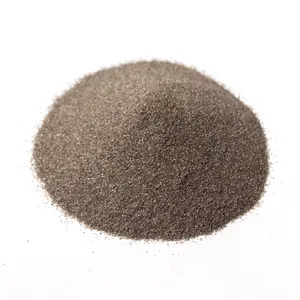
Aluminum oxide is manufactured by smelting bauxite ore (hydrated aluminum oxide) in an electric arc furnace at temperatures exceeding 2,000°C. The melt solidifies into a crystalline mass that is then crushed, sized, and classified to FEPA F-grade specifications. Brown fused alumina (BFA) contains approximately 95–97% Al₂O₃ with iron oxide and silica impurities imparting the characteristic brown color. White fused alumina (WFA) is produced from calcined alumina with 99%+ purity, giving a white or slightly off-white color and eliminating iron contamination — critical for stainless steel, electronic substrates, and precision glass work.
At Mohs 9, aluminum oxide is hard enough to cut structural carbon steel, stainless steel, ceramics, glass, stone, and hardened metals. Its particle fracture behavior is described as friable: under repeated blasting impacts, particles break along crystallographic planes, continuously regenerating sharp cutting edges. This self-sharpening characteristic maintains cutting efficiency across multiple reuse cycles — a property that distinguishes AO from rounder, tougher media that dull progressively with use.
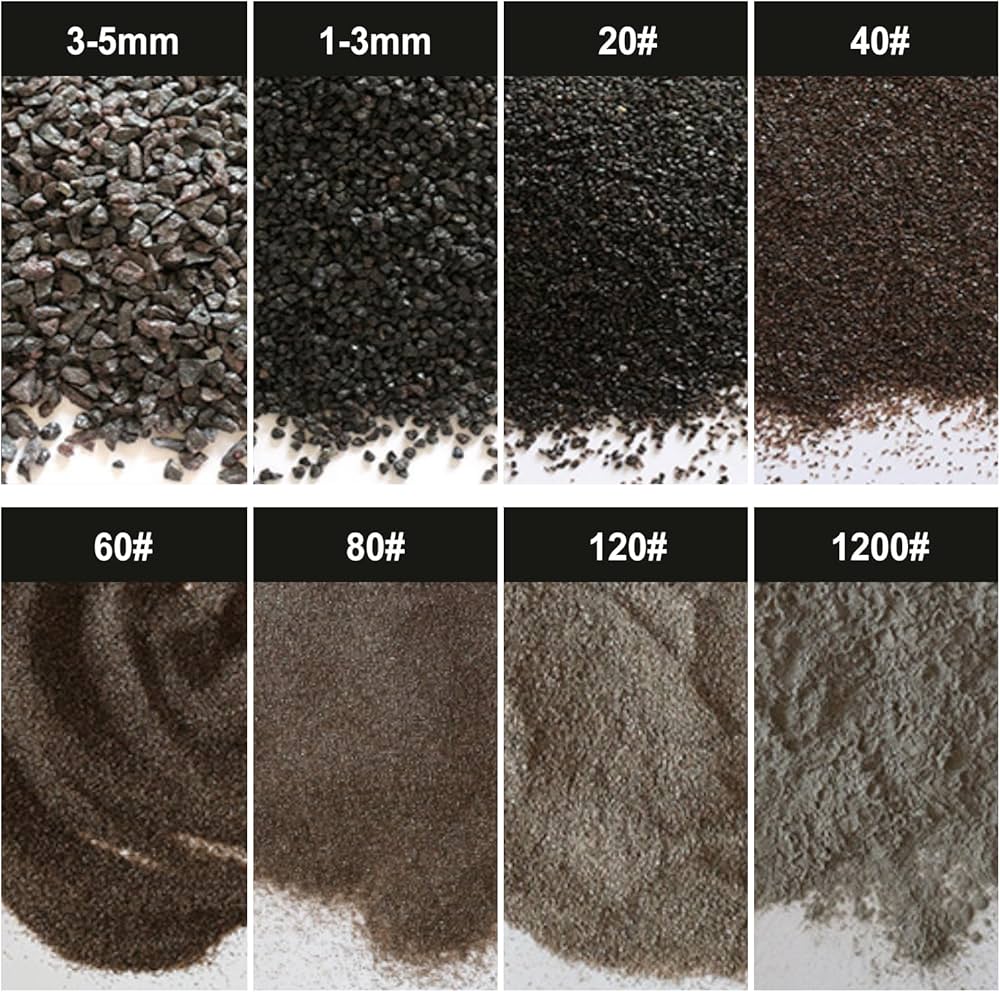
The grit range is the widest of any blast media: F12 (1,680 µm, aggressive profiling for thermal spray prep) through F220 (63 µm, ultra-fine finishing for optical components and precision lapping). This breadth makes aluminum oxide the most versatile blast media type and the correct default choice when no specialized substrate or environmental constraint changes the recommendation. Avoid using brown AO on stainless steel — specify white AO or garnet instead to prevent iron contamination from the trace iron oxide content in brown AO.
Silicon carbide is manufactured by the Acheson process, developed in 1891 and still the dominant production method: a resistive electric furnace heats a mixture of silica sand (SiO₂) and petroleum coke (carbon) to approximately 2,000–2,500°C, driving the reaction SiO₂ + 3C → SiC + 2CO. The resulting crystalline SiC is crushed, sized, and classified. Black silicon carbide (~98.5% SiC) is standard grade for most blasting and grinding applications. Green silicon carbide (~99%+ SiC) offers higher purity for semiconductor substrates, high-performance lapping compounds, and precision optical work.
At Mohs 9–9.5, silicon carbide is the hardest abrasive commercially available for blasting — and the only one capable of reliably cutting glass, granite, marble, silicon wafers, tungsten carbide coatings, and advanced technical ceramics. Its cutting edges are sharper and more aggressive than aluminum oxide at the same grit size, producing profiles approximately 10–15% deeper and cutting depths in hard materials that no other blast media achieves. For artistic glass etching, monument engraving, and micro-semiconductor substrate texturing, silicon carbide is not merely preferred — it is frequently the only viable option.
The cost premium over aluminum oxide (typically 3–6× higher per ton) is justified only when the substrate material genuinely requires it. For standard structural steel surface preparation, silicon carbide offers no meaningful advantage over aluminum oxide and should not be specified on cost grounds. Its higher hardness also increases wear rates on blast nozzles and equipment — tungsten carbide nozzles rather than standard boron carbide are recommended for extended silicon carbide service. Available in both FEPA F-grade (blasting range F16–F220) and FEPA P-grade (polishing/lapping range P240–P2500).
Glass beads are manufactured by melting soda-lime glass and forming it into near-perfect spheres through air atomization or rotary drum processes. The molten glass droplets solidify into amorphous (non-crystalline) glass spheres with no free silica hazard. Key standards include ASTM E1790, MIL-PRF-9954A (for aerospace applications), and ISO 11126-7. Most commercial glass beads for industrial blasting are produced in sizes from 50 mesh (approximately 300 µm, used for moderate peening and brightening) to 325 mesh (approximately 44 µm, used for ultra-fine precision finishing).
Glass beads are unique among the ten media types in this guide for their perfectly spherical geometry. This shape fundamentally changes the interaction with the substrate: instead of cutting angular grooves, glass beads indent the surface with smooth, uniform hemispherical dimples, producing a compressive peened surface layer rather than a tensile-cracked profile. The result is a bright, uniform satin finish with very low surface roughness (Rz 0.5–1.5 mils) — unsuitable for aggressive coating adhesion but ideal for stainless steel aesthetics, deburring precision machined parts, and shot peening applications where compressive residual stress improvement is the goal.
Their exceptionally high recyclability — 20–30 cycles in cabinet systems — makes glass beads among the most economical media on a per-cycle basis despite their moderate purchase price per kilogram. Lead-free borosilicate formulations are available for pharmaceutical equipment finishing and food-grade applications where chemical contamination is a concern. Glass beads contain no iron and produce no ferrous contamination — essential when working on stainless steel, titanium, or any substrate where iron embedding would initiate galvanic corrosion. Never use angular mineral or metallic media on a surface previously specified for glass bead finishing; cross-contamination from a shared blasting system will compromise the results.
Steel shot is manufactured by atomizing a stream of molten high-carbon steel with high-pressure water jets (water atomization) or compressed air (air atomization). The molten droplets solidify into near-perfect spheres as they fall through a water bath or cooling chamber. The solidified particles are heat-treated (quenched and tempered) to achieve the target hardness range specified in SAE J827. Two primary grades exist: regular hardness (280–390 HV Vickers, approximately 28–40 HRC) for general cleaning applications, and hard grade (420–520 HV, approximately 43–50 HRC) for more demanding cleaning and scale removal. Conditioned cut wire (CCW) shot, made from drawn steel wire cut to specified lengths then conditioned to round the edges, offers an alternative production method with even higher consistency.
Steel shot’s round geometry creates a smooth, compressive peened surface upon impact — identical in principle to glass beads but far more powerful due to the much higher density of steel (7.8 g/cm³ vs 2.5 g/cm³ for glass). This higher density gives steel shot dramatically more kinetic energy per particle at the same velocity, making it effective for removing heavy mill scale and oxide layers from structural steel and foundry castings at industrial production rates in wheel-blast equipment. More importantly, the compressive residual stresses induced by shot peening measurably improve the fatigue life of springs, gears, crankshafts, connecting rods, turbine blades, and structural components — a well-quantified mechanical benefit standardized under AMS 2430, SAE J443, and MIL-S-13165.
Steel shot’s economy advantage at production scale is unmatched. In a properly maintained wheel-blast system with a closed-loop media recovery and classification circuit, steel shot achieves 100–300 or more reuse cycles before replacement is needed. This translates to a per-cycle media cost of USD 0.003–0.007 per kilogram — lower than any other blast media by a significant margin. The limitation is profile depth: steel shot’s round shape caps achievable Rz at approximately 2.0–2.5 mils under aggressive wheel-blast conditions. Applications requiring profiles above 2.5 mils should specify steel grit instead.
Steel grit is produced by crushing steel shot — taking the spherical particles produced in the atomization process and fracturing them under controlled impact conditions to produce angular, faceted fragments. The crushing process generates particles with sharp cutting edges in a range of sizes classified to SAE J1993. Three hardness grades are produced: GL (Low, 40–51 HRC) — the most ductile, generates a moderate profile with the lowest wear rate on equipment impellers; GM (Medium, 47–56 HRC) — a balance of profile depth and equipment life; and GH (High, 60–66 HRC) — the hardest and most aggressive, producing the deepest profiles but with faster equipment wear and higher brittleness. Within each hardness grade, sizes range from G-120 (fine, approximately 0.21 mm nominal diameter) to G-10 (coarse, approximately 2.36 mm) — in steel grit, higher G-numbers indicate smaller particle size.
The angular geometry of steel grit, combined with the density advantage of steel and the velocity achievable in centrifugal wheel-blast turbines, produces surface profiles that no mineral abrasive can match at the same throughput rate. GH grade G-18 routinely delivers 3.0–4.5 mils Rz on structural carbon steel; G-12 can push to 5.0–6.0 mils for the deepest thermal spray preparation requirements. These profiles are mandatory for heavy anti-corrosion coating systems in marine immersion, buried pipe, and aggressive chemical service — and steel grit in wheel-blast equipment achieves them at throughput rates of 20–100 metric tons of steel per hour depending on facility size.
Steel grit recycles as effectively as steel shot — 100–300+ cycles in closed systems — giving it the same low per-cycle cost advantage. The combination of deep-profile capability and metallic recyclability makes it the definitive choice for shipyard blast halls, bridge preparation facilities, and large structural fabricators worldwide. It does generate metallic iron in its blast residue, which must be managed in environmentally sensitive settings, and requires properly designed closed-loop wheel-blast equipment to realize its economic advantage.
Blasting-grade garnet is almandine (iron aluminum silicate, Fe₃Al₂(SiO₄)₃), a naturally occurring mineral mined primarily in Australia (the Pilbara region of Western Australia, supplying the GMA Garnet brand) and India (Rajasthan and Tamil Nadu states). After mining, the ore is crushed, classified by size, magnetically separated to remove ferrous impurities, and screened to meet commercial purity standards. High-purity blasting garnet (>98% almandine) contains very low levels of heavy metals (arsenic, lead, chromium below detection limits in quality grades) and less than 1% free silica — key properties for environmental compliance.
Garnet’s defining characteristic in the market is not its hardness (moderate at Mohs 7–8) or its profile capability (good but not exceptional at 1.0–3.5 mils) — it is its exceptionally low dust generation. Garnet particles are denser and tougher than most slag-based alternatives, and their sub-angular (rather than fully angular) geometry produces fewer fine particles on impact. The combination of low dust, low free silica, and low leachable heavy metal content makes garnet the go-to choice for every situation where environmental or health constraints restrict more aggressive alternatives: bridge work over navigable waterways, enclosed shipyard blasting with limited ventilation, occupied industrial facilities where dust spread is unacceptable, and coastal work where media residue enters tidal areas.
Garnet is also the universal abrasive in waterjet cutting systems, where its hardness, density, and low nozzle wear characteristics make it the technically and economically optimal choice for high-pressure water-abrasive cutting of steel, composites, stone, and glass. Leading brands (GMA Garnet, BARTON, Opta Minerals) maintain consistent quality programs with elemental certification for each production batch — relevant for projects requiring documented media certification as part of the quality record.
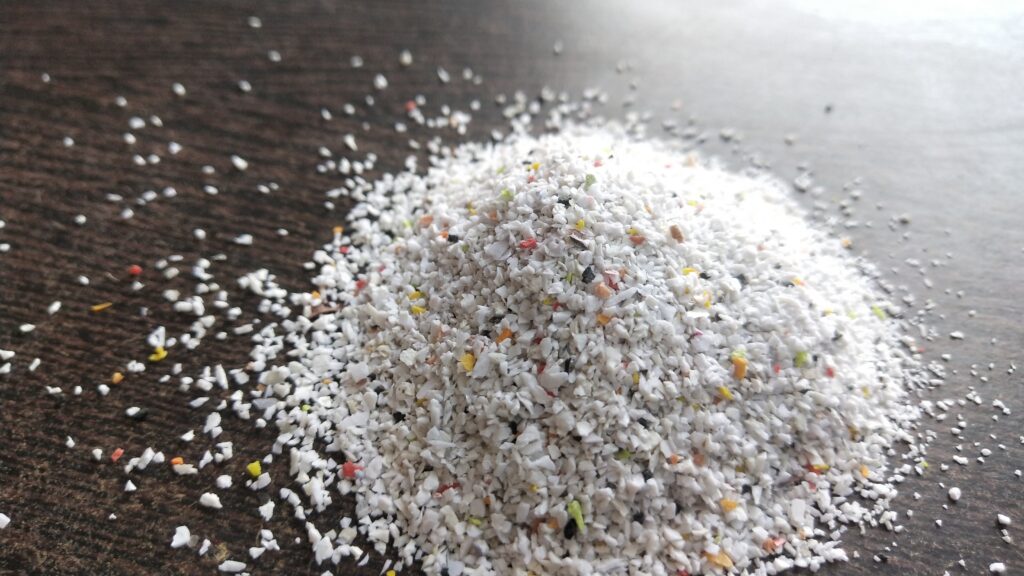
Crushed glass is manufactured from post-consumer recycled glass — primarily mixed container glass (green, amber, and clear bottles and jars) — that is cleaned, sorted, crushed to size, and screened to remove metallic cap fragments and paper labels. The resulting angular glass particles contain no heavy metals, no organic contaminants, and no free crystalline silica (glass-state silica is amorphous and does not carry the crystalline silica disease risk). No major international standard governs crushed glass specifically for blasting, though suppliers typically characterize product by mesh size and publish elemental analysis on request.
The case for crushed glass is purely economic: it is among the cheapest blasting abrasives per metric ton on the market — often USD 80–150/tonne depending on region and volume. At this cost, it can be used as a one-pass single-use media on large outdoor blasting projects where recovery is impractical, without the total project cost becoming unacceptable. Its angular fracture geometry produces adequate profiles (1.0–3.0 mils Rz) for re-painting structural steel to SSPC-SP 6 or SP 10 requirements. It contains no crystalline silica, making it a straightforward legal alternative to silica sand in jurisdictions where sand is restricted.
The limitations are real: crushed glass generates moderate to high dust (fine glass particles are irritating to eyes and respiratory tissue and require appropriate PPE despite not posing a silicosis risk); it breaks down rapidly, producing large volumes of fine particles that must be collected and disposed; and its profile capability tops out at approximately 3.0 mils, making it unsuitable for deep-profile specifications. For one-pass outdoor structural blasting on a budget, it is a practical choice. For any closed-loop system, any stainless steel work, or any profile requirement above 3.0 mils, better options exist.
Copper slag is a byproduct of copper ore smelting. During the smelting process, iron-rich slag separates from the copper melt and is tapped from the furnace, solidified, crushed, and screened to produce the angular glassy particles used in blasting. Global copper production generates enormous volumes of slag — typically 2–3 tonnes of slag per tonne of copper produced — making it one of the most abundant industrial byproducts available as a blast abrasive. The composition varies by ore source and smelting process but typically includes iron silicates (fayalite, Fe₂SiO₄), calcium silicates, and aluminum silicates, with a glassy amorphous microstructure.
Historically, copper slag was one of the most widely used abrasives for large outdoor structural blasting — ship hulls, storage tanks, bridges, and industrial infrastructure — because its very low cost per ton made it economical even at single-use rates. Its angular morphology delivers moderate profiles (1.5–3.5 mils) adequate for most coating systems, and its hardness (Mohs 6–7) is sufficient for effective cleaning of structural carbon steel to SSPC-SP 6 or SP 10 standards.
The regulatory trend is against copper slag. Quality control in slag processing is less rigorous than for synthetic abrasives, and elemental composition varies between sources and production batches. Multiple published studies have documented arsenic, lead, beryllium, chromium, and barium in copper slag dust and aqueous leachate at levels that trigger hazardous waste classification under US RCRA (Resource Conservation and Recovery Act) and equivalent EU regulations in certain scenarios. Near-water work with copper slag is increasingly restricted or prohibited by port authorities and environmental regulators in North America, Europe, and Australia. Request a full certified elemental SDS from any copper slag supplier, and verify hazardous waste classification requirements for your jurisdiction before specifying it — particularly for marine or waterway-adjacent applications. For a silica-free, lower-regulatory-risk alternative at comparable cost, crushed glass is the appropriate substitute.
Walnut shell grit is produced from the shells of black walnuts (Juglans nigra), the hard outer shell of a widely cultivated North American tree species. The shells are cleaned, dried to a controlled moisture content, crushed in hammer mills or roller mills, and classified by mesh size to produce consistent grades from coarse (4–8 mesh, particles approximately 2.4–4.8 mm) down to fine (60–80 mesh, particles approximately 180–250 µm). The resulting particles are angular with a granular texture — harder than corn cob grit at Mohs 4.5–5 versus corn cob’s Mohs 4–4.5, but significantly softer than all mineral or metallic abrasives.
Walnut shell occupies a unique application niche defined by controlled softness. Its hardness is below that of most aluminum alloys (typically Mohs 3–4 at common tempers) at critical measurement scales — a walnut shell particle physically cannot erode structural aluminum the way a Mohs 9 aluminum oxide particle would. This makes it the standard media for stripping old paint and coatings from aircraft aluminum panels, helicopter rotor blades, classic automobile bodywork, wooden boat hulls, antique furniture, and historical building elements — any substrate where dimensional tolerance, substrate texture, or material integrity must be absolutely preserved through the coating removal process.
Walnut shell is biodegradable, non-toxic, and produces waste that does not require hazardous classification under normal circumstances (subject to any hazardous content in the paint residue stripped). It generates low dust and is non-sparking — properties that matter in potentially flammable aircraft maintenance environments. Blast pressure must be set conservatively (35–60 psi) even with this soft media; excessive pressure causes surface friability and raises dust levels. Store dry and use within a reasonable time period — moisture absorption causes particle degradation and promotes mold growth in humid environments. Corn cob grit is an alternative in the same application category, slightly softer (Mohs 4–4.5) and available in similar mesh sizes.
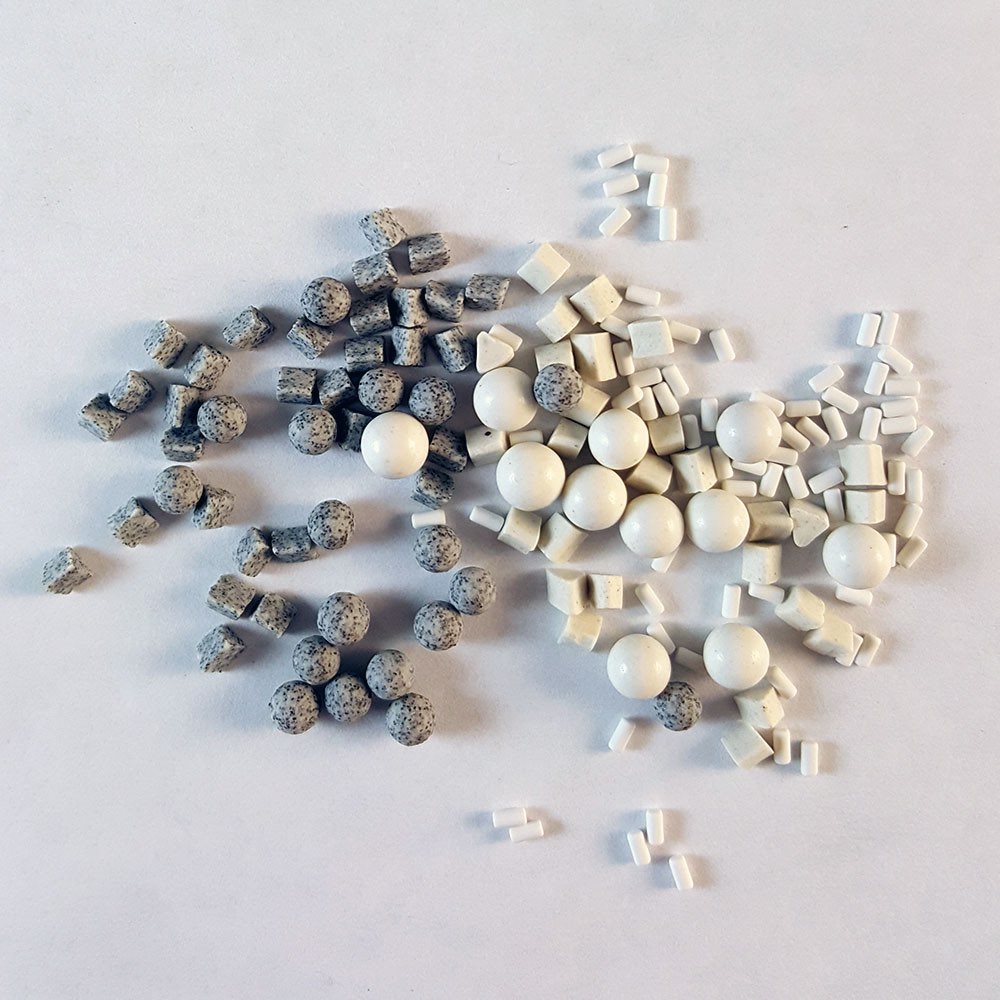
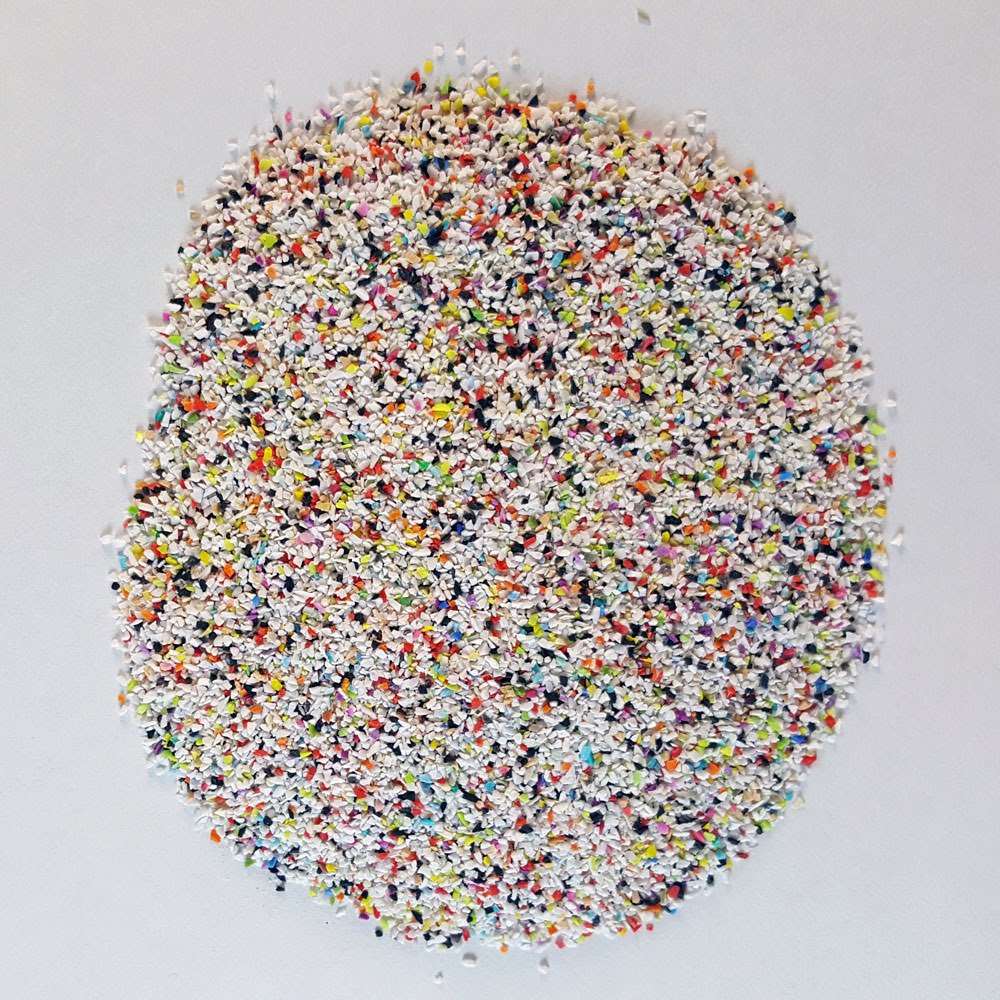
Plastic abrasive grit is manufactured by grinding thermoset plastic molding compounds into angular particles classified to standard mesh sizes. Three formulations are commercially available, each offering a slightly different hardness-brittleness profile: urea formaldehyde (Mohs approximately 3–3.5) — the softest and most brittle, preferred for the most delicate composite panels and thin aluminum skins; melamine formaldehyde (Mohs approximately 3.5–4) — slightly harder with better cutting action and higher recyclability, the most common general-purpose grade; and polyester/acrylic variants — intermediate hardness, used in specialized automotive and precision industrial applications. All three are thermoset (permanently cured cross-linked polymer) rather than thermoplastic, giving them the hardness and brittleness needed for blasting action that thermoplastic polymers lack.
Plastic grit’s defining characteristic is its ability to remove coatings from substrates that cannot tolerate any detectable substrate material removal. In aerospace MRO (maintenance, repair, and overhaul) operations, this function is critical: CFRP (carbon fiber reinforced polymer) composite airframe panels must have their topcoats and primers stripped for inspection and repainting without disturbing the underlying carbon fiber reinforcement. Even minor surface fiber erosion would constitute structural damage requiring expensive panel replacement or repair. Plastic grit — applied at controlled pressures of 40–70 psi in aircraft-specification blast systems — strips organic coatings from CFRP reliably without touching the fiber structure, a capability no other blast media achieves. The specific approved process (media type, grade, pressure, nozzle size, exposure time, and inspection method) must be drawn from the aircraft manufacturer’s Structural Repair Manual (SRM) or the applicable MRO process specification.
Plastic grit is also used in automotive refinishing to strip factory coatings from body panels without distorting thin-gauge steel, in electronics manufacturing for deflashing mold lines from plastic and ceramic components, and in food equipment cleaning where no media residue can be permitted. Its non-sparking, non-conductive properties make it safe in intrinsically safe environments. The high purchase cost (typically 5–15× aluminum oxide per ton) is almost always justified by the precision and substrate protection it provides in its target applications. Virgin media only — never reuse plastic grit on different substrate types, as contamination from prior use defeats the no-contamination purpose.
How the 10 Types Compare: Key Tradeoffs
No single attribute determines the right media choice — the correct selection emerges from weighing multiple properties simultaneously against the specific job requirements. The tradeoff matrix below rates each media type on six decision criteria to support that comparison at a glance.
| メディア・タイプ | Profile Depth | リサイクル性 | Environment / Dust | Substrate Safety | Economy (/ cycle) | Versatility |
|---|---|---|---|---|---|---|
| 酸化アルミニウム | 高い | 中程度 | 中程度 | 中程度 | 中程度 | Very High |
| 炭化ケイ素 | Very High | 中程度 | 中程度 | 中程度 | 低い | 中程度 |
| ガラスビーズ | 非常に低い | Very High | 高い | 高い | 高い | 中程度 |
| スチールショット | Low – Moderate | Very High | Very High | 中程度 | Very High | 中程度 |
| スチールグリット | Very High | Very High | Very High | 中程度 | Very High | 高い |
| ガーネット | 中程度 | 中程度 | Very High | 中程度 | 中程度 | 高い |
| Crushed Glass | 中程度 | 低い | 中程度 | 中程度 | 高い | 中程度 |
| Copper Slag | 中程度 | 非常に低い | 低い | 低い | 高い | 低い |
| Walnut Shell | 非常に低い | 中程度 | 高い | Very High | 中程度 | 低い |
| Plastic Grit | 非常に低い | 中程度 | 高い | Very High | 低い | 低い |
Select by Substrate and Application For a full matrix mapping each substrate type (carbon steel, stainless, aluminum, concrete, CFRP, wood, glass) to the correct media, grit size, and equipment type, see: Abrasive Blast Media Selection Chart by Material and Application
よくある質問
Synthetic blast media is manufactured through controlled industrial processes: aluminum oxide by electric arc fusion of bauxite; silicon carbide by the Acheson process at over 2,000°C; glass beads by melting soda-lime glass into spheres; steel shot and grit by atomizing and crushing molten steel. Synthetic media offers consistent, tightly controlled properties because the manufacturing process can be precisely managed from batch to batch. Natural blast media includes garnet (mined almandine mineral), walnut shell (milled nut shells), and corn cob grit (processed agricultural byproduct). Natural media exhibits more property variation between batches and source regions, but quality mining and processing operations maintain commercially acceptable consistency for blasting applications. Crushed glass sits between the two: made from recycled manufactured glass, but processed by relatively straightforward crushing and sieving rather than synthesis.
Steel shot and steel grit last the longest — 100 to 300 or more reuse cycles in well-maintained closed-loop wheel-blast systems. Their metallic density and toughness resist fracture under repeated impact far more effectively than any mineral abrasive. Glass beads are the next most durable at 20–30 cycles in cabinet blasting. Aluminum oxide and garnet last 3–7 and 3–6 cycles respectively. Single-use media (crushed glass, copper slag) are designed for one or two passes. In all cases, actual cycle life depends heavily on operating conditions — excessive blast pressure, inadequate media classification, and moisture in the system accelerate breakdown significantly.
Mixing media types is almost always inadvisable. Different densities and particle sizes cause separation and uneven consumption, making profile consistency impossible to control. Steel media residue on a surface subsequently blasted with glass beads for stainless steel work will leave iron contamination. Organic media mixed with metallic media in recycling systems can swell, ferment, or clog recovery lines. Plastic grit run through a system containing harder mineral residue will be ground to useless powder. Each media type should run in a dedicated system with dedicated recovery and classification equipment to ensure process control and prevent cross-contamination.
Environmental impact spans three dimensions: air quality during blasting, waste classification of spent media, and production carbon footprint. On air quality, garnet and steel media generate the least respirable dust. On waste disposal, walnut shell and corn cob produce biodegradable, non-hazardous waste. Crushed glass produces inert silicate residue with no leachable heavy metals. Copper slag scores poorly — its dust and residue may require hazardous waste handling. On production carbon footprint, naturally mined garnet requires less industrial processing energy than synthetic fused abrasives produced in high-temperature electric arc furnaces. For marine and near-water environmental compliance specifically, garnet is the recognized best-practice choice — very low leachable metals, low dust, and documented regulatory acceptance across major international port jurisdictions.
Steel grit in the hardest and coarsest grades — GH grade, G-12 to G-14 SAE size — produces the deepest surface profiles achievable by any commercial blast media, routinely 4.0–6.0 mils Rz on structural carbon steel in high-energy wheel-blast systems. These depths are mandatory for heavy thermal spray bond coats (HVOF, arc wire) and the most severe immersion anti-corrosion systems. For pressure-blast operations where wheel-blast equipment is not available, coarse aluminum oxide (F12–F16) achieves profiles of 3.5–5.0 mils — sufficient for nearly all coating specifications. Silicon carbide of the same grit size produces profiles approximately 10–15% deeper than aluminum oxide, but the cost premium is rarely justified for the marginal additional depth on steel substrates.
Source Any of These 10 Media Types Direct from Jiangsu Henglihong Technology
We manufacture and export aluminum oxide, silicon carbide, glass beads, steel shot, and steel grit in all commercial grit sizes and grades. Competitive FOB pricing, full elemental certification, SGS inspection available, flexible MOQ for new customers.
Request a Quote ← Complete Media Comparison Chartフィルター