Abrasive Media Supplies: Complete Buyer’s Guide & Product Catalog
Whether you are removing millscale from structural steel, stripping legacy coatings from aircraft-grade aluminum, preparing a ship hull for anti-corrosion epoxy, or etching fine decorative patterns into architectural glass — every successful surface-finishing outcome starts with a single decision: choosing the right abrasive media supplies. The hardness, shape, grain size, and composition of the abrasive you select determines the cleanliness level you can achieve, the anchor profile depth you create, the throughput your blast equipment delivers, and the total cost you incur across the full project lifecycle.
This complete buyer’s guide covers every dimension of abrasive media procurement — from understanding each media family and its physical properties, to matching media type to substrate, application, and equipment, to evaluating total cost of ownership beyond the price per bag. It also introduces the complete manufacturing and export product range of 江蘇恒隆科技有限公司, a factory-direct supplier serving industrial clients across construction, shipbuilding, oil and gas, automotive, aerospace, and specialty surface-finishing sectors worldwide.
What Are Abrasive Media Supplies?
The term abrasive media supplies refers to the broad category of granular or particulate materials — and their associated handling and safety consumables — used in blasting, tumbling, polishing, and surface-preparation processes. The “media” itself is the abrasive particle: a discrete granule accelerated against a workpiece to remove contamination, strip coatings, reshape a surface, or impart a defined texture. The “supplies” dimension broadens the scope to include the packaging formats, bulk handling containers, and ancillary materials that accompany the abrasive through a production or field operation.
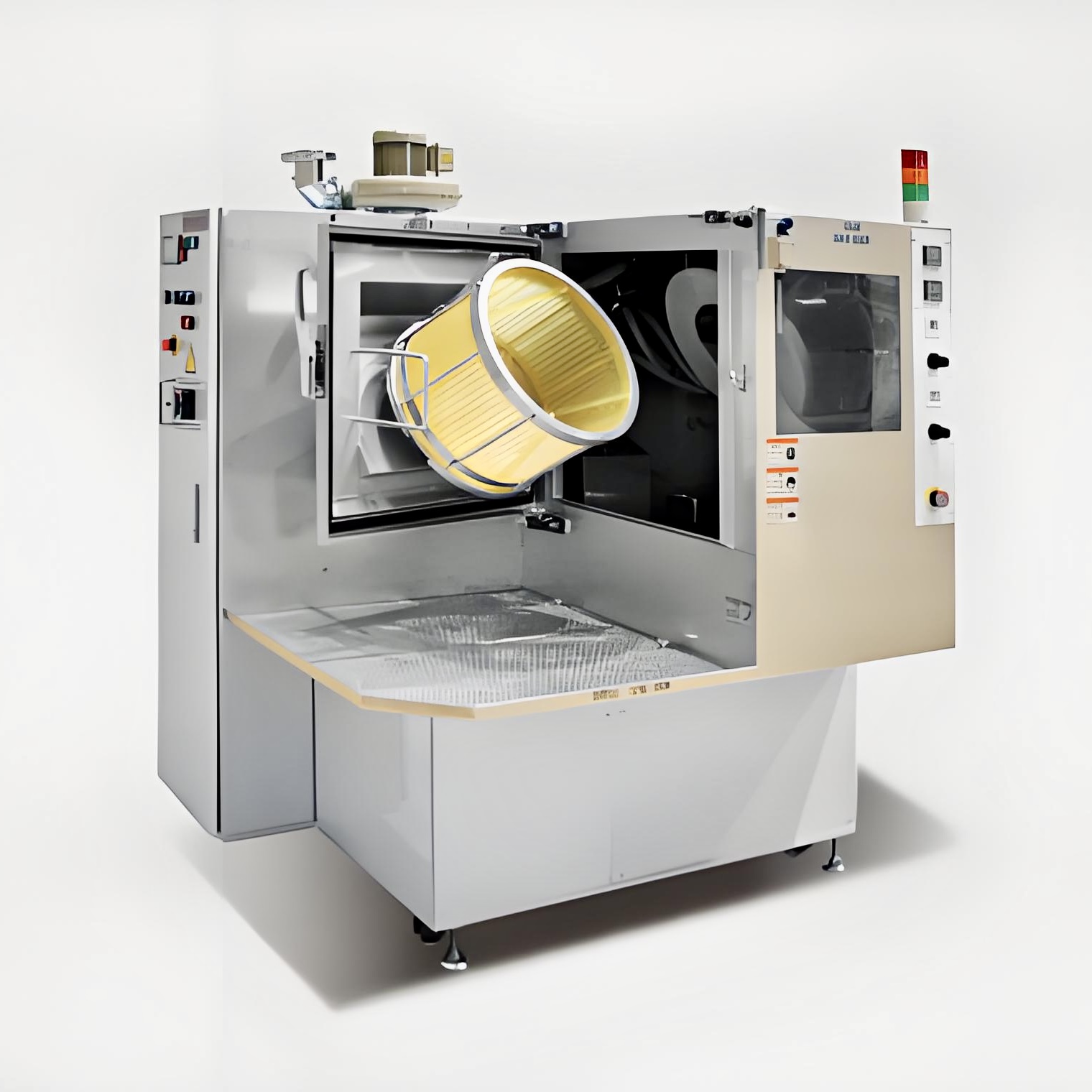
In abrasive blasting — the most prevalent application — media particles are accelerated either by compressed air (in pressure-blast or suction-blast systems) or by a centrifugal steel wheel (in wheel-blast machines). Each particle impact removes a microscopic volume of surface material, scales away oxide layers or prior coatings, and leaves behind a surface roughness — the “anchor profile” — that dramatically improves mechanical adhesion for primers, protective coatings, and thermal spray applications. The anchor profile is quantified in microns Ra (average roughness) or mils Rz (peak-to-valley height), and the specific abrasive selected is the primary variable that determines where the finished surface falls within those measurements.
International surface preparation standards define target cleanliness grades that blasting must achieve before coating. ISO 8501-1 and the equivalent NACE/SSPC standards describe grades from Sa 1 (sweep blast, loose material removed) through Sa 2 (commercial blast), Sa 2.5 (near-white metal), and Sa 3 (white metal — zero visible mill scale, rust, or prior coating). Each coating system and service environment specifies a minimum cleanliness grade, and the abrasive media selected must be capable of achieving it within the available working time and equipment constraints.
Beyond industrial blasting, abrasive media supplies are used across a wide spectrum of precision and specialist applications: vibratory tumbling for deburring cast or machined parts; barrel finishing for surface brightening of small components; lapping and polishing for optics, ceramics, and semiconductor substrates; and artistic processes such as decorative glass etching and lapidary gemstone polishing. For a comprehensive introduction to the physics and process families involved, see our foundational resource: What Is Abrasive Blast Media? Types, Uses & How Blasting Works.
Effective procurement of abrasive media supplies requires aligning seven interrelated variables simultaneously:
- Substrate material and hardness — the workpiece’s resistance to abrasion and its tolerance for surface stress
- Target surface profile — required anchor depth in microns Ra or mils Rz specified by the coating manufacturer
- Cleanliness standard — ISO Sa grade or NACE/SSPC equivalent required before coating application
- Blast equipment type — pressure pot, suction (siphon) cabinet, or centrifugal wheel blast machine
- Recyclability requirements — how many reuse cycles the operation needs to achieve target project economics
- Dust and environmental compliance — free silica content, dust generation rate, and local regulatory requirements
- Total cost of ownership — media cost per square meter of prepared surface, not simply the per-bag purchase price
Each of these variables is addressed in the sections below.
Types of Abrasive Media: A Complete Overview
The global abrasive media market encompasses more than a dozen distinct material families, each with a unique combination of hardness, particle morphology, specific gravity, chemical composition, recyclability, and cost profile. Procurement managers and plant engineers working across multiple projects frequently find that the optimal abrasive media supplies for one application are entirely wrong for another — even within the same facility. The nine categories below represent the principal media types in commercial use across blasting, tumbling, peening, and polishing operations, with direct links to in-depth technical articles for each.
Garnet Blast Media
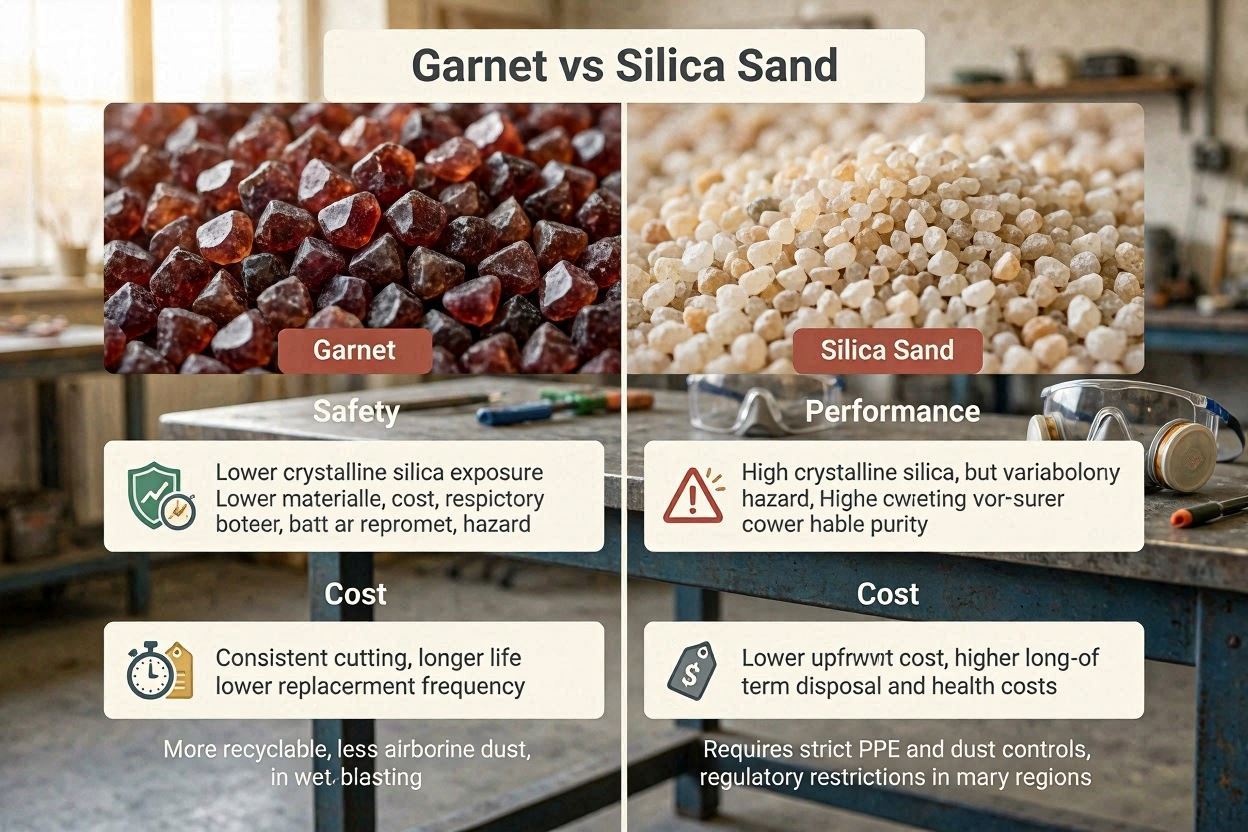
Almandine garnet is the benchmark abrasive for professional blasting contractors working to ISO Sa 2.5 and Sa 3 specifications. Its sub-angular morphology delivers fast cutting action, a consistent anchor profile, low dust generation, and free silica content below 1% — making it the media of choice for oil & gas pipelines, ship hulls, bridge structures, and any project where worker health and coating performance are non-negotiable.
Full garnet media guide →スチールショット
Spherical high-carbon steel shot is specified for shot peening — imparting controlled compressive residual stress to improve fatigue life in springs, crankshafts, gears, and welded structures — and for high-volume descaling of steel plate and structural sections. With up to 3,000 reuse cycles in a properly managed reclaimer system, steel shot delivers the lowest cost-per-cycle of any metallic abrasive in continuous production environments.
Steel shot vs grit comparison →スチールグリット
Crushed angular steel grit bites aggressively into millscale and heavy corrosion, producing the deep anchor profiles required beneath heavy-duty epoxy, zinc-rich primer, and thermal spray coating systems. Hardness grades from GL 16 (coarse) through GL 120 (fine) allow blast operators to dial in a precise profile depth for any coating specification, achieving Sa 2.5 or Sa 3 in a single pass on most steel substrates.
Steel grit selection guide →Aluminum Oxide (Al₂O₃)
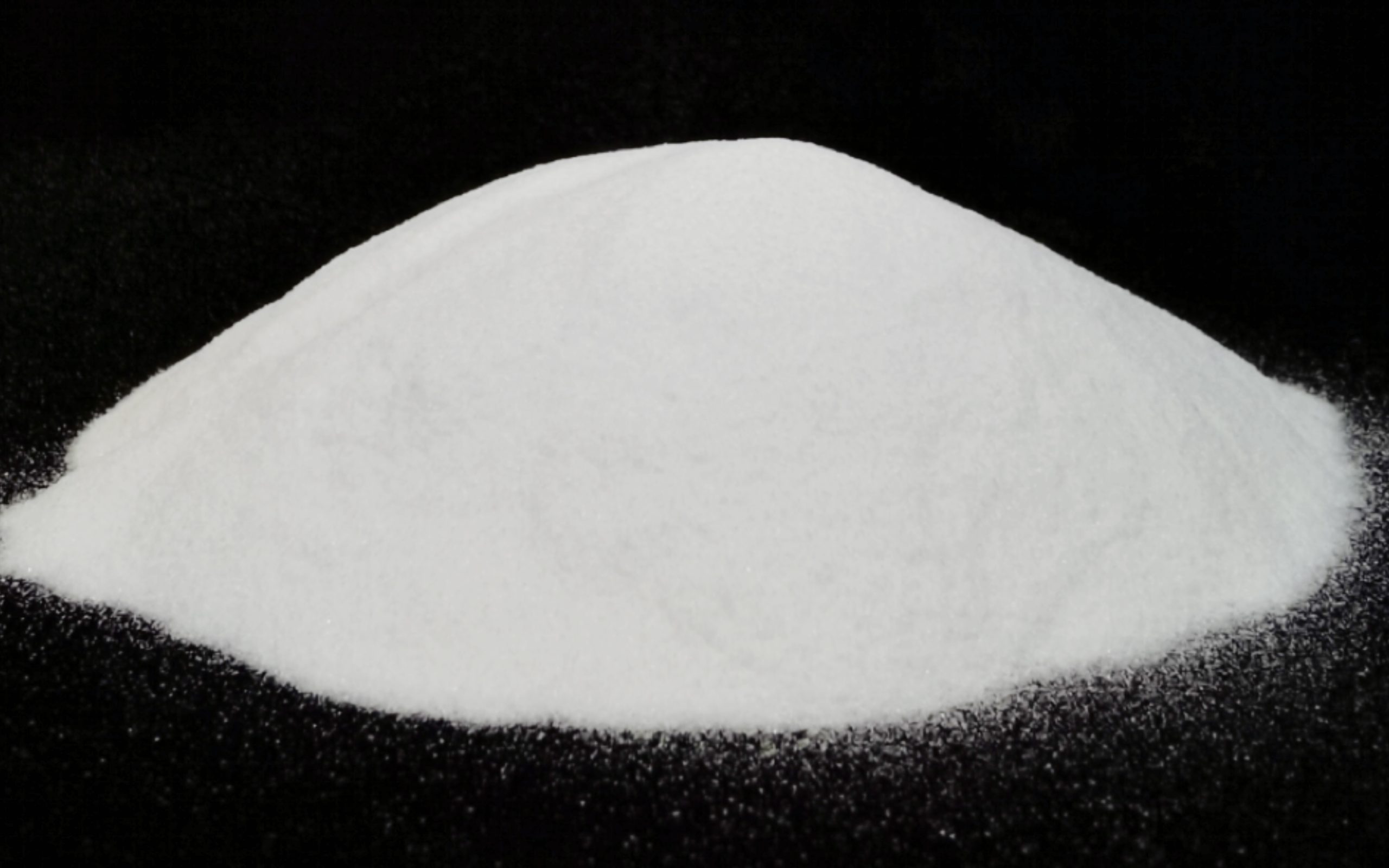
Brown and white aluminum oxide offer the broadest grit range of any engineered abrasive — from coarse 12-grit for aggressive surface profiling to ultra-fine 320-grit for precision lapping and finishing. White Al₂O₃ (purity >99%) is specified in contamination-sensitive environments such as aerospace coating prep and thermal spray substrate conditioning, where any iron contamination from metallic media is unacceptable.
Aluminum oxide grades & applications →Silicon Carbide (SiC)
The hardest commercially available blasting abrasive, silicon carbide self-sharpens as particles fracture, continuously exposing fresh cutting edges and maintaining consistent cutting performance throughout its service life. It is the standard choice for glass etching and sandcarving studios, stone and ceramic surface preparation, and any precision application where maximum cutting speed per unit of media mass outweighs reuse-cycle economics.
Silicon carbide media guide →ガラスビーズ
Manufactured from soda-lime glass, spherical glass beads produce a smooth, bright, satiny surface finish without any dimensional change to the workpiece. Their spherical morphology imparts a uniform peening action — developing compressive surface stress without raising a directional anchor profile — making them indispensable for cleaning aluminum aircraft components, stainless steel medical instruments, and any decorative metal finishing where surface integrity is critical.
Glass bead blasting guide →Copper Slag (Black Beauty)
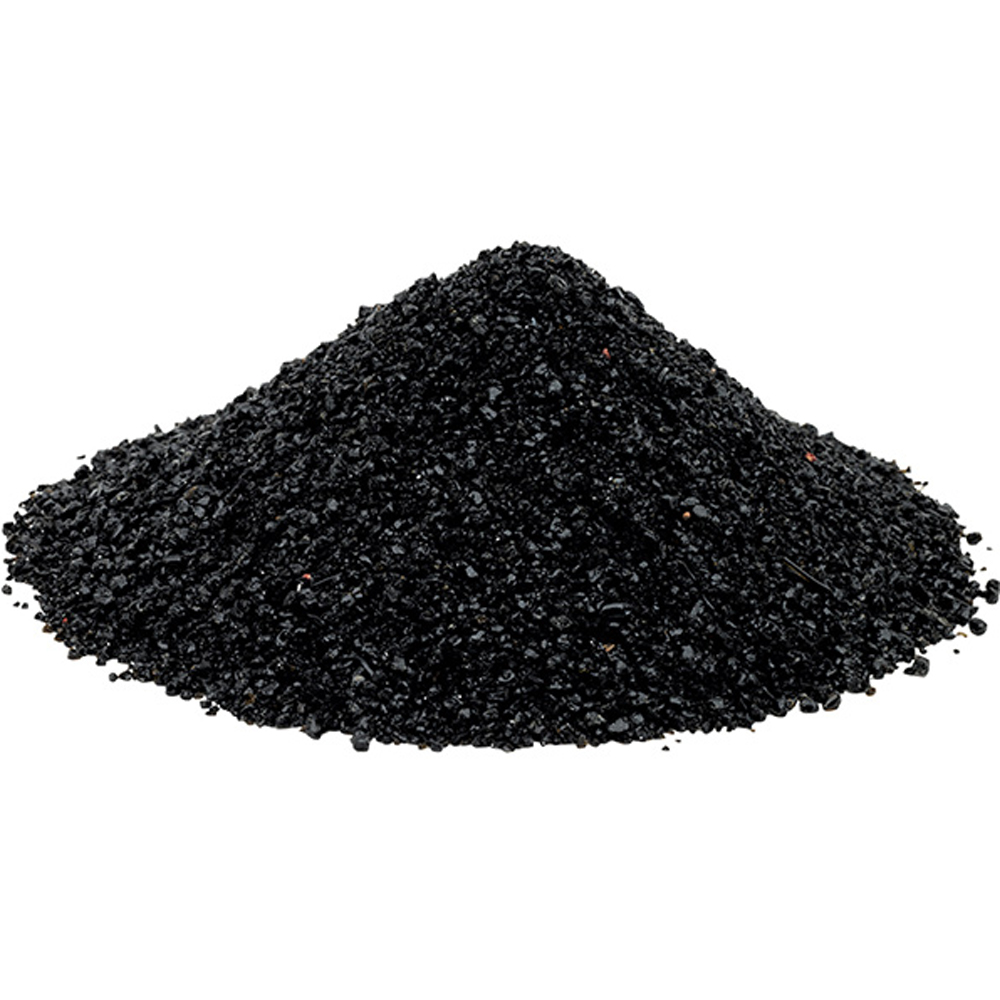
A dense, angular by-product of copper smelting, copper slag delivers aggressive cutting action at a unit cost well below most engineered abrasives. It is widely used in shipyards, storage tank rehabilitation, and large-scale infrastructure blasting where material cost per metric ton drives project economics and the site permits single-use media disposal. Free silica content is typically below 1%, satisfying OSHA regulatory requirements.
Full blast media types overview →Walnut Shell & Organic Media
Crushed walnut shell, corn cob grit, and related organic abrasives are chosen for surfaces that cannot tolerate any risk of dimensional change, substrate embedding, or stress concentration — gas turbine blades, antique metalwork, delicate alloy castings, and composite structures. Fully biodegradable and accepted in most solid waste streams, organic media is also used in cosmetic and food-equipment cleaning applications where contamination from synthetic abrasive residue is unacceptable.
Soft & gentle abrasive media options →Plastic Abrasive Media
Urea (Type II) and melamine (Type V) plastic grit are engineered for controlled paint and coating removal from aluminum airframes, fiberglass panels, and composite structures without warping, thinning, or stress-cracking the substrate. The established standard for aerospace maintenance, repair, and overhaul (MRO) operations and automotive refinishing shops where the base material cannot absorb the impact energy of harder abrasives.
Urea vs Melamine grit comparison →Henglihong’s Core Product Range
Jiangsu Henglihong Technology Co., Ltd. operates as a factory-direct manufacturer and bulk exporter of abrasive media, giving industrial buyers worldwide direct access to production-grade inventory without distributor mark-ups or intermediary handling. The company’s quality management system is ISO 9001 certified, and every production batch is tested against ASTM, ISO, SAE, and FEPA international standards before shipment documentation is issued. The complete product range available for export procurement is summarized below.
Garnet Blast Media
ASTM B-7 / MIL-A-22262スチールショット
SAE J827 / ISO 11124-3スチールグリット
SAE J1993 / ISO 11124-3酸化アルミニウム
FEPA F & P Standards炭化ケイ素
FEPA F & P Standardsガラスビーズ
MIL-G-9954A / AMS 2431Copper Slag
SSPC-AB 3Walnut Shell Grit
MIL-G-5634Plastic Abrasive Grit
MIL-P-85891OEM & Custom Packaging Available. Henglihong supplies branded and unbranded packaging in 25 kg woven PP bags, 1-metric-ton FIBC jumbo bags, and full-container loose-load configurations. Custom labeling and private-label arrangements are available for distributors and OEM buyers in any region. Material Data Sheets (MDS), Certificates of Analysis (COA), and SGS inspection reports are available for each production batch. お問い合わせ to discuss minimum order quantities and FOB/CIF pricing.
How to Choose the Right Abrasive Media
The right abrasive media supplies are not simply the cheapest option per bag — they are the option that achieves the specified surface condition at the lowest total cost per square meter of finished surface. Selecting media correctly requires working through five decision layers in sequence, each narrowing the candidate field until only one or two material families remain as the technically correct specification.
Define the Substrate Material and Condition
Hard, thick carbon steel plate can accept aggressive angular abrasives applied at high pressure. Thin aluminum sheet, titanium alloy components, fiberglass panels, and composite structures require soft media with low Mohs hardness — typically below 4 — to avoid warping, embedding abrasive particles in the substrate surface, or initiating stress cracks. Identify the workpiece alloy, its hardness in Rockwell or Brinell, and the maximum allowable surface stress before selecting any candidate media.
Set the Target Surface Profile and Cleanliness Standard
What ISO Sa grade or SSPC/NACE equivalent must the blasted surface achieve? What anchor profile depth — expressed in microns Ra or mils Rz — does the coating manufacturer’s specification require? Angular abrasives produce deeper, sharper profiles; spherical media produce shallower, more uniform finishes with minimal directional texture. Knowing the specification precisely before touching the media shortlist eliminates the majority of selection errors. For a complete cross-reference of media types against achievable profiles, consult our Abrasive Media Hardness Comparison: Mohs Scale & What It Means for Blasting.
Confirm Blasting Equipment Compatibility
Not all abrasives are compatible with all blast equipment. Centrifugal wheel blast machines are optimized for round or near-spherical metallic media; fine angular mineral abrasives can cause rapid impeller, paddle, and liner wear in wheel systems. Air-powered pressure pots and suction cabinets handle a wider range of media types, but very dense metallic shot requires higher working pressures to achieve the same velocity as lighter mineral abrasives. Matching media density and particle shape to the equipment type is essential for both performance and machine service life. See our detailed equipment guide: Blast Media & Equipment Compatibility Guide: Pressure vs Suction vs Wheel.
Evaluate Recyclability and Disposal Requirements
High-reuse metallic media — steel shot at up to 3,000 cycles or aluminum oxide at up to 100 cycles — carries a higher unit purchase price but a dramatically lower cost-per-cycle than single-use garnet or copper slag. Before finalizing a media type, calculate the total expected volume consumed in the project, confirm the site’s dust-collection and separator capability for reclaiming the chosen media, and verify local regulations on abrasive waste disposal. Some jurisdictions classify certain spent abrasives as hazardous waste, adding disposal costs that can invert the economics of an apparently inexpensive single-use option.
Calculate True Total Cost of Ownership
Total cost of ownership per square meter = (media purchase price ÷ reuse cycles) + labor cost per m² + equipment wear cost attributable to media + waste disposal cost + abrasive consumption rate. For any two media candidates meeting the technical specification, run this calculation at your project volume. The result frequently reverses the intuitive ranking based on sticker price per bag — a media priced at three times the per-bag cost of a competitor but delivering 20× the reuse cycles will almost always be the lower-cost option on a continuous production line. For a worked example applying this model to a real blasting scenario: How to Choose Abrasive Blast Media: 5-Step Selection Framework.
Applications by Industry
The abrasive media supplies that deliver optimal results in one industry sector frequently perform poorly or cause damage in another. Matching media to application is as important as matching it to substrate. The following six industry contexts map the performance requirements and recommended media families for each, with links to in-depth application guides.
Industrial Surface Preparation
Structural steel fabrication, oil storage tanks, industrial pipelines, bridges, and offshore platforms require Sa 2.5 or Sa 3 cleanliness with anchor profiles typically between 40 and 100 microns, depending on the coating system. Garnet, steel grit, copper slag, and aluminum oxide are the dominant media in this sector. The correct media choice directly determines coating warranty compliance and long-term asset service life — engineering specifications must be read in full before media is ordered.
Industrial surface prep media guide →Automotive Restoration & Paint Stripping
Vehicle bodywork restoration demands a media that removes rust, paint, and body filler without warping thin-gauge sheet metal, causing panel distortion, or embedding abrasive particles that later bleed through fresh paint. Sodium bicarbonate, glass beads, walnut shell, and plastic grit each serve a distinct role in auto restoration depending on the substrate alloy, panel thickness, and the type of coating being removed. Incorrect media selection in automotive work is among the most common causes of expensive panel re-work.
Automotive blasting media guide →Sandcarving & Glass Etching
Creating precise decorative or functional patterns in glass, stone, granite, and solid surface materials requires a fine, dimensionally consistent abrasive with sharp, maintained cutting edges. Silicon carbide and aluminum oxide in the 80–220 grit range are the established standards for sandcarving studios, architectural glass fabricators, and trophy engravers. These applications also depend on a properly calibrated reclaimer-separator to maintain grit consistency as media breaks down during use.
Sandcarving & glass etching media →Rock Tumbling & Lapidary
Hobbyist and professional gem cutters use a four-stage abrasive progression — from coarse-grit silicon carbide for heavy material removal through progressively finer grinding stages to a final polishing compound such as cerium oxide or aluminum oxide — to shape and polish rough mineral specimens to a mirror finish. Each stage requires a specific mesh size and media type, and skipping or abbreviating stages always results in visible scratching in the finished surface.
Rock tumbling grit guide →Surface Prep Before Painting & Coating
The long-term adhesion performance of any industrial coating is a direct function of the substrate anchor profile beneath it. Too little profile and the coating delaminates under service stress; too much profile and peaks perforate the coating film, creating rust initiation points. Hitting the specification window precisely — typically 25–75 microns for industrial epoxy systems, 50–100 microns for heavy-duty polyurethane — requires selecting both the media type and the grit size with the coating manufacturer’s data sheet in hand.
Pre-coating surface prep media guide →Silica-Free & OSHA-Compliant Blasting
Following OSHA’s 2016 silica dust standard (29 CFR 1926.1153), which reduced the permissible exposure limit for respirable crystalline silica to 50 µg/m³ as an 8-hour TWA, industrial operators accelerated the replacement of traditional silica sand with compliant alternatives. Garnet, steel shot, glass beads, aluminum oxide, copper slag, and walnut shell all contain free silica below 1%, meeting OSHA requirements while matching or exceeding the surface preparation performance of quartz sand — at comparable or lower total cost when proper TCO accounting is applied.
Silica-free blast media options →Grit Size & Mesh Reference Guide
Abrasive grit size notation varies by media family and regional standard. Metallic media (steel shot and grit) use SAE diameter designations or ISO equivalents; mineral and synthetic abrasives follow ANSI B74.12 or FEPA grit numbering; screened natural media such as garnet and copper slag are specified in mesh intervals. The table below provides a cross-reference of the most commonly specified sizes across the nine principal abrasive families, giving procurement teams a common language when translating between coating specifications, equipment settings, and supplier data sheets. Note that particle size in microns is an approximate midpoint of the sieve range for each designation.
| メディア・タイプ | Size Designation | Approx. Particle Size | Typical Application Context |
|---|---|---|---|
| ガーネット | #30/60 mesh | 250–595 µm | General industrial blast, Sa 2.5 specification |
| ガーネット | #80 mesh | 150–210 µm | Fine profile, thin-film coatings |
| スチールショット | S-110 to S-230 | 300–710 µm | Light descaling, peening of thin components |
| スチールショット | S-330 to S-780 | 800–2,360 µm | Heavy descaling, high-throughput wheel blast lines |
| スチールグリット | GL 25 / GL 40 | 425–710 µm | Anchor profile 50–75 µm, heavy epoxy systems |
| スチールグリット | GL 80 / GL 120 | 106–210 µm | Fine profile, thin-film and powder coatings |
| 酸化アルミニウム | 16–36 grit | 425–1,200 µm | Aggressive surface profiling, refractory grain |
| 酸化アルミニウム | 60–120 grit | 106–250 µm | Finishing, lapping, thermal spray prep |
| 炭化ケイ素 | 36–80 grit | 180–500 µm | Glass etching, stone carving, ceramic blasting |
| ガラスビーズ | Class A (100 mesh) | 105–210 µm | General peening, cosmetic finishing |
| ガラスビーズ | Class C–E (170–325 mesh) | 44–88 µm | Medical instruments, fine peening |
| Copper Slag | Coarse (12–30 mesh) | 600–1,700 µm | Shipyard blasting, tank farm rehabilitation |
| Walnut Shell | 12/20 mesh | 840–1,680 µm | Turbine blade cleaning, delicate alloys |
| Plastic Grit | 14–40 grit | 425–1,400 µm | Aerospace paint stripping, composite refinishing |
For the full cross-reference table — including ANSI, FEPA, JIS, and mesh equivalents, micron conversions at every standard sieve interval, and achievable surface profile ranges for each media type and grit combination — see our dedicated resource: Abrasive Media Grit & Mesh Size Chart: Complete Reference Guide.
Recyclability & Total Cost of Ownership
Among the most persistent misconceptions in abrasive media procurement is treating the per-bag purchase price as the primary cost metric. In continuous industrial operations, two blast lines running simultaneously can face cost-per-square-meter differences exceeding 300% — simply because one chose a high-reuse metallic media and the other defaulted to single-use garnet or slag based on unit price. The number of reuse cycles an abrasive delivers — governed by its hardness, toughness, and resistance to particle fracture under impact — is the dominant variable in total cost of ownership once project volumes exceed a few hundred square meters.
Recyclability also intersects with environmental compliance. Operations subject to waste minimization regulations or restricted from landfilling spent abrasives gain additional economic value from every additional reuse cycle a media delivers, independent of the direct cost-per-cycle calculation. The table below compares the nine principal media types across the variables that determine their TCO profile.
| メディア・タイプ | Hardness (Mohs) | Reuse Cycles | Unit Cost Tier | Strongest Economic Case |
|---|---|---|---|---|
| スチールショット | 5–6 | Up to 3,000 | 高い | High-volume continuous wheel blast production lines |
| スチールグリット | 7–8 | Up to 2,000 | 高い | Large structural fabrication and shipbuilding shops |
| 酸化アルミニウム | 9.0 | 50–100 | Medium | Cabinet blast rooms, precision aerospace work |
| Plastic Grit | 3–4 | 20–40 | Medium | Aerospace MRO, automotive composite refinishing |
| 炭化ケイ素 | 9.5 | 30–60 | Medium-High | Glass etching, stone carving, lapidary studios |
| ガラスビーズ | 5.5 | 30–50 | Medium | Aerospace and medical component peening and finishing |
| Walnut Shell | 3.5–4 | 5–15 | Medium | Delicate alloy and turbine blade cleaning |
| ガーネット | 7.5–8.5 | 5–10 | Low-Medium | Projects with strict silica and dust controls, variable volume |
| Copper Slag | 6-7 | 1–2 | 低い | One-time or infrequent large-area blasting with disposal access |
For a detailed worked example that applies the full cost-per-cycle model to a real blasting scenario — comparing single-use garnet against recyclable steel grit across a 10,000 m² structural steel project — and includes a downloadable cost-comparison worksheet, see: Recyclable vs Single-Use Abrasive Media: Cost-Per-Cycle Analysis.
Why Choose Jiangsu Henglihong Technology Co., Ltd.
The global abrasive media market offers buyers access to dozens of suppliers in every region. What separates Jiangsu Henglihong Technology Co., Ltd. from distributor-based alternatives is a combination that is difficult to replicate: factory-direct ownership of the production process, ISO-certified quality systems applied at every production stage, and a technical support capability that extends from media specification through post-delivery performance review. The following factors are the most consistently cited reasons industrial buyers across Asia, the Middle East, Africa, and the Americas partner with Henglihong for their long-term abrasive media supply.
Factory-Direct Pricing
No distributor tier, no intermediary margin. Buyers receive pricing that reflects actual manufacturing cost and committed volume, not a multi-tier supply chain mark-up.
ISO 9001 Certified QMS
Every production batch is tested for particle size distribution, hardness, and chemical composition before shipment. Quality is documented, not assumed.
Bulk Export Capability
25 kg bags through full FCL container loads. FOB, CIF, and CFR terms available. OEM and private-label packaging for distributor partners in any region.
Technical Specification Support
Henglihong’s technical team reviews your coating specification, substrate type, and equipment to recommend the correct media and grit size before the order is placed.
Full Compliance Documentation
MDS, COA, SGS inspection reports, REACH compliance statements, and SDS in multiple languages — complete documentation packages for engineering and regulatory requirements worldwide.
Consistent Batch-to-Batch Quality
Controlled manufacturing parameters deliver consistent particle size distribution and hardness uniformity across batches — essential for meeting ISO 8501-1 and NACE/SSPC profile specifications job after job.
If you are currently evaluating multiple abrasive media suppliers for a new long-term supply contract, the following checklist details the eight most important technical, commercial, and logistical criteria to verify before committing to a source: Bulk Abrasive Media Supplier: 8 Things to Evaluate Before You Order.
よくある質問
Traditional sandblasting sand consists primarily of crystalline silica (quartz), which is classified as a Group 1 human carcinogen by IARC and is linked to silicosis — a progressive, irreversible, and potentially fatal lung disease caused by inhaling respirable crystalline silica dust. OSHA, HSE, and equivalent regulatory bodies in most industrialized countries now prohibit or severely restrict its use as a blasting abrasive under occupational health law. Modern abrasive media supplies — including garnet, steel shot and grit, aluminum oxide, glass beads, copper slag, and silicon carbide — achieve equivalent or superior surface preparation results with free silica content consistently below 1%, fully satisfying regulatory requirements. The colloquial term “sandblasting” persists as a description of the process, but the media in professional and industrial use is almost never silica sand.
Grit size selection depends on three primary factors working in combination: (1) the target surface profile depth specified by your coating manufacturer — typically expressed in microns Ra or mils Rz in the coating data sheet; (2) the substrate alloy hardness, since the same grit size leaves a measurably deeper profile on soft mild steel than on hardened alloy or stainless steel under the same blast pressure; and (3) the blast equipment pressure, nozzle diameter, and stand-off distance, since higher kinetic energy delivered to the surface increases both cutting speed and profile depth independent of grit size. As a general principle, a lower grit number (coarser particle) produces a deeper, rougher profile; a higher grit number (finer particle) produces a shallower, smoother finish. Always cross-reference your selection against the coating manufacturer’s minimum and maximum profile specification before finalizing the order.
Mixing media types is generally not recommended and should be avoided unless deliberately engineered for a specific performance outcome. Different materials have different densities, particle morphologies, and breakdown rates — mixing them makes it impossible to predict or control the resulting surface profile, and it prevents the separator from efficiently recovering either component for reuse. In practice, intentional blending is sometimes specified (for example, a sodium bicarbonate and aluminum oxide combination for simultaneous degreasing and profiling), but this is always done with full knowledge of the resulting performance characteristics and separator behavior. Unintentional cross-contamination between media types — for example, introducing garnet into a steel shot reclaimer system — typically degrades both the surface quality and the separator efficiency until the system is thoroughly purged.
Minimum order quantities vary by product type and destination port. For sea-freight shipments, we typically work with quantities from one full 20-foot FCL container upward, though smaller orders packaged in 1-MT FIBC bulk bags or 25 kg bags can be accommodated for new buyers, sample evaluation orders, or distributors managing mixed-product containers. Contact us directly through our inquiry page to receive a volume-specific FOB quotation tailored to your product requirement, destination port, and delivery timeline. Pricing tiers apply at standard FCL, multi-FCL, and annual-volume contract levels.
Yes. A Material Data Sheet (MDS), Certificate of Analysis (COA) confirming particle size distribution and chemical composition, and SGS or equivalent third-party inspection reports are available for every production batch. For buyers with specific regulatory documentation requirements — REACH compliance statements for EU-bound shipments, Safety Data Sheets (SDS) in locally required languages, customs classification documentation, or specific test method reports such as ASTM or ISO method certificates — our export documentation team can coordinate the complete package before the bill of lading is issued. Documentation requirements should be communicated at the time of order confirmation to ensure no delay to shipment.
All abrasive media should be stored in a dry, covered environment on raised pallets, away from moisture, direct sunlight, and potential contamination sources. Mineral and synthetic abrasives — garnet, aluminum oxide, silicon carbide — are hygroscopic to varying degrees and can aggregate or develop surface contamination when exposed to prolonged humidity, which interferes with separator and reclaimer performance. Metallic media (steel shot and grit) must be kept completely dry to prevent surface oxidation; even light surface rust on shot can transfer iron contamination to the blasted substrate and cause coating adhesion failures. Organic media (walnut shell, corn cob) must be stored in fully dry conditions to prevent mold growth that makes it unsuitable for use. Sealed original bags stacked on wooden pallets in a ventilated covered warehouse is the correct storage configuration for all media types covered in this guide.
Request a Quote for Abrasive Media Supplies
Tell us your substrate type, application, target surface profile, and required annual volume. Jiangsu Henglihong Technology Co., Ltd.’s technical team will recommend the correct media specification and provide a competitive factory-direct quotation — typically within one business day.
Get a Free Factory-Direct Quoteフィルター