Type II Urea Plastic Abrasive: When and Why to Use It
Type II urea formaldehyde is the most widely used plastic blast abrasive in the world — and for good reason. It sits at the exact sweet spot between cutting power and substrate protection that the majority of industrial blasting applications demand. Yet despite its widespread use, many operators choose it simply because it’s the default, without fully understanding when it excels, when it falls short, and exactly how to run it for optimal results.
This guide gives you a complete picture of Type II urea: its physical and chemical properties, the substrate and coating combinations where it performs best, the specific process parameters that maximize both media life and surface quality, and the situations where you should reach for a different abrasive entirely. Whether you’re qualifying a new blast process, troubleshooting inconsistent strip rates, or simply trying to reduce per-part abrasive cost, this is the reference you need.
If you haven’t yet read our side-by-side comparison of all three major plastic blast media types, start with: Plastic Blast Media Types Compared: Urea vs Melamine vs Acrylic. For a broader overview of the full plastic media category, see: What Is Plastic Media? The Complete Guide.
What Is Type II Urea Formaldehyde Media?
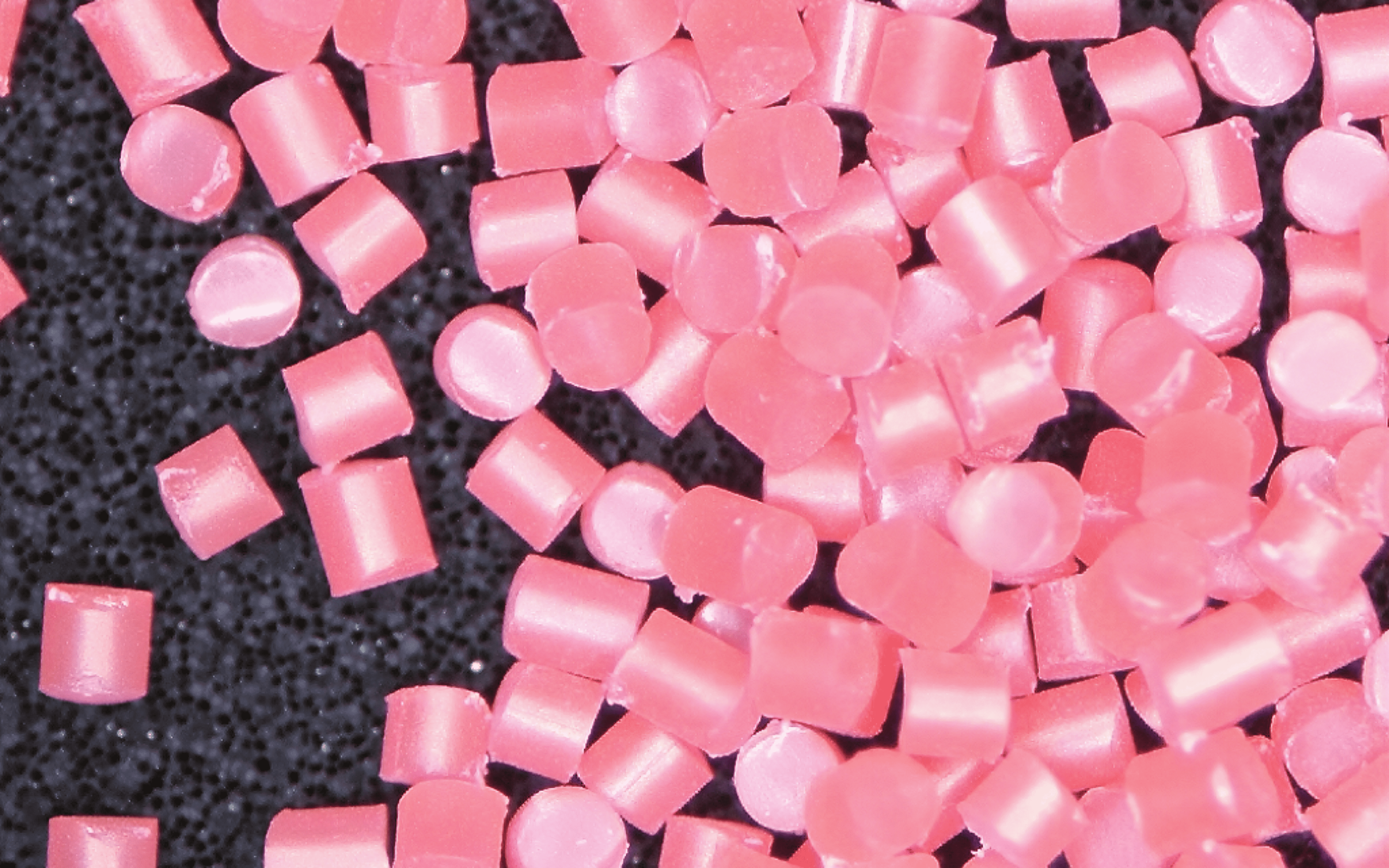
Type II urea formaldehyde plastic blast media is a synthetic thermosetting abrasive manufactured by reacting urea with formaldehyde under controlled conditions to produce a hard, cross-linked polymer resin, which is then ground and screened to precise particle size distributions. The resulting angular particles are off-white to cream in color, with a Mohs hardness of approximately 3.5 — harder than soft metals like lead (Mohs 1.5) and pure copper (Mohs 3.0), but softer than the aluminum alloys most commonly encountered in aerospace and automotive surface preparation work.
The “Type II” designation comes from MIL-P-85891A, the U.S. military specification that categorizes plastic blast media by resin chemistry and performance characteristics. This standard was developed specifically for aircraft depaint operations, where the need to remove multi-layer coating systems from aluminum structures without causing dimensional changes or surface damage drove the development of engineered plastic abrasives as replacements for both chemical strippers and harder mineral abrasives.
Today, Type II urea is used far beyond its military aviation origins — in automotive restoration, industrial equipment recoat, general metal fabrication, and anywhere that coating removal without substrate damage is the governing requirement.
Full Physical & Chemical Properties
Understanding the spec sheet in depth helps you predict behavior in edge cases and troubleshoot process problems more effectively. Here is the complete property profile for MIL-P-85891A Type II urea formaldehyde media:
| Property | Value / Specification | Significance |
|---|---|---|
| Resin Chemistry | Urea formaldehyde (UF), thermosetting | Brittle fracture mechanism; predictable breakdown rate |
| MIL-SPEC Designation | MIL-P-85891A, Type II | Required for DoD aircraft maintenance operations |
| Dureté Mohs | ~3.5 | Below 2024-T3 Al hardness threshold; prevents substrate scoring |
| Densité en vrac | 55–65 lb/ft³ (880–1,040 kg/m³) | Affects media flow, hopper sizing, and kinetic energy at impact |
| True Particle Density | ~1.48–1.52 g/cm³ | Determines kinetic energy per particle at given velocity |
| Forme des particules | Angular to sub-angular, irregular | Angular edges provide cutting action on coating surfaces |
| Couleur | Off-white to cream | Color shift during use (darkening) indicates paint contamination |
| Available Mesh Sizes | 12, 16, 20, 30, 40, 50, 60, 80 | Coarser = more aggressive; finer = gentler, lower profile |
| Moisture Content (max) | ≤ 1.0% by weight | Excess moisture causes clumping and inconsistent flow |
| pH (10% aqueous slurry) | 7.0–9.0 | Mildly alkaline; not corrosive to aluminum or steel |
| Free Formaldehyde Content | ≤ 0.1% (per MIL-P-85891A) | Limits residual off-gassing; important for enclosed blast rooms |
| Typical Reuse Cycles | 3–6 passes with reclaim | Cycle count is application- and pressure-dependent |
| Surface Profile Produced | 0.5–1.0 mil (12–25 µm) on aluminum | Within spec for most aerospace re-prime requirements |
| Operating Temperature | Up to 180°F (82°C) ambient | Media softens and performance degrades above this range |
How Urea Media Works: The Fracture Mechanism
To use any abrasive effectively, you need to understand what happens at the moment of impact. For Type II urea, the physics work like this:
Acceleration Through the Nozzle
Compressed air accelerates urea particles through the blast hose and nozzle to velocities typically between 200–400 ft/s (60–120 m/s) depending on operating pressure. Particle kinetic energy — which determines impact force — scales with the square of velocity, so even small pressure changes have significant effects on media behavior and substrate impact.
Impact and Brittle Fracture
When a urea particle strikes the coating surface, two things happen almost simultaneously. The angular particle edges concentrate stress on the coating, initiating micro-cracks that propagate through the coating layer. Simultaneously, the urea particle itself fractures through a brittle fracture mechanism — it does not bounce or deform plastically; it shatters into smaller fragments, each of which briefly continues cutting before losing sufficient mass to be effective.
This is the key advantage over elastic abrasives: brittle fracture ensures kinetic energy is transferred into coating removal rather than wasted as elastic rebound.
Coating Delamination
The combination of direct cutting from particle edges and the shockwave generated by impact causes the coating layer to delaminate from the substrate. Well-adhered primer systems may require multiple overlapping passes; loosely adhered topcoats often lift in large flakes from a single pass. Delamination efficiency depends on coating adhesion, coating thickness, and the degree of coating degradation (UV exposure, corrosion lifting, etc.).
Substrate Interaction
Once coating is removed, the urea particle interacts directly with the bare metal surface. Because urea’s Mohs hardness (~3.5) is at or below the hardness of common structural aluminum alloys, the particle fractures on impact rather than gouging the metal. The result is a micro-textured surface with a profile of 0.5–1.0 mil — enough to provide mechanical adhesion for re-priming, but not enough to constitute material removal from the substrate itself.
This self-limiting profile behavior is the defining advantage of Type II urea over mineral abrasives on aluminum substrates.
Reclaim, Classification, and Reuse
After impact, the fractured urea particles, paint debris, and intact reusable particles are drawn back into the reclaim system by the blast cabinet’s vacuum. An air wash separator uses airflow to carry away the lightest particles (paint debris and sub-effective fines) while returning heavier, still-useful particles to the media hopper. Screen decks provide secondary classification by particle size. This closed-loop process enables 3–6 reuse cycles per media charge under typical conditions.
When You Should Use Type II Urea
Type II urea is the right choice in a wide range of scenarios. Here is a detailed breakdown of the applications where it consistently delivers the best combination of performance, substrate safety, and economics:
Aircraft Depaint (Aluminum)
The application urea was originally designed for. Removes MIL-SPEC primer + polyurethane topcoat from 2024-T3, 7075-T6, and 6061 aluminum skins without exceeding allowable surface profile limits.
Automotive Panel Stripping
Strips factory multi-layer paint from steel and aluminum body panels without warping or metal thinning. Dramatically faster than chemical dipping and safer than heat-based methods on thin gauge panels.
General Metal Fabrication Prep
Surface preparation of steel weldments, aluminum extrusions, and fabricated components prior to powder coat or liquid paint application. Provides clean, profiled substrate for optimal coating adhesion.
Military Vehicle Maintenance
Compliant with MIL-P-85891A for use on ground vehicles and support equipment. Handles standard military coating systems on steel hulls and aluminum armored structures.
Marine Aluminum Structures
Strips antifouling paint and primer from aluminum boat hulls and marine superstructures without pitting. Particularly valuable for complex hull geometries where chemical stripping is difficult to apply uniformly.
Job Shop Versatility
When a single media type needs to handle varied substrates and coating systems across different jobs, Type II urea’s middle-of-the-road hardness profile makes it the safest general-purpose choice.
Substrate Compatibility Matrix
Not all substrates respond equally to Type II urea blasting. Here is a practical compatibility guide covering the most common materials encountered in industrial finishing operations:
Coating Systems: What Urea Handles Well
Media hardness and particle geometry must be matched not just to the substrate, but to the coating system being removed. Here is how Type II urea performs against the coating types most commonly encountered in industrial blast stripping:
| Coating System | Urea Performance | Typical Passes | Notes |
|---|---|---|---|
| MIL-PRF-85285 Polyurethane Topcoat | Excellent | 1–2 | Standard aerospace topcoat. Strips cleanly at Mesh 20, 40–55 PSI. |
| MIL-PRF-23377 Epoxy Primer | Excellent | 1–2 | Well-adhered primer may require 2 passes. Coarser mesh (Mesh 16–20) speeds removal. |
| Two-component Epoxy (industrial) | Bon | 2–3 | Harder than aerospace epoxy. Use Mesh 16–20 at higher pressure (50–60 PSI). |
| Single-Stage Enamel (automotive) | Excellent | 1 | Softer and less adherent than two-component systems. Fast, efficient removal. |
| OEM Automotive Multi-Layer (primer + basecoat + clearcoat) | Bon | 2–3 | Clearcoat is typically soft; primer is well-adhered. Work progressively from coarser to finer mesh if needed. |
| Powder Coat (standard) | Fair | 3–5 | Powder coat’s hardness and flexibility resists urea’s cutting action. Consider Type III melamine for faster throughput on powder-coated steel. |
| Chromate Conversion Coating (Alodine) | Modéré | 1–2 | Very thin layer. Urea will remove it, but so will all other blast media. Note: chromate removal requires hazmat handling protocols for media waste. |
| Antifouling (marine, vinyl/copper-based) | Bon | 2–4 | Older buildup may require multiple passes. Media waste from antifouling removal must be characterized before disposal (biocide content). |
| Thick Polyurea or Spray-On Bedliner | Poor | 5+ | Elastic, rubber-like coatings absorb impact energy and resist brittle fracture removal. Chemical stripping is usually more efficient for these systems. |
Optimal Blast Parameters
Running Type II urea at the wrong parameters is one of the most common causes of poor results — either inadequate strip rates or substrate damage. These are the proven parameter ranges for the most common application scenarios:
How Mesh Size Affects Outcomes
| Mesh Size | Particle Size Range | Strip Rate | Surface Profile | Best Substrate / Use Case |
|---|---|---|---|---|
| Mesh 12 | 1.68 mm / 0.066″ | Very High | 2–3 mil+ | Heavy multi-coat steel structures; rarely used on aluminum |
| Mesh 16 | 1.19 mm / 0.047″ | Haut | 1.5–2.5 mil | Steel; thick epoxy coatings; robust aluminum alloys at low PSI |
| Mesh 20 | 0.84 mm / 0.033″ | Medium-High | 0.8–1.5 mil | Standard aerospace aluminum depaint; most common choice overall |
| Mesh 30 | 0.59 mm / 0.023″ | Medium | 0.5–1.0 mil | Thin aluminum; automotive panels; moderate coating systems |
| Mesh 40 | 0.42 mm / 0.016″ | Medium-Low | 0.3–0.6 mil | Light coatings; pre-paint scuff; thin gauge sheet metal |
| Mesh 50–60 | 0.30–0.25 mm | Faible | 0.1–0.3 mil | Mold surfaces; light carbon removal; adhesion promotion only |
| Mesh 80 | 0.18 mm / 0.007″ | Très faible | <0.1 mil | Precision cleaning; near-zero profile required |
Step-by-Step Blast Setup Guide
Follow this sequence when setting up a new Type II urea blast process for the first time, or when qualifying a process for a new substrate or coating combination:
Verify Media Certification
Before loading media, confirm it meets MIL-P-85891A Type II requirements. Request and retain the Certificate of Conformance (CoC) and batch test report from your supplier. For defense work, this documentation must be traceable. Check moisture content — media that has been improperly stored may clump or exhibit uneven flow, signaling moisture uptake above the 1.0% limit.
Set Up and Check the Reclaim System
Inspect air wash separator and screen decks for blockages or wear. Verify that the air wash is correctly calibrated for the specific mesh size you’re running — an air wash set for Mesh 20 will not effectively separate Mesh 40 media from fines without recalibration. Confirm that the vacuum system is pulling sufficient CFM to draw media back from the blast zone without allowing it to accumulate.
Set Initial Parameters
Set nozzle pressure at the conservative end of the appropriate range for your substrate and coating: 30–35 PSI for thin aluminum, 45–55 PSI for standard aerospace aluminum depaint, up to 65 PSI for steel. Set standoff distance at 8 inches and impingement angle at 80–85°. These starting parameters can be adjusted after coupon testing.
Run Qualification Coupons
Blast scrap coupons of the same alloy and temper as your production parts. After blasting, measure surface profile using Testex Press-O-Film replica tape (Grade Coarse for profiles above 0.5 mil). Confirm that coating has been completely removed. If profile exceeds specification, reduce pressure or move to a finer mesh. If strip rate is inadequate, increase pressure incrementally in 5 PSI steps and re-evaluate. Document all parameters for the approved process.
Inspect and Clean Parts After Blasting
After blasting, blow off loose urea dust and paint debris with clean, dry compressed air. Inspect the surface visually and with a white glove wipe for paint residue and media embedment. For aerospace parts, perform a visual inspection under UV light to confirm complete coating removal if fluorescent primers were used. Parts should be primed or coated within the time window specified by the applicable process specification — typically within 4 hours to prevent surface oxidation.
Track and Manage Media Cycles
Log each media charge from initial load through each reclaim cycle. Track strip rate performance across cycles — when strip rate drops below 80% of the initial baseline, the media charge has reached end-of-life and should be replaced. Maintain a separate record for MIL-SPEC traceability purposes, tying CoC documentation to specific blast records and part serial numbers where required.
For a more detailed process guide covering blast cabinet configuration, nozzle wear management, and multi-operator standardization, see: Plastic Media Blasting: Step-by-Step Setup Guide.
Media Reclaim & Extending Reuse Cycles
The reuse cycle is where a significant portion of the economic advantage of Type II urea over mineral abrasives is generated. Here is how to maximize the number of productive cycles per media charge:
Air Wash Separator Calibration
The air wash separator is the most critical component in the reclaim loop. It uses an upward airflow column to separate usable particles (which fall through) from lightweight fines and paint debris (which are carried up and out into the dust collector). The airflow velocity must be calibrated to the specific mesh size in use — too low and paint-contaminated fines recirculate back into the blast cycle (contaminating surfaces); too high and usable particles are discarded prematurely (raising media consumption cost). Calibrate the air wash for each new mesh size and recheck every 50–100 blast hours.
Screen Deck Maintenance
Vibrating screen decks downstream of the air wash provide secondary size classification. Screens accumulate blinding (partial blockage by elongated particles or debris) during use and must be inspected and cleared regularly. A blinded screen passes oversized particles back to the blast zone, increasing substrate impact energy unpredictably and accelerating media breakdown. Inspect screens at the start of each shift for any sign of blinding or screen damage.
Monitoring Media Quality During Use
Track these indicators across the life of a media charge:
- Color darkening: Off-white urea gradually darkening toward gray indicates paint contamination accumulation in the circulating media — an early warning that the air wash may need recalibration.
- Dust generation increase: Visible increase in dust from the blast zone indicates higher-than-normal particle breakdown — a sign the media is near end-of-life or that pressure is too high for current particle size.
- Strip rate decline: If achieving full coating removal requires more nozzle passes than at the start of the charge, effective particle size has dropped below optimal. Replace the media charge.
- Media size measurement: Periodically screen a sample of the circulating media through reference screens to verify the particle size distribution has not shifted significantly below the nominal mesh size.
Full media reuse guidance: How to Reuse and Recycle Plastic Blast Media.
Total Cost of Ownership Analysis
The per-pound purchase price of any blast media is a poor proxy for its true cost in production. Total cost of ownership (TCO) for a blast abrasive includes media purchase cost, media consumption rate, reclaim system operating cost, substrate rework cost from damage, and waste disposal cost. Here is how Type II urea compares across these dimensions against the most common alternatives for aluminum depaint applications:
*TCO comparison for aluminum substrate depaint applications. Steel substrates shift the comparison — aluminum oxide becomes more competitive on steel where substrate damage is less of a concern.
When NOT to Use Type II Urea
Understanding where urea falls short is just as important as knowing where it excels. These are the scenarios where a different media type will deliver better results:
- Substrate is aluminum (any common alloy)
- Substrate is steel or titanium with standard coating systems
- MIL-P-85891A compliance is required
- A versatile single media is needed for varied jobs
- Substrate safety is the primary concern
- Coating system is standard epoxy or polyurethane
- Surface profile must stay below 1.5 mil
- Substrate is CFRP or carbon fiber composite (use Type V acrylic)
- Substrate is a thermoplastic part (use Type V acrylic)
- Coating is powder coat or thick catalyzed epoxy on steel (use Type III melamine for speed)
- Deburring soft non-ferrous metals (use tumbling media instead)
- Substrate is optically polished or mirror-finish (chemical cleaning may be required)
- Coating is thick polyurea or rubber-like elastomer (chemical stripping is more effective)
- Part is extremely thin gauge (<0.030″) and distortion risk is high
Troubleshooting Common Issues
| Symptom | Likely Cause | Corrective Action |
|---|---|---|
| Inadequate strip rate — coating not fully removed | Pressure too low; mesh too fine; media charge at end-of-life; excessive standoff distance | Increase pressure in 5 PSI increments; move to coarser mesh; replace media charge; reduce standoff to 6–8 inches |
| Surface profile exceeding specification | Pressure too high; mesh too coarse; impingement angle too steep; standoff too close | Reduce pressure; move to finer mesh; reduce angle to 60–75°; increase standoff to 10–12 inches |
| Paint residue remaining after blasting | Inadequate nozzle travel overlap; nozzle moving too fast; media charge contaminated with fines | Increase nozzle pass overlap to 50%; slow travel speed; inspect and recalibrate air wash separator |
| Media clumping or erratic flow from nozzle | Media moisture content above 1.0%; storage in humid conditions; condensation in blast hose | Replace media with dry stock; dry blast hose and cabinet before use; store media in sealed containers with desiccant |
| Rapid media breakdown (fewer than 3 cycles) | Operating pressure too high; media impacting hard tooling inside cabinet; reclaim screen blinded | Reduce pressure; pad or remove hard impact points in cabinet interior; clean and inspect reclaim screens |
| White or grey streaks on blasted surface | Media embedment in soft substrate (magnesium or very soft aluminum alloy) | Reduce pressure and mesh size; increase standoff; verify substrate hardness compatibility; consider Type V acrylic |
| Dust collector blinding rapidly | Air wash separator not removing fines effectively; media at end-of-life; paint loading very high | Recalibrate air wash velocity; replace media charge; increase dust collector cleaning frequency |
Questions fréquemment posées
What is the shelf life of unused Type II urea blast media?
When stored correctly in sealed containers in a dry, temperature-stable environment (below 85°F / 30°C and below 60% relative humidity), unopened Type II urea blast media has an indefinite shelf life. The resin does not degrade chemically over time. The primary storage risk is moisture absorption, which causes clumping and flow problems. Once a bag is opened, reseal it and use it within 90 days, or store it in an airtight container with desiccant packets.
Will Type II urea media leave any chemical residue on blasted aluminum that affects primer adhesion?
Under normal operating conditions with media meeting MIL-P-85891A specification (free formaldehyde content ≤0.1%), residual chemical contamination from urea blasting is not a practical concern for primer adhesion. A standard compressed air blow-off and, where required by process specification, a solvent wipe with isopropyl alcohol or MEK will produce a surface fully compatible with aerospace primer systems. If adhesion issues are observed, check whether the media meets specification and whether the reclaim system is allowing paint-contaminated fines to recirculate onto finished surfaces.
Can Type II urea media be used in a wet blast (vapor blast) machine?
Urea formaldehyde media is not recommended for wet blast applications. The thermosetting resin absorbs water during wet blasting, causing accelerated particle breakdown and significantly reduced reuse cycles — often dropping to a single pass. Additionally, the water can carry dissolved formaldehyde from the media into the slurry, raising occupational and environmental handling concerns. Type V acrylic (PMMA) is better suited for wet blast applications if a plastic abrasive is required, due to its lower water absorption characteristics.
How should Type II urea blast media waste be disposed of?
Spent urea blast media mixed with stripped paint debris must be characterized before disposal under RCRA (Resource Conservation and Recovery Act) regulations. The hazard classification depends on what coatings were stripped — media contaminated with chromate-containing primer, lead-based paint, or other regulated coating residues must be managed as hazardous waste. Media used solely to strip non-regulated coating systems (standard polyurethane topcoat, non-chromate epoxy primer) is typically non-hazardous solid waste and can be landfilled. Always perform a TCLP (Toxicity Characteristic Leaching Procedure) test on representative samples if the waste classification is uncertain. Consult a licensed environmental consultant for your specific application.
Does blasting with Type II urea affect the fatigue life of aluminum aircraft structures?
This is one of the most important questions in aerospace applications, and the answer requires nuance. Studies conducted during the development of plastic media blasting for military aircraft maintenance found that Type II urea at compliant process parameters (MIL-P-85891A, with controlled pressure, mesh size, and impingement angle) does not measurably reduce the fatigue life of aluminum aircraft structures compared to pre-blast baseline. In fact, some studies found a slight improvement due to beneficial compressive residual stress introduced at the surface. However, blasting at parameters above the qualified envelope — particularly at excessive pressure or with worn nozzles that allow velocity surges — can introduce tensile residual stress that does reduce fatigue life. Process control and qualification are therefore critical for flight-critical structure depaint operations.
Filtres