Abrasive Media for Surface Preparation: Industry Best Practices
The complete technical reference for abrasive blast surface preparation — SSPC and NACE cleanliness grades, anchor profile selection by coating system, media and pressure matching, industry-specific standards, and the most common coating failure modes caused by inadequate surface preparation.
Why Surface Preparation Is the Most Critical Step in Any Coating System
The coating industry has a maxim that is repeated so often it has become a cliché — and it is a cliché because it is true: the coating is only as good as the surface under it. Study after study of premature coating failure in marine, infrastructure, and industrial applications consistently identifies inadequate surface preparation as the primary cause, accounting for between 60% and 80% of all coating failures in field service.
Surface preparation does two things that no coating can do for itself: it removes everything that would prevent adhesion (rust, scale, oil, moisture, old paint, chloride contamination), and it creates the physical anchor profile that allows the coating to mechanically interlock with the substrate surface. A coating applied to inadequately prepared steel does not fail at the coating — it fails at the substrate interface, separating as a complete layer because the surface beneath it was never truly clean or sufficiently profiled.
This guide covers the standardised system for specifying, measuring, and verifying blast-cleaned surface preparation for industrial coating applications. For media selection guidance specific to automotive restoration, see Abrasive Media for Automotive Restoration. For a full media comparison by type, see the Abrasive Media Comparison Chart.
SSPC / NACE Cleanliness Grades Explained
The standard reference system for specifying the degree of cleanliness required before coating application is the joint SSPC (Society for Protective Coatings) / NACE (now AMPP — Association for Materials Protection and Performance) standard series. These standards define specific visual cleanliness grades that can be specified in coating contracts, verified during inspection, and referenced in coating system technical data sheets. Every industrial coating specification in the world either directly references these standards or uses an equivalent national standard (ISO 8501-1 in Europe, which maps closely to the SSPC/NACE grades).
- All visible rust, scale, paint, and foreign matter removed
- Surface grey-white in appearance with uniform metallic sheen
- No shadows, streaks, or discolouration permitted
- Highest and most demanding cleanliness grade
- At least 95% of each unit area free of all visible residues
- Slight shadows or streaks in pits are permitted
- Most common specification for industrial and marine coating
- Excellent adhesion base for most protective coatings
- At least 67% of each unit area free of all visible residues
- Remaining staining limited to tight adherent residues in pits
- Most cost-effective standard for moderate service environments
- Acceptable for many architectural and maintenance coatings
- Tight mill scale, rust, and coatings removed by power tools
- No blast media required — wire brush, grinder, needle gun
- Surface retains metal lustre from tool burnishing
- Lowest acceptable standard for most coating specifications
| SSPC Standard | NACE Grade | ISO 8501-1 | Description | % Area Clean | Typical Application |
|---|---|---|---|---|---|
| SP5 | NACE 1 | Sa 3 | White Metal Blast | 100% | Immersion, buried, extreme environments |
| SP10 | NACE 2 | Sa 2½ | Near-White Metal Blast | 95%+ | Marine, offshore, bridges, industrial |
| SP6 | NACE 3 | Sa 2 | Commercial Blast | 67%+ | Moderate service, maintenance coatings |
| SP7 | NACE 4 | Sa 1 | Brush-Off Blast | Loose material removed | Over-coating; spot repair; low service |
| SP14 | NACE 8 | — | Industrial Blast | Between SP6 and SP10 | Specific coatings tolerant of trace rust in pits |
| SP11 | — | — | Bare Metal Power Tool | Bare metal by tool | When blast not available; minimum 1 mil profile required |
Anchor Profile — What It Is and Why It Matters
Cleanliness grade alone is not sufficient to specify surface preparation for a coating system. The second critical variable is the anchor profile — the microscopic roughness of the blast-cleaned surface, measured as the peak-to-valley height of the surface texture. It is the anchor profile that provides the mechanical interlocking surface area into which the coating flows and cures.
Anchor profile is measured in mils (thousandths of an inch) or microns using a surface profile gauge (Elcometer, Testex replica tape, or digital stylus profilometer). Every coating technical data sheet specifies a minimum and maximum acceptable profile depth — and both limits matter. Too little profile means insufficient surface area for adhesion, leading to delamination. Too much profile means the peaks of the surface roughness may not be completely covered by the applied coating, creating pinholes and early corrosion initiation at exposed metal peaks beneath thin film areas.
Typical Anchor Profile Range — By Media Type & Grade at Standard Blast Pressure
Every coating system has a maximum specified profile as well as a minimum. A 100-micron (4 mil) DFT epoxy primer applied over a 4-mil steel grit profile will have exposed metal peaks above the coating surface — creating immediate corrosion initiation sites. Always check both the minimum and maximum profile specified in the coating TDS before selecting blast media and grit size.
Matching Media to Cleanliness and Profile Target
| Target Cleanliness | Profile Target | Recommended Media | Grit / Size | Notes |
|---|---|---|---|---|
| SSPC-SP5 (White Metal) | 2.0 – 4.0 mil | Al₂O₃ or Steel Grit | Al₂O₃ 36–46 mesh · G25–G40 | Multiple passes may be needed; verify with visual standard comparator |
| SSPC-SP10 (Near-White) | 1.5 – 3.0 mil | Garnet or Al₂O₃ | Garnet 30–60 mesh · Al₂O₃ 36–60 mesh | Most common industrial spec; single pass on moderate rust |
| SSPC-SP10 low profile | 1.0 – 1.8 mil | Garnet 60 mesh or Al₂O₃ 60–80 | 60–80 mesh | For thin-film coating systems requiring SP10 without deep profile |
| SSPC-SP6 (Commercial) | 1.0 – 2.0 mil | Garnet or Al₂O₃ | 60 mesh | More economical blast; shorter cycle time; moderate service only |
| SP10 + deep profile | 3.0 – 5.0 mil | Steel Grit GH | G10–G25 | Thermal spray, thick-film epoxy, cathodic protection coating systems |
| Peening only (no profile increase) | 0.5 – 1.5 mil | Glass Beads or Steel Shot | 80–150 mesh · S230–S330 | For fatigue life improvement; or cleaning scale without profiling |
| No profile — coating strip only | 0 – 0.3 mil | Supports en plastique | 20–40 mesh | Aircraft, composite, thin aluminium; follow with Al₂O₃ if profile needed |
Matching Surface Preparation to Coating System
| Coating System | Min. Cleanliness | Profile Range | Preferred Media | Critical Notes |
|---|---|---|---|---|
| Inorganic zinc silicate primer | SP5 White Metal | 2.0 – 3.0 mil | Al₂O₃ 36–46 or Garnet 30 | Zinc silicates require SP5 — SP10 may not achieve required adhesion; apply within 4 hr of blasting |
| Epoxy zinc-rich primer | SP10 Near-White | 1.5 – 2.5 mil | Garnet 36–60 or Al₂O₃ 36–60 | Most marine and offshore coating systems; chloride <20 mg/m² required |
| High-build epoxy (midcoat) | SP10 | 1.5 – 3.0 mil | Al₂O₃ 36–60 or Garnet 30–60 | Profile top of range for DFT >200 µm; ensure no peaks exceed DFT |
| Polyurethane topcoat | SP10 (over primer) | Per primer spec | N/A — applied over primed surface | Surface prep is for the primer, not the PU topcoat; no additional blasting before topcoat |
| Fusion-bonded epoxy (FBE) | SP5 | 2.0 – 3.5 mil | Steel Grit G25–G40 or Al₂O₃ 36 | Pipe coating — cleanliness and profile critical; steel grit preferred for pipe blast machines |
| Thermal spray (metallising) | SP5 | 3.0 – 5.0 mil | Steel Grit G10–G18 GH | Deepest profiles of any coating system; angular coarse grit only; blast and spray same day |
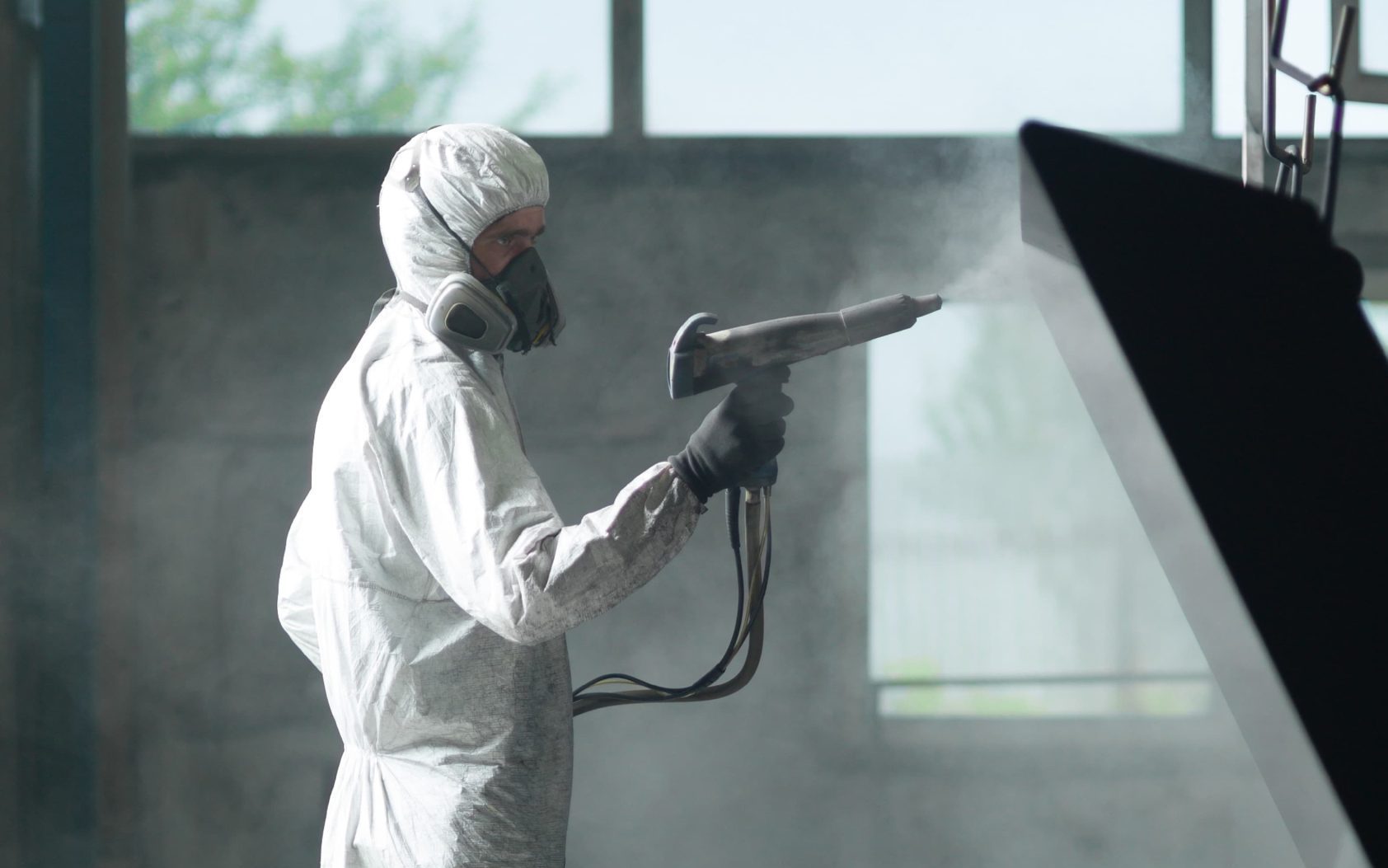
| Powder coating | SP10 or SP6 | 1.5 – 2.5 mil | Al₂O₃ 36–60 or Garnet 36–60 | Outgas from zinc-coated steel can cause pinholing — pre-heat or use non-galvanised stock |
| Coal tar epoxy | SP10 | 2.0 – 3.5 mil | Al₂O₃ 36–46 or Garnet 30–36 | Marine immersion service; high-build system requires deep profile anchor |
The Five-Step Surface Preparation Process
Achieving a consistently blast-cleaned surface that meets a specified cleanliness grade and profile is a process, not a single operation. The five steps below represent the complete workflow from pre-blast condition assessment to post-blast verification, as followed in specification-governed industrial coating work.
Pre-Blast Inspection & Contamination Removal
Inspect the substrate for visible contamination — oil, grease, salts, old paint. Solvent clean oil and grease per SSPC-SP1 before any blasting. Measure surface chloride levels using Bresle patch, SCM-400, or equivalent method. If chloride exceeds the coating specification limit (typically 20–50 mg/m² depending on system), fresh water wash and dry before proceeding. Blasting does not remove soluble salts — it drives them deeper into the surface profile if present.
Media & Equipment Selection
Select blast media type and size based on the specified cleanliness grade, target anchor profile, and substrate type. Confirm media is silica-free (obtain SDS / XRD certificate). Set blast pressure to achieve the target profile — typically 80–100 psi for pressure blast, 60–80 psi for suction. Select nozzle diameter appropriate to compressor capacity (maintain minimum 100 CFM per nozzle). Ensure dust collection and ventilation are operational.
Blast Cleaning
Blast at the specified parameters, maintaining consistent standoff distance (typically 8–12 inches for pressure blast) and sweep rate. Work in overlapping passes to ensure uniform coverage. Verify cleanliness visually against the SSPC pictorial standard comparator plates during blasting — do not wait until completion to discover an inadequate result. For vertical and overhead surfaces, ensure complete coverage of pit bottoms where rust tends to persist longest.
Post-Blast Inspection & Verification
Verify cleanliness grade against SSPC pictorial standards. Measure anchor profile using Testex replica tape (Press-O-Film) or digital surface profile gauge — minimum 3 readings per area, average and range recorded. Re-measure chloride levels (blasting can expose sub-surface salts previously sealed under mill scale). Document all measurements for the coating inspection record. Do not proceed to coating application until all parameters are within specification.
Coat Within the Specified Recoat Window
Apply the first coat of primer within the time specified by the coating manufacturer and the coating specification — typically 4 hours maximum for most industrial epoxy systems in temperate conditions, less in humid environments. Monitor for flash rust (surface reddening) and re-blast any areas showing visible oxidation before coating. Confirm surface temperature is at least 3°C above the dew point before coating application to prevent moisture condensation beneath the primer.
Industry-Specific Standards and Best Practices
Marine & Offshore
Ship hulls, offshore platforms, FPSO vessels, and subsea structures operate in the most aggressive corrosive environment of any coating application. NORSOK M-501 (Norwegian offshore) and IMO PSPC (ballast tank and void spaces on ships) represent the gold standard specifications, requiring SP10 minimum with chloride <20 mg/m² and strict DFT verification. Low-chloride garnet or aluminum oxide at 30–60 mesh is the standard media.
Bridges & Infrastructure
Bridge rehabilitation projects in most jurisdictions reference SSPC guide specifications or state DOT standards that typically require SP10 with a 1.5–2.5 mil profile for the primary zinc-rich primer system. Containment, lead paint management, and spent media disposal are significant project cost drivers. Garnet is favoured for its low dust and non-hazardous spent media profile on urban bridge projects.
Oil & Gas Pipeline
Pipeline external and internal coating specifications (FBE, 3LPE, liquid epoxy) are typically the most demanding surface preparation specifications in any industry, requiring SP5 white metal with tight profile and chloride control for coatings that must perform for 30–50 years in buried or subsea service. Automated blast plants using steel grit or aluminum oxide process pipe at high throughput in controlled environments.
Industrial Facilities & Tanks
Storage tanks, process vessels, structural steel in chemical and petrochemical plants, and power generation facilities typically specify SP10 with 1.5–2.5 mil profile for epoxy lining and coating systems. Tank interior lining for potable water service (NSF/ANSI 61) and chemical storage (specific liner qualifications) typically requires SP5 with surface cleanliness verification by holiday detector after application.
Aerospace & Defence
Aircraft structure, ground support equipment, and military vehicles require surface preparation that maintains dimensional control (no material removal from critical tolerances), avoids contamination of aluminium and composite substrates with iron from steel abrasives, and meets specification requirements such as AMS 2441, MIL-SPEC paint systems, and Boeing/Airbus process specifications. Plastic media and white fused alumina are the primary media.
Architectural & Construction Steel
Structural steelwork for buildings, bridges under non-highway specifications, and architectural cladding is typically primed to SP6 commercial blast or SP10 depending on the exposure category and coating system specified in the project corrosion protection design. SSPC-PA 1 governs the coating application process; ISO 12944-2 defines the corrosivity categories that drive the surface preparation specification.
Coating Failure Modes from Inadequate Surface Preparation
Understanding the specific ways in which coating systems fail when surface preparation is inadequate is the most persuasive argument for getting preparation right. Each failure mode maps directly to a specific preparation deficiency, and all of them are far more expensive to remediate in service than they would have been to prevent at the preparation stage.
❌ Delamination & Blistering
- Cause: Inadequate cleanliness grade (below SP10 for immersion service); soluble salt contamination beneath the coating
- Mechanism: Osmotic pressure draws moisture through the coating film to the salt deposits, forming blisters that eventually break and delaminate
- Prevention: Achieve specified cleanliness; chloride test after blasting; wash if above limit; reblast after washing
❌ Pinholing at Peak Tips
- Cause: Profile depth exceeds coating DFT — peaks of surface profile protrude through the coating film
- Mechanism: Exposed metal peaks corrode and expand, splitting the coating film above them
- Prevention: Match profile to coating DFT; use finer media for thin-film systems; verify peak count and profile distribution
❌ Adhesion Loss — Cohesive Failure
- Cause: Oil, grease, or organic contamination not removed before blasting; blasting drives contamination into surface texture
- Mechanism: Coating bonds to contamination layer rather than clean metal; contamination layer fails cohesively
- Prevention: Solvent clean (SSPC-SP1) before blasting; never blast over oil or grease
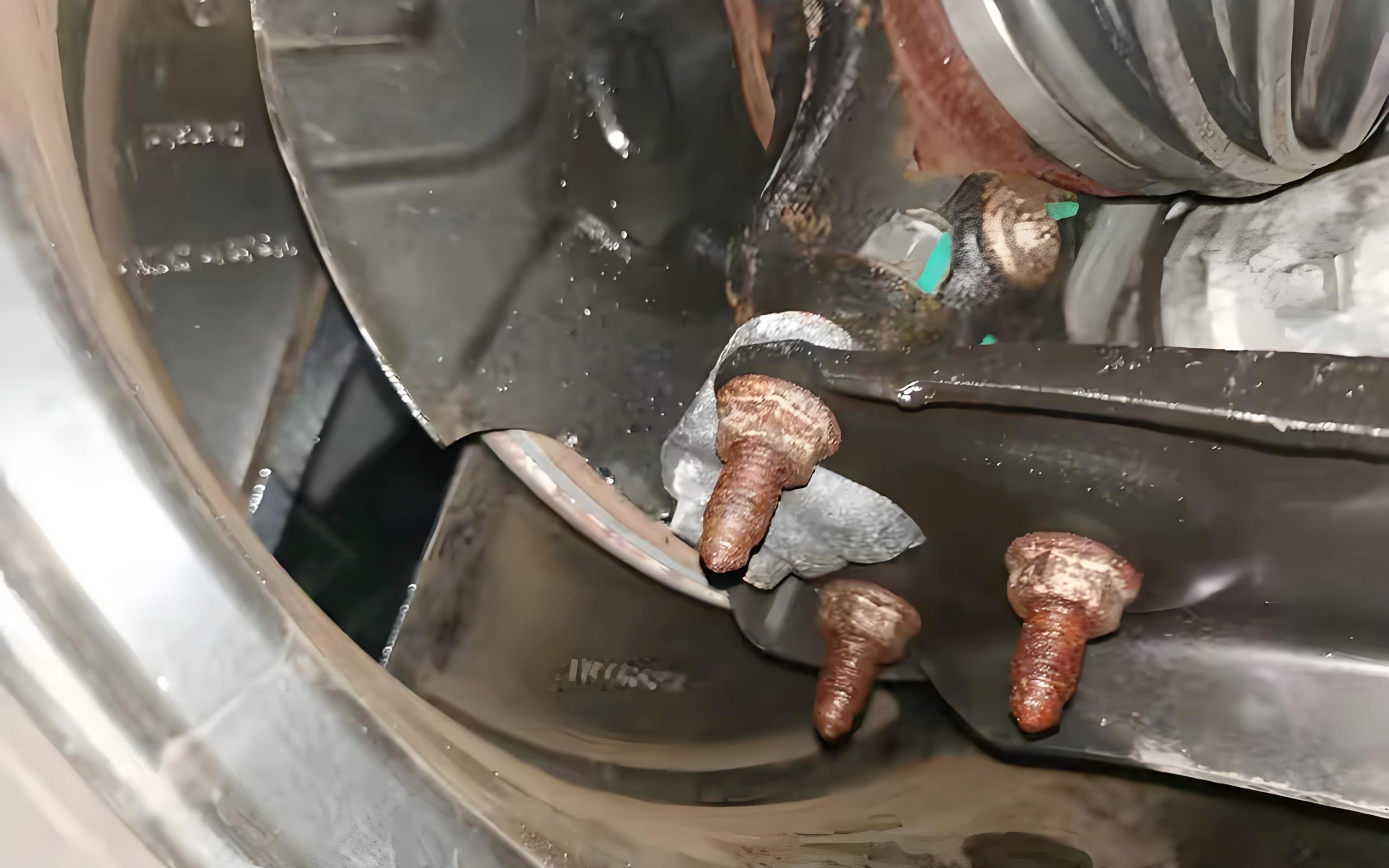
❌ Flash Rust Under Primer
- Cause: Delay between blasting and primer application exceeds recoat window; surface oxidises
- Mechanism: Iron oxide layer forms on blast-cleaned surface; primer bonds to oxide layer, not to base metal
- Prevention: Prime within 4 hours (or as specified); monitor dew point; use flash rust inhibitor if delay unavoidable
Surface Contamination & Chloride Testing
The most insidious surface preparation failure — soluble salt contamination — is invisible to the naked eye and cannot be detected by visual inspection against SSPC standard comparators. Chloride ions (from marine atmosphere, deicing salts, or process spillage), sulphate ions (from atmospheric pollution), and nitrate ions can all be present on a surface that appears visually clean at SP10 standard after blasting.
Under a coating film, these soluble salts absorb moisture from the atmosphere by osmosis, creating localised blistering and delamination within 6–12 months of coating application in service — a failure that requires complete removal and recoating at far greater cost than the original job. In marine and offshore service, the consequences are worse: cathodic protection system overload, accelerated coating breakdown, and structural corrosion requiring early drydocking or shutdown.
Chloride Testing Methods
- Bresle patch method (ISO 8502-6 / ASTM D4940): A latex patch is adhered to the blasted surface, filled with distilled water, agitated, and the extract tested by conductivity or ion chromatography. Simple, reliable, and widely specified.
- SCM-400 / Chlor*Test systems: Proprietary conductivity meters that simplify the Bresle method for field use. Rapid result in 5 minutes.
- Elcometer 130 salt contamination meter: Electronic handheld device providing direct readout in mg/m².
NORSOK M-501 and IMO PSPC (ballast tanks): <20 mg/m². ISO 12944 Category C5-M (marine, very high): <20 mg/m². General industrial atmospheric service (C3–C4): <50 mg/m² typically. Potable water tank lining: <10 mg/m². These limits apply to the blast-cleaned substrate before primer application. Measure after the final blast pass, not before.
Surface Preparation Media from Jiangsu Henglihong Technology
All Henglihong surface preparation media is supplied with the documentation required for coating inspection records and project specification compliance. For projects governed by NORSOK, IMO PSPC, or project-specific QA plans requiring detailed material traceability, we provide full mill certificates and third-party test reports on request. Contact our technical team with your coating specification and project requirements for a tailored media recommendation.
Questions fréquemment posées
What is the difference between SSPC-SP5, SP10, and SP6?
These SSPC (Society for Protective Coatings) standards define increasing degrees of surface cleanliness on blast-cleaned steel. SP5 White Metal (NACE 1) requires 100% of the surface free of all visible rust, scale, paint, and contaminants — the most demanding grade, specified for immersion service and buried pipelines. SP10 Near-White Metal (NACE 2) requires 95% of the surface area free of all visible residues, with slight shadows permitted in pits — the most commonly specified standard for marine, offshore, and industrial coating work. SP6 Commercial Blast (NACE 3) requires 67% free of visible residues — adequate for moderate service atmospheric coatings where cost efficiency is important. Always specify both the cleanliness grade and the target anchor profile depth; cleanliness grade alone does not fully define the surface preparation requirement.
How do I measure anchor profile after blasting?
The most widely used field method is Testex Press-O-Film replica tape (ASTM D4417 Method C / ISO 8503-5). A piece of replica tape is pressed firmly onto the blast-cleaned surface, the compressible foam conforms to the surface texture, and the resulting embossed surface is measured with a dial thickness gauge. The tape comes in two grades: “Coarse” for profiles of 0.8–2.5 mil, and “X-Coarse” for 1.5–5.0 mil. Digital surface profile gauges (Elcometer 124, Positector SPG) provide a faster alternative for high-volume inspection. Take a minimum of three readings per area and record the average and range. Compare results against the coating manufacturer’s specified profile range in the TDS.
How soon after blasting must I apply the primer?
The maximum allowable interval between blasting and primer application (the “recoat window”) depends on the coating system specification and the ambient conditions. Most industrial coating specifications require priming within 4 hours of blasting in temperate conditions (15–25°C, relative humidity below 80%). In marine or high-humidity environments, flash rust can begin within 30–60 minutes of blasting, so the interval may be reduced to 2 hours or less. Always check the specific coating manufacturer’s TDS for the stated maximum interval. If you cannot prime within the specified window, apply a temporary holding primer or rust inhibitor. Never prime over visible flash rust — re-blast if any surface reddening has occurred.
Why is chloride testing required after blasting?
Blasting to SP10 or SP5 cleanliness removes visible contamination but does not remove soluble salts (chlorides, sulphates) that may be embedded in the steel or within pits in the surface. In marine and coastal environments, these ions are present even on steel that appears visually clean after blasting. When left under a coating film, they draw moisture osmotically through the coating, creating blisters and delamination within months of service. Chloride testing (using Bresle patch per ISO 8502-6, or equivalent methods) is the only way to confirm that soluble salt levels are within the coating specification limit before priming. This test is specified in virtually all marine, offshore, and high-performance industrial coating specifications and should be a standard step in any quality coating application.
What anchor profile is required for powder coating?
Most powder coating specifications require an anchor profile of 1.5–2.5 mil (38–64 microns) for optimum adhesion, with a corresponding SSPC-SP10 or SP6 surface cleanliness. Aluminum oxide 36–60 mesh or garnet 36–60 mesh at 70–80 psi achieves this profile range reliably. Some powder coating manufacturers specify finer profiles (1.0–1.5 mil) for thin-film decorative powders; check the powder manufacturer’s technical data sheet. Note that powder coating over galvanised steel requires special handling — zinc outgassing during curing can cause pinholing, and the preferred preparation for galvanised stock is chemical conversion coating (chromate or phosphate) rather than abrasive blasting.
Need Surface Preparation Media for a Coating Project?
Full range of SP5 and SP10 blast media — low-chloride garnet, aluminum oxide, steel grit and more — with the specification documentation your coating inspection records require.
Request a Quote & Spec Documents View All Abrasive Media Products →Filtres