Abrasive Blasting Stainless Steel Surgical Instruments: Deburring, Matte Finishing, and Passivation Complete Guide
Stainless steel surgical instruments represent the most mature and highest-volume application of abrasive blasting in medical device manufacturing. The global surgical instrument manufacturing industry — concentrated in Germany, Pakistan, and the United States — produces hundreds of millions of instruments annually, and virtually every one passes through a blasting step before passivation. This guide focuses on the stainless steel material science that determines how different instrument grades respond to blasting, how to choose between deburring and finish blasting sequences, why passivation chemistry must match the alloy grade, and how to identify and prevent the corrosion failure modes that cut short instrument service life.
1. Medical-Grade Stainless Steel Alloys and Their Properties
| Grade | Type | Cr % | Ni % | Mo % | Hardness (typical) | Key Applications |
|---|---|---|---|---|---|---|
| 316L | Austenitic | 16–18 | 10–14 | 2–3 | 150–200 HV | Forceps, needle holders, delicate instruments, implant trays |
| 304 | Austenitic | 18–20 | 8–10.5 | — | 150–190 HV | Hemostats, retractors, general-purpose clamps |
| 420 | Martensitic | 12–14 | — | — | 200–650 HV (HT) | Scissors, scalpel handles, cutting instruments |
| 440C | Martensitic | 16–18 | — | 0.75 | 650–750 HV (HT) | Premium surgical scissors, bone cutters |
| 17-4PH | Precip. hardened | 15–17.5 | 3–5 | — | 380–440 HV (H900) | High-strength heavy-duty instruments, orthopedic tools |
The distinction between austenitic (304, 316L) and martensitic (420, 440C) stainless steel grades is fundamental to blasting and passivation practice. Austenitic grades are non-magnetic, relatively soft, and have high chromium and nickel content that provides excellent corrosion resistance. They respond uniformly to glass bead blasting and are passivated with standard nitric or citric acid methods. Martensitic grades are magnetic, heat-treatable to very high hardness, but have lower chromium content and no molybdenum — making them intrinsically less corrosion resistant than austenitic grades. Their higher hardness means they require higher blasting pressure or longer dwell time to achieve equivalent Ra, and their passivation requires more careful chemistry selection to avoid surface damage.
2. Deburring Stainless Steel Instruments: Steel Shot vs Glass Beads
Deburring removes the sharp metal protrusions — burrs — left by machining, stamping, drilling, and welding operations. Burrs on surgical instruments are a patient safety risk (they can catch tissue or gloves), an assembly problem (they prevent jaws from closing precisely), and a sterilization problem (they trap organic debris that resists cleaning).
Two blasting approaches address deburring in instrument manufacturing:
Stainless steel shot deburring: 304 or 316L stainless steel shot (0.3–0.6 mm diameter) at 3–5 bar in a rotary blasting machine provides the impact energy needed to mechanically break off or flatten stainless steel burrs on instrument bodies. Steel shot is significantly harder and denser than glass beads, delivering much more impact energy per particle. It is appropriate for aggressive burr removal on instrument bodies, weld seams, and stamped edges. It must be composed of corrosion-resistant stainless steel (not carbon steel) to avoid iron contamination, and all shot residue must be removed before passivation. Steel shot blasting should not be used near precision instrument features — jaw tips, cutting edges, spring pivots — where the high impact energy could deform critical geometry.
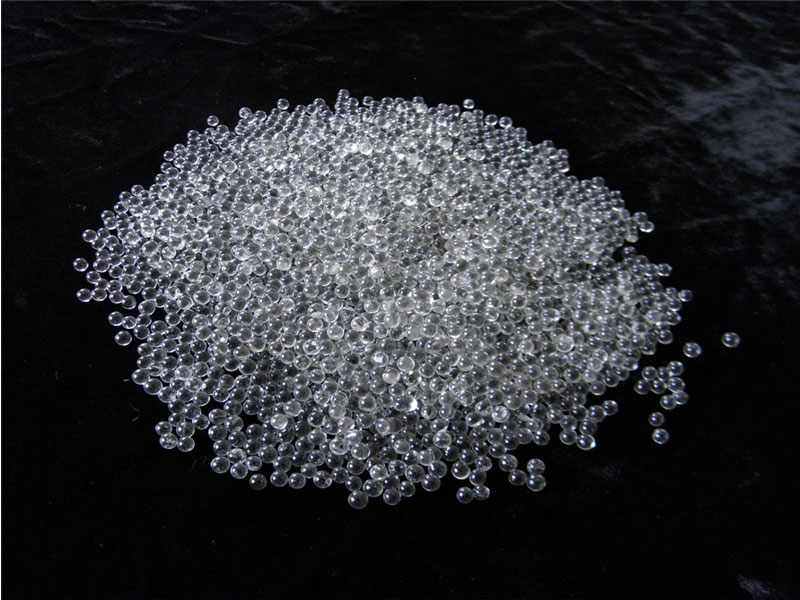
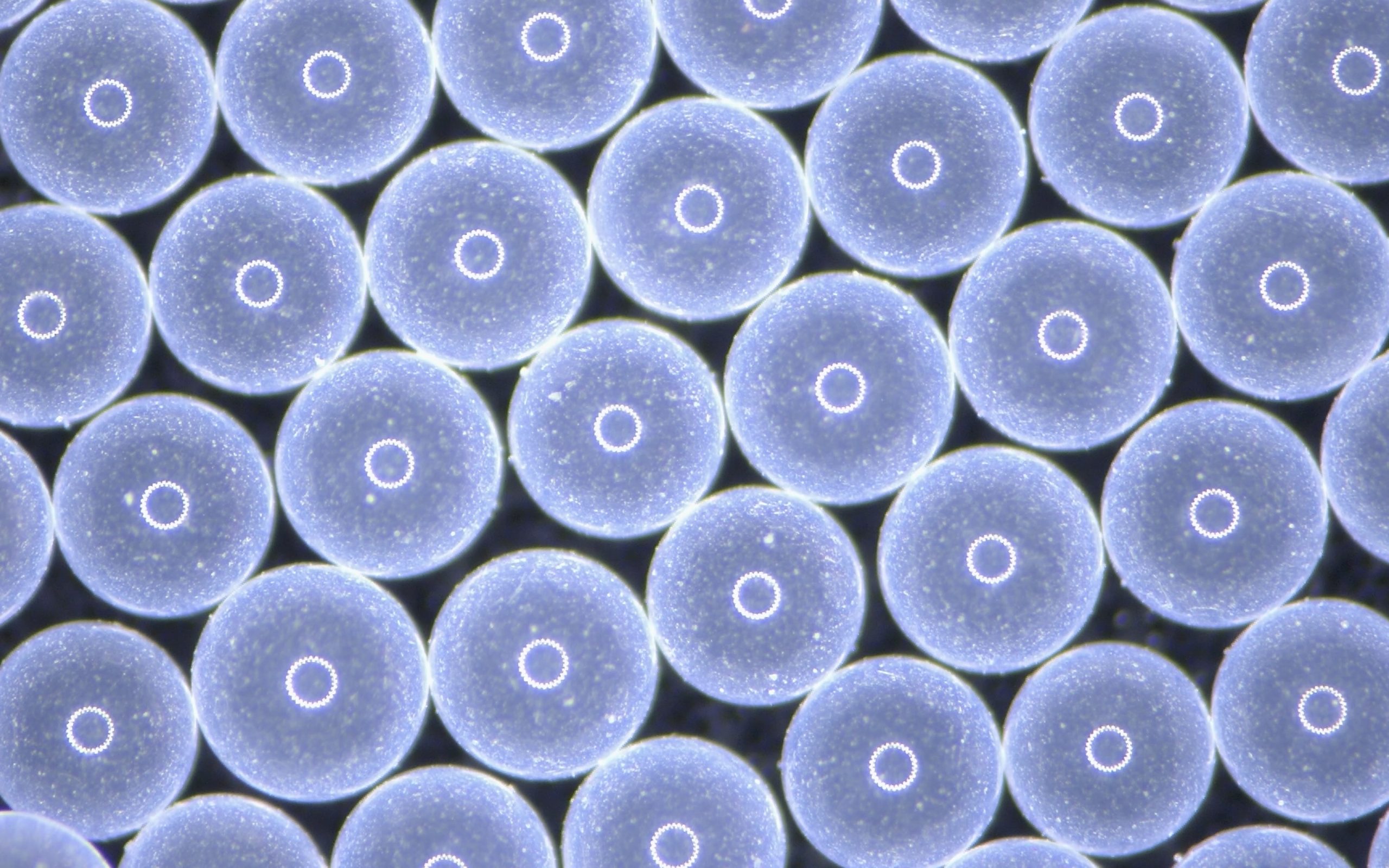
Glass bead deburring: Coarser glass beads (#8–#10, 150–300 μm) at 2.5–3.5 bar can remove light machining burrs and flash from stainless steel instrument surfaces without the risk of over-deforming delicate features. For instruments with fine features and light burrs, glass beads alone in a two-step process (coarser grade for deburring, finer grade for finish) eliminate the need for steel shot and simplify the process and cleaning requirements.
3. Finish Blasting: Achieving the Matte Surface Specification
After deburring (if required), finish blasting with fine glass beads produces the matte finish required for anti-glare performance and passivation preparation. The target Ra for surgical instrument matte finish is typically 0.4–1.6 μm, with the exact specification set by the instrument design requirements and customer/regulatory standards.
| Instrument Category | Grade | Finish Bead Grade | Pressure | Target Ra |
|---|---|---|---|---|
| General hemostats and clamps | 304, 316L | #10–#12 | 2.0–2.5 bar | 0.6–1.2 μm |
| Delicate microsurgical forceps | 316L | #12–#13 | 1.5–2.0 bar | 0.4–0.8 μm |
| Scissors body (non-cutting surfaces) | 420, 440C | #10–#12 | 2.5–3.0 bar | 0.6–1.2 μm |
| Retractors and large instruments | 304 | #8–#10 | 2.5–3.5 bar | 0.8–1.6 μm |
| High-strength orthopedic instruments | 17-4PH | #10 | 2.5–3.5 bar | 0.6–1.4 μm |
For martensitic grades (420, 440C), higher hardness compared to austenitic grades means more pressure is required to achieve equivalent Ra. This is important because scissors and cutting instruments made from 420 or 440C must have their cutting edge geometry masking confirmed before finish blasting — the higher pressure needed for the harder alloy body would dull or round a precision ground cutting edge if unprotected.
4. Passivation by Alloy Grade: ASTM A967 Practice Selection
Passivation treatment must be matched to the stainless steel grade being treated. Using the wrong passivation conditions for a grade can either fail to adequately restore the passive layer (under-treatment) or damage the surface through over-etching or intergranular attack (over-treatment).
| Alloy Grade | Recommended ASTM A967 Practice | Typical Conditions | Notes |
|---|---|---|---|
| 316L, 304 (austenitic) | Practice B or C (nitric) or E/F (citric) | 20–40% HNO₃, 48–55°C, 30 min; or 4–10% citric, 54–65°C, 20 min | Higher temp nitric or citric effective; citric preferred for environmental reasons |
| 420 (martensitic, annealed) | Practice A (nitric, mild) | 20–25% HNO₃, 21–32°C, 30 min | Avoid high temp nitric — can cause intergranular attack; citric Practice E safe |
| 440C (martensitic, hardened) | Practice A or E (mild citric) | 20% HNO₃, 21°C, 30 min; or 4% citric, 21°C, 30 min | Very conservative conditions to protect hardened surface from etching |
| 17-4PH (aged condition) | Practice B or E | 20–40% HNO₃, 48°C, 20 min; or citric Practice E | Similar to austenitic response in aged H900/H1025 condition |
5. Autoclave Resistance and Long-Term Corrosion Performance
Surgical instrument autoclave sterilization (134°C saturated steam, approximately 3 bar pressure, 3–18 minutes per cycle depending on the cycle type) is a harsh corrosion test repeated hundreds of times over instrument service life. The combination of elevated temperature, high humidity, chloride ions from detergent residues, and frequent thermal cycling creates conditions that aggressively test passivation quality.
Well-blasted and passivated 316L instruments routinely survive 500–1000+ autoclave cycles without significant corrosion. The critical factors are:
- Freedom from iron contamination at the surface after blasting. Any carbon steel or free iron from blasting media or equipment will corrode in the autoclave and seed pitting corrosion into the surrounding stainless matrix.
- Complete passivation layer formation verified by copper sulfate or ferroxyl test.
- Avoidance of chloride concentrations from detergent residues. Most instrument damage attributed to autoclaving is actually caused by chloride-containing detergent residues not fully rinsed from instrument surfaces before sterilization.
- Avoidance of dissimilar metal contact in the sterilization load. Carbon steel instruments or carbon steel instrument stands in the same autoclave load can seed galvanic corrosion on stainless instruments.
6. Corrosion Failure Modes and How Blasting Prevents Them
Pitting corrosion — small, deep craters that develop on the instrument surface, typically originating at surface impurities, scratches, or free iron contamination — is the most common corrosion failure in stainless steel instruments. Glass bead blasting removes the Beilby surface layer and machining-embedded contamination that serves as pit initiation sites, and passivation rebuilds the protective oxide that suppresses pit initiation electrochemically.
Crevice corrosion occurs in tight gaps between mating surfaces (instrument box-joint crevices, screw holes, tissue-grasping serrations) where stagnant electrolyte and oxygen depletion create an aggressive local electrochemical environment. Blasting cannot directly prevent crevice corrosion, but thorough post-blast cleaning of these crevices ensures no residue traps chloride-containing solution that would accelerate the process.
Stress corrosion cracking (SCC) occurs in austenitic stainless steel under tensile stress in the presence of chloride ions. Glass bead blasting introduces compressive surface stresses that directly oppose SCC initiation by eliminating the surface tensile stress state that machining creates — this is one of the most practically important benefits of bead blasting for instruments with spring-loaded jaws or curved bodies under tensile bending stress.
7. Frequently Asked Questions
316L (best corrosion resistance; delicate forceps, needle holders), 304 (general purpose; hemostats, retractors), 420 (hardened martensitic; scissors and cutting instruments), 440C (highest hardness; premium cutting instruments), and 17-4PH (precipitation hardened; heavy-duty orthopedic instruments). Each grade has different hardness, chromium content, and corrosion resistance affecting blasting and passivation requirements.
316L stainless steel shot is appropriate for aggressive deburring of heavy instrument bodies with significant machining burrs or weld spatter that glass beads cannot remove at safe pressures. Steel shot must be completely removed before passivation. It must never be carbon steel (only 304/316L), and it should not be used near precision features where high impact energy could deform critical geometry. Many manufacturers prefer two-pass glass bead processes (coarse then fine) to avoid steel shot entirely.
Deburring removes machining burrs and flash using coarser media (#8–#10 glass beads or stainless steel shot) at higher pressure (2.5–4 bar). Finish blasting produces the uniform matte anti-glare surface using fine media (#10–#13 glass beads) at lower pressure (1.5–2.5 bar). Both steps are required for instruments with significant burrs; finish blasting alone is sufficient for cleanly machined bodies.
420 martensitic stainless has lower chromium (~13%) and no molybdenum, making it less corrosion resistant and more sensitive to aggressive passivation chemistry. ASTM A967 Practice A (dilute nitric acid at room temperature) or Practice E (citric acid) are recommended — aggressive high-temperature nitric acid conditions used for austenitic grades can cause intergranular attack on martensitic microstructures. Citric acid passivation is particularly safe for 420 and 440C grades.
Properly blasted and passivated 316L instruments should withstand 500–1000+ autoclave sterilization cycles without significant corrosion. Failures below 200 cycles typically indicate inadequate passivation, carbon steel contamination from blasting media, detergent-induced chloride corrosion from incomplete pre-sterilization rinse, or dissimilar metal contact with carbon steel instruments in the same load.
Source Glass Beads and SS Shot for Surgical Instrument Finishing
Jiangsu Henglihong Technology supplies glass beads in medical instrument grades and stainless steel shot for deburring, with full material certifications and size distribution data for process validation.
Request Specifications & QuoteFiltres