Abrasives for Industrial Pipeline Coating Preparation
Pipeline coating failure is one of the most expensive maintenance problems in the oil, gas, and water infrastructure sectors. The abrasive blasting quality of the pipe surface before coating application determines coating life — and media selection is the first critical variable. Complete guide to abrasive specification for internal and external pipeline coating preparation.
Pipeline Coating Standards
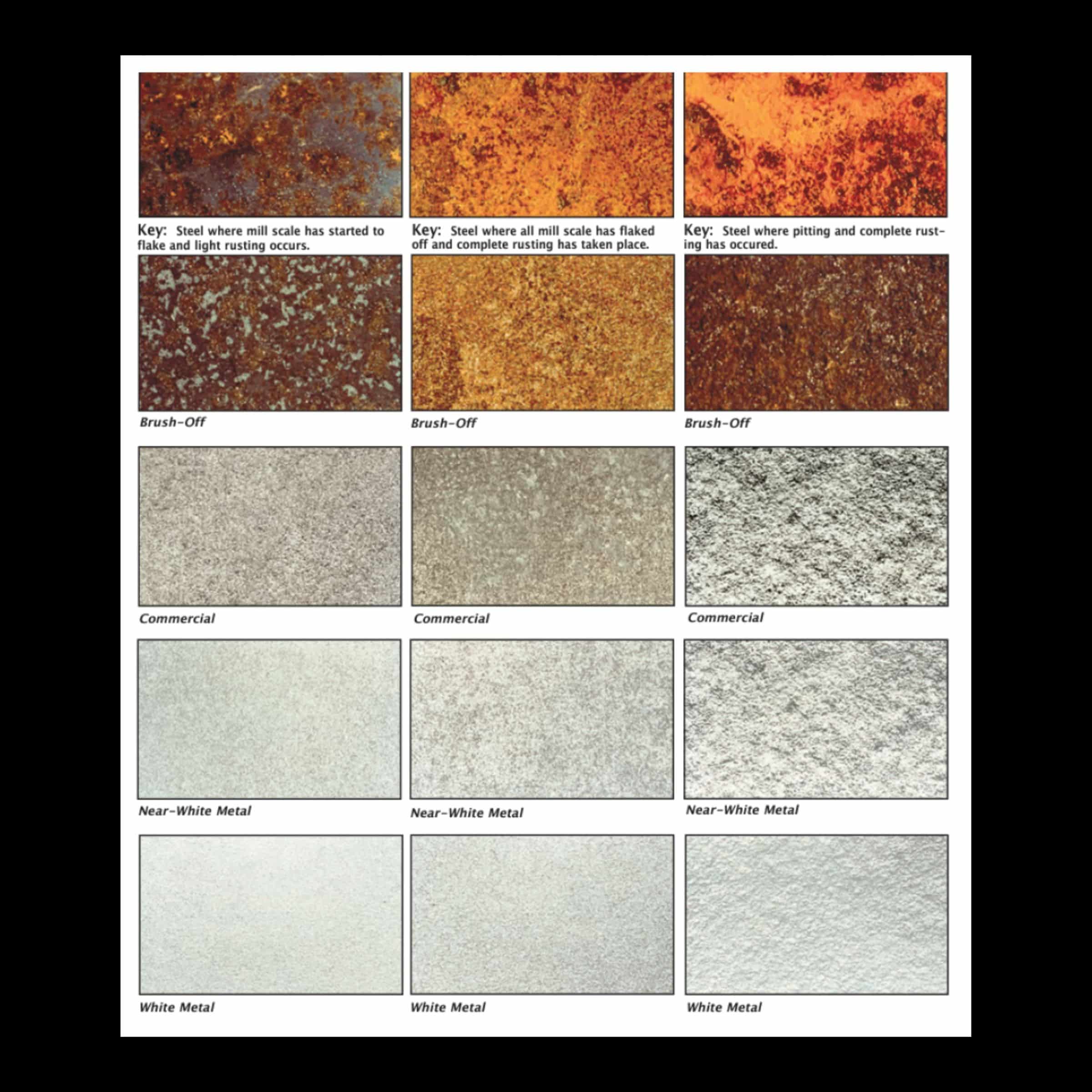
Pipeline coating systems are among the highest-performance protective coating applications in industry, designed for service lives of 20–50 years in aggressive soil, seawater, or chemical exposure environments. The surface preparation standard that enables this longevity is rigorously specified: ISO 8501-1 Sa 2.5 or Sa 3 (equivalent to NACE No. 2/SSPC-SP 10 and NACE No. 1/SSPC-SP 5 respectively) is the baseline requirement for virtually all pipeline coating systems worldwide.
In addition to cleanliness, pipeline coating specifications define anchor profile requirements matched to the specific coating system. Fusion-bonded epoxy (FBE) typically requires 40–75 µm (1.6–3.0 mil) profile; three-layer polyethylene (3LPE) and three-layer polypropylene (3LPP) systems require 40–70 µm (1.6–2.8 mil); internal liquid epoxy lining systems require 25–75 µm (1.0–3.0 mil) depending on the system manufacturer’s TDS.
Media Selection for Pipeline Coating
| Application | Media | Grade/Size | Profile Target | Standard |
|---|---|---|---|---|
| External pipe (FBE) | Grains d'acier | G25–G40 GH | 40–75 µm (1.6–3.0 mil) | ISO 8501-1 Sa 2.5 |
| External pipe (3LPE/3LPP) | Grains d'acier | G25–G40 GH | 40–70 µm (1.6–2.8 mil) | ISO 8501-1 Sa 2.5 |
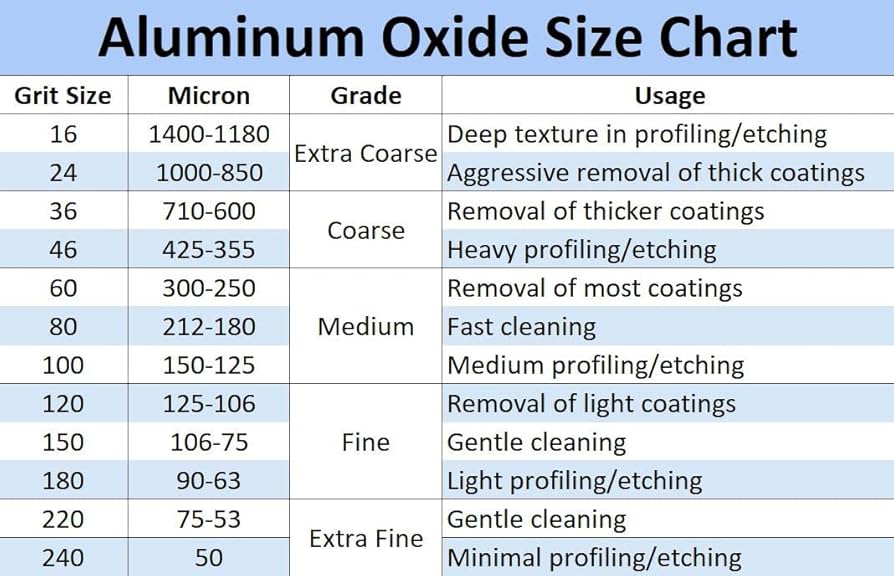
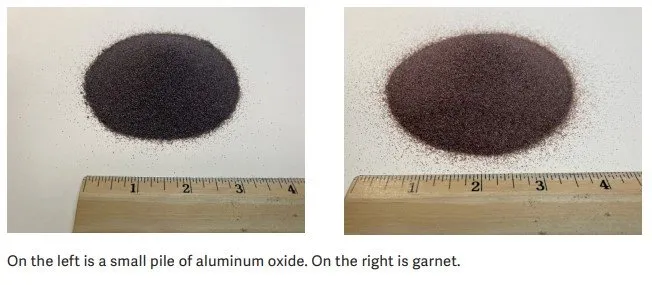
| External pipe (field) | Garnet or aluminum oxide | GMA 16–20 / 36–60 grit | 40–75 µm | NACE No. 2 / ISO Sa 2.5 |
| Internal pipe lining | Aluminum oxide or garnet | 36–60 grit | 25–75 µm (1.0–3.0 mil) | ISO 8501-1 Sa 2.5 |
| Field joint (external) | Aluminum oxide or garnet | 36–60 grit | Match parent pipe profile | As pipeline spec |
External Pipe Coating Preparation
External pipe coating preparation for onshore pipelines is typically performed on automated external pipe blast machines — rotating the pipe past a bank of blast nozzles or centrifugal wheel blast heads. Steel grit G25–G40 GH grade is the dominant media in automated pipe blast machines, combining the deep, consistent profiles required by FBE and 3LPE coating systems with 100+ cycle recyclability that makes pipe mill-scale blast economics favourable.
In automated pipe blast facilities, media quality control is critical: working mix particle size distribution must be maintained within the specified range by regular sampling and separator adjustment. Profile depth is checked with replica tape at the start of each production run and after any equipment change. Soluble salt contamination of the blasted pipe surface must be tested per the coating manufacturer’s specification — typically requiring chlorides below 30–50 µg/cm² before FBE application.
Internal Pipe Lining Preparation
Internal pipe lining — protecting pipe bore from corrosion, scaling, and contamination — requires surface preparation that is both effective and practical within the geometric constraint of the pipe bore. Small-diameter pipes (below 150 mm bore) are particularly challenging: conventional blast nozzles cannot reach the full pipe circumference uniformly, and media recovery from the pipe bore requires purpose-built internal blast units with integrated vacuum recovery.
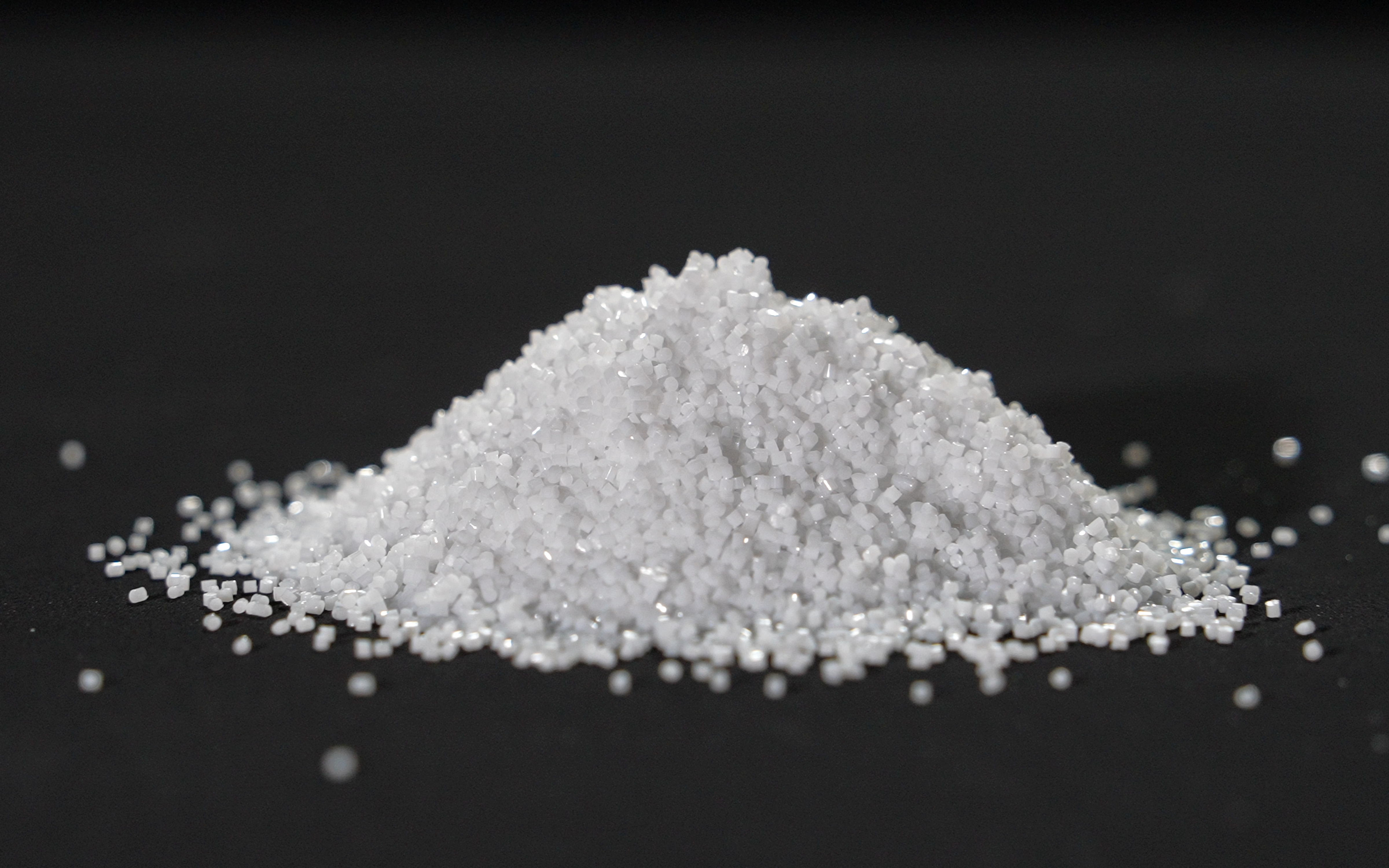
Aluminum oxide 36–60 grit is the standard for internal pipe blast because its high recyclability reduces media cost in the single-pass, vacuum-recovered system, and its profile depth capability meets the 1.5–2.5 mil requirement of most internal epoxy lining systems. Garnet is used where chemical inertness and residue-free cleanliness is required — particularly for potable water pipelines and food-grade process piping where the internal lining specification includes strict requirements on surface ionic contamination.
Fusion-Bonded Epoxy (FBE) Coating Systems
FBE is the dominant pipeline coating system globally for onshore and offshore gas and liquid hydrocarbon pipelines, chosen for its high adhesion, cathodic disbondment resistance, and consistent application quality in a factory-controlled environment. FBE application requires pipe surface temperature between 230°C and 275°C at the point of powder application — which means the blasted pipe surface quality is fixed at the mill and must survive transit to the coating line without recontamination.
The anchor profile specification for most FBE systems is 40–75 µm (1.6–3.0 mil) to ISO 8503, with surface cleanliness Sa 2.5 confirmed by visual comparison to ISO 8501-1 comparator photographs. Steel grit G25–G40 GH in an automated blast machine consistently achieves this specification. Profile uniformity across the full pipe circumference is verified by replica tape measurements at four positions (12, 3, 6, and 9 o’clock) on each qualification panel. For full steel grit specifications, see the Steel Grit guide.
Field Joint Coating Preparation
Field joint coating — applying protective coating over the welded girth weld joint and adjacent bare steel after pipe laying — cannot use automated blast equipment. Portable blast pots with aluminum oxide or garnet are the standard method for field joint surface preparation, which must match or exceed the parent pipe coating’s surface preparation standard. Garnet (GMA 16–20 mesh) is increasingly specified for field joint work on environmentally sensitive pipeline routes — wetlands, river crossings, agricultural land — where dust and waste abrasive control is a permit condition.
FAQ
ISO 8501-1 Sa 2.5 (Near-White Blast) cleanliness and a surface anchor profile of 40–75 µm (1.6–3.0 mil) are the standard requirements for FBE pipeline coating. The blasted surface must be free of oil, grease, moisture, and soluble salts before coating application, and the pipe must reach the FBE application temperature (230–275°C) without surface recontamination. Steel grit G25–G40 GH is the industry-standard media for achieving this specification in automated pipe blast facilities.
Yes — GMA garnet is widely used for field joint blasting and for internal pipe lining preparation where chemical inertness is required. For automated mill coating preparation using conveyor blast systems, steel grit is more economical due to its recyclability advantage. In field conditions where media recovery is impractical and dust control matters (sensitive environments, populated areas), garnet is the preferred choice for pipeline field blasting operations.
Source Pipeline Coating Prep Abrasives from Jiangsu Henglihong Technology
Steel grit, garnet, and aluminum oxide for external and internal pipeline coating preparation. ISO-compliant media with full certification for oil, gas, and water infrastructure projects.
Filtres