Soda Blasting Media: When & Why to Choose Sodium Bicarbonate
A complete guide to sodium bicarbonate soda blasting — covering the unique properties that make it indispensable for certain applications, its performance limits, equipment requirements, and how it compares to conventional abrasive media.
What Is Soda Blasting Media?
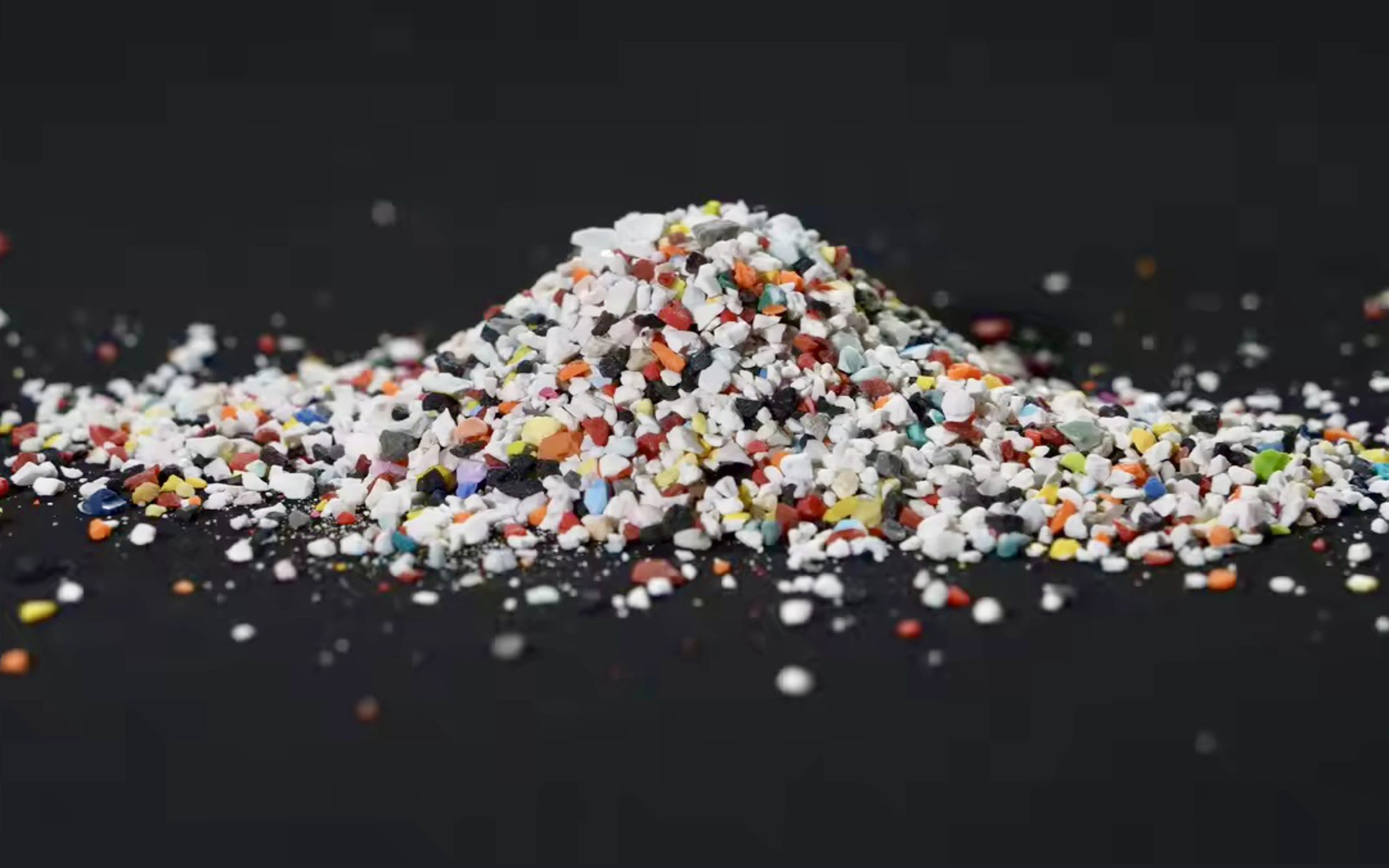
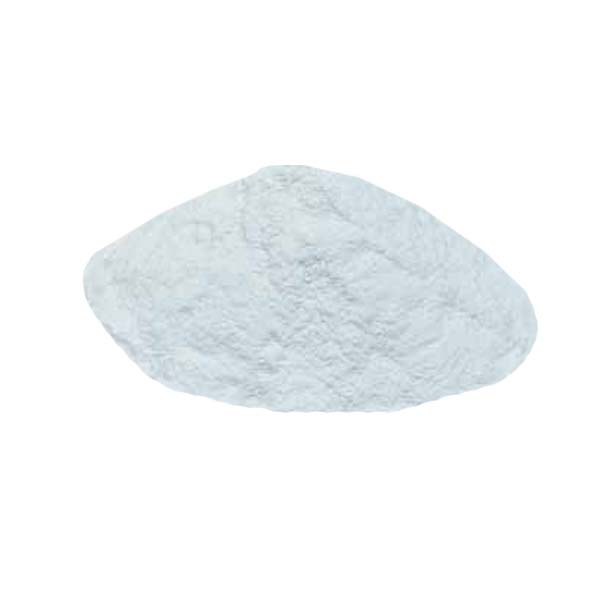
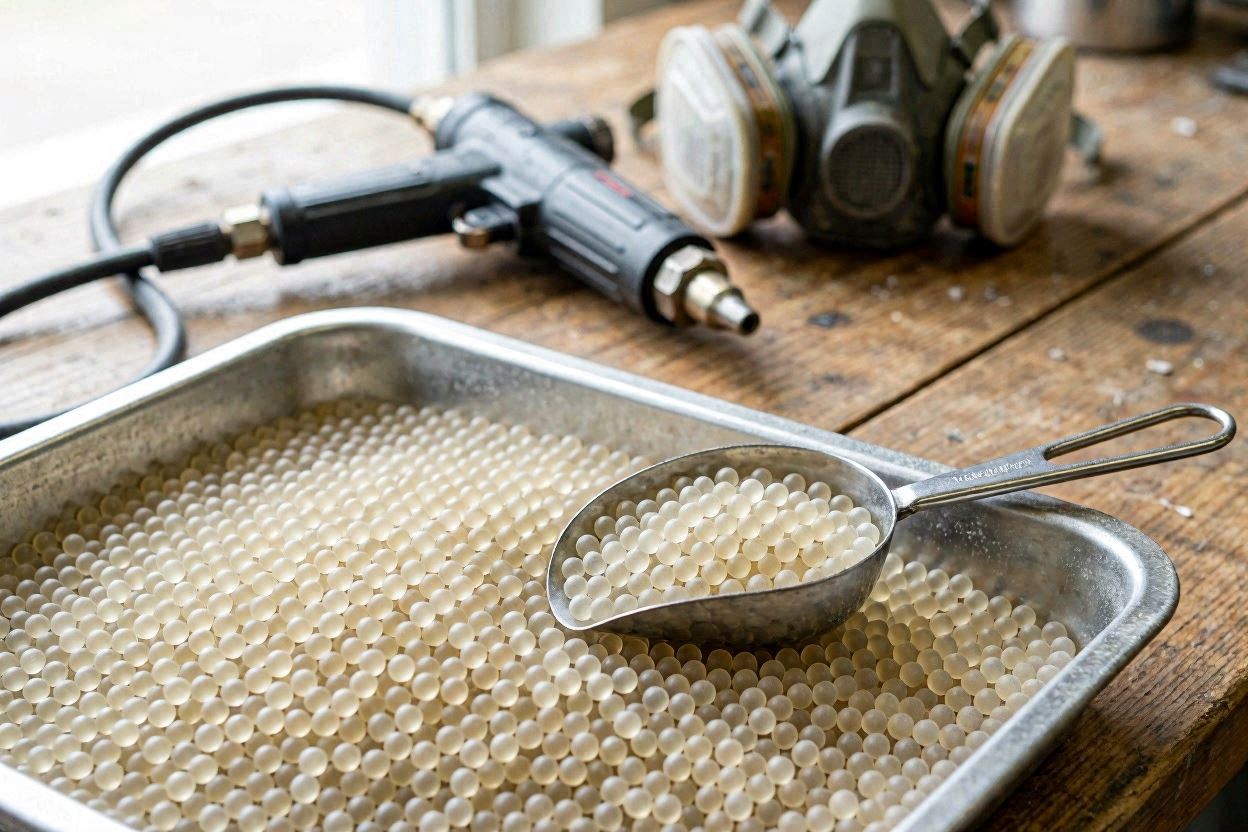
Soda blasting media is sodium bicarbonate (NaHCO₃) — the same compound as baking soda — manufactured in a specially engineered particle size and moisture-controlled formulation for use in pressurized abrasive blasting equipment. It rates just 2.5 on the Mohs hardness scale — the softest abrasive used for surface preparation — and uniquely, it shatters completely on impact, leaving no embedded particles and no surface profile.
Soda blasting occupies a specific and irreplaceable niche in the surface preparation toolkit: situations where the cleaning or coating removal goal must be achieved with absolutely zero alteration of the substrate surface. This is impossible with any other commonly available blasting media — even the softest plastic or organic alternatives leave some micro-profile on the surface. Soda’s shattering impact mechanism is the only approach that truly preserves the substrate exactly as it was.
Critically, soda blasting media is not ordinary kitchen baking soda. Kitchen sodium bicarbonate is ungraded, moisture-contaminated, and will clog blasting equipment and produce inconsistent results. Industrial soda blasting media is manufactured to defined particle size distributions (typically 70–500 µm for blasting grades), with controlled moisture content and free-flowing characteristics specifically engineered for pressurized blasting use.
For broader context on where soda fits in the soft abrasive spectrum: Plastic & Organic Blasting Media: Walnut Shell, Corn Cob & Plastic Grit. For complete media comparison: Abrasive Blasting Media Complete Guide.
Unique Properties of Sodium Bicarbonate as a Blast Media
| Property | Bicarbonate de sodium | Significance |
|---|---|---|
| Mohs hardness | 2.5 | Softest of all common blast media — will not profile any substrate |
| Impact mechanism | Shatters completely on impact | Zero embedded particles; zero profile change |
| Water solubility | Fully water-soluble (88 g/L at 20°C) | Spent media dissolves in water rinse; potential drain disposal |
| pH of solution | ~8.3 (mildly alkaline) | Mild degreasing action; slightly inhibits flash rust on steel |
| Odor neutralization | Active — absorbs and neutralizes acidic odors | Valuable for fire and mold remediation |
| Food safety | GRAS (Generally Recognized As Safe) — FDA listed | Safe for food contact surfaces and food equipment environments |
| Free silica content | Aucun | No silicosis risk |
| Iron content | Aucun | Safe on stainless steel and non-ferrous metals |
| Recyclabilité | Single-use only | Dissolves/fractures completely — no reclaim possible |
| Blasting temperature sensitivity | Stable to ~50°C | Avoid blasting very hot surfaces — decomposition above 50°C |
The combination of complete impact shattering (leaving no media residue on the surface) and water solubility makes soda blasting genuinely unique — no other blast media offers both properties simultaneously. This combination enables several application scenarios that are impossible with any alternative.
When to Choose Soda Blasting
The decision to use soda blasting rather than another soft media (plastic grit, walnut shell, corn cob) or a harder abrasive is driven by one or more of the following requirements being present:
- Zero substrate profiling required: The surface must not be altered in any dimensional or textural way — precision chrome plating, polished stainless steel, decorative glass, soft stone, or any surface where even the finest angular abrasive would leave unacceptable marks.
- Food-grade cleaning environment: Equipment or surfaces in direct food contact zones where chemical cleaning residues are unacceptable and where the cleaning medium itself must be food-safe. Soda’s GRAS status is the decisive advantage here.
- Odor neutralization required alongside cleaning: Fire damage restoration, mold remediation, and smoke-damaged building restoration all involve substrate contamination that produces persistent odors. Soda’s active odor neutralization — chemically reacting with acidic odor compounds to neutralize them — is unique among blast media.
- Water-soluble waste disposal: Applications where dry waste collection is impractical but a water rinse is available, and where drain disposal of the dissolved soda residue is permitted by local regulations.
- Stainless steel or high-value alloy cleaning: Where even the iron-free but still-abrasive glass bead or plastic grit would be too aggressive for the application, soda provides contamination-free cleaning without any surface alteration.
Primary Application Areas
Heritage Building & Historic Structure Restoration
The restoration of historic buildings, monuments, stone facades, and architectural ornamental elements requires cleaning methods that remove accretions, biological growth, old paint, and pollution staining without damaging the original stone, brick, or plaster surface. Soda blasting is one of the most widely approved methods for this application — its extreme gentleness prevents stone surface erosion that would destroy carved details and historic surface textures, while its water solubility means no residue is left in the porous stone matrix.
Different crystal sizes are available for heritage work: coarser grades (XL crystals, 400–500 µm) for removing thicker paint deposits from robust masonry; medium grades for standard cleaning; fine grades for the most delicate ornamental stone. Always consult a conservation specialist before specifying soda blasting on listed or protected heritage structures — the technique and parameters require expert calibration for each substrate type and condition.
Fire & Smoke Damage Restoration
Fire damage remediation — cleaning soot, smoke residue, and char from structural elements and building contents — is one of soda blasting’s most established and effective applications. Soda accomplishes three things simultaneously: physical removal of soot and char by the abrasive impact of the crystal, chemical neutralization of acidic smoke residue (smoke deposits are acidic; sodium bicarbonate, being alkaline, neutralizes them on contact), and deodorizing of smoke odors through the same acid-base reaction mechanism.
No other blast media offers this combination. Walnut shell or plastic grit physically removes deposits but does not neutralize smoke chemistry or odors. Chemical treatments address chemistry but require dwell time, rinsing, and generate different waste streams. Soda blasting handles all three objectives in a single pass, making it the preferred technique for fire restoration contractors globally.
Food Processing Equipment Cleaning
Food manufacturing facilities — bakeries, meat processing, dairy plants, snack food production — use soda blasting for periodic deep cleaning of production equipment: conveyors, mixers, tanks, and processing chambers. The combination of food-safe status, zero chemical residue, and effective removal of baked-on food deposits, grease, and biofilm makes soda blasting highly valuable in regulated food production environments. After blasting, a water rinse dissolves all soda residue, leaving no contamination that could affect food safety compliance.
Automotive Restoration: Engine Bay & Underbody Cleaning
Soda blasting has become popular in automotive restoration for cleaning engine bays, underbody components, and chassis members of accumulated grease, oil, and dirt without risk of damaging painted or plated surfaces adjacent to the blasted area. Its extremely gentle action makes it safer than any other blast media for use around rubber seals, gaskets, bearings, and plastic components that must not be contacted by abrasive media. For automotive paint removal from sheet metal, melamine plastic grit remains the more appropriate choice — soda cannot remove tightly adhered multi-layer paint systems from steel effectively.
Industrial Equipment Degreasing and Mold Cleaning
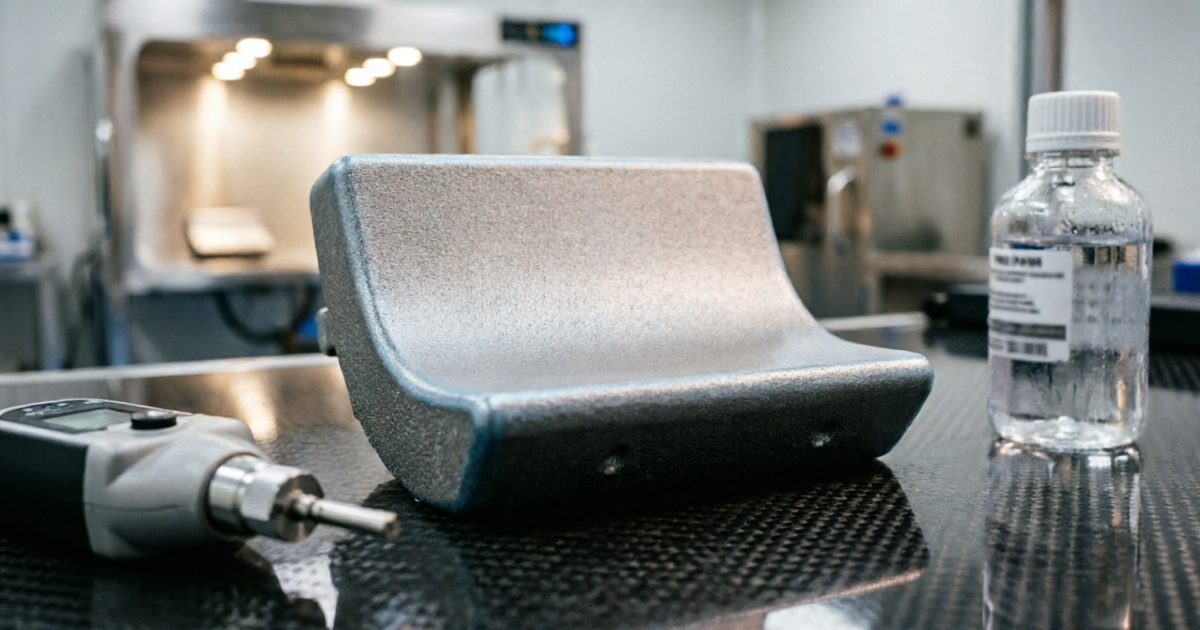
Injection molds and precision machined surfaces can be cleaned of release agent, polymer residue, and contamination by soda blasting without altering the surface finish or dimensions. The technique is particularly valued for molds with fine surface textures (leather grain, wood grain, matte finishes) where any abrasive media would damage the textured surface that is essential to the molded part’s appearance.
Equipment Requirements
Soda blasting requires different equipment considerations than conventional abrasive blasting:
- Dedicated or carefully cleaned equipment: Soda absorbs moisture rapidly and can cake in equipment that has previously held mineral or metallic abrasives. Dedicated soda blasting pots with smooth internal coatings minimize caking and bridging. At minimum, equipment must be thoroughly cleaned and dried before loading soda.
- Moisture control is critical: Soda must be kept dry before use. Humid conditions cause particle agglomeration and equipment clogging. Many soda blasting systems include air dryers and heated hoses to prevent in-line moisture absorption.
- Lower operating pressures: Soda is used at 20–60 PSI — significantly lower than mineral abrasives. Higher pressures fracture the crystals too aggressively, increasing dust without improving cleaning effectiveness.
- Waste collection: While soda is water-soluble, dry containment is still required during blasting to prevent airborne soda powder from contaminating adjacent areas. After collection, soda waste can typically be rinsed down drains (subject to local pH discharge regulations — confirm soda discharge is permitted).
Limitations of Soda Blasting
Soda blasting leaves the substrate exactly as it was dimensionally — no anchor profile, no micro-roughness change. This means it cannot prepare a steel surface for protective coating adhesion. If coating application is the goal after cleaning, a separate profiling operation using angular abrasive media (aluminum oxide, garnet, or steel grit) is required after the soda clean. This two-step process is more time-consuming and costly than profiling and cleaning simultaneously with a single angular blast — soda blasting’s primary use is therefore in applications where coating application is NOT the downstream objective.
Soda blasting at practical pressures cannot remove tightly adhered industrial paint systems, epoxy coatings, or thick rust. It is effective only at removing: loose or degraded paint, light contamination, soiling, biological growth, soot, grease, and soft deposits. For removing well-adhered multi-layer paint from steel or removing rust and mill scale, harder abrasive media is required. Attempting to use soda for applications beyond its capability results in unacceptably slow production and high media consumption without achieving the required surface condition.
Soda vs Other Soft Blasting Media
| Property | Bicarbonate de sodium | Walnut Shell | Corn Cob | Plastic Grit (Urea) |
|---|---|---|---|---|
| Mohs hardness | 2.5 | 3–4 | 2.5–3 | 3–3.5 |
| Surface profile change | Zero | Minimal | Minimal | Minimal |
| Water solubility | Complete | Aucun | None (absorbs water) | Aucun |
| Odor neutralization | Active (alkaline) | Aucun | Aucun | Aucun |
| Food safe | Yes (GRAS) | Yes (natural) | Yes (natural) | No |
| Biodegradable | Yes | Yes | Yes | No |
| Reusability | Single-use | Single-use | Single-use | 2–3× |
| Coating removal capability | Very light only | Light-medium | Very light only | Light-medium |
| Cost per kg | Haut | Faible | Très faible | Haut |
Pre-Coating Considerations After Soda Blasting
If coating application is required after soda blasting (unusual — see limitations above), specific substrate preparation steps are necessary before any coating can be applied:
- Thorough water rinse: Remove all soda residue from the surface and from any crevices or recesses where it may have accumulated. Residual soda under a coating will absorb moisture osmotically and cause blistering.
- pH verification: Test the rinsed surface with pH paper or a pH meter. The surface must be pH-neutral (pH 6–8) before coating application. Soda leaves a mildly alkaline residue that must be fully rinsed away.
- Dry completely: The surface must be completely dry before any coating is applied. Soda’s hygroscopic nature means the blasted surface can re-absorb atmospheric moisture rapidly in humid conditions.
- Profile the surface: If the coating specification requires a minimum anchor profile, this must be created with a separate angular abrasive blast after the soda clean and rinse. Soda blasting alone does not produce a coating-ready profile on steel.
Questions About Soda Blasting or Other Soft Media?
While Jiangsu Henglihong Technology’s core product range is aluminum oxide, silicon carbide, glass beads, and steel shot/grit, our technical team can advise on the full spectrum of blasting media options — including soda blasting for specialized applications — and help you select the most appropriate media for your specific surface preparation challenge.
Request Technical AdviceQuestions fréquemment posées
Filtres