Garnet Blasting Media: Eco-Friendly Performance for Wet & Dry Blasting
A complete technical guide to garnet abrasive blasting media — from mineral properties and grades to low-dust performance, wet and dry blasting capabilities, marine applications, and environmental certifications.
What Is Garnet Blasting Media?
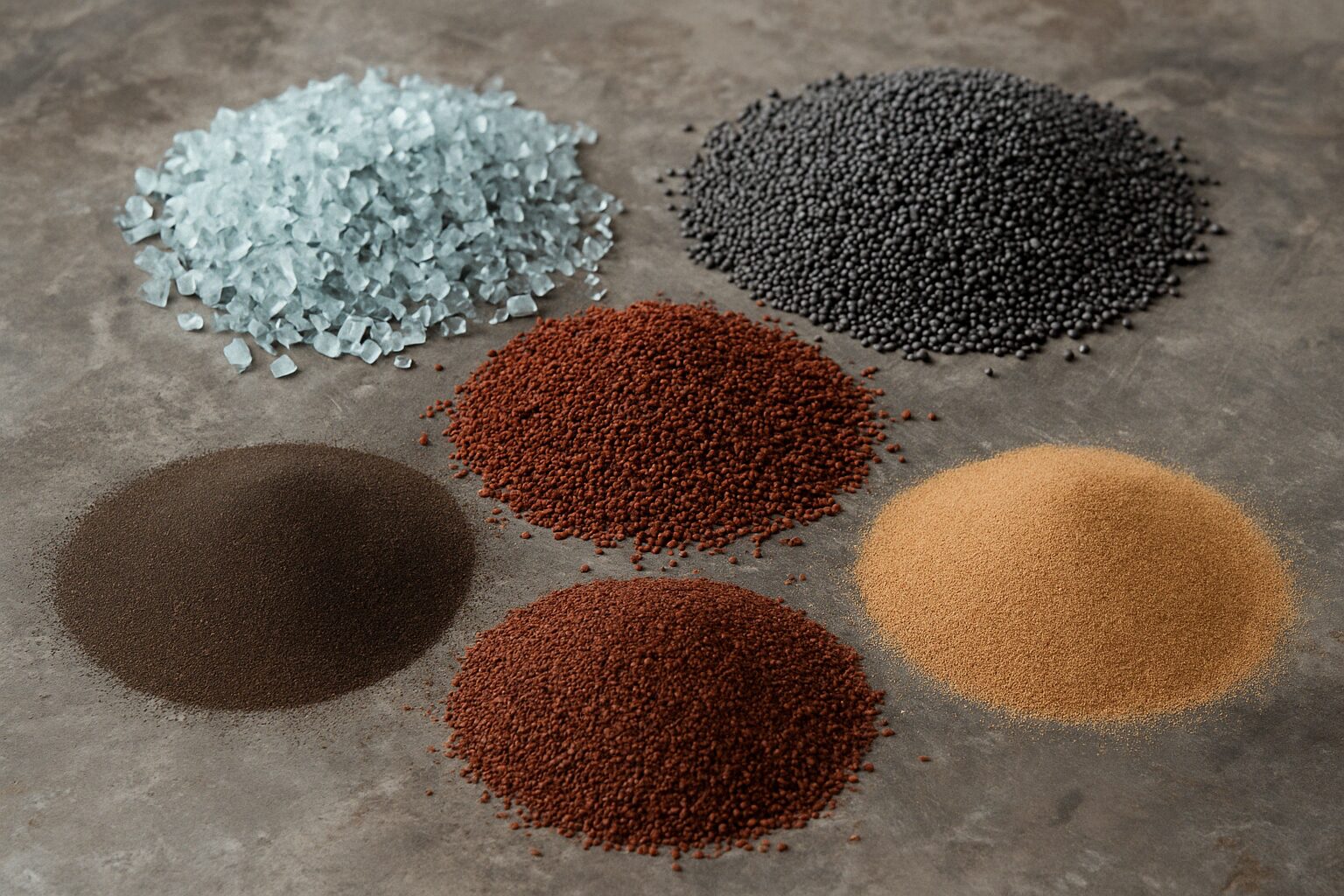
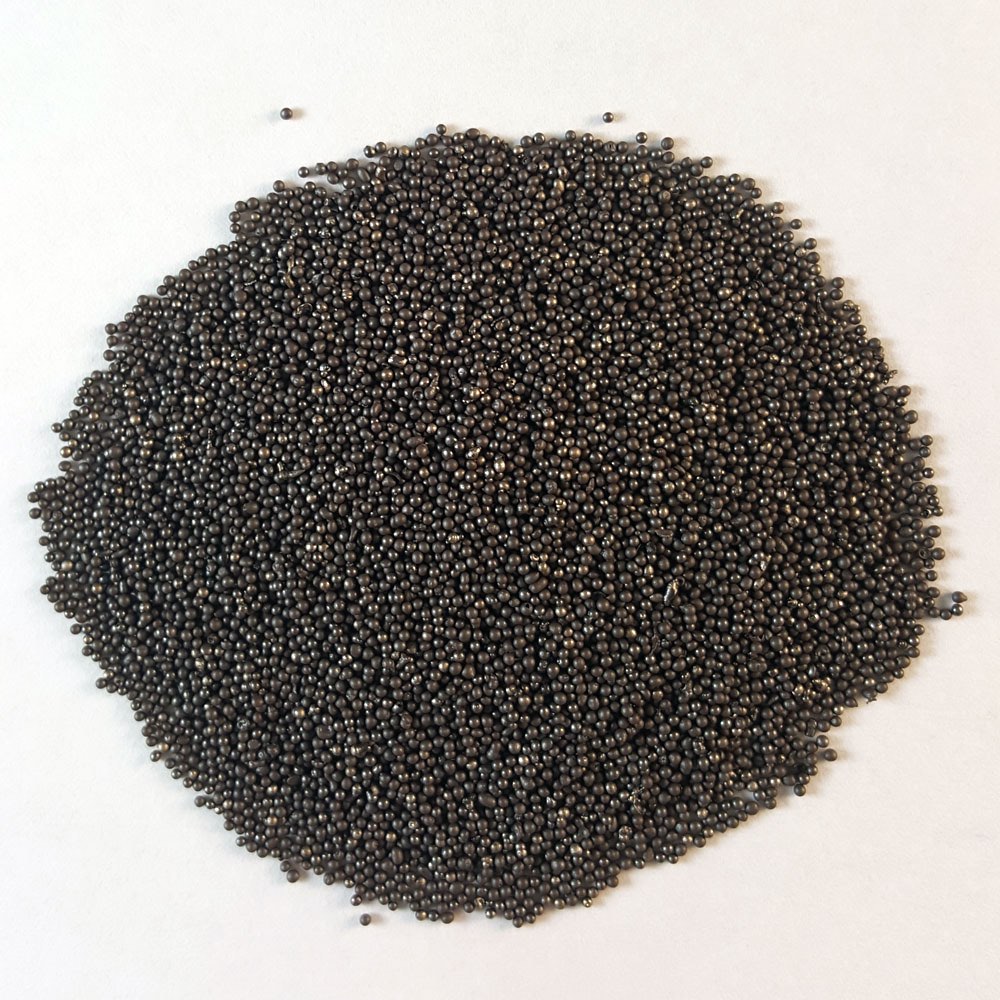
Garnet blasting media is a natural mineral abrasive derived primarily from almandine garnet — a member of the silicate mineral group with the chemical formula Fe₃Al₂(SiO₄)₃. Mined from metamorphic rock formations, crushed, and precisely screened to produce angular abrasive particles, garnet combines moderate hardness (Mohs 7–8), very low dust generation, low free crystalline silica content, and a favorable environmental profile that sets it apart from both synthetic and slag-based abrasives.
Garnet is the preferred blast media for marine and offshore surface preparation, waterjet cutting operations, and any application where worker health, site contamination control, or environmental certification requirements make high-dust or high-silica media unacceptable. Its angular grain morphology provides effective cleaning and surface profiling, while its density and fracture characteristics produce less airborne particulate than comparable abrasives at equivalent blasting pressures.
For a broader overview of where garnet fits among all blast media options, see the Abrasive Blasting Media Complete Guide. For environmental positioning, refer to our guide on Eco-Friendly & Biodegradable Blasting Media.
Physical & Chemical Properties
| Property | Almandine Garnet (Industrial Grade) |
|---|---|
| Mineral type | Almandine garnet — Fe₃Al₂(SiO₄)₃ |
| Mohs hardness | 7.0–8.0 |
| True density | 3.9–4.1 g/cm³ |
| Densité apparente | 2.2–2.5 g/cm³ |
| Forme des particules | Sub-angular to angular |
| Free crystalline silica | <1% (typically 0.1–0.5%) |
| Heavy metal content | Negligible (<0.01% for regulated metals) |
| Couleur | Red-brown to dark red |
| Génération de poussière | Very low (significantly lower than slag, sand, or Al₂O₃) |
| Reuse cycles | 3–5× |
| Applicable standards | SSPC-AB 3, ASTM C136, ISO 11127 |
The combination of moderate-to-high true density (3.9–4.1 g/cm³ — considerably denser than most mineral abrasives) and angular fracture morphology gives garnet its effective surface cleaning performance despite being somewhat softer than aluminum oxide or silicon carbide. Its density means each particle carries more kinetic energy at the same velocity than lighter alternatives, partially compensating for the hardness differential.
Garnet Grades & Global Sources
Not all garnet abrasive is equivalent. The mineral name “garnet” covers a family of related silicate minerals with varying hardness and performance characteristics. For abrasive blasting, almandine garnet (Fe₃Al₂(SiO₄)₃) is the dominant grade, sourced primarily from:
- Australia (Western Australia): The world’s largest supplier of blasting-grade garnet. Australian almandine garnet is generally considered the highest consistency product for marine and offshore applications due to tight geological uniformity and well-developed mining and processing operations.
- India (Rajasthan): A major supplier of cost-competitive garnet for global blasting markets. Quality varies more than Australian product; careful supplier qualification is important.
- China: Growing production capacity for both almandine and pyrope garnet grades. Increasingly competitive for export markets.
- USA (Idaho): Local production primarily serving the North American market.
For blasting applications, the key quality criteria regardless of source are: free silica content (<1%), hardness consistency (Mohs 7–8 confirmed by Knoop hardness testing), particle size distribution within specification (confirmed by sieve analysis per ASTM C136), and heavy metal content within regulatory limits.
Grit Size Chart
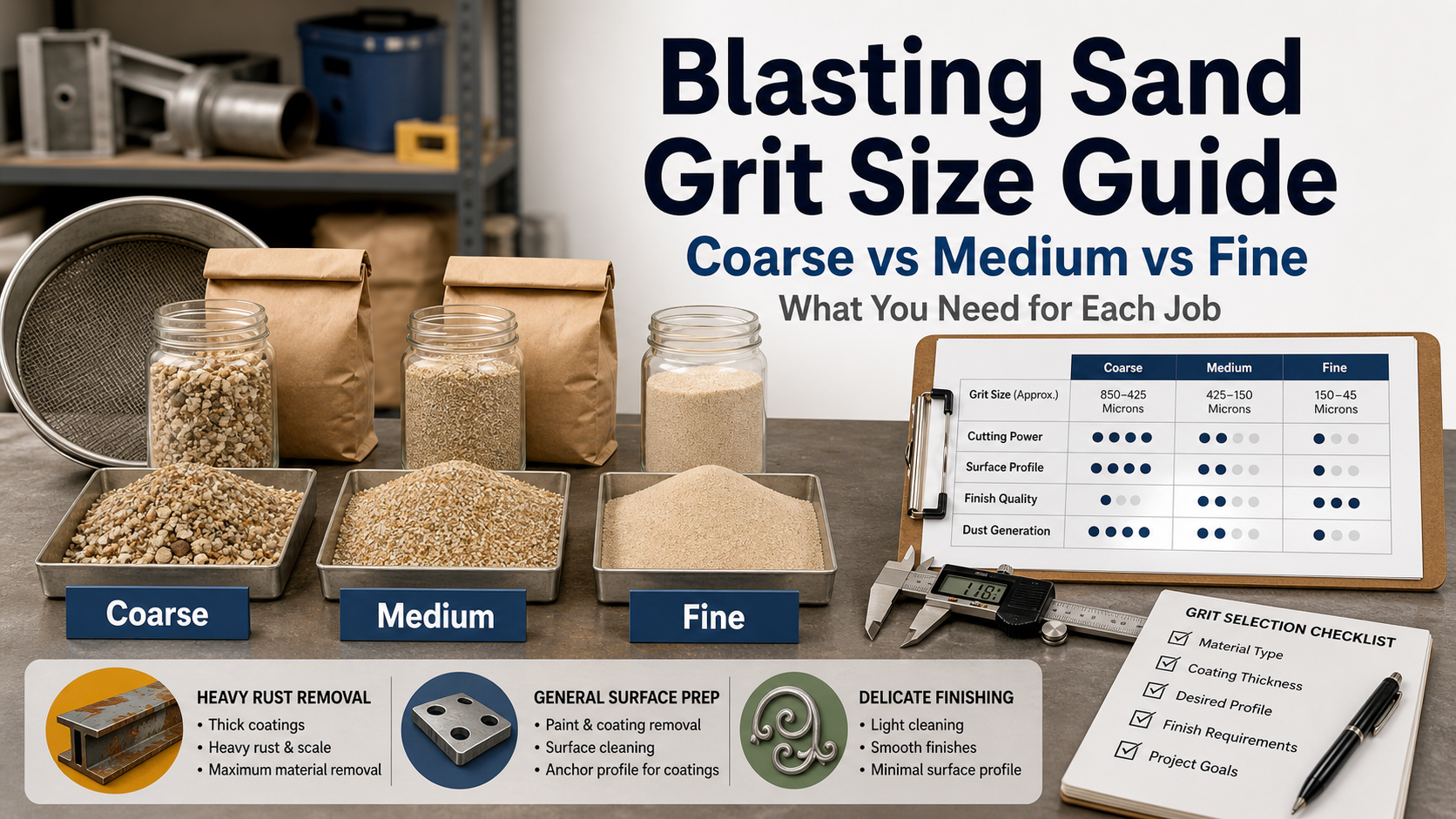
| Grit Size (US Mesh) | Particle Size (µm) | Typical Profile (µm Ra) | Application |
|---|---|---|---|
| 16/20 | 850–1,180 | 75–120 | Heavy rust and mill scale removal |
| 20/40 | 425–850 | 50–90 | General coating preparation, Sa 2.5 |
| 30/60 | 250–600 | 35–65 | Coating prep, pipe and tank blasting |
| 36/60 | 250–500 | 30–55 | Standard marine and offshore coating prep |
| 60/100 | 150–250 | 15–35 | Precision surface preparation, light rust removal |
| 80/120 | 125-180 | 10–25 | Fine surface conditioning, waterjet abrasive |
| 120/200 | 75–125 | 5–15 | Ultra-fine finishing, waterjet precision cutting |
The most widely specified garnet grades for marine and offshore blasting are 30/60 and 36/60 mesh, which provide the optimal balance between surface profile depth, blasting speed, and dust generation for NORSOK M-501 and SSPC SP-10 Near White Metal compliance work. For full cross-standard conversions, see: Blasting Media Grit Size & Mesh Size Guide.
Wet vs Dry Blasting Performance
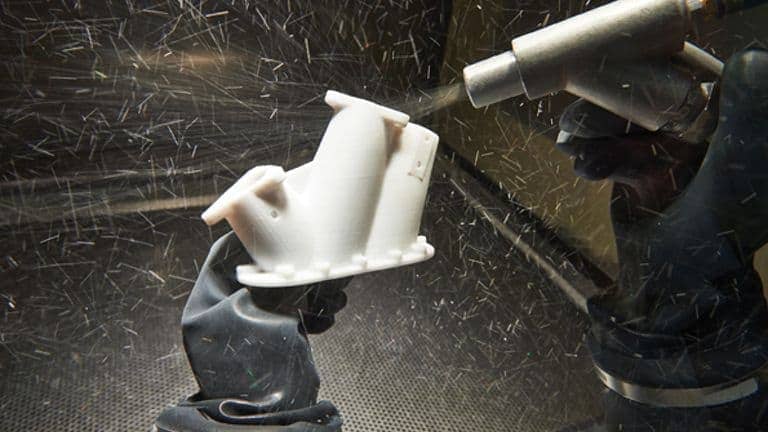
Garnet is one of the best-performing media in both wet (vapor) and dry blasting systems, which is a significant advantage in applications where process versatility or dust control is a priority.
Sablage à sec
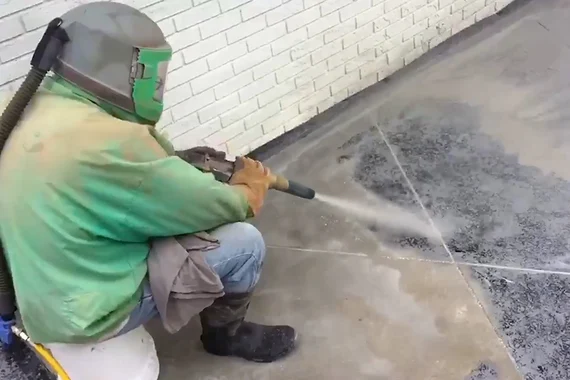
In conventional dry blasting, garnet’s inherently low dust generation makes it a standout performer compared to most alternatives. When blasting at standard working pressures (60–100 PSI), garnet produces approximately 30–50% less airborne dust than equivalent-grit aluminum oxide and significantly less than slag-based abrasives. This translates directly to improved operator visibility during blasting, reduced dust collection system load, and lower respirable particulate exposure for workers.
Wet (Vapor) Blasting
Garnet is fully compatible with wet blasting systems and performs particularly well in this mode. The water component in vapor blasting further suppresses the already-low garnet dust levels to near-zero, making wet garnet blasting among the lowest-dust surface preparation options available. Wet garnet blasting is widely used on offshore platforms, in confined spaces, and in any environment where dust generation must be minimized for safety, environmental, or operational reasons.
For a detailed comparison of wet and dry blasting parameters: Wet Blasting vs Dry Blasting Media: Which Method Is Right for You?
Reusability & Cost
Garnet’s reusability — typically 3 to 5 cycles under a proper reclaim system — represents a meaningful economic advantage over single-use alternatives such as coal slag and copper slag, which cannot be practically recycled. While garnet’s reuse cycle count is lower than steel media (200–300 cycles), its lower equipment capital cost (garnet can be used in standard pneumatic systems without the heavy reclaim infrastructure required for steel media) makes it competitive for operations with lower throughput volumes or those using portable/open-site equipment.
Garnet at $0.35/kg × 4 cycles = $0.088 per effective cycle. Copper slag at $0.12/kg × 1 cycle = $0.12 per effective cycle. Despite garnet’s higher unit price, its recyclability makes it 25–35% cheaper per effective cycle than single-use slag — before accounting for reduced disposal costs and lower dust collection expenditure.
Applications industrielles
Marine & Offshore Surface Preparation
Garnet is the dominant blast media for marine and offshore coating preparation in many major markets, particularly in Australia, Europe, and the Middle East. NORSOK M-501 (the Norwegian offshore industry standard), IMO MSC/Circ. 1330, and SSPC SP-10 all specify near-white metal blasting cleanliness grades that garnet achieves effectively. Its low dust profile is particularly valued in the confined and semi-enclosed spaces characteristic of offshore platform maintenance and ship repair. For a full treatment of marine applications: Blasting Media for Shipbuilding & Marine Steel Structures.
Pipeline & Storage Tank Blasting
Garnet is widely used for internal and external blasting of oil and gas pipelines, storage tanks, and process vessels — particularly in field applications where portable equipment is used and dust generation must be minimized. Its combination of effective profiling (achieving the 50–75 µm Rz profiles required for pipeline coating systems) and low dust makes it the preferred choice for field grit blasting of pipelines in environmentally sensitive corridors.
Waterjet Cutting
Beyond abrasive blasting, garnet is the dominant abrasive for waterjet cutting — the process of directing a high-pressure water jet (typically 60,000–90,000 PSI) mixed with abrasive particles to cut through metals, stone, glass, and composites. Fine garnet grades (80/120 and 120/200 mesh) are used in waterjet cutting for their hardness, consistent particle shape, and low contamination risk to the cut material. This represents a significant parallel market for garnet alongside its blasting applications.
Bridge & Infrastructure Maintenance
Bridge repainting and infrastructure coating maintenance frequently specifies garnet due to its low environmental impact. Lead paint removal from bridges over waterways requires media with minimal environmental hazard — garnet’s low heavy metal content and classification as non-hazardous waste in most jurisdictions simplifies the containment and disposal requirements compared to slag-based abrasives that may contain lead, arsenic, or chromium leachable at concentrations above regulatory thresholds.
Environmental & Safety Profile
Garnet’s environmental and safety credentials are among the strongest of any mineral abrasive blasting media:
- Free crystalline silica <1%: Well below the threshold for the most stringent OSHA silica regulations, and far lower than silica sand (70–99% free silica). See: Silica Sand in Abrasive Blasting: Health Risks, OSHA Rules & Safe Alternatives.
- Non-hazardous waste classification: Spent garnet is classified as non-hazardous industrial waste in most major jurisdictions (US, EU, Australia), simplifying disposal and reducing disposal costs compared to some slag-based alternatives.
- No heavy metal leaching: Garnet does not contain regulated heavy metals at concentrations that trigger hazardous waste classifications in TCLP (Toxicity Characteristic Leaching Procedure) testing.
- Very low dust generation: Reduces airborne particulate exposure, improving worker health outcomes and site environmental compliance.
- Naturally occurring mineral: No synthetic manufacturing process required beyond mining, crushing, and screening — lower embodied energy than synthetic abrasives.
Industrial garnet for blasting must meet SSPC-AB 3 (Standard for Ferrous Metallic Abrasive) or the mineral abrasive equivalent to confirm conductivity, hardness, and contamination levels. Always request SSPC-AB 3 compliance documentation and a TCLP test report when sourcing garnet for environmentally sensitive or regulated applications.
Garnet vs Other Blast Media
| Media | Mohs | Dust Level | Free Silica | Reuse | Env. Classification | Best Use Case |
|---|---|---|---|---|---|---|
| Grenat | 7–8 | Très faible | <1% | 3–5× | Non-hazardous | Marine, offshore, eco-sensitive |
| Oxyde d'aluminium | 9 | Medium | <1% | 4–8× | Non-hazardous | Coating prep, thermal spray |
| Grain d'acier | 7–8 | Faible | Aucun | 200–300× | Non-hazardous | High-volume structural steel |
| Coal Slag | 6-7 | Haut | 1–3% | 1× (single-use) | May be hazardous (TCLP) | Low-cost single-use applications |
| Sable de silice | 7 | Very High | 70–99% | 1× (single-use) | Health hazard (silicosis risk) | Banned in most jurisdictions |
Source Garnet Blasting Media — Inquire with Jiangsu Henglihong Technology
We can source and supply certified almandine garnet in standard blasting grades (20/40, 30/60, 36/60, 60/100 mesh) with full SSPC-AB 3 compliance documentation, TCLP test reports, and chemical analysis certificates. Available in 25 kg bags and 1,000 kg bulk jumbo bags for global export.
Request a Quote or SampleQuestions fréquemment posées
Filtres