Cubic Zirconia Beads: Engineering Properties, Structure, and Industrial Applications
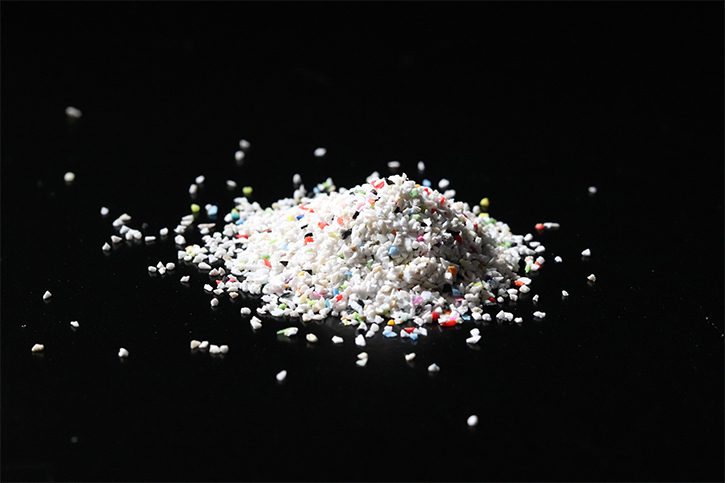
Cubic zirconia beads are a specialized class of zirconia-based ceramic grinding media engineered to maintain a fully cubic crystal structure under mechanical, thermal, and chemical loading. Unlike transformation-toughened zirconia systems, cubic zirconia beads emphasize phase stability, isotropic mechanical behavior, and long-term structural reliability in demanding industrial environments.
This page provides a comprehensive engineering-level analysis of cubic zirconia beads, including crystal structure fundamentals, stabilizer chemistry, mechanical and physical properties, wear mechanisms, application suitability, and detailed comparison with other zirconia bead systems such as yttria stabilized zirconia (YSZ) and ceria stabilized zirconia (Ce-TZP).
As a dedicated cluster page, this content is designed to support the main Cuentas de circonio pillar by addressing a specific material system frequently evaluated by process engineers during grinding media selection.
Table of Contents
- 1. What Are Cubic Zirconia Beads?
- 2. Cubic Crystal Structure and Phase Stability
- 3. Stabilizer Chemistry and Composition Design
- 4. Mechanical and Physical Properties
- 5. Wear Behavior and Failure Mechanisms
- 6. Industrial Applications
- 7. Cubic Zirconia Beads vs Other Zirconia Systems
- 8. When to Choose Cubic Zirconia Beads
- 9. Conclusion
1. What Are Cubic Zirconia Beads?
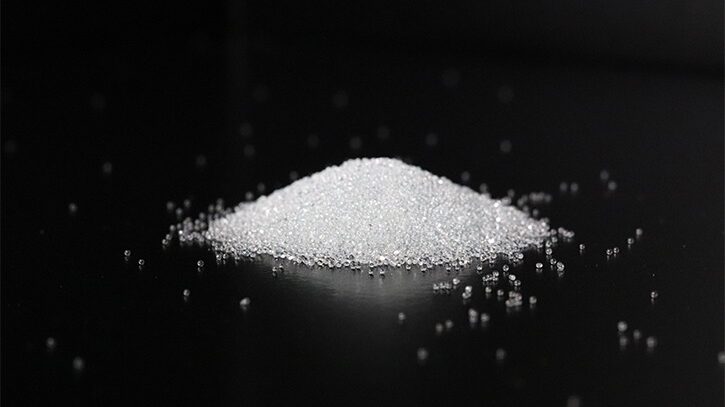
Cubic zirconia beads are ceramic milling media manufactured from zirconium dioxide (ZrO₂) that has been chemically stabilized to retain a cubic crystal phase at room temperature and under operating stress. In contrast to tetragonal zirconia systems, cubic zirconia beads do not rely on stress-induced phase transformation for toughness.
The defining characteristic of cubic zirconia beads is their complete phase stability. The cubic phase is thermodynamically stable and does not undergo volumetric expansion or contraction during mechanical loading. This eliminates the risk of transformation-induced microcracking, which can occur in partially stabilized zirconia under extreme conditions.
As a result, cubic zirconia beads are often selected for applications where thermal stability, chemical resistance, and long-term dimensional consistency are more critical than maximum fracture toughness.
2. Cubic Crystal Structure and Phase Stability
Zirconium dioxide exhibits three primary polymorphs: monoclinic, tetragonal, and cubic. The cubic phase is normally stable only at high temperatures in pure zirconia. To stabilize this phase at ambient conditions, specific dopants must be introduced into the crystal lattice.
The cubic structure is characterized by a fluorite-type lattice, where zirconium ions occupy a face-centered cubic arrangement and oxygen ions fill tetrahedral interstitial sites. This structure is highly symmetric and isotropic, meaning mechanical and thermal properties are uniform in all crystallographic directions.
For grinding media applications, this isotropy translates into predictable mechanical response under multi-axial stress, reduced internal stress concentration, and excellent resistance to thermal shock.
3. Stabilizer Chemistry and Composition Design
Cubic zirconia beads are typically stabilized using higher concentrations of oxides such as yttria (Y₂O₃) or ceria (CeO₂). Stabilizer content is significantly higher than that used in YSZ systems and is carefully controlled during powder synthesis and sintering.
Typical stabilizer ranges include:
- Yttria-stabilized cubic zirconia: ~8–10 mol% Y₂O₃
- Ceria-stabilized cubic zirconia: variable, depending on target density and chemistry
The higher stabilizer concentration suppresses tetragonal-to-monoclinic transformation entirely, ensuring permanent cubic phase stability. However, this also reduces the availability of transformation toughening, leading to lower fracture toughness compared with YSZ beads.
From an engineering perspective, cubic zirconia beads are therefore designed as stability-driven media rather than toughness-driven media.
4. Mechanical and Physical Properties
The mechanical behavior of cubic zirconia beads reflects the inherent characteristics of the cubic phase and the influence of stabilizer content.
| Property | Cubic Zirconia Beads | YSZ Beads | Ce-TZP Beads |
|---|---|---|---|
| Densidad (g/cm³) | ~5.8–5.9 | ~6.0 | ~6.1 |
| Vickers Hardness (HV) | 1000–1200 | 1100–1300 | 1100–1250 |
| Fracture Toughness (MPa·m¹ᐟ²) | 5–7 | 7–10 | 8–11 |
| Phase Stability | Excelente | Moderate (stress-induced) | Excelente |
Although cubic zirconia beads exhibit lower fracture toughness than YSZ or Ce-TZP beads, their mechanical behavior remains highly predictable and stable over long service periods.
5. Wear Behavior and Failure Mechanisms
Wear of cubic zirconia beads primarily occurs through surface micro-abrasion and gradual material removal rather than catastrophic fracture. The absence of phase transformation eliminates one of the major failure pathways present in partially stabilized zirconia systems.
Common wear mechanisms include:
- Surface polishing under sliding contact
- Grain boundary wear in poorly sintered structures
- Micro-chipping at localized stress concentrators
High-quality cubic zirconia beads are produced with fine, homogeneous grain structures and sintering densities exceeding 99.5%, significantly reducing wear rate and contamination generation.
6. Industrial Applications
Cubic zirconia beads are particularly well suited for applications requiring long-term stability, thermal resistance, and consistent mechanical behavior.
- High-temperature milling environments
- Chemically aggressive slurries
- Continuous-duty milling with low impact loading
- Specialty dispersion processes with strict stability requirements
In contrast, for ultra-high impact or shock-dominated milling, engineers often prefer YSZ beads o ceria stabilized zirconia beads due to their superior fracture toughness.
7. Cubic Zirconia Beads vs Other Zirconia Systems
Selecting the appropriate zirconia bead system requires understanding the fundamental trade-offs between stability and toughness.
| Criterion | Cubic Zirconia | YSZ | Ce-TZP |
|---|---|---|---|
| Phase Stability | Very High | Moderado | Very High |
| Impact Resistance | Medium | Alta | Very High |
| Resistencia al desgaste | Low–Medium | Bajo | Muy bajo |
| Typical Use Case | Thermal stability | General milling | Nano & CMP |
8. When to Choose Cubic Zirconia Beads
Cubic zirconia beads are the optimal choice under the following conditions:
- When phase stability is more critical than maximum toughness
- When operating temperatures are elevated or variable
- When long-term dimensional consistency is required
- When chemical resistance outweighs impact loading concerns
For size-sensitive processes, cubic zirconia beads are available across multiple diameter ranges. For nano-scale processes, consider reviewing 0.1 mm zirconia beads for detailed size-specific performance characteristics.
9. Conclusion
Cubic zirconia beads represent a stable, predictable, and chemically robust class of zirconia grinding media. While they do not offer the transformation-toughened fracture resistance of YSZ or Ce-TZP systems, their fully stabilized cubic structure provides unmatched phase stability and isotropic behavior.
For engineers prioritizing thermal reliability, chemical compatibility, and long-term process consistency, cubic zirconia beads remain a strategically important option within the broader cuentas de circonio portfolio.
Filtros