Ceramic Beads for SLS Powder Removal: The Complete De-Powdering and Surface Finishing Guide
Every Selective Laser Sintering build emerges buried in powder. Getting it off — completely, consistently, and without damaging the part — is one of the most consequential decisions in SLS post-processing. This guide covers everything you need to know about ceramic bead blasting for SLS powder removal: which media type to choose, how to match bead size and blast pressure to your material and geometry, what surface finish and dimensional outcomes to expect, and how to build a cost-efficient operation around ceramic bead recycling.
1. What Is SLS Powder Removal — and Why It Matters
Selective Laser Sintering (SLS) is a powder bed fusion additive manufacturing process in which a CO₂ laser selectively sinters nylon powder particles layer by layer inside a temperature-controlled build chamber. The unfused powder surrounding the parts during the build acts as a self-supporting medium, which is one of SLS’s key advantages: unlike FDM or SLA, SLS can produce complex overhanging geometries, enclosed cavities, and interlocking assemblies without any dedicated support structures.
When the build is complete and the powder cake has cooled — a process that typically takes 4 to 12 hours depending on build volume and material — the parts must be excavated and thoroughly cleaned. This post-processing stage is called depowdering o powder removal, and it encompasses several sequential phases.
Phase 1 — Coarse excavation
Parts are extracted from the powder cake at the build station using hand tools or pneumatic pick systems. Loose, unsintered powder is recovered and sieved for reuse in subsequent builds. This phase removes the bulk of the powder mass but leaves each part surface coated in residual powder.
Phase 2 — Compressed-air blow-off
Compressed air is used to clear loose surface powder from exposed, accessible surfaces. This step is effective on open geometry but cannot reach internal channels, tight recesses, or porous lattice structures. More importantly, it does not address the semi-sintered powder skin — a layer of partially fused nylon particles bonded to the outer part surface by heat and laser energy during the build. This skin is the defining challenge of professional SLS depowdering.
Phase 3 — Surface blasting
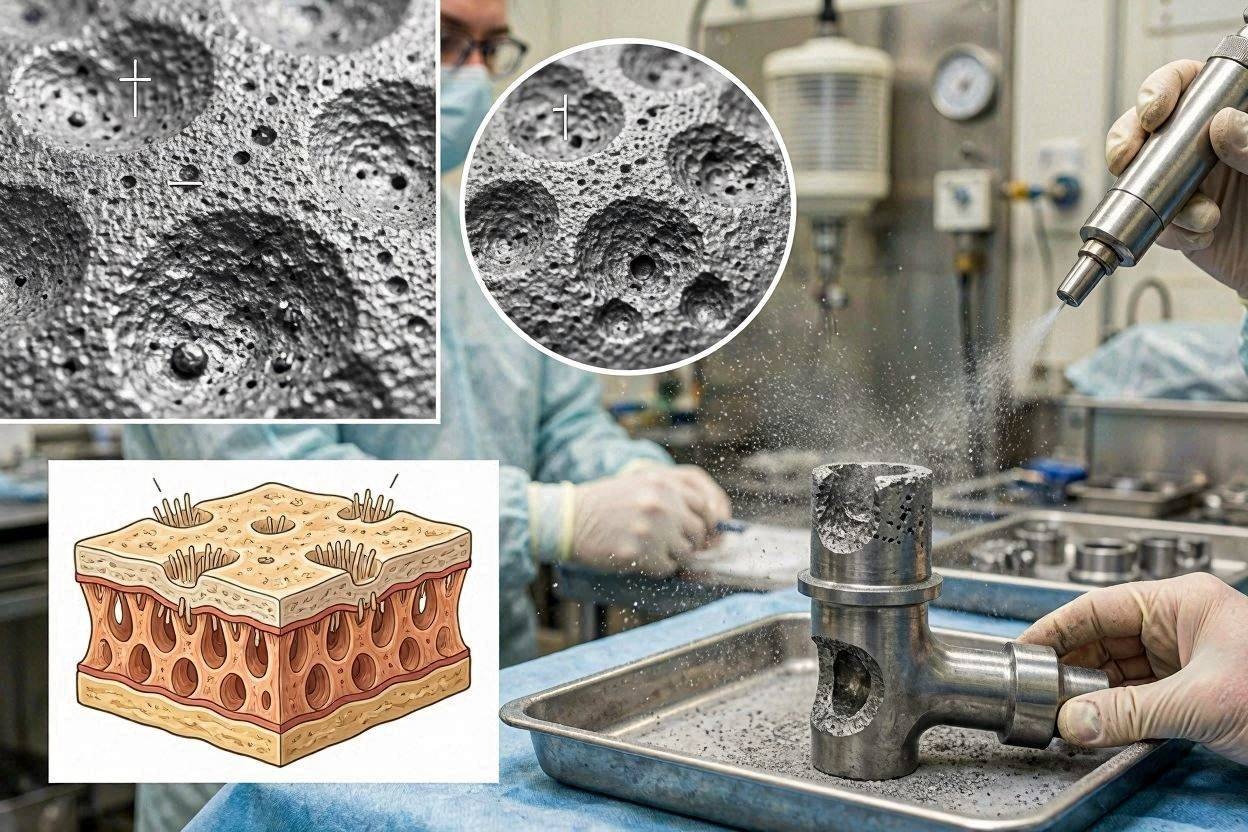
Ceramic bead blasting is applied to remove the semi-sintered skin and all residual powder from the entire accessible part surface. This step determines the final surface texture, visual appearance, dimensional outcome, and readiness for all downstream operations — dyeing, painting, bonding, coating, and inspection.
The consequences of incomplete depowdering
Incomplete powder removal has downstream consequences across every process the part will pass through. In functional parts with fluid channels, mating interfaces, or dynamic joints, retained powder causes flow restriction, increased friction, dimensional interference, and premature wear. In appearance parts destined for dyeing, residual powder creates uneven dye uptake, pinholes, and visibly inconsistent color. In precision components with tight dimensional tolerances, the additional material thickness from retained semi-sintered powder can push features out of specification before the part has even been measured.
Beyond individual parts, poor depowdering generates systemic workflow problems. Parts that fail initial quality inspection require manual rework, consuming labor, blast time, and cost. For high-volume SLS operations processing hundreds of parts per build cycle, even a modest rework rate from depowdering failures carries significant operational burden.
As SLS moves deeper into functional, end-use applications in aerospace, automotive, and medical sectors, buyer specifications now routinely include surface cleanliness requirements, Ra value ranges, and powder-free internal channel standards. Manual methods — brushing, air blow-off, vibratory finishing — cannot meet these standards consistently at scale. Ceramic bead blasting is the method that can.
2. Why Ceramic Beads Are the Preferred Blasting Media for SLS Depowdering
The selection of blasting media for SLS depowdering is not arbitrary. Nylon is a thermoplastic polymer — relatively soft compared to metals, sensitive to localized heat from frictional impact, and capable of absorbing contamination from incompatible media. The ideal blasting media for SLS parts must satisfy five criteria simultaneously:
- Deliver sufficient kinetic energy to dislodge semi-sintered powder without eroding the nylon substrate
- Have a spherical geometry to produce uniform compressive impact rather than cutting action
- Be chemically inert to avoid surface contamination that would interfere with dyeing or coating
- Recycle efficiently to control media cost at high production throughput
- Produce a consistent, controllable surface texture that meets downstream finishing requirements
Ceramic beads satisfy all five. Here is the technical basis for each property.
Hardness and density in the right range
Zirconia (ZrO₂) ceramic beads have a Mohs hardness of 8 to 8.5 and a density of 5.4 to 5.6 g/cm³. Zirconia-silicate (ZS) beads register Mohs 7 to 7.5 with density 3.8 to 4.0 g/cm³. These values position ceramic beads in a performance window that is well above glass beads (Mohs 5.5–6) but far below steel shot or aluminum oxide grit. For SLS nylon, this window is precisely right: the hardness and density are sufficient to break the semi-sintered powder bond through kinetic impact, while being low enough not to erode the underlying polymer substrate or generate significant surface heat.
Spherical geometry — clean rather than cut
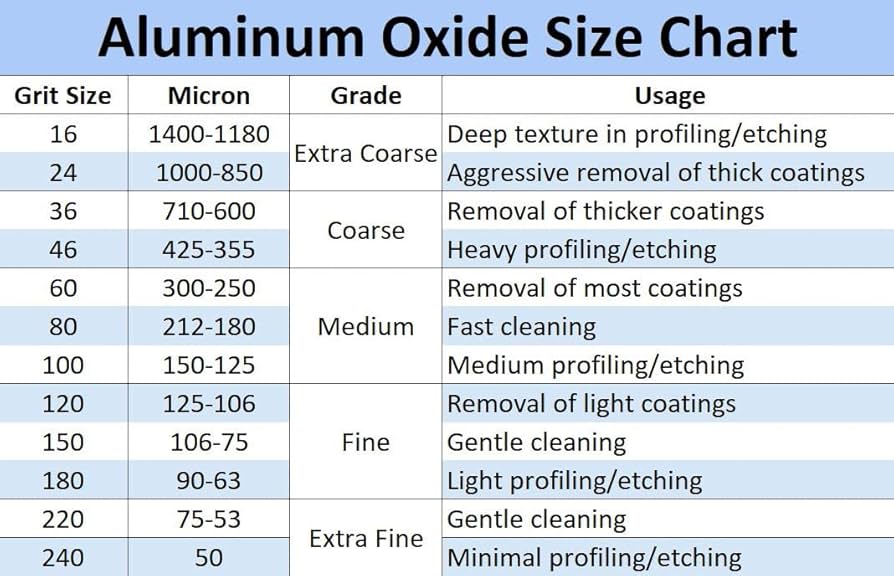
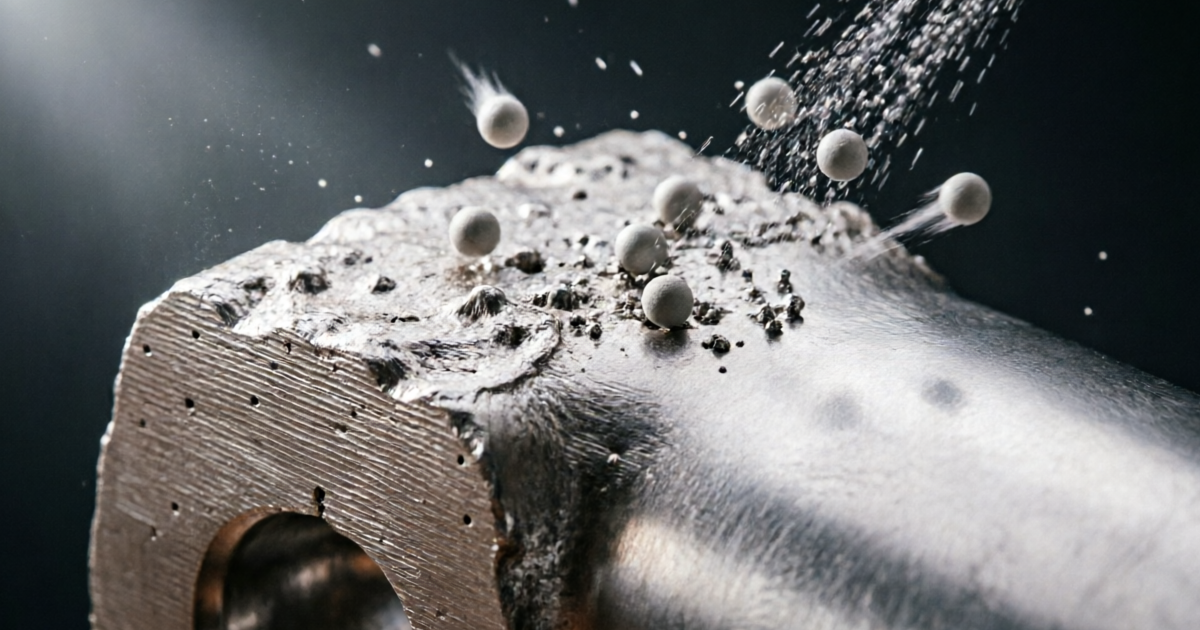
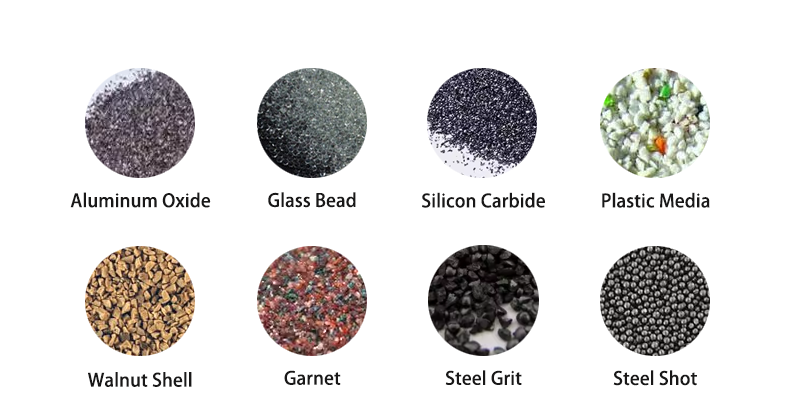
The spherical shape of ceramic beads is critical to their suitability for nylon SLS parts. Angular abrasives — aluminum oxide, silicon carbide, steel grit — produce cutting action on impact, removing material through scratching and gouging. On metals this is often intentional. On nylon SLS parts, cutting action removes excessive material per cycle, produces an irregular and inconsistent surface texture, and can cause localized thermal deformation in thin-walled features. Ceramic beads, being smooth spheres, produce compressive peening impact: they push and dislodge powder particles rather than cutting into the substrate. The result is a more uniform surface with controlled roughness and minimal bulk material removal.
Chemical inertness protects downstream operations
Ceramic materials do not react with nylon at blast pressures and temperatures encountered in industrial SLS depowdering. This matters most for parts destined for dyeing: any surface contamination — metallic particles from media breakdown, sharp glass fragments, silica dust — interferes with dye absorption and creates pinholes or uneven color. Ceramic beads remain chemically stable throughout their service life. Their breakdown product — smaller ceramic spheres — continues to function as effective blasting media until it falls below the minimum usable size.
Exceptional recycling life
Ceramic bead longevity is one of the most commercially significant differences between media classes in SLS applications. Zirconia beads typically run 2,500 to 4,000 blast cycles before degrading below usable size. Glass beads run 400 to 800 cycles. This 3x to 6x difference in recycling life fundamentally changes the economics of SLS depowdering at volume — a difference that compounds rapidly in operations running multiple shifts. The media cost per thousand parts processed is substantially lower for ceramic beads despite their higher initial unit price.
Controlled, consistent surface finish
Ceramic beads give process engineers direct control over surface texture by varying bead size and blast pressure. Finer beads produce lower Ra values (smoother); coarser beads produce higher Ra (more texture). This controllability is important for SLS operations serving customers with diverse surface finish requirements, from tight Ra specifications on precision functional parts to intentionally textured grip surfaces on consumer products. Because ceramic beads degrade gradually (via spherical attrition rather than shattering), their surface finish output remains consistent throughout most of their service life — another advantage over glass beads, whose surface finish output degrades noticeably as they shatter and shift to a mixed angular/spherical population.
3. Types of Ceramic Beads for SLS Depowdering
Three main ceramic bead types are used in SLS depowdering applications, differentiated by composition, density, hardness, recycling life, and cost. Selecting the right type depends on your throughput, part material, geometric complexity, and tolerance requirements.
| Ceramic Bead Type | Composition | Densidad (g/cm³) | Hardness (Mohs) | Recycling Cycles | Best Suited For |
|---|---|---|---|---|---|
| Zirconia (ZrO₂) | Pure zirconia | 5.4–5.6 | 8.0–8.5 | 2,500–4,000 | High-volume PA12/PA11 production, tight tolerances, maximum media life |
| Zirconia-Silicate (ZS) | ZrO₂ + SiO₂ composite | 3.8–4.0 | 7.0–7.5 | 1,500–2,500 | General SLS depowdering — standard choice for most operations |
| Alumina-Silicate | Al₂O₃ + SiO₂ composite | 2.4–2.7 | 6.5–7.0 | 800–1,500 | Lower-throughput operations, simple geometry, cost-sensitive applications |
Zirconia (ZrO₂) beads are the premium-grade option. Their high density delivers maximum kinetic energy per particle at a given blast pressure — meaning effective cleaning at lower velocity, reducing risk of surface damage on thin-walled features. ZrO₂ beads maintain their spherical geometry longer than lower-grade alternatives and generate minimal sharp-edged breakdown fragments. For high-volume SLS production lines where media cost is amortized over large part quantities, ZrO₂ beads are frequently the lowest total cost-per-part solution despite their higher unit price.
Zirconia-silicate (ZS) beads represent the best performance-to-cost balance for most SLS operations. They handle PA12 and PA11 parts effectively across a wide range of geometries, produce reliable surface finish results, and offer a recycling life significantly superior to glass beads. ZS beads are the standard choice recommended by Jiangsu Henglihong Technology Co., Ltd. for operators new to ceramic bead SLS depowdering.
Alumina-silicate beads are the entry point in the ceramic bead family. Their lower density reduces impact energy, which limits their effectiveness on complex geometry parts with tight recesses and internal channels. They are appropriate for low-throughput operations processing primarily open-geometry SLS parts where premium media economics are difficult to justify. They are not recommended for TPU or other flexible SLS materials.
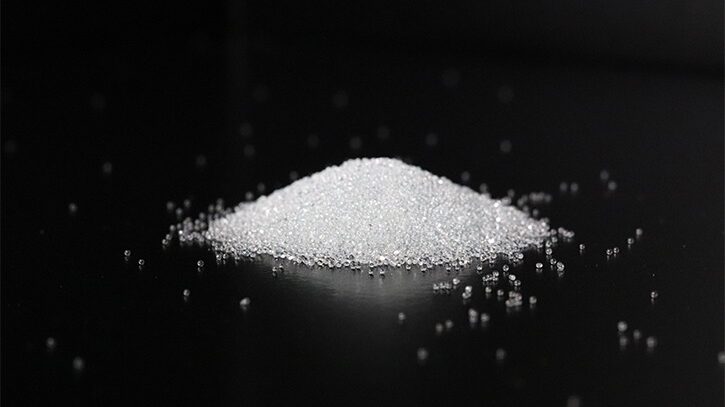
Jiangsu Henglihong Technology Co., Ltd. manufactures both ZrO₂ and zirconia-silicate ceramic beads to ISO size classifications, supplied in size ranges from 0.05 mm to 0.60 mm to cover all SLS depowdering applications.
4. Ceramic Bead Blasting by SLS Material Type
The appropriate ceramic bead grade, size, and blast pressure depend significantly on the SLS material being processed. The composition, surface hardness, tensile modulus, and elongation at break of the nylon or elastomeric material each influence how it responds to bead impact. This section provides material-specific guidance for the three most common SLS material categories.
4.1 PA12 Nylon SLS Parts
Polyamide 12 (PA12) is the dominant SLS material in commercial production as of July 2026, valued for its low moisture absorption, excellent chemical resistance, fatigue performance, and dimensional stability. The as-built surface of PA12 SLS parts is characteristically rough — typically Ra 15 to 25 µm — with a matte grey appearance that varies noticeably by build orientation. Horizontal faces (perpendicular to the build direction) tend to be smoother; vertical and angled walls display more pronounced staircase texture.
The semi-sintered powder skin on PA12 SLS parts adheres firmly to the base part surface due to PA12’s moderate melting point (approximately 178°C) and the careful thermal management of SLS build chambers, which are maintained just below the sintering temperature during the build to prevent premature sintering of surrounding powder. The result is a surface bond that compressed air cannot break but that ceramic bead impact disrupts cleanly.
Recommended starting parameters for standard PA12 SLS depowdering:
- Media: Zirconia-silicate (ZS) beads, 0.15–0.25 mm
- Blast pressure: 55–70 PSI (suction-feed cabinet)
- Cycle time: 5–10 minutes depending on part volume and geometric complexity
- Expected Ra after blasting: 5–10 µm
For PA12 parts with internal channels below 2 mm diameter, thin walls below 1.5 mm, or fine lattice structures, step down to 0.10–0.15 mm beads and reduce pressure to 45–58 PSI. The longer cycle time required at finer bead size is offset by the reduced risk of feature damage and the smoother Ra achieved.
PA12 is highly receptive to post-blast dyeing. Ceramic bead blasting opens the surface pore structure uniformly, improving dye uptake consistency across the build and from build to build. For PA12 operations that include dyeing, the blast protocol and the dye protocol should be developed and validated together — the Ra target for a pre-dye blast part is typically 6–10 µm, which provides the surface texture needed for dye penetration without the roughness that can trap residual dye and create color inconsistency.
Full PA12 protocol including bead size selection by wall thickness, blast cycle qualification procedure, surface finish data tables, and dyeing compatibility guide.
4.2 PA11 Bio-Based Nylon SLS Parts
Polyamide 11 (PA11), derived from castor oil, is increasingly specified in SLS applications where bio-based material content is a procurement requirement. PA11 offers slightly higher impact resistance (notched Charpy impact strength 5–7 kJ/m² vs. 3–5 kJ/m² for PA12) and greater elongation at break, making it the preferred choice for flexible snap-fit assemblies, protective housings, and parts that must absorb repeated impact in service.
In SLS builds, PA11 produces a surface texture similar to PA12 — as-built Ra typically 15–22 µm — and a semi-sintered skin with comparable adhesion. The ceramic bead blast protocol for PA11 is largely similar to PA12, with one important adjustment: PA11’s greater elongation at break means that thin-walled features and flexible geometries may flex under blast pressure rather than holding rigidly, producing uneven coverage if parts are not properly fixtured.
Recommended starting parameters for PA11 SLS depowdering:
- Media: ZS beads, 0.15–0.25 mm
- Blast pressure: 52–68 PSI
- Key adjustment vs. PA12: Use rigid fixtures or nesting cradles to prevent part movement during the blast cycle, particularly for flexible components
PA11’s slightly higher impact toughness means it is somewhat more tolerant of accidental over-blasting than PA12, providing a marginally wider process window. However, the fixture design requirement is non-negotiable for flexible PA11 assemblies — unsupported parts that flex under blast impact will show uneven powder removal on areas that moved out of the blast plume mid-cycle.
PA11 vs. PA12 material property comparison, fixture design recommendations, blast parameter differences, and surface finish outcome data.
4.3 TPU and Flexible SLS Parts
Thermoplastic polyurethane (TPU) SLS parts represent the most challenging category for ceramic bead depowdering. Flexible SLS materials — typically Shore A 80 to 95 — have fundamentally different mechanical behavior under impact. Rather than standing firm under bead impact as rigid PA12 does, a TPU part compresses and rebounds locally, concentrating impact energy in ways that can distort thin walls, collapse open lattice cells, and permanently deform fine flexible features.
The key is a significantly modified protocol built around reduced energy per impact — achieved through finer bead size, lower blast pressure, and shorter individual cycle times with mid-cycle inspection:
- Media: Fine ZS or alumina-silicate beads, 0.05–0.15 mm
- Blast pressure: 30–45 PSI (approximately half the pressure for rigid PA12)
- Blast system: Suction-feed preferred over pressure-feed for more gradual, controllable impact delivery
- Cycle approach: Multiple short cycles of 2–4 minutes with mid-cycle inspection, rather than a single extended cycle
- Fixturing: Parts must be fixtured to support the flexible geometry — do not leave free-hanging sections exposed to blast
The advantage of ceramic beads over plastic media for flexible SLS parts — despite requiring this reduced-pressure protocol — is that the higher density of ceramic particles still delivers effective powder dislodgement at 30–45 PSI. Plastic media at the same low pressures frequently fails to fully remove the semi-sintered skin from TPU SLS parts, leaving a hazy, adherent residue. Ceramic beads, even at reduced pressure, clean more completely because their density converts velocity to impact energy more efficiently.
Complete low-pressure depowdering protocol for flexible SLS materials, fixture design guide, bead grade comparison at reduced pressure, and inspection criteria.
5. Process Parameters: Bead Size, Blast Pressure, and Wet vs. Dry
Three process parameters function as the primary controls in a ceramic bead SLS depowdering operation: bead size, blast pressure, and the choice between wet and dry blasting. Each directly influences the kinetic energy applied to the part surface, the surface finish outcome, the suitability of the process for specific geometries, and the rate of bead degradation.
5.1 Ceramic Bead Size Selection
Bead size is the single most influential variable in ceramic bead SLS depowdering. Larger beads carry more kinetic energy per particle and remove powder faster but produce coarser surface texture (higher Ra). Smaller beads carry less energy per particle, work more gently on delicate features, reach smaller internal channels, and produce finer surface finish (lower Ra). The trade-off is cycle time: finer beads require longer blast duration to achieve the same cleaning coverage as coarser beads.
| Bead Size | Mesh Equivalent | Recommended Application | Typical Ra After Blast | Notes |
|---|---|---|---|---|
| 0.05–0.10 mm | 150–270 mesh | Fine internal channels (<1 mm), TPU/flexible SLS, wall thickness <1 mm | Ra 3–6 µm | Longest cycle time; highest finish quality |
| 0.10–0.15 mm | 100–150 mesh | Complex geometry PA12/PA11, walls 1–2 mm, pre-dyeing blast | Ra 5–8 µm | Standard fine-grade choice for appearance parts |
| 0.15–0.25 mm | 60–100 mesh | Standard PA12/PA11, moderate geometry, general production | Ra 7–12 µm | Most widely used size range for SLS depowdering |
| 0.25–0.35 mm | 45–60 mesh | Simple geometry, coarse finish acceptable, high throughput priority | Ra 10–16 µm | Not for fine features or appearance-grade output |
Bead size also governs access to internal channels and recesses. A practical rule: the bead diameter should be no larger than one-quarter of the smallest internal channel dimension that must be cleaned. For a 2 mm channel, use beads at 0.5 mm or smaller; for a 0.8 mm channel, use beads at 0.2 mm or smaller. This ensures beads can enter, impact the channel wall, and exit without bridging or packing inside the channel.
When processing builds that contain parts with widely different geometries — some with fine channels, some with open flat surfaces — it is generally better to set the bead size for the most demanding geometry rather than blending size fractions. Blending creates a polydisperse charge whose surface finish output lies between the two grades, which may not satisfy either requirement adequately.
Complete size selection guide with geometry-to-bead-size mapping, particle size distribution data for each ceramic grade, internal channel sizing rules, and multi-geometry build strategies.
5.2 Blast Pressure and Cycle Time
Blast pressure — measured in PSI at the nozzle inlet — determines the velocity at which ceramic beads strike the part surface and therefore the kinetic energy of each impact. Higher pressure cleans faster but degrades beads more rapidly, increases risk of surface erosion on thin-walled features, and narrows the process window where effective cleaning and dimensional stability coexist. Lower pressure extends bead life, widens the safe processing window, and is mandatory for flexible materials, at the cost of longer cycle times.
| SLS Material | Wall / Feature | Recommended Pressure | Typical Cycle Time | Notes |
|---|---|---|---|---|
| PA12 (standard) | Wall >2 mm | 60–75 PSI | 5–10 min | Standard production range |
| PA12 (complex/thin) | Wall 1–2 mm | 45–60 PSI | 7–14 min | Monitor Ra closely; inspect mid-cycle |
| PA11 (standard) | Wall >2 mm | 55–70 PSI | 5–10 min | Fixture recommended for flexible assemblies |
| PA12 with fine channels | Body >2 mm, channels <2 mm | 40–55 PSI | 10–18 min | Extended time compensates for reduced energy |
| TPU / flexible SLS | Any | 30–45 PSI | 3–6 min (per cycle) | Multiple short cycles; inspect between cycles |
Nozzle standoff distance — the distance from nozzle tip to part surface — is typically set at 50 to 150 mm. Shorter standoff concentrates impact; longer standoff disperses the blast plume, reducing impact energy but allowing broader coverage per nozzle pass, which can be useful for large, flat surface areas.
Bead embedment — where ceramic particles become lodged in the part surface — can occur at excessively high pressures, particularly on parts with angular features or when using a degraded, non-spherical media charge. Post-blast inspection under magnification for embedded particles is recommended on first-article qualification runs for any new part design, especially complex geometry at the upper end of the pressure range.
Full process optimization methodology, nozzle selection guide, cycle time calculation worksheets, bead embedment inspection criteria, and process qualification templates.
5.3 Wet vs. Dry Ceramic Bead Blasting for SLS
SLS nylon parts can be processed with either dry blast cabinet systems or wet (hydroblast) systems. Each approach has distinct performance characteristics and operational trade-offs for SLS depowdering.
En dry ceramic bead blasting, beads are propelled by compressed air in a pressure-feed or suction-feed cabinet. This is the most common configuration in SLS post-processing. Dry blasting is fast, requires minimal setup, and is available in a wide range of cabinet sizes and automation levels. Its main operational consideration is dust: nylon powder is a fine, inhalable particulate that requires effective dust collection and appropriate PPE at the blast station.
En wet (hydroblast) ceramic bead blasting, beads are mixed with water and propelled as a slurry. The water film cushions the impact slightly, reducing surface roughness and producing a finer, more uniform finish than dry blasting at equivalent bead size. This cushioning also reduces deformation risk for flexible SLS parts. The primary concern for nylon SLS parts is moisture: PA12 and PA11 are hygroscopic, and exposure to a wet blast environment without prompt drying can cause dimensional change, weight gain, and degradation of surface quality.
| Factor | Dry Blast | Wet Blast |
|---|---|---|
| Typical Ra (same bead size) | Ra 7–14 µm | Ra 4–10 µm |
| Throughput | Alta | Moderado |
| Setup complexity | Bajo | Moderate–High |
| Generación de polvo | High — requires dust extraction | Minimal |
| Moisture risk for nylon | Ninguno | Must dry parts immediately after |
| Capital equipment cost | Low–Moderate | Moderate–High |
| Best suited for | PA12/PA11 volume production | Appearance-critical parts, TPU, fine-finish requirements |
The recommendation for most SLS operations is to start with dry blasting, which is simpler to implement and adequate for the majority of PA12 and PA11 applications. Wet blasting becomes worth evaluating when output Ra requirements are below 6 µm and dry blasting with fine beads cannot consistently reach that target, or when processing flexible TPU geometries where the wet blast cushioning effect provides a meaningful reduction in deformation risk.
Side-by-side process analysis including surface profile data, Ra comparison at matched bead sizes, nylon moisture absorption data, drying protocols, throughput comparison, and total cost per part.
6. Surface Finish and Quality Outcomes
The quality result of ceramic bead SLS depowdering is measured across three primary dimensions: surface roughness (Ra and Rz), dimensional accuracy, and — for appearance parts — color consistency. Each is quantifiable, controllable, and specifiable within defined process parameters.
6.1 Surface Roughness and Ra Values
The as-built Ra of SLS nylon parts is inherently variable and build-orientation-dependent. Horizontal surfaces (perpendicular to the build direction) typically show Ra 10–18 µm. Side surfaces (parallel or angled to the build direction) display Ra 18–28 µm due to the staircase effect of layered sintering. Bottom surfaces that sit within the powder bed show Ra 15–22 µm. This anisotropy — the visible difference in texture between build faces — is one of the most common appearance complaints about as-built SLS output.
After a standard ceramic bead blast cycle (ZS beads, 0.15–0.25 mm, 60 PSI, 6–8 minutes), typical Ra values reduce to:
| Surface Orientation | As-Built Ra (µm) | After ZS Bead Blast — 0.15–0.25 mm | After ZS Bead Blast — 0.10–0.15 mm |
|---|---|---|---|
| Horizontal (top) | 10–18 | 5–9 | 3–7 |
| Side / angled | 18–28 | 7–13 | 5–10 |
| Bottom (in bed) | 15–22 | 6–11 | 4–8 |
The important outcome is not just the absolute Ra reduction, but the improvement in Ra uniformity across the part. Build-orientation-related surface variation, which is clearly visible on untreated SLS parts, is substantially reduced after ceramic bead blasting. Parts that were visibly anisotropic as-built become visually uniform after a well-executed blast cycle — which is critical for appearance-grade SLS production where uniform texture is a commercial quality standard.
Ra measurement should be performed on a reference flat surface (a test coupon sintered with each production build) rather than directly on production parts, to avoid damage from the profilometer contact tip. The coupon should be sintered at a defined build orientation and measured at a standardized location after each blast cycle to track Ra consistency over time and across media charge ages.
Comprehensive Ra and Rz datasets across bead grades, sizes, and process conditions — with surface profile images, measurement protocol templates, and matte/satin finish control guide.
6.2 Dimensional Accuracy and Part Tolerances
A common concern when introducing any blasting process to SLS post-processing is the effect on dimensional accuracy. Ceramic bead blasting does remove material — but selectively and in small quantities. The material removed is primarily the semi-sintered surface skin (which is partially degraded nylon with lower density than the bulk part), not the fully sintered substrate. The amount removed per cycle is small and well-characterised.
Typical material removal values for standard ceramic bead SLS depowdering:
- ZrO₂ beads (0.15–0.25 mm) at 65 PSI, 6-min cycle: 25–65 µm per external surface per cycle
- ZS beads (0.15–0.25 mm) at 60 PSI, 6-min cycle: 20–55 µm per external surface per cycle
- ZS beads (0.10–0.15 mm) at 50 PSI, 5-min cycle: 10–35 µm per external surface per cycle
For most SLS applications with tolerances of ±0.2 mm or wider, a single ceramic bead blast cycle removes a negligible amount of material relative to the tolerance band. Even at ±0.1 mm, a single optimized-parameter cycle at 0.10–0.15 mm bead size typically remains within the tolerance budget.
Internal dimensions (channels, holes, recesses) are generally affected less than external OD dimensions, because internal features receive less uniform blast coverage. When dimensional compensation is needed, it is typically applied to external dimensions in the part design file rather than internal features. For precision SLS applications, it is good practice to measure a first-article blast sample before committing to a production blast protocol — the measurement data confirms that the protocol is within tolerance before scaling to volume.
Material removal data by bead grade and pressure, OD vs. ID measurement comparisons, design compensation recommendations, and first-article measurement protocol.
6.3 Color Consistency and Pre-Dyeing Preparation
For SLS parts destined for dyeing — a widespread finishing step in consumer, medical, industrial, and automotive SLS production — the surface condition after depowdering directly governs dye uptake uniformity and color consistency across the batch.
As-built SLS parts have a heterogeneous surface. Areas of dense, fully sintered nylon alternate with areas of partially sintered, more porous surface that absorbs dye at different rates. Without blasting, this heterogeneity produces uneven color: darker patches over high-porosity areas, lighter regions over dense surfaces. Batch-to-batch color variation is also high, because powder properties and build thermal history vary between builds.
Ceramic bead blasting before dyeing resolves both issues. The blast cycle removes the heterogeneous semi-sintered layer, exposing a more mechanically uniform surface beneath. The impact action also opens the surface microstructure — creating a consistent network of fine, interconnected pores that accept dye evenly. The result is dramatically improved color uniformity within a batch and across builds.
The relationship between bead size and dye outcome is important to understand for process design. Finer beads produce lower Ra (smoother), which tends to give lighter, more pastel dye results. Coarser beads produce higher Ra (more textured), which gives deeper, more saturated color. This effect can be used deliberately: if your target color is consistently lighter than the dye formulation would normally produce, switching to a finer bead size adjusts the dye uptake depth without changing the dye chemistry.
Pre-dyeing blast protocol, color uniformity measurement methodology, bead-grade-to-color-depth relationship data, and color target calibration guide.
7. How Ceramic Beads Compare to Other Blasting Media
Ceramic beads are not the only media used in SLS post-processing. Glass beads and plastic media are both encountered in the industry. Understanding where ceramic beads excel and where alternatives may be appropriate helps operators make informed sourcing and process decisions.
7.1 Ceramic Beads vs. Glass Beads for SLS Depowdering
Glass beads have historically been the most widely used media in SLS depowdering, primarily because of their low entry price and broad availability. As SLS production volumes have scaled and surface quality standards have tightened across the industry, ceramic beads have progressively displaced glass beads in professional operations. The performance and economic gap is significant.
| Property | Ceramic (ZS) | Cuentas de vidrio | Advantage |
|---|---|---|---|
| Densidad (g/cm³) | 3.8–4.0 | 2.5–2.6 | Ceramic — higher kinetic energy at same velocity |
| Hardness (Mohs) | 7.0–7.5 | 5.5–6.0 | Ceramic — more effective powder dislodgement |
| Sphericity | >95% | 90–95% | Ceramic — more consistent surface impact pattern |
| Recycling cycles | 1,500–2,500 | 400–800 | Ceramic — 3–5× longer service life |
| Failure mode | Gradual spherical attrition | Shattering into angular fragments | Ceramic — far less sharp-fragment contamination |
| Surface finish consistency over time | Stable through most of service life | Degrades as beads shatter and shift to angular population | Ceramic — predictable output across runs |
| Unit cost per kg | Higher | Lower | Glass — lower initial purchase price |
| Cost per 1,000 parts processed | Lower (for volume operations) | Higher (due to frequent replacement) | Ceramic — lower total operational cost |
The recycling advantage is the factor that most consistently tips the decision toward ceramic beads in volume SLS operations. A ZS bead charge may cost 2.5 to 3.5 times as much as an equivalent glass bead charge per kilogram, but its 3 to 5 times longer service life means the media cost per thousand parts processed is lower for ceramic — often 30 to 50% lower in operations running two or more shifts.
The failure mode difference also carries quality implications beyond just cost. Glass beads shatter on impact into sharp angular fragments, which can embed in the nylon surface and contaminate it for subsequent dyeing or coating. The sharp glass fragments also scratch rather than peen — degrading surface finish consistency over time, often in ways that are subtle enough not to be immediately noticed but become visible after dyeing. Ceramic beads undergo spherical attrition: they become smaller but remain spherical, generating far less sharp-edged contamination throughout their service life.
Detailed performance comparison with surface finish data, cost-per-part analysis at different throughput levels, and case study data from SLS bureau operations that switched from glass to ceramic.
7.2 Ceramic Beads vs. Plastic Media for SLS Depowdering
Plastic blasting media — typically acrylic or melamine-formaldehyde particles — are the lowest-density option in the SLS depowdering toolkit (density approximately 1.2 to 1.6 g/cm³). Their low density makes them the gentlest media class, which defines their niche use case: very soft flexible SLS parts in Shore A 80 and below where even the reduced-pressure ceramic bead protocol risks deformation.
Outside that specific niche, plastic media have significant limitations that restrict their suitability for most SLS applications:
- Cleaning effectiveness: Low density means lower kinetic energy per particle. At typical SLS blast pressures, plastic media frequently fails to fully remove the semi-sintered skin from PA12 or PA11 parts, leaving an adherent surface haze that looks clean under casual inspection but retains residual powder contamination
- Recycling life: Plastic media breaks down in approximately 400 to 700 cycles — comparable to glass beads, not ceramic. The breakdown product is fine plastic dust that can contaminate the nylon surface and interfere with dyeing
- Cost-per-part: High-quality melamine media can cost as much per kilogram as ZS ceramic beads, and with inferior recycling life, the cost-per-part is significantly higher
- Surface finish: Plastic media produces Ra values similar to or higher than ceramic beads at equivalent bead size, without the long-run consistency advantage
When to use plastic media for SLS
Plastic media is worth specifying only when processing the most flexible SLS materials — Shore A 75 to 80 or below — where reduced-pressure ceramic bead blasting still produces unacceptable surface deformation. For all rigid nylon SLS materials (PA12, PA11, PA12-GB, PA12-GF) and for most TPU grades (Shore A 85 and above), ceramic beads at appropriately reduced pressure outperform plastic media on cleaning effectiveness, surface finish consistency, recycling life, and cost per part.
Side-by-side analysis of cleaning effectiveness, surface finish, recycling life, and cost per part for rigid and flexible SLS materials — with decision framework for when each media class is appropriate.
8. Ceramic Bead Recycling and Operational Cost Management
In a high-throughput SLS operation, blasting media is a recurring operational cost that compounds across hundreds of blast cycles per week. Understanding how ceramic beads degrade, how to monitor media condition, and when to top up or replace the charge is essential for controlling per-part cost and maintaining consistent output quality.
How ceramic beads degrade
Ceramic beads do not fail suddenly — they undergo gradual spherical attrition. Each blast cycle chips micro-scale fragments from the bead surface, progressively reducing bead diameter while maintaining approximate spherical morphology. This is fundamentally different from glass bead failure mode, where beads shatter into angular fragments on impact.
The attrition-based degradation of ceramic beads means that their cleaning effectiveness and surface finish output remain relatively consistent throughout most of their service life. Performance declines only near the end of the bead’s life, when average particle diameter has dropped significantly below the original specification and the cleaning energy per particle is no longer sufficient. This predictable degradation curve makes ceramic bead replacement planning straightforward compared to glass beads, where performance degradation is more abrupt and less linear.
Three concurrent effects develop as the media charge ages:
- Reduction in average particle size — the charge gradually shifts toward a finer size distribution, reducing cleaning energy per particle
- Increase in fine dust fraction — requires more frequent dust collector service and can affect blast cabinet visibility
- Accumulation of nylon powder contamination — blasted-off nylon powder can accumulate in the media charge and affect bead flow and surface output
Monitoring media condition
The standard monitoring method is periodic sieve analysis. Extract a 100-gram sample from the media charge, sieve through a calibrated sieve set corresponding to your original bead size specification, and measure what fraction falls below the lower size bound. When more than 20 to 25% of the sample mass falls below the lower bound, the charge needs attention — either a partial top-up of fresh media (10 to 20% of total charge) or full replacement.
A simpler proxy indicator is reference Ra tracking: measure the surface Ra of a standard test coupon blasted with each production batch. If Ra values on the reference coupon begin increasing over baseline — indicating degraded cleaning effectiveness — that is an early signal to inspect the media charge. This proxy is particularly useful in operations that do not have sieve analysis equipment readily available at the blast station.
Nylon powder contamination is detected by visual inspection of the media charge: if a handful of beads appears dusty or grey rather than clean white or cream, the nylon fraction is building up. In high-volume PA12 operations, a planned periodic replacement of 20 to 30% of the media charge — rather than waiting for complete degradation — helps control contamination while preserving the economic advantage of the ceramic bead investment.
Cost-per-part modeling
A simplified framework for understanding ceramic bead media cost per part in SLS depowdering:
Media cost per part calculation
Media cost per cycle = Total charge cost ÷ Recycling cycles
Media cost per part = Media cost per cycle ÷ Parts per cycle
Example: ZS bead charge of 10 kg at USD 10/kg = USD 100 charge cost. Recycling cycles: 2,000. Parts per cycle: 30. Media cost per part = (100 ÷ 2,000) ÷ 30 = USD 0.0017 per part.
At realistic production scales, media cost per part is typically the smallest line item in total SLS post-processing cost — well below labor, equipment amortization, and compressed air. The argument for ceramic over glass beads is therefore not primarily about media cost, but about output quality consistency, reduced rework, and the elimination of glass contamination problems.
Full recycling management protocol, sieve analysis procedures, nylon powder contamination control, classification equipment guide, and downloadable cost-per-thousand-parts model.
9. Equipment Considerations for SLS Ceramic Bead Depowdering
The right blast equipment makes as much difference as the right media selection. For SLS ceramic bead depowdering, the primary equipment decisions are blast cabinet type (suction-feed vs. pressure-feed), system automation level, and media classification and recycling configuration.
Suction-feed blast cabinets
In a suction-feed (siphon-feed) cabinet, compressed air creates a venturi effect that draws media from the reservoir through a siphon tube into the blast hose. Suction-feed systems are simpler, less expensive, and easier to adjust in real time during the blast cycle. They deliver lower blast velocity at equivalent inlet pressure compared to pressure-feed systems. For SLS depowdering — particularly for flexible parts, complex geometry PA12, or any application where excess energy is a concern — suction-feed is often the preferred configuration. The lower velocity reduces part damage risk and provides a more forgiving process window for operators developing new blast protocols.
Pressure-feed blast cabinets
In a pressure-feed cabinet, compressed air pressurizes the media reservoir, propelling beads at higher velocity for a given inlet pressure. Pressure-feed systems deliver higher cleaning rates, shorter cycle times, and are better suited to high-throughput operations processing large quantities of robust PA12 parts at volume. The trade-off is a narrower process window: at higher blast velocities, the margin between effective cleaning and surface erosion on thin-walled features is smaller. Pressure-feed systems require more disciplined parameter control and first-article qualification before entering volume production with new part designs.
Media classification and recycling systems
In any production SLS blasting operation, media classification — continuous separation of degraded fines from usable bead stock — is essential for maintaining consistent blast performance. A cyclone classifier or vibratory screen classifier integrated with the blast cabinet automatically removes oversized fragments (occasional sintered nylon cake material entering the media stream through the blast cabinet floor) and fine dust (ceramic attrition product) on a continuous basis. Without active classification, fine dust accumulates in the media charge, degrading surface finish consistency, increasing dust collector burden, and making it difficult to identify the true degradation state of the media.
Automated rotary blast systems
For SLS bureaus processing high volumes of small-to-medium parts, automated rotary blast systems — rotary basket or barrel blast configurations — offer significant throughput advantages over manual single-part blasting. Parts are loaded in a rotating basket inside the blast chamber; ceramic beads are directed at the rotating load from fixed or oscillating nozzles. Cycle time per batch rather than per part dramatically reduces labor cost and throughput variability.
The consideration for SLS parts in rotary systems is part-on-part contact during rotation, which can cause surface damage on parts with fine protruding features, thin walls, or delicate lattice structures. The standard mitigation is fixture-based loading — parts are individually supported in racks or cradles within the rotary chamber — which eliminates part contact while preserving the throughput advantage of batch blast processing.
Recommended configurations by operation scale
| Operation Type | Recommended Configuration | Notes |
|---|---|---|
| Low volume (<500 parts/week) | Suction-feed manual cabinet, basic media separator | Simple, flexible setup; easy bead size changes between runs |
| Medium volume (500–5,000 parts/week) | Pressure-feed cabinet with cyclone classifier, semi-automated nozzle traverse | Balance of throughput and process control |
| High volume (>5,000 parts/week) | Automated rotary basket blast with integrated classifier and media recycling loop | Fixture-based part loading recommended for complex geometry parts |
10. Quality Control and Process Validation
A production ceramic bead SLS depowdering operation requires a documented quality control framework to ensure consistent, traceable results across shifts, operators, and the aging media charge. This section outlines the key elements of a robust QC program.
First-article qualification
For any new SLS part design entering production, a first-article qualification run should be performed before full-volume processing begins. The qualification establishes: the correct bead grade and size for the part material and geometry; the blast pressure and cycle time that achieves the target Ra within a defined tolerance band; the maximum allowable cycle count before dimensional removal exceeds the tolerance budget; and the baseline reference Ra for ongoing production monitoring. Qualification results should be documented in a process specification sheet that travels with the part through production.
In-process monitoring
Ongoing production monitoring should include Ra measurement on a reference test coupon sintered in each build, visual inspection of the part against a defined checklist of critical depowdering features (typically the smallest channels and tightest recesses), blast pressure verification at the start of each shift, and media charge sieve analysis on a defined schedule (weekly for high-volume operations, monthly for lower throughput). Any deviation from specification values should trigger a defined hold-and-review process before parts are released to the next operation.
Documentation for regulated applications
For SLS parts used in medical devices, aerospace components, or automotive safety applications, the ceramic bead blast process should be documented as part of the manufacturing process validation (MPV) or special process control dossier. Parameters recorded for each production batch should include bead grade and size range, blast pressure, cycle time, cabinet type, media charge age (cycle count since last replacement or top-up), and operator identification. Jiangsu Henglihong Technology Co., Ltd. provides Certificate of Conformance (CoC) documents and material data sheets for all ceramic bead grades to support customer process validation requirements.
Preguntas frecuentes
The recommended starting point for standard PA12 SLS parts with moderate geometric complexity is zirconia-silicate (ZS) beads in the 0.15 to 0.25 mm range (approximately 60–100 mesh). Run at 55 to 65 PSI in a suction-feed cabinet for an initial cycle of 5 to 8 minutes, then inspect for completeness of powder removal and measure Ra on a reference coupon. If powder remains in recesses, extend the cycle time or check that blast coverage is reaching those areas. If Ra is higher than your target, step down to the 0.10–0.15 mm size range. For parts with internal channels narrower than 2 mm, start with 0.10–0.15 mm beads from the outset to ensure adequate channel access.
Ceramic beads are suitable for all mainstream SLS nylon grades including PA12, PA11, PA12-GB (glass-bead filled), PA12-GF (glass-fiber filled), and most TPU grades (Shore A 85 and above). For very soft, low-Shore TPU materials (Shore A 75–80), a significantly reduced pressure protocol of 30 to 40 PSI is required, and results should be qualified by first-article testing. For high-performance engineering thermoplastics such as PEEK — where surface hardness is significantly higher — standard SLS nylon bead grades and parameters are not necessarily appropriate; contact our technical team for media recommendations for non-standard SLS material grades. Ceramic beads are generally not recommended for SLS-processed elastomers below Shore A 70.
There are two monitoring approaches: sieve analysis and Ra tracking. For sieve analysis, extract a 100-gram sample from the media charge, pass it through calibrated sieves corresponding to your original bead size specification, and measure how much falls below the lower size bound. When this fraction exceeds 20 to 25%, add fresh media (a 15 to 20% charge top-up) or replace the charge depending on overall contamination level. For Ra tracking, measure the surface roughness on a standard reference coupon after each blast cycle. If Ra begins drifting upward from your baseline by more than 1 to 2 µm without any change in blast parameters, it is an early signal that the media charge is degraded. Many high-volume SLS operations use both methods together: Ra tracking for continuous monitoring, sieve analysis for scheduled verification.
For most SLS applications, the dimensional impact is negligible. A standard ZS bead blast cycle (0.15–0.25 mm, 60 PSI, 6 minutes) removes approximately 20 to 55 µm from external part surfaces — primarily the semi-sintered surface skin rather than the bulk sintered nylon. For parts with tolerances of ±0.2 mm or wider, this is far within the tolerance budget. For tighter-tolerance features (±0.1 mm or better), use finer beads (0.10–0.15 mm) at lower pressure (45–55 PSI) and shorter cycle time, which typically keeps material removal to 10 to 30 µm per external surface. Internal channel and hole dimensions are generally affected less than external OD dimensions due to limited blast coverage inside features. A first-article measurement after a qualified blast cycle is recommended for any precision SLS part before committing to volume production.
Both types produce excellent SLS depowdering results. The differences are density, hardness, recycling life, and cost. ZrO₂ beads (density 5.4–5.6 g/cm³, Mohs 8–8.5, 2,500–4,000 cycles) deliver higher kinetic energy per particle at the same blast velocity and have significantly longer service life than ZS beads (density 3.8–4.0 g/cm³, Mohs 7–7.5, 1,500–2,500 cycles). In practice for SLS nylon depowdering, both achieve clean, well-finished parts. ZrO₂ beads are the better choice for the highest-volume operations where extended recycling life fully amortizes the higher initial unit cost, and for applications where achieving the lowest possible Ra with fewer blast cycles is a priority. ZS beads are the standard recommendation for most SLS operations — excellent performance, good economics, and the right starting point for operators building a ceramic bead depowdering program for the first time.
For the majority of SLS operations — particularly PA12 and PA11 production at any scale — start with dry ceramic bead blasting in a suction-feed or pressure-feed cabinet. Dry blasting is faster to set up, simpler to operate, and eliminates the moisture absorption risk associated with wet blasting nylon. Wet (hydroblast) ceramic bead blasting is worth evaluating in two specific scenarios: first, when appearance-critical parts have Ra requirements below 5 to 6 µm that cannot be consistently reached with fine dry-blast beads at reasonable cycle times; and second, when processing flexible TPU geometries where the water-cushioned impact significantly reduces deformation risk compared to dry blasting. If wet blasting is adopted for nylon SLS parts, implement a mandatory and immediate drying protocol — forced-air oven at 60 to 70°C for 2 to 4 hours — before any dyeing, coating, bonding, or measurement operation.
Resumen
Ceramic bead blasting has established itself as the technical and commercial benchmark for SLS powder removal in professional additive manufacturing operations. The combination of spherical geometry, optimally positioned hardness and density for nylon substrates, chemical inertness, and exceptional recycling longevity makes ceramic beads — particularly zirconia and zirconia-silicate grades — the most complete depowdering solution across all mainstream SLS materials.
The key decisions in building an effective ceramic bead SLS depowdering process are: selecting the right bead grade and size for your specific material and part geometry; dialing in blast pressure and cycle time to achieve the target Ra without exceeding the dimensional tolerance budget; and maintaining the media charge through active sieve-based monitoring and planned top-ups to preserve consistent output through the charge’s full service life.
Whether you are processing thousands of PA12 parts per week, handling specialty PA11 bio-based builds, working with challenging flexible TPU geometries, or preparing SLS parts for dyeing with demanding color consistency requirements, ceramic bead blasting provides the process control and output quality that professional SLS manufacturing demands.
Jiangsu Henglihong Technology Co., Ltd. manufactures zirconia and zirconia-silicate ceramic blasting beads in a full range of size grades suitable for all SLS depowdering applications. Our technical team can assist with media grade selection, first-article process qualification support, and CoC documentation for regulated applications. Contact us using the link below.
Get the Right Ceramic Beads for Your SLS Depowdering Operation
Jiangsu Henglihong Technology Co., Ltd. supplies zirconia and zirconia-silicate ceramic blasting beads in ISO-classified sizes from 0.05 mm to 0.60 mm. Tell us your SLS material, part geometry, and Ra target — we will recommend the right grade and provide samples for first-article qualification.
Request a Technical ConsultationFiltros