Carburo de silicio Sandblasting Abrasive
The hardest common blasting abrasive at Mohs 9–9.5. When aluminum oxide is not aggressive enough — ceramics, tungsten carbide, hardened tool steel, optical glass — silicon carbide is the answer. Complete technical guide for industrial buyers and surface engineers.
What Is Silicon Carbide Blasting Abrasive?
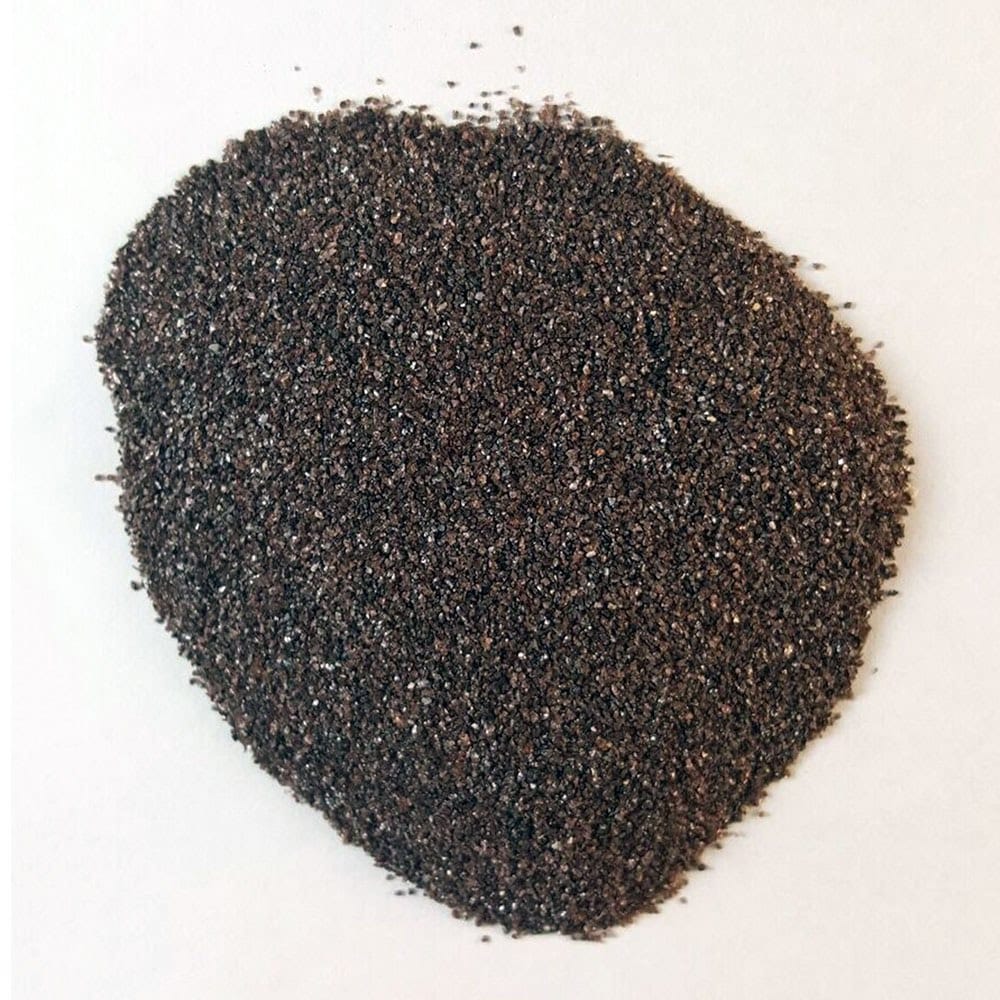
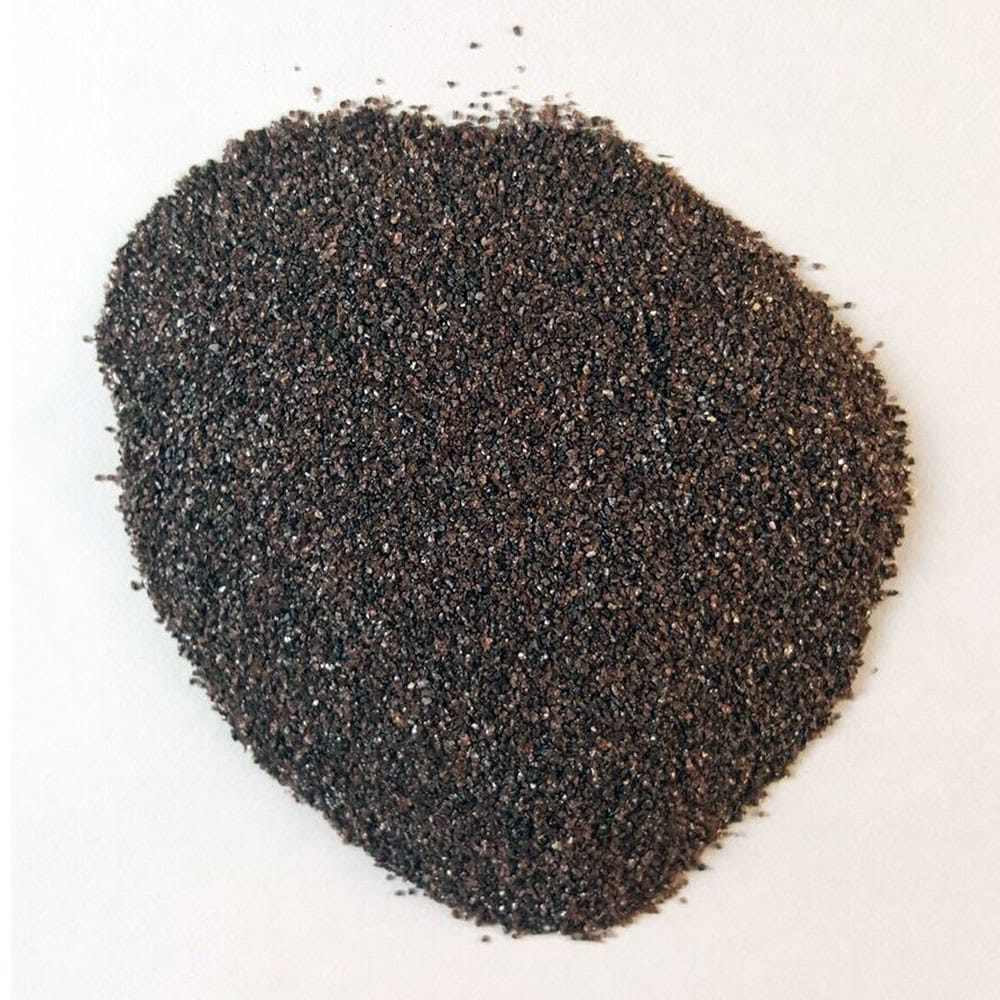
Silicon carbide (SiC), also known as carborundum, is a synthetic abrasive produced by fusing silica sand and carbon in an electric resistance furnace (the Acheson process) at temperatures approaching 2,500 °C. The result is one of the hardest materials known to exist — Mohs 9 to 9.5, surpassed only by diamond and boron carbide. In blasting applications, silicon carbide’s extreme hardness translates directly to the fastest material removal rate of any common abrasive, making it the specialist tool for substrates that aluminum oxide simply cannot process effectively.
Silicon carbide is not a general-purpose blasting abrasive. Its cost — typically 2–3× higher than aluminum oxide per unit weight — and its tendency to wear equipment aggressively at high operating pressures make it appropriate only where its extreme hardness is the decisive advantage. Those applications include blasting cemented tungsten carbide, silicon nitride ceramics, sapphire optical elements, hardened tool steel, and intricate glass engraving where the cutting speed and edge definition of SiC are unmatched.
Technical Specifications
| Property | Black SiC | Green SiC |
|---|---|---|
| SiC Content | 97–98.5% | 99%+ |
| Dureza Mohs | 9.0–9.2 | 9.4–9.5 |
| Peso específico | 3.19–3.22 g/cm³ | 3.20–3.23 g/cm³ |
| Shape | Angular, sharp-edged | Angular, very sharp |
| Color | Black/grey-black | Green |
| Free Silica | <0.5% | <0.3% |
| Reciclabilidad | 10–15 cycles | 12–18 cycles |
| Relative Cost | Alta | Very High |
Black vs Green Silicon Carbide
Black Silicon Carbide (Black SiC) is the standard commercial grade, with SiC content of 97–98.5%. It is harder than aluminum oxide and garnet, and offers a significant cutting speed advantage on difficult substrates. Black SiC is the appropriate choice for most industrial blasting applications requiring SiC, including surface preparation of hard ceramics, deburring of sintered parts, and glass etching.
Green Silicon Carbide (Green SiC) achieves 99%+ purity through a more energy-intensive production process and has slightly higher hardness and a sharper fracture pattern. It is specified for the most demanding applications: lapping and polishing of optical elements, precision grinding of semiconductor wafers, and applications where the lowest possible contaminant introduction is essential. Green SiC’s cost premium over black SiC is only justified in these specialist applications.
Specialist Applications of Silicon Carbide Blasting
Technical Ceramics & Carbide Components
Cemented tungsten carbide (WC-Co), silicon nitride, aluminium oxide ceramics, and zirconia components can only be effectively blasted with SiC — aluminum oxide is too soft to profile these materials at practical speeds. SiC 36–60 grit is the standard specification for blast texturing of ceramic thermal spray substrates.
Glass Engraving & Deep Etching
SiC 100–220 grit is used for deep artistic engraving, stage engraving on thick glass panels, and frosting of optical glass where the sharper cut definition of SiC versus aluminum oxide is visually apparent. The finer-edged cuts produced by SiC create higher-contrast etched designs than those achievable with Al₂O₃ at the same grit size.
Hardened Tool Steel
Tooling with hardness above HRC 60 — including high-speed steel cutters, die inserts, and carbide-tipped tooling — can be surface-cleaned and profiled with SiC 36–80 grit. Aluminum oxide loses its cutting edge too rapidly on these substrates to be economical.
Aerospace Thermal Barrier Coatings
Bond coat preparation on nickel superalloy turbine blades for thermal spray TBC systems sometimes specifies SiC for its ability to produce the precise angular profiles (2.5–4.0 mil) required without embedding media in the superalloy substrate. SiC is lighter than alumina and less prone to substrate contamination in critical HVOF bond coat applications.
Pros & Cons
Ventajas
- Highest hardness of any common blasting abrasive (Mohs 9–9.5)
- Fastest material removal rate on hard substrates (ceramics, carbide, hardened steel)
- Sharp, controlled fracture produces excellent etch definition on glass
- Low specific gravity — lighter than Al₂O₃, less equipment wear per kg used
- Available in fine grits (down to 320 or finer) for precision finishing
Limitaciones
- Significantly higher cost than aluminum oxide — 2–3× per unit weight
- Wears nozzles, hoses, and blast pot components faster at high pressure
- Not economically justified for standard steel surface preparation
- Lower recyclability than aluminum oxide due to more aggressive fracture
- Limited availability in very coarse sizes vs aluminum oxide
When to Choose Silicon Carbide Over Aluminum Oxide
The decision to use SiC over aluminum oxide should be driven by a clear technical need, not budget preference. Choose SiC when:
- The substrate hardness exceeds Mohs 8 (cemented carbide, silicon nitride, alumina ceramics) and aluminum oxide cannot achieve an adequate removal rate
- Glass engraving applications require the sharper edge definition and higher contrast that SiC’s fracture pattern provides
- Thermal spray substrate preparation specifications explicitly call for SiC due to contamination sensitivity
- Production testing with aluminum oxide has confirmed inadequate throughput or insufficient profile depth on the target substrate
For all other industrial blasting applications — carbon steel, stainless steel, aluminium, and most alloys — óxido de aluminio delivers equivalent or better results at significantly lower cost.
PREGUNTAS FRECUENTES
Silicon carbide contains less than 0.5% free silica (the compound that causes silicosis), making it considerably safer than crystalline silica sand. Standard respiratory protection (supplied-air respirator) and PPE protocols apply for all blasting operations. The dust generated by SiC blasting is non-toxic and non-reactive under normal conditions. For full regulatory guidance, see the OSHA Safety Regulations guide.
Yes, SiC is compatible with standard pressure pot and blast cabinet equipment. However, its extreme hardness significantly accelerates nozzle and hose wear compared to softer media. Tungsten carbide or boron carbide nozzles (rather than ceramic nozzles) are recommended when using SiC at pressures above 80 psi to achieve acceptable nozzle life. Always use a tungsten carbide metering orifice in the media valve when handling SiC in a pressure pot.
Source Silicon Carbide Blasting Abrasive from Jiangsu Henglihong Technology
Black and green SiC in grit sizes 16–320, supplied in 25 kg bags and super sacks for B2B export. Technical data sheets and SDS available on request.
Filtros