Blasting Media for Automotive & Aerospace Applications
A precision media selection guide for automotive and aerospace blasting — covering shot peening for fatigue life, composite surface prep, aluminum alloy finishing, aircraft paint stripping, and applicable industry standards including AMS, SAE, and MIL-SPEC.
- Why These Industries Demand Precision Media Selection
- Shot Peening for Automotive Components
- Shot Peening for Aerospace Components
- Aerospace Paint Stripping
- Aluminum Alloy Surface Preparation
- CFRP & Composite Surface Preparation
- Engine Component Cleaning
- Industry Standards Reference
- Häufig gestellte Fragen
Why Automotive & Aerospace Demand Precision Media Selection
Automotive and aerospace blasting applications represent the highest precision end of the abrasive blasting spectrum. Unlike structural steel preparation where a range of media choices produces acceptable results, these industries operate under tightly defined material specifications — AMS (Aerospace Material Specifications), SAE (Society of Automotive Engineers), and MIL-SPEC standards — that prescribe specific media types, sizes, hardness grades, and process parameters for each application.
The stakes in these sectors are correspondingly high. An incorrect media choice during aircraft paint stripping could damage a structural composite panel, requiring costly repair or replacement. Inappropriate peening media or intensity on a titanium turbine disk could introduce the wrong residual stress state, potentially reducing fatigue life rather than improving it. Ferrous contamination on an aluminum aerospace component from a steel blast media can initiate galvanic corrosion that propagates undetected under subsequent coatings.
This guide covers the five primary blasting applications in automotive and aerospace — shot peening, paint stripping, aluminum surface prep, composite prep, and engine component cleaning — with specific media recommendations and applicable standard references.
For the full media selection framework: How to Choose Abrasive Blasting Media: 7 Key Factors Explained. For media type technical details: Abrasive Blasting Media Complete Guide.
Shot Peening for Automotive Components
Shot peening is a standard process in automotive powertrain and suspension manufacturing, applied to extend the fatigue life of high-cycle-load components by introducing compressive residual stress in their surface layers. The compressive stress zone inhibits fatigue crack initiation and slows crack propagation, extending component service life by 20–300% in laboratory and field testing.
Components Routinely Shot-Peened in Automotive Production
- Crankshafts and camshafts: Peening of fillet radii at journal-to-web transitions — the highest-stress locations — significantly extends fatigue life. SAE J808 governs automotive shot peening for crankshafts.
- Connecting rods: Peening of the beam and big-end bore area. Critical for high-performance and heavy-duty diesel engines.
- Valve springs: Entire spring peened to maximize fatigue life under high-frequency cyclic loading. Fine shot (S-110 to S-170) is used for the small wire diameter.
- Gears and transmission components: Peening of gear tooth roots and flanks improves resistance to bending fatigue and contact fatigue (pitting).
- Suspension springs and anti-roll bars: Coil springs are routinely peened to extend service life under road-load cycling.
- Wheel hubs and steering knuckles: Safety-critical components that benefit from maximum fatigue life enhancement.
Media for Automotive Shot Peening
| Komponente | Peening Media | SAE Grade | Typical Almen Intensity | Erfassungsbereich |
|---|---|---|---|---|
| Crankshaft fillets | Stahlkugel | S-230–S-330 | 0.20–0.35A | 100%+ |
| Connecting rod (steel) | Stahlkugel | S-170–S-280 | 0.15–0.30A | 100%+ |
| Ventilfedern | Steel Shot / Glass Bead | S-110–S-170 | 0.10–0.25A | 100%+ |
| Gears (carburized steel) | Stahlkugel | S-230–S-390 | 0.25–0.45A | 125%+ |
| Aluminum suspension components | Glass Bead | AMS 2431 spec | 0.004–0.010A | 100%+ |
| Titanium fasteners | Glass Bead / Ceramic Shot | AMS 2430 spec | 0.004–0.008A | 100%+ |
Shot Peening for Aerospace Components
Aerospace shot peening is governed by significantly more stringent specifications than automotive applications, reflecting the safety-critical nature of aerospace structures. AMS 2430 (shot peening) and AMS 2432 (computer-controlled shot peening) are the primary US aerospace standards. NADCAP (National Aerospace and Defense Contractors Accreditation Program) certification is required for suppliers performing shot peening on aerospace primary structure components.
Aerospace Components Requiring Shot Peening
- Turbine engine disks and blades: Compressor and turbine disk forgings are peened to resist centrifugal fatigue, thermal fatigue, and foreign object damage initiation.
- Landing gear components: Structural elements subjected to very high cyclic loads during aircraft operations — axles, torque links, drag braces.
- Wing spars and structural fastener holes: Cold expansion and peening of fastener holes dramatically extends fatigue life of wing structural elements.
- Engine shafts and gearboxes: High-cycle fatigue loading requires maximum peening benefit at stress concentration points.
Aerospace Peening Media: Glass Bead vs Steel Shot
Glass beads (AMS 2431 classification) are specified for aerospace applications involving aluminum alloys, titanium alloys, and nickel superalloys where iron contamination from steel shot is unacceptable. Ceramic shot (zirconia-based, per specific OEM specifications) is used for the most demanding clean-room or contamination-sensitive peening applications. Steel shot is acceptable for high-carbon steel components (landing gear steel, certain engine components) where iron contamination is not a concern. For complete glass bead technical reference: Glass Bead Blasting Media: Finish Quality, Mesh Sizes & Equipment Compatibility.
Aerospace Paint Stripping
Aircraft maintenance cycles require periodic complete paint stripping for structural inspection, corrosion treatment, and full repainting. The challenge is removing all coating layers — topcoat, primer, and any conversion coating topcoats — while preserving the underlying aluminum alloy skin or composite structure in its original, undamaged condition.
Approved Media for Aerospace Paint Stripping
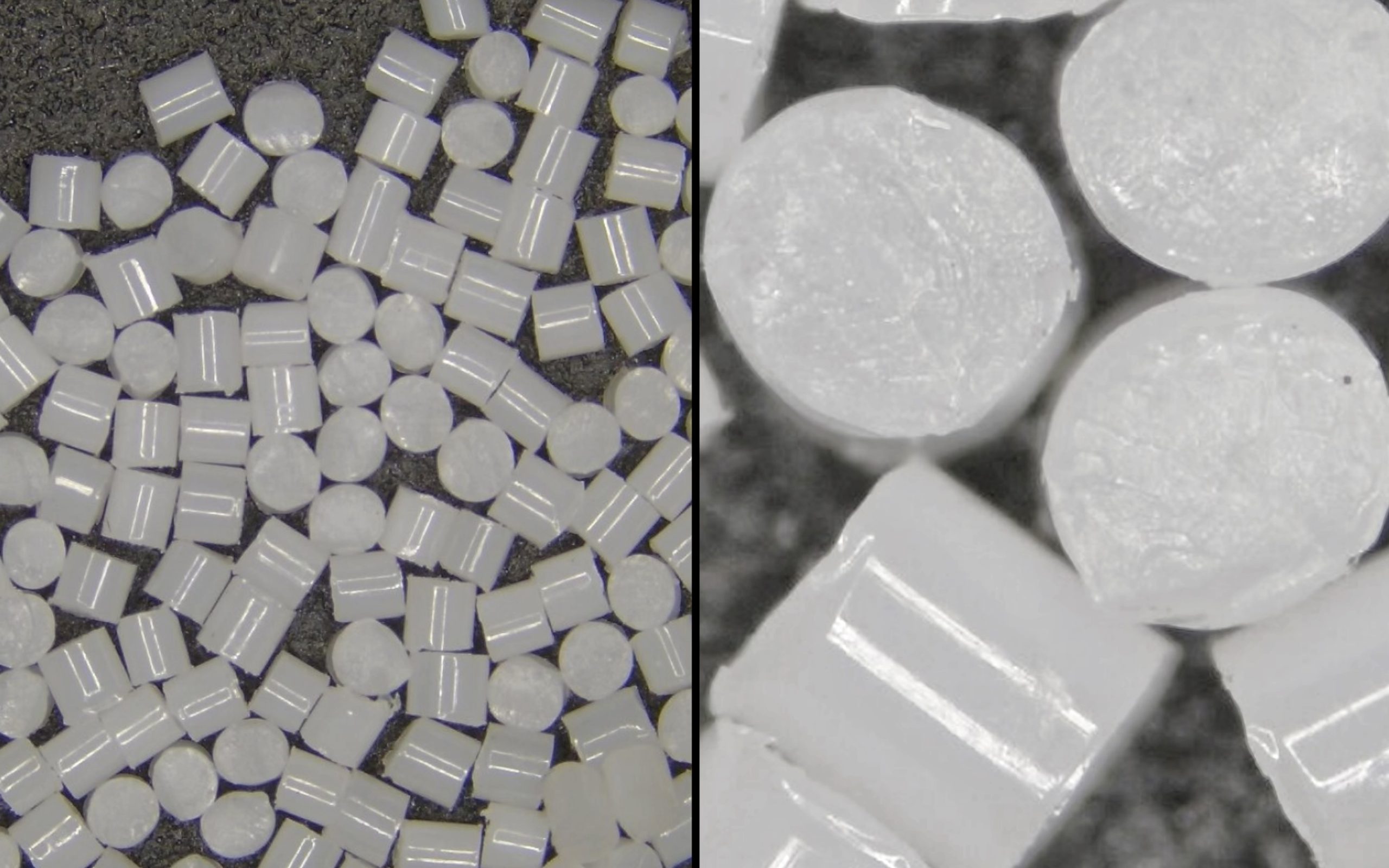
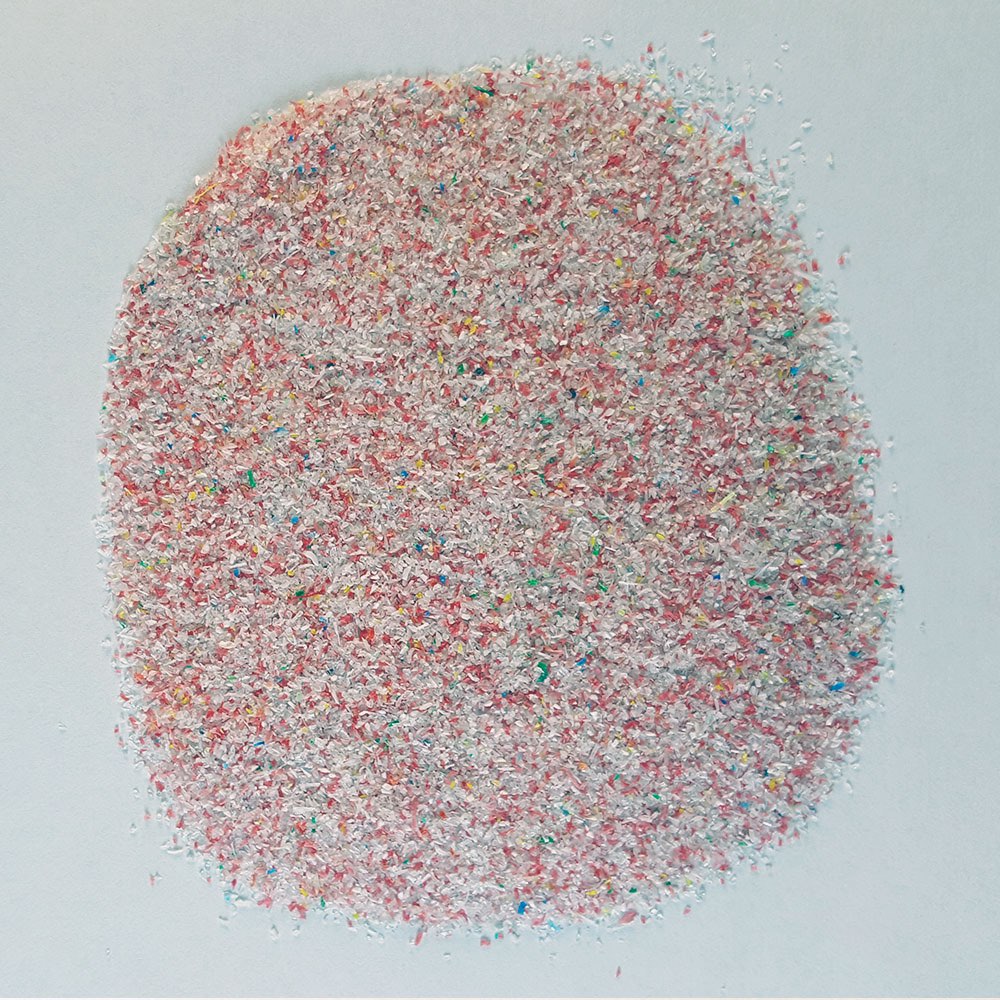
Melamine plastic grit per AMS 2441 is the industry-standard approved media for aerospace paint stripping from aluminum and composite structures. Process parameters per AMS 2441:
- Blasting pressure: 20–55 PSI (1.4–3.8 bar) depending on substrate and coating thickness
- Nozzle standoff distance: 15–30 cm (6–12 inches)
- Impingement angle: 30–60° from perpendicular
- Nozzle type: Standard or wide-fan venturi nozzle
- Prohibited substrate indicators: No visible substrate metal removal, no fiber disruption in composites, no change in surface profile measurable by profilometer
Urea plastic grit is specified for the most sensitive composite structures (honeycomb sandwich panels, thin-skin sections) where even melamine grit’s moderate hardness may cause fiber disruption if process parameters are not tightly controlled. See full plastic media guide: Plastic & Organic Blasting Media: Walnut Shell, Corn Cob & Plastic Grit.
Aluminum Alloy Surface Preparation
Aluminum alloy surface preparation for structural adhesive bonding, coating application, or anodizing requires a carefully controlled combination of surface cleanliness and profile. The key constraint that distinguishes aluminum from steel: all media used must be iron-free, and process parameters must be calibrated to prevent substrate deformation or excessive profile depth in thin sections.
| Anmeldung | Media Recommendation | Grit / Mesh Size | Pressure (PSI) | Target Profile |
|---|---|---|---|---|
| Pre-primer surface prep (structural) | White Aluminum Oxide | F60–F80 | 50–70 | Ra 2–5 µm |
| Pre-anodize surface conditioning | White Aluminum Oxide | F80–F120 | 40–60 | Ra 1–3 µm |
| Pre-bond surface activation | White Aluminum Oxide | F80–F100 | 40–60 | Ra 2–4 µm |
| Decorative satin finish | Glass Bead | US 100–170 | 40–60 | Ra 0.4–1.5 µm |
| Shot peening (light, non-structural) | Glass Bead | AMS 2431 | Velocity controlled | Per Almen spec |
| Paint removal only | Melamine Plastic Grit | Medium grade | 30–50 | Zero substrate change |
CFRP & Composite Surface Preparation
Carbon fiber reinforced polymer (CFRP) and other composite materials present unique blasting challenges: the reinforcement fibers must not be cut, delaminated, or exposed, while the surface must be adequately prepared for adhesive bonding, coating application, or repair lamination. Only soft abrasive media at carefully controlled pressures achieves this balance.
The standard approach for CFRP surface preparation is melamine plastic grit at 25–45 PSI. This lightly scours the composite surface, removing surface contamination and the resin-rich layer that reduces adhesive bond strength, without disrupting the carbon fiber reinforcement just below the surface. Post-blast inspection with a magnifying glass or profilometer confirms no fiber damage before bonding or coating proceeds.
For composite structures where even plastic grit at controlled pressure is considered too aggressive (thin honeycomb skins, damaged repair areas), hand-sanding or solvent wiping to ASTM D2093 is preferred over blasting.
Engine Component Cleaning
Engine component cleaning — removing carbon deposits, varnish, oxidation, and old gasket material from cylinder heads, pistons, intake manifolds, and valvetrain components — requires media gentle enough to clean without dimensional alteration of precision-machined surfaces, while still removing carbonaceous deposits that resist soft media.
Walnut shell grit (20/40 to 40/60 mesh) is the standard for this application. Its Mohs 3–4 hardness removes carbon deposits efficiently without abrading the underlying cast iron, aluminum, or steel machined surfaces. Fine glass beads (US 120–200) can also be used for cleaning and light surface brightening of precision engine components without any material removal. Full technical reference: Plastic & Organic Blasting Media.
Industry Standards Reference
| Standard | Scope | Key Requirements |
|---|---|---|
| AMS 2430 | Shot peening — general aerospace | Almen intensity, coverage, media hardness and size, process documentation |
| AMS 2431 | Peening media — glass bead classification | Defines glass bead size classes GP1–GP14 for aerospace peening |
| AMS 2432 | Computer-controlled shot peening | CNC peening with real-time Almen intensity monitoring |
| AMS 2441 | Plastic media blasting for paint stripping | Melamine grit, pressure limits, inspection requirements for aluminum and composite |
| SAE J808 | Automotive shot peening | Automotive-specific peening requirements for powertrain components |
| MIL-S-13165 | Shot peening of metal parts (military) | Military applications — similar to AMS 2430 but for defense procurement |
| NADCAP AC7117 | NADCAP shot peening audit criteria | Required for NADCAP-approved shot peening facilities supplying aerospace OEMs |
Source Aerospace & Automotive Grade Blasting Media
Jiangsu Henglihong Technology supplies glass beads (AMS 2431 compliant), aluminum oxide, silicon carbide, and steel shot for automotive and aerospace applications, with full batch-level quality documentation and available material certifications. Contact us for specification review and sample requests.
Request a Specification ReviewHäufig gestellte Fragen
Filter