Abrasive Media Comparison Chart: Hardness, Grit & Cost Guide
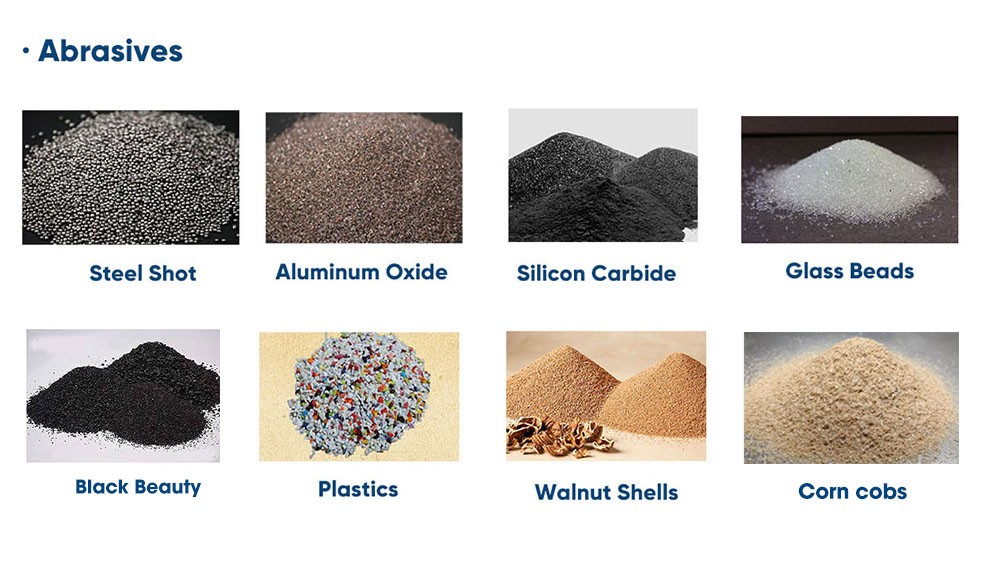
Every major blast media type compared in one place — particle hardness, shape, grit range, surface profile, recyclability, cost per cycle, and the applications each one handles best.
Finding the right abrasive media often comes down to a handful of technical parameters that are easy to compare once they are laid out side by side. This page exists for one purpose: give you every key comparison in one place, with no need to jump between product pages or data sheets. Bookmark it, print it, or share it with your team.
All media types covered here are part of our full detailed breakdown in 10 Types of Abrasive Blasting Media: Pros, Cons & Best Uses. Use this page for quick reference; use that page when you need the full picture on any individual type.
Need this chart on the shop floor or in a specification document? Contact Jiangsu Henglihong Technology to request a print-ready PDF of this comparison chart, formatted for A4 / US Letter with your project details included.
Master Comparison Table
The table below covers all eight abrasive media types supplied by Jiangsu Henglihong Technology, plus silicon carbide and crushed glass for completeness. Scroll horizontally on mobile to see all columns.
| Medienart | Mohs / HRC | Shape | Grit / Size Range | Profile Depth | Wiederverwertbarkeit | Per-Cycle Cost | Silica Compliant | Primary Use Case |
|---|---|---|---|---|---|---|---|---|
| Aluminium-Oxid | Mohs 9 | Eckig | 16 – 320 | 1.5 – 4.0 mil | 5 – 10× | Medium | ✅ Yes | General industrial metal prep |
| Glasperlen | Mohs 5.5–6 | Spherical | 40 – 325 | Peen only | 3 – 5× | Medium | ✅ Yes | Satin finish, peening, stainless |
| Granat | Mohs 7.5–8 | Sub-angular | 30 – 120 | 1.5 – 2.5 mil | 1 – 3× | Medium | ✅ Yes | Marine, low-dust, waterjet |
| Stahlkies | HRC 55–66 | Eckig | G10 – G120 | 2.5 – 5.0 mil | 100+× | Very low | ✅ Yes | Heavy industrial, wheel blast |
| Stahlkugel | HRC 40–51 | Spherical | S70 – S780 | 0.5 – 1.5 mil | 100+× | Very low | ✅ Yes | Shot peening, scale removal |
| Walnut Shell | Mohs 3–4 | Eckig | 6 – 100 | Negligible | 1 – 2× | Niedrig | ✅ Yes | Composites, gentle cleaning |
| Corn Cob | Mohs 3–3.5 | Eckig | 4 – 80 | Negligible | 1 – 2× | Niedrig | ✅ Yes | Jewelry polishing, tumbling |
| Plastische Medien | Mohs 3–3.5 | Eckig | 12 – 80 | Negligible | 3 – 5× | Medium-high | ✅ Yes | Aircraft / composite stripping |
| Siliziumkarbid | Mohs 9–9.5 | Eckig | 16 – 600 | Very deep | Very low | Very high | ✅ Yes | Ceramics, carbide, glass engraving |
| Crushed Glass | Mohs 5.5–6 | Eckig | 12 – 80 | 1.0 – 2.0 mil | 1× | Niedrig | ⚠️ Verify SDS | Budget outdoor structural blasting |
Hardness Comparison — Mohs Scale
Hardness is the single most important factor in determining how aggressively a media cuts into a surface and how long individual particles remain effective. The Mohs hardness scale runs from 1 (talc) to 10 (diamond). The chart below maps each media type across that scale — a longer bar means a harder, more aggressive abrasive.
An important distinction: steel abrasives are rated on the Rockwell C (HRC) scale rather than Mohs, because they are metallic rather than mineral. HRC 40–66 is approximately equivalent to Mohs 7–8 for a rough comparison, but the two scales are not directly interchangeable.
Relative Hardness — Mohs Scale (1 = Softest, 10 = Hardest)
Using a media that is harder than necessary for your substrate increases the risk of surface damage, warping, and dimensional loss — and often raises your operating cost unnecessarily. The rule: choose the softest media that can still achieve your required cleanliness grade and surface profile.
Particle Shape & What It Does to Your Surface
Hardness tells you how aggressively a media cuts. Shape tells you what kind of cut it makes. This is the most frequently overlooked variable in media selection, and it determines whether your blasted surface has a rough anchor profile, a smooth peened finish, or something in between.
Angular particles fracture and cut into the surface on impact, creating sharp peaks and valleys — the anchor profile that coatings rely on for mechanical adhesion. The more angular and harder the particle, the deeper and more pronounced the profile. This is what you need before applying epoxy, polyurethane, zinc-rich primer, or any industrial protective coating to steel.
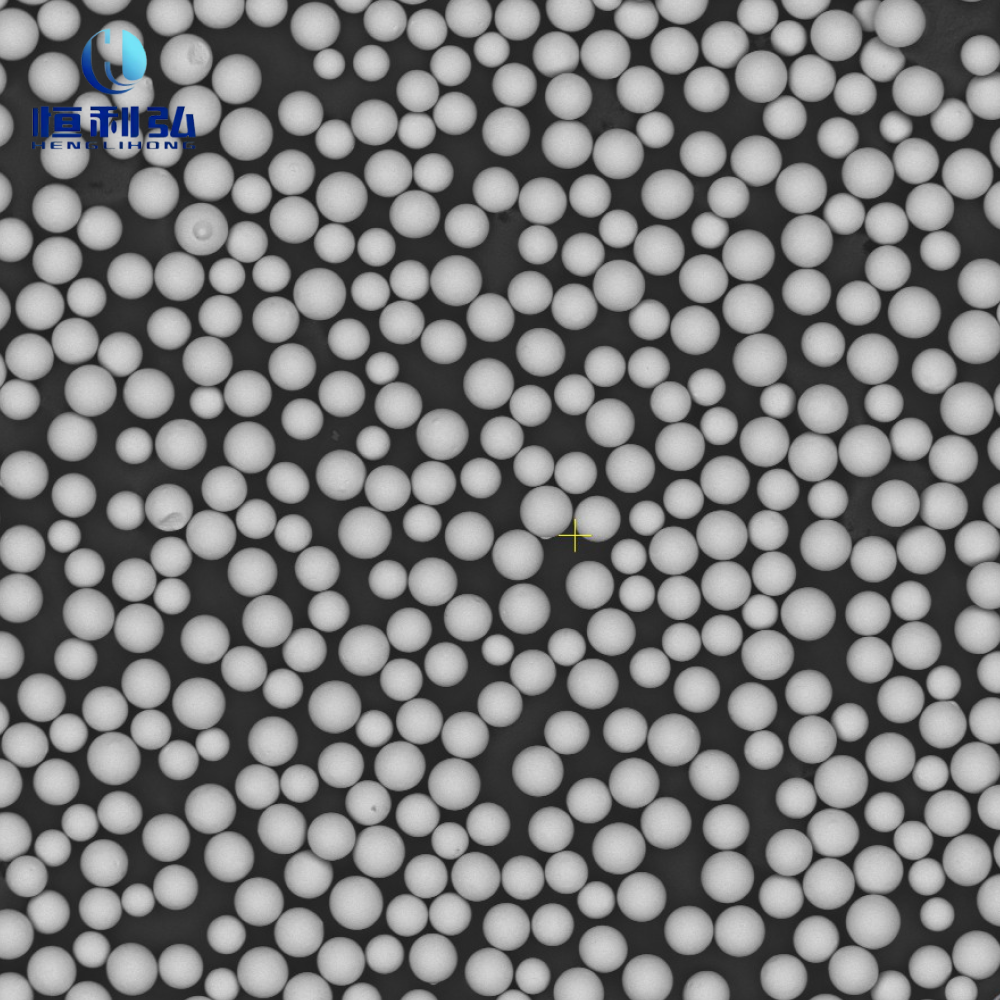
Spherical particles do not cut — they hammer. Each impact leaves a tiny round dimple, and the cumulative effect is a smooth, compressive surface layer. This is the shot-peening effect: it improves fatigue life without raising a profile. It is also what glass bead blasting delivers — a smooth, satin surface with no sharp profile, ideal for stainless steel finishing and decorative applications.
Sub-angular particles (like garnet) sit between the two extremes: they produce a profile, but one that is somewhat less aggressive than fully angular media of the same hardness. This makes them particularly controllable for applications where a medium-range profile is specified.
Grit Size Range by Media Type
The grit size available in each media family determines how fine or coarse a finish you can achieve. The ranges below reflect typical commercial availability. Note that for steel abrasives, the SAE size designation (G-number for grit, S-number for shot) uses the opposite convention to mineral grit numbering: a larger number means a smaller particle size for steel grit (G10 is coarser than G120), but a larger number means a larger particle for steel shot (S780 is larger than S110).
For a full explanation of grit numbering conventions, how to read mesh sizes, and how to match grit to required surface profile, see our Abrasive Media FAQ: Grit Size, Mesh, Recycling & Storage Tips.
Surface Profile Depth Comparison
Surface profile — also called anchor profile or surface roughness — is the microscopic peak-to-valley height created by abrasive impact, measured in mils (thousandths of an inch) or micrometers. It is the mechanical key that locks a coating to a substrate. Most industrial coating systems specify a minimum and maximum acceptable profile range; going outside either end causes adhesion failure.
| Medienart | Typical Profile Range | SSPC Cleanliness Achievable | Suitable Coating Systems |
|---|---|---|---|
| Steel Grit (GH grade) | 2.5 – 5.0 mil | SP5 / SP10 / SP6 | High-build epoxy, zinc-rich, coal tar, thermal spray |
| Aluminum Oxide (coarse) | 1.5 – 4.0 mil | SP5 / SP10 | Industrial epoxy, polyurethane, zinc primer |
| Garnet (30–60 mesh) | 1.5 – 2.5 mil | SP10 / SP6 | Marine epoxy, polyurethane, standard industrial coatings |
| Crushed Glass | 1.0 – 2.0 mil | SP10 / SP6 | General structural coatings, light-duty industrial |
| Aluminum Oxide (fine) | 0.5 – 1.5 mil | SP10 | Thin-film coatings, aerospace primers, powder coat |
| Stahlkugel | 0.5 – 1.5 mil | SP6 / SP10 | Pipeline internal coating, mill scale removal |
| Glasperlen | Peen — no profile | SP6 (cleaning only) | Bare metal finishing, decorative, pre-anodize |
| Plastic / Walnut / Corn Cob | Negligible | Surface clean only | Stripping only — substrate must be re-prepped for coating |
Recyclability Comparison
Recyclability directly determines the true cost per blast cycle — not the price per bag. A media that costs three times as much per pound but lasts ten times as many cycles is actually three times cheaper in operation. The cards below show how many blast cycles each media type typically delivers before replacement.
Cost Per Cycle — The Number That Actually Matters
Purchase price per pound is almost meaningless as a standalone metric. The number that matters is cost per blast cycle — how much media you consume to process one unit of surface area. This integrates purchase price, media consumption rate, and recyclability into a single comparable figure.
The cards below rank each media type by approximate per-cycle cost, from lowest to highest. These are relative rankings based on typical commercial pricing and consumption data, not absolute figures — exact numbers vary significantly by region, volume, and supplier.
Substrate Compatibility Matrix
This matrix summarizes which media types are compatible with the most common substrate categories. ✅ Recommended = good fit; ⚠️ Conditional = possible with precautions (note below); ❌ Avoid = risk of substrate damage or contamination.
| Media | Carbon Steel | Stainless Steel | Aluminium | CFRP / Composites | Fiberglas | Stone / Concrete | Wood |
|---|---|---|---|---|---|---|---|
| Aluminium-Oxid | ✅ | ⚠️ WFA only | ⚠️ Fine grit | ❌ | ❌ | ✅ | ❌ |
| Glasperlen | ⚠️ No profile | ✅ | ✅ | ⚠️ Light only | ✅ | ⚠️ | ❌ |
| Granat | ✅ | ❌ Contamination | ⚠️ Fine grit | ❌ | ❌ | ✅ | ❌ |
| Stahlkies | ✅ | ❌ Iron contamination | ❌ | ❌ | ❌ | ⚠️ | ❌ |
| Stahlkugel | ✅ | ❌ Iron contamination | ❌ | ❌ | ❌ | ⚠️ | ❌ |
| Walnut Shell | ⚠️ Light only | ✅ | ✅ | ✅ | ✅ | ✅ | ✅ |
| Corn Cob | ⚠️ Very light | ✅ | ✅ | ✅ | ✅ | ⚠️ | ✅ |
| Plastische Medien | ⚠️ Stripping only | ⚠️ Stripping only | ✅ | ✅ | ✅ | ❌ | ❌ |
For a detailed walkthrough of how to match media to substrate in your specific application — including equipment type, coating spec, and cost calculation — see: How to Choose the Right Abrasive Media for Your Project →
Häufig gestellte Fragen
What is the hardest abrasive blasting media?
Silicon carbide is the hardest at Mohs 9–9.5, followed by aluminum oxide at Mohs 9. For most industrial surface preparation work, aluminum oxide provides the best combination of hardness, recyclability, and cost-effectiveness and is the more practical choice. Silicon carbide is reserved for niche applications like ceramics, carbide tooling, and glass engraving where aluminum oxide cannot achieve the required result.
Which abrasive media creates the deepest surface profile?
Steel grit (high-hardness grade, HRC 60–66) creates the deepest anchor profile, typically reaching 2.5–5.0 mil in wheel-blast operations. Coarse aluminum oxide in a pressure blast system follows closely at 1.5–4.0 mil depending on grit size and operating pressure. For applications requiring profiles above 3.0 mil, steel grit in a wheel-blast system is the standard industrial solution.
What is the most cost-effective abrasive media overall?
Cost-effectiveness must be evaluated on a per-cycle basis, not a per-pound basis. Steel grit and steel shot, despite their high upfront cost, typically deliver the lowest per-cycle media cost at production scale due to their 100+ cycle recyclability in wheel-blast equipment. For lower-volume pressure blast and cabinet operations, aluminum oxide (5–10 cycles) offers the best balance. Single-use media like garnet and crushed glass are the cheapest per bag, but the highest cost per ton of steel processed.
What is the difference between grit and mesh numbering?
For mineral and synthetic abrasives (aluminum oxide, garnet, silicon carbide, glass beads), higher grit/mesh numbers mean finer, smaller particles: 36 grit is coarse, 220 grit is fine. For steel grit (SAE G-series), the opposite applies — G10 is large/coarse, G120 is small/fine. For steel shot (SAE S-series), larger numbers mean larger particles: S110 is small, S780 is large. Always verify which numbering convention a product datasheet uses before specifying a size.
Can I mix different abrasive media types?
Generally, no — blending different media types is not recommended. Mixed media produces unpredictable surface profiles and contamination that can interfere with coating adhesion. Different media also have different optimal operating parameters (pressure, nozzle type, reclaim settings). The only exception is deliberate production blending of different sizes of the same media type to achieve a specific profile range — a practice used in some aerospace finishing applications with glass beads or aluminum oxide. Always consult the media manufacturer before attempting any blend.
Filter