Where to Buy Blasting Sand: The Complete Buyer’s Guide
Everything you need to know about sourcing blasting sand and abrasive media — from retail stores and online platforms to bulk industrial suppliers — with expert guidance on types, grit sizes, safety, and cost.
What Is Blasting Sand?
The term blasting sand refers to any granular abrasive material propelled at high velocity against a surface to clean, strip, etch, or prepare it. In its most literal sense it means silica sand — the material that gave “sandblasting” its name. In modern industrial practice, however, the phrase covers a much wider family of abrasive media, including garnet, steel grit, glass beads, coal slag, aluminum oxide, and walnut shells.
Understanding this distinction matters enormously when you start shopping. The bag labeled “blasting sand” at a hardware store and the premium garnet media sold by a specialist abrasive supplier both get propelled through the same equipment — but they perform very differently on the job site, carry very different health profiles, and cost very different amounts per hour of effective blasting.
This guide covers every place you can source blasting sand or its modern alternatives, how to evaluate what you are buying, and how to match the right abrasive to your specific project — whether you are stripping rust from a vehicle frame in your garage or managing a large-scale industrial surface preparation contract.
Where to Buy Blasting Sand: All Your Options
The right purchasing channel depends on how much you need, how quickly you need it, and what type of abrasive you are after. Below we break down every major option — from your local hardware aisle to pallet-scale industrial procurement. For a deeper look at local sourcing options including Tractor Supply, Lowe’s, and regional masonry suppliers, see our dedicated guide: Where to Buy Blasting Sand Near Me.
Retail & Hardware Stores
For small to medium projects — automotive restoration, fence cleaning, concrete etching — retail stores provide convenient, immediate access to blasting sand without minimum order requirements.
Tractor Supply Co.
One of the most reliable retail sources. Carries Black Diamond coal slag in fine and coarse grades at competitive prices, typically $7–$10 per 50 lb bag. Available for in-store pickup.
Home Depot
Stocks Quikrete and Cemex blasting sand (100 lb bags, medium grit). Ideal for concrete surface prep. Product availability varies by region — check online inventory before visiting. For more detail, see our guide: Does Home Depot Sell Blasting Sand?
Lowe’s
Carries silica sand and coal slag blasting media. Also stocks sandblasting equipment and accessories, making it a one-stop option for smaller setups. Select stores carry Ash Grove abrasive media.
Agri Supply
Excellent range of sandblasting sand in extra fine, fine, medium, and coarse grit. 50 lb and 100 lb bags available. Silica-based media suitable for removing paint, rust, and shaping stone.
Menards
TechMix Black Blast blasting crystals (50 lb) — a coal slag blend suitable for rust and paint removal, glass frosting, and brick cleaning. Works with all standard blasting equipment.
White Cap / Richards Supply
Professional-grade supplier. White Cap stocks Quikrete 100 lb medium blasting sand with local branch pricing and 1–3 day shipping. Better suited for contractors than casual DIYers.
Online Stores & Marketplaces
Online purchasing dramatically widens your selection and usually offers better per-unit pricing once you factor in multi-bag orders. The tradeoff is shipping cost — abrasive media is heavy, and shipping charges can erode savings on small orders.
For a side-by-side comparison of the leading online platforms including pricing benchmarks, shipping lead times, and product depth by media type, visit our detailed comparison: Best Online Stores to Buy Blasting Sand (Amazon vs Tractor Supply vs Northern Tool).
| Platform | Best For | Typical Price Range | Shipping Notes |
|---|---|---|---|
| Amazon | Quick delivery, small quantities, diverse brands | $15–$45 / 50 lb | Prime 2-day on some; heavy items may add surcharge |
| Northern Tool | Equipment + media bundles, serious DIY | $8–$35 / 50 lb | Free store pickup; freight on large orders |
| Tractor Supply Online | Black Diamond slag, rural buyers | $7–$12 / 50 lb | Free in-store pickup, local availability varies |
| Cyclone Manufacturing | Specialist media (garnet, aluminum oxide, glass beads) | $20–$60 / 50 lb | Ships in 50 lb increments, pallets available |
| Abrasive Blast Supply | Industrial quantities, full media + equipment range | Quote-based on volume | Fast shipping, expert support included |
Bulk & Industrial Suppliers
For professional contractors, shipyards, steel fabricators, and industrial surface preparation operations, retail bags are neither cost-effective nor logistically practical. Bulk procurement — measured in pallets, super sacks, or full truckloads — is the standard approach.
Key considerations when buying blasting media in bulk include: minimum order quantities (often 1 pallet / 1 metric ton), lead times, freight class (abrasives typically ship LTL), storage requirements (keep dry, off the ground), and supplier certifications (ISO, SSPC compliance). For comprehensive guidance on bulk pricing structures and supplier evaluation criteria, see our in-depth resource: How to Buy Blasting Sand in Bulk: Pricing, Pallets & Supplier Options.
At the industrial scale, Jiangsu Henglihong Technology Co., Ltd. manufactures and supplies a full range of abrasive blasting media — including garnet, steel grit, and glass beads — directly to global buyers. Factory-direct sourcing at this level eliminates the middleman margin and ensures consistent specification control across production batches.
Types of Blasting Sand: What to Look For
Walk into any specialty abrasive supplier and you will quickly discover that “blasting sand” is just the beginning. Each abrasive type has a different hardness, shape, density, and cost profile — and choosing the wrong one can mean slow results, surface damage, or unnecessary health risk.
For a thorough head-to-head breakdown of every major media type, including silica sand, coal slag (Black Diamond), garnet, aluminum oxide, and glass beads, read our full comparison guide: Blasting Sand Types Explained: Silica Sand vs Garnet vs Coal Slag.
| Тип носителя | Твердость по Моосу | Shape | Reusability | Best Application |
|---|---|---|---|---|
| кварцевый песок | 7 | Angular | Low (single use) | Concrete etching, open-air paint removal |
| Coal Slag (Black Diamond) | 6-7 | Angular | Низкий | Steel surface prep, cost-effective open blasting |
| Гранат | 7.5–8 | Sub-angular | Medium (3–5×) | Steel, aluminum, shipbuilding, coating prep |
| Оксид алюминия | 9 | Angular | High (10–20×) | Hard metals, ceramic, glass etching |
| Стеклянные бусины | 5.5–6 | Spherical | High (up to 30×) | Stainless, automotive restoration, peening |
| Стальная крошка | 40–65 HRC | Angular | Very high (100+×) | Heavy industrial, structural steel, foundry |
| Скорлупа грецкого ореха | 3–4 | Irregular | Medium | Delicate surfaces, wood, aircraft components |
| Бикарбонат натрия | 2.5 | Crystalline | Нет | Sensitive surfaces, food-processing equipment |
The Shape Factor: Angular vs Spherical
Angular media (silica sand, garnet, aluminum oxide, steel grit) cuts aggressively into surfaces, creating a rough anchor profile ideal for coating adhesion. Spherical media (glass beads, steel shot) peens the surface rather than cutting it, producing a smooth, polished finish and compressive stress that improves fatigue resistance.
This distinction directly affects which media you should purchase. If your goal is surface preparation prior to painting or thermal spraying, angular media is almost always the right choice. If you are finishing stainless steel parts or deburring precision components, spherical media produces a cleaner, brighter result without removing base material.
Choosing the Right Grit Size
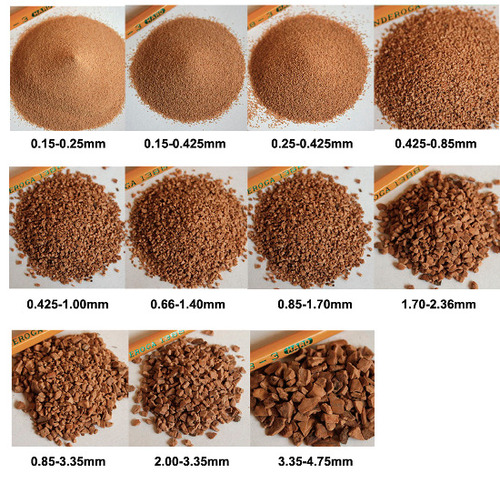
Grit size is one of the most underappreciated variables when buying blasting sand. It controls both the aggressiveness of the cut and the surface profile left behind — which directly affects how well a subsequent coating adheres. For a dedicated guide to matching grit size with specific job requirements, see: Blasting Sand Grit Size Guide: Coarse vs Medium vs Fine.
Coarse (6–20 grit)
Maximum material removal. Heavy mill scale, thick rust, structural steel prep. Creates a deep anchor profile (2–4 mil). Use for industrial coating systems requiring SSPC-SP 10 or better.
Medium (30–60 grit)
The most versatile range. Rust removal from automotive panels, general paint stripping, concrete surface prep. Produces a 1–2 mil profile suitable for most industrial primers.
Fine (80–120 grit)
Light cleaning, deburring, and finishing work. Ideal for aluminum, stainless steel, and thin sheet metals where aggressive profiling would warp or damage the substrate.
Extra Fine (150–220 grit)
Surface polishing, glass frosting, and precision part cleaning. Used in cabinet blasters for detailed work. Almost no surface profile — not suitable before painting.
A common mistake is selecting a grit size based on what happens to be available at the nearest store. Always start from the surface profile specification required by your coating system — then work backward to the grit size that achieves it with your particular equipment and pressure settings.
Safety Concerns: Is Blasting Sand Dangerous?
Silicosis Risk — Read Before You Buy
Traditional silica sand generates fine respirable dust during blasting. Prolonged inhalation of crystalline silica particles causes silicosis — an incurable, progressive lung disease. OSHA enforces a Permissible Exposure Limit (PEL) of 50 µg/m³ as an 8-hour TWA. Many countries and U.S. states have outright banned uncontained silica sandblasting. See our full safety guide: Is Blasting Sand Safe? Silicosis Risks & What to Use Instead.
The health risk attached to silica sand is not theoretical — it is well-documented and the subject of extensive occupational health regulation in North America, the European Union, and Australia. When crystalline silica is fractured during blasting, it generates particles in the respirable range (under 10 microns). These particles penetrate deep into lung tissue and trigger irreversible fibrosis.
This does not mean blasting sand is inherently off-limits. It means that when you purchase silica-based blasting media, you must also budget for appropriate engineering controls: wet blasting systems, vacuum blast equipment, or contained blasting enclosures with filtered exhaust. A basic dust mask is not adequate protection. NIOSH-approved supplied-air respirators are required for open silica blasting work.
For many users — especially DIYers, small shops, and operations without dedicated blasting enclosures — the safer and ultimately more cost-effective solution is to switch to a non-silica abrasive entirely.
Safer Alternatives to Silica Sand
The good news is that the abrasives industry has developed numerous alternatives that match or exceed silica sand’s performance while dramatically reducing health and environmental risk. The right alternative depends on your substrate, finish requirement, and equipment. For a comprehensive comparison with performance data and cost-per-job analysis, read: Best Alternatives to Blasting Sand: Garnet, Glass Beads, Aluminum Oxide Compared.
Гранат
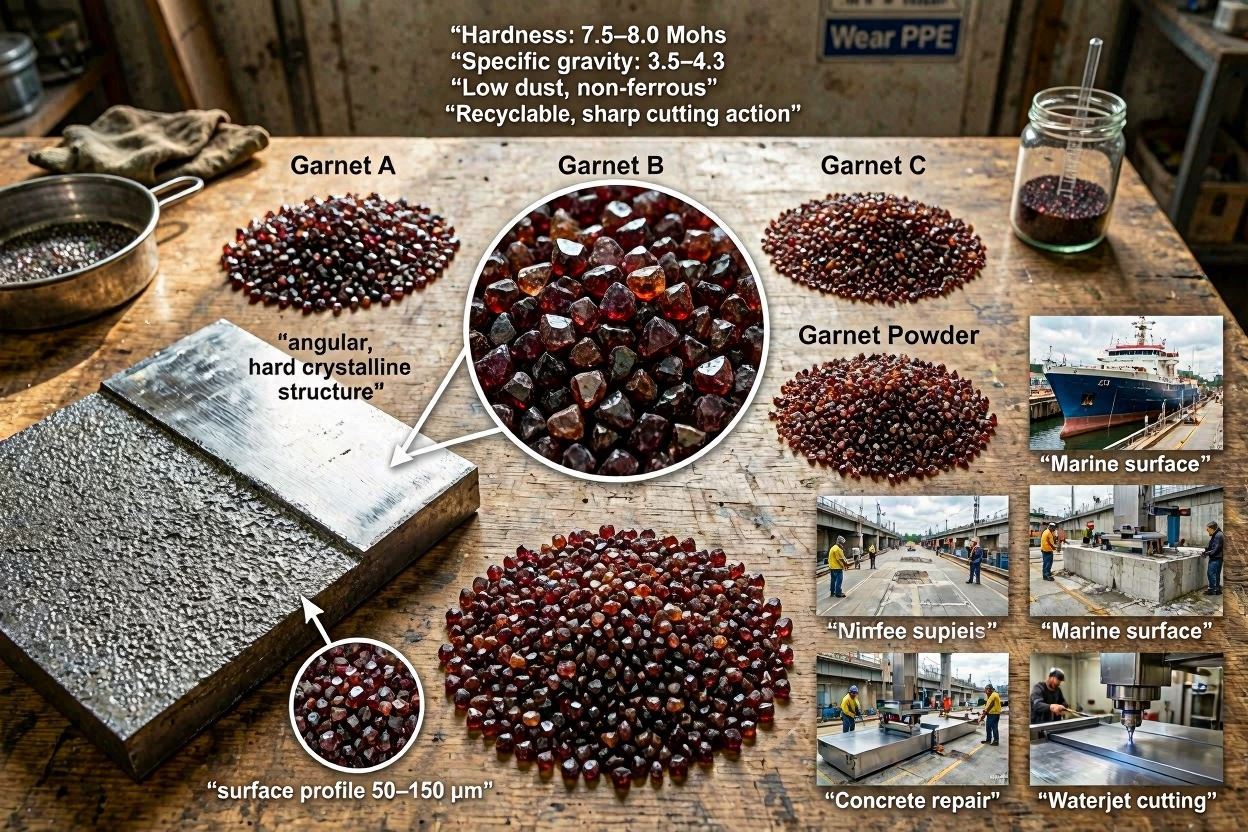
Гранат is widely regarded as the professional’s preferred alternative to silica sand. It is a naturally occurring silicate mineral with a Mohs hardness of 7.5–8, making it harder than silica but far less dusty. It generates a low-silica dust profile, can be recycled 3–5 times with proper screening, and produces a consistent anchor pattern ideal for high-performance coatings.
Garnet is the preferred media for NACE/SSPC-specified surface preparation in marine, oil and gas, and bridge infrastructure applications. Jiangsu Henglihong supplies high-grade garnet blasting media in multiple mesh sizes for both abrasive blasting and waterjet cutting applications.
Стеклянные бусины
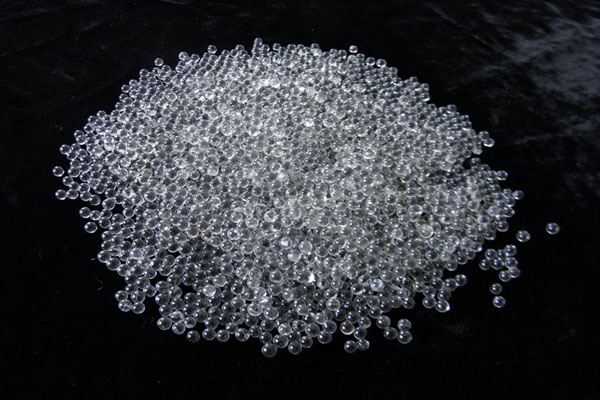
Стеклянные бусины are the preferred choice when surface finish quality is the primary objective. Their perfectly spherical shape means they peen rather than cut, leaving a bright, smooth, matte finish without deep profiling. They are recyclable up to 30 times in a closed cabinet system, making their per-use cost extremely low despite a higher purchase price.
Glass beads are non-toxic, chemically inert, and free of heavy metals — making them acceptable for blasting food-contact surfaces, medical devices, and aerospace components. Henglihong’s glass beads for sandblasting meet MIL-PRF-9954 and AMS 2431 standards, ensuring consistent sizing and sphericity across production batches.
Steel Grit & Steel Shot
Стальная крошка is the workhorse of heavy industrial blasting. Angular steel particles cut aggressively to achieve deep surface profiles (2–5 mil) required before thermal spray coatings, epoxy linings, and zinc-rich primers. Steel media is highly recyclable — a properly maintained closed-loop system can achieve 100+ reuse cycles — making it among the lowest cost-per-cycle options for high-volume operations.
Henglihong manufactures cast steel shot and steel grit to SAE J444 standards, covering the full hardness range from GP (general purpose) through GH (high hardness) grades for demanding foundry and structural steel applications.
Оксид алюминия
With a Mohs hardness of 9, aluminum oxide is one of the hardest abrasive media available commercially. It is the go-to choice for blasting hardened steels, ceramics, and glass etching where aggressive cutting speed is required. It is also used extensively in blasting cabinets where its high recyclability (10–20 cycles) offsets its premium price.
Choosing by Application
Different blasting jobs demand very different abrasive profiles. Below we outline the most common use cases and the media that professional operators choose for each.
Rust Removal from Metal
Rust removal is the most common reason hobbyists and professionals reach for blasting sand. The goal is to achieve a white metal or near-white metal surface (SSPC-SP 5 or SP 6) without leaving excessive surface profile that would require heavy primer to fill. For detailed media selection guidance for rust removal projects, including pressure settings and equipment recommendations, see: Best Blasting Sand for Rust Removal: What Professionals Actually Use.
For most steel rust removal, garnet (30–60 mesh) или coal slag (medium grit) offers the best balance of cutting speed, surface profile, and cost. Steel grit outperforms both for extremely heavy rust or mill scale on structural sections.
Automotive Restoration
Automotive bodywork presents unique challenges: thin sheet metal panels can warp under aggressive blasting, and any media that penetrates seams or cavities can cause long-term rust if not fully removed. The automotive restoration community has strong preferences about which media to use — and which to avoid. For a complete guide covering media selection, pressure settings, and equipment for vehicle blasting, read: Blasting Sand for Automotive Restoration: Media Selection Guide for DIYers.
For body panels, glass beads (80–120 grit) или fine garnet (60–80 mesh) are the professional recommendations. Both remove paint and surface rust without warping thin metal. Avoid coarse silica sand on automotive panels — it is too aggressive for sheetmetal work.
Concrete & Masonry
Blasting concrete requires aggressive, hard abrasives capable of cutting through the cement matrix to expose aggregate or achieve the specified surface profile for overlays and coatings. Silica sand, coal slag, and coarse garnet are all appropriate. Wet blasting is preferred outdoors to control dust.
Wood & Delicate Surfaces
For wood, antiques, and other delicate substrates, organic abrasives — walnut shells, corn cob grit — or sodium bicarbonate are the recommended media. They are soft enough to remove coatings without damaging the underlying material and leave no hazardous residue.
How Much Does Blasting Sand Cost?
Blasting sand pricing varies enormously by media type, quantity, and sourcing channel. Looking only at the per-bag sticker price is a mistake — the true metric is cost per effective square foot of cleaned surface, which accounts for consumption rate and reusability. For a full price breakdown across all media types and quantity tiers, including cost-per-job calculations, see: How Much Does Blasting Sand Cost? Price Breakdown by Type & Quantity.
| Тип носителя | Retail Price (50 lb) | Reuse Cycles | Cost Per Cycle (50 lb) |
|---|---|---|---|
| кварцевый песок | $4–$8 | 1 | $4–$8 |
| Coal Slag (Black Diamond) | $7–$12 | 1–2 | $4–$12 |
| Гранат | $25–$45 | 3–5 | $5–$15 |
| Стеклянные бусины | $30–$55 | 20–30 | $1–$3 |
| Оксид алюминия | $35–$60 | 10–20 | $2–$6 |
| Steel Grit / Shot | $40–$80 | 100+ | <$1 |
| Скорлупа грецкого ореха | $20–$40 | 3–5 | $4–$13 |
The table above illustrates a counterintuitive reality: the cheapest media by purchase price (silica sand, coal slag) often delivers the highest cost per effective use, because they cannot be recycled. In a closed blasting cabinet, glass beads or aluminum oxide frequently deliver lower total cost over a project’s lifetime despite their higher upfront price.
Step-by-Step: How to Buy Blasting Sand the Right Way
Whether you are making your first purchase or optimizing a high-volume procurement process, following a structured approach prevents costly mistakes.
Define Your Surface & Coating System
Start with the end state, not the media. What surface are you blasting, and what coating will follow? The coating manufacturer’s specification will often define the required surface cleanliness (SSPC/NACE standard) and anchor profile (in mils). These two numbers drive every other decision.
Choose Your Media Type
Match the media hardness, shape, and grit size to your surface and finish requirement. Reference the type comparison table above. If health and safety are primary concerns, rule out silica sand first and evaluate garnet, glass beads, or steel media as your working candidates.
Estimate Your Quantity
As a rough rule: one 50 lb bag of garnet (30 mesh) covers approximately 20–40 square feet of steel at medium blast pressure. Increase quantity for heavier rust or scale. For cabinet blasting with recyclable media, your consumption rate drops dramatically — a 50 lb charge may last an entire season of hobbyist use.
Select Your Purchasing Channel
Small project (< 5 bags): retail store or Amazon. Medium project (5–20 bags): online specialist or Northern Tool. Large or recurring project (> 20 bags): direct from manufacturer or industrial distributor for volume pricing. Confirm the supplier can provide a Safety Data Sheet (SDS) for the media — this is a regulatory requirement for workplace use.
Verify Specifications Before Purchase
Check the product label or spec sheet for: mesh size or grit range, free silica content (look for <1% for low-risk media), moisture content (should be ≤0.2% to prevent clogging), and any relevant certifications (MIL-SPEC, AMS, ISO). Never buy blasting media without confirming these parameters match your job requirement.
Plan Storage & Disposal
Store dry abrasive media on pallets in a covered, moisture-controlled environment. Wet media clumps and can clog equipment. For spent single-use media, check local regulations on silica and heavy metal disposal — used blast media from painted steel surfaces may be classified as hazardous waste.
Часто задаваемые вопросы
The Bottom Line
Knowing where to buy blasting sand is only half the equation. The real value comes from understanding what to buy for your specific application — and sourcing it from a supplier who can deliver consistent specification, reliable supply, and documented quality assurance.
For hobbyist and DIY projects, retail stores and Amazon provide convenient access to silica and coal slag media. For professional surface preparation work, online specialists and industrial distributors offer the broader media selection and volume pricing that serious operations require. For high-volume industrial procurement, factory-direct sourcing from a manufacturer like Jiangsu Henglihong Technology Co., Ltd. eliminates intermediary costs and ensures batch-level consistency across garnet, glass bead, and steel grit product lines.
Explore the full guide series linked throughout this article to go deeper on any specific topic — from media type comparisons и grit size selection to safety and health guidance и comprehensive cost analysis.
Фильтры