SSPC SP5 / SP6 / SP10 vs ISO Sa 1 / Sa 2 / Sa 2.5 / Sa 3: Complete Cross-Reference
A definitive cross-reference between the American SSPC surface preparation standards, the international ISO 8501-1 Sa grades, and the matching NACE designations — with the visual criteria, acceptance language, and typical use cases for each cleanliness grade.
Why Two Systems Exist
Surface preparation cleanliness is specified by two parallel standards systems: SSPC (originally US, now widely used internationally) and ISO 8501-1 (the international standard derived from the Swedish SA grades published in 1967). The NACE numbered system, recently merged into AMPP, is a third reference but maps cleanly to SSPC.
The two systems describe the same visual cleanliness using different reference photographs and terminology. They are functionally equivalent for most practical purposes. The role of cleanliness standards within the broader sand blasted surface specification is covered in our pillar guide on sand blasted surface.
Complete Cross-Reference Table
| SSPC | NACE | ISO 8501-1 | Removal % | Описание |
|---|---|---|---|---|
| SP 1 | — | — | — | Solvent cleaning (degreasing only) |
| SP 2 | — | St 2 | — | Hand tool cleaning |
| SP 3 | — | St 3 | — | Power tool cleaning |
| SP 5 | NACE 1 | Sa 3 | 100% | White metal blast cleaning |
| SP 6 | NACE 3 | Sa 2 | ≥66% | Commercial blast cleaning |
| SP 7 | NACE 4 | Sa 1 | Loose only | Brush-off blast cleaning |
| SP 10 | NACE 2 | Sa 2½ | ≥95% | Near-white blast cleaning |
| SP 11 | — | — | — | Power tool to bare metal |
| SP 14 | NACE 8 | — | Variable | Industrial blast cleaning (between SP 6 and SP 7) |
SP 5 / NACE 1 / Sa 3 — White Metal Blast
The most aggressive cleanliness grade. SP 5 / Sa 3 requires 100% of each unit area free of all visible mill scale, rust, paint, oxidation, foreign material, and any other contaminants. The surface presents as uniformly bright metal.
Typical applications:
- Immersion service tank linings (potable water, chemicals, oil storage)
- Aerospace primary structural coating
- Pharmaceutical and food contact equipment
- High-temperature coatings (>200°C service)
SP 5 is the most expensive cleanliness grade and is rarely specified unless absolutely required.
SP 10 / NACE 2 / Sa 2½ — Near-White Blast
The de facto industrial standard for high-performance coatings. SP 10 / Sa 2.5 requires at least 95% of each unit area free of all visible contaminants. The remaining 5% may show only very light shadowing or staining.
Typical applications:
- Marine and offshore structures (decks, hulls, platforms)
- Pipeline coatings (fusion-bonded epoxy)
- Industrial fabrication for corrosive service
- Architectural steel for long-life coating systems
SP 10 / Sa 2.5 represents the cost-quality optimum for the majority of industrial protective coating work. For marine application, see our guide on sand blasted steel for marine and offshore: SA 2.5 + zinc primer workflow.
SP 6 / NACE 3 / Sa 2 — Commercial Blast
SP 6 / Sa 2 requires at least 66% of each unit area free of all visible contaminants. Tightly adherent mill scale and rust may remain on up to 33%.
Typical applications:
- General structural steel for atmospheric service
- Equipment skids and frames
- Maintenance painting
- Cost-sensitive applications with moderate corrosion exposure
SP 6 is approximately 30% cheaper than SP 10 due to reduced media consumption. The trade-off is reduced coating life — typically 50–70% of SP 10 performance.
SP 7 / NACE 4 / Sa 1 — Brush-off Blast
The lightest cleanliness grade. SP 7 / Sa 1 requires only that all loose mill scale, loose rust, and loose coatings be removed. Tightly adherent material may remain.
Typical applications:
- Maintenance painting over existing coating systems
- Surface preparation for thick high-build coatings
- Touch-up work where economic constraints prevent full re-blast
How to Cite These Standards in Specifications
For maximum clarity in international specifications, cite both SSPC and ISO designations together. Common acceptable formats:
- “Surface cleanliness to SSPC SP 10 (ISO 8501-1 Sa 2½)”
- “Blast cleaning to NACE 2 / SSPC SP 10 / Sa 2½”
- “Near-white blast per ISO 8501-1 Sa 2½, equivalent to SSPC SP 10”
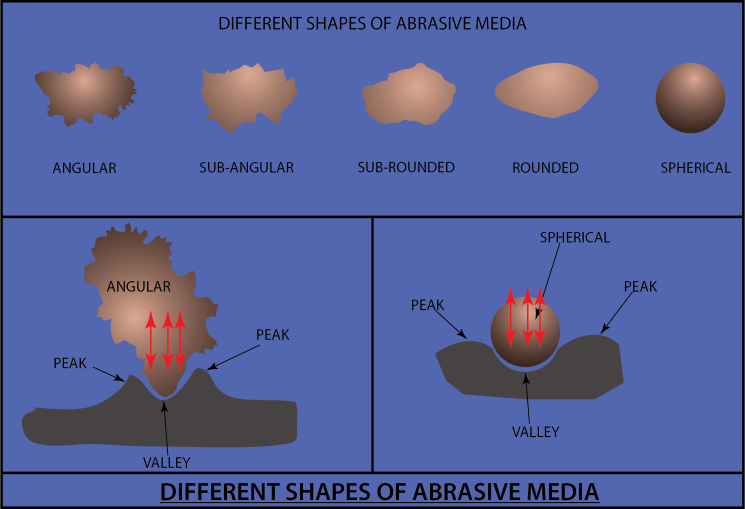
Always pair the cleanliness specification with a separate profile specification since cleanliness standards do not specify roughness. A complete specification template is provided in our guide on how to write a sand blasted surface spec for suppliers.
Часто задаваемые вопросы
Is SP 10 the same as Sa 2.5?
Yes, functionally. SSPC SP 10 and ISO 8501-1 Sa 2½ are equivalent designations for near-white metal blast cleaning, requiring at least 95% of each unit area to be free of all visible contaminants. NACE 2 is the equivalent NACE/AMPP designation.
What is the difference between SP 5 and SP 10?
SP 5 (white metal) requires 100% removal of all visible contaminants; SP 10 (near-white) allows up to 5% light shadowing. SP 5 is typically 30–50% more expensive due to extended blast time and stricter inspection.
Which is most commonly specified?
SSPC SP 10 / ISO Sa 2.5 is the dominant industrial standard for high-performance protective coatings — the cost-quality optimum for marine, offshore, pipeline, and industrial fabrication work.
Do cleanliness standards specify the surface roughness?
No. SSPC, NACE, and ISO 8501-1 specify only visual cleanliness. Surface roughness is specified separately, typically per ISO 8503 or by direct numerical value.
Can I substitute SP 6 for SP 10 to save money?
Only if the coating system permits. SP 6 allows up to 33% tightly adherent mill scale and rust, which typically reduces coating life to 50–70% of SP 10 performance. Check the coating manufacturer’s specification.
Request an Abrasive Blasting Media Sample
Jiangsu Henglihong Technology Co., Ltd. supplies certified aluminum oxide, garnet, glass bead, steel grit, and steel shot to global industrial buyers. Request a sample with full batch documentation for technical evaluation.
Request a Sample →Фильтры