Shot Blasting Metal 3D Printed Parts: SLM, DMLS, and EBM Post-Processing Protocol
Metal additive manufacturing — whether by selective laser melting (SLM), direct metal laser sintering (DMLS), or electron beam melting (EBM) — produces parts with as-built surface roughness values that are incompatible with most structural, coating, and functional specifications without post-processing. As-built Ra of 8–40 µm, combined with a non-uniform surface oxide layer and adherent partially melted powder particles, means that virtually every metal AM part in production use today undergoes some form of abrasive blasting before it reaches its end-use application. This guide provides a complete shot blasting and bead blasting protocol for the most widely used metal AM processes and alloys, with parameter tables, workflow integration guidance, and quality control procedures.
1. As-Built Surface Conditions by AM Process
Understanding the as-built surface condition of each metal AM process is the essential starting point for designing an effective blast protocol. The three most widely deployed metal AM processes differ substantially in their surface characteristics.
SLM and DMLS (Laser Powder Bed Fusion)
Selective laser melting (SLM) and direct metal laser sintering (DMLS) are different commercial names for essentially the same process: a high-power laser melts and fuses metallic powder particles layer by layer. As-built surface Ra values for SLM/DMLS are determined primarily by powder particle size, layer thickness, and build orientation:
- Up-skin (upward-facing) surfaces: Ra 8–15 µm — the laser scans directly over these surfaces, producing the finest as-built finish
- Vertical (side wall) surfaces: Ra 10–20 µm — stepped by the layer thickness (typically 30–60 µm), with adherent partially melted powder particles
- Down-skin (downward-facing) surfaces: Ra 20–35 µm — the most difficult surfaces; the melt pool must bridge across unsupported powder, creating significant roughness and adherent powder
The as-built surface also carries a thin oxide layer (1–5 µm) formed during the laser melting process, even in inert atmosphere build chambers (residual oxygen reacts at melt temperatures).
EBM (Electron Beam Melting)
EBM uses a high-energy electron beam in a vacuum environment to melt titanium and nickel alloy powder. The vacuum atmosphere eliminates oxidation during the build, but EBM operates at higher temperatures (600–1000°C vs. 20–200°C for SLM) and uses much coarser powder (45–150 µm vs. 15–45 µm for SLM). This produces significantly rougher as-built surfaces: Ra 25–40 µm is typical across all surface orientations. EBM parts also feature a characteristic “sintered cake” of unmelted powder that must be removed by mechanical and blast means after the build cycle.
2. Shot Blasting vs Bead Blasting for Metal AM
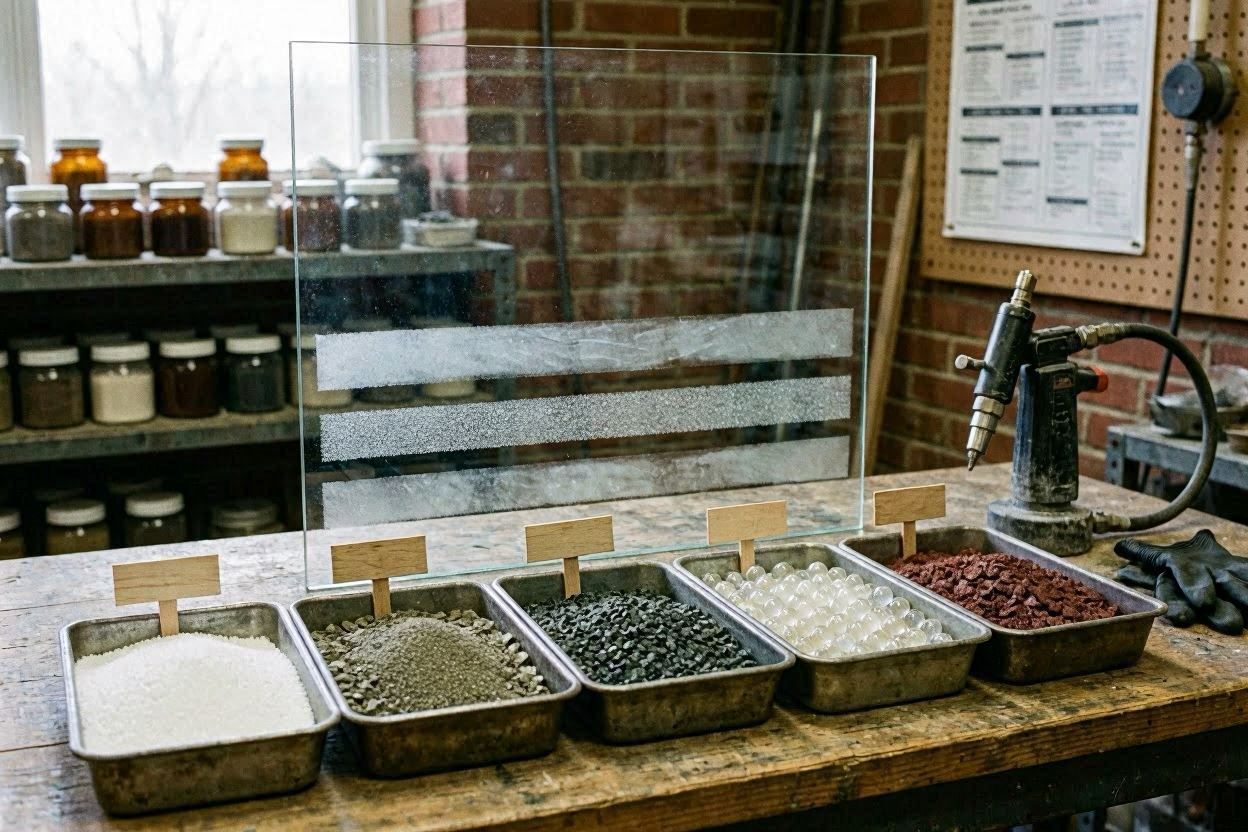
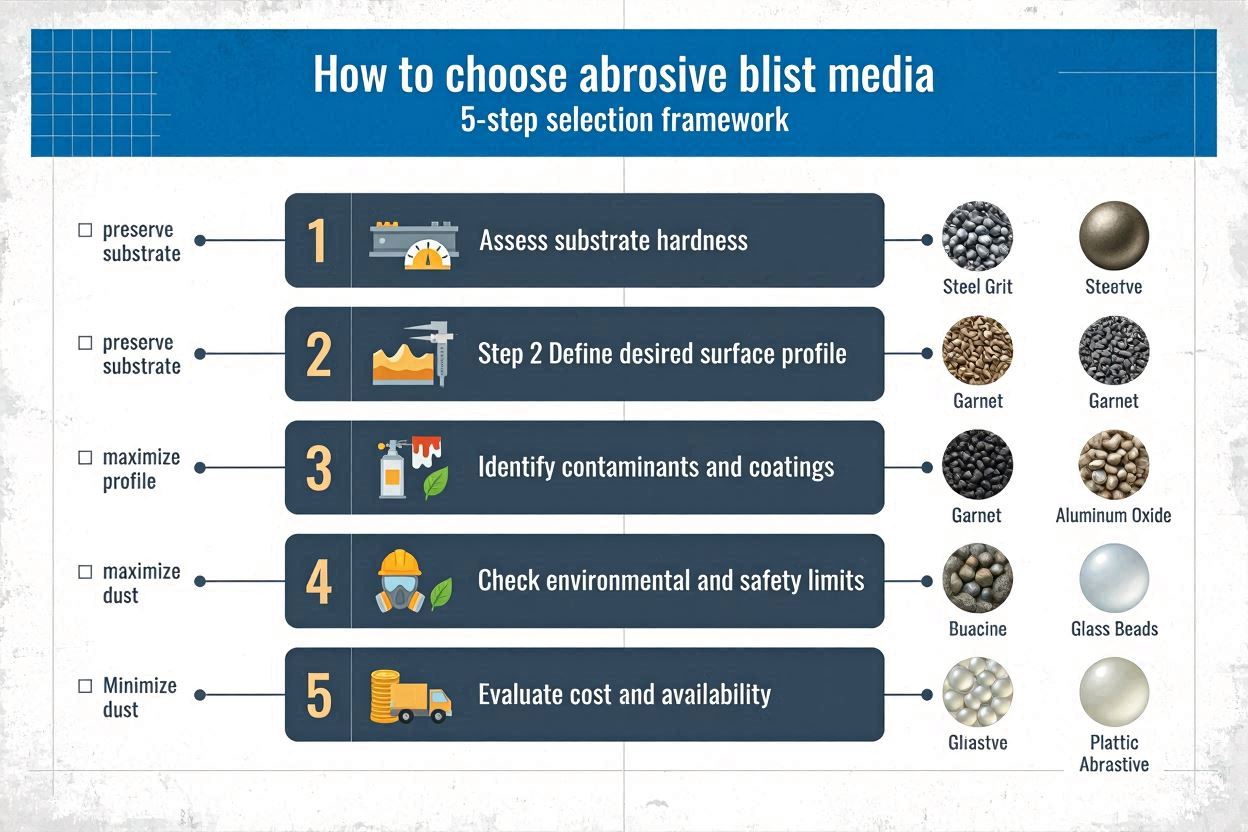
Both shot blasting and bead blasting use spherical media, but they differ in media material, density, size, and the energy delivered per impact. Understanding the distinction is important for specifying the correct process for a metal AM part.
Bead Blasting (Glass or Ceramic Beads)
Glass bead blasting at 45–80 psi is the standard first-choice process for metal AM surface conditioning. It produces a uniform matte finish, reduces Ra by 60–80%, removes the as-built oxide layer, and introduces a slight compressive residual stress in the surface layer. It is chemically inert (no iron contamination) and suitable for all metal AM alloys. Bead blasting is the default specification for titanium, stainless steel, and aluminum AM parts where material contamination must be avoided.
Shot Blasting (Steel Shot)
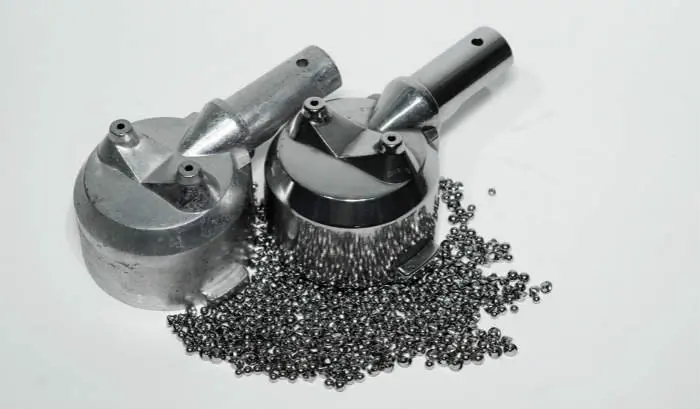
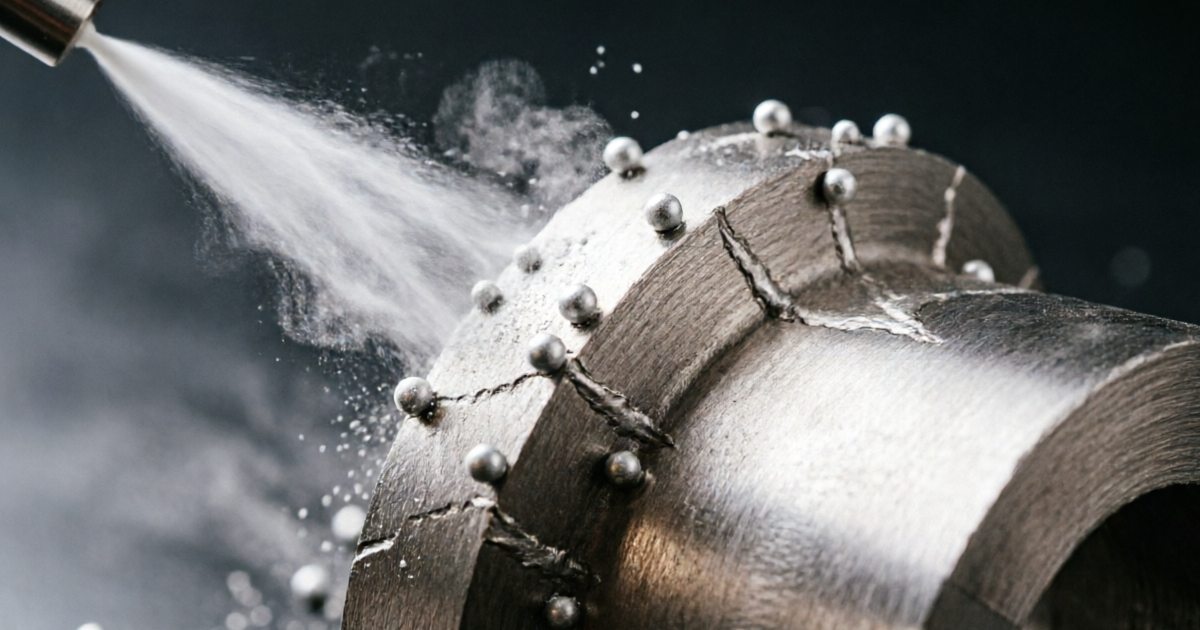
Steel shot blasting uses dense (7.8 g/cm³) spherical steel media at higher kinetic energy levels. It is used when significantly more peening energy is required — for shot peening of carbon steel or tool steel AM parts, or for aggressive descaling of heavy-section metal AM components. Steel shot carries an iron contamination risk and must never be used on titanium, stainless steel, or other alloys where iron contamination is detrimental.
Grit Blasting (Aluminum Oxide)
Angular Al₂O₃ grit blasting is used when the goal is to create a specific anchor profile for coating adhesion — not for surface smoothing. It is specified for pre-painting, pre-thermal spray, and aggressive cleaning of support attachment zones on steel and Inconel AM parts. It is not recommended for titanium or stainless steel (contamination risk) or aluminum (embedding risk).
| プロセス | Media | Applicable Alloys | Primary Objective | Ra Outcome |
|---|---|---|---|---|
| Bead blasting | Glass beads 100–200 mesh | All AM alloys | Surface finish, cleaning, matte | 1–5 µm |
| Shot blasting/peening | Steel shot S110–S230 | Carbon steel, tool steel, Inconel | Peening, fatigue life, descaling | 2–5 µm |
| Grit blasting | Al₂O₃ 80–120 mesh | Steel, Inconel, cautiously aluminum | Pre-coating anchor profile | 2–6 µm |
3. The Metal AM Blast Protocol
The following sequence is the standard blast protocol for SLM/DMLS metal AM parts in production settings:
- Remove support structures. Cut off support structures by wire EDM, band-sawing, or manual breaking. Inspect support attachment zones — these will have higher local Ra and oxidation and will receive additional blast treatment. For the full support removal protocol, see: Removing Support Structures from Metal 3D Printed Parts with Abrasive Blasting.
- Initial blast — cleaning pass. Glass beads 100–150 mesh at 55–75 psi, full coverage across all surfaces. This removes the as-built oxide layer, loosely adherent powder particles, and the most prominent surface peaks. 2–5 minutes for a typical bracket-scale part.
- Inspect support zones and down-skin surfaces. These areas start rougher and may need a targeted second cleaning pass with 80–100 mesh glass beads or Al₂O₃ at higher pressure before the finishing stage.
- Finishing pass. Glass beads 150–200 mesh at 55–70 psi, covering all surfaces uniformly. This refines the surface texture to the target Ra range of 1–4 µm.
- Blow off and clean. Compressed clean dry air to remove all residual media. For medical or critical aerospace parts, follow with ultrasonic cleaning in a suitable solvent (IPA or DI water).
- Inspect and document. Visual inspection for uniform coverage; Ra measurement at specified locations; ferroxyl test for stainless and titanium parts if iron-free media compliance is required.
4. Media Selection by Alloy
| AM Alloy | Recommended Media | Media to Avoid | 理由 |
|---|---|---|---|
| Ti-6Al-4V (SLM/EBM) | Glass beads (iron-free only) | Steel shot, steel grit | Iron contamination disrupts TiO₂ passive layer |
| 316L Stainless Steel | ガラスビーズ | Steel shot, steel grit | Iron contamination disrupts Cr₂O₃ passive layer |
| AlSi10Mg | Glass beads; fine Al₂O₃ (for coating prep only) | Steel media | Media embedding risk with hard angular media |
| Inconel 625/718 | Glass beads or Al₂O₃ 80–150 mesh | Steel grit (on medical/aerospace parts) | Inconel tolerates both; choose by objective |
| Maraging Steel (MS1) | Steel shot S110–S170 or glass beads | — | Hard alloy tolerates steel shot; no contamination issue |
| 17-4PH Stainless | Glass beads (pre-precipitation hardening) | Steel media | Stainless: iron contamination risk |
| H13 Tool Steel | Al₂O₃ 80–120 or steel grit | — | Hard material for tooling; contamination not a concern |
| CoCr (Cobalt-Chrome) | Glass beads or Al₂O₃ 120–200 | Steel media | Biomedical applications require iron-free media |
5. Integration with HIP, Heat Treatment, and Machining
Metal AM parts for demanding applications often undergo multiple additional processing steps. Understanding where blasting fits in the overall workflow is critical for producing parts that meet their full specification.
Recommended Sequence
Standard industrial metal AM workflow:
- Build removal from plate + support removal
- Initial blast (removes as-built oxide, prepares clean surface)
- Stress relief heat treatment (if required)
- Hot isostatic pressing / HIP (if required for porosity closure)
- Post-HIP blast (removes HIP-cycle scale and oxide)
- Aging or precipitation hardening heat treatment (for age-hardened alloys: Inconel 718, 17-4PH)
- Post-aging blast (if required — removes aging scale)
- CNC machining of critical surfaces (threads, precision bores, sealing faces)
- Final blast or passivation as specified on part drawing
Not all of these steps are required for every part. The minimum for most industrial metal AM parts is blast + heat treatment + final blast. For non-critical applications, initial blast alone may be sufficient.
Blasting After EDM Wire Cutting
When supports are removed by wire EDM, the cut surface has a characteristic EDM recast layer (typically 5–25 µm thick) that is hard, brittle, and oxidised. Blasting after EDM removes the recast layer and heat-affected zone, restoring the parent metal surface properties at the support attachment zone. Use angular Al₂O₃ 60–80 mesh at 70–90 psi for this targeted recast layer removal.
6. Process Parameters Reference
| 素材 | Stage | Media | Mesh | Pressure (psi) | Standoff (in) | Notes |
|---|---|---|---|---|---|---|
| Ti-6Al-4V SLM | Cleaning + finish | ガラスビーズ | 100–200 | 55–75 | 8–12 | Iron-free only; clean air supply |
| Ti-6Al-4V EBM | Cleaning + finish | ガラスビーズ | 80–150 | 60–80 | 8–10 | Coarser media for higher starting Ra |
| 316L SS | Cleaning + finish | ガラスビーズ | 100–200 | 50–70 | 8–12 | Passivate within 2h post-blast |
| AlSi10Mg | Finish | ガラスビーズ | 100–200 | 35–55 | 8–12 | Pre-anodizing; no steel media |
| AlSi10Mg | Pre-coating | Al₂O₃ | 120–220 | 45–60 | 8–10 | Brief exposure; embedding risk |
| Inconel 718/625 | Cleaning + finish | Glass beads or Al₂O₃ | 100–150 | 60–80 | 8–12 | Al₂O₃ for better coating anchor |
| Maraging Steel | Cleaning + peening | スチールショット | S110–S170 | 50–70 | 6–10 | After aging heat treatment |
| Support zones (any) | Targeted clean | Al₂O₃ | 60–80 | 70–90 | 6–10 | Remove EDM recast layer |
7. EBM-Specific Considerations
EBM parts present unique post-processing challenges compared to SLM/DMLS parts. The following considerations apply specifically to EBM-built components (primarily titanium alloys — Ti-6Al-4V, Ti-6Al-2Sn-4Zr-2Mo — and nickel alloys):
- Sintered powder cake removal: EBM parts emerge from the build chamber surrounded by a loosely sintered “cake” of unmelted powder that must be broken away mechanically before blasting begins. Failure to remove this cake before blasting will contaminate the blast media and produce inconsistent results.
- Alpha case on titanium EBM: Despite the vacuum atmosphere, EBM titanium parts can develop a thin brittle alpha phase (alpha case) on surfaces due to contamination during powder handling and build cycle. Blasting removes the outermost surface layer containing alpha case, but deep alpha case (>50 µm) may require chemical etching after blasting.
- Higher Ra starting point: EBM’s coarser powder means the first-stage cleaning blast must use coarser glass beads (80–120 mesh) and slightly higher pressure than SLM equivalents to achieve effective surface treatment. Multiple passes may be required.
- Loose powder in lattice structures: EBM is commonly used for porous lattice structures (orthopaedic implants, heat exchangers). Blasting is used to clean the lattice surfaces, but the combination of small apertures and coarse EBM surface means that specialised nozzle configurations and long blast cycles are needed to achieve coverage inside the lattice.
8. Quality Control and Inspection
Quality control after blasting metal AM parts must be matched to the application requirements. At minimum, the following checks apply to all metal AM blast operations:
- 目視検査: No shiny patches (unblasted areas), no visible loose powder adhesion, no corrosion products. For support attachment zones, verify that the recast layer has been removed — the treated zone should match the appearance of the main part surface.
- Surface roughness measurement: Contact profilometer per ISO 4287 at a minimum of three representative locations per surface type (up-skin, side wall, down-skin). For aerospace and medical parts, Ra measurement at all specified locations with documented results is mandatory.
- Iron contamination test (for Ti and SS): Ferroxyl test swab — any blue colour indicates iron contamination requiring re-cleaning and re-inspection. Mandatory for all titanium medical implants and recommended for aerospace titanium and all stainless steel AM parts.
- Dimensional verification: Check critical dimensions after blasting. Material removal per pass is typically 0.01–0.05 mm; for tight-tolerance features (±0.05 mm or tighter), measure before and after blasting.
For material-specific detailed protocols, see: Blasting AlSi10Mg Aluminum 3D Printed Parts, Surface Finishing Ti-6Al-4V Titanium 3D Printed Partsそして Abrasive Blasting 316L Stainless Steel 3D Printed Parts.
よくある質問
Should I blast metal AM parts before or after heat treatment?
The standard sequence for most metal AM workflows is: (1) initial blast to remove as-built oxide and major surface contamination, (2) stress relief or solution anneal heat treatment, (3) HIP if specified, (4) final blast to remove heat treatment scale and produce the finished surface, (5) machining of critical surfaces (threads, bores, mating faces) if required. Blasting before heat treatment removes the as-built oxide layer and prepares a clean surface for the furnace atmosphere; blasting after heat treatment removes the heat treatment scale. Two blast cycles are common in high-quality metal AM production.
What blasting media should I use for Inconel 718 3D printed parts?
For SLM/DMLS Inconel 718, both glass beads (100–200 mesh) and aluminum oxide grit (80–120 mesh) are suitable, depending on the objective. Glass beads produce a clean matte surface at Ra 1–4 µm and are preferred for parts that will receive a thermal barrier coating or require surface cleanliness verification. Aluminum oxide grit is preferred when the part will be painted, powder-coated, or bonded, as the angular grit creates a better anchor profile for adhesive coatings. Inconel 718 is hard enough (HRC 40–48 after aging) to tolerate aggressive blasting at 70–90 psi without risk of surface damage.
How does EBM titanium surface compare to SLM titanium after blasting?
EBM (Electron Beam Melting) titanium parts start with significantly higher as-built Ra (25–40 µm) than SLM titanium parts (Ra 8–18 µm), because EBM uses coarser powder feedstock (45–150 µm vs 15–45 µm for SLM) and operates at higher temperatures that promote greater surface balling. After blasting with glass beads (80–150 mesh, 60–80 psi), EBM titanium achieves Ra 2–6 µm — somewhat higher than blast-treated SLM titanium (Ra 1–4 µm) due to the deeper as-built surface profile. EBM parts may require multiple blast passes or an initial coarser media stage to bring the Ra into the range achievable with a single bead blast pass.
Can I use steel shot on SLM stainless steel parts?
Steel shot is not recommended for SLM 316L or 17-4PH stainless steel parts. Steel shot will introduce iron particles from the shot media into the stainless steel surface, disrupting the passive chromium oxide layer that provides corrosion resistance. This is detectable with a ferroxyl test (blue stain) and may cause visible rust spotting in humid environments. Use glass beads exclusively for stainless steel AM parts. If you need more aggressive cleaning than glass beads provide, use fine aluminum oxide grit (120–200 mesh) as an alternative to steel media.
How do I know when metal AM parts have been adequately blasted?
The primary indicators of adequate blast coverage for metal AM parts are: (1) Visual — the as-built surface showing distinct shiny or coloured patches (oxidation, partially fused powder) is replaced by a uniform matte appearance across all surfaces. No shiny spots, discoloured patches, or visible powder adhesion should remain. (2) Tactile — the blast-treated surface should feel consistent and fine when touched with a gloved finger; rough or grainy patches indicate incomplete coverage. (3) Measured — contact profilometer Ra measurement confirms the target surface roughness range has been achieved. For aerospace and medical parts, Ra measurement is always required; for general industrial parts, visual and tactile inspection may be sufficient.
What is the role of blasting in the hot isostatic pressing (HIP) workflow?
Hot isostatic pressing (HIP) is used for high-performance metal AM parts to close internal porosity and improve fatigue properties. The standard integration with blasting is: initial blast (removes as-built oxide) → HIP (closes porosity, typically 900–1200°C at 100–200 MPa in argon) → post-HIP blast (removes HIP-cycle oxide/scale, restores surface finish after the high-temperature process). The post-HIP blast is particularly important because HIP at high temperatures in elevated-pressure inert gas still creates surface oxidation that must be removed before the final dimensional and surface quality inspection. In some workflows, machining of critical surfaces follows post-HIP blasting.
What happens to metal AM parts if they are over-blasted?
Over-blasting occurs when excessive pressure, too-coarse media, or excessive dwell time removes more material than intended. The consequences depend on the severity: light over-blasting increases surface Ra slightly (a more aggressive texture than the specification requires) without causing structural damage. Significant over-blasting on thin-walled metal AM structures (walls below 0.8–1.0 mm) can cause visible surface erosion, thinning of walls, and rounding of sharp edges. For precision features with tight dimensional tolerances, over-blasting changes dimensions beyond acceptable limits. Prevent over-blasting by defining maximum exposure time and minimum standoff distance for each feature type, and by performing dimensional checks on first-article parts.
Source Blasting Media for Metal AM Post-Processing
Jiangsu Henglihong Technology Co., Ltd. manufactures glass beads, aluminum oxide, and steel shot for professional metal AM post-processing — with media specifications covering SLM titanium, stainless, Inconel, and aluminum alloys. Contact our technical team for media selection guidance and sample evaluation.
Contact Our Technical TeamPublished July 2026 by Jiangsu Henglihong Technology Co., Ltd. — Specialists in industrial abrasive blasting media for additive manufacturing post-processing.
フィルター