Dental Implant Surface Treatment: The SLA Blasting and Acid-Etching Process, Ra Specifications, and Clinical Evidence
No surface treatment in all of medical device manufacturing has been subjected to more rigorous clinical scrutiny than the SLA (Sandblasted, Large-grit, Acid-etched) process for titanium dental implants. Developed in the late 1980s and refined continuously over three decades, SLA and its derivatives are now used by virtually every major implant manufacturer and have been validated in thousands of randomized controlled trials, systematic reviews, and meta-analyses. The core insight is simple: surface topography at two length scales simultaneously — macro-roughness from blasting, micro-roughness from acid etching — produces an implant surface that bones heals to faster, stronger, and more reliably than any single-treatment alternative. This guide covers the full process from abrasive blasting parameters through acid etch chemistry, surface measurement, modified SLA variants, and the regulatory framework that governs production.
1. Historical Development of SLA and Why It Works
The SLA concept emerged from the convergence of two independent lines of research in the late 1980s: studies showing that titanium surface roughness significantly influenced early peri-implant bone formation, and the development of reliable acid-etching processes that could create controlled micro-topography on titanium without compromising the bulk material properties. Institut Straumann AG (Basel, Switzerland) brought these together in a production process that created a hierarchical dual-scale surface — rough at the tens-of-micrometers scale from blasting, rough at the sub-micrometer scale from acid etching — and validated it first in animal models and then in human clinical trials starting in the early 1990s.
The biological rationale for dual-scale roughness rests on the understanding that different cell and tissue processes operate at different length scales. At the macro-scale (2–10 μm Ra, the scale of blasting-induced features), the implant surface creates mechanical interlocking opportunities for fibrin clot stabilization and provides the three-dimensional scaffold geometry for osteoprogenitor cell migration and differentiation. At the micro-scale (0.5–2 μm Ra, the scale of acid-etching-induced pitting), individual osteoblasts sense surface geometry through membrane-spanning integrin receptors, and this mechanosensing triggers intracellular signaling cascades that upregulate osteogenic gene expression. The combination of scales means the implant simultaneously supports both the tissue-level organization of bone healing and the cell-level signaling of osteogenesis — a more powerful biological stimulus than either scale alone.
The SLA surface has since been manufactured on hundreds of millions of dental implants worldwide and remains the reference standard against which all new implant surface treatments are compared in clinical studies. Understanding the process parameters and their effects is essential for any manufacturer producing implants or the blasting media used to make them.
2. The Blasting Phase: Media, Parameters, and Macro-Roughness
The blasting phase of SLA processing creates the macro-scale roughness that defines the primary topographic character of the implant surface before acid etching modifies it. Every parameter of the blasting step affects the surface that the etching step subsequently acts upon.
Pre-blast cleaning
Machined implants are degreased in acetone or IPA, rinsed in deionized water, and dried. Any cutting fluid or handling contamination present at this stage will create non-uniform blasting results — lubricant films reduce particle impact effectiveness and create shadow zones of lower roughness.
Media loading and classification
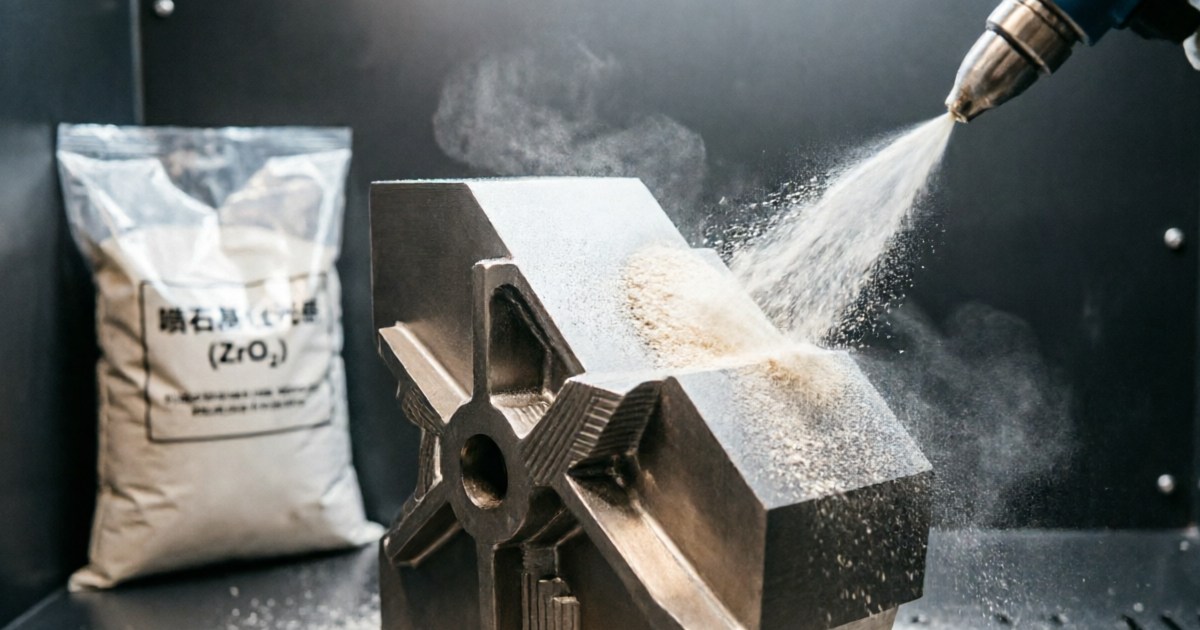
Al₂O₃ media in the 250–500 μm particle size range (the “large grit” in SLA nomenclature) is loaded into the blasting system. Media is screened before use to verify particle size distribution. Broken media fragments below the lower size cutoff are removed because they produce finer, inconsistent roughness. For TiO₂ or ZrO₂ media, the same size classification applies.
Automated blasting
Implants are mounted in a rotating fixture that presents all threaded and neck surfaces to the blast nozzle at a controlled angle (typically 60–90°) and distance (60–100 mm). Pressure is set within the validated range of 2–4 bar. Dwell time per pass and number of passes are defined in the process specification. Automated equipment ensures repeatability across every implant in the production lot.
Post-blast compressed air blow-off
Dry filtered compressed air removes loose media fragments from implant threads before the acid etch step. This step is important because loose alumina particles entering the acid bath can mechanically contaminate the acid solution and deposit non-uniformly on other implant surfaces.
The critical process variable in blasting is the relationship between particle size and the resulting surface morphology. The “large grit” designation in SLA refers specifically to using particles large enough (250–500 μm) to create impact craters in the 5–20 μm diameter range — craters that are significantly larger than the cells that will colonize the implant surface (osteoblasts are approximately 20–30 μm in diameter). These macro-scale craters provide physical sheltering niches for early cell attachment that are protected from fluid shear forces during healing.
3. The Acid-Etching Phase: Chemistry, Micro-Roughness, and Contamination Removal
The acid etching phase is what transforms the blasted macro-rough surface into the dual-scale SLA surface. The etch serves three simultaneous functions: creating micro-roughness at the sub-micrometer scale, removing the work-hardened surface layer introduced by blasting, and partially dissolving embedded blasting media residues from the surface.
Standard SLA acid etching uses a mixture of hydrochloric acid (HCl) and sulfuric acid (H₂SO₄) at concentrations and temperatures defined in the process specification. The exact concentration ratios and temperature are proprietary to each implant manufacturer, but the mechanistic chemistry is well understood:
- HCl action on titanium: Hydrochloric acid dissolves the native TiO₂ passive layer and attacks the titanium metal at grain boundaries and crystallographic slip planes, creating the characteristic micro-pit morphology of etched titanium. The reaction generates hydrogen gas, which creates the fizzing appearance of active etching.
- H₂SO₄ contribution: Sulfuric acid intensifies the etching reaction and contributes to the dissolution of the work-hardened surface layer. The combination of HCl and H₂SO₄ produces more uniform micro-pitting than either acid alone.
- Temperature effect: Higher acid bath temperature accelerates the etch rate and produces deeper micro-pitting at a given immersion time. Temperature is a critical controlled parameter — variation of even ±5°C can significantly alter the resulting micro-roughness.
- Time effect: Etch time determines the depth of micro-pit formation. Under-etching leaves the work-hardened layer incompletely removed; over-etching can smooth the macro-roughness created by blasting by dissolving the sharp feature peaks.
| Acid Etch Parameter | Effect on Ra (micro) | Effect on Alumina Removal | Control Requirement |
|---|---|---|---|
| HCl concentration ↑ | Deeper micro-pitting; Ra increases | Better surface Al removal | Titrated / gravimetric monitoring |
| H₂SO₄ concentration ↑ | More aggressive; risk of surface damage at high levels | Limited independent effect | Fixed ratio to HCl |
| Temperature ↑ | Faster etch; deeper pitting | Improved embedded Al dissolution | ±2°C bath thermostat |
| Time ↑ | Increases then plateaus / decreases | Reaches maximum at ~optimal time | Timed from immersion to removal |
| Bath depletion (acid consumed) | Lower Ra; inconsistent results | Reduced Al removal | Batch change interval defined by lot count or acid titration |
After acid etching, implants are rinsed in multiple deionized water baths to remove all acid residue and are then dried. The drying step — whether in air or under nitrogen atmosphere — is itself a critical process variable that distinguishes standard SLA from hydrophilic modified SLA variants such as SLActive.
4. Surface Characterization: Ra, 3D Parameters, and SEM Analysis
The surface produced by the complete SLA process is characterized by multiple complementary methods. Each method reveals different aspects of the surface topography that influence biological response.
Contact profilometry (stylus, ISO 4287): Produces 2D roughness profiles and calculates Ra (arithmetic mean roughness), Rz (mean peak-to-valley height), Rq (root-mean-square roughness), and Rsk (skewness). Ra values for standard SLA surfaces typically fall in the range of 1.0–2.0 μm post-etch. Rsk values are typically negative (valley-dominated surface), reflecting the pit morphology created by acid etching. Contact profilometry is the standard quality control measurement in production because it is fast, traceable, and requires only a calibrated stylus instrument.
Optical profilometry (ISO 25178): White light interferometry (WLI) or confocal microscopy produces full three-dimensional surface maps and calculates areal parameters: Sa (areal arithmetic mean height, analogous to Ra), Sz (maximum height), Sdr (developed interfacial area ratio, a measure of the surface area increase relative to a flat reference), Ssk (areal skewness), and Smr (material ratio). Sdr values for SLA surfaces are typically 20–80%, meaning the actual surface area is 20–80% greater than the projected area — a significant factor in protein adsorption and cell attachment capacity. 3D characterization is increasingly required in implant surface specifications because it captures the full surface texture that cells encounter, not just the linear profile sampled by a stylus.
Scanning electron microscopy (SEM): SEM imaging at magnifications of ×500 to ×5000 provides qualitative visualization of the dual-scale surface morphology — the large macro-craters from blasting superimposed with the fine micro-pitting from etching are clearly visible. SEM is used for process development, troubleshooting, and publication in clinical studies, but is not typically used as a routine in-process quality control measurement due to its time and cost.
5. Clinical Evidence: Osseointegration, ISQ, and BIC Data
The clinical evidence base for SLA and SLA-derived surfaces is more extensive than for any other implant surface treatment and provides the benchmark against which new surfaces must be compared.
Implant Stability Quotient (ISQ): ISQ, measured by resonance frequency analysis (RFA), is the most widely used clinical surrogate for osseointegration status. Studies consistently show SLA-surface implants reach ISQ values ≥ 65 (the clinical threshold for safe loading) at 4–6 weeks post-insertion in normal bone, compared to 8–12 weeks for turned (machined) surface implants. This shortened healing period is the primary clinical and patient benefit of SLA over previous surface treatments.
Bone-to-implant contact (BIC): Histomorphometric analysis of retrieved implants and animal model studies report BIC values of 60–85% for SLA surfaces at 4–12 weeks in cortical bone — significantly higher than the 40–60% typical of turned surfaces at the same time points. BIC represents the proportion of the implant surface in direct contact with mineralized bone on histological sections.
Survival rates: Long-term multicenter clinical studies tracking SLA-surface implants show 5-year survival rates consistently above 96–98% across diverse patient populations and implant indications, with 10-year follow-up data showing similarly high survival. These data reflect the stability and reliability of the osseointegration that SLA surface treatment produces.
6. Modified SLA Variants and Proprietary Surfaces
SLActive (Straumann)
Post-etch handling under N₂ atmosphere; storage in isotonic NaCl solution. Hydrophilic surface retains wettability; promotes faster early protein adsorption and cell attachment. RCTs show higher ISQ at 2–4 weeks vs standard SLA.
Ossean (Intralock)
SLA blasting + acid etch followed by calcium and phosphate ion impregnation under vacuum. Creates a chemically modified surface with enhanced bioactivity. Published clinical data support faster osseointegration in compromised bone.
OsseoSpeed (Dentsply Sirona)
Blasting with TiO₂ media (eliminating alumina contamination) followed by dilute HF acid etch that creates a fluoride-modified titanium oxide surface. Fluoride incorporation promotes osteoblast differentiation and is clinically associated with improved implant stability in low-density bone.
Roxolid SLActive (Straumann)
SLActive surface applied to Roxolid Ti-Zr alloy (TiZr15) rather than CP titanium, enabling smaller-diameter implants with equivalent clinical performance. Surface treatment process identical to SLActive; alloy substrate provides higher fatigue strength.
7. Alumina-Free SLA: TiO₂ and Zirconia Blasting Media
As described in the section on alumina contamination above and in the detailed guide to blasting titanium medical implants, the embedded alumina particle problem has driven several manufacturers to adopt alternative blasting media.
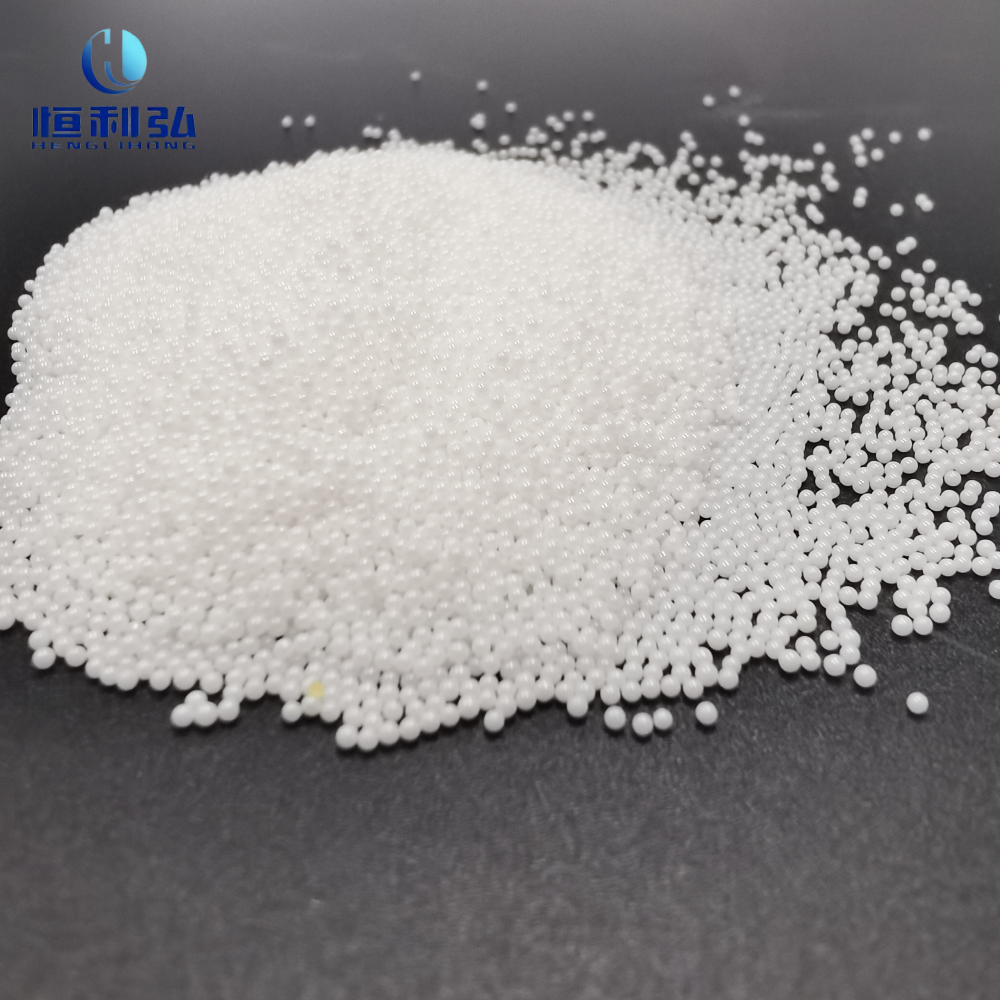
TiO₂ blasting: Titanium dioxide media (grain size 200–500 μm, hardness Mohs 5.5–6.5) produces equivalent macro-roughness to Al₂O₃ blasting at slightly higher pressure settings, leaving only TiO₂ residues that are chemically indistinguishable from the native implant oxide. OsseoSpeed (Dentsply Sirona) and several other implant systems use TiO₂ blasting as part of their surface process. The commercial adoption of TiO₂ blasting has been facilitated by the development of qualified medical-grade TiO₂ media with documented particle size distribution and purity.
ZrO₂ blasting: Zirconia media (grain size 200–500 μm, hardness Mohs 8–8.5) provides higher cut rate than TiO₂ while remaining alumina-free. Zirconia blasting is particularly relevant for zirconia dental implants, where zirconia media residues are chemically compatible with the substrate. For titanium implants, ZrO₂ blasting leaves zirconia residues that require their own biocompatibility characterization, but zirconia is well-established as biocompatible per ISO 10993.
8. SLA for Zirconia Dental Implants
The growing market for metal-free zirconia dental implants — driven by patient demand for metal-free treatment and the aesthetic advantage of tooth-colored implant bodies — requires surface treatment processes adapted to the ceramic substrate.
Zirconia requires surface roughening for osseointegration by the same biological logic that applies to titanium: smooth ceramic surfaces show poor clinical osseointegration. However, the brittle nature of zirconia creates a fundamental process constraint: over-blasting can introduce sub-surface crack damage that propagates under clinical loading and leads to implant fracture. Process parameters for zirconia blasting are therefore more conservative than for titanium: pressure 1–3 bar (vs 2–4 bar for Ti), particle size 50–250 μm (smaller than standard SLA), and impact angle often at 45° rather than perpendicular to reduce crack-inducing tensile stress components at the ceramic surface.
After blasting, zirconia implants are etched with HF or fluoride-containing acids, which react with the ZrO₂ surface to produce micro-pitting. The resulting surface topography resembles SLA titanium surfaces in Ra values (1–2 μm post-etch) and in dual-scale morphology, and published animal and clinical studies show osseointegration rates comparable to SLA titanium for two-piece zirconia systems.
9. Standards and Regulatory Compliance
| Standard | Scope | Relevance to SLA Blasting |
|---|---|---|
| ISO 14801 | Fatigue testing of endosseous dental implants | Surface treatment must not reduce fatigue strength below ISO 14801 test thresholds; process validation must demonstrate no fatigue life reduction |
| ISO 13485 | Medical device QMS | SLA blasting and acid etching are special processes requiring IQ/OQ/PQ validation; all parameters controlled and recorded |
| ISO 10993 | Biological evaluation | Blasting media residues and acid-etch-modified surfaces must pass biocompatibility testing on finished implants |
| ISO 4287 / 25178 | Surface roughness measurement | Ra and 3D surface parameter measurement standards; calibration and cutoff wavelength selection must comply |
| ASTM F136 | Wrought Ti-6Al-4V ELI for implants | Material specification for the blasting substrate; blasting must not alter bulk mechanical properties |
| FDA 21 CFR 880.3300 | Dental implants (Class II) | U.S. device classification; surface treatment process is part of the 510(k) or PMA technical file |
10. Frequently Asked Questions
SLA stands for Sandblasted, Large-grit, Acid-etched. It uses aluminum oxide particles in the 250–500 μm range blasted at 2–4 bar pressure to create macro-roughness (Ra 2–4 μm), followed by HCl/H₂SO₄ acid etching to create micro-roughness (Ra 0.5–1 μm). The hierarchical dual-scale surface promotes faster and stronger osseointegration than turned or polished surfaces across thousands of published clinical studies.
Standard SLA blasting with 250–500 μm Al₂O₃ at 2–4 bar produces Ra 2–4 μm before acid etching. After the HCl/H₂SO₄ etch step, Ra typically falls to 1–2 μm as the etch removes the sharpest blasted peaks and adds micro-pitting. This post-etch Ra of 1–2 μm is the target range supported by the majority of clinical osseointegration evidence.
The blasting and acid-etching steps are identical. The difference is post-etch handling: SLA implants are rinsed, dried in air, and stored dry, allowing a hydrophobic carbon-contamination layer to form over time. SLActive implants are rinsed under nitrogen and stored in isotonic NaCl solution, preserving a hydrophilic, chemically active surface that promotes faster early protein adsorption. RCTs show SLActive achieves higher implant stability (ISQ) at 2–4 weeks post-insertion, enabling earlier loading protocols.
Aluminum oxide particles can become mechanically embedded in the titanium surface during blasting and cannot be fully removed by standard acid etching. In vitro research has shown embedded alumina can inhibit osteoblast adhesion and differentiation. To eliminate this risk, some manufacturers use TiO₂ blasting media (leaving only chemically native TiO₂ residues) or ZrO₂ media. OsseoSpeed (Dentsply Sirona) is the best-known commercial system using TiO₂ blasting as part of a fluoride-modified surface process.
Yes, with parameter modifications. Zirconia implants are blasted at lower pressure (1–3 bar) with smaller media (50–250 μm) to avoid inducing subsurface crack damage in the brittle ceramic. Etching uses HF-based acids rather than HCl/H₂SO₄, as HF effectively etches zirconia. The resulting Ra 1–2 μm surface achieves osseointegration comparable to titanium SLA in published animal and clinical studies.
Particle size is the primary determinant of macro-roughness before acid etching. The “large grit” designation in SLA specifically means using particles large enough (250–500 μm) to create impact craters 5–20 μm in diameter, significantly larger than individual osteoblasts (~20–30 μm) and sized to provide cell-scale topographic niches. Smaller particles produce finer roughness that after acid etching creates a surface approaching the micro-rough-only category with less pronounced macro-features.
Source Medical-Grade Al₂O₃ and TiO₂ Blasting Media for Dental Implant Production
Jiangsu Henglihong Technology supplies aluminum oxide and titanium dioxide blasting media in dental implant grades, with full particle size distribution data, purity certificates, and documentation to support your ISO 13485 process validation.
Request Media Data Sheet & QuoteФильтры