Aluminum Oxide Blasting Media Suppliers: Grit Sizes, Hardness & Sourcing
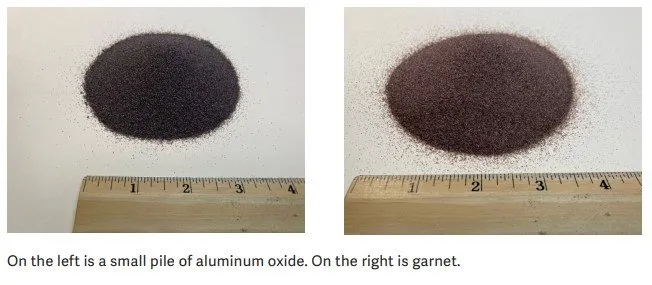
酸化アルミニウム — chemically Al₂O₃, also known as alumina or corundum — is the second-hardest abrasive material used in industrial blasting, trailing only diamond and cubic boron nitride on the Mohs scale. At Mohs 9, it outlasts garnet, outlasts all slag abrasives by a wide margin, and cuts through materials that slower abrasives cannot address efficiently. For industrial buyers sourcing aluminum oxide blasting media, understanding the difference between brown and white fused grades, selecting the right grit size, and vetting supplier quality claims is essential to getting consistent results.
This guide is part of our broader resource on sandblasting media suppliers and industrial abrasive selection. It covers everything specific to aluminum oxide: product types, grit size tables, application guidance, recyclability data, and sourcing recommendations from Jiangsu Henglihong Technology Co., Ltd.
to diamond & CBN
brown fused grade
white fused grade
in blast cabinet
1. What Is Aluminum Oxide Blast Media?
Aluminum oxide blast media is produced by fusing bauxite ore (for brown fused alumina) or high-purity alumina powder (for white fused alumina) in an electric arc furnace at temperatures exceeding 2,000°C. The solidified melt is then crushed, screened, and classified into precise grit sizes. The result is a tough, angular abrasive with exceptional hardness, high friability (the tendency to fracture under impact and expose fresh, sharp cutting edges), and near-zero free silica content.
Its combination of high hardness, consistent particle geometry, and chemical inertness makes it suitable for a wide range of demanding applications: thermal spray surface preparation, glass etching, aerospace component stripping, precision deburring, and hard-surface profiling where softer abrasives would wear before achieving adequate cleanliness or profile depth.
2. Brown Fused Alumina vs. White Fused Alumina
Brown Fused Alumina (BFA)
- Al₂O₃ content: typically 95–97%
- Color: dark brown / gray-brown
- Toughness: higher (less friable)
- Hardness: Mohs 9 / HV ~1800
- Cost: lower (more affordable)
- Best for: heavy-duty blasting, rust removal, coating prep on hard metals, glass etching
- Iron contamination risk: low (residual iron oxide from bauxite)
White Fused Alumina (WFA)
- Al₂O₃ content: typically 99–99.5%
- Color: bright white
- Toughness: lower (more friable — sharper fracture)
- Hardness: Mohs 9+ / HV ~1900–2000
- Cost: 30–60% premium over BFA
- Best for: stainless steel, titanium, aluminum — surfaces where iron contamination must be avoided; precision finishing
- Iron contamination risk: negligible
3. Grit Size Chart & Typical Profile Depths
| FEPA Grit | Particle Size Range (µm) | Typical Profile Depth | Common Use |
|---|---|---|---|
| #12 | 1700–2360 | 150–250 µm | Very aggressive profiling, thick coating removal |
| #16 | 1180-1700 | 120–180 µm | Heavy industrial, offshore preparation |
| #24 | 710–1180 | 80–130 µm | Heavy rust removal, hard metals |
| #36 | 500-710 | 60–90 µm | Standard industrial prep, thermal spray substrate |
| #46 | 425-600 | 50–75 µm | General Sa 2.5 preparation |
| #60 | 250–425 | 35–55 µm | Moderate profiling, tool steels |
| #80 | 180-250 | 25–40 µm | Precision profiling, automotive |
| #120 | 106–180 | 15–25 µm | Fine surface finishing, electronics |
| #150 | 90-125 | 10–18 µm | Precision deburring, fine cleaning |
| #220 | 63-90 | 6–12 µm | Lapping, glass etching, ultra-fine finishing |
| #280 | 45–75 | 4–8 µm | Precision optics, semiconductor components |
4. Key Applications
Thermal Spray & HVOF Substrate Preparation
Thermal spray coatings — including HVOF, plasma spray, and arc spray — require a very aggressive, clean anchor profile, typically Rz 50–150 µm, achieved immediately before spraying (within 4 hours to prevent oxidation). BFA #24–#36 at high blast pressure delivers the required profile on tool steels, carbide substrates, and hard metals without introducing iron contamination from metallic abrasives. This is one of the primary industrial applications driving demand for aluminum oxide blast media globally.
Stainless Steel & Non-Ferrous Metal Preparation
Stainless steel components that will be passivated, electropolished, or used in food-grade or pharmaceutical environments must not be contaminated with embedded iron particles. White fused alumina is the universal standard for blasting these substrates. After blasting with WFA, the passivation layer reforms cleanly and the surface maintains its corrosion resistance.
Glass Etching & Decorative Finishing
BFA #80–#220 is widely used for etching glass, ceramic tile, and stone in signage, architectural glass, and trophy manufacturing. The sharp, consistent particle geometry produces clean, uniform matte finishes. Finer grits produce more uniform, less aggressive textures.
Aerospace Component Stripping
For stripping paint, anodize, or corrosion-resistant coatings from aluminum airframe components, WFA in a controlled blast cabinet with precisely regulated pressure is the standard approach where substrate dimensional tolerance is critical. The non-ferrous nature of the abrasive eliminates contamination risk.
Precision Deburring
BFA #120–#220 in vibratory or tumblast systems removes sharp edges (burrs) from machined metal parts, castings, and stamped components without dimensional impact on finished surfaces. The hardness ensures consistent, repeatable results across high production volumes.
5. Recyclability & Cost-Per-Cycle
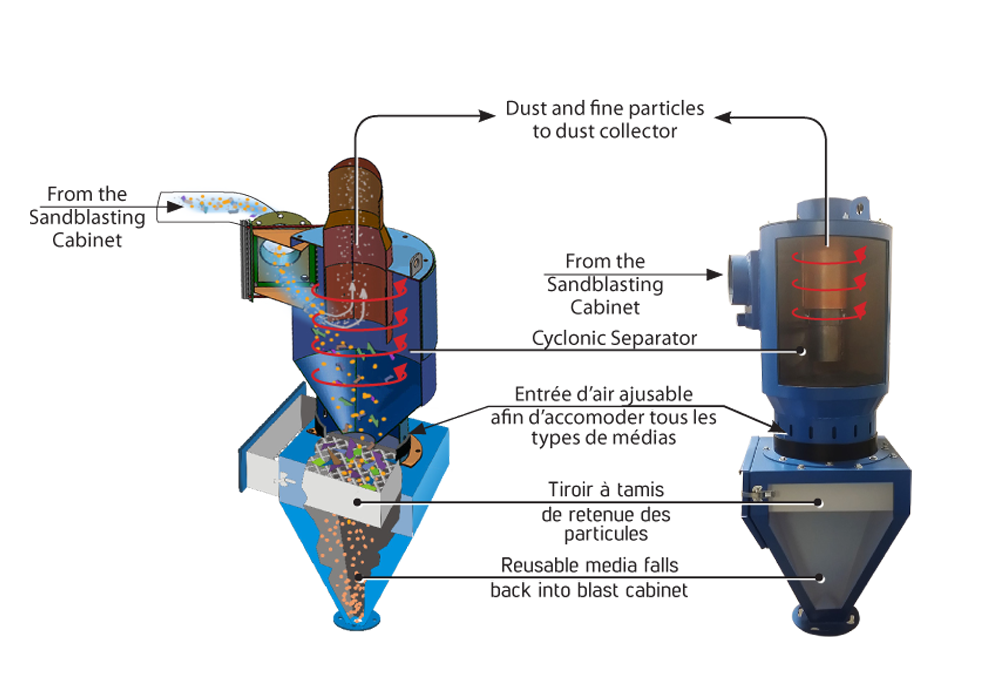
Aluminum oxide is significantly more recyclable than mineral abrasives (slag, garnet) but less recyclable than steel abrasives. In a properly maintained blast cabinet with effective dust collection and classifier:
- BFA: 50–150 cycles before media is fully consumed by attrition to fines
- WFA: 30–100 cycles (WFA is more friable — breaks down faster but cuts more aggressively per pass)
For a full cost-per-cycle comparison between aluminum oxide, steel grit, garnet, and single-use slag abrasives, see our dedicated analysis: Reusable vs. Single-Use Blast Media: Cost-Per-Cycle Analysis.
6. Quality Specifications to Request from Suppliers
| パラメータ | BFA Specification | WFA Specification | Test Method |
|---|---|---|---|
| Al₂O₃ content | ≥95.0% | ≥99.0% | XRF / wet chemical |
| Fe₂O₃ content | ≤0.5% | ≤0.1% | XRF |
| SiO₂ content | ≤1.5% | ≤0.1% | XRF |
| Free silica (SiO₂ crystalline) | <1.0% (OSHA limit) | <0.1% | XRD |
| Mohs hardness | ≥9.0 | ≥9.0 | Mohs scale |
| Moisture content | <0.5% | <0.3% | ASTM E1252 |
| 粒度分布 | Per FEPA 42-1:2006 | Per FEPA 42-1:2006 | Laser diffraction / sieve |
7. Sourcing & Pricing Benchmarks (May 2026)
China is the world’s largest producer of both brown and white fused alumina, accounting for over 70% of global supply. Prices are influenced heavily by electricity costs (electric arc furnace processing is energy-intensive), bauxite quality, and export market demand. The following ranges reflect FOB China pricing from ISO 9001-certified manufacturers as of May 2026:
| 製品 | Grit Range | FOB Price (USD/MT) | Standard Packaging |
|---|---|---|---|
| Brown Fused Alumina (BFA) | #12–#36 (coarse) | $580–$750 | 25 kg bags / 1 MT big bags |
| Brown Fused Alumina (BFA) | #46–#120 (medium) | $620–$820 | 25 kg bags / 1 MT big bags |
| Brown Fused Alumina (BFA) | #150–#280 (fine) | $700–$950 | 25 kg bags |
| White Fused Alumina (WFA) | #36–#120 | $900–$1,250 | 25 kg bags / 1 MT big bags |
| White Fused Alumina (WFA) | #150–#280 | $1,100–$1,600 | 25 kg bags |
For detailed guidance on comparing landed-cost quotations from multiple overseas suppliers, see our procurement guide: China vs. USA Sandblasting Media Suppliers: Quality, Lead Time & Cost Reality.
8. Frequently Asked Questions
Request Aluminum Oxide Samples & Pricing
Specify your required grade (BFA or WFA), grit size, and application. Jiangsu Henglihong Technology Co., Ltd. provides certified sample shipments and competitive FOB quotations within 24 hours.
Contact Us →フィルター