Abrasive Slurry Pumps for Mining: Tailings, Ore Concentrate & Dewatering Applications
Mining represents the largest and most demanding application class for abrasive slurry pumps in the world. Mine slurry pumps must handle particles with Mohs hardness from 5 to 9, concentrations from 20% to 70% by weight, coarse particle sizes up to 50 mm+, and in many cases operate continuously at 24/7 duty for months between planned shutdowns. Getting pump selection, material specification, and maintenance strategy right in a mining application is not just an engineering matter—it is a production economics decision that can determine whether a processing circuit meets its throughput targets or falls chronically short.
This guide covers the major mining slurry types, the dominant pump technology, material selection, key application scenarios, and maintenance considerations. For the complete pump selection framework, see: Pumps for Abrasive Media: The Complete Selection & Buying Guide.
1. Mining Slurry Types and Their Pump-Relevant Characteristics
Mining operations generate several distinct slurry types, each with significantly different pump requirements. Understanding which slurry type you are handling is the essential first step in correct pump selection.
| Slurry Type | Typical Particle Hardness | d50 Range | Concentration (w/w) | Key Challenge |
|---|---|---|---|---|
| Mill discharge (ball mill / SAG mill) | Mohs 5–8 (ore dependent) | 50–500 μm | 50–70% | Very high solids, coarse particles, abrasive |
| Cyclone feed | Mohs 5–8 | 100–300 μm | 30–50% | High flow volume; steady pressure required |
| Flotation concentrate | Mohs 5–7 | 20–150 μm | 20–40% | Fine particles; often chemically sensitive |
| Tailings disposal | Mohs 5–7 | 50–200 μm | 25–45% | Long-distance transport; pipeline wear |
| Dredge slurry | Mohs 6–7 (sand/gravel) | 0.2–5 mm | 20–35% | Coarse particles; variable feed |
| Underground sump drainage | Mohs 5–7 (rock fines) | Mixed — fine to coarse | 5–25% | Grit ingestion; highly variable content |
The most demanding combination in mining is the mill discharge application: very high solid concentration, broad particle size distribution including coarser fractions, high hardness, and continuous duty. This is the application class that drives centrifugal slurry pump technology at its most robust.
2. Why Centrifugal Slurry Pumps Dominate Mining
Centrifugal slurry pumps are the dominant pump type for mining applications for three fundamental reasons:
- Flow volume: Mining operations require slurry flow rates from hundreds to thousands of cubic meters per hour. No other pump type can match the volumetric capacity of large centrifugal slurry pumps at acceptable capital cost and power consumption. The largest mining slurry pumps handle flow rates above 10,000 m³/h.
- Particle size handling: Centrifugal slurry pumps with open or recessed impellers and large internal clearances can handle particles up to 50 mm+ (in the largest dredge pumps) without blockage. Progressive cavity and peristaltic pumps are limited to much smaller particle sizes.
- Continuous duty reliability: Well-maintained centrifugal slurry pumps with rubber or high-chrome liners run continuously for 500–2,000 hours between planned maintenance interventions in mining service—acceptable for processing circuit operation where brief planned shutdowns can be tolerated but continuous unplanned failures cannot.
The primary limitation of centrifugal pumps in mining is that they require priming, cannot run dry without severe impeller damage, and must be operated near their best efficiency point to avoid excessive wear from internal recirculation. Underground sump drainage applications where the sump level is variable and the pump risks dry running typically use submersible slurry pumps or protected installations with level-controlled operation.
3. Material Selection for Mining Applications
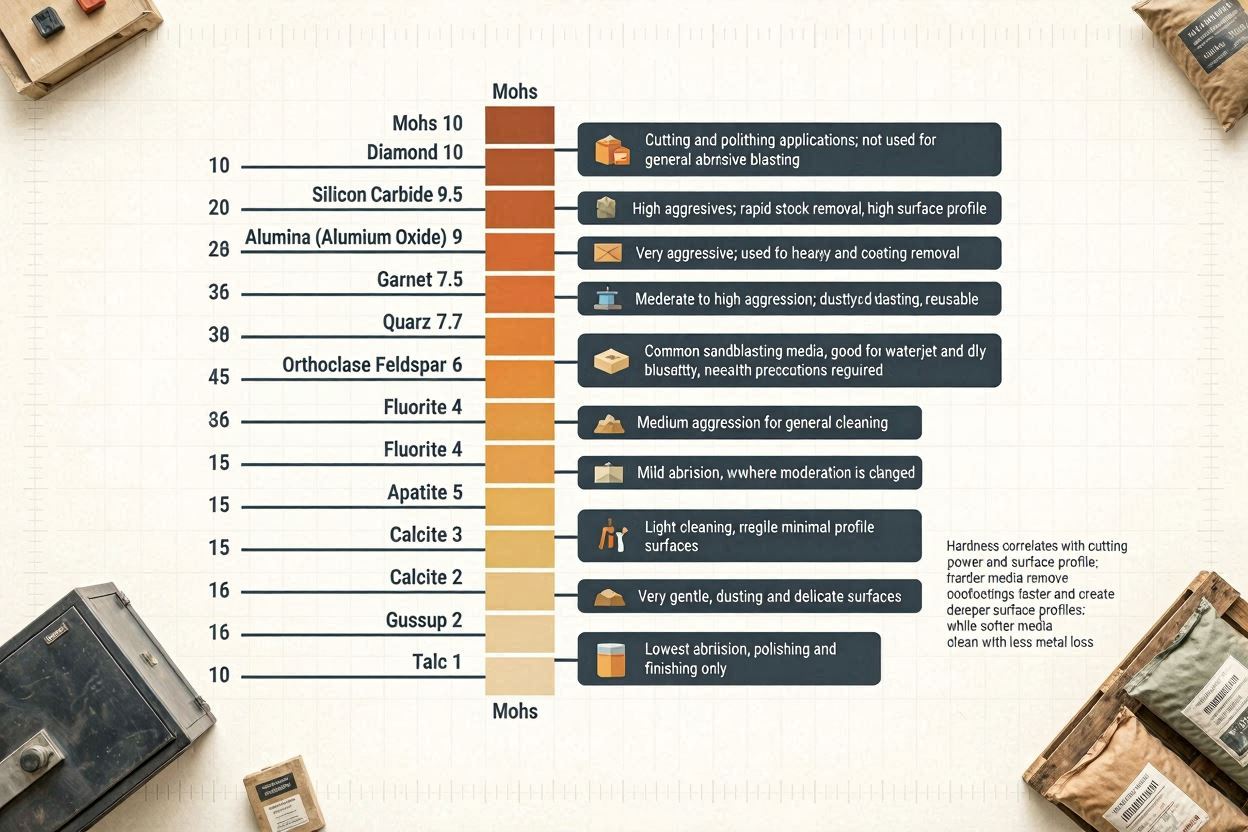
Mining slurry pump material selection follows the same hardness-matching principle as all abrasive pump applications, but with the added complexity of highly variable and often very hard ore mineralogy:
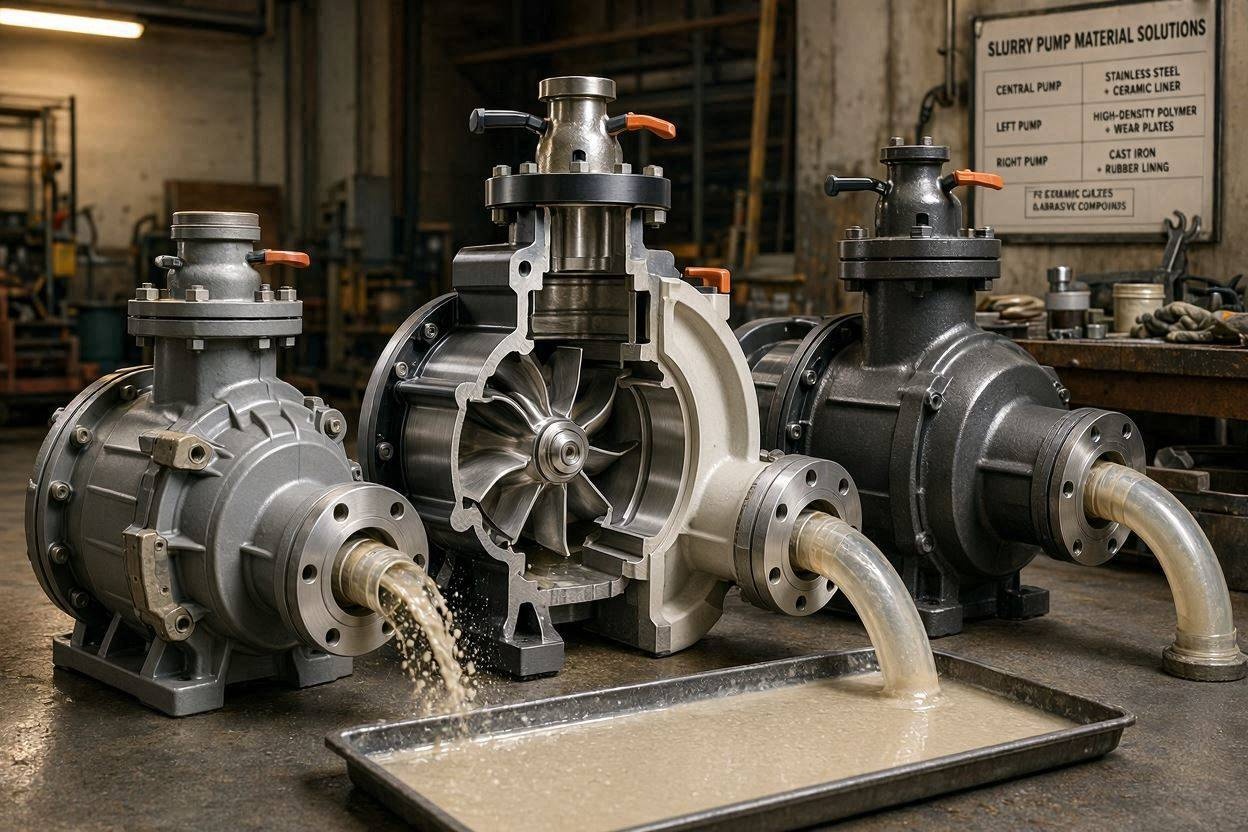
- High-chrome white iron (Cr27/Cr28): The standard material for hard, abrasive ore applications—gold and copper mining with quartz gangue (Mohs 7), iron ore (magnetite, Mohs 5.5–6.5), and phosphate rock. High-chrome provides the best wear resistance for hard angular mineral particles at the flow velocities typical in mill circuit slurry pumps. Liner life in hard rock mining applications ranges from 500 to 2,000 operating hours depending on ore mineralogy and pump speed.
- Natural rubber: The preferred liner material for fine particle applications where particles are below approximately Mohs 6.5 and below 6–8 mm. Rubber liners offer excellent resistance to fine, rounded mineral particles in tailings pumping and flotation concentrate transfer. Rubber also provides better resistance to mildly acidic slurries (from ore chemistry) than high-chrome alloys in many applications. Liner life for rubber in fine mineral service can range from 1,000 to 5,000 hours.
- Polyurethane: Used in applications between the rubber and high-chrome ranges—moderately abrasive slurries where rubber service life is inadequate but high-chrome would represent over-specification. Common in cyclone feed and product sump applications.
Many mining pump suppliers offer both liner material options for the same pump frame. The optimal material depends on your specific ore type and mineralogy—request wear life data from the pump manufacturer for your specific ore, not just generic guidance. For the full material selection framework, see: Pump Materials for Abrasive Media: Chrome vs. Rubber vs. Ceramic vs. Polyurethane.
4. Key Mining Pump Application Scenarios
5. Horizontal vs. Vertical/Submersible Pump Configuration
Mining slurry pump configurations fall into two families, each suited to different site conditions:
- Horizontal centrifugal slurry pumps: The most common configuration for surface applications. The pump is installed above the slurry sump level and draws slurry up through the suction pipe. Requires careful management of net positive suction head (NPSH) — long suction lifts or high slurry viscosity can cause cavitation. Accessible for maintenance. Standard for mill circuit, tailings, and concentrate pumping.
- Vertical spindle (cantilever) slurry pumps: The impeller is submerged in the sump; the motor and bearings are above flood level. Eliminates NPSH concerns and handles highly variable sump levels without dry-running risk. Limited by shaft length and bending loads. Common in product sumps, flotation circuit sumps, and rougher/scavenger tails applications.
- Submersible slurry pumps: Motor and pump are both submerged. Can pump down to very low sump levels. Used for underground dewatering, remote sump applications, and situations where suction lift is not feasible. Higher maintenance effort because the motor must be removed from the sump for service.
6. Performance Monitoring in Mining Service
Continuous performance monitoring is critical in mining pump applications because wear is progressive and any reduction in pump output directly affects processing circuit throughput. Key monitoring parameters:
- Discharge pressure at constant speed: Falling discharge pressure at constant motor speed and constant slurry density indicates increasing internal pump clearances from wear. This is the primary wear indicator for centrifugal slurry pumps.
- Motor power at constant flow: Rising motor current at constant flow indicates increased hydraulic losses from worn impeller geometry. Also indicates approaching BEP departure.
- Vibration amplitude: Track weekly. Rising vibration indicates impeller mass imbalance from uneven wear, or bearing distress.
- Liner thickness: Measure with ultrasonic gauging at quarterly planned shutdowns. Document remaining wear allowance to schedule liner replacement as a planned event rather than a breakdown.
For the full maintenance and monitoring framework for abrasive slurry pumps, see: Abrasive Media Pump Maintenance Guide. For estimating how quickly liners will wear in your specific ore type, see: How to Estimate Pump Wear Rate for Abrasive Slurry.
よくある質問
Quality Abrasive Media — From Surface Finishing to Mining-Grade Applications
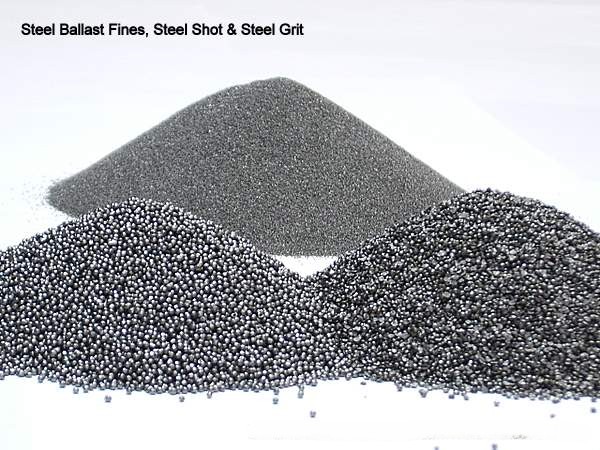
Jiangsu Henglihong Technology Co., Ltd. manufactures steel shot, steel grit, stainless steel shot, and aluminum cut wire shot to international standards. Whether for surface preparation, shot blasting, or research into abrasive media behavior, our certified products deliver controlled particle size and hardness — the same consistency that abrasive pump engineers depend on for accurate performance modeling.
Request Product Quotation →フィルター