Abrasive Blasting Media: Complete Guide to Types, Properties & Selection
Everything you need to know about abrasive blasting media — from material science and surface profile mechanics to safety compliance and B2B sourcing — in one authoritative reference.
- What Is Abrasive Blasting Media?
- How Abrasive Blasting Works
- Key Properties That Define Performance
- Major Types of Abrasive Blasting Media
- Full Comparison Chart
- How to Choose the Right Media
- Grit Sizes & Mesh Size Guide
- 産業用途
- Reusability & Cost Efficiency
- Safety, Regulations & Silica Risks
- Eco-Friendly & Biodegradable Options
- Sourcing & Supplier Selection
- よくある質問
What Is Abrasive Blasting Media?
Abrasive blasting media is any granular, particulate, or pelletized material propelled at high velocity against a work surface to achieve cleaning, surface preparation, deburring, descaling, shot peening, or decorative texturing.
The term encompasses a wide spectrum of materials — from ultra-hard synthetic ceramics like silicon carbide and aluminum oxide to natural minerals such as garnet, from engineered metallic products like steel shot and steel grit to soft organic options like walnut shell and corn cob. Each category delivers a distinct combination of hardness, particle shape, density, and recyclability, making the choice of media as critical as the choice of blasting equipment itself.
Abrasive blasting is also referred to by many industry-specific names depending on the media used or the application context: sandblasting (originally referring to silica sand, now largely banned due to health risks), grit blasting, shot blasting, bead blasting, vapor blasting, and media blasting. Despite the different terminology, the underlying principle is the same — kinetic energy transferred from a high-velocity particle to a surface creates the desired cleaning or profiling effect.
The wrong abrasive media can damage sensitive substrates, fail to achieve the required surface profile for coating adhesion, create unacceptable dust hazards, or dramatically inflate per-part processing costs. Selecting the right media from the outset is one of the highest-leverage decisions in any surface finishing operation.
How Abrasive Blasting Works
In any blasting system, media particles are accelerated and directed at a target surface by one of two principal mechanisms: compressed air (pneumatic blasting) または centrifugal wheel blasting.
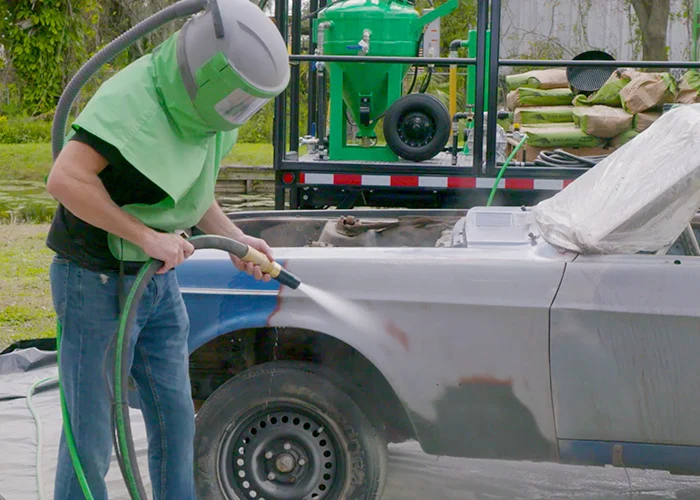
In pneumatic systems, compressed air — typically operating between 40 and 110 PSI — carries the abrasive through a blast hose and nozzle. The operator controls the blast angle, standoff distance, and pressure. These systems are highly versatile and are well-suited to open-site work, irregular geometries, and targeted spot blasting.
In centrifugal wheel (airless) blasting, a high-speed rotating wheel throws media at the surface mechanically. These enclosed systems are optimized for high-throughput, consistent results on flat or structurally predictable substrates — such as steel plate, I-beams, and fabricated assemblies. They are faster, more energy-efficient, and offer excellent media reclaim rates.
Regardless of the delivery method, the physics are the same: the kinetic energy of each particle upon impact determines whether the surface is cleaned, profiled, peened, or polished. Particle mass, velocity, hardness, and shape all directly influence the outcome. This is why understanding the physical properties of abrasive media — not just the trade name — is essential for engineering the right blasting process.
Key Properties That Define Blasting Media Performance
Before evaluating any specific media type, it is important to understand the core physical properties used to characterize and compare abrasive blasting materials. These properties appear on technical data sheets and drive nearly every aspect of blasting performance.
硬度(モース硬度)
Determines the media’s ability to cut, abrade, or deform a target surface. Harder media cuts faster and creates deeper anchor profiles. Ranges from 1 (talc) to 10 (diamond). Most industrial blast media falls between 5 and 9.5.
Particle Shape (Morphology)
Angular particles cut and create rough profiles; spherical particles peen and produce smoother, compressive-stress-bearing finishes. Shape is the primary driver of whether blasting produces an anchor profile or a peened surface.
Grit Size / Mesh Size
Determines the depth of the surface profile and the throughput speed. Coarser grits remove material faster; finer grits produce smoother finishes. Expressed as grit number, mesh size, or micron rating depending on the standard used.
かさ密度
Heavier particles carry more kinetic energy at the same velocity, increasing impact force. High-density media (such as steel shot) delivers greater impact per particle than low-density alternatives at equivalent velocities.
リサイクル性
The number of times media can be reused before degradation reduces effectiveness. High recyclability dramatically lowers per-cycle media cost. Metallic media typically offers the highest reuse cycles; organic and slag-based media are generally single-use.
Dust Generation
Dust level affects operator safety, regulatory compliance, visibility during blasting, and equipment wear. Low-dusting media reduces exposure risk and cleaning burden. Linked closely to media hardness and fracture toughness.
Major Types of Abrasive Blasting Media
The market offers more than a dozen distinct categories of blasting media. Below is a structured review of the most widely used types, with detailed performance characteristics for each. For deeper dives into individual materials, follow the dedicated guides linked in each section.
1. Aluminum Oxide (Alumina)
Aluminum oxide — also known as alumina or corundum — is among the most widely used synthetic abrasive blasting media globally. Produced by fusing bauxite ore in an electric arc furnace, it offers an outstanding combination of hardness (Mohs 9), sharp angular fracture, chemical inertness, and multi-cycle reusability.
Its angular grain structure creates aggressive cutting action, making it highly effective for surface profiling prior to thermal spray coatings, industrial paints, and powder coatings. Available from very coarse (12 grit) through ultra-fine (1200 grit), aluminum oxide covers an enormous range of finishing requirements.
For a complete breakdown of aluminum oxide grit sizes, reuse cycles, and recommended applications, refer to our dedicated guide: Aluminum Oxide Blasting Media: Properties, Grit Sizes & Best Uses.
2. Silicon Carbide
Silicon carbide (SiC) is the hardest commonly available abrasive blasting material, rating 9–9.5 on the Mohs scale — harder than aluminum oxide and second only to diamond and cubic boron nitride. This exceptional hardness makes it the preferred choice for blasting the hardest substrates: hardened tool steels, tungsten carbide surfaces, ceramics, and advanced composite materials.
Silicon carbide fractures into extremely sharp edges, producing cutting action that is more aggressive per particle than aluminum oxide. However, this also means faster media breakdown and fewer reuse cycles. It is typically reserved for applications where processing speed outweighs media cost, or where no softer alternative can achieve the required surface condition.
For technical specifications, SiC grades, and industrial use cases, visit our full resource: Silicon Carbide Blasting Media: Hardness, Applications & Reusability.
3. Glass Beads
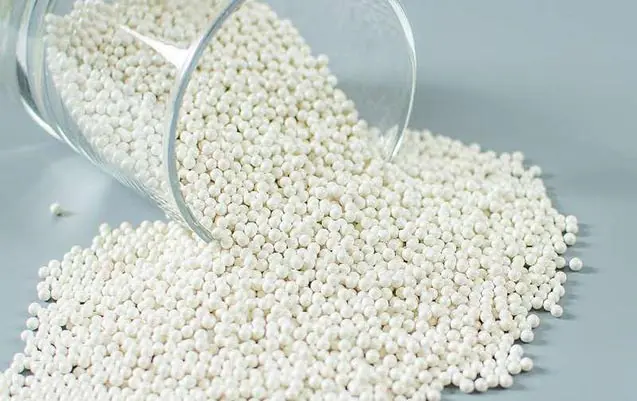
Glass beads are spherical abrasive particles made from lead-free soda-lime glass. Unlike angular media, they do not cut into surfaces — instead, they peen the surface through repeated impact, producing a bright, satin-smooth, uniform finish without altering critical dimensions. This makes them the media of choice for decorative finishing, stainless steel brightening, aerospace component peening, and cleaning delicate precision parts.
Glass beads are chemically inert, free of iron contamination, and gentle enough for use on non-ferrous metals, plastics, and sensitive alloys. They are available in a broad range of mesh sizes — from as coarse as US 20 mesh through ultra-fine US 400 mesh — enabling precise control of surface texture.
Learn more about mesh sizing, equipment compatibility, and finish quality in our dedicated article: Glass Bead Blasting Media: Finish Quality, Mesh Sizes & Equipment Compatibility.
4. Steel Shot & Steel Grit
Steel-based blasting media comes in two principal forms: スチールショット (spherical) and スチールグリット (angular, produced by crushing hardened steel shot). Both offer exceptional recyclability — typically 200–300 cycles under proper reclaim systems — making them economically dominant in high-volume operations such as structural steel fabrication, shipbuilding, pipe production, and automotive component lines.
Steel shot produces a peened, compressive-stress surface that enhances fatigue resistance. Steel grit produces an angular anchor profile essential for heavy-duty coating adhesion. The two types are often blended to achieve a combination of profile depth and surface cleanliness in a single pass.
For a detailed comparison of angular versus round steel blast media and surface profile outcomes, see: Steel Shot & Steel Grit Blasting Media: Angular vs Round for Surface Prep.
5. Garnet
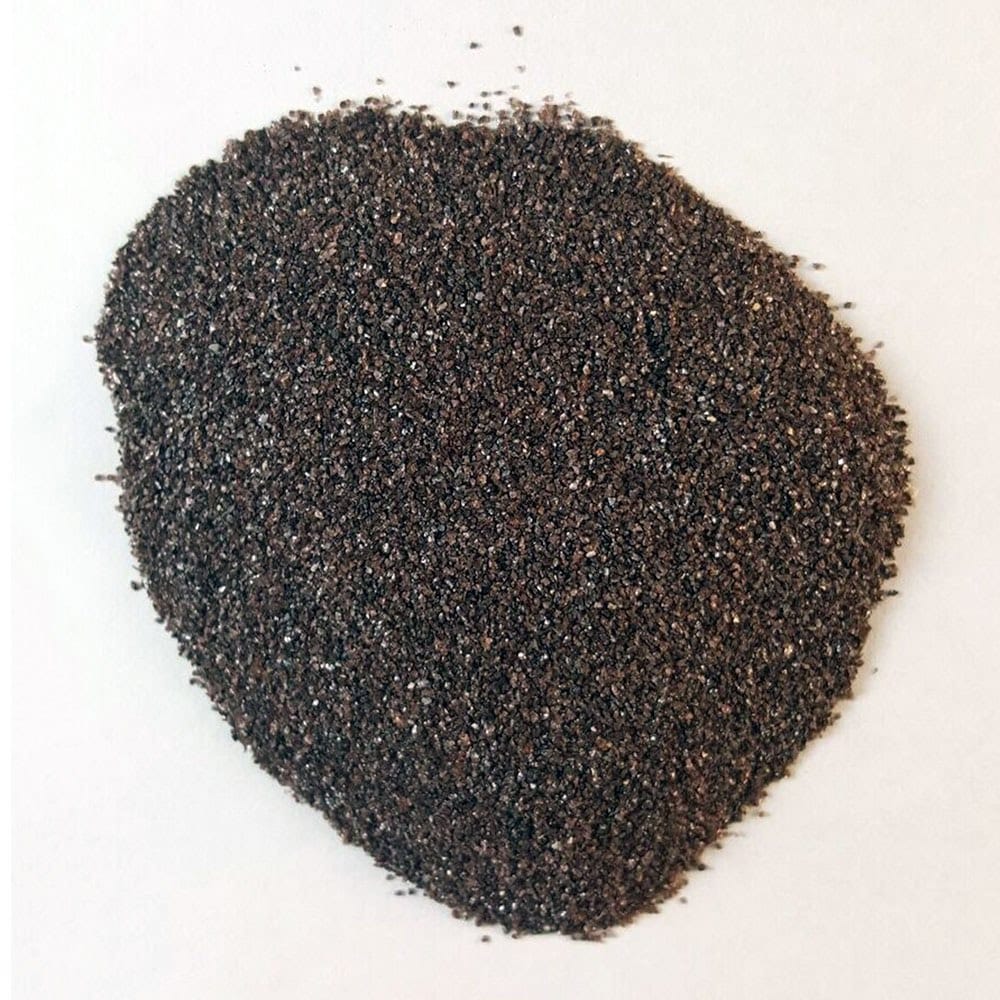
Garnet is a naturally occurring mineral abrasive — most commonly almandine garnet — that offers a balanced combination of moderate hardness (Mohs 7–8), angular particle shape, low dust generation, low free silica content, and excellent recyclability for a natural mineral. These properties make it a popular choice for marine and offshore coating applications, waterjet cutting, and environmentally sensitive blasting projects.
Garnet generates significantly less airborne dust than many competing abrasives, which reduces respiratory risk and improves visibility during blasting. Its low free silica content (<1%) avoids the most serious health concerns associated with quartz sand, while its recyclability (typically 3–5 cycles) delivers meaningful cost advantages over single-use materials.
Explore wet blasting applications, environmental certifications, and garnet grades in our full guide: Garnet Blasting Media: Eco-Friendly Performance for Wet & Dry Blasting.
6. Plastic & Organic Blasting Media
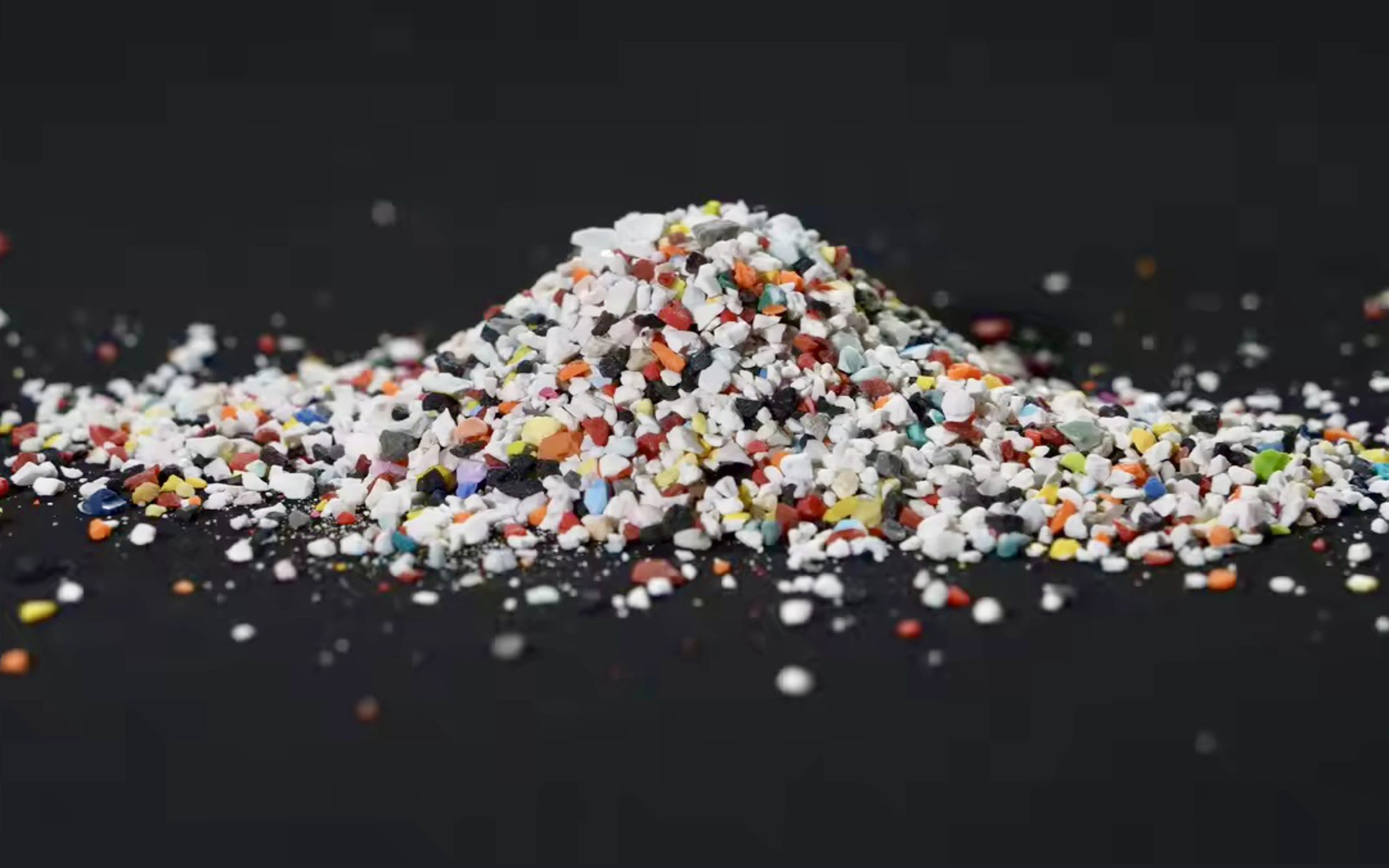
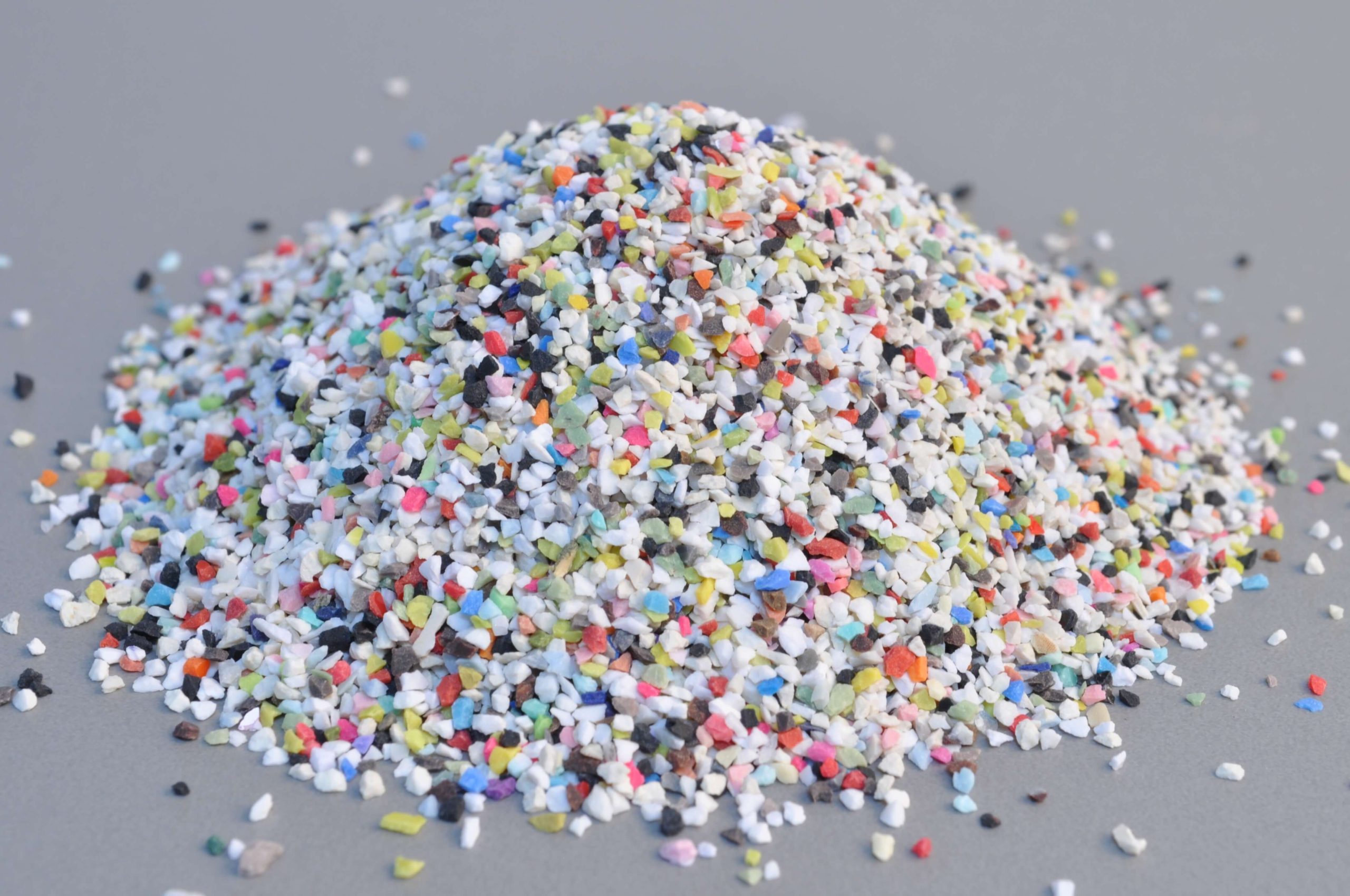
Organic and plastic blasting media — including walnut shell, corn cob, and engineered plastic pellets — occupy the “soft blasting” end of the spectrum. These materials are used when the primary goal is cleaning or paint removal without altering the substrate’s dimensions, hardness, or surface profile. Common applications include paint stripping from aircraft skins, cleaning delicate molds and dies, removing coatings from carbon fiber composites, and food-equipment sanitizing.
Their low Mohs hardness (2.5–4) and low density mean they cannot profile hard metal surfaces, but they are uniquely suited to sensitive substrates that harder media would damage. Organic media is generally single-use; plastic media may offer limited recyclability.
For a full breakdown of plastic vs. organic abrasives and their specific use cases: Plastic & Organic Blasting Media: Walnut Shell, Corn Cob & Plastic Grit.
Full Abrasive Blasting Media Comparison Chart
The table below provides a side-by-side reference across all major media types. For a detailed analysis of how to use this data in your selection process, see our dedicated comparison resource: Abrasive Blasting Media Comparison Chart: Hardness, Profile & Cost.
| メディア・タイプ | モース硬度 | Shape | Surface Profile | Reuse Cycles | Dust Level | Relative Cost | Key Applications |
|---|---|---|---|---|---|---|---|
| 酸化アルミニウム | 9 | アンギュラー | Deep anchor | 4–8× | Medium | Medium | Thermal spray, coating prep, tool sharpening |
| 炭化ケイ素 | 9–9.5 | アンギュラー | Very deep | 2–5× | Medium-High | 高い | Ceramics, hardened steel, composites |
| Glass Bead | 5.5–6 | Spherical | Peened, smooth | 3–6× | 低い | Medium | Decorative, aerospace peening, stainless |
| スチールショット | 7–8 | Spherical | Peened, smooth | 200–300× | 低い | Low/cycle | Shot peening, fatigue resistance |
| スチールグリット | 7–8 | アンギュラー | Deep anchor | 200–300× | 低い | Low/cycle | Heavy steel prep, shipbuilding, bridges |
| ガーネット | 7–8 | アンギュラー | Medium anchor | 3–5× | 非常に低い | Medium | Marine, offshore, waterjet, eco projects |
| Walnut Shell | 3–4 | Irregular | Minimal | 1× (single-use) | 低い | 低い | Aircraft paint strip, composites, mold cleaning |
| Corn Cob | 2.5–3 | Irregular | Minimal | 1× (single-use) | 非常に低い | 低い | Wood restoration, food equipment, polishing |
| Plastic Grit | 3–4 | アンギュラー | Minimal | 2–5× | 低い | Medium | Aerospace composites, molds, delicate parts |
| 炭酸水素ナトリウム | 2.5 | Irregular | なし | 1× (single-use) | 非常に低い | Medium-High | Food-grade cleaning, heritage restoration |
How to Choose the Right Abrasive Blasting Media
Media selection is a multi-variable engineering decision. The following seven-factor framework — covered in full in our guide How to Choose Abrasive Blasting Media: 7 Key Factors Explained — gives a structured approach to making the right call.
Define the substrate material and its sensitivity
Hard carbon steel tolerates aggressive angular media; soft aluminum, plastics, and composites require gentle spherical or organic abrasives. Mismatching media hardness to substrate hardness causes surface damage or contamination.
Determine the required surface finish or profile
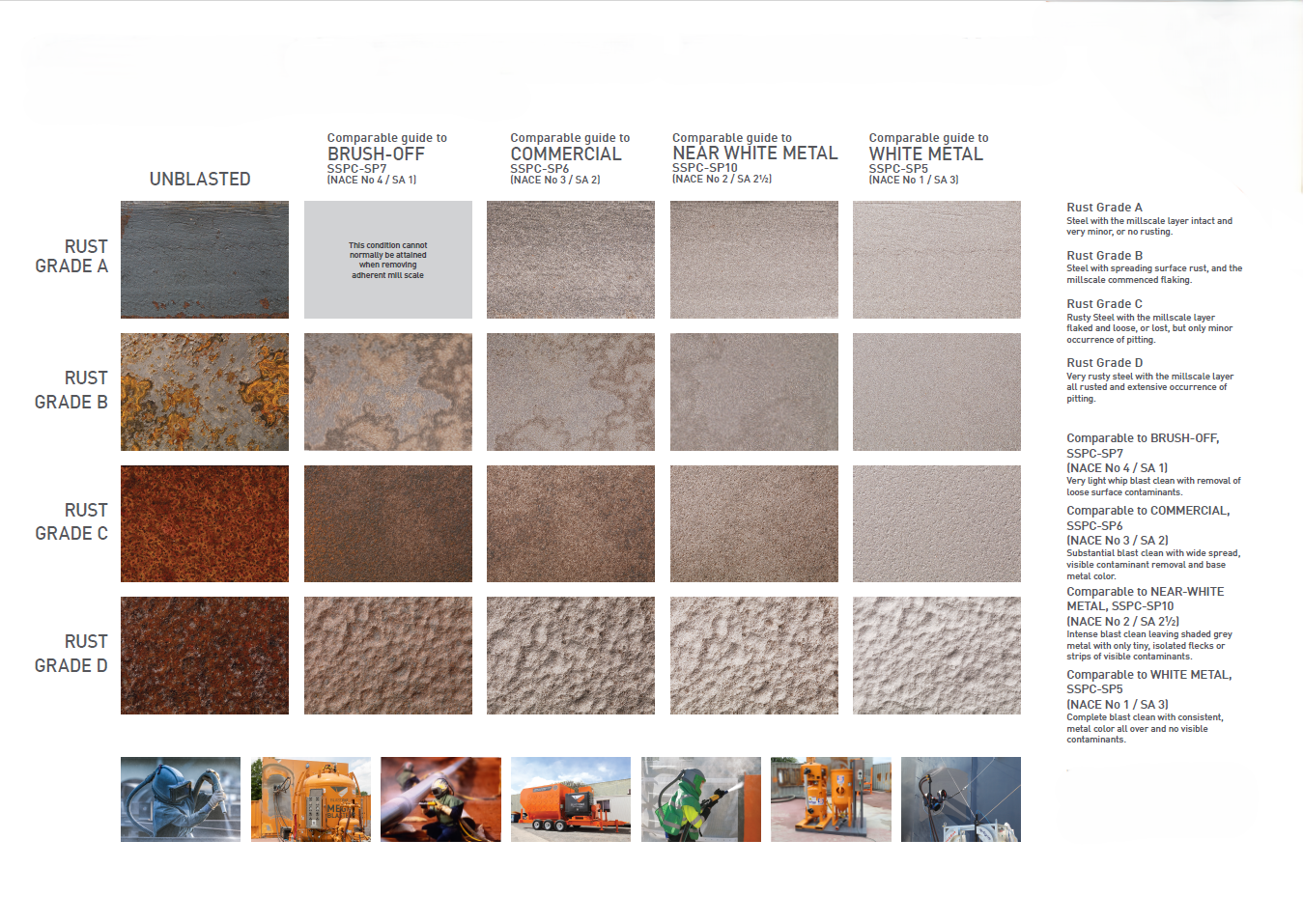
Coatings require specific anchor profiles (commonly Sa 2.5, Ra 50–100 µm). Shot peening requires a controlled compressive layer. Decorative finishing requires uniformity and brightness. Each outcome demands a different media type and particle morphology.
Match hardness to the task
As a rule, blasting media should be harder than the contamination being removed but not excessively harder than the substrate itself — particularly for precision components. Use the Mohs comparison chart in the previous section as a starting reference.
Select particle shape: angular or round?
Angular particles (grit) cut and anchor-profile. Round particles (shot, beads) peen and polish. If the goal is coating adhesion, angular media is nearly always required. If the goal is fatigue resistance or decorative sheen, round media is preferred. See our detailed breakdown: Angular vs Round Blasting Media: Surface Profile & Finish Differences.
Choose the appropriate grit size
Coarser grit removes material faster and creates deeper profiles. Finer grit delivers smoother results but slower throughput. Most applications fall between 20 and 120 grit for production blasting, with finer sizes reserved for polishing and ultra-precision work. Full sizing reference: Blasting Media Grit Size & Mesh Size Guide.
Factor in recyclability and total cost of use
Unit price per kilogram is a misleading metric. True media cost is calculated as: (cost per kg) ÷ (number of reuse cycles). Steel media at $1.50/kg with 200 reuse cycles costs $0.0075 per effective cycle — far below a $0.30/kg single-use slag. Full analysis: Reusable vs Single-Use Blasting Media: Cost Analysis & ROI.
Assess safety, environmental, and regulatory requirements
OSHA PEL limits, free silica restrictions, waste disposal classifications, and environmental permits all constrain media choice in many jurisdictions. In particular, any media containing >1% crystalline silica requires elevated engineering controls and respiratory protection. See our full safety guide below.
Grit Sizes & Mesh Size Guide
Grit size is one of the most frequently misunderstood aspects of abrasive media specification. Different industries and regions use different sizing standards — FEPA (Federation of European Producers of Abrasives), ANSI (American National Standards Institute), MESH (US sieve size), and JIS (Japanese Industrial Standard) — and they are not always directly interchangeable. Our comprehensive resource on Blasting Media Grit Size & Mesh Size Guide: How to Read & Convert covers all four standards with a conversion table.
As a practical orientation, the table below shows approximate grit-to-application mapping for the most common industrial blasting tasks:
| Grit Range | Profile Depth (µm) | Typical Application | Common Media Used |
|---|---|---|---|
| 12–24 (Very Coarse) | 75–150+ | Heavy mill scale removal, severe corrosion | Steel grit, coarse aluminum oxide |
| 36–60 (Coarse) | 50–100 | General coating prep, rust removal | Steel grit, garnet, aluminum oxide |
| 80–120 (Medium) | 25–75 | Precision coating prep, paint stripping | Aluminum oxide, garnet, glass bead |
| 150–220 (Fine) | 10–25 | Satin finish, light cleaning, deburring | Glass bead, fine aluminum oxide |
| 280–600 (Very Fine) | <10 | Polishing, dimension-critical precision parts | Fine glass bead, fine aluminum oxide, SiC |
Industry Applications of Abrasive Blasting Media
Abrasive blasting media serves a vast range of industries. Below is a summary of key application domains, each with a link to the dedicated application guide in our resource library below.
Reusability, Recycling & Cost Efficiency
For high-volume operations, the number of times media can be reused is often the single most important economic variable. A full cost analysis comparing reusable vs single-use media is essential reading for any purchasing decision, but the key principles are summarized here.
Media degrades through two mechanisms: fracture (angular particles break into fines) and deformation (spherical particles become misshapen). Both reduce blasting efficiency. Proper reclaim and classification systems — using cyclone separators, bucket elevators, and vibratory screens — extend usable media life by continuously removing spent fines and restoring the working mix to the correct particle size distribution.
Cost per cycle = Purchase price ($/kg) ÷ Number of reuse cycles
Example: Aluminum oxide at $1.20/kg with 6 reuse cycles = $0.20/effective cycle. Steel grit at $1.50/kg with 250 cycles = $0.006/effective cycle. The steel grit is more than 33× cheaper per actual use despite its higher purchase price.
For operations that handle significant media volumes, investing in a closed-loop reclaim system can reduce total media expenditure by 60–80%. See our operational guide: Abrasive Blasting Media Recycling & Reclaim Systems: Reduce Cost & Waste.
Safety, Regulations & The Silica Risk
The use of silica sand (quartz sand) as abrasive blasting media is banned or severely restricted in many countries including the UK, most of the EU, and Australia due to the risk of ケイ肺 — a progressive, incurable, and potentially fatal lung disease caused by inhaling fine crystalline silica dust. Even in jurisdictions where it remains technically legal, OSHA and equivalent bodies impose extremely stringent engineering controls and respiratory protection requirements.
Modern industrial blasting operates under a comprehensive framework of health and safety standards. Key regulations and standards relevant to abrasive blasting media include:
- OSHA 29 CFR 1910.1053 / 1926.1153 — US federal standard for occupational exposure to respirable crystalline silica, establishing a PEL of 50 µg/m³ (time-weighted average).
- NIOSH REL — The National Institute for Occupational Safety and Health recommends even lower exposure limits and the elimination of silica sand as blast media.
- EN 15051 / EN 481 — European standards for measurement of workplace dust and respirable fractions.
- SSPC-AB 1 / SSPC-AB 2 / SSPC-AB 3 — Steel Structures Painting Council standards for mineral, manufactured, and coal slag abrasives, defining permissible levels of contaminants including free silica.
For a complete walkthrough of OSHA compliance requirements, approved alternatives to silica, and PPE specifications, refer to our full safety resource: Silica Sand in Abrasive Blasting: Health Risks, OSHA Rules & Safe Alternatives.
Beyond silica, all abrasive blasting operations require appropriate controls for general dust exposure, noise (wheel blasting equipment typically generates 90–110 dB), and, in enclosed environments, ventilation requirements to prevent oxygen depletion and explosive dust accumulation. See: Abrasive Blasting Media Safety: PPE, Ventilation & Dust Control.
Eco-Friendly & Biodegradable Blasting Options
Environmental pressure on surface finishing operations has intensified significantly through the 2020s, driven by tightening waste disposal regulations, sustainability reporting requirements, and customer-driven supply chain expectations. In April 2026, the EU’s Industrial Emissions Directive revisions and the US EPA’s updated NESHAP standards for surface coating operations both increase scrutiny on blasting media waste streams and dust emissions.
The most environmentally advantageous media options share three characteristics: low dust generation, low free silica, and either high recyclability or biodegradability. Garnet, glass beads, and steel-based media score well on all three. Organic media (walnut shell, corn cob) are biodegradable but single-use. Novel options such as dry ice blasting (CO₂ pellets) and sodium bicarbonate blasting leave no solid media residue at all.
For a full evaluation of green blasting alternatives and regulatory positioning: Eco-Friendly & Biodegradable Blasting Media: Green Alternatives Guide.
It is also worth noting the distinction between wet blasting (vapor blasting) and conventional dry blasting in the context of environmental performance. Wet blasting significantly reduces airborne dust by encapsulating particles in a water mist, lowering both health risk and site contamination. The trade-offs in media performance and process speed are explored in: Wet Blasting vs Dry Blasting Media: Which Method Is Right for You?.
Sourcing Abrasive Blasting Media: Supplier Evaluation & B2B Best Practices
For industrial buyers, sourcing abrasive blasting media involves considerably more than finding the lowest price per kilogram. Quality consistency, certification compliance, lead time reliability, packaging options, and technical support from the supplier all have direct downstream effects on blasting line productivity and coating quality.
Key criteria for evaluating abrasive blasting media suppliers include:
- Material certifications: ISO 9001 quality management, SSPC-AB compliance, RoHS/REACH conformity for materials used in sensitive industries.
- Chemical analysis certificates: Batch-level documentation of free silica content, heavy metal levels, and moisture.
- Particle size distribution reports: Screen analysis data confirming that the delivered media matches the specified grit grade.
- Packaging and logistics capability: Availability in bulk bags (1,000–1,200 kg), small bags (25 kg), and the supplier’s ability to handle containerized export shipments for international customers.
- Minimum order quantities (MOQ) and lead times: Critical for production planning, especially where blasting lines operate continuously.
For a detailed supplier evaluation checklist and guidance on negotiating custom specifications, see: Abrasive Blasting Media Suppliers & Manufacturers: How to Evaluate & Source.
High-volume buyers sourcing in bulk should also review: Bulk Abrasive Blasting Media: Packaging Options, MOQ & Logistics.
For operations requiring non-standard grades, custom particle size blends, or tailored chemistry, working directly with a manufacturer on custom specifications can unlock significant performance and cost advantages. Our guide on Custom Blasting Media Specifications: Working with Manufacturers on Grit & Grade walks through the process from RFQ to production qualification.
Jiangsu Henglihong Technology Co., Ltd. is a specialist manufacturer of four core categories of high-performance abrasive blasting media: aluminum oxide (alumina), 炭化ケイ素, ガラスビーズそして steel shot & steel grit. All product lines are manufactured under ISO 9001-certified quality management systems, with full batch-level chemical analysis certificates, SSPC-AB 1 compliance documentation, and global export capability in both 25 kg small bags and 1,000 kg bulk jumbo bags. Our technical team supports specification matching, custom grit blending, and pre-shipment sampling for new customers worldwide.
Need Help Selecting the Right Blasting Media?
Our technical team at Jiangsu Henglihong Technology can help you match the right media — aluminum oxide, silicon carbide, glass beads, or steel shot/grit — to your exact application, with certified quality documentation and competitive bulk pricing.
Request a Free Consultationよくある質問
Complete Abrasive Blasting Media Resource Library
This pillar page is the central reference in Jiangsu Henglihong Technology’s abrasive blasting media knowledge hub. Every topic covered above is explored in greater depth in the specialized guides below. Use this index to navigate directly to the resource most relevant to your question or application.
Media Types
Selection & Comparison
アプリケーション
Safety, Technology & Environment
Sourcing & B2B Procurement
フィルター