What Is Black Beauty Abrasive? Coal Slag Explained
A complete guide to the origins, chemistry, and industrial classification of Black Beauty coal slag — the most widely used slag abrasive in North American surface preparation.
1. Defining Black Beauty Abrasive
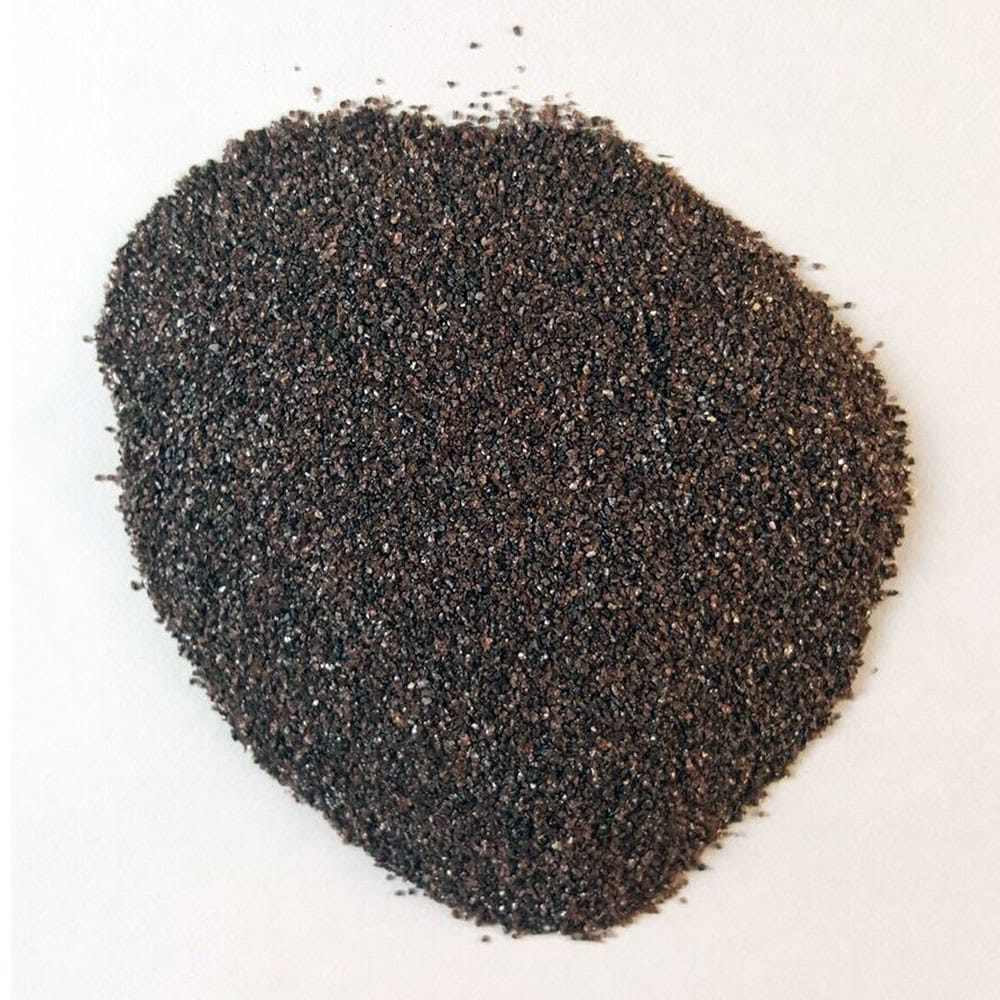
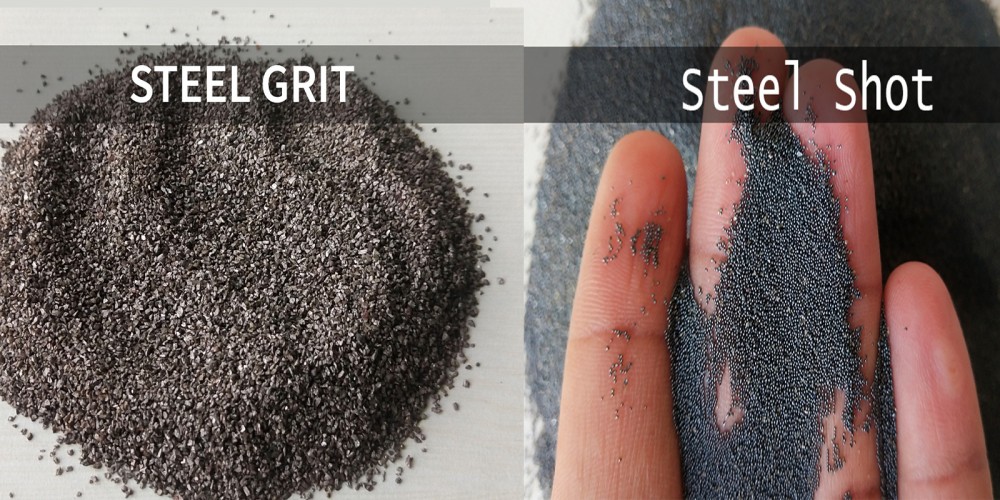
Black Beauty abrasive is a processed coal slag used as a blasting medium in dry abrasive blasting operations. It is dark grey to jet black in color, granular in texture, and characterized by angular, sharp-edged particles that give it effective mechanical cutting action on rusted, coated, and contaminated metal and concrete surfaces.
At the most fundamental level, Black Beauty is an industrial byproduct repurposed as a consumable abrasive. The raw material — vitrified slag from coal-fired boilers and power plants — would otherwise be landfilled as solid waste. Instead, it is collected, processed, and graded into a product that meets the strict physical and chemical requirements of the SSPC AB 1 standard (Mineral and Slag Abrasives) and, for certain grades, U.S. military specification MIL-A-22262B(SH).
The defining performance characteristics of Black Beauty abrasive are:
- Mohs hardness of 6.0–7.0 — hard enough to cut paint, rust, and mill scale efficiently
- Angular particle morphology — maximizes surface profiling per unit of media consumed
- Free crystalline silica content below 0.1% — the critical health and regulatory differentiator from silica sand
- Chemical inertness — does not react with substrate metals or coating chemistry
- Moisture-free composition — prevents clumping in pressurized blast pots
For the full buyer’s guide covering grit selection, applications, compliance, and sourcing, see our pillar resource: Black Beauty Abrasive Blasting Media: The Complete Buyer’s Guide.
2. The Origin: What Is Coal Slag?
To understand Black Beauty, you must first understand coal slag — the raw material from which it is made. Coal slag is the vitrified (glass-like) mineral residue produced when coal is burned at high temperatures in industrial furnaces and power plant boilers.
2.1 The Combustion Process
When coal burns at temperatures exceeding 1,300–1,500 °C, two categories of residue are generated. The first is fly ash — fine particles that are carried upward with flue gases and captured by electrostatic precipitators or baghouses. The second is bottom ash or boiler slag — denser molten material that pools at the base of the furnace. It is this bottom slag fraction, rapidly quenched with water, that forms the raw feedstock for Black Beauty.
The rapid water quench causes the molten mineral material to solidify in an amorphous (non-crystalline) glass structure. This is the pivotal chemistry distinction: the silica in coal slag is locked in a disordered glass matrix, not arranged in the repeating crystalline lattice of quartz. This structural difference is why coal slag is not classified as a respirable crystalline silica hazard under the same framework as natural silica sand.
2.2 From Power Plant to Blast Pot
The slag production chain involves: coal combustion → molten slag pooling → water quench → solid slag fragment collection → transport to processing facility → jaw crushing → impact milling → vibratory screening into grade fractions → quality testing → packaging. The entire process is designed to produce a consistent, moisture-free, tightly graded abrasive that performs predictably in production blasting environments.
3. Chemical Composition in Detail
The exact chemical composition of coal slag varies by coal source and furnace design, but premium Black Beauty-grade material consistently falls within the following oxide ranges. All figures are expressed as weight percentages of the total material:
| Oxide / Component | Typical Range (wt%) | Role in Performance |
|---|---|---|
| SiO₂ (amorphous silica) | 40–55% | Primary glass-forming oxide; contributes to hardness and chemical stability. Amorphous form — not biologically hazardous |
| Al₂O₃ (alumina) | 20–28% | Increases hardness and abrasion resistance; improves cutting speed relative to lower-alumina slags |
| Fe₂O₃ / FeO (iron oxides) | 10–18% | Responsible for the characteristic dark color; contributes to specific gravity |
| CaO (calcium oxide) | 3–8% | Flux oxide; higher CaO in “calcium iron silicate” (Platinum) variants improves durability |
| MgO (magnesium oxide) | 1–4% | Secondary flux; contributes to chemical inertness |
| Free crystalline SiO₂ | < 0.1% (often <0.01%) | The critical health parameter — must remain below OSHA PEL threshold levels |
| TiO₂, K₂O, Na₂O, trace metals | < 3% combined | Minor constituents from coal mineral matter; monitored in TCLP testing for leachability |
| Moisture | < 0.5% | Controlled during processing to ensure free-flowing behavior in blast pots |
The practical implication of this chemistry is a material that is simultaneously hard enough to profile steel, stable enough not to react with coatings or substrates, and safe enough — in terms of crystalline silica content — to be legally used in jurisdictions where silica sand blasting is prohibited.
4. Why It Is Not Classified as a Silica Hazard
This is the question most frequently asked by health, safety, and environment (HSE) professionals when evaluating coal slag abrasives. The answer lies in the distinction between crystalline and amorphous silica.
4.1 Crystalline vs. Amorphous Silica
Crystalline silica — specifically the quartz polymorph — has a long-range ordered atomic structure. When inhaled as fine respirable particles (those below 4 microns aerodynamic diameter), crystalline silica causes silicosis through a specific mechanism: quartz surfaces are reactive and trigger a persistent inflammatory response in alveolar macrophages that ultimately leads to progressive lung fibrosis. This is why IARC classifies inhaled crystalline silica from occupational sources as a Group 1 human carcinogen.
Amorphous silica — the form present in coal slag — has a disordered glass structure. The surface reactivity that drives the inflammatory response is absent or dramatically reduced. Epidemiological studies and animal studies have consistently found that amorphous silica does not produce the same dose-response fibrosis seen with crystalline quartz at comparable exposure levels.
4.2 The Regulatory Picture
OSHA’s respirable crystalline silica standard (29 CFR 1910.1053 and 1926.1153) sets a Permissible Exposure Limit (PEL) of 50 μg/m³ as an 8-hour time-weighted average for respirable crystalline silica specifically. Because Black Beauty contains less than 0.1% free crystalline silica, even at high dust concentrations the crystalline silica fraction remains well below the PEL in most operating conditions — provided adequate engineering controls (ventilation, wet suppression, or enclosed blasting) and PPE are in place.
This is not an argument for operating without respiratory protection. Nuisance dust limits still apply to total particulate. Rather, it explains why Black Beauty is approved for use in countries (UK, Canada, EU member states, Australia) where silica sand blasting has been banned or severely restricted since the mid-twentieth century.
5. Brand Name vs. Generic Category
The name “Black Beauty” originated with Harsco Corporation’s Environmental Division (now known as Harsco Environmental), which has processed and marketed coal slag abrasive under that brand for nearly nine decades. The name is a registered trademark and refers specifically to Harsco’s processed boiler slag product line.
However, in everyday industrial usage — particularly among blasting contractors, procurement teams, and specification writers — “black beauty” has evolved into a generic descriptor for any high-quality processed coal slag abrasive that meets SSPC AB 1 requirements. This is analogous to how “fiberglass” (a Owens Corning trademark) became a generic material name.
Competing products marketed under different brand names — Black Diamond (Black Diamond Abrasives), Black Blaster, and various international equivalents — are specification-equivalent materials that must be evaluated on the same technical criteria: particle size distribution, free silica content, TCLP results, moisture content, and specific gravity. Brand loyalty is understandable, but in industrial procurement, the CoC (Certificate of Conformance) and third-party test data are what matter for project compliance.
For a complete technical specification comparison, see our guide: Black Beauty Blasting Media Specifications: Technical Data Sheet Breakdown.
6. Product Grades and Variants
Commercial Black Beauty-grade coal slag is produced in four primary grit size grades, each suited to different surface preparation requirements. A fifth premium variant — calcium iron silicate slag (marketed as “Platinum” grade by some suppliers) — offers improved durability and slightly higher cutting speed at a higher price point.
For the full mesh-to-Mil-profile chart with SSPC-SP level mapping, see our dedicated grit selection guide: Black Beauty Grit Size Chart: How to Choose the Right Mesh for Your Job.
7. A Brief Industrial History
The industrial use of coal slag as a blasting abrasive dates to the 1930s in the United States, when the rapid expansion of coal-fired power generation created abundant quantities of boiler slag that the utilities needed to dispose of. Forward-thinking industrial minerals processors recognized that this waste material — hard, angular, and plentiful — could substitute for increasingly scrutinized silica sand in abrasive blasting applications.
By the 1950s and 1960s, coal slag abrasives had gained widespread acceptance in the steel fabrication, shipbuilding, and bridge maintenance industries. The Black Beauty brand established a quality benchmark that the broader market adopted as a specification shorthand. The 1970s brought OSHA’s occupational safety regulations, which dramatically increased scrutiny of silica sand blasting and further accelerated the shift to coal slag alternatives.
As of June 2026, coal slag abrasives remain among the highest-volume blast media in North America and are exported globally. Environmental pressure on coal-fired power generation has raised questions about long-term feedstock availability, driving interest in alternative slag feedstocks — notably copper slag and iron silicate — as well as engineered abrasives. However, for the foreseeable future, coal slag supply from existing power plant inventories and ongoing production is expected to remain sufficient for market demand.
8. Summary: Key Facts at a Glance
| Attribute | Value |
|---|---|
| Material category | Processed coal boiler slag (vitrified mineral byproduct) |
| カラー | Dark grey to jet black |
| 粒子形状 | Angular, irregularly fractured (conchoidally) |
| Mohs hardness | 6.0 – 7.0 |
| Specific gravity | 2.6 – 2.9 g/cm³ |
| Free crystalline silica | < 0.1% (typically < 0.01%) |
| Key compliance standards | SSPC AB 1, MIL-A-22262B(SH), 40 CFR 261.24 (TCLP) |
| リサイクル性 | Primarily single-use; limited reclaim (1–2 cycles) in equipped blast rooms |
| Primary applications | Structural steel, ship hulls, bridges, pipelines, concrete, blast cabinets |
| Environmental status | 100% recycled byproduct; typically TCLP non-hazardous |
Return to the complete overview: Black Beauty Abrasive Blasting Media: The Complete Buyer’s Guide · Also explore: Safety Data & Environmental Compliance · Grit Size Chart
フィルター