Sand Blasted Surface Cost Guide: Per Square Meter Pricing by Region & Method
A 2026 cost benchmark for sand blasted surfaces — per-square-meter pricing across regions, method types, and project sizes — plus the cost drivers buyers can pull to reduce total spend without compromising quality.
Why Cost Quoting Varies So Widely
Buyers comparing sandblasting quotes routinely see 3× or 4× spread between bidders on the same project. This is not always supplier dishonesty — the cost of sand blasted surface preparation depends on at least seven independent variables, any of which a bidder may interpret differently.
This guide breaks down those variables, presents 2026 benchmark pricing by region and method, and identifies the levers a sourcing manager can pull to reduce total cost. For the broader specification context, see the pillar guide on sand blasted surface.
The Cost Driver Breakdown
| Cost Driver | Share of Total | Reduction Lever |
|---|---|---|
| Abrasive media consumption | 25 – 45% | Switch to recyclable media; closed-loop reclamation |
| Labor | 30 – 45% | Automation; robotic blast cells; operator training |
| Compressed air / energy | 10 – 18% | Right-sized compressors; nozzle wear monitoring |
| Containment & waste disposal | 8 – 20% | Low-silica media; dust collection optimization |
| Inspection & QC | 3 – 8% | Standardized acceptance protocols |
| Equipment depreciation | 4 – 10% | Equipment utilization rate |
| Margin & overhead | 10 – 25% | Supplier competition; long-term agreements |
Regional Pricing 2026
| Region | Shop Blast (USD/m²) | Field Blast (USD/m²) |
|---|---|---|
| Northern Europe (DE, NL, NO) | 22 – 35 | 40 – 60 |
| United States | 18 – 32 | 35 – 55 |
| Australia / New Zealand | 20 – 34 | 38 – 58 |
| UAE / Middle East | 14 – 26 | 26 – 42 |
| Eastern Europe | 12 – 22 | 22 – 38 |
| China (export-grade yards) | 10 – 18 | 18 – 32 |
| India / Southeast Asia | 8 – 16 | 15 – 28 |
Regional variance is driven primarily by labor cost. Media cost varies less because global commodity prices for garnet, aluminum oxide, and steel grit are relatively flat. Higher labor-cost regions accelerate automation, partially offsetting the labor premium.
Shop vs Field Cost Gap
Field blasting routinely costs 1.5× to 2× shop blasting for identical preparation. The cost premium comes from:
- Containment. Field work requires scaffolding, shroud systems, or full encapsulation to control dust and debris.
- Lower productivity. Operators on scaffolding produce 30–50% of shop-cabinet throughput.
- Weather dependence. Rain, humidity, and wind delay or stop field operations.
- Waste handling. Field-blasting waste is typically classified as industrial waste; shop systems can recycle.
- Logistics. Compressor trucks, media transport, generator power for remote sites.
Where geometry permits, shipping a fabrication to a shop blast facility almost always undercuts field blasting. Exception: monumental structures and large infrastructure assets (bridges, tanks, pipelines) that cannot be transported.
Media Cost Economics
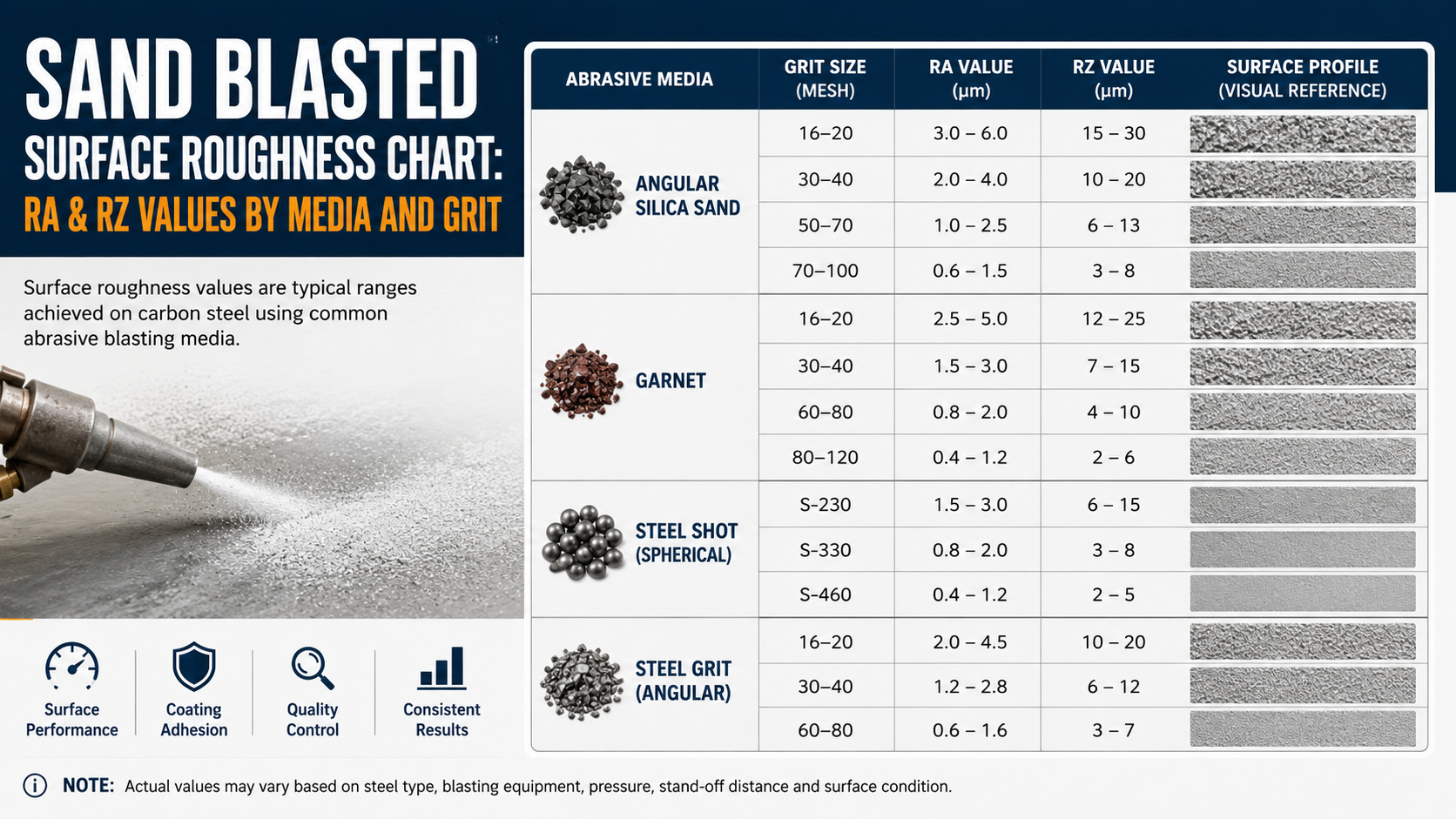
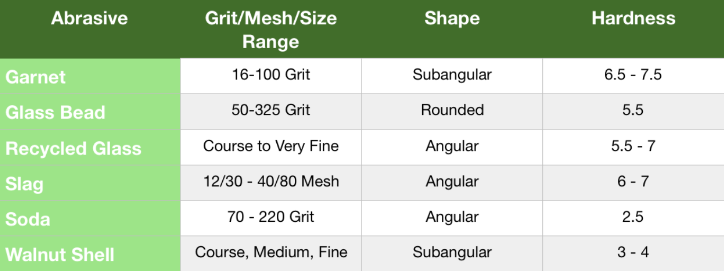
Per-ton media prices look misleading. A high-volume operator should compare cost per square meter of acceptable surface, which factors in media life:
| Media | Price (USD/ton) | Reuse Cycles | Effective Cost/m² |
|---|---|---|---|
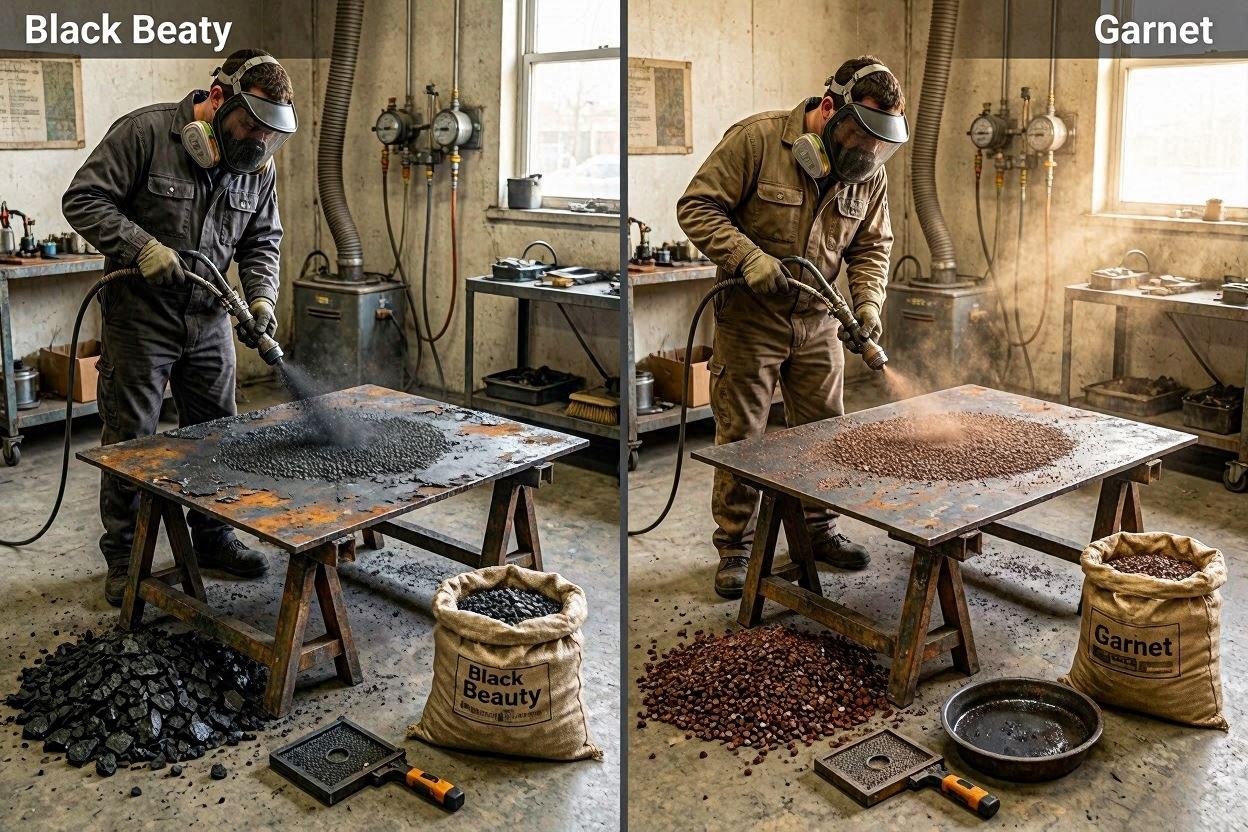
| Coal slag | 180 – 280 | 1 (single use) | 3.5 – 6 |
| ガーネット | 320 – 480 | 3 – 5 | 1.5 – 3 |
| 酸化アルミニウム | 800 – 1,400 | 15 – 20 | 1 – 2.5 |
| Steel grit (closed loop) | 900 – 1,400 | 100+ | 0.4 – 1 |
| Glass bead | 450 – 700 | 15 – 30 | 0.8 – 1.8 |
Steel grit closed-loop in a shipyard is the lowest effective media cost per square meter despite the highest unit price per ton. This is why every modern large-volume blasting operation invests in reclamation systems.
よくある質問
How much does sandblasting cost per square meter in 2026?
Shop blasting in 2026 typically costs USD 8–35 per square meter; field blasting USD 15–60 per square meter. Regional variance is significant: Southeast Asia 30–50% below Western Europe / North America.
What is the biggest cost driver in sandblasting?
Labor and abrasive media are the two largest cost drivers, each typically representing 25–45% of total cost. Containment, energy, inspection, equipment, and overhead make up the remainder.
Is field blasting more expensive than shop blasting?
Yes, typically 1.5× to 2× more expensive. Field blasting requires containment, suffers lower operator productivity, depends on weather, and involves higher waste handling and logistics costs.
Why is steel grit cheaper per square meter despite higher ton price?
Steel grit recycles 100+ times in closed-loop systems. Even at USD 1,200/ton, the effective cost per square meter is below USD 1 — far below single-use coal slag at USD 200/ton but USD 4–6 per square meter.
How can I reduce sand blasting cost on a large project?
Negotiate long-term media supply agreements, switch to recyclable media if volume justifies, specify automation-friendly workpiece geometry, and consolidate work into shop blasting rather than field blasting where transport allows.
Request an Abrasive Blasting Media Sample
Jiangsu Henglihong Technology Co., Ltd. supplies certified aluminum oxide, garnet, glass bead, steel grit, and steel shot to global industrial buyers. Request a sample with full batch documentation for technical evaluation.
Request a Sample →フィルター