Abrasive Blasting Media Recycling & Reclaim Systems: Reduce Cost & Waste
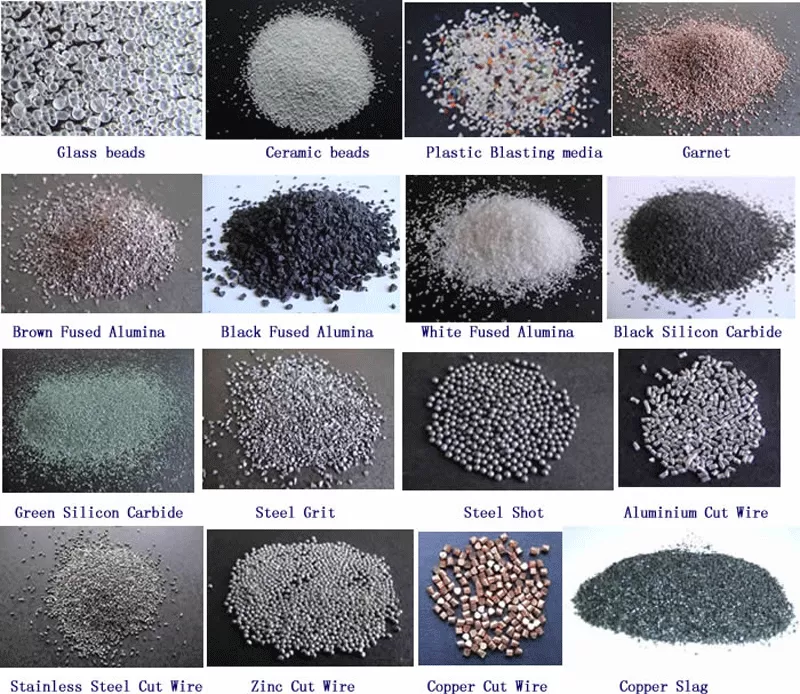
A technical and economic guide to abrasive blasting media reclaim systems — covering cyclone separators, bucket elevators, air wash classifiers, vibratory screens, and ROI modeling for media recycling in steel grit, aluminum oxide, garnet, and glass bead blasting operations.
Why Reclaim Systems Are Essential
A recyclable blast media is only as economical as the reclaim system that captures and reconstitutes it. Without reclaim, even steel grit — which offers 200–300 reuse cycles in theory — is effectively single-use, losing its entire economic advantage. The reclaim system is not optional infrastructure for recyclable media operations; it is the mechanism that converts purchase price per kilogram into the dramatically lower cost per effective cycle that makes recyclable media economically compelling.
The economic argument is straightforward: steel grit at $1.50/kg is 12× more expensive than copper slag at $0.12/kg by purchase price. But with 250 reuse cycles enabled by a reclaim system, steel grit costs $0.006 per effective cycle versus $0.12 for single-use copper slag — making steel grit 20× cheaper per actual blasting cycle. That 20× cost advantage is entirely created by the reclaim system. The capital investment in reclaim infrastructure is the investment that unlocks this economic advantage. For the full cost-per-cycle analysis: Reusable vs Single-Use Blasting Media: Cost Analysis & ROI.
Core Components of a Reclaim System
A complete closed-loop blast media reclaim system for a wheel blast machine or pneumatic blasting room typically consists of the following major components, each serving a defined function in the reclaim process:
1. Media Collection System
Spent media falls to the floor of the blast chamber and must be collected for reclaim. In wheel blast machines, perforated floor grating allows media to fall through to a collection hopper below the chamber floor. In blast rooms, a combination of manual collection (sweeping), mechanical conveying (screw conveyors, drag chain conveyors), and pneumatic sweep systems recovers media from the floor and returns it to the reclaim circuit.
2. Bucket Elevator (Vertical Conveyor)
The collected media must be elevated from the floor-level collection point to the separator, which typically sits above the blast machine for gravity-feed return. A continuous bucket elevator with abrasion-resistant buckets and liners lifts the media vertically. The elevator capacity (tonnes/hour) must be matched to the blast machine output rate — an undersized elevator creates a bottleneck that reduces blasting productivity.
3. Air Wash Separator (Classifier)
The air wash separator is the critical quality control component of the reclaim system. As media falls through a controlled upward air current, fine particles and dust are carried upward by the airstream and captured by the dust collector, while heavier in-spec media particles fall through and proceed to the storage hopper. The air velocity is calibrated to separate fines below the minimum acceptable particle size for the media being reclaimed — particles smaller than this threshold do not contribute useful blasting action and degrade blast quality if returned to the circuit.
Correct calibration of the air wash separator is essential: too high an air velocity carries away usable media (wasteful); too low fails to remove degraded fines (allows blast quality to deteriorate). Calibration must be rechecked when switching media types or grit sizes, as the separation velocity differs for different particle sizes and densities.
4. Magnetic Separator
For steel media reclaim systems, a magnetic separator positioned in the media stream removes non-magnetic contaminants (debris, substrate material, scale pieces) that accumulated during blasting. This protects the blast machine from damage by non-metallic debris and maintains media quality. For non-ferrous media (garnet, aluminum oxide, glass bead), magnetic separation is not applicable, and separation relies entirely on size classification.
5. Dust Collector
Dust generated during blasting and by media degradation must be captured before exhausting to atmosphere. A dust collector — typically a baghouse filter or cartridge collector — receives the fine particle-laden airstream from the air wash separator and the blast chamber exhaust, collects the dust on filter media, and periodically shakes or pulses the filters clean. HEPA filtration is required for operations involving silica or heavy metals. Collected dust is disposed of as industrial waste.
6. Media Storage Hopper
Classified, reclaimed media is held in a storage hopper above the blast machine, from which it gravity-feeds into the blast machine pot or wheel hopper on demand. Hopper capacity should allow continuous blasting operation for at least 2–4 hours without requiring manual media additions.
Separator Types: Air Wash vs Cyclone vs Spiral
| Separator Type | Operating Principle | Best For | 制限事項 |
|---|---|---|---|
| Air Wash Classifier | Counter-current airflow separates particles by terminal velocity (size × density) | Steel media, garnet, aluminum oxide — any dense mineral abrasive | Less effective for light media (low density); requires calibration when changing media |
| Cyclone Separator | Centrifugal force in rotating airstream separates heavy particles from fines and dust | Pre-separation of large debris; dust collection; high-volume operations | Less precise size classification than air wash — typically used upstream of air wash |
| Spiral Separator | Spinning particles separate by shape — spheres roll to outer edge, non-sphericals remain near center | Glass bead reclaim — removes fractured (non-spherical) beads from intact spheres | Only effective for spherical vs non-spherical separation; not for size classification |
| Vibratory Screen | Physical sieve screen classifies by particle size | Final quality check after air wash; removing oversized contaminants | Slower than air separation; screens wear and require replacement |
Reclaim System Requirements by Media Type
| メディア・タイプ | Minimum Reclaim System | Critical Component | Key Calibration Point |
|---|---|---|---|
| Steel Shot / Steel Grit | Full closed-loop: elevator + air wash + magnetic separator + dust collector | Magnetic separator removes non-metallic debris | Air wash velocity calibrated to remove sub-spec fines for the specific grade in use |
| 酸化アルミニウム | Air wash classifier + dust collector | Air wash quality determines effective cycle count significantly | Fine tuning for grit size — F36 and F120 need different air velocities |
| ガーネット | Air wash classifier + dust collector | Dust collector must handle garnet’s naturally lower dust generation efficiently | Air velocity to retain coarser fraction while removing fines below minimum effective size |
| Glass Bead | Spiral separator + air wash + dust collector | Spiral separator removes fractured non-spherical glass fragments | Spiral speed calibrated to separate spherical from non-spherical beads of the target size |
| 炭化ケイ素 | Air wash classifier + dust collector | SiC’s high friability generates significant fines quickly — air wash must be efficient | Air velocity to maximize recovery of in-spec fraction given rapid degradation rate |
Understanding Media Degradation in the Reclaim Circuit
All recyclable blast media degrades with each use cycle through two mechanisms: fracture (particles break into smaller fragments) and deformation (particles change shape without fracturing — primarily relevant for steel shot, which can become angular rather than spherical). Both mechanisms reduce the media’s blasting effectiveness and the proportion of in-spec material in the reclaim circuit.
The reclaim system’s air wash separator continuously removes degraded material (fines and deformed particles below the minimum effective size) from the circulating mix. The working media in the blast machine at any given time is therefore a mix of original particles and fractured fragments of varying sizes — all of which remain above the separator cut-off and continue contributing useful blasting action.
Media is considered “exhausted” and ready for replacement when the circulating mix can no longer achieve the required surface cleanliness grade or profile depth within an acceptable number of passes — indicating that too high a proportion of the working mix has degraded below effective blasting particle size, even above the separator cut-off.
Quality Control: Monitoring Media Condition
Proactive monitoring of circulating media condition prevents quality problems from appearing on blasted workpieces before they are identified. Recommended monitoring practices:
- Sieve analysis: Periodic screening of a sample from the circulating media mix against the original particle size distribution specification. A shift toward finer particles indicates progressive degradation — compare against the supplier’s new-media PSD certificate.
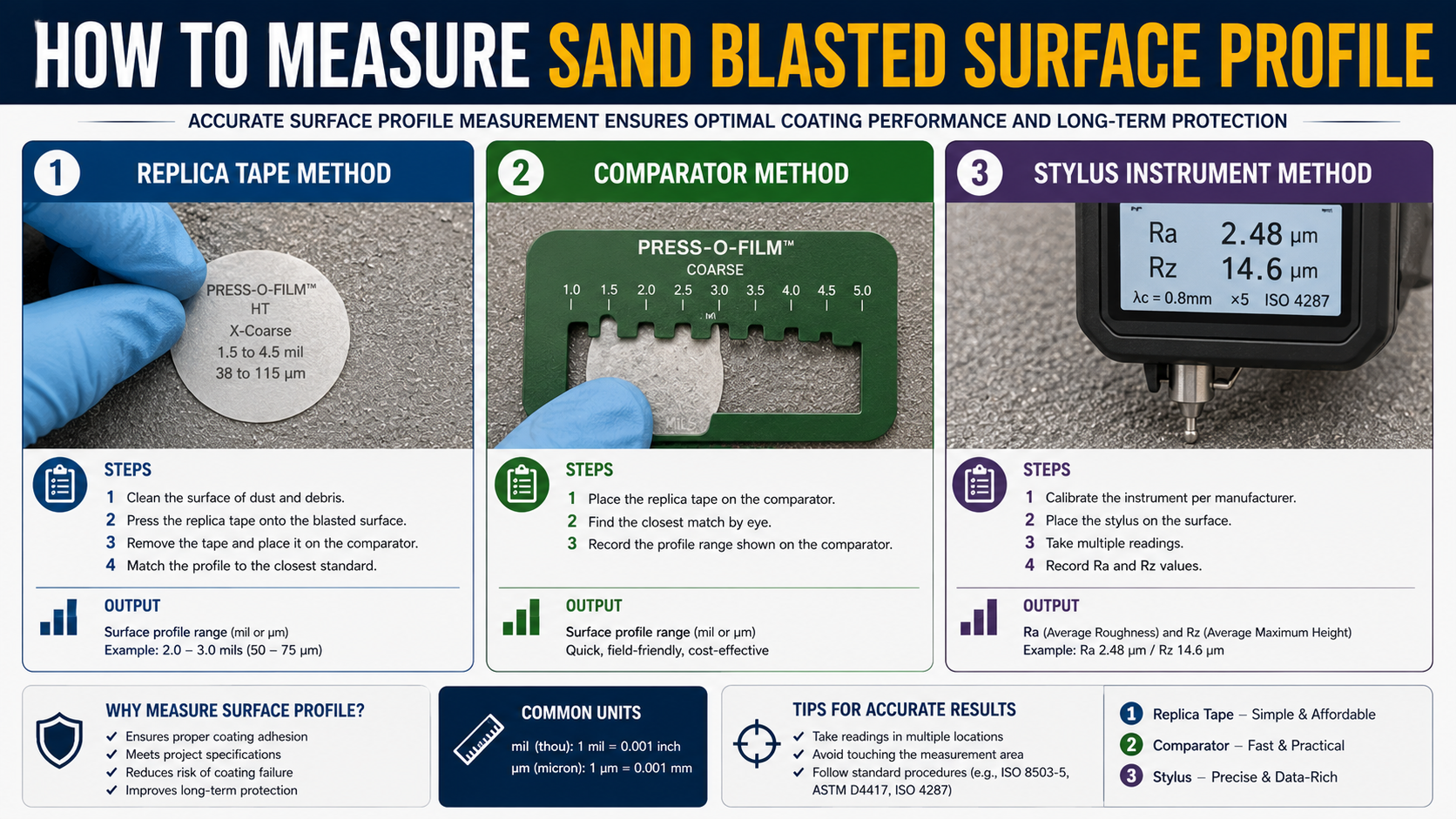
- Surface profile measurement: Regular measurement of the surface profile achieved on test panels using replica tape (Testex) or profilometer. Declining profile depth with consistent process parameters indicates media degradation.
- 目視検査: For glass bead applications, periodic examination under magnification to assess the percentage of intact spheres versus fractured fragments. Replacement is indicated when fractured particles exceed 20–30% of the mix.
- Dust collector weight monitoring: Increasing dust collection rate per tonne of work blasted is an indicator of accelerating media breakdown — more material is being degraded to dust per cycle, suggesting the working mix is beyond its effective service life.
ROI and Payback Calculation
Step 1: Calculate current annual media + disposal cost without reclaim.
Step 2: Estimate annual media + disposal cost with reclaim (accounting for actual reuse cycles achieved and reduced waste volume).
Step 3: Annual savings = Step 1 cost − Step 2 cost.
Step 4: Payback period = Reclaim system capital cost ÷ Annual savings.
Step 5: Post-payback annual return = Annual savings (ongoing, every year after payback).
Example: Current copper slag cost $18,000/year + disposal $6,000/year = $24,000/year. With steel grit + $120,000 reclaim system: media $1,800/year + disposal $400/year = $2,200/year. Annual savings = $21,800. Payback = $120,000 ÷ $21,800 = 5.5 years. After payback: $21,800/year ongoing savings.
Optimizing Your Blasting Media Selection for Reclaim ROI
Jiangsu Henglihong Technology supplies aluminum oxide, silicon carbide, glass beads, and steel shot/grit in the grades and sizes that work best with reclaim systems. Our technical team can help you match media specification to your reclaim system capability for maximum cycle efficiency.
Request a Technical Consultationよくある質問
フィルター